Asia’s vast ecosystems support powerful carnivores that pursue enormous herbivores amid rapid environmental changes.
Tigers: Apex Ambush Masters
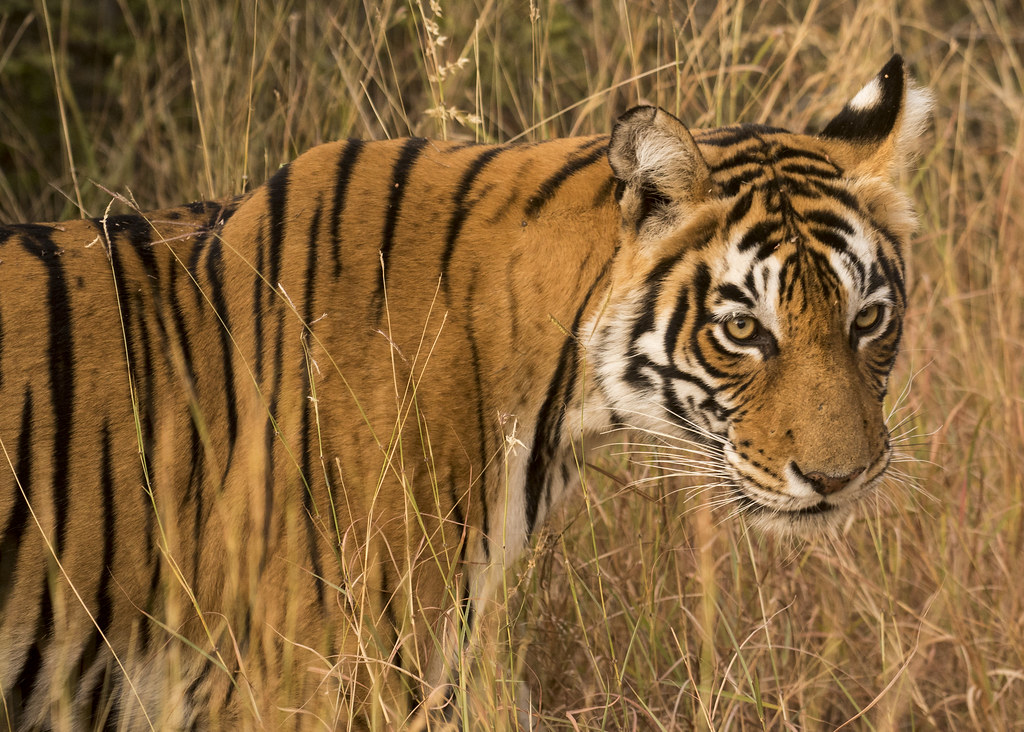
Tigers: Apex Ambush Masters (Image Credits: Flickr)
The tiger stands as Asia’s largest feline predator, capable of reaching lengths of 2.8 meters and weights up to 260 kilograms. These solitary hunters rely on stealthy ambushes in forested regions to take down substantial prey such as deer, wild boar, and even gaur. Once widespread across the continent, tigers now occupy fragmented habitats in India, Southeast Asia, and Russia. They have vanished from vast areas including much of China and islands like Java. Conservation efforts highlight their critical status, with populations clinging to isolated pockets.
Subspecies variations in size and markings once numbered up to nine, though genetic studies challenge these divisions. Tigers shape ecosystems by controlling herbivore numbers, preventing overgrazing in their territories.
Asiatic Lions and Bear Dominance
Asiatic lions, confined to India’s Gir Forest, measure 2.5 to 2.9 meters long and weigh up to 190 kilograms, featuring sparser manes than their African counterparts.[1] These social animals hunt in prides, targeting ungulates like deer and wild boar. Bears add diversity to Asia’s predator lineup. The Asiatic black bear, agile climbers up to 200 kilograms, raid trees for fruits and small mammals across mountainous forests from the Middle East to Japan.
Sloth bears specialize in insects, using elongated lips to vacuum ants from mounds, while brown bears exceed 600 kilograms in Siberian taigas, feeding omnivorously on roots, fish, and large game. Giant pandas, though largely bamboo eaters at 160 kilograms, defend fiercely when provoked. Polar bears in Russia’s Arctic north hunt seals on ice floes, tipping scales at 700 kilograms.
Colossal Prey Shaping Landscapes
These predators target megaherbivores that transform habitats by toppling trees and dispersing seeds. Asian elephants, weighing around four tons with 2.75-meter shoulder heights, roam tropical forests, occasionally falling to tigers. Rhinoceros species persist in low numbers: the furry Sumatran rhino at 800 kilograms in Sumatra and Borneo, the armored Indian rhino over two tons in India and Nepal, and the critically rare Javan rhino in Java’s rainforests.
Wild water buffalo reach 1,200 kilograms in floodplains, gaur surpass one ton as the largest wild cattle in Southeast Asian forests, and wild yaks endure high-altitude plateaus above 4,000 meters. Such giants maintain ecological balance, creating clearings that benefit smaller species.
| Predator | Max Weight (kg) | Key Habitat |
|---|---|---|
| Tiger | 260 | Forests (India, Russia) |
| Asiatic Lion | 190 | Gir Forest, India |
| Brown Bear | 600+ | Taiga, Himalayas |
| Polar Bear | 700 | Arctic Russia |
Survival Amid Growing Threats
Habitat fragmentation from deforestation plagues all these species, echoing Pleistocene shifts between savannas and forests. Tigers have lost 93 percent of their historic range since the 20th century. Rhinos face overhunting legacies, with Javan numbers below 100 and Sumatran under 80. Bears suffer from human conflicts and traditional medicine demands.
Climate change melts Arctic ice for polar bears and alters highland forests for yaks and pandas. Conservation isolates populations, risking inbreeding, yet targeted protections have stabilized some groups like Asiatic lions.
Key Takeaways
- Tigers and lions top Asia’s food chain but survive in tiny fractions of former ranges.
- Megaherbivores like elephants and gaur engineer landscapes essential for biodiversity.
- Habitat loss and poaching threaten a “slow end” for these Pleistocene survivors.
Asia’s predators and giants underscore the fragility of megafauna ecosystems, where top hunters regulate colossal herbivores vital for balance. Protecting these remnants demands urgent action against degradation. What steps should prioritize their future? Share your thoughts in the comments.