Southeast Asia – In the parched lowlands of Cambodia, Thailand, and neighboring countries, a rotund frog spends most of its life hidden from view, emerging only when conditions suit its peculiar lifestyle.
A Deceptively Cartoonish Look
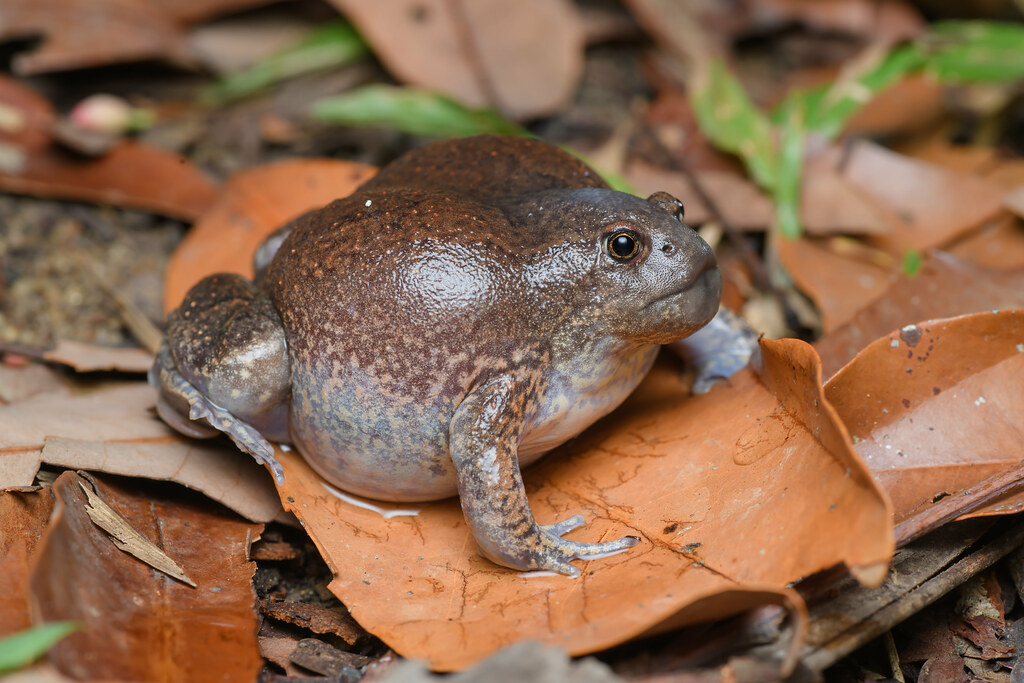
Blunt-Headed Burrowing Frog: Southeast Asia’s Plump Underground Survivor (Image Credits: Flickr)
This amphibian, known scientifically as Glyphoglossus molossus, boasts a smooth, glossy body that resembles a whimsical cartoon character more than a wild creature. Its blunt head and plump form earned it nicknames like balloon frog, sparking viral fascination online where viewers mistook photos for clever fakes. The rounded shape, often around 5 centimeters from snout to vent, gives it an almost inflated appearance even at rest.
Observers noted its expressive face and chubby silhouette, which stand out against sleeker frog relatives. Such features not only captivate but also hint at specialized survival strategies honed over generations.
Adaptations for a Buried Existence
The blunt-headed burrowing frog excels at life below ground, burrowing headfirst into soil during prolonged dry periods to conserve moisture. Its compact body and hardened skin facilitate efficient digging through compact earth, while the smooth exterior minimizes water loss in arid settings.
When threats arise, the frog inflates dramatically, ballooning to deter predators with a larger, more imposing profile. These traits suit habitats like seasonal forests, moist savannas, rural gardens, and temporary ponds across Indochina.
- Streamlined body for forward burrowing.
- Glossy skin to retain hydration.
- Inflation defense mechanism.
- Short limbs optimized for underground movement.
- Tolerance for degraded landscapes.
Breeding Burst in Ephemeral Waters
Rains trigger mass emergences, leading to explosive breeding events in shallow ponds and ditches. Males and females perform repeated dives, releasing 200 to 300 eggs per motion in pigmented clutches that float on the surface. Tadpoles then filter feed on suspended particles until ponds dry, prompting metamorphosis.
This strategy ensures survival in unpredictable wet seasons, though it concentrates the population briefly and heightens vulnerability.
Facing Habitat Loss and Harvest Pressures
Despite resilience, the species confronts challenges from deforestation and agricultural expansion that disrupt its watery breeding sites. Overcollection for food poses a graver risk, particularly in Thailand where locals prize it as a delicacy, consuming it whole during breeding peaks. Such harvesting depleted populations in some areas.
The IUCN lists it as Near Threatened, prompting breeding programs at research centers to bolster wild numbers. Amphibians like this serve as environmental sentinels, signaling broader ecosystem health amid climate shifts and pollution.
Key Takeaways
- Thrives underground in Southeast Asia’s dry zones through clever adaptations.
- Explosive breeder tied to seasonal rains.
- Near Threatened due to human harvest and habitat changes.
This unassuming burrower reminds us of nature’s ingenuity and the need to protect niche specialists. What surprises you most about the blunt-headed burrowing frog? Share in the comments.