When you picture prehistoric creatures, chances are you think of dinosaurs. Towering T. rexes, long-necked Brachiosauruses, or ferocious Velociraptors come to mind almost immediately. It’s funny how our brains automatically group every ancient beast into that one category, even though the world during the Mesozoic era was far more complex than we usually give it credit for.
The truth is, while dinosaurs dominated the land, they weren’t the only fearsome reptiles alive during their time. Several other groups of reptiles conquered the seas and skies with just as much power and success. These animals often get mistakenly called dinosaurs simply because they lived millions of years ago and looked terrifying. Yet they were completely separate groups, with unique evolutionary paths and specialized features that set them apart from true dinosaurs.
Pterosaurs: The Sky’s First Rulers
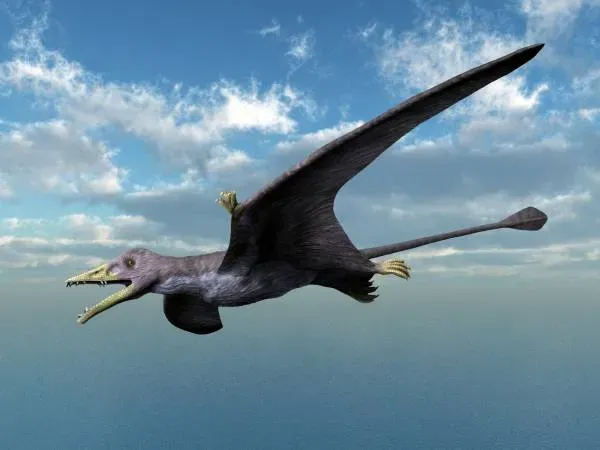
Pterodactyls and their relatives filled the skies above the dinosaurs but were not part of the same family, belonging instead to pterosaurs, an extinct group of reptiles that evolved to take flight. Pterosaurs were the dinosaurs’ closest relatives, and their time on Earth overlapped almost exactly, with shared ancestors being bipedal. Yet despite these similarities, several key anatomical differences clearly separate them.
While some dinosaurs like Archaeopteryx and Microraptor could glide, their wing structures were fundamentally different from those of pterosaurs. Pterosaurs relied on featherless wing membranes to achieve lift, stretching from elongated fourth fingers all the way down to their bodies. Unlike birds, pterosaurs had weak hind-legs that played a minimal role during take-off, instead using their powerful wings to launch themselves into the sky. These creatures ranged from sparrow-sized species to giants with wingspans exceeding thirty feet, hunting fish and other prey across prehistoric shorelines and open seas.
Plesiosaurs: Long-Necked Ocean Predators
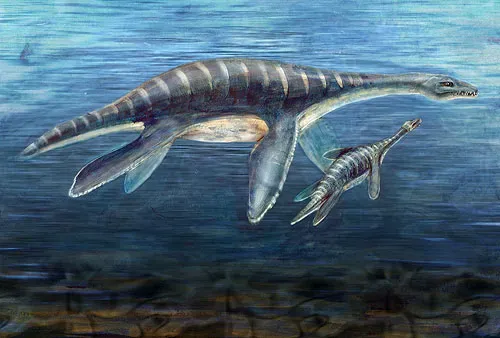
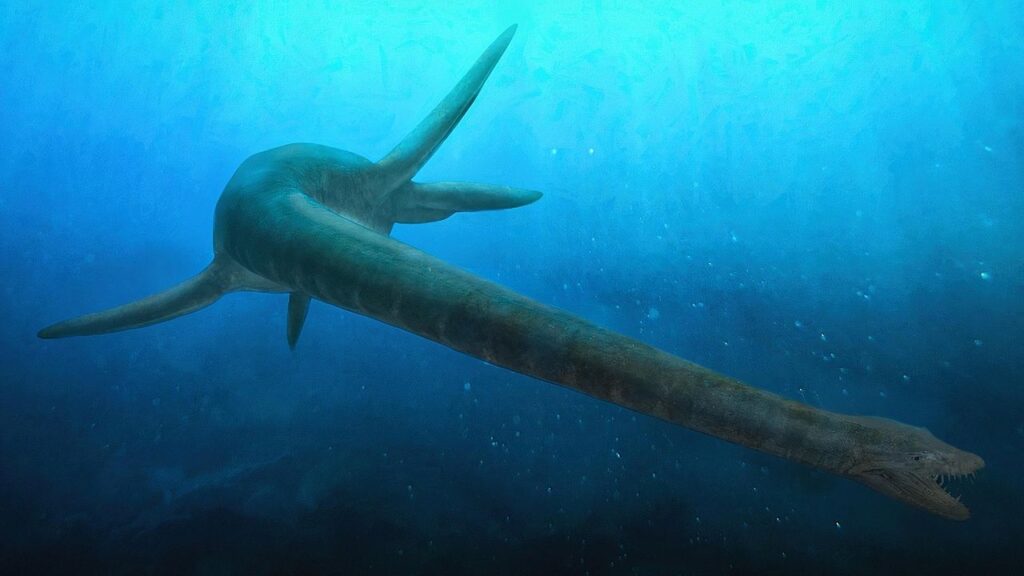
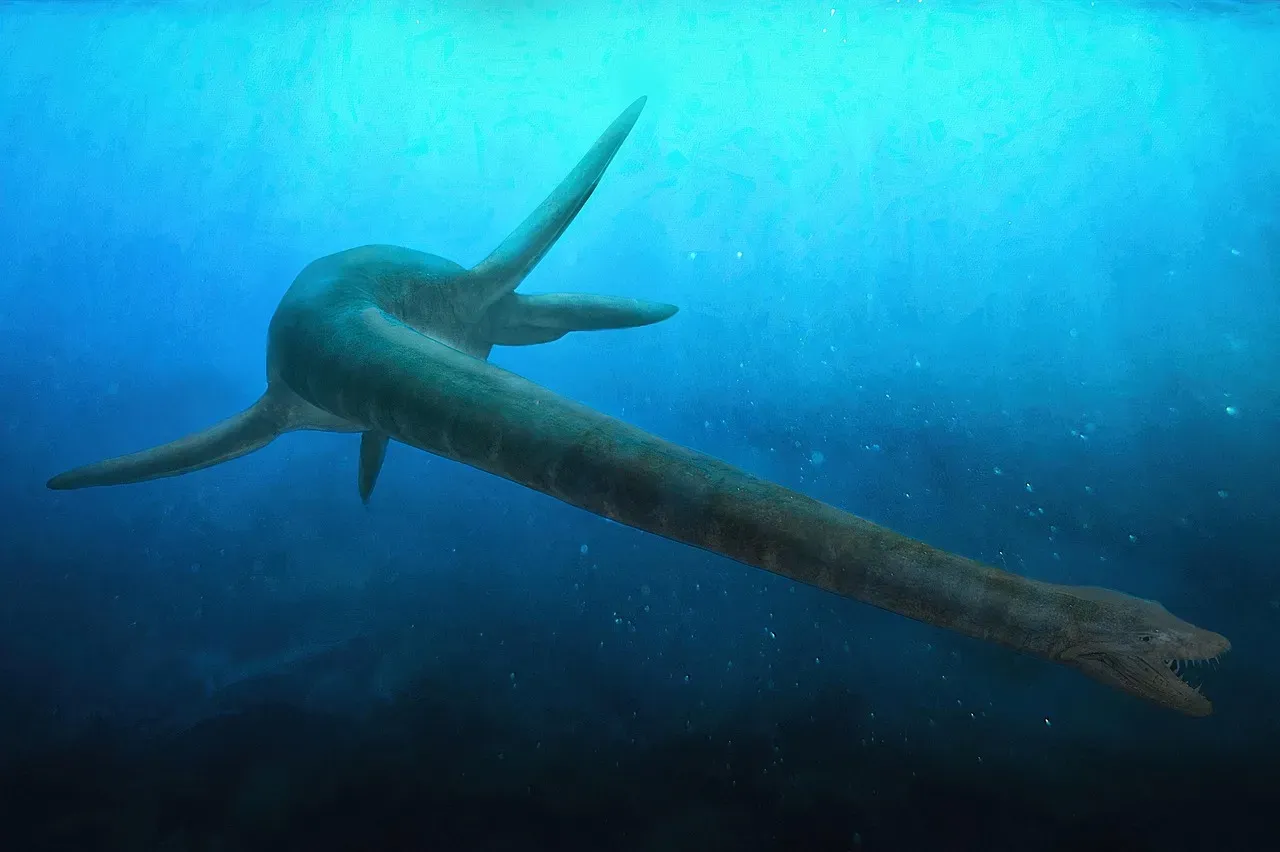
Plesiosaurs were an order of extinct Mesozoic marine reptiles that first appeared in the latest Triassic Period, about 203 million years ago, becoming especially common during the Jurassic Period until their disappearance due to the Cretaceous-Paleogene extinction event. These creatures are perhaps most famous for their bizarre body plans. Some species had sometimes extremely long necks and small heads, and were relatively slow, catching small sea animals.
Picture a barrel-shaped body with four massive flippers and a neck that seemed to go on forever. The flippers made a flying movement through the water, propelling these reptiles through ancient oceans with surprising agility. Other species reached a length of up to seventeen meters and had a short neck with a large head, serving as apex predators and fast hunters of large prey. The long-necked, flippered beasts occupied oceans until the mass extinction event at the end of the Cretaceous period, so they may have had run-ins with dinosaurs who explored the shore. It’s hard to say for sure, but the mental image of a curious dinosaur encountering one of these marine giants is pretty captivating.
Mosasaurs: The Ocean’s Ultimate Apex Predators
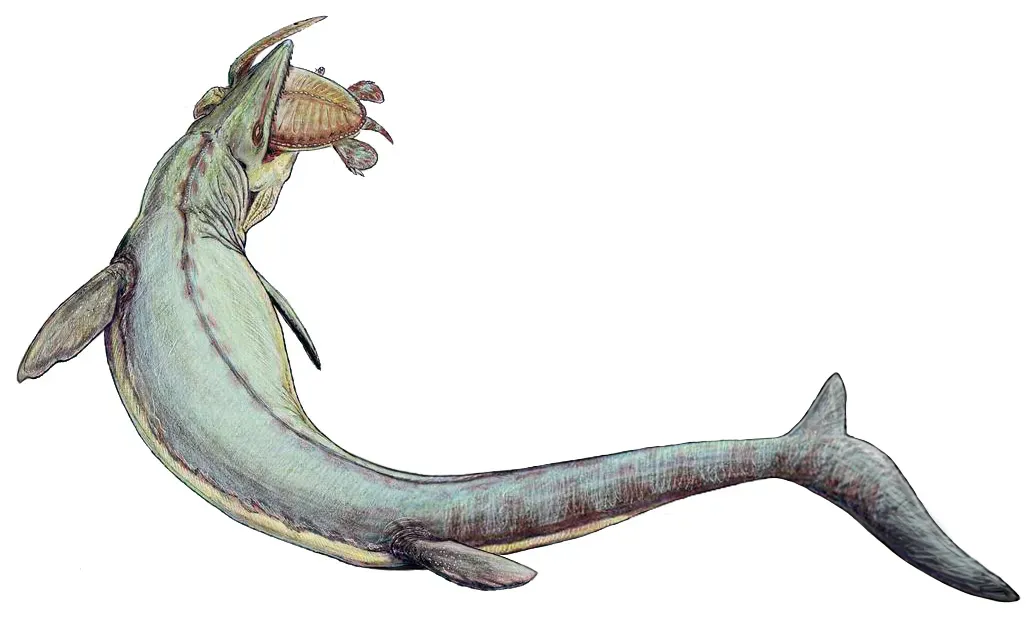
Mosasaurs are another group of prehistoric aquatic beasts that belong to the reptile class, with short necks and massive jaws used for capturing prey, measuring up to 50 feet long. Although these aquatic reptiles are featured in the movie Jurassic World, they didn’t live during the Jurassic period and aren’t true dinosaurs, having evolved in the early Cretaceous period. Their closest living relatives today are monitor lizards and snakes.
Let’s be real, mosasaurs were terrifying. Mosasaurus hoffmannii was the apex predator of the Late Cretaceous oceans, reaching 11 metres in length and 3.8 metric tons in body mass. The Mosasaur became the dominant ocean predator at the end of the Cretaceous after the extinction of the Ichthyosaurs and the decline of the Plesiosaurs. Mosasaurs had a body shape similar to modern-day monitor lizards but were more elongated and streamlined for swimming, with reduced limb bones and paddles formed by webbing between long finger and toe bones, plus broad laterally compressed tails terminating in a fluke-like structure. They ambushed prey with incredible speed and power, dominating the seas until the very end of the dinosaur age.
Ichthyosaurs: The Dolphin Mimics of Prehistory
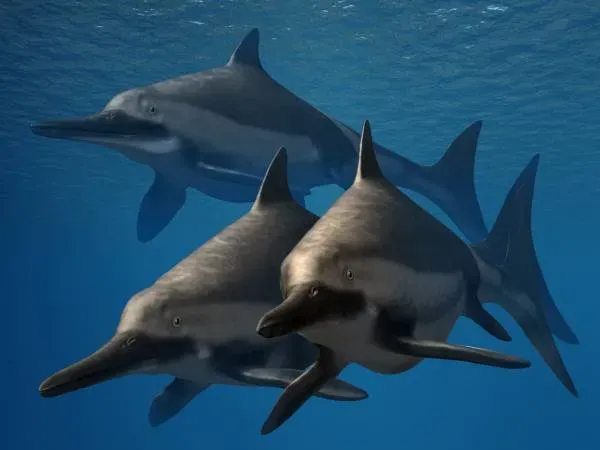
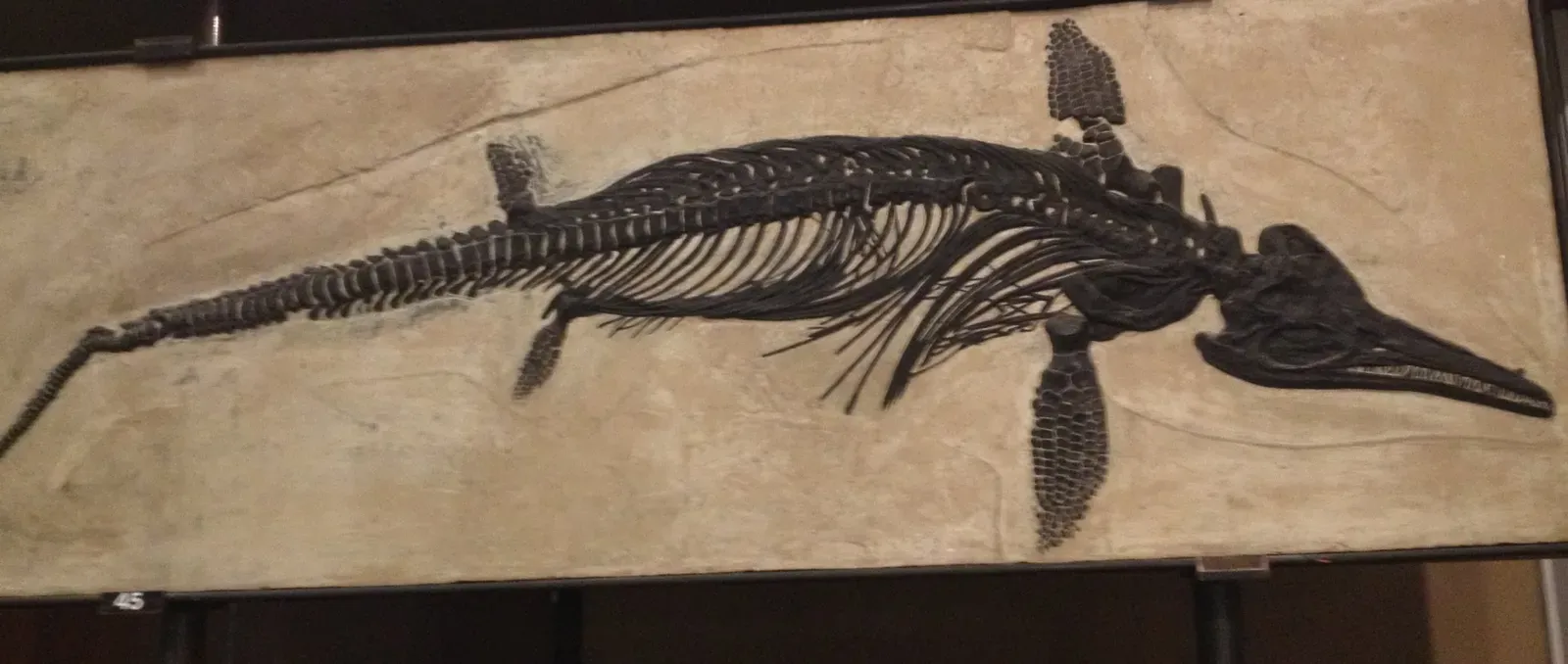
Ichthyosaurs were an order of large extinct marine reptiles that thrived during much of the Mesozoic era, first appearing around 250 million years ago and with at least one species surviving until about 90 million years ago. Ichthyosaurs evolved from a group of unidentified land reptiles that returned to the sea in a development similar to how mammalian ancestors of modern-day dolphins and whales returned to the sea millions of years later. This is a textbook case of convergent evolution, where completely unrelated animals develop similar body shapes to solve the same environmental challenges.
Ichthyosaurs were marine reptiles with streamlined bodies, no necks, and smooth heads, with two nostrils situated far back on the top of the head, generally similar in shape to a modern porpoise. The eyes were very large, for deep diving, allowing them to hunt in darker waters where other predators couldn’t compete. Unlike most reptiles that lay eggs, ichthyosaurs gave birth to live young, a trait that made them perfectly adapted for life in the open seas, with fossils even showing tiny ichthyosaurs still inside their mothers. Ichthyosaurians were particularly abundant in the Late Triassic and Early Jurassic periods until they were replaced as the top aquatic predators by Plesiosauria in the later Jurassic.
Why These Reptiles Aren’t Dinosaurs
So what actually makes a dinosaur a dinosaur? Every dinosaur had holes where its thighbones attached to the pelvis, an open hip socket not found in any other reptiles, meaning reptiles lacking this hip structure were not dinosaurs. Studies have shown that dinosaurs are terrestrial reptiles that can walk upright on their hind limbs. Dinosaurs belong to vertebrates and most are reptiles, while pterosaurs belong to flying reptiles and mosasaurs, ichthyosaurs, and plesiosaurs are marine reptiles, making them not the same kind of creatures despite having a common ancestor.
One of the reasons for dinosaurs’ success is that they had straight back legs perpendicular to their bodies, allowing them to use less energy to move than other reptiles with a sprawling stance, with their legs positioned under their bodies rather than sticking out to the side for better weight support. Dinosaurs also had an open hip joint and a long crest on the humerus, which aren’t present in any other reptiles. These anatomical features might sound technical, but they’re crucial for understanding why a mosasaur swimming through Cretaceous seas wasn’t a dinosaur, even though it lived at exactly the same time.
The Legacy of These Ancient Rulers
Many of these ancient creatures played very important roles in their ecosystems, and many died out at the same time as dinosaurs. Most marine reptile groups became extinct at the end of the Cretaceous period, but some still existed during the Cenozoic, most importantly the sea turtles. The asteroid impact that ended the reign of the dinosaurs also brought down these magnificent marine and flying reptiles, fundamentally reshaping life on Earth.
Yet their legacy lives on in fascinating ways. Birds are the closest modern relatives of the dinosaurs, indeed their only living descendants. When you watch a hawk soaring overhead or a penguin diving through ocean waves, you’re witnessing echoes of that ancient world. The story of these prehistoric reptiles reminds us that evolution is far more creative and diverse than any single category can capture. Pterosaurs, plesiosaurs, mosasaurs, and ichthyosaurs weren’t dinosaurs, but honestly, they were just as remarkable in their own right.
What do you think about these ancient rulers of sky and sea? Did you expect such clear differences between them and true dinosaurs?