
Imagine walking across a landscape where the ground trembles beneath the footfalls of creatures larger than any living land animal you know today. Picture towering beasts covered in thick fur, predators with dagger-like teeth, and bears that could peer into second-story windows. This wasn’t science fiction or a Hollywood movie set.
This was North America during the Pleistocene epoch, a time when giants genuinely walked the Earth. These extraordinary animals, collectively known as megafauna, inhabited the continent for hundreds of thousands of years before mysteriously vanishing. What drove these magnificent creatures to extinction remains one of paleontology’s most fascinating puzzles. Let’s uncover the truth about the colossal beasts that once dominated American landscapes.
Woolly Mammoths: The Iconic Ice Age Titans
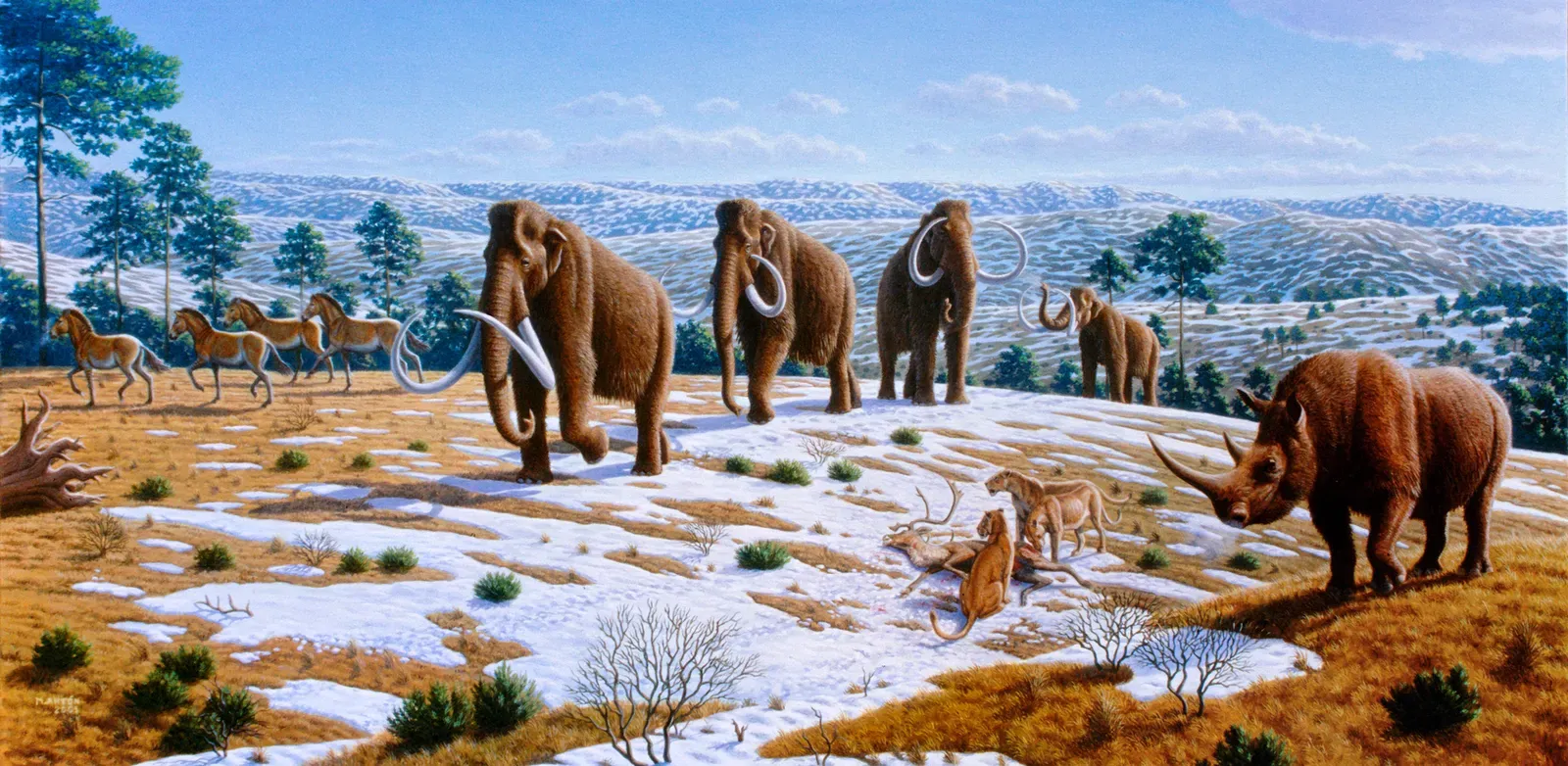
Standing roughly three and a half meters tall at the shoulders and weighing between six to eight tons, woolly mammoths grazed the northern steppes of Ice Age North America using their colossal, curved tusks to dig under the snow for food and defend themselves against predators. These tusks, reaching astonishing lengths of around four and a half meters, curved dramatically and served multiple purposes beyond just protection.
The woolly mammoth’s defining feature was undoubtedly its thick coat of shaggy hair. This insulation allowed the species to thrive in frigid conditions that would be inhospitable to most modern elephants. Mammoths spread everywhere in Ice Age North America, ranging from Canada down to Honduras. Interestingly, there were mammoths living down to the time when the Egyptians were building the pyramids, with isolated populations surviving on remote Arctic islands thousands of years after their mainland cousins disappeared.
American Mastodons: The Forest-Dwelling Cousins
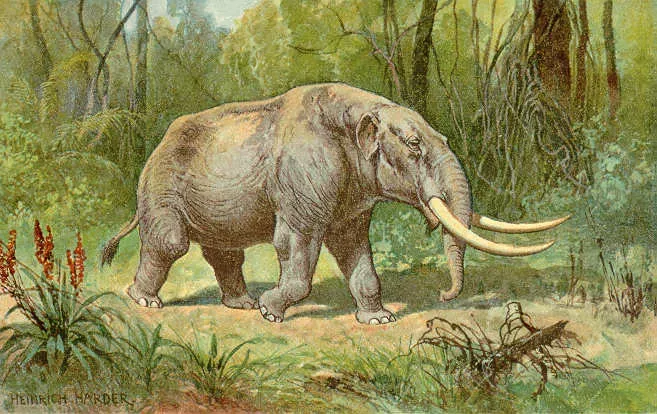
The American mastodon is the most ancient of the North American elephants, with ancestors that crossed the Bering Strait from Asia roughly 15 million years ago and evolved into the American mastodon 3.5 million years ago; the mastodon was shorter and stockier than the later mammoths, and the shape of its teeth indicate that mastodons didn’t graze on grass like mammoths, but ripped off leaves and entire tree branches for food.
Fully-grown male American mastodons reached heights of about three meters and weighed in around six tons, making them formidable but generally smaller than their mammoth relatives. Mastodons had cone-shaped teeth for crunching foods like twigs, shrubs, and pine needles, which perfectly suited their woodland habitats. These peaceful herbivores preferred forested environments across the continent, where they browsed on woody vegetation rather than grazing on open grasslands like their mammoth cousins.
Saber-Toothed Cats: Apex Predators With Deadly Canines
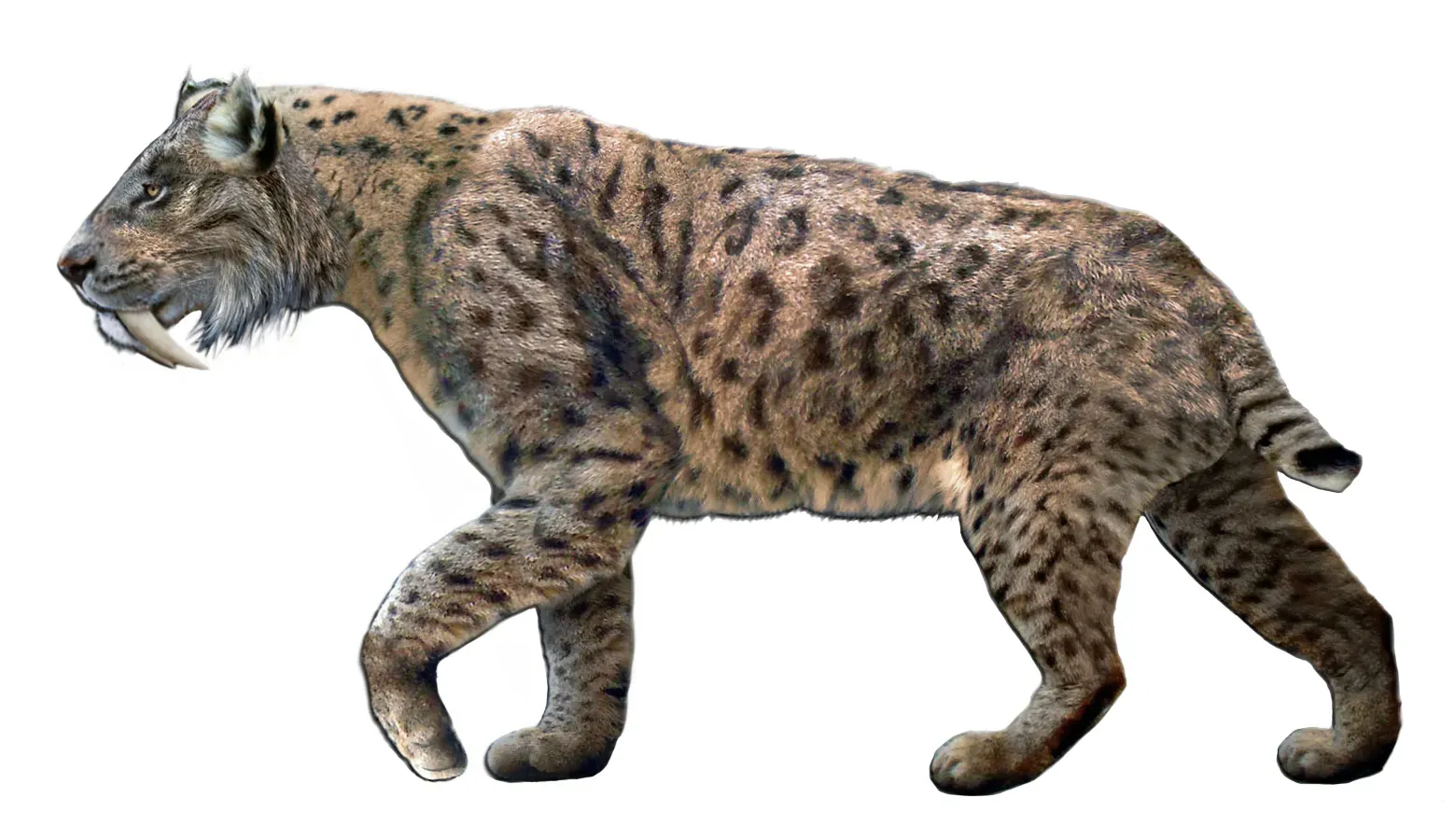
Few prehistoric creatures capture the imagination quite like the saber-toothed cat. Smilodon lived in the Americas during the Pleistocene to early Holocene epoch (2.5 million years ago until at latest 8,200 years ago). These flattened, dagger-like canines could reach up to eight inches in length, creating one of nature’s most formidable weapons.
Honestly, the functionality of those massive teeth has fascinated scientists for decades. Smilodon was likely an ambush predator that concealed itself in dense vegetation, as its limb proportions were similar to modern forest-dwelling cats, and its short tail would not have helped it balance while running. Recent research analyzing tooth wear patterns suggests these cats consumed both flesh and bone, indicating they were efficient hunters rather than mere scavengers. Results suggest there was actually much less competition for prey among the region’s largest Pleistocene carnivores, particularly between the saber-tooth cats and dire wolves; the new study is significant because it is the first paper to show that Smilodon and dire wolves were really doing something different in terms of prey choices.
Dire Wolves: The Misunderstood Pack Hunters
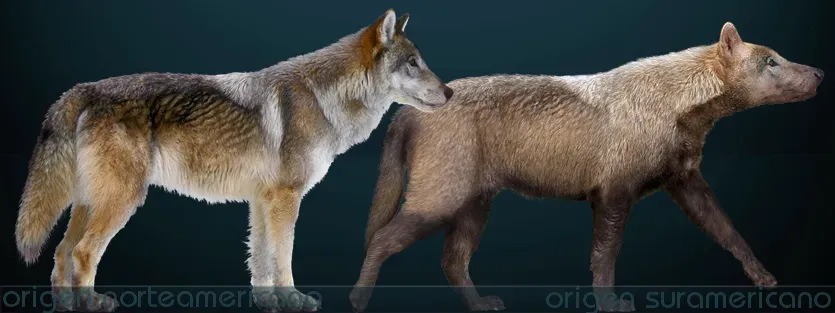
Dire wolves weren’t just slightly larger versions of today’s gray wolves. They represented an entirely different lineage of canids that prowled North American landscapes for hundreds of thousands of years. The bones of saber-toothed cats and dire wolves analyzed included specimens that lived between 55,000 and 12,000 years ago.
The wolves pursued prey over long distances, and extended bouts of running may have put more pressure on the wolves’ shoulders and knees. Unlike their famous feline contemporaries, dire wolves likely hunted in packs across more open environments. Recent studies discovered something unexpected about these ancient predators: 6 percent of the saber-toothed cat thigh bones, 2.6 percent of the dire wolf thigh bones, and 4.5 percent of the dire wolf shoulder bones had signs of osteochondrosis dissecans. This bone disease may have afflicted them more than any modern wild carnivore, possibly indicating their populations were declining through inbreeding as they approached extinction.
Giant Ground Sloths: Gentle Giants of the Pleistocene
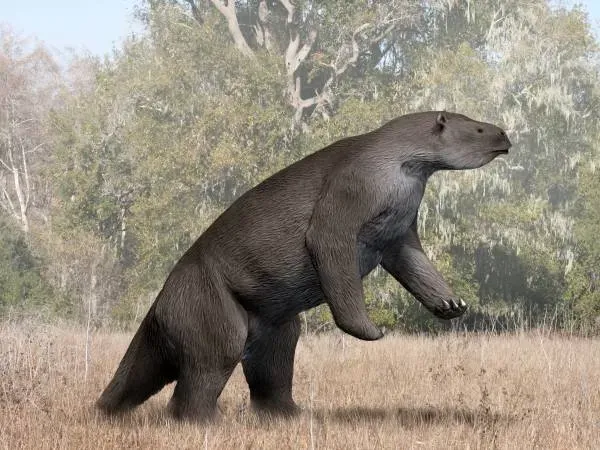
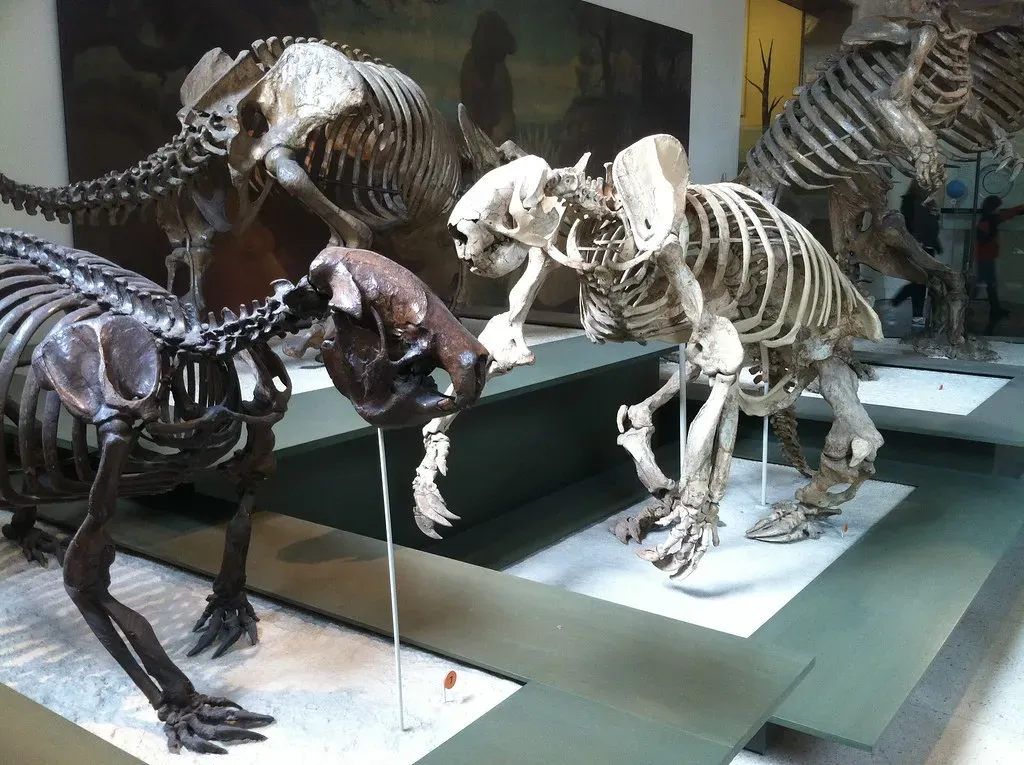
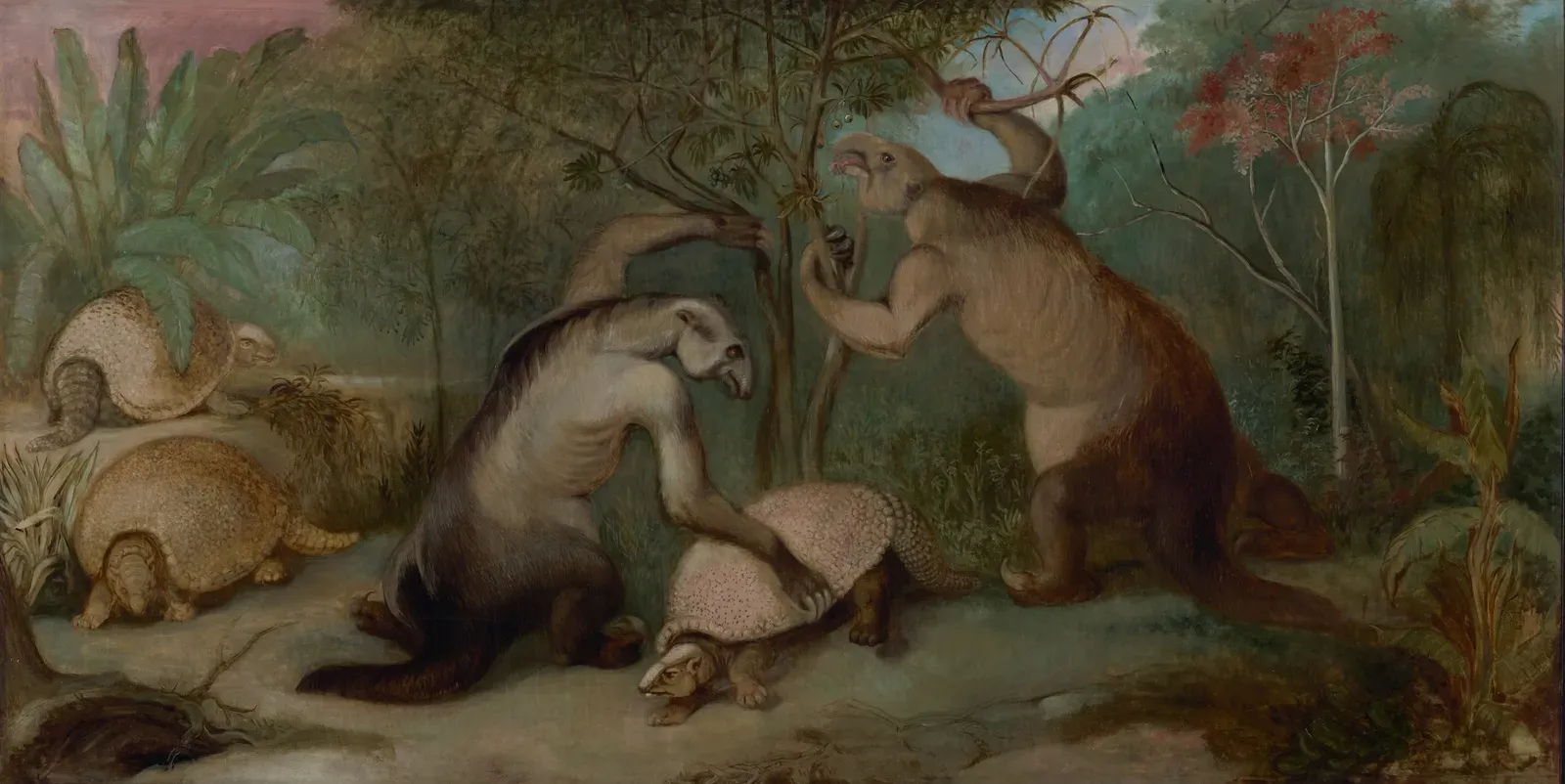
Let’s be real, when you think of sloths today, you probably picture small, slow-moving creatures hanging from tree branches. The giant ground sloths of the late Pleistocene were bear-sized herbivores that stood twelve feet on their hind legs and weighed up to 3,000 pounds. These massive herbivores defied everything we associate with modern sloths.
Megatherium was up to ten times the size of living sloths reaching weights of up to four tonnes (similar to a bull elephant), and on its hind legs, M. americanum would have stood a full three and a half meters tall. Despite their magnificent claws, which could easily have been defensive weapons, these giants were strict vegetarians. Megatherium fossils have been found with cut marks on them, suggesting that these giant sloths were on the menu thousands of years ago. The relationship between early humans and these peaceful giants likely contributed to their eventual disappearance from the continent.
Giant Short-Faced Bears: North America’s Largest Carnivore
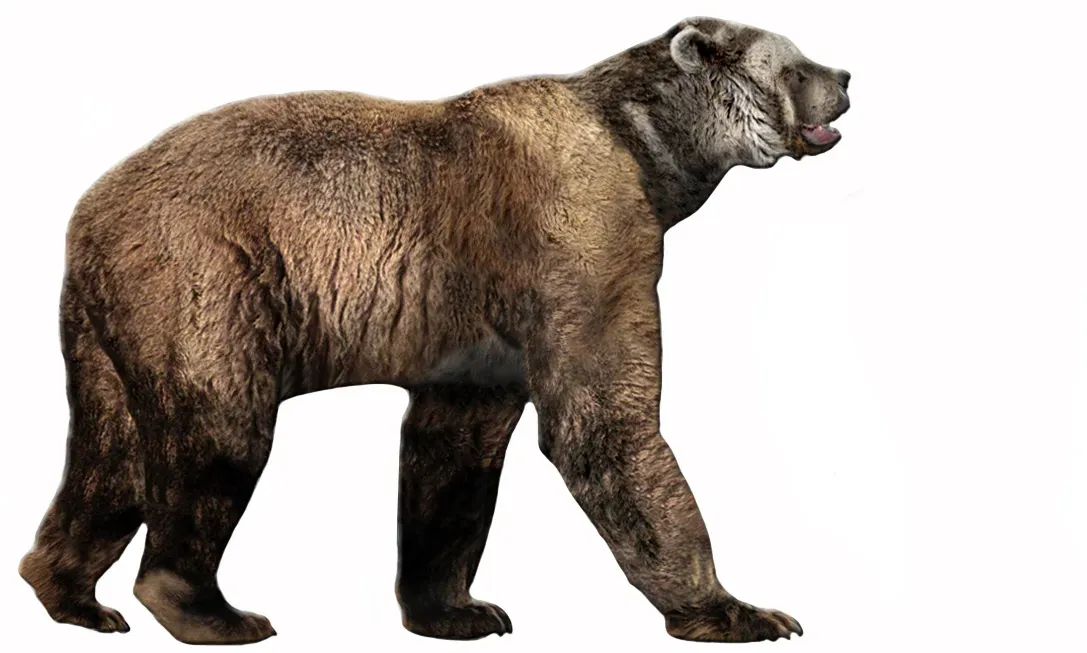
The giant short-faced bear (Arctodus simus) was the largest carnivorous mammal to ever roam North America, and standing on its hind legs, an adult giant short-faced bear boasted a vertical reach of more than 14 feet. Here’s the thing: this bear wasn’t just tall. It was fast, powerful, and unlike anything alive today.
Though it was long considered to be an obligate carnivore like a big cat or canid due to their huge size, bone-crushing jaws, and long legs adapted for running, it’s now predicted that it was more similar to modern brown bears, in that it had an omnivorous diet; whilst it did sometimes actively hunt young megafauna like ancient bison, horses, camels, and tapirs, they also scavenged off kills made by Smilodon, dire wolves, and American lions. The last fossil of Arctodus simus was found in a Texas Cave dated to 12,800 years ago, making it one of the final megafaunal casualties of the late Pleistocene extinction. Its disappearance marked the end of an era when enormous bears ruled the continent.
Columbian Mammoths: The Warm-Weather Giants
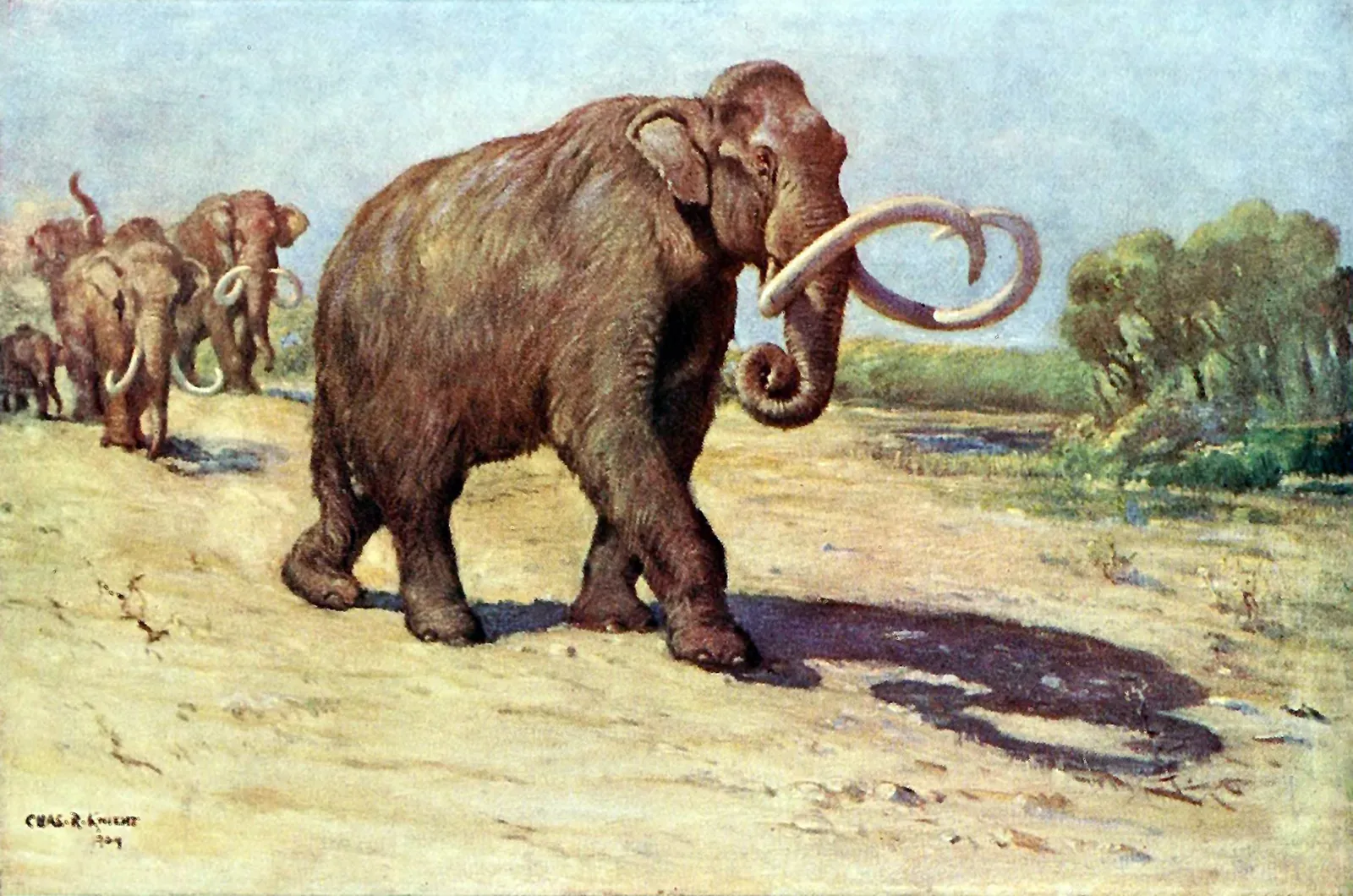
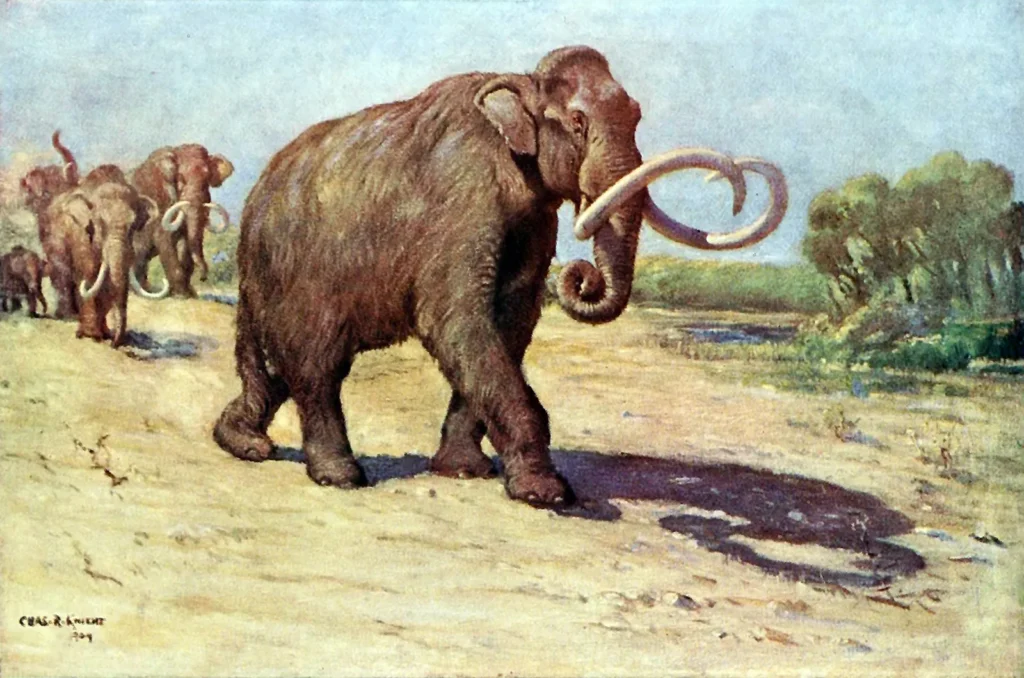
While woolly mammoths get most of the attention, their southern relatives were actually more impressive in size. Columbian mammoths, the North American species named for Christopher Columbus, stood up to 14 feet tall at the shoulder, towering two feet over African elephants. These giants adapted to warmer climates than their northern woolly cousins.
The Columbian mammoths uncovered at the Tar Pits were bigger and much less hairy, adapted to warmer climates than their northern cousins, and have been found as far south as Mexico. Their range stretched across most of the continent, and they thrived in diverse habitats from sea level to high plateaus. Like modern elephants, mammoths had ridged cheek teeth to help grind down grasses into tiny digestible bits; they were grazers like the bison and horses stampeding across the Pleistocene Los Angeles. Their tremendous size and adaptability made them one of the most successful megafauna species for hundreds of thousands of years.
The Great Mystery: What Caused Their Extinction?
I know it sounds crazy, but after surviving for hundreds of thousands of years, nearly all of these magnificent creatures vanished within a few thousand years. Around 10,000 years ago, nearly all of those giant creatures were wiped out. The debate over why remains fierce among scientists even today.
Most archeologists blame over-hunting by paleo-humans, who would have encountered large prey animals unafraid of the hairless, two-legged newcomers; the mass extinctions may have also been triggered by a sudden climatic shift that rapidly cooled the planet 12,800 years ago (the Younger Dryas), or animals could have been stricken with diseases carried by paleo-humans and their dogs. The timing of these conflagrations coincides with both a growing human population on the continent and the demise of the Rancho La Brea megafauna; at the point where we found the human population to really start to increase in North America, we see an interval of profound climatic and ecologic change coupled with unprecedented fire happening right here, and it’s in this interval when all of the megafauna species disappear. The truth probably lies in some combination of climate change, human pressure, and habitat transformation. What’s certain is that North America lost an irreplaceable part of its natural heritage when these giants disappeared forever.
Conclusion
The megafauna of prehistoric America represented an ecosystem unlike anything that exists today. From elephant-sized ground sloths to bears that towered over modern grizzlies, these creatures dominated landscapes across the continent for hundreds of thousands of years. Their disappearance roughly ten thousand years ago transformed North America into a fundamentally different place, one where the largest land mammals are mere shadows of their Pleistocene predecessors.
Understanding what happened to these giants matters beyond simple curiosity. Their extinction teaches us about the fragility of even the most powerful species when faced with rapid environmental change and human pressure. As we face our own era of accelerating extinctions, the story of North America’s lost megafauna serves as both a warning and a reminder of what we stand to lose. What do you think ultimately sealed their fate: climate change, human hunting, or something else entirely? The mystery continues to captivate scientists and enthusiasts alike, ensuring these magnificent beasts will never truly be forgotten.