Have you ever looked at a platypus and wondered what on Earth was going through evolution’s mind? That strange duck-billed, beaver-tailed, egg-laying mammal seems like nature’s practical joke. Yet the platypus isn’t alone in sporting features that make absolutely no sense at first glance. Throughout millions of years of history, our planet has witnessed the rise and fall of creatures so utterly bizarre that scientists are still scratching their heads trying to figure out why they developed certain body parts.
Life on Earth underwent tremendous evolution during prehistoric eras, leading to countless experimental designs that ranged from brilliantly successful to downright perplexing. Some animals sported enormous horns that jutted from bizarre locations, while others had teeth arranged in spiraling patterns that defy logic. What makes these features even more fascinating is that many remain mysteries, with paleontologists unable to definitively explain their purpose. Let’s take a journey through time and explore the strangest adaptations the natural world has ever produced.
The Spiraling Mystery of Helicoprion’s Buzzsaw Jaw
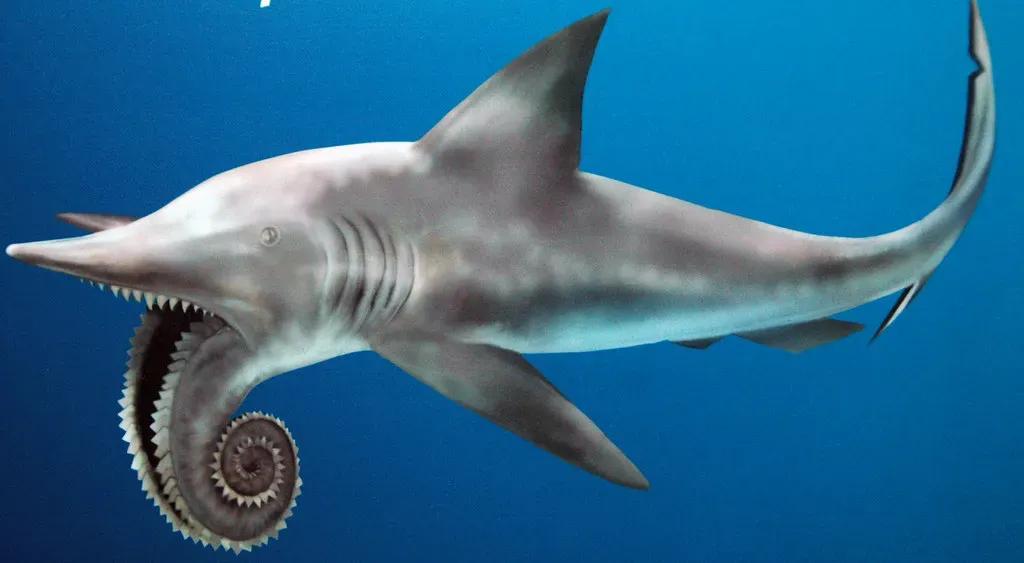
The 270 million year old Helicoprion was first described in 1899 based on its buzzsaw-shaped whorl of teeth and nothing else. Imagine stumbling upon a fossil that looks like someone left a circular saw at the bottom of an ancient ocean. That’s essentially what scientists found when they discovered this prehistoric shark-like fish. For decades, researchers couldn’t even agree on where this bizarre spiral of teeth belonged on the creature’s body.
These toothwhorls adorned Helicoprion as a serrated jaw used for snagging prey, and the spiral jaw faced inward with rotating teeth acting as a circular saw for grinding up food, though this still sparks debate among experts. Early reconstructions showed the teeth unraveling like a party favor, creating one of the strangest depictions of any prehistoric animal. The true purpose of this wild dental arrangement continues to puzzle scientists, making Helicoprion one of evolution’s most enduring enigmas.
Opabinia and Its Laughable Five Eyes
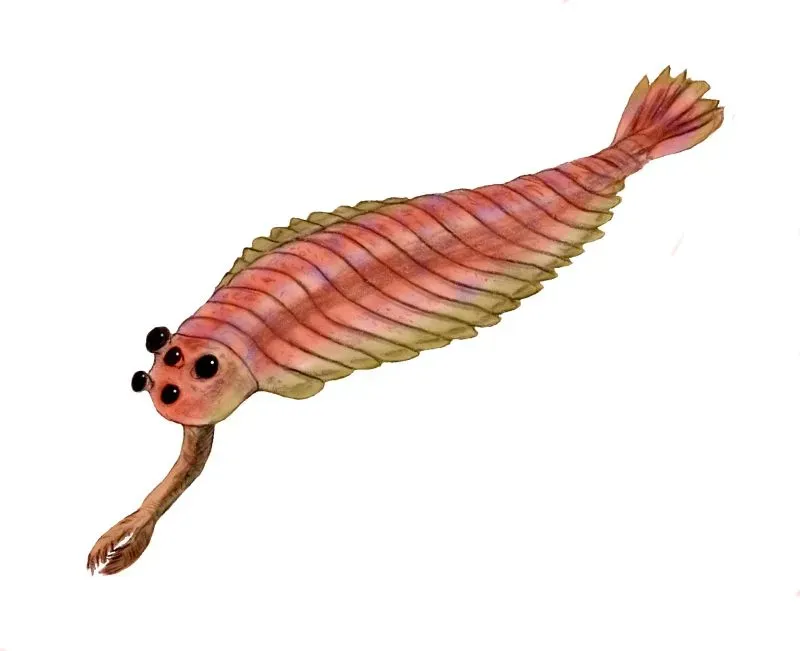
When Opabinia was first revealed to paleontologists at a scientific conference, the audience burst out laughing. Let’s be real, can you blame them? This tiny creature had a segmented body of plates, five eyes on mushroom-like stalks, and a proboscis ending in a kind of claw. It had a flexible proboscis extending from its face that it used to grab things, with its mouth positioned under its head and facing backward.
The whole setup sounds like something designed by a committee that couldn’t agree on anything. Why would an animal need five eyes? How did it eat with a backward-facing mouth? Paleontologists still puzzle over how this animal lived. This little creature, measuring only about three inches long, inhabited ancient oceans over 500 million years ago. Its body plan is so strange that scientists initially thought different parts of it belonged to entirely separate species.
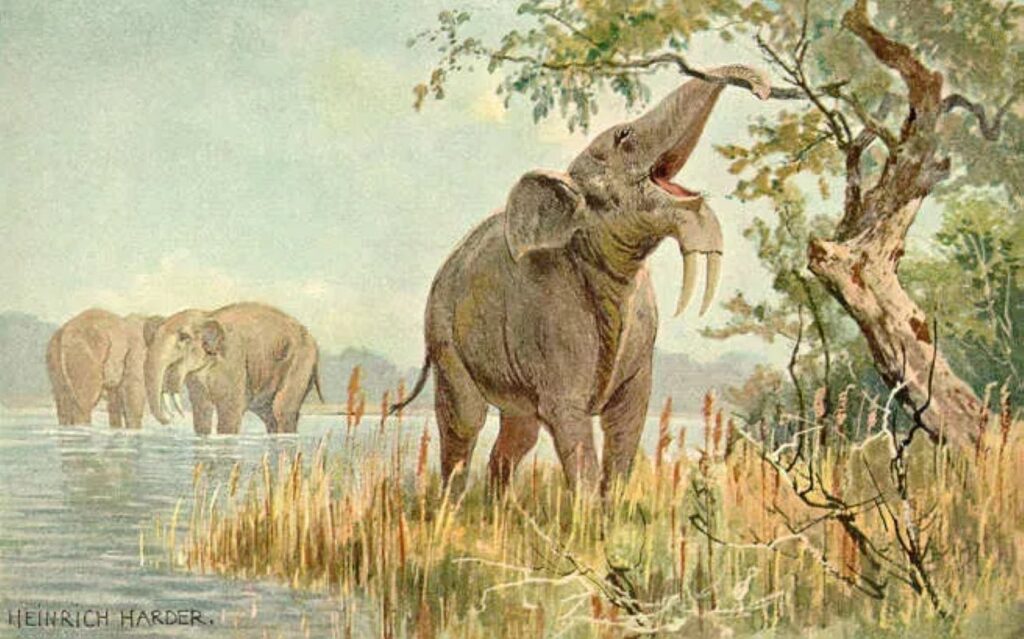
Deinotherium’s Downward-Curving Tusks
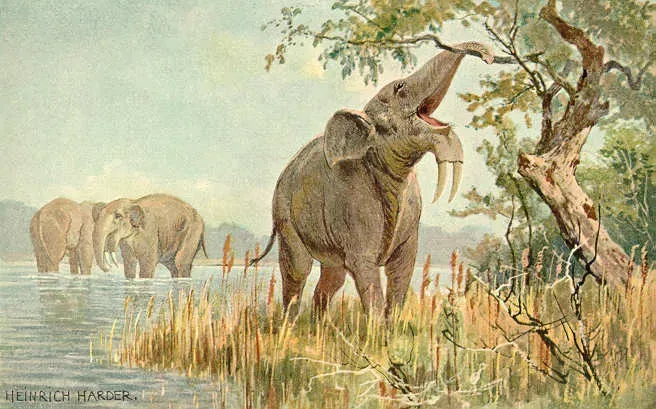
Most elephants have tusks that curve outward and upward, perfect for defense and digging. Around 20 million years ago there lived a prehistoric pachyderm named Deinotherium with twin, curved tusks curving down from the jaw. Picture an elephant that looks like it’s wearing a handlebar mustache made of ivory, except pointing downward instead of up.
Precisely what the elephant used these tusks for isn’t clear, with one early and fanciful idea suggesting Deinotherium used them to anchor itself to riverbanks while sleeping. That theory sounds absurd enough to be charming. More likely, these bizarre tusks helped the animal dig up roots or strip bark from trees, though we honestly can’t say for sure. The arrangement is so unusual that it challenges everything we think we know about how elephant relatives should look and behave.
Therizinosaurus and Its Massive Mystery Claws
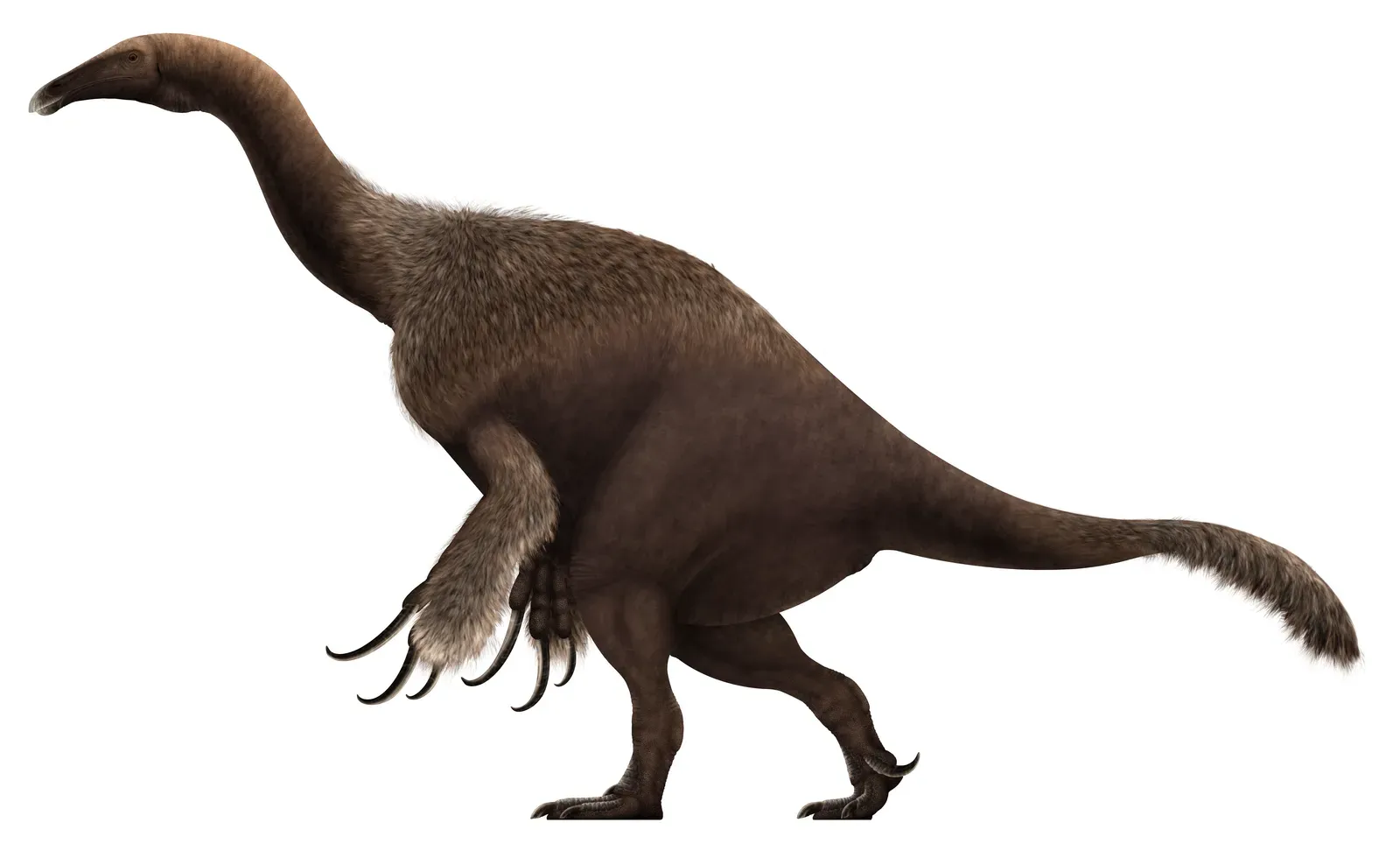
Therizinosaurus looked like a dinosaur assembled with random body parts, featuring a tiny head, long neck, huge belly, immense claws and little feet, with its true appearance eluding scientists for decades. When paleontologists first discovered its arms, they thought they’d found the largest predator ever. Those claws measured up to three feet long, making Wolverine’s adamantium blades look like nail clippers.
Here’s where it gets truly weird. Therizinosaurus was originally believed to be a prehistoric turtle based on the discovery of its giant arms, but other fossils refuted this claim and it was placed in multiple dinosaur categories before being given its own. Despite having claws that could eviscerate almost anything, evidence suggests this dinosaur was actually a herbivore. Why would a plant-eater need weapons worthy of a horror movie monster? Scientists still can’t fully explain it, though theories range from defense against predators to reaching high vegetation.
The Unicorn-Like Horn of Tsaidamotherium
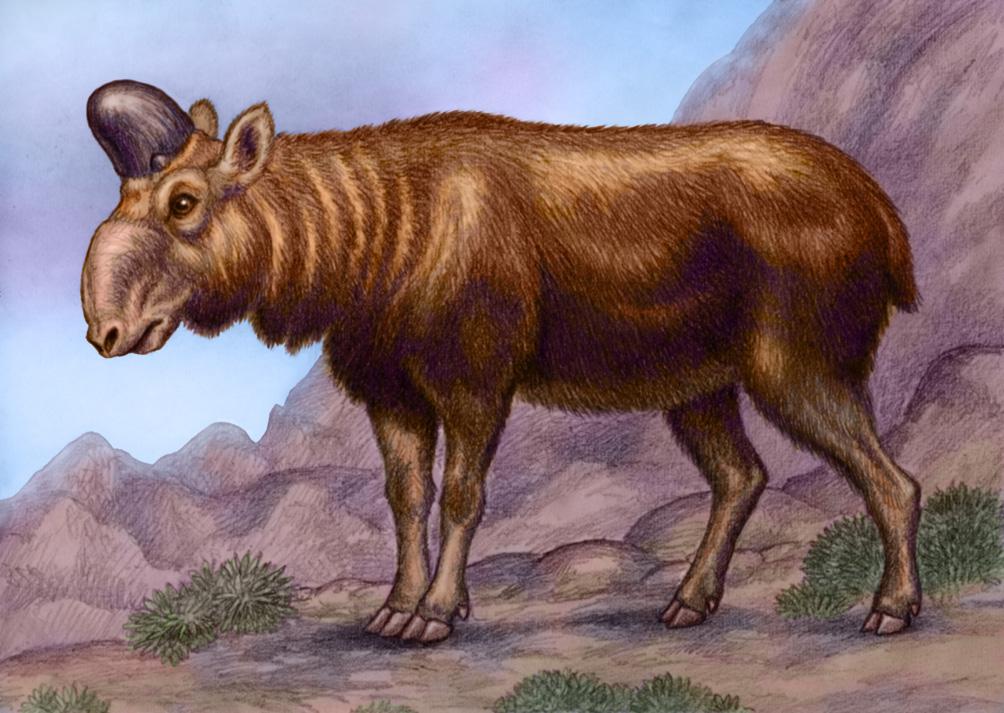
Tsaidamotherium was a grazing creature that lived on the Mongolian plains and possessed one great cylindrical horn on top its forehead and directly in the center. Unlike modern horned animals that sport pairs of these structures, this ancient relative of antelopes went all-in on a single, massive protrusion. At first glance, this creature could resemble the description of the mythical beast the unicorn.
The likely function that its larger horn carried out was perhaps for display to attract a counterpart of the opposite gender, though scientists aren’t completely certain. Was it purely decorative, meant to wow potential mates during prehistoric dating rituals? Did it serve some defensive purpose we haven’t figured out yet? The mystery persists because we simply don’t have enough evidence to say definitively. What we do know is that this creature’s single horn setup was unique among its family members, making it one of evolution’s stranger experiments.
Adalatherium’s Mismatched Body Parts
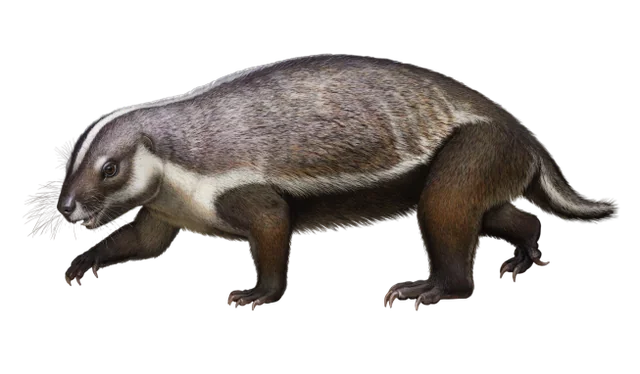
The weird thing about Adalatherium is that none of its parts seem to match, with its surprisingly well-preserved skeleton not making any sense. This ancient mammal from Madagascar looks like it was designed by throwing darts at a board of random animal parts. Its front legs were sort of like a badger’s, situated under the body and seemingly good for digging, but the hind legs sprawled out to the sides like a lizard’s and were strong and muscular.
Scientists are completely baffled by how this thing walked. Seriously, imagine trying to move efficiently when your front and back legs operate on completely different mechanical principles. Adalatherium’s teeth are equally confusing because even respected paleontologists can’t figure out why they are the way they are, with no animal dead or alive having teeth like Adalatherium. The discovery of Adalatherium suggests that even when dinosaurs roamed, islands led to weird evolution, as species isolated on islands tend to evolve in strange ways.
Longisquama’s Unexplained Back Protrusions
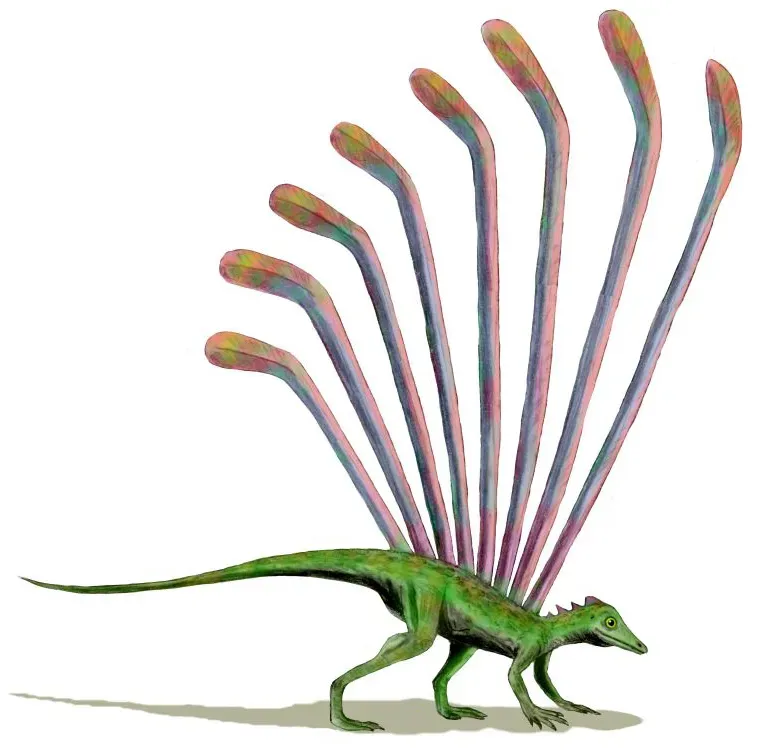
Longisquama is known from one full fossil discovered in Kyrgyzstan, showing a small reptile with inexplicably large protrusions or long scales from its back that dwarfed the body and were shaped like hockey sticks. This 200 million-year-old reptile sported structures so bizarre that scientists have proposed wildly different theories about their function. Were they proto-wings? Elaborate display structures? Temperature regulators?
While it’s been hypothesized that the structures were attached with a membrane to allow for gliding, this is dubious, with the more accepted idea being that the appendages were unconnected and performed like peacock feathers for display adapted for defense and mating. The fact that we only have one complete fossil makes solving this mystery incredibly difficult. Without more specimens, we’re left guessing about one of evolution’s most outlandish fashion statements. It’s hard to stress how utterly bizarre those back structures appear, seemingly serving no obvious survival advantage yet somehow persisting long enough to be fossilized for our puzzlement.
Conclusion
Evolution doesn’t always follow a clear logical path that we can easily decode millions of years later. These adaptations didn’t happen just for us to be amused by them, as even the strangest adaptations help an animal fit into its environment to get food, make babies, and survive. What seems utterly bizarre to us now made perfect sense in the specific ecological niches these creatures inhabited.
The mysteries surrounding these ancient animals remind us how much we still don’t know about life’s incredible diversity. Each fossil discovery raises as many questions as it answers, keeping paleontologists busy piecing together the puzzle of prehistoric life. These creatures weren’t evolutionary mistakes or nature’s jokes. They were successful animals that thrived in their environments, even if we can’t always figure out exactly how or why.
What do you think drove these strange adaptations? Could there be even weirder creatures waiting to be discovered in rocks we haven’t yet examined? The past holds countless secrets still buried beneath our feet.