
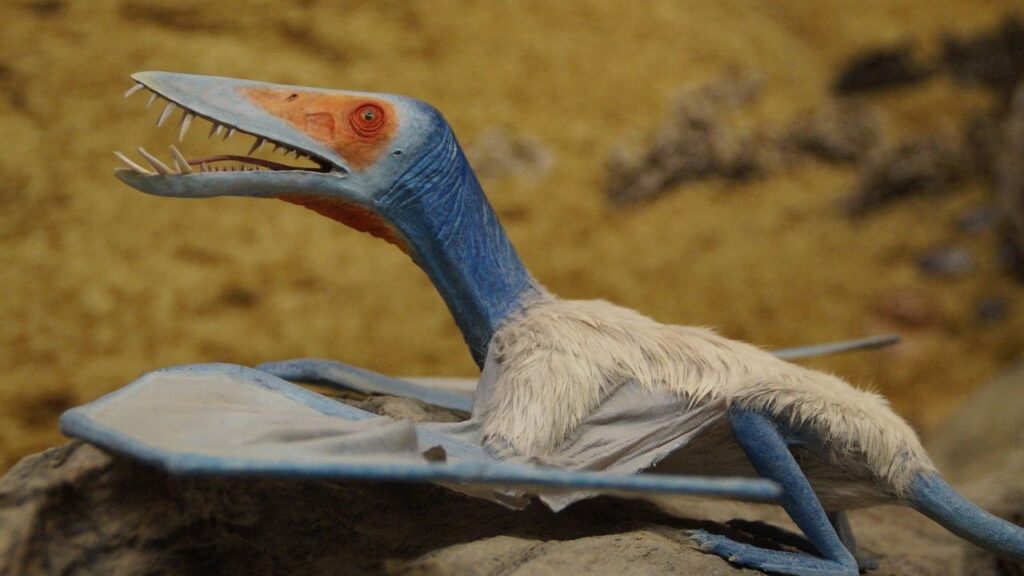
When you think of the age of dinosaurs, your mind might leap to towering sauropods or ferocious tyrannosaurs. Let’s be real though, some of the most extraordinary creatures weren’t stomping across the ground at all. They were soaring through prehistoric skies, mastering flight in ways that still astonish scientists. Pterosaurs ruled the air for more than 160 million years, evolving into forms both delicate and colossal, from sparrow-sized insect hunters to giants with wingspans rivaling small aircraft.
Yet despite their dominance, these winged reptiles remain mysteriously elusive. Their hollow bones rarely survived the ravages of time. What we’re discovering now, through cutting-edge fossil analysis and remarkable new finds, is painting a vivid picture of creatures far more complex than anyone imagined. These weren’t just flying lizards. They were sophisticated predators, versatile foragers, and perhaps even caring parents.
When Flight Burst Into Existence
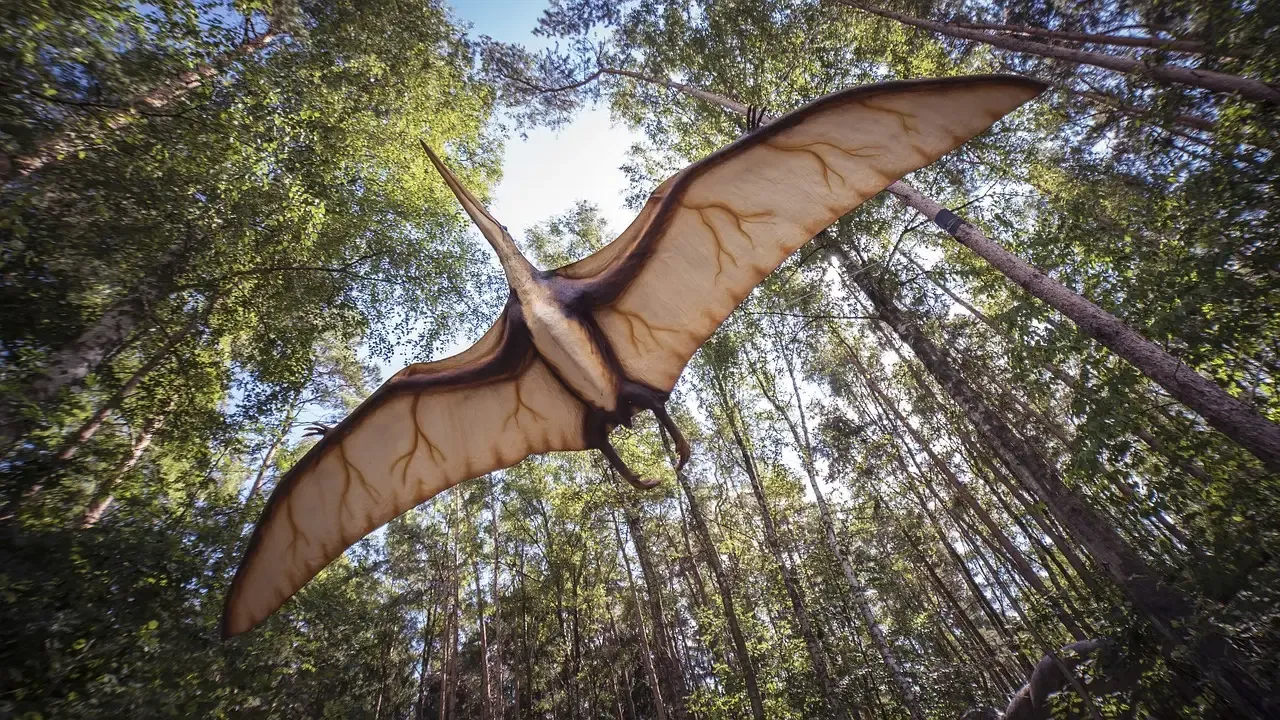
Recent brain scans of pterosaur fossils suggest these ancient reptiles acquired flight in a burst at their origin, with their brains quickly transforming and acquiring all they needed to take flight from the beginning. This stands in stark contrast to birds, who inherited enlarged brains from their dinosaur ancestors and developed flight more gradually. Honestly, it’s hard to imagine how revolutionary this was.
Pterosaurs took to the skies more than 220 million years ago, long before early bird relatives like Archaeopteryx appeared around 150 million years ago. They were pioneers, the first vertebrates to master powered flight. Their closest relatives, the flightless tree-dwelling lagerpetids, already showed features linked to improved vision, including an enlarged optic lobe, suggesting that even before flight evolved, these ancestors were preparing for an aerial lifestyle. The leap from tree-dweller to sky master happened with breathtaking speed.
Wings That Defied Conventional Design
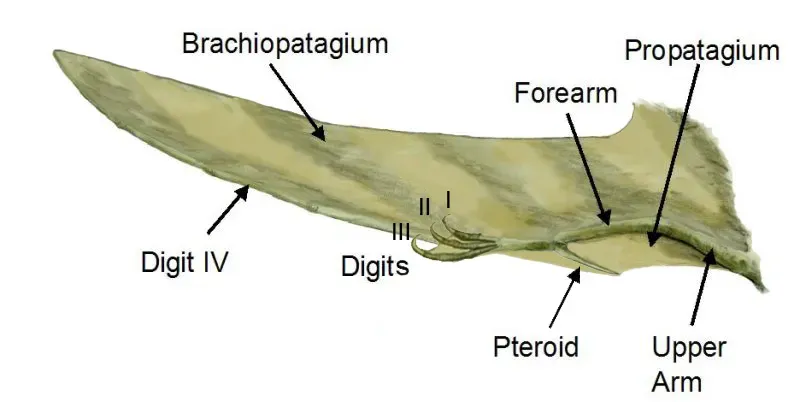
Pterosaur wings were engineering marvels, nothing like the feathered appendages of birds or the digit-supported membranes of bats. Their wings were formed by a membrane of skin, muscle, and other tissues stretching from the ankles to a dramatically lengthened fourth finger. Picture that for a moment: a single finger, grotesquely elongated, acting as the primary support for an entire wing.
The wing membrane wasn’t just simple skin but a layered and dynamic structure containing networks of blood vessels, bundles of muscle, and stiffening fibers known as actinofibrils, allowing shape-shifting in flight. Using Laser Stimulated Fluorescence, researchers discovered detailed images of tail membranes in Rhamphorhynchus specimens, revealing a lattice of supporting structures previously invisible to conventional analysis. This flexibility gave pterosaurs remarkable control, enabling them to adapt to turbulent conditions and execute precision maneuvers.
The wing bones themselves were hollow tubes with walls no thicker than a playing card, yet pterosaur humeri were up to three times more resistant to failure than those of birds, and were more than strong enough to sustain flapping loads. These creatures weren’t fragile kites. They were robust fliers built to endure.
A Diverse Menu Across Ancient Ecosystems
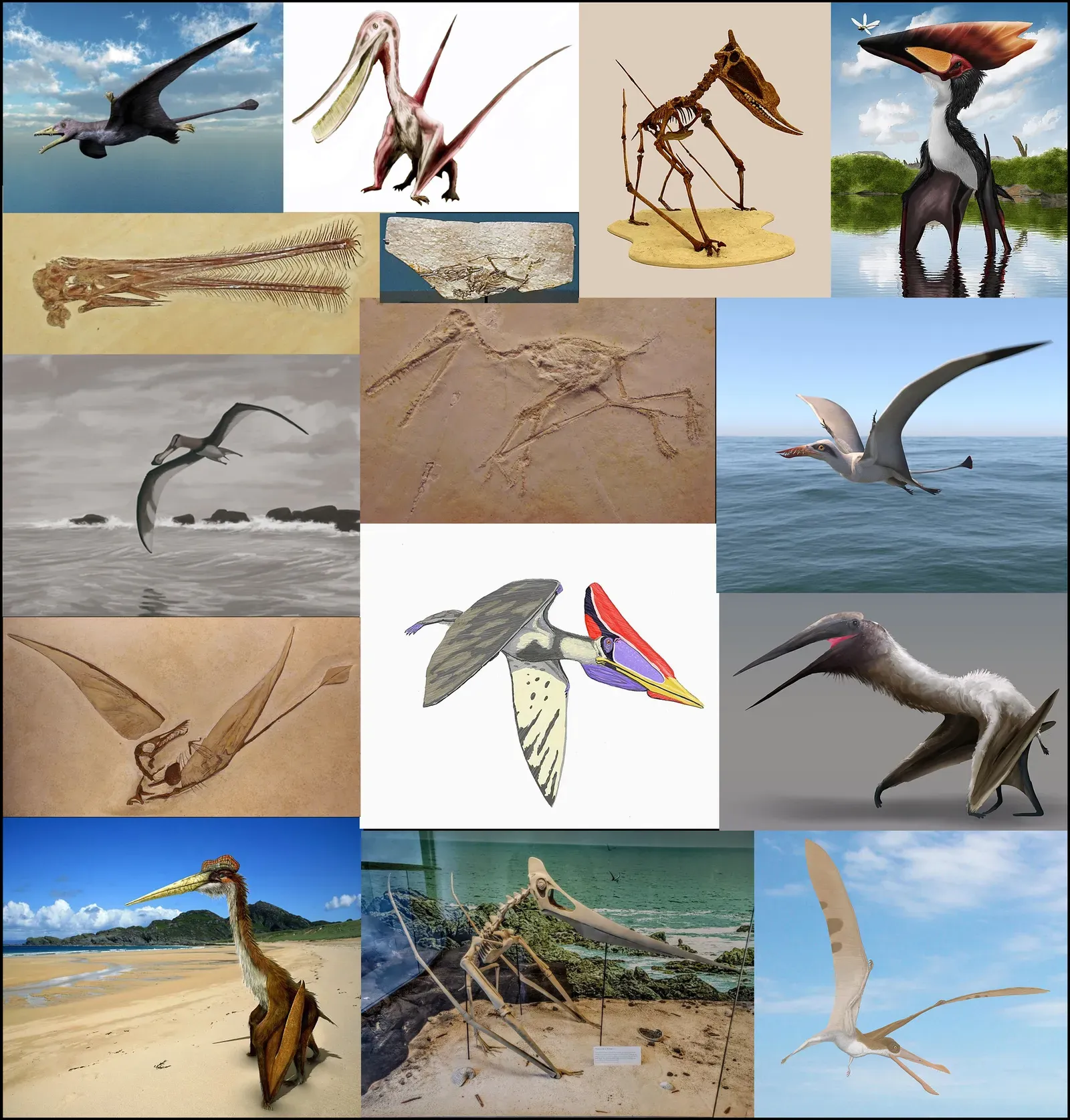
You might assume all pterosaurs were fish-eaters, swooping down to snatch prey from the water’s surface. That’s what popular culture often suggests. The reality was far more varied. Numerous dietary hypotheses have been proposed for different pterosaur groups, including insectivory, piscivory, carnivory, durophagy, herbivory, filter-feeding and generalism.
Recent fossilized stomach contents show that the pterosaur Dorygnathus ate small fish, while Campylognathoides ate prehistoric squid. This discovery revealed that even species living in the same habitat partitioned their food resources to avoid competition. Meanwhile, new research found phytoliths from various plants in a specimen of the tapejarid Sinopterus, providing the first direct evidence that pterosaurs were perfectly happy to eat a full meal of plant material.
Some pterosaurs evolved truly bizarre feeding strategies. The Ctenochasmatidae were suspension feeders, using their numerous fine teeth to filter small organisms from shallow water, while Pterodaustro was adapted for flamingo-like filter-feeding. Others, like the dsungaripterids, crushed mollusks with powerful jaws. The diversity was staggering.
Masters of Both Sky and Ground
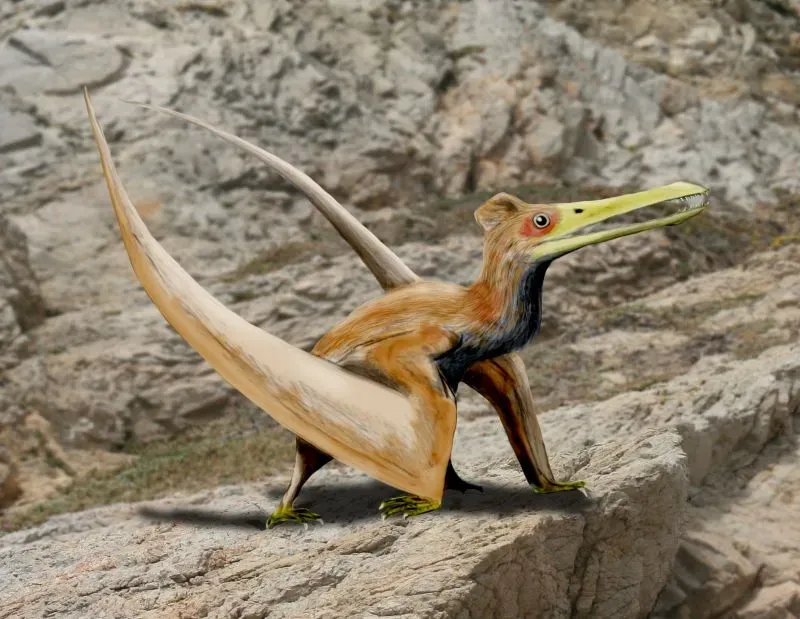
Here’s something that might surprise you: many pterosaurs spent considerable time on the ground. Fossilized footprints reveal a 160-million-year-old invasion as pterosaurs came down from the trees and onto the ground. This wasn’t just occasional landings. The research supports the idea that pterosaurs underwent a major ecological shift about 160 million years ago, with several groups becoming more terrestrial.
Neoazhdarchians, which includes Quetzalcoatlus with a 10-meter wingspan, left footprints in coastal and inland areas around the world, supporting the idea that these long-legged creatures not only dominated the skies but were also frequent ground dwellers. These giants likely stalked prey on foot, similar to modern ground hornbills or storks. Ctenochasmatoids with their long jaws and needle-like teeth left tracks most commonly found in coastal deposits, where they likely waded along muddy shores or in shallow lagoons.
Walking on all fours wasn’t awkward for these creatures. Their limb structure was perfectly adapted for quadrupedal movement, giving them access to food sources that purely aerial hunters couldn’t exploit.
Extraordinary Sensory Adaptations
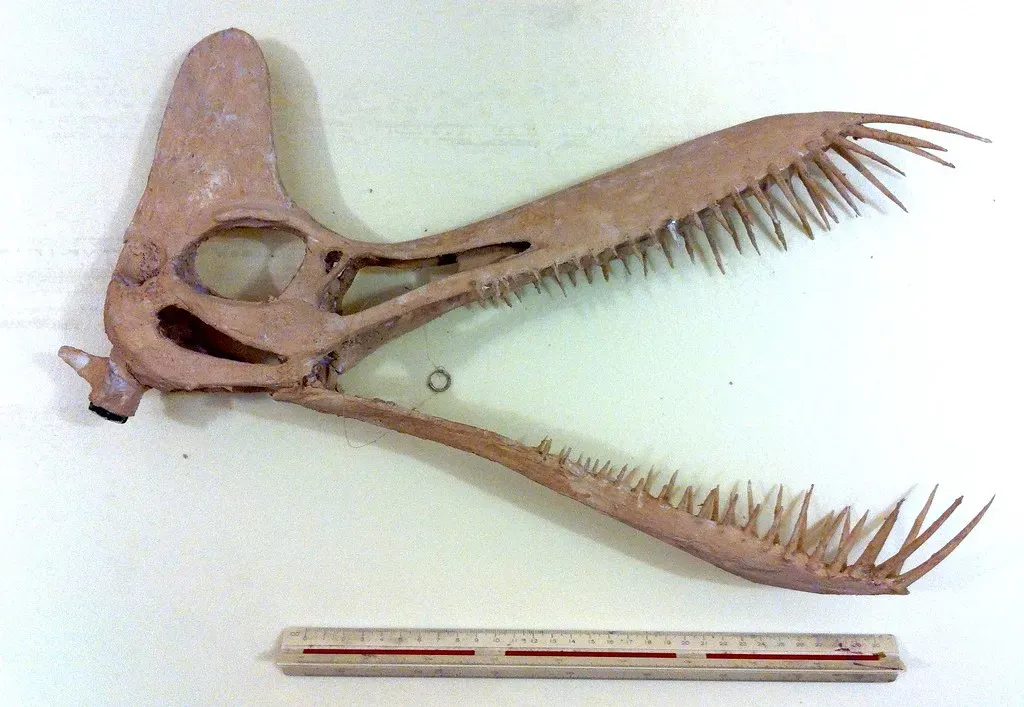
Flying demands exceptional sensory processing. Pterosaurs didn’t disappoint. A unique feature of the pterosaur brain was a greatly enlarged flocculus, a structure of the cerebellum likely involved in processing sensory information from their membranous wings to keep their eyes fixed on a target while in flight. This neurological specialization allowed them to execute complex aerial maneuvers while tracking fast-moving prey.
The brains of pterosaur species had small olfactory bulbs yet large optic lobes, indicating that vision and motor coordination were much more important than smell and were likely adaptations for improved flight and hunting ability. They were visual hunters first and foremost. Some researchers speculate that certain pterosaurs might have possessed color vision, helping them identify potential mates or navigate complex forest environments, though direct evidence remains elusive.
Acoustic communication may have also played a role in pterosaur behavior, with their hollow bones possibly acting as resonating chambers, amplifying vocalizations across large distances, crucial in establishing territory, locating mates, or warning rivals. Imagine the skies filled not just with wings but with haunting calls echoing across prehistoric landscapes.
Reproduction and Parental Care Mysteries
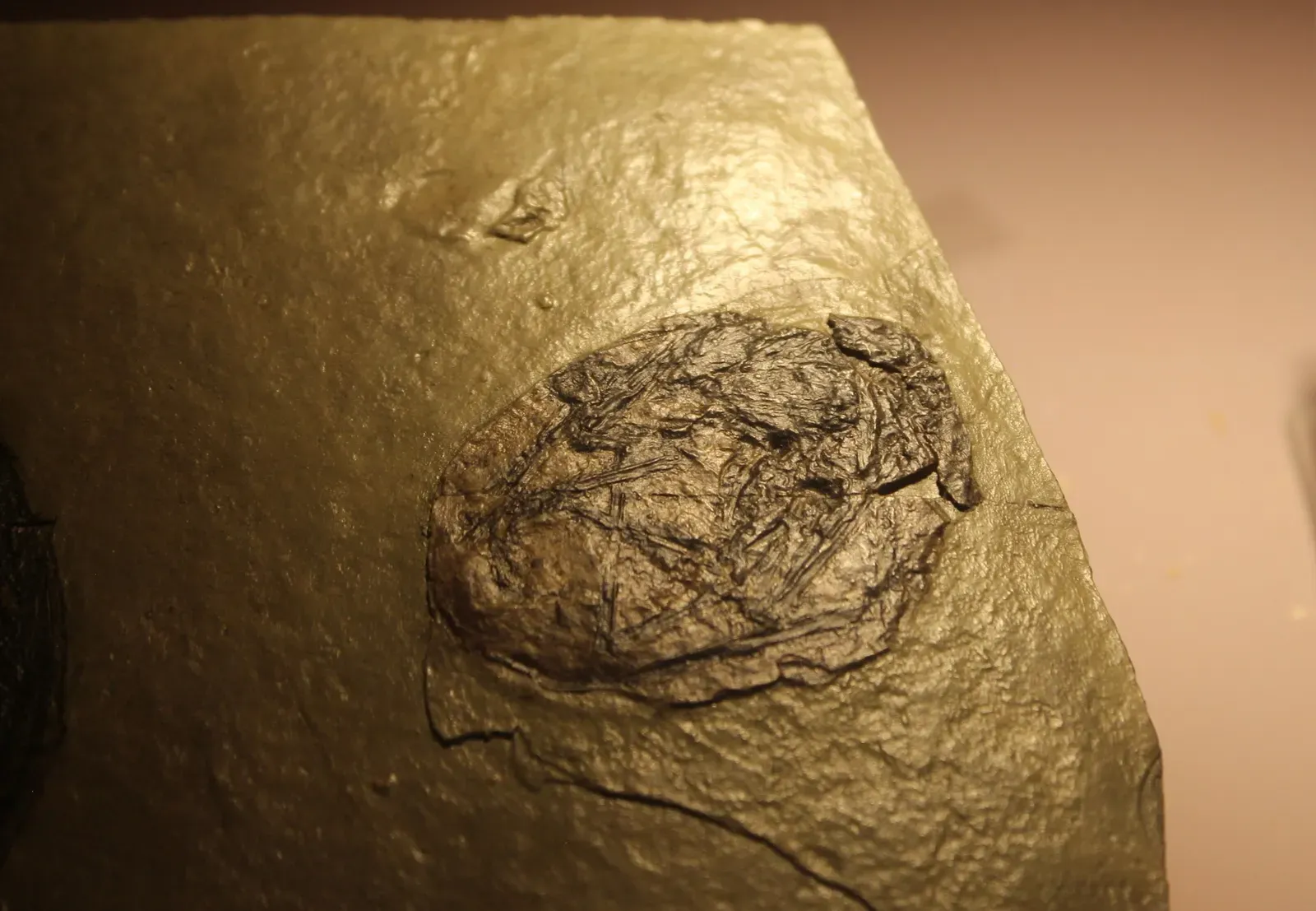
In northwestern China, paleontologists discovered a cache of hundreds of ancient pterosaur eggs, including at least 215 stunningly preserved specimens. This was a game-changing find. The sheer number of eggs suggests that Hamipterus bred in large groups like some living birds, indicating social complexity we hadn’t suspected.
An examination of 16 embryos shows that little pterosaurs had well-developed thigh bones suggesting they could walk shortly after hatching, but because the embryos had underdeveloped bones supporting the pectoral muscle, it’s unlikely that newborn pterosaurs could fly. This flightless period would have left hatchlings vulnerable. If Hamipterus babies could not fly, they probably needed some parental care.
The eggs themselves had soft, parchment-like shells rather than hard calcified ones. Estimates suggest the nest had a minimum moisture content of roughly three-quarters, combined with geological data suggesting that some pterosaurs may have adopted nesting strategies similar to those of grebes and flamingos. They weren’t just burying eggs and walking away. These creatures were selecting specific nesting environments, possibly returning to the same sites year after year.
Giants That Redefined Possible
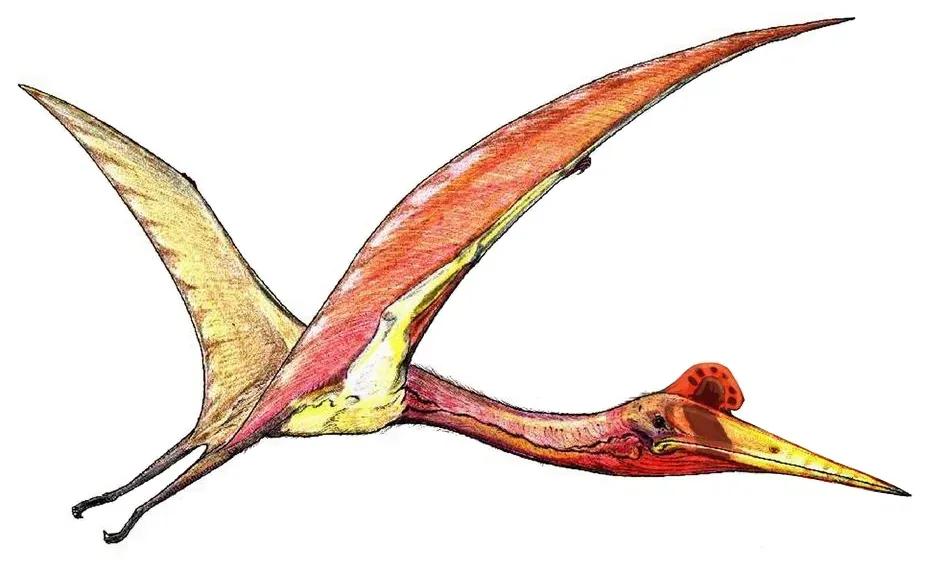
The largest pterosaurs challenge our understanding of biological limits. Quetzalcoatlus had a 10-meter wingspan, one of the largest flying animals ever to have existed. To put that in perspective, that’s comparable to the wingspan of a small aircraft. How did something that large even get off the ground?
Research suggests pterosaurs used a vaulting mechanism to obtain flight, with the tremendous power of their winged forelimbs enabling them to take off with ease. They essentially pole-vaulted into the air using their muscular front limbs. Wing tests suggest that large pterosaurs had substantially higher profile drag and maximum lift coefficients than previously assumed, meaning they were aerodynamically less efficient but could fly more slowly than previously estimated.
These giants weren’t soaring over oceans like albatrosses. Remains of the giant Quetzalcoatlus northropi are rare and found only in stream channel facies, suggesting it may have had a more solitary lifestyle and preferred riparian habitats. They were inland stalkers, terrestrial predators exploiting diverse ecosystems far from coastlines. The idea of a giraffe-sized creature launching itself skyward seems almost fantastical, yet the evidence is undeniable.
The Evolutionary Journey Mapped
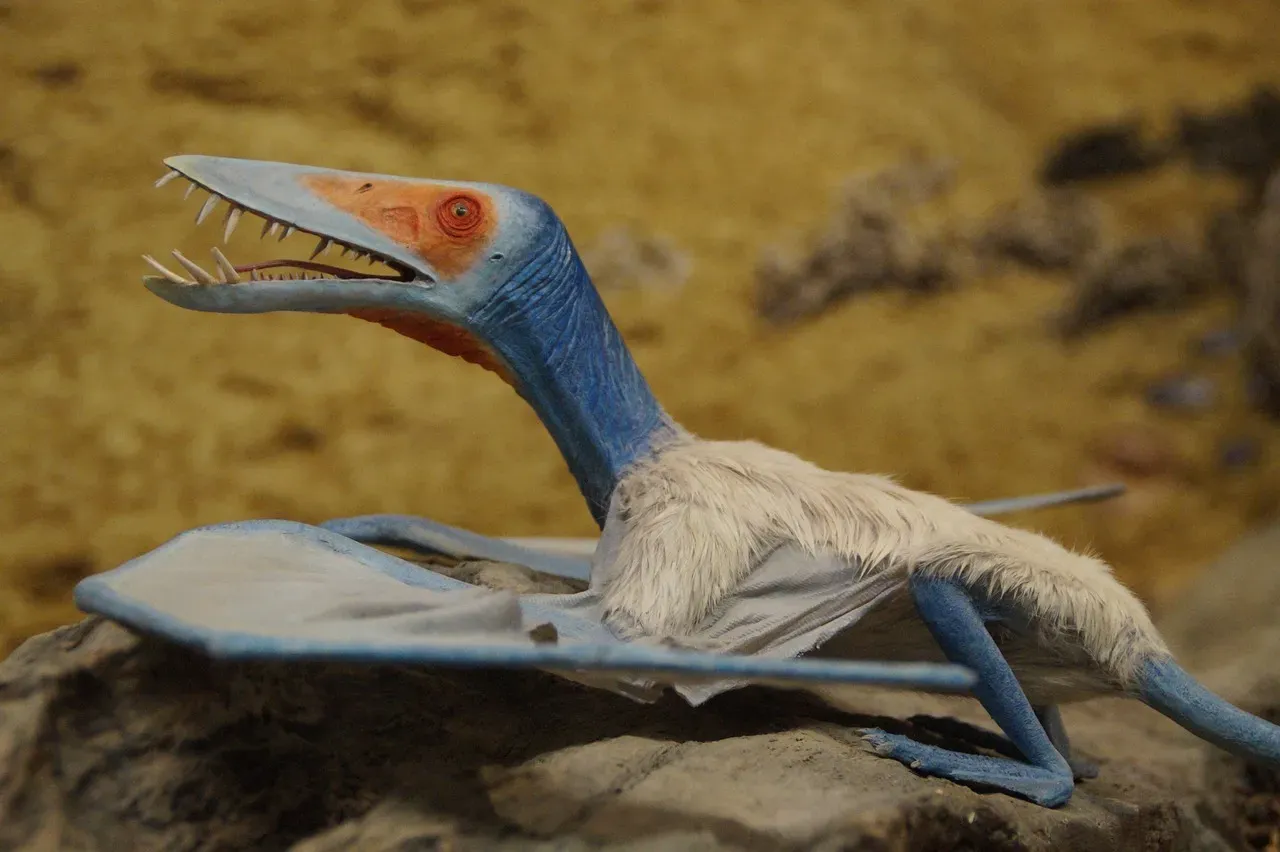
A newly discovered pterosaur fossil named Skiphosoura bavarica provides crucial insights into how pterosaurs transitioned from early, smaller forms to later, gigantic species, allowing paleontologists to trace step-by-step evolution including changes in head size, neck length, wing structure, and tail length. This missing link has helped scientists understand the sequence of anatomical changes that occurred over millions of years.
We now have a complete sequence of evolution showing intermediate positions between early pterosaurs and advanced forms, allowing researchers to trace the increase in head and neck size, the elongating wrist, shrinking toe and tail and other features step-by-step. Each discovery adds another piece to this magnificent puzzle.
Paleontologists excavating in Arizona recently unearthed fossilized remains of North America’s oldest known pterosaur, small enough to perch on a person’s shoulder, which lived 209 million years ago just a few million years before a major extinction event. These early forms were tiny compared to their descendants, yet they already possessed the fundamental adaptations that would allow their lineage to eventually dominate prehistoric skies.
Conclusion: Creatures Beyond Imagination
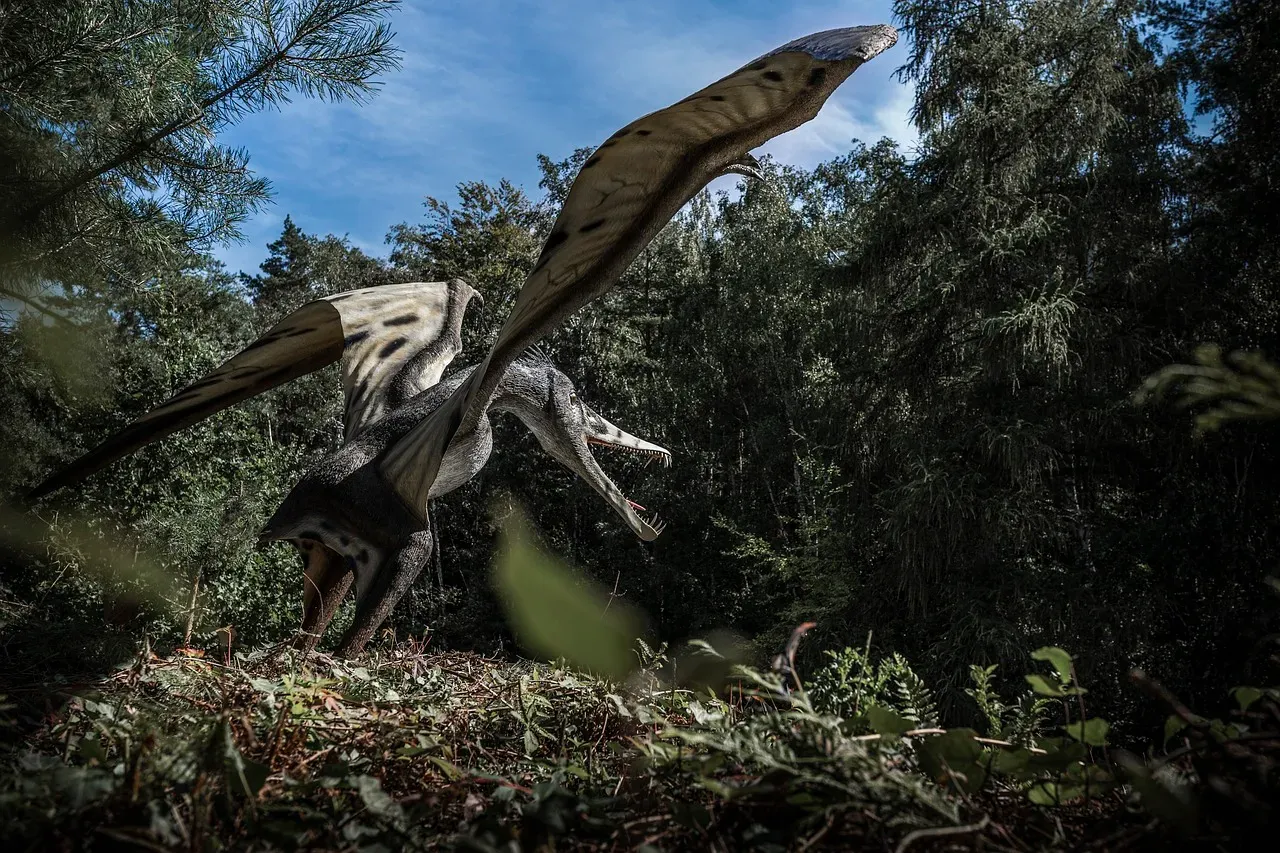
Pterosaurs were far more than prehistoric curiosities. They were sophisticated organisms with complex behaviors, diverse diets, and remarkable adaptations that allowed them to thrive for an incomprehensible span of time. From delicate forest-dwellers hunting insects to colossal terrestrial stalkers prowling inland waterways, these creatures exploited nearly every available niche in Mesozoic ecosystems.
The more we discover, the more their lives come into focus. Colonial nesting sites. Parental care. Specialized feeding strategies. Rapid evolutionary bursts. They challenge our assumptions about what’s possible in vertebrate flight and force us to reimagine entire ancient ecosystems.
What’s most exciting is how much we still don’t know. Every new fossil, every advanced imaging technique, every interdisciplinary analysis reveals another layer of complexity. These weren’t simple reptiles with wings. They were masters of their environment, perfectly adapted predators and foragers who ruled the skies when dinosaurs ruled the land. Did you expect creatures from so long ago to be this remarkable? What other secrets might still be locked in ancient stone, waiting to reshape what we think we know?