
Have you ever wondered who the very first Americans were and how they managed to reach these vast continents? The story is far more intriguing than what you probably learned in school. For decades, we thought we had it all figured out. Turns out, the reality is way more complex and honestly, kind of mind-blowing. These ancient pioneers didn’t just show up one day and settle down. They survived brutal ice ages, crossed frozen seas, and navigated uncharted coastlines in ways that would make even modern adventurers nervous.
What makes this story so captivating is how much we’re still discovering. New evidence keeps reshaping our understanding of when, how, and even why these early humans made the journey. Were they following herds of woolly mammoths? Did they sail along icy coasts in search of food? The answers might surprise you. Let’s dive in.
The Ancient Bridge That Connected Two Worlds
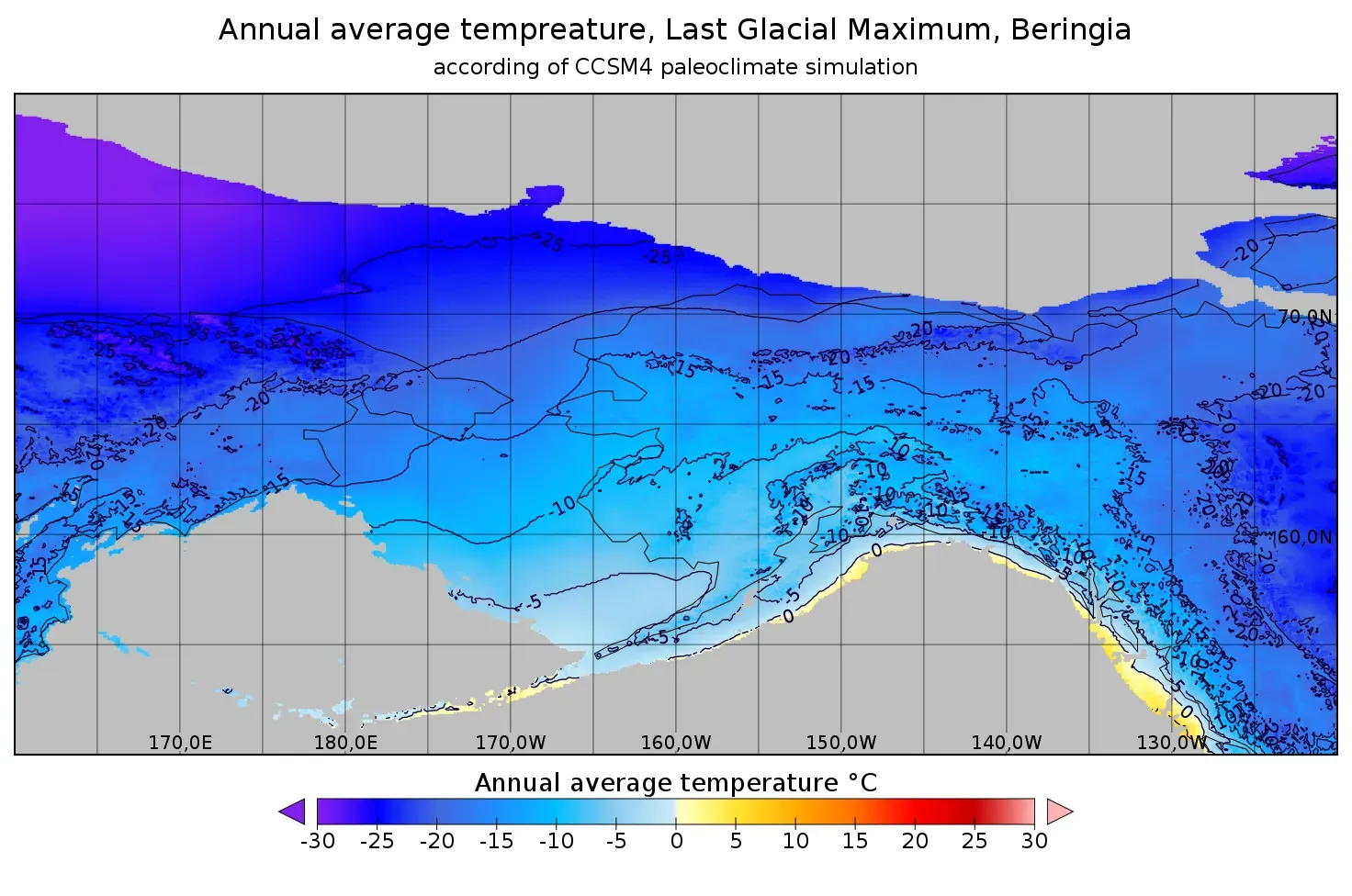
Picture a massive land bridge stretching between Asia and Alaska, almost as large as Australia itself. The Bering Land Bridge, scientists found, remained flooded until around 35,700 years ago, much later than previously thought. This discovery totally changed how researchers understand the timeline of human migration.
The peopling of the Americas began when Paleolithic hunter-gatherers entered North America from the North Asian Mammoth steppe via the Beringia land bridge, which had formed between northeastern Siberia and western Alaska due to the lowering of sea level during the Last Glacial Maximum. Here’s the thing: Beringia wasn’t just a narrow strip of land you could dash across in a few days. It was a huge region with its own ecosystem, complete with grassy plains and roaming herds of Ice Age animals.
Every time an ice age began, a large proportion of the world’s water got locked up in massive continental ice sheets, causing major drops in sea level up to 328 feet or more. That’s when the shallow seafloor became dry land. Genetic studies tell us that ancestral Native American populations diverged from Asian populations about 36,000 years ago, the same time that the Bering Land Bridge emerged. The timing is almost too perfect to be coincidence.
The Genetic Mystery of Ancient Populations
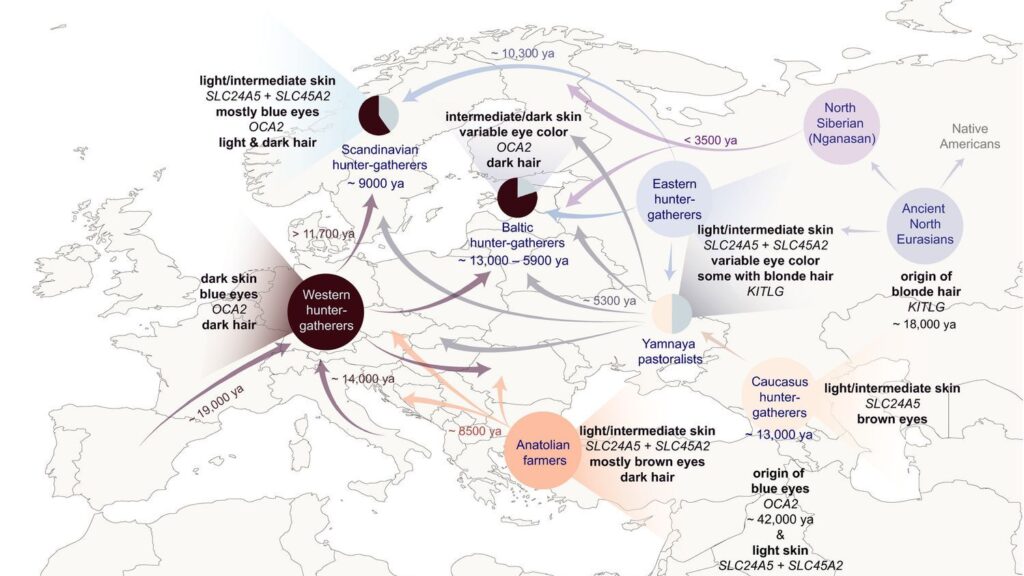
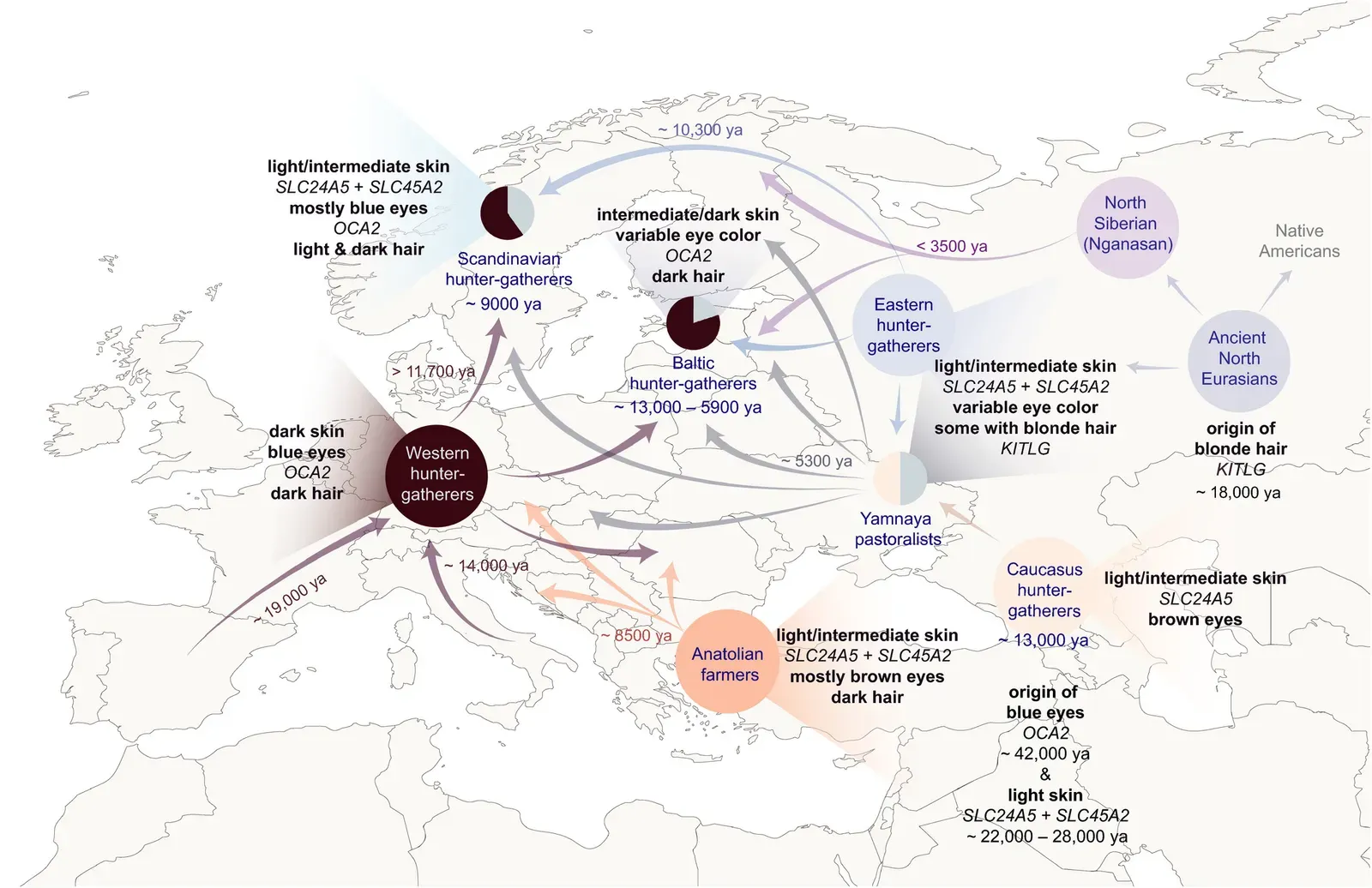
Scientists have gotten really good at reading ancient DNA, and what they’ve found is pretty wild. Ancient North Eurasians mixed with a daughter population of ancient East Asians around 25,000 years ago, which led to the emergence of Native American ancestral populations. This wasn’t just some random meeting between two groups. It was a genetic mixing event that would define the ancestry of millions of people across two continents.
The ancient ancestors of the first Americans left Siberia between 24,000 and 21,000 years ago, confirmed by comparing the DNA of Paleo-Americans with the DNA of Paleo-Siberians. The genetic evidence is incredibly specific. Researchers can literally pinpoint when these populations split apart by analyzing tiny differences in DNA sequences.
Interestingly, excavations revealed the remains of an Indigenous girl at the Upward Sun River archaeological site in Alaska in 2013, whose DNA proved not to match the two recognized branches of Indigenous Americans and instead belonged to the early population of Ancient Beringians. This suggests multiple distinct groups existed early on. The genetic landscape was way more complicated than a simple migration story would suggest.
Coastal Migration: The Ocean Highway Theory
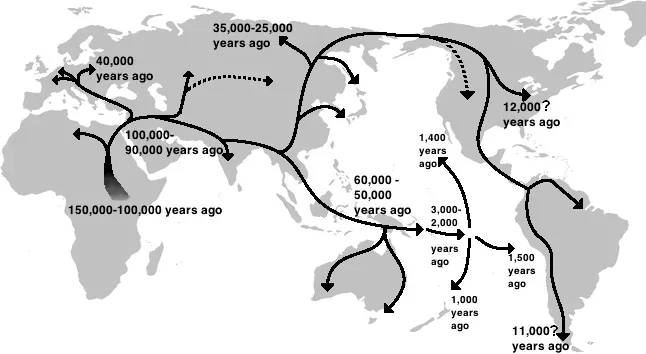
Let’s be real, the old story about people just walking through an ice-free corridor seems a bit too simple now. Growing evidence suggests that the first settlers didn’t trudge through a flat, grassy plain following large prey, but rather set off along the Pacific Coast in ancient boats. This coastal migration theory has been gaining serious traction among archaeologists.
Stemmed points came from East Asia – the Korean peninsula, Japan and the Russian Far East – dating to around 15,000 years ago, with 14,000-year-old stemmed points in Oregon and 12,000-year-old points on the Channel Islands. The trail of similar tools stretching down the Pacific coast is hard to ignore. It’s like breadcrumbs left by ancient travelers.
Think about it: the coastline would have offered consistent food sources. The route, often referred to as the “kelp highway,” is found along the Pacific coast from Japan to Mexico. Kelp forests provide shelter for fish, sea otters, seals, and countless other marine animals. Early humans could have island-hopped their way down, living off seafood and coastal resources. Climate conditions provided both winter sea ice and ice-free summer conditions that facilitated year-round marine resource diversity and multiple modes of mobility along the North Pacific coast.
The Clovis People and the Old Theory
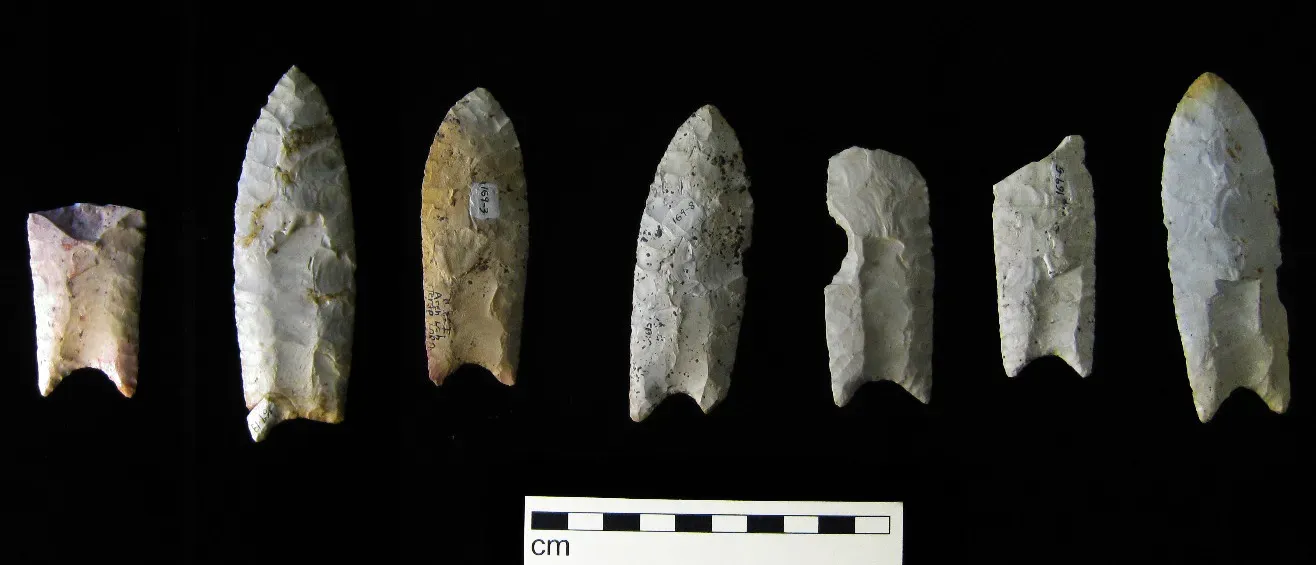
For a long time, the Clovis people were considered the rock stars of American prehistory. The Clovis culture is an archaeological culture from the Paleoindian period of North America, spanning around 13,050 to 12,750 years Before Present. They were named after distinctive stone spear points first discovered near Clovis, New Mexico, back in 1929.
These Clovis points are pretty impressive. Clovis points are projectile points with a fluted, lanceolate shape, typically large, sometimes exceeding 10 centimeters in length. For decades, archaeologists thought these folks were the original Americans, the first to set foot in the New World after crossing the Bering Land Bridge.
The Clovis First theory dominated archaeological thinking throughout the second half of the twentieth century. It was neat, tidy, and seemed to explain everything. Today it appears likely that Clovis people depended mostly on foraging for plants, hunting small mammals and, probably, fishing, using the Clovis point as part of a generalized tool kit. But as more sites were discovered, cracks started appearing in the theory.
Pre-Clovis Sites That Changed Everything
Here’s where things get really interesting. The exceptionally well-preserved Monte Verde site in Chile held remains of wooden huts, rope, and stone tools dated to around 14,500 years ago. That’s older than Clovis, and it’s way down in South America. How could Clovis people have reached Chile before they even existed in North America?
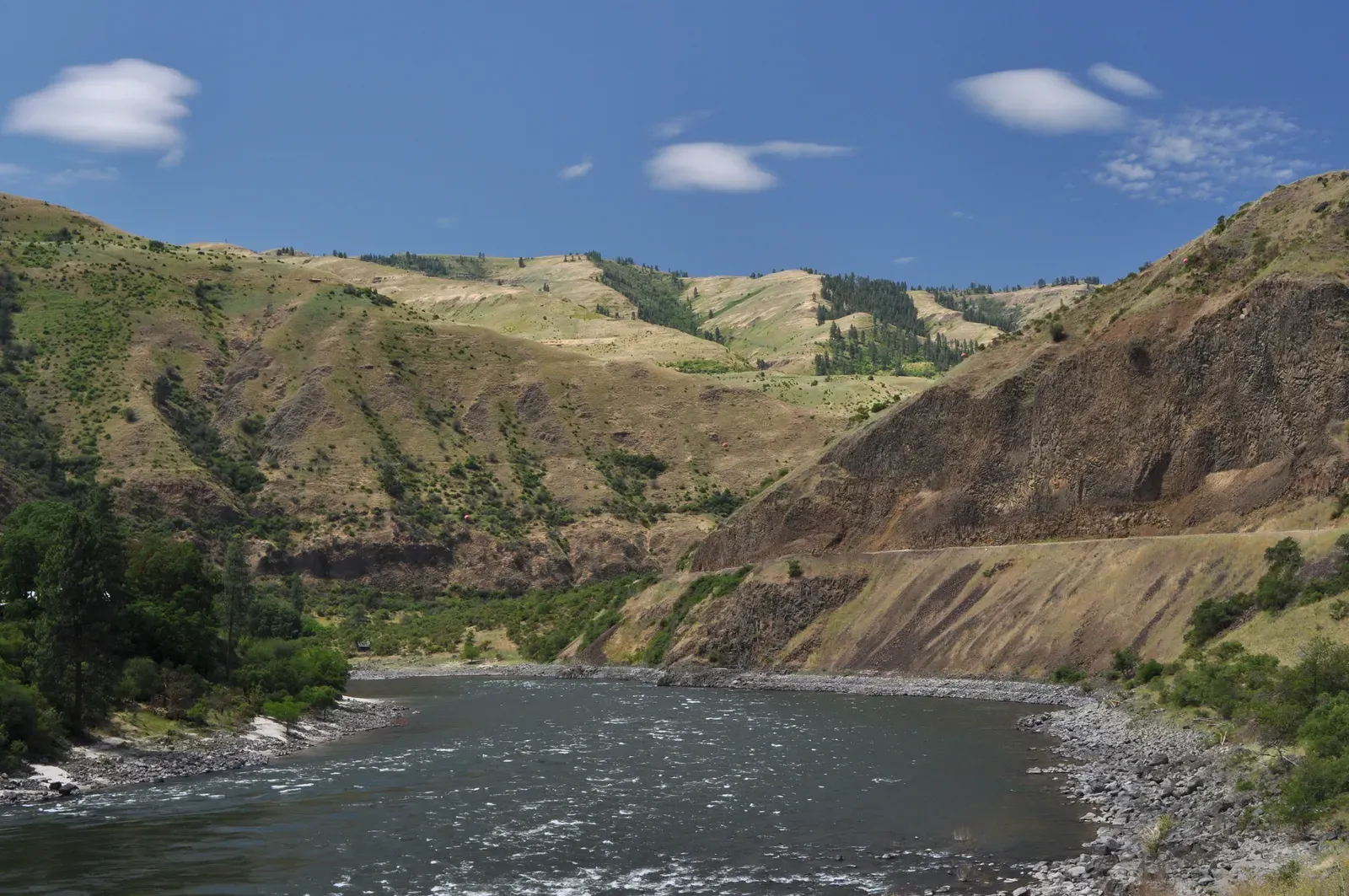
Davis’ work inland led to his discovery of a settlement dating back more than 15,000 years at Cooper’s Ferry, Idaho. This site is hundreds of miles from the coast but connected to the Pacific via river systems. The artifacts found there don’t match Clovis technology at all. They look more like tools from coastal Asian cultures.
People travelled by boat to North America some 30,000 years ago, at a time when giant animals still roamed the continent and long before it was thought the earliest arrivals had made the crossing from Asia. If this evidence holds up, it pushes human arrival back by more than 15,000 years. That’s absolutely staggering when you think about it. Numerous claims challenged the Clovis first model beginning in the 1990s, culminating in significant discoveries at Monte Verde dating back 14,500 years, Oregon’s Paisley Caves at 14,300 years, and Texas’ Buttermilk Creek complex at 15,500 years.
The Rapid Spread Across Two Continents
Once people got south of the ice sheets, they moved fast. I mean really fast. The close genetic similarity between Spirit Cave and Lagoa Santa implies their ancestral population travelled through the continent at astonishing speed. We’re talking about people reaching the southern tip of South America in what might have been just a few hundred years.
Ancient DNA studies show that people related to the Anzick child, part of the Clovis culture, quickly spread across both North and South America about 13,000 years ago. The Anzick child, found in Montana, shares genetic similarities with ancient peoples found thousands of miles away in Brazil and Chile. That tells us these populations were closely related and moved through the landscape remarkably quickly.
Around 8,000 years ago, Native Americans were on the move again, but this time from Mesoamerica into both North and South America. The story didn’t end with initial settlement. People continued migrating, mixing, and establishing new populations for thousands of years. The demographic history is incredibly complex, with multiple waves of movement in different directions.
What Modern Science Reveals About Ancient Lives
DNA technology has revolutionized how we understand the past. Because of recent technical developments in approaches for recovering and analyzing DNA, plus sequencing whole genomes, geneticists’ and archaeologists’ ability to ask and answer questions about the past has improved dramatically. We can now extract genetic information from bones thousands of years old.
The Cell study found evidence for two previously unknown populations that also entered South America, both closely related to the main line of Southern Native Americans but distinct enough to show up separately within ancient peoples’ DNA. Every new genome sequenced adds another piece to the puzzle. Sometimes those pieces fit where we expect them. Other times, they completely upend our theories.
Results suggest that human movements closer to the Atlantic coast eventually linked ancient Uruguay and Panama in a south-to-north migration route, estimated to have occurred approximately 1,000 years ago. People weren’t just moving south. They were also traveling back north, along coastlines, through river valleys, across mountains. The Americas were a dynamic landscape of human movement.
The First Americans weren’t a single group with one origin story. They were diverse populations who arrived at different times, took different routes, and developed distinct cultures. Studying ancient DNA adds extra detail to this picture, revealing the presence of genetically distinct groups who didn’t leave behind unique physical traces. Every archaeological site, every DNA sample, every stone tool adds another layer to this incredible story of human determination and adaptability. What do you think drove these ancient peoples to embark on such incredible journeys into the unknown? Tell us in the comments.