
Gujarat – A solitary tiger achieved a rare conservation milestone by completing one uninterrupted year in the state, rekindling ambitions to host India’s three iconic big cats.
Ending Decades of Absence
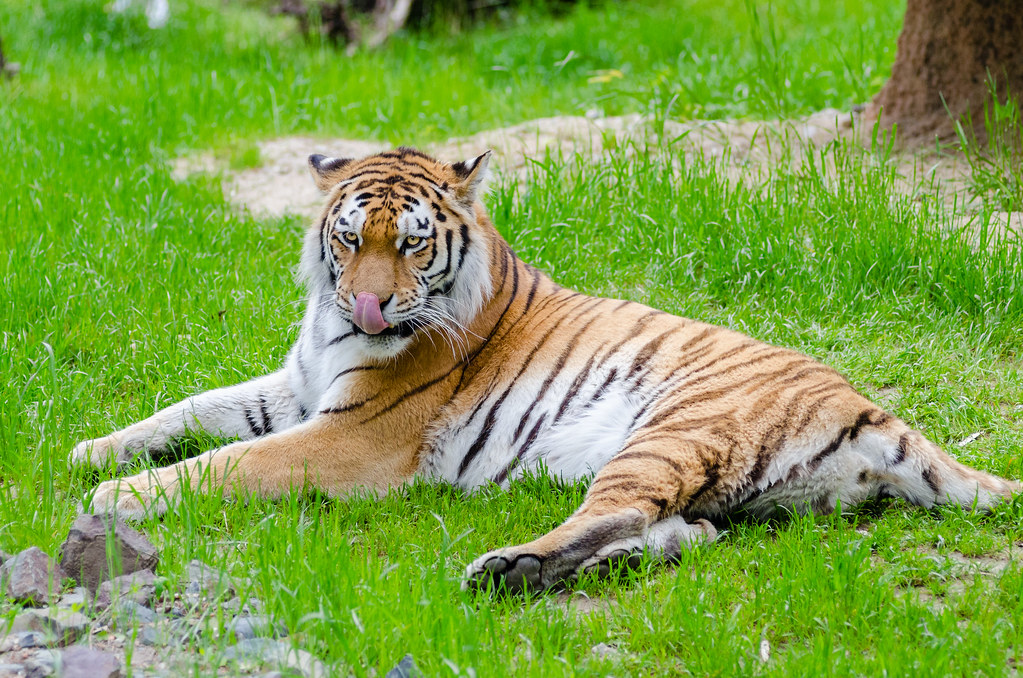
Ending Decades of Absence (Image Credits: Flickr)
The tiger’s presence shattered a long-standing void. Gujarat had lacked resident tigers since the 1989 census, which used pugmark evidence and led to its exclusion from national estimates by 1992. A brief sighting in Mahisagar district in February 2019 offered hope, but that animal perished from starvation soon after.
Forest officials confirmed the current tiger entered the state on February 22, 2025. This development prompted Gujarat to regain its tiger-bearing status in December 2025. The animal’s successful adaptation highlighted shifting ecological conditions in eastern Gujarat.
Territory Growth Signals Stability
The tiger carved out a stable home. Its territory expanded steadily from 120 square kilometers to nearly 150 square kilometers. Forest staff documented scratch markings across the area, a key sign of territorial assertion through scent marking.
Scat analysis revealed a wild diet dominated by barking deer, supplemented by nilgai and wild boar. No instances of livestock predation emerged, as the tiger confined itself to forested zones away from human areas. Pugmark variations sparked curiosity about potential newcomers, though camera traps yielded no confirmation yet.
Boosted Conservation Measures
Authorities responded swiftly to the tiger’s arrival. The forest department enhanced habitat through water management, prey augmentation, and ecological restoration. Ungulates received release into the territory to increase food availability.
Chief Conservator of Forests Sandeep Kumar outlined proactive steps. “We are in the process of forming a dedicated rescue and rehabilitation team. Cages and equipment are being procured to ensure swift response in case of emergency,” he stated. Officials ordered 100 high-tech camera traps for intensified monitoring.
Toward a Triple Big Cat Future
Gujarat already shelters Asiatic lions in Gir National Park and maintains a strong leopard population. The tiger’s endurance positioned the state to pursue all three species together, a unique feat. Officials emphasized sustained habitat connectivity and protection.
- Habitat improvements via water and prey enhancements.
- Dedicated rescue team formation with specialized gear.
- Expanded camera trap network for evidence collection.
- Ecological restoration funded specifically for tiger zones.
- Surveillance to detect additional tigers.
Senior forest personnel projected gradual population growth if efforts persisted. The one-year stay laid groundwork for Gujarat’s return to India’s tiger landscape.
Key Takeaways
- Gujarat hosted no resident tigers for over 33 years until this milestone.
- The tiger’s 150 sq km territory shows strong adaptation without human conflict.
- Ongoing initiatives aim to secure all three big cats long-term.
This tiger’s persistence symbolizes resilience in wildlife recovery. It challenges past assumptions and invites bolder conservation strategies. What steps should Gujarat take next to nurture its big cat legacy? Share your thoughts in the comments.