
Imagine a creature with the wingspan of a fighter jet, bones thinner than a playing card, and the ability to launch itself into the air from flat ground. No, it’s not science fiction. These were pterosaurs, and they ruled the skies for over 160 million years. Long before the first bird ever spread its feathers, these extraordinary reptiles had already cracked one of evolution’s most complex puzzles: powered, sustained flight.
What’s genuinely exciting, though, is that we are still cracking open new secrets about how they actually did it. In 2024 and 2025 alone, a wave of new research has dramatically reshaped what science thinks it knows about pterosaur flight mechanics, brain evolution, wing structure, and takeoff strategy. Some findings are exactly what you’d expect. Others are downright shocking. Let’s dive in.
The First Vertebrates to Ever Take Powered Flight
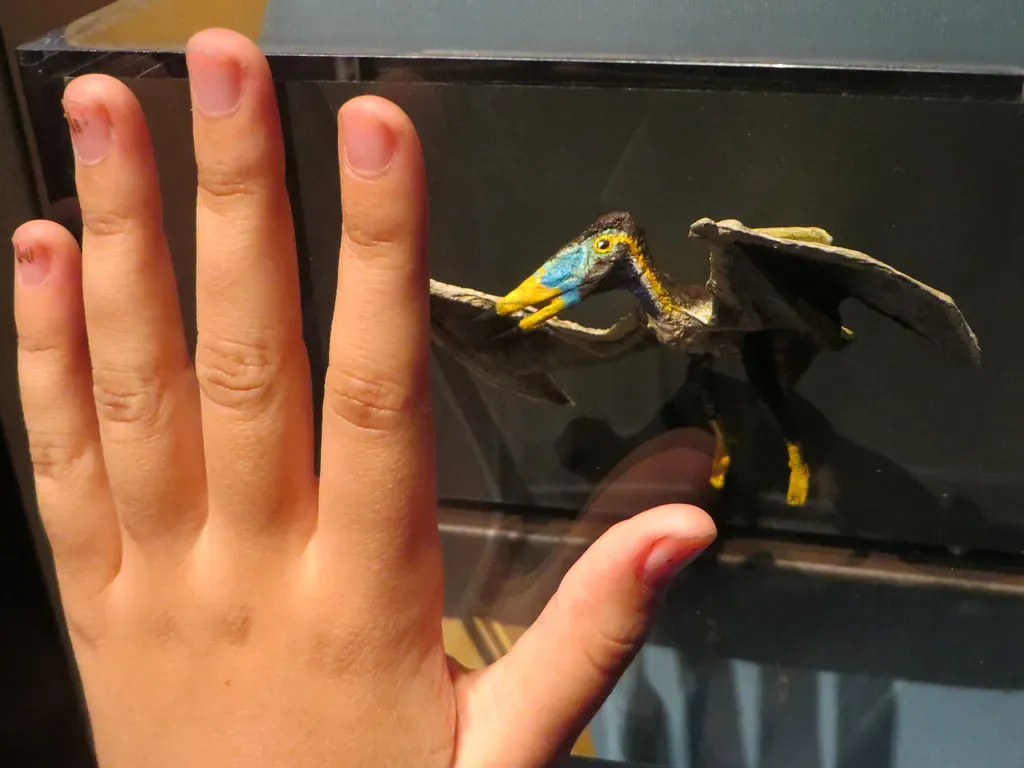
Here’s the thing most people don’t realize: pterosaurs weren’t just ancient birds with weird heads. Pterosaurs were the first vertebrate group to achieve powered flight, and they were remarkably successful in the aerial realm for over 160 million years. That’s a staggering amount of time to dominate the skies, far longer than birds have existed as a group.
They are an extinct clade of flying reptiles in the order Pterosauria, existing during most of the Mesozoic era, from the Late Triassic to the end of the Cretaceous, roughly 228 million to 66 million years ago. To put that in perspective, you could fit the entire history of dinosaurs inside the pterosaur timeline and still have room to spare.
A Brain Built for the Sky in an Instant
One of the most surprising findings in recent years comes from a November 2025 study published in Current Biology. A research group led by an evolutionary biologist at Johns Hopkins Medicine reports that giant reptiles living as far back as 220 million years ago may have developed the ability to fly at the very start of their evolutionary history, in contrast with the ancestors of modern birds, which are thought to have reached powered flight more slowly and with larger, more complex brains.
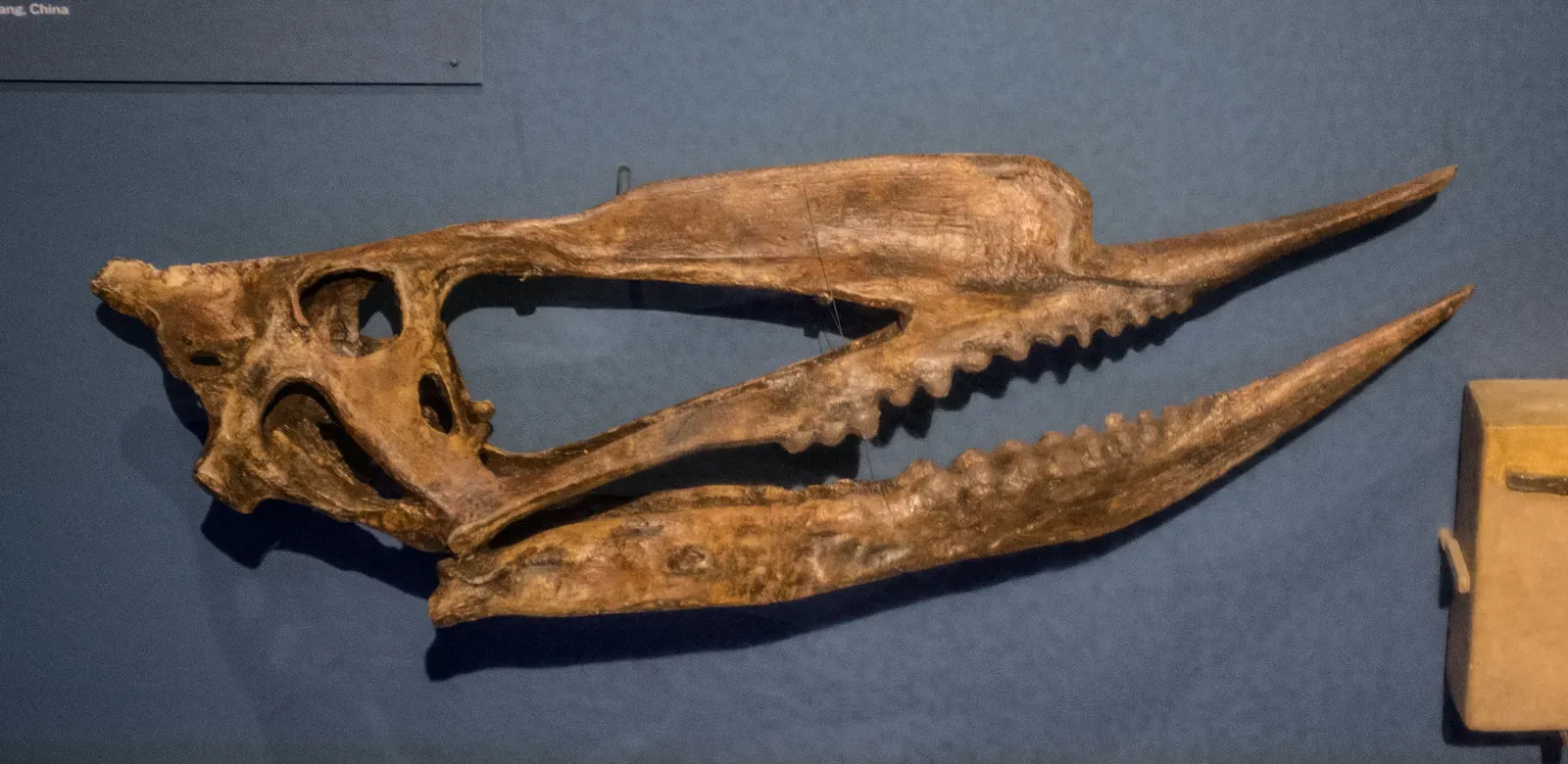
The international research team used high-resolution 3D imaging techniques, including microCT scanning, to reconstruct brain shapes from more than three dozen species, including pterosaurs, their close relatives, early dinosaurs and bird precursors, modern crocodiles and birds, and a wide range of Triassic archosaurs. What they found was remarkable. Rather than gradually developing flight-enabling brain features over generations, pterosaur brains appear to have transformed almost overnight in evolutionary terms, acquiring all the neural hardware required for flight right from the start. Honestly, it sounds almost too dramatic to be real.
Flapping vs. Soaring: Not All Pterosaurs Flew the Same Way
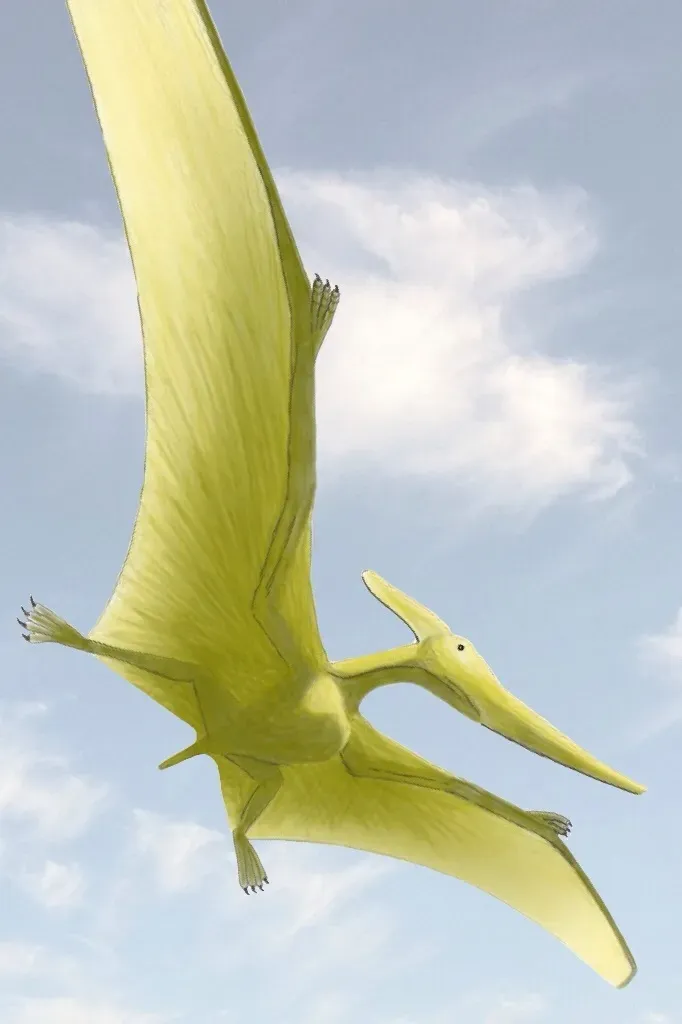
You might picture all pterosaurs as graceful soaring giants, lazily riding thermals above prehistoric seas. But the reality was far more diverse. Some species of pterosaurs flew by flapping their wings while others soared like vultures, as demonstrated by new research. The distinction matters enormously, because it tells us about the ecological niches these animals occupied.
CT scans revealed that Arambourgiania philadelphiae, a giant pterosaur with a 10-meter wingspan, exhibited spiral ridges inside its humerus, resembling those in the wing bones of vultures, and these ridges likely resisted torsional loadings associated with soaring flight. In contrast, a newly discovered species named Inabtanin alarabia, with a five-meter wingspan, showed internal bone struts similar to those of modern flapping birds, suggesting its skeleton was adapted to handle the repeated bending loads of active wing beats. Their hollow bones, lightweight frames, and varied flight adaptations allowed pterosaurs to conquer diverse environments, from coastal cliffs to inland forests.
The Wing Itself Was an Engineering Marvel
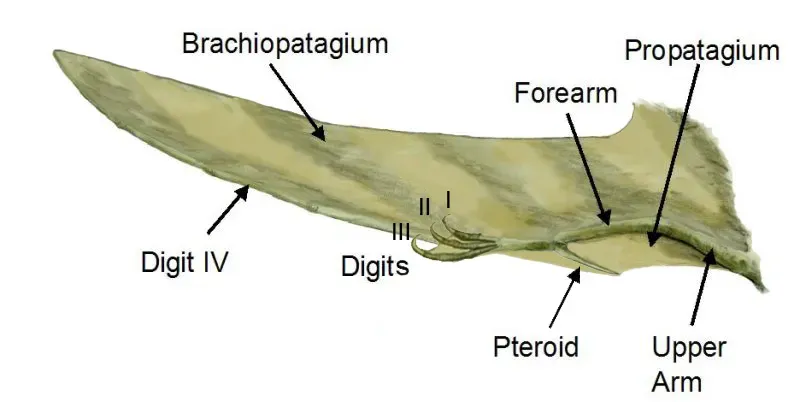
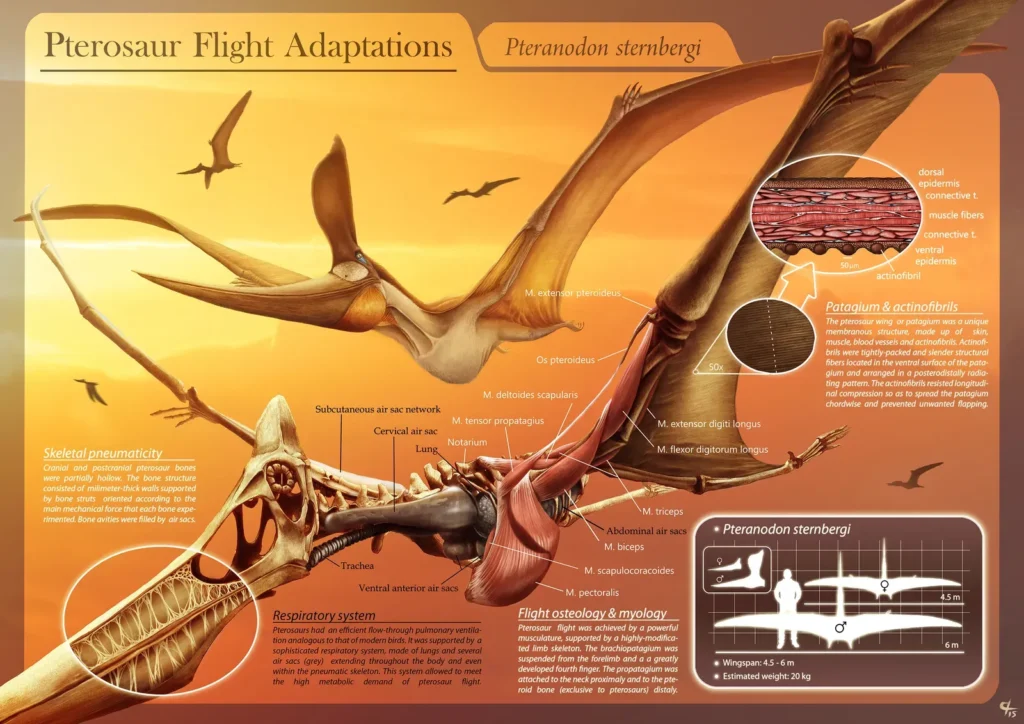
Think of a modern hang glider, then imagine it alive, muscular, and able to adjust its own tension mid-flight. That’s somewhat close to what pterosaur wings were. Their wings were formed by a membrane of skin, muscle, and other tissues stretching from the ankles to a dramatically lengthened fourth finger. This design was entirely unique in the history of vertebrate life.
Recent discoveries show that pterosaur wing membranes were more than simple flaps of skin. Long fibers extended from the front to the back of the wings forming a series of stabilizing supports, so the membranes could be stretched taut, or folded up like a fan. Even more impressive, separate muscle fibers helped pterosaurs adjust the tension and shape of their wings, and veins and arteries kept the wings nourished with blood. It was essentially a living, self-regulating airfoil. No aircraft engineer in history has managed anything quite like it.
The Secret of the Muscular Wing Root
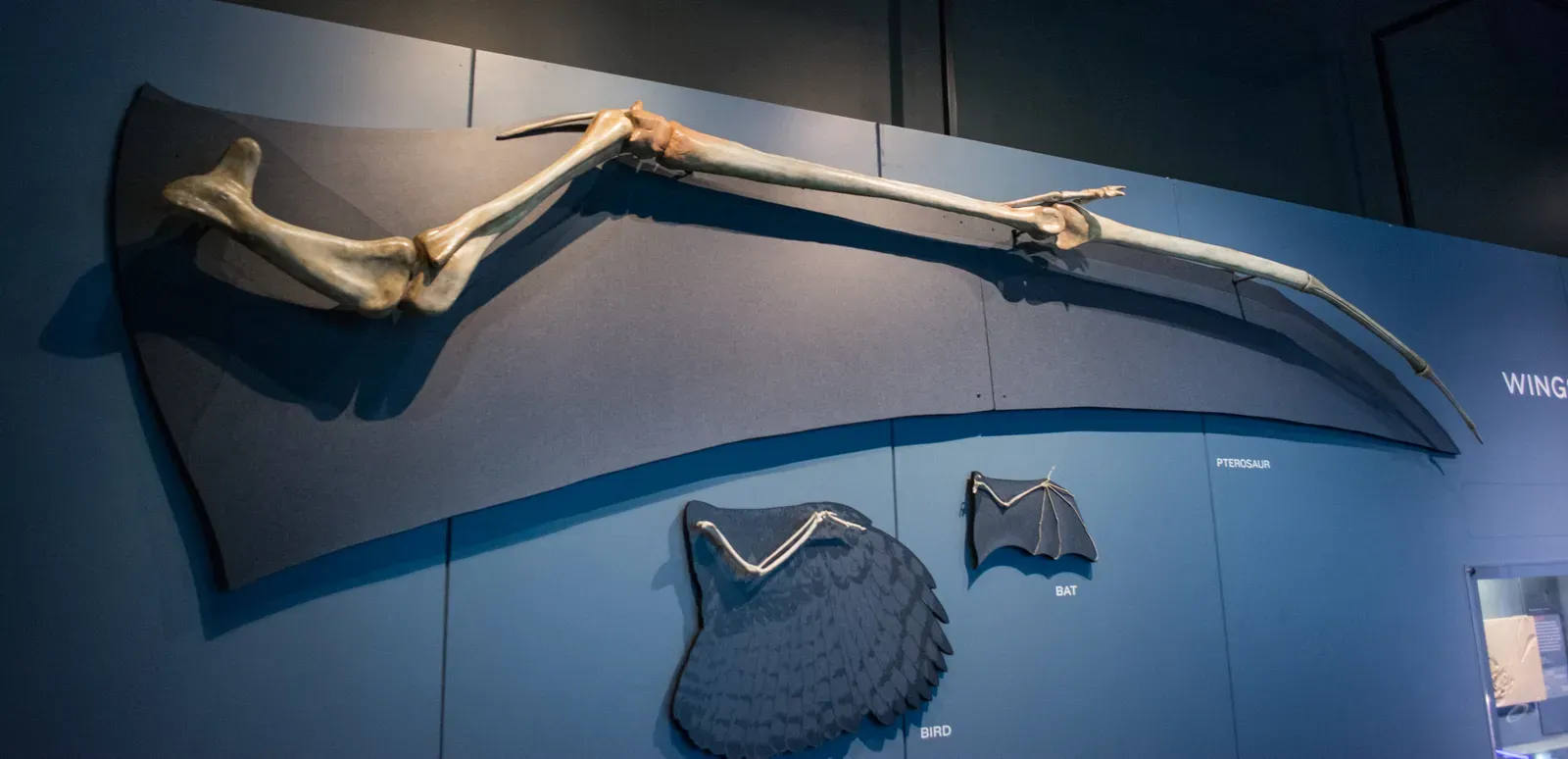
Here’s where things get particularly fascinating for anyone who loves aerodynamics. A landmark study published in PNAS uncovered something that had never been seen before in any flying animal. Using laser-stimulated fluorescence, researchers observed direct soft tissue evidence of a wing root fairing in a pterosaur, a feature that smooths out the wing-body junction, reducing associated drag, as in modern aircraft and flying animals. Unlike bats and birds, the pterosaur wing root fairing was unique in being primarily made of muscle rather than fur or feathers.
As a muscular feature, pterosaurs appear to have used their fairing to access further flight performance benefits through sophisticated control of their wing root and contributions to wing elevation and anterior wing motion during the flight stroke. Think of it like an active aerodynamic fairing, a built-in feature that not only reduced drag passively but also gave pterosaurs active, fine-grained control over their wing position. Modern aerospace engineers would be impressed. I think that’s one of the most underappreciated findings in the entire field of pterosaur research.
How They Launched: The Four-Limbed Takeoff
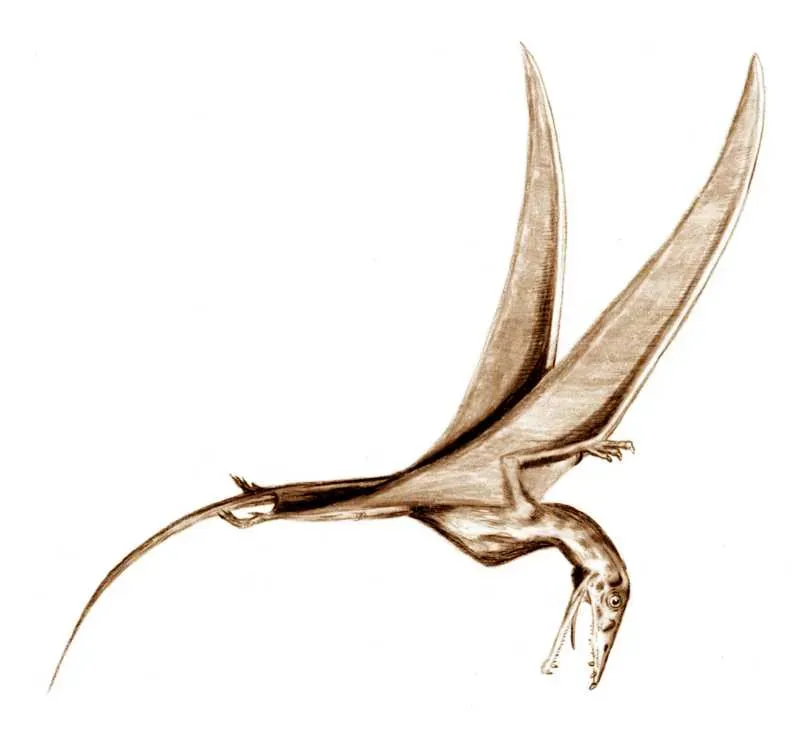
For years, scientists debated how the largest pterosaurs ever got off the ground. A bipedal running launch would have shattered their legs. Jumping from a cliff was assumed by many. After analyzing the biomechanics of the creatures, researchers propose that pterosaurs took flight by using all four limbs to make a standing jump into the sky, not by running on their two hind limbs or jumping off a height, as more widely assumed.
The research team created the first computer model of this kind for a pterosaur to test three different ways pterosaurs may have taken off: a vertical burst jump using just the legs like those used by primarily ground-dwelling birds, a less vertical jump using just the legs more similar to the jump used by birds that fly frequently, and a four-limbed jump using its wings as well in a motion more like the takeoff jump of a bat. Because the reptiles had stiff but lightweight, hollow bones, they could use all four limbs, both their feet and wings, to push powerfully against the ground, allowing them to generate more speed over a shorter distance as they leaped into flight. It’s a bit like watching a vampire bat launch off a tree branch, scaled up to the size of a small aircraft.
The Fossil That Filled 200 Years of Gaps: Skiphosoura bavarica
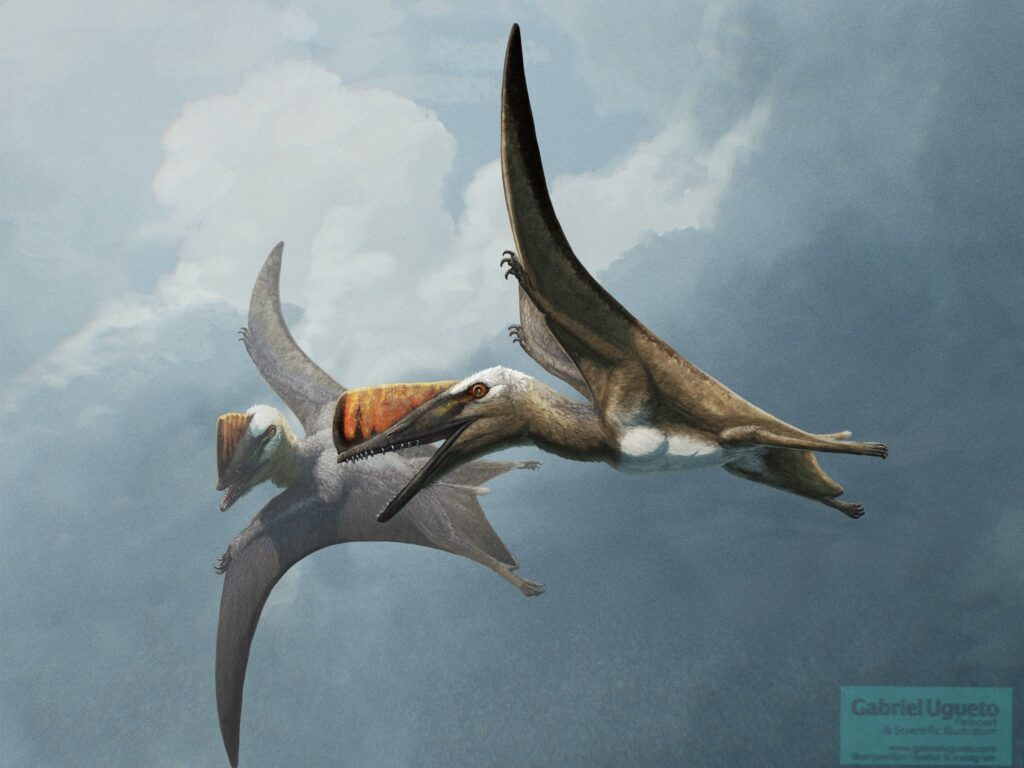
In November 2024, a single fossil from southern Germany turned pterosaur evolutionary science on its head. Scientists named the animal Skiphosoura bavarica, meaning “sword tail from Bavaria,” because it comes from southern Germany and has a very unusual short, but stiff and pointed tail. The specimen is complete with nearly every single bone preserved and unusually, it is preserved in three dimensions, where most pterosaurs tend to be crushed flat. In life it would have had about a 2-meter wingspan, similar to that of large birds like the golden eagle.
With this discovery, science now has a complete sequence of evolution from early pterosaurs to Dearc, to the first darwinopterans to Skiphosoura, to the pterodactyloids. While not every specimen is complete, we can now trace the increase in size of the head and neck, the elongating wrist, shrinking toe and tail and other features step-by-step across multiple groups. Both Dearc and Skiphosoura are unusually large for their time, also suggesting that the changes that enabled the pterodactyloids to reach enormous sizes were appearing even in these transitional species. For two centuries this evolutionary gap haunted paleontology. Now it’s filled.
Baby Pterosaurs Could Fly Too, and Science Proves It
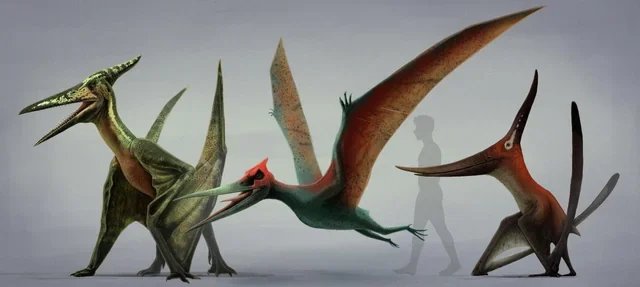
Here’s a fact that surprises almost everyone: pterosaur hatchlings may have been capable of powered flight almost immediately after hatching. A “flap-early” model proposes that hatchlings were capable of independent life and flapping flight, a “fly-late” model posits that juveniles were not flight capable until 50% of adult size, and a “glide-early” model requires that young juveniles were flight-capable but only able to glide. To settle the debate, researchers went quantitative.
The humeri of pterosaur juveniles are similar in bending strength to those of adults and able to withstand launch and flight, and wing size and wing aspect ratios of young juveniles are also in keeping with powered flight. The high power-to-mass ratios of juveniles and potential for both steeper climb phases and more dynamic flight might have assisted with the avoidance of predators, allowing small pterosaurs to rapidly escape even when in cluttered settings. The same traits may have allowed hatchlings and small juveniles to chase more nimble prey than their parents, as well as fly in complex, heavily vegetated environments off-limits to larger, less manoeuvrable adults. So while a baby bird needs weeks before it can fly, a baby pterosaur may have been airborne within days of hatching. Let that sink in.
Conclusion: Ancient Wings, Modern Revelations
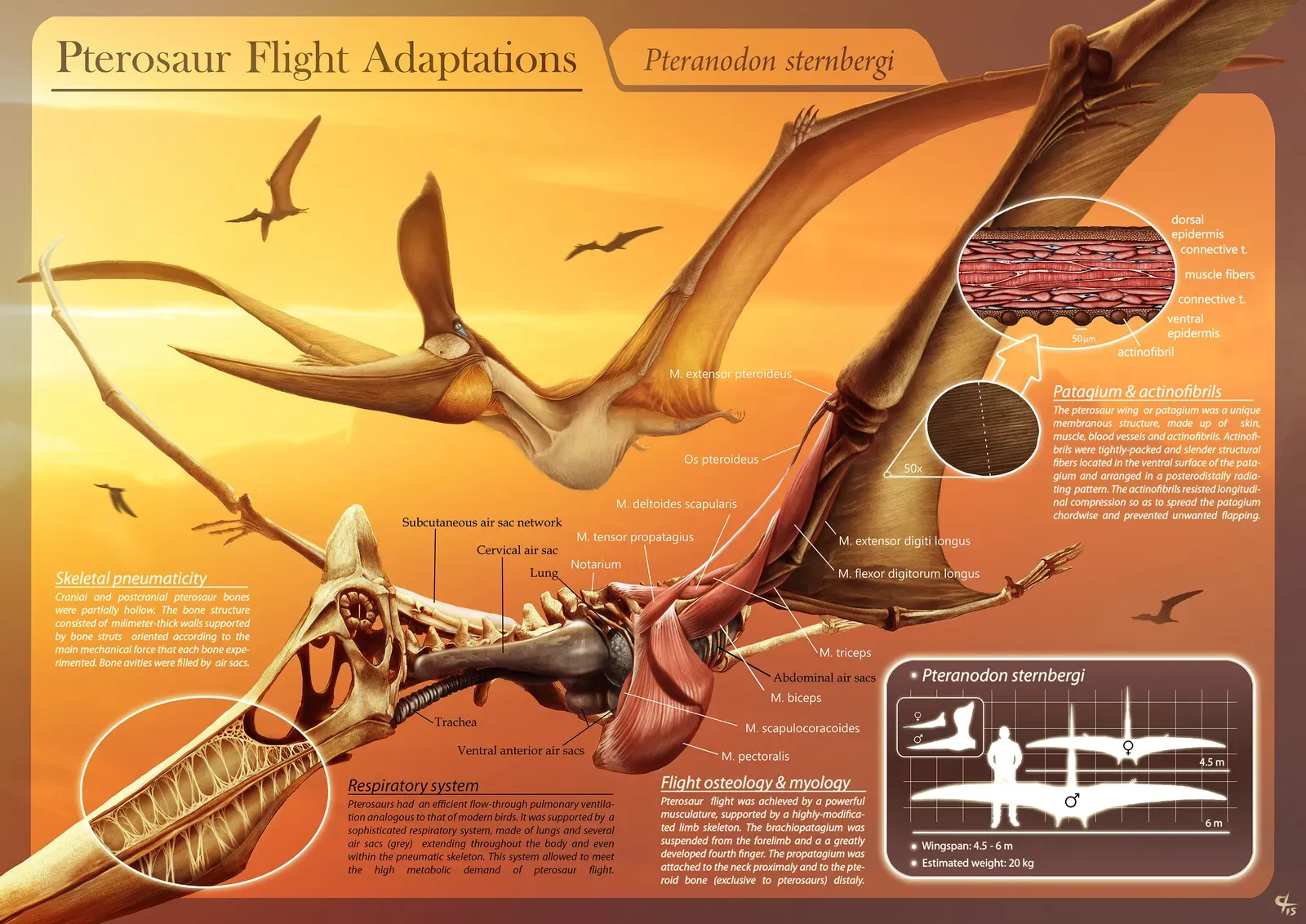
What we are learning about pterosaurs in 2026 is nothing short of astonishing. These were not clumsy, leathery relics stumbling into the sky by accident. They were precision-engineered flying machines, complete with muscular aerodynamic fairings, self-adjusting wing membranes, lightning-fast brain evolution, and diverse flight strategies that ranged from vulture-like soaring to vigorous flapping. Their hatchlings could potentially fly from birth, and their largest members launched with a powerful, pole-vault style leap using all four limbs.
Despite their extinction, pterosaurs offer invaluable insights into evolutionary biology, biomechanics, and flight mechanics. Ongoing discoveries continue to deepen our understanding of how flight evolved and what environmental pressures shaped the development of these remarkable creatures. The study of pterosaurs also contributes to broader scientific fields, helping researchers apply ancient lessons to modern questions, such as the physics of flight and the evolution of other flying animals.
Every new fossil, every CT scan, every laser-stimulated image is another chapter added to one of the greatest stories nature ever wrote. And the story isn’t over. If history is any guide, the next major discovery is probably already sitting in a quarry somewhere, waiting. What do you think will surprise us most about pterosaurs next? Drop your thoughts in the comments.