Close your eyes for a moment and imagine an ocean with no whales, no dolphins, no great white sharks ruling the deep. Instead, picture creatures unlike anything alive today – enormous reptiles slicing through prehistoric waters with grace, speed, and terrifying power. That was the reality of our planet’s ancient seas, and honestly, it’s one of the most underappreciated stories in all of natural history.
Before large mammals, reptiles ruled the ocean. During the Mesozoic Era, the time period when dinosaurs roamed on land, many of these large creatures were the top predators in the ocean food chain. You might know a dinosaur or two by name, but the real drama, the truly jaw-dropping chapter of prehistoric life, was unfolding beneath the waves. Let’s dive in.
Before the Dinosaurs Even Existed: The First Marine Reptiles
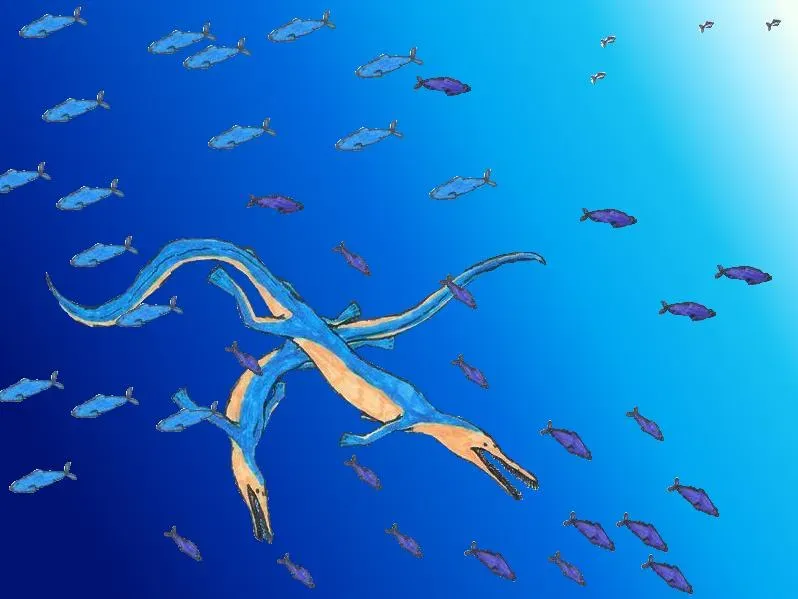
The earliest marine reptile was Mesosaurus, which arose in the Permian period of the Paleozoic era. Let that sink in. These creatures were swimming in ancient seas even before the age of dinosaurs had begun – a detail that surprises most people who assume prehistoric ocean life was an afterthought to the land-dwelling giants.
Mesosaurs were quite possibly the first fully aquatic reptilian animals and the only group known from the Paleozoic, though they are technically not true reptiles in the strictest sense. Taxonomic placement puts these Permian animals, resembling long-snouted lizards with newt-like tails, either as members of Parareptilia or as a type of Synapsid. Think of them as the “proof of concept” – nature’s early experiment in sending reptiles back into the sea, long before the truly spectacular creatures followed.
How Land Creatures Made the Leap Into the Sea
Here’s the thing that blows my mind every time I think about it. These were land animals. They had legs. They breathed air. Yet over millions of years, they traded all of that for a life in the water.
Only after the worst mass extinction of all time, as Earth’s ecosystems struggled to recover from intense global warming spurred by volcanoes, did reptiles begin to live by the shoreline and become ever more at home in the water. Ancestral ichthyosaurs were among these early swimmers, and the “fish lizards” got big fast. This tendency to evolve flippers may partly explain why reptiles recovered more quickly and invaded the oceans after an extinction event known as the “Great Dying” wiped out the vast majority of Earth’s animal species 252 million years ago. While they developed flippers and aquatic lifestyles, the ancestors of today’s mammals, who were thriving on land before extinction, didn’t commit to life in the water until over 180 million years later.
Ichthyosaurs: The Dolphins of the Deep Past
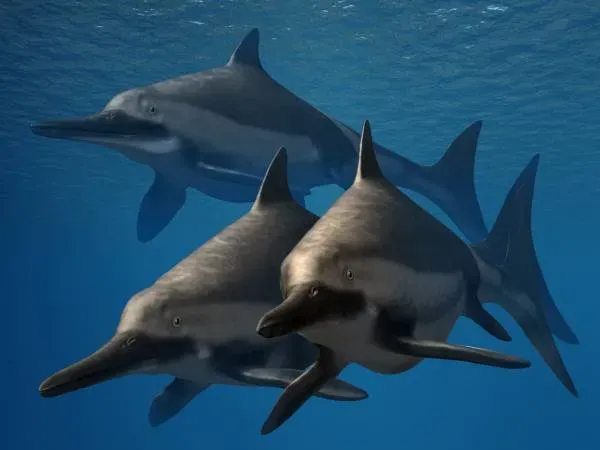
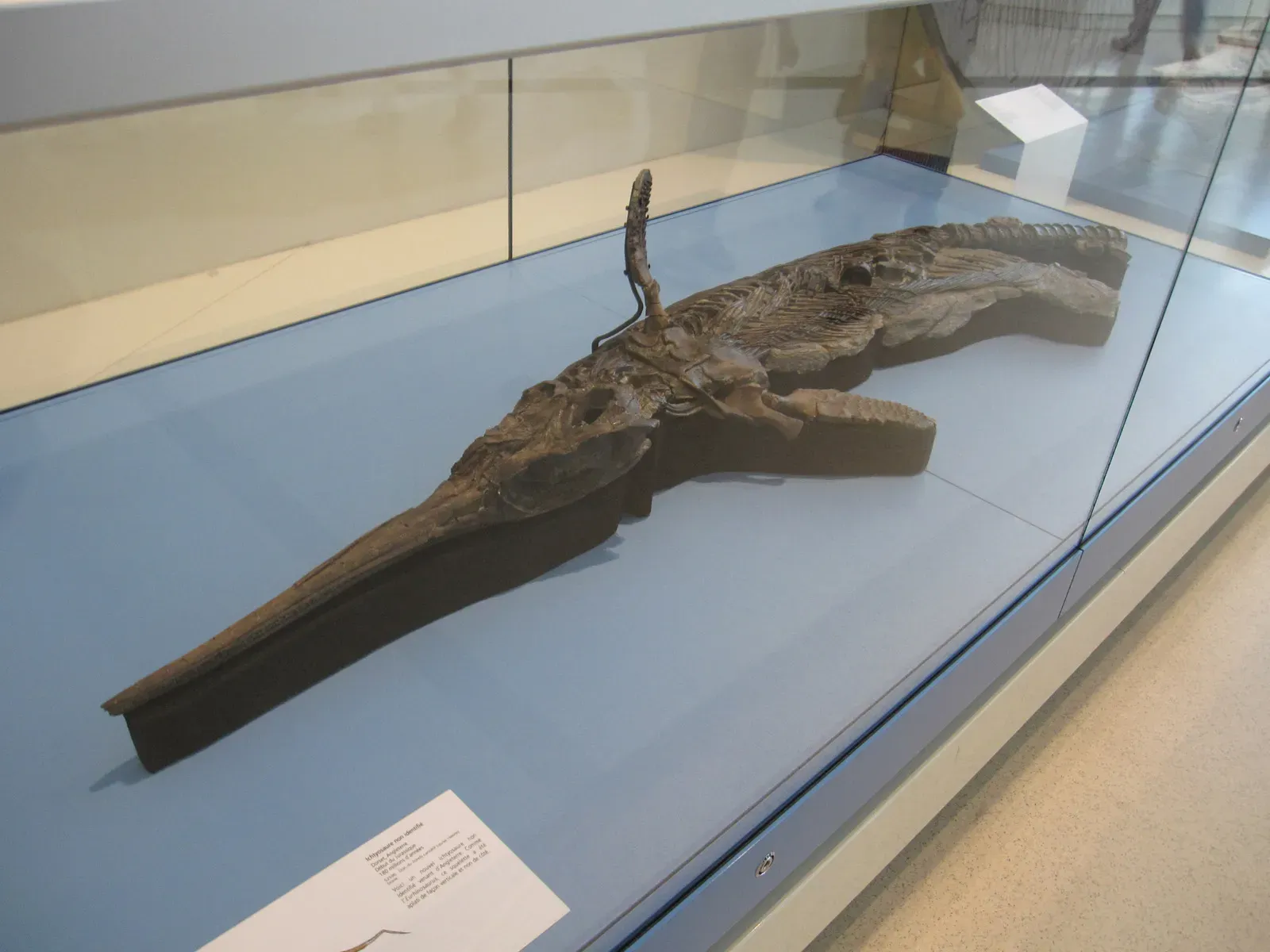
If you saw an ichthyosaur today, you’d probably mistake it for a dolphin. That’s not a coincidence. It’s one of the most stunning examples of convergent evolution you’ll ever encounter.
Ichthyosaurs were marine reptiles with a dolphin-like body shape that flourished during the Mesozoic era. In 2021, paleontologists described the skull of the Triassic ichthyosaur Cymbospondylus youngorum. Based upon the skull, the living reptile exceeded 50 feet in length and was comparable in size to large whales today. Most striking of all, however, is that the giant ichthyosaur lived 244 million years ago, just five million years after the first, tiny ichthyosaurs. That’s an almost incomprehensibly rapid transformation – like watching a kitten become a blue whale in the blink of geological time.
Among vertebrates, ichthyosaur eyes were both relatively and absolutely the largest known. Modern leopard seals can dive to up to 1 kilometer hunting on sight. Scientists suggest that ichthyosaurs, with their relatively much larger eye sockets, should have been able to reach even greater depths. Temnodontosaurus, with eyes that had a diameter of twenty-five centimeters, could probably still see at a depth of 1,600 meters. Enormous eyes designed for near-total darkness – those weren’t just adaptations, they were biological masterpieces.
Plesiosaurs: Long-Necked Lords With an Unusual Secret
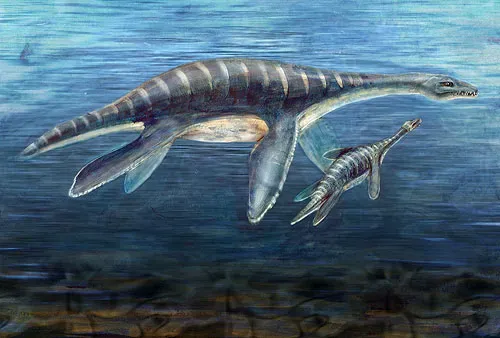
If any ancient marine reptile has fired up public imagination, it’s the plesiosaur. You’ve almost certainly seen artist reconstructions of that long swan-like neck rising out of dark water, possibly with the Loch Ness Monster lurking in the back of your mind.
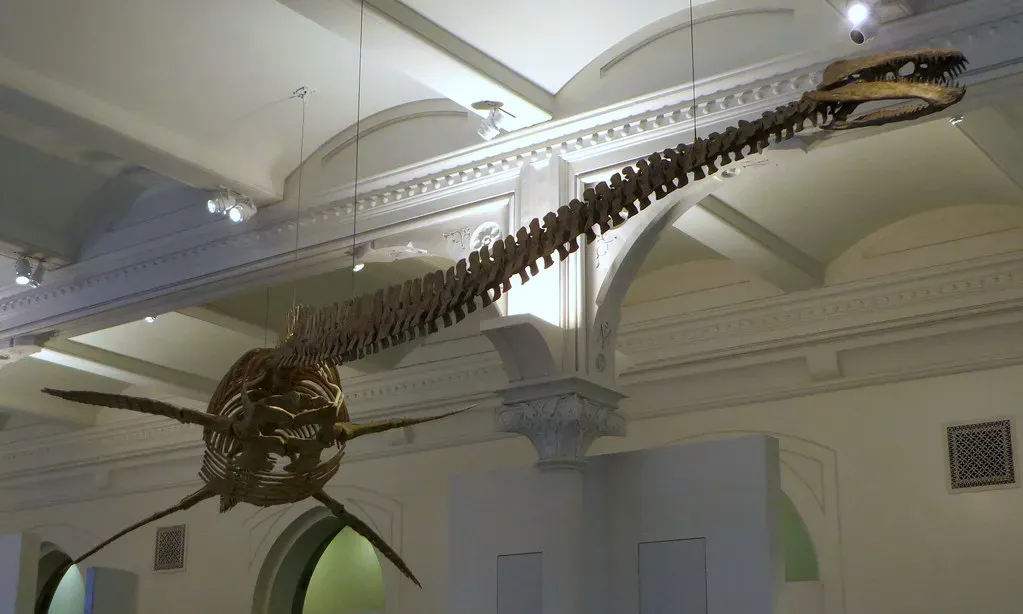
Plesiosaurs ruled the oceans for over 135 million years, surviving multiple extinction events and diversifying into one of the most successful groups of marine reptiles in Earth’s history. Some plesiosaurs had necks longer than their entire bodies, with as many as 70 or more vertebrae – more than any other known vertebrate animal. Others went in a completely different direction, abandoning long necks in favor of massive skulls, short muscular necks, and immense bite strength. These short-necked forms are commonly known as pliosaurs, and they represent one of the most extreme predatory body plans ever to evolve in the sea.
The flipper arrangement of plesiosaurs is unusual for aquatic animals in that probably all four limbs were used to propel the animal through the water by up-and-down movements. The tail was most likely only used for helping in directional control. This contrasts to the ichthyosaurs and the later mosasaurs, in which the tail provided the main propulsion. Imagine “flying” through the ocean on four wings rather than swimming with a tail – that’s exactly what plesiosaurs were doing.
Mosasaurs: The Ultimate Apex Predator You’ve Never Feared Enough
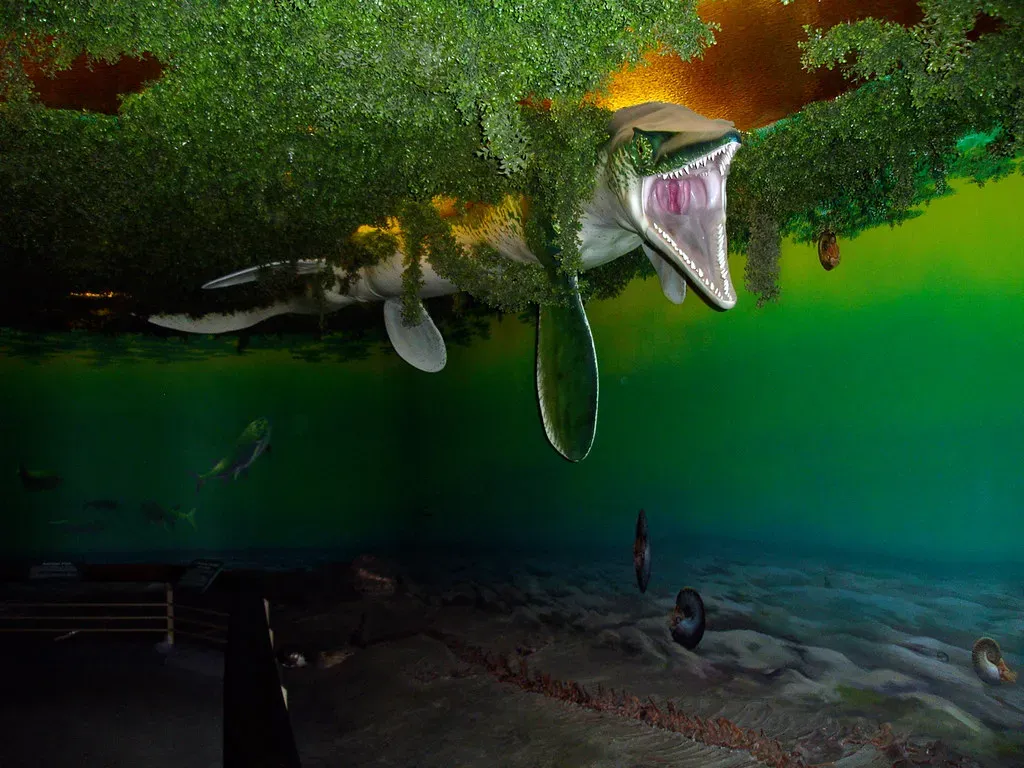
Forget everything you think you know about prehistoric ocean danger. Mosasaurs were on a completely different level – and they were the last great marine reptile dynasty before the curtain came down on the Mesozoic Era.
Mosasaurs were the real leviathans of the Mesozoic Era, gigantic marine lizards that grew as large as whales. Some were wide-ranging hunters of large prey while others snacked on shellfish at the bottom of shallow seas. They became the biggest predators of the Cretaceous oceans in just 25 million years, a short period in geologic time. The largest Mosasaurus reached more than 17 meters long and 15 tons, with a powerful skull as big as a grown man. This real-life leviathan preyed on huge turtles, sharks, and even other mosasaurs in the shallow Maastricht seas. Cannibalism included – these creatures had absolutely zero chill.
The coloration of mosasaurs was unknown until 2014, when the findings of Johan Lindgren of Lund University and colleagues revealed the pigment melanin in the fossilized scales of Tylosaurus nepaeolicus. Mosasaurs were likely countershaded, with dark backs and light underbellies, much like a great white shark or leatherback sea turtle. Even their camouflage was built for stealth. Nature really did design the perfect predator.
Warm-Blooded Reptiles: The Discovery That Changed Everything
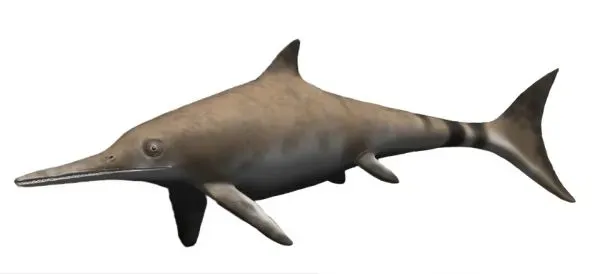
For a long time, scientists assumed that ancient marine reptiles were essentially large, sluggish, cold-blooded lizards with flippers. That assumption was spectacularly wrong. I think this particular scientific revelation deserves far more attention than it gets.
A 2010 study of extinct marine reptiles compared geochemical proxies for temperature in fossil teeth with those found in the fossils of extinct fish, generally regarded as having body temperatures heavily influenced by ocean temperature. The researchers found that both ichthyosaurs and plesiosaurs had elevated body temperatures compared with the fish. The reptiles were likely warm-blooded, which is consistent with the idea that they actively pursued prey instead of hunting by ambush as a crocodile does.
Many millions of years before whales and seals would evolve blubber, marine reptiles were already enjoying the benefits of thick subcutaneous fat. In 2018, paleontologists described a fossil of the Early Jurassic ichthyosaur Stenopterygius that preserved parts of the marine reptile’s skin as well as remnants of fats and proteins that made up the animal’s flesh. By 180 million years ago, the fossil revealed, ichthyosaurs had smooth skin. The findings also revealed that ichthyosaurs evolved blubber beneath their skin, an insulating layer of fat that helped them maintain warm, constant body temperatures. Blubber, warm blood, and live births – these were reptiles operating more like mammals in many ways.
Born in the Open Ocean: The Remarkable Truth About Reproduction
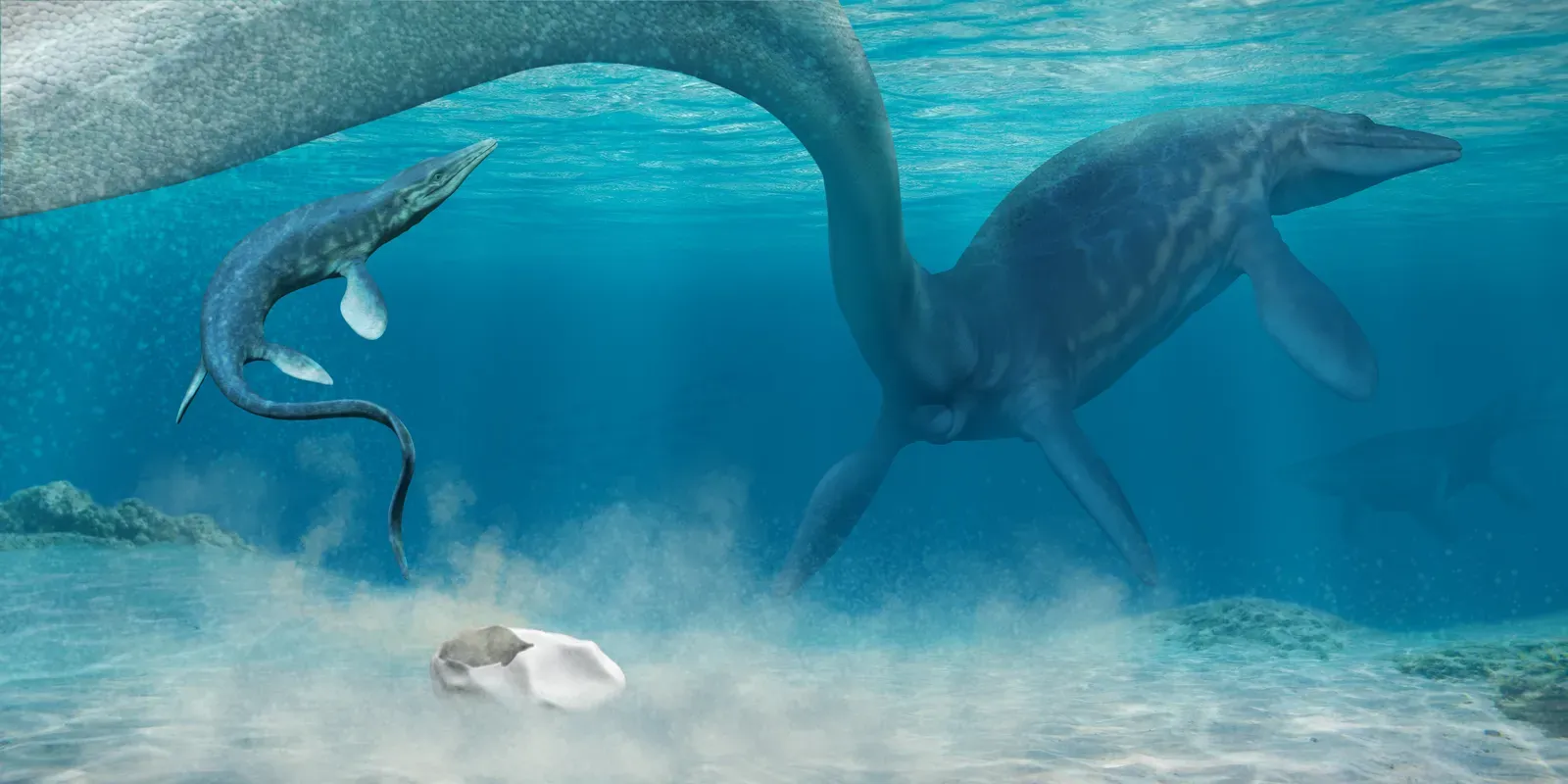
You might picture ancient marine reptiles hauling themselves onto beaches to lay eggs, much like modern sea turtles. That’s not the full picture. In fact, for several groups, it was the complete opposite.
Some marine reptiles, such as ichthyosaurs, plesiosaurs, metriorhynchid thalattosuchians, and mosasaurs became so well adapted to a marine lifestyle that they were incapable of venturing onto land and gave birth in the water. The discovery of several specimens of juvenile and neonate-sized mosasaurs unearthed more than a century ago indicates that mosasaurs gave birth to live young, and that they spent their early years of life out in the open ocean, not in sheltered nurseries or areas such as shallow water as previously believed.
This reproductive strategy meant adults never needed to return to land, allowing both plesiosaurs and pliosaurs to exploit offshore feeding grounds throughout their lives. Juveniles were likely born relatively large and well developed, increasing their chances of survival in predator-rich oceans. Born into the deep ocean, large enough to fend for themselves – prehistoric survival of the fittest at its most raw and unforgiving.
The Forgotten Ones: Lesser-Known Marine Reptile Groups
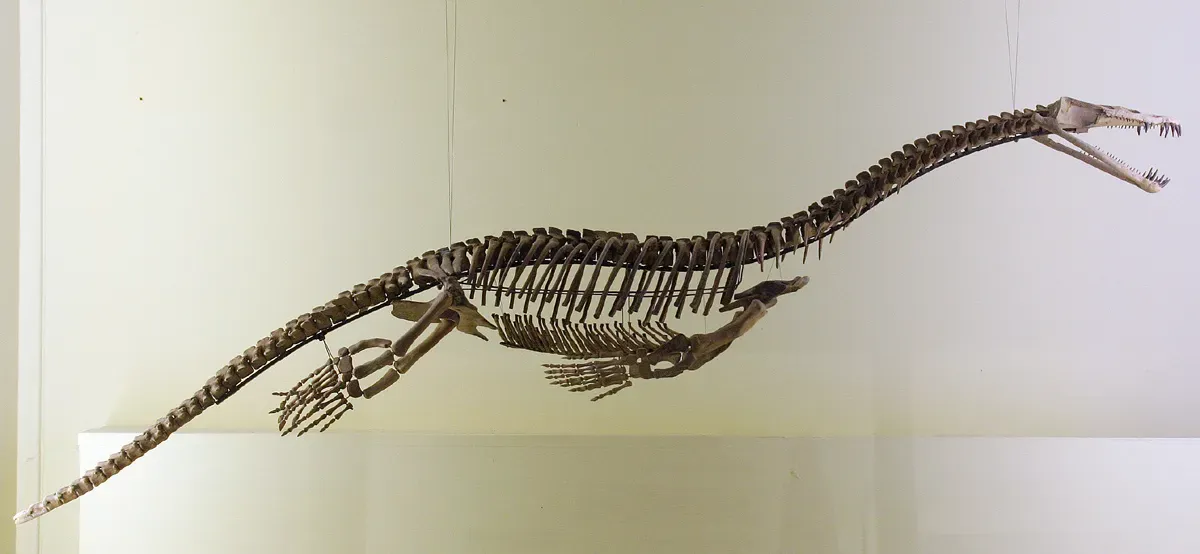
It’s easy to let ichthyosaurs, plesiosaurs, and mosasaurs steal all the glory. But honestly, the full cast of ancient marine reptiles was far more diverse and fascinating than most people ever hear about.
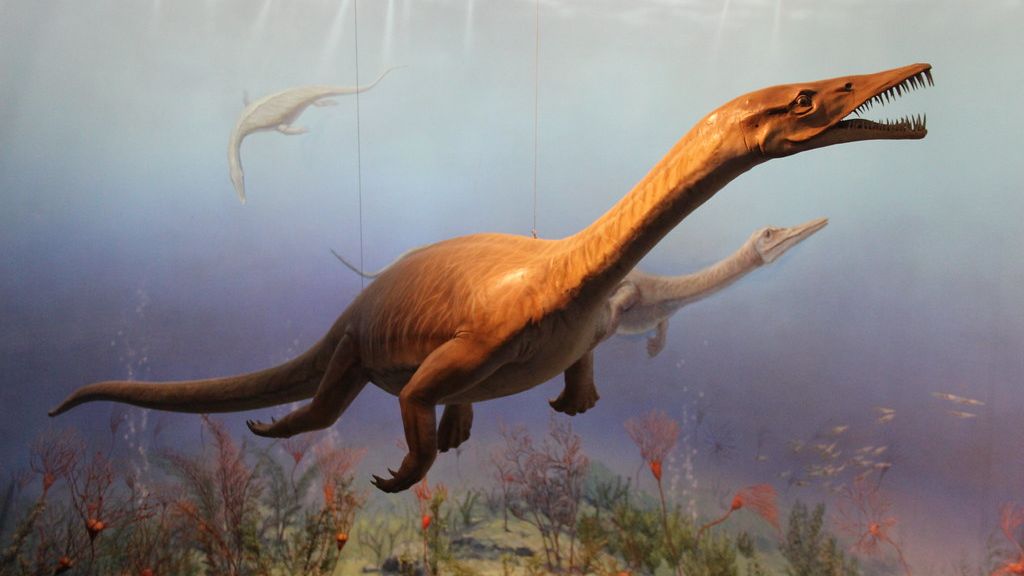
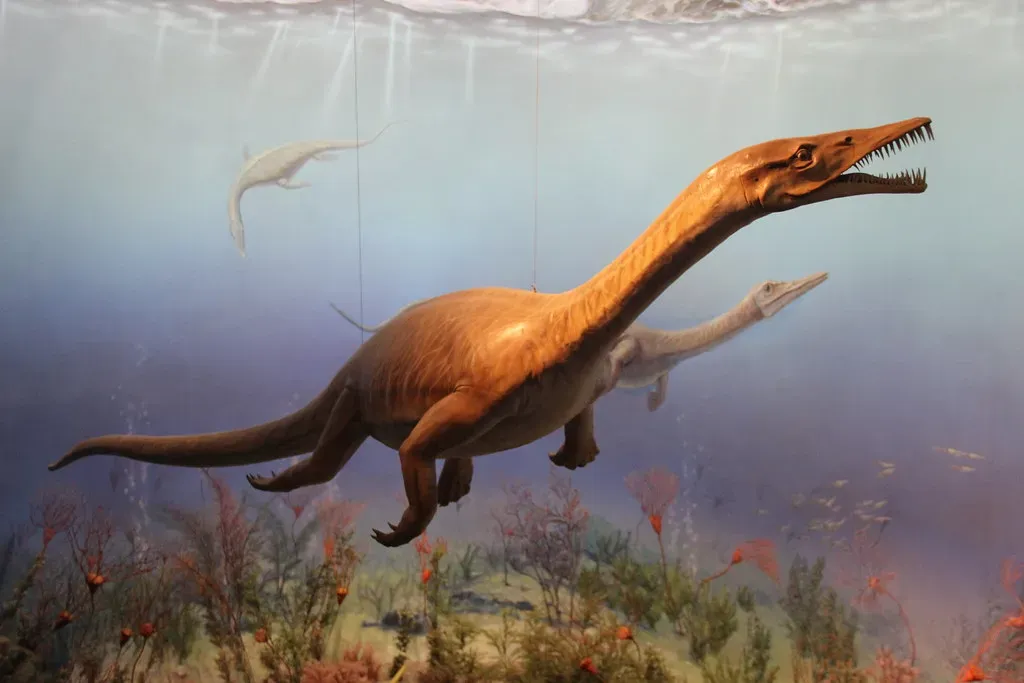
During the Mesozoic era, many groups of reptiles became adapted to life in the seas, including ichthyosaurs, plesiosaurs, mosasaurs, nothosaurs, placodonts, sea turtles, thalattosaurs, and thalattosuchians. Many of these were alive during the Triassic, including the long-tailed thalattosaurs, the very peculiar hupehsuchians, the mostly shellfish-eating placodonts, the fang-toothed helveticosaurs, the nothosaurs, and the pistosaurs. Each had their own role, their own niche, like characters in a vast ecological play that ran for hundreds of millions of years.
The highest diversity of marine reptiles was achieved in the Triassic. Mesozoic marine reptiles explored many different swimming styles and diets. Their diet included fish, cephalopods, other vertebrates, and hard-shelled invertebrates, whereas no herbivore is known at this point. It’s a sobering reminder of how much we’ve lost – an entire, irretrievably complex underwater world, gone, with only bones and rock to tell us it ever existed.
Extinction, Survival, and What Came Next
All great dynasties eventually fall. The story of marine reptile extinction is as dramatic as their rise – and it unfolded in waves rather than a single sudden crash.
While the plesiosaurs and ichthyosaurs were able to survive the end-Triassic extinction, they didn’t last forever. The last ichthyosaurs died out around 90 million years ago during the Cretaceous after they were unable to adapt to changes in the ocean and the extinction of some of their food sources. Plesiosaurs, meanwhile, lasted until the end of the Cretaceous. They were eventually wiped out during the same extinction event that killed the non-bird dinosaurs.
The mammals, once small and rodent-like, took advantage of the dinosaurs’ extinction and evolved in new directions, with some lineages eventually giving rise to the whales, seals, and manatees that live in the ocean today. Understanding how groups like ichthyosaurs, plesiosaurs, and mosasaurs came to be so successful in the Mesozoic seas can enhance our understanding of how modern groups such as whales and dolphins achieved the same success in similar roles in the ocean ecosystem. On the flip side, a better understanding of why those ancient groups went extinct can help us understand potential threats to our modern ocean ecosystems as well. Nature didn’t stop experimenting – it simply handed the ocean’s throne to a different set of rulers.
Conclusion: The Ocean’s Greatest Chapter, Still Being Written
The story of ancient marine reptiles is one of the most breathtaking tales in the entire history of life on Earth. You’re talking about creatures that evolved from land-walkers into ocean giants, grew warm blood, gave birth in the open sea, developed blubber, and dominated the planet’s oceans for more than 150 million years. That’s not a footnote in natural history – that’s the main event.
The study of ancient marine reptiles and their fossilized remains provides a unique window into Earth’s prehistoric oceans. And here’s what makes it even more exciting: there are new discoveries in paleontology made almost every day. With every new skeleton or other fossil found, new information comes to light. The fossil record is still giving up its secrets, still rewriting what we thought we knew, still finding ways to astonish us.
These creatures were not side characters in Earth’s story. They were the headliners – the undisputed masters of an ancient world we are only now beginning to understand. So next time you look out at the ocean, think about what once moved beneath its surface. What do you think – does the real deep sea history of our planet surprise you?