
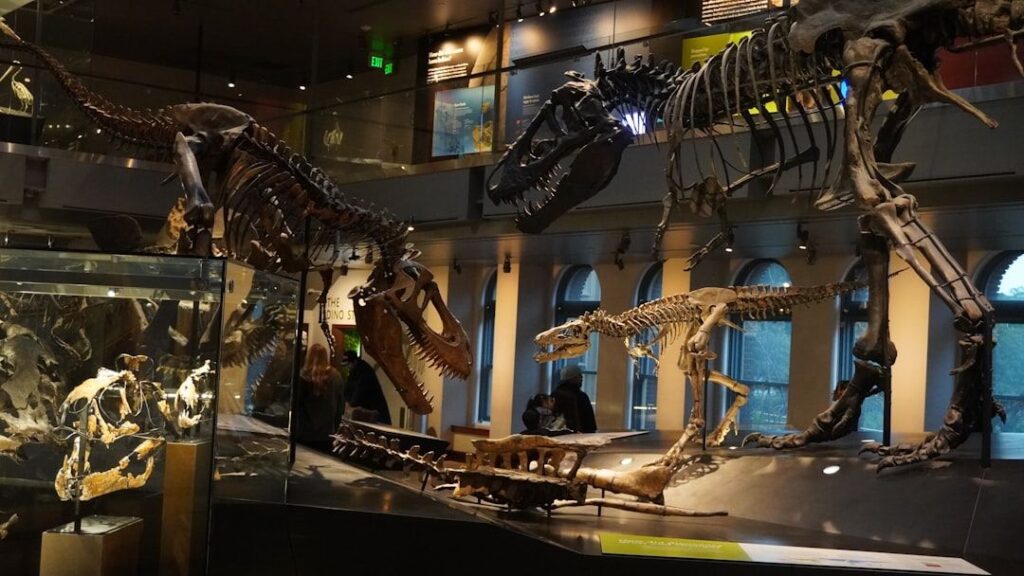
Imagine stepping outside on a quiet afternoon and stumbling across a bone sticking out of a hillside. Not an old cattle bone, not a tree root, but an ancient, mineralized remnant of a creature that walked the earth over 70 million years ago. It sounds like the plot of a movie, but for a surprising number of Americans, something close to this has actually happened. The United States, it turns out, is one of the most dinosaur-rich countries on the planet, and the fossils buried beneath your feet might be more extraordinary than you ever guessed.
You might assume that dinosaur country begins and ends somewhere out west, in the sun-baked deserts of Utah or the badlands of Montana. Honestly, that’s not the full story. From New Jersey marl pits to Alaska’s remote wilderness, the prehistoric past is woven into the very geology of this country in ways that continue to shock even the experts. Get ready, because what you’re about to discover might completely change how you look at the landscape around you. Let’s dive in.
Why America Is a Goldilocks Zone for Dinosaur Fossils
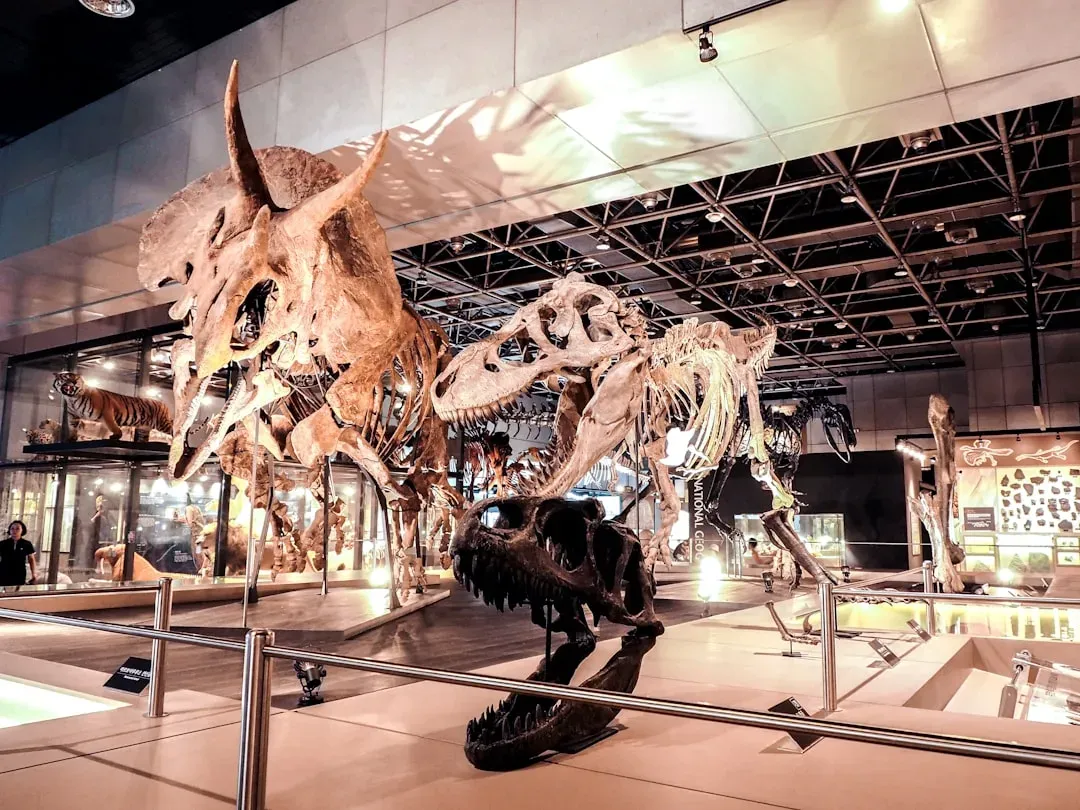
There’s a reason America keeps producing such a breathtaking number of dinosaur discoveries, and it comes down to something researchers have called the perfect timing window. The rocks that preserve the fossil records have been recently uplifted and eroded by natural processes, making the exposed rock of western North America conspicuously sparse in vegetation, which allows for enhanced erosion and, consequently, fossil discovery. Think of it like this: the geology of western America is essentially peeling itself open, revealing what’s been locked inside for millions of years.
According to a study on fossil preservation, fossils preserved in North America’s Western Interior Basin record an exceptional peak in the diversification of dinosaur fossils towards the end of the Cretaceous period. So you’re not just finding random old bones here. You’re finding evidence of an evolutionary explosion, a moment in prehistoric time when dinosaurs were at their most diverse and spectacular before the asteroid ended it all.
The East Coast Surprise: New Jersey’s Groundbreaking Discovery
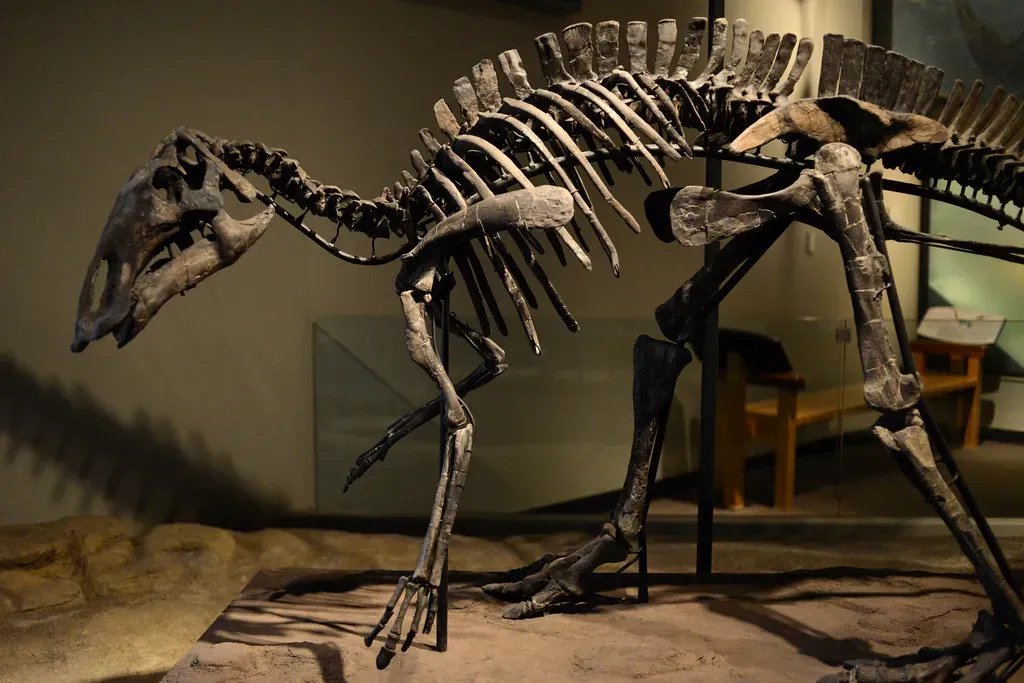
Most people would never guess that the discovery which truly launched the modern age of dinosaur science happened not in Wyoming or Utah, but in a small New Jersey town. It may be surprising that one of the most significant discoveries in paleontology happened on the east coast, when in 1838, a number of large bones were uncovered on the property of John Estaugh Hopkins in a marl pit near present-day Haddonfield, New Jersey, and Hopkins put the remains on display at his farm. The world, at that point, had no real idea what was hiding in American soil.
Hadrosaurus is a famous dinosaur because it was the most complete dinosaur skeleton unearthed anywhere in the world when it was discovered and scientifically documented in 1858. According to the Academy of Natural Sciences, Hadrosaurus foulkii is “The Dinosaur that changed the world,” because its discovery set off the infamous Bone Wars that sent scientists Edward Drinker Cope and Othniel Charles Marsh scrambling across the continent to find and excavate what became an endless trove of dinosaur fossils. One small marl pit in New Jersey essentially started the whole thing. Let that sink in for a moment.
The Morrison Formation: America’s Greatest Dinosaur Treasure Chest
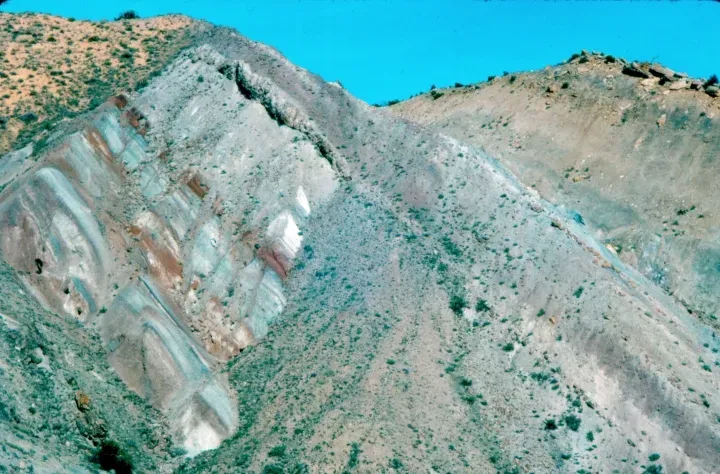
If you were forced to pick one geological formation that defines American paleontology, it would be the Morrison. The Morrison Formation is a distinctive sequence of Upper Jurassic sedimentary rock found in the western United States, which has been the most fertile source of dinosaur fossils in North America. It is centered in Wyoming and Colorado, with outcrops in Montana, North Dakota, South Dakota, Nebraska, Kansas, the panhandles of Oklahoma and Texas, New Mexico, Arizona, Utah, and Idaho. That’s a staggering geographic spread, almost like an ancient buried world lying beneath a dozen modern states at once.
Many famous dinosaurs were named from discoveries within the Morrison, including the carnivores Allosaurus, Ceratosaurus, Coelurus, and Ornitholestes; the sauropods Apatosaurus, Brontosaurus, Camarasaurus, and Diplodocus; and the stegosaur Stegosaurus. Fossils of nearly 50 different species of dinosaurs have been discovered in the Morrison Formation alone. That number is almost hard to believe, but the rock simply does not lie. You could spend several lifetimes digging in Morrison country and still not exhaust what’s there.
Montana: Where the Giants Sleep and New Species Keep Waking Up
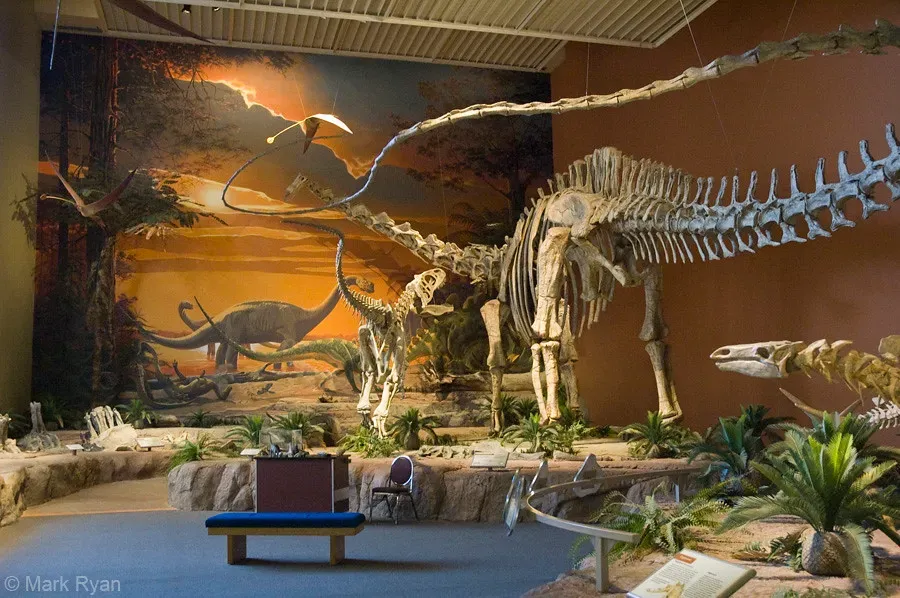
Montana is the kind of place where ranchers sometimes find dinosaur bones just by walking their own land after a heavy rain. Montana is a genuine hotspot for dinosaur bones, especially in locations such as Yellowstone National Park, where paleontologists have dug up bones belonging to at least 75 dinosaur species that once lived in the region, with over 909 fossils recovered. That’s an almost absurd concentration of prehistoric life, all packed into one state.
In 2024, one of the most visually spectacular dinosaur discoveries in years came straight out of northern Montana. A remarkable new species of horned, plant-eating dinosaur was unveiled at the Natural History Museum of Utah, excavated from the badlands of northern Montana just a few miles from the USA-Canada border. It is among the largest and most ornate ever found, with two huge blade-like horns on the back of its frill, and its distinctive horn pattern inspired its name: Lokiceratops rangiformis, meaning “Loki’s horned face that looks like a caribou.” I think it’s safe to say that discovering a real-life Loki dinosaur is about as exciting as paleontology gets.
Wyoming’s Ancient Secrets and the Bone Wars Legacy
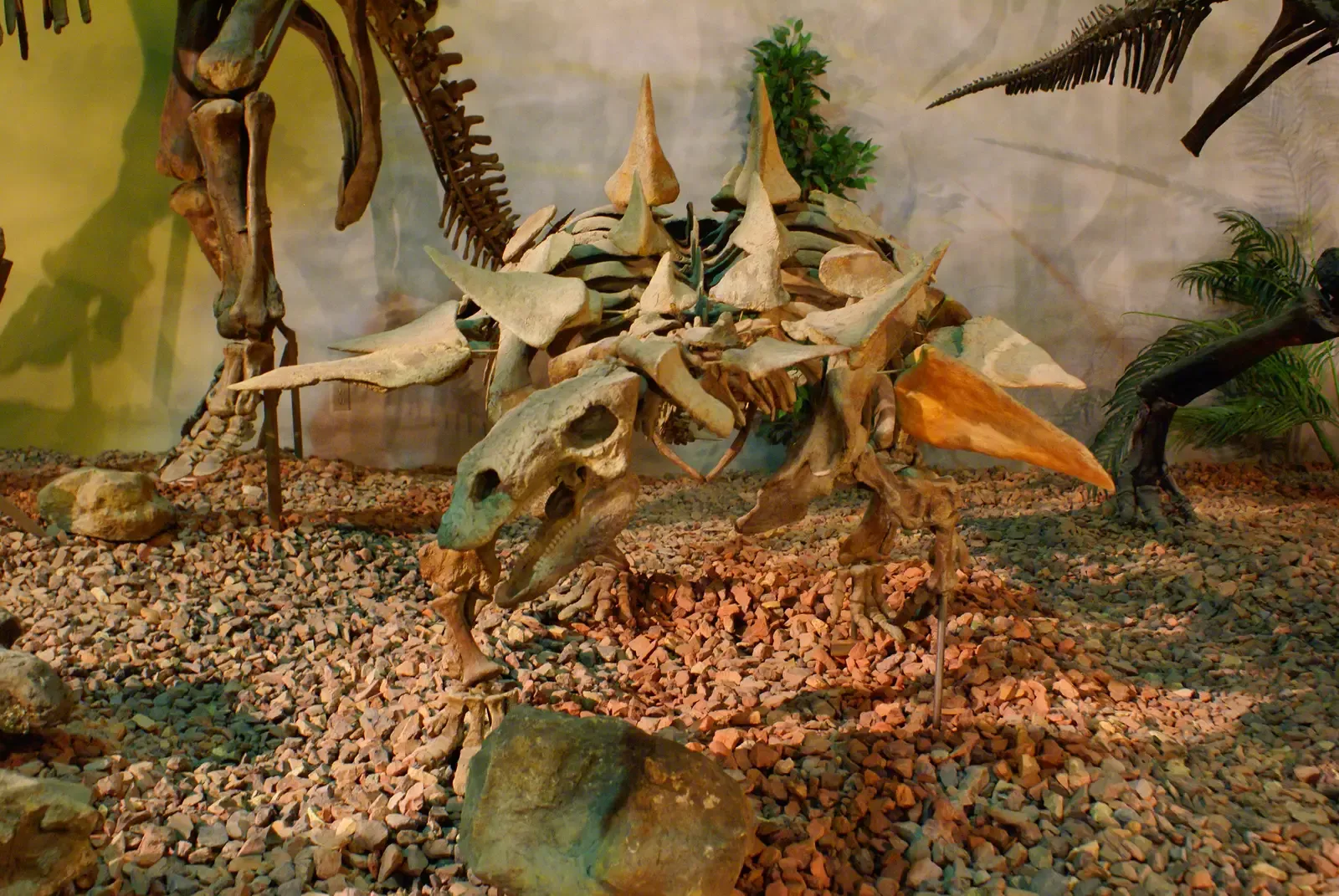
Wyoming holds a special place in the story of American dinosaur hunting. In Wyoming, scientists have unearthed over 1,000 fossilized remains, making it the second most popular spot in the United States for finding dinosaurs. There’s something poetic about the fact that the same wide open plains and dramatic landscapes that once made Wyoming wild country are also what make it so extraordinarily rich in prehistoric remains.
The Bone Wars of the 1870s, a bitter rivalry between paleontologists Cope and Marsh, largely played out in Wyoming and Colorado. Study of the Morrison Formation took off with finds in three places in early 1877: Garden Park, Colorado; Morrison, Colorado; and Como Bluff, Wyoming. These finds were reported to Edward Drinker Cope and Othniel Charles Marsh, a pair of prolific vertebrate paleontologists who were in fierce competition, and they helped spur the legendary Bone Wars. The two scientists eventually lost sight of the science and focused instead on sabotaging each other’s progress, hurling accusations of spying and fossil theft and even destroying fossils to prevent them from falling into the other’s hands. It reads like a Hollywood script, and yet every word of it is real history.
The Midwest Underwater World: A Different Kind of Fossil Story
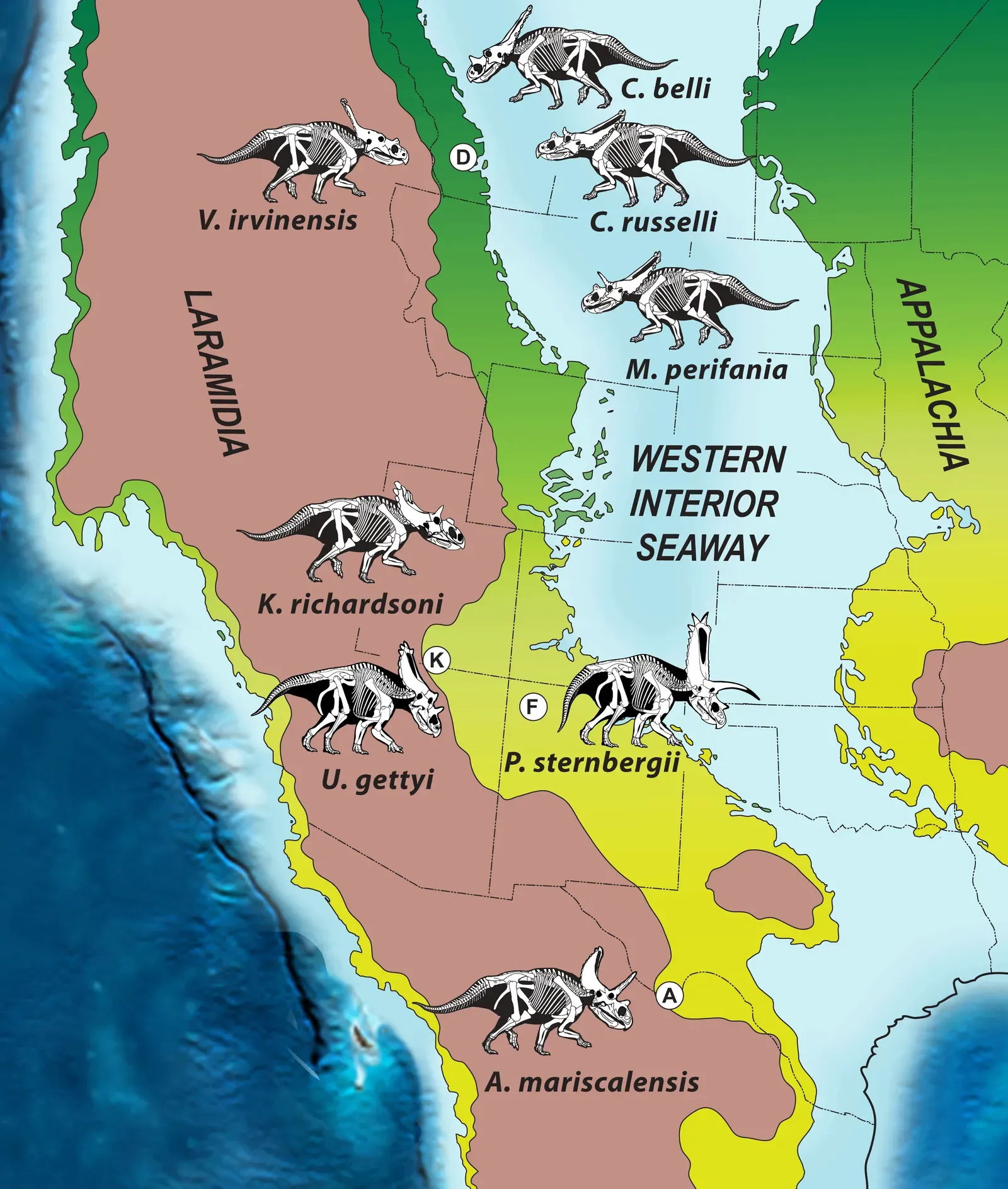
Here’s the thing about the Midwest: it wasn’t exactly dinosaur territory in the traditional sense, and the reason why is genuinely fascinating. For nearly the entire time dinosaurs existed on Earth, what would become the Midwest was actually underwater. Referred to as the Western Interior Seaway, this giant sea split the North American continent completely in two and existed for around 34 million years, and fossils of sea life from that time, such as ammonites and Pteranodons, are commonly found in the area. Picture Kansas as the bottom of a vast prehistoric ocean. That’s not science fiction; that’s geology.
Missouri even designated a state dinosaur in 2022. The Parrosaurus missouriensis was discovered in 1942 and to date is the only species of dinosaur ever discovered in Missouri. Originally classified as a sauropod, it is now thought to have been a hadrosaur, a “duck-billed dinosaur.” In Iowa, the formation of glaciers is likely another reason why dinosaur bones are difficult to find. The “Des Moines lobe” was a large glacier that traveled through north-central and central areas of the state around 15,000 years ago, and the movement of glaciers can destroy fossils that may have been there originally, or even push them to another location, giving another state the future glory of dinosaur discovery. Nature, it seems, is the most unpredictable archaeologist of all.
The Nanotyrannus Revelation: North Carolina’s Jaw-Dropping Moment
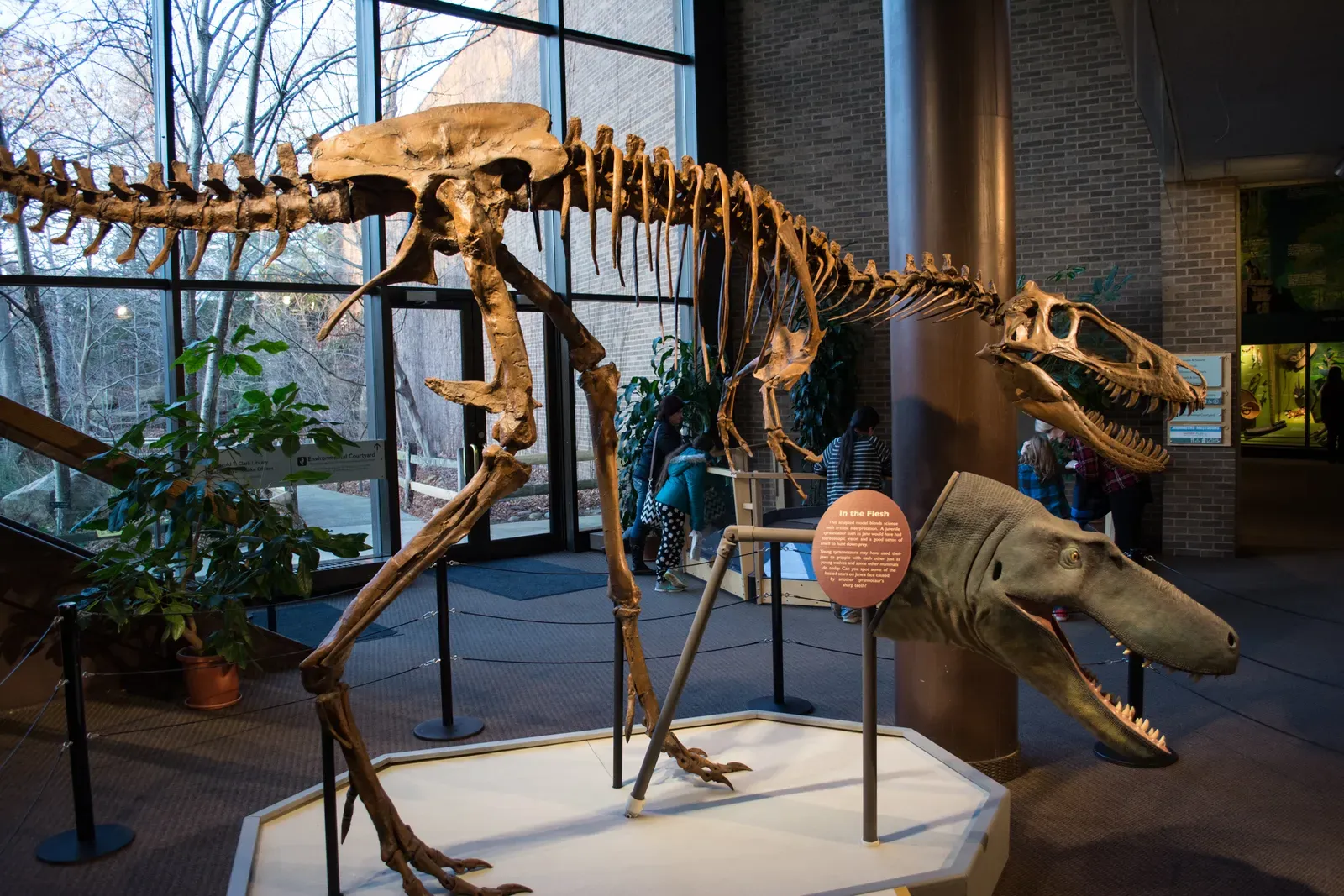
North Carolina is not where you’d expect the biggest dinosaur story of recent years to unfold. Yet in 2025, a groundbreaking announcement from the North Carolina Museum of Natural Sciences rewrote a decades-old chapter of paleontology. The Dueling Dinosaurs fossil contains two dinosaurs preserved together in a potential predator-prey encounter: a Triceratops and what was originally thought to be a juvenile tyrannosaur, found buried together in the Hell Creek Formation of Montana.
That tyrannosaur is now confirmed to be a fully grown Nanotyrannus lancensis, not a teenage Tyrannosaurus rex as many scientists once believed. The implications are profound, because for decades, paleontologists used Nanotyrannus fossils to model T. rex growth and behavior, and new evidence reveals that those studies were based on two entirely different animals, and that multiple tyrannosaur species inhabited the same ecosystems in the final million years before the asteroid impact. You could argue this is one of the most important dinosaur revelations in a generation, and it happened right here in America.
The Cutting Edge: How Science Is Rewriting Fossil Discovery in Real Time
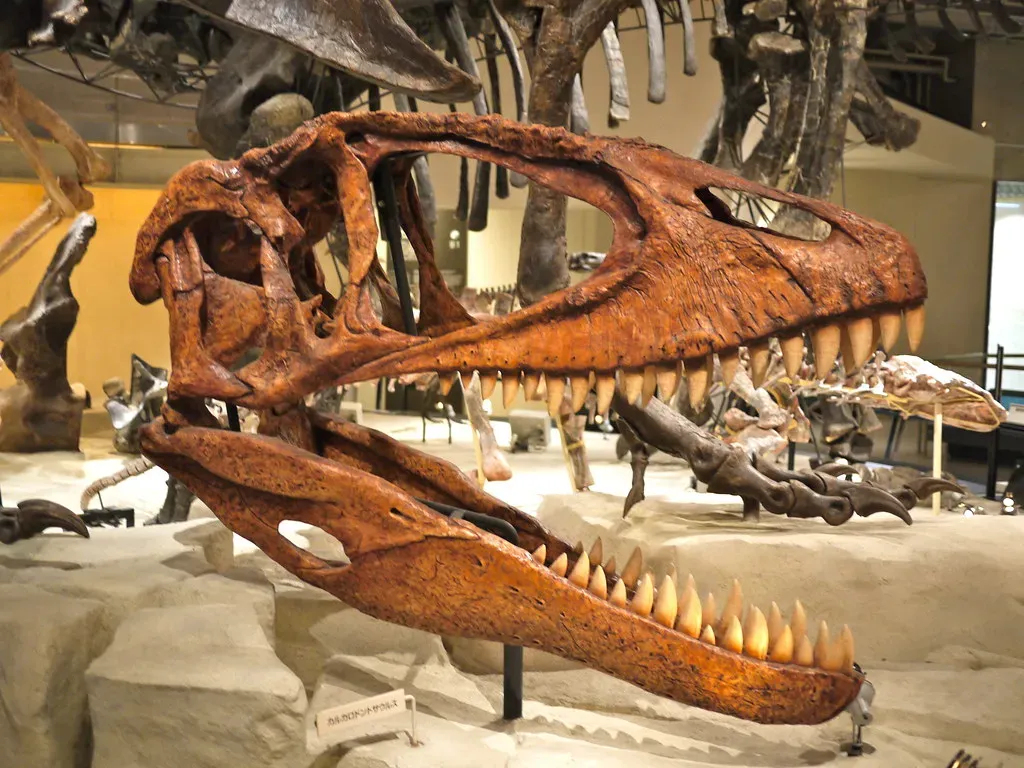
What makes the world of American fossil discovery so thrilling right now, in 2026, is that the science is accelerating faster than ever before. With studies of fossilized bones, gut contents, eggshells and more, paleontologists are revealing new and captivating details about the enormous reptiles that once roamed the Earth, with newly discovered species filling gaps in dinosaur evolution and shedding light on historic migrations. It’s not just about digging anymore. It’s about reading the deep language of ancient chemistry, color, and even behavior from bones that have waited millions of years to tell their story.
One of the most startling recent finds rewrote the very origin story of dinosaurs on this continent. Paleontologists in the United States uncovered the fossilized remains of a new species of sauropodomorph dinosaur that lived in the northern hemisphere during the Carnian age of the Late Triassic epoch, around 230 million years ago. Named Ahvaytum bahndooiveche, this sauropodomorph is the oldest known Laurasian dinosaur, discovered right in Wyoming. It’s hard to say for sure where the next earthshaking discovery will come from, but given America’s extraordinary geological diversity, the odds are it will happen right here, possibly in a state you wouldn’t expect, maybe even close to where you live.
Conclusion
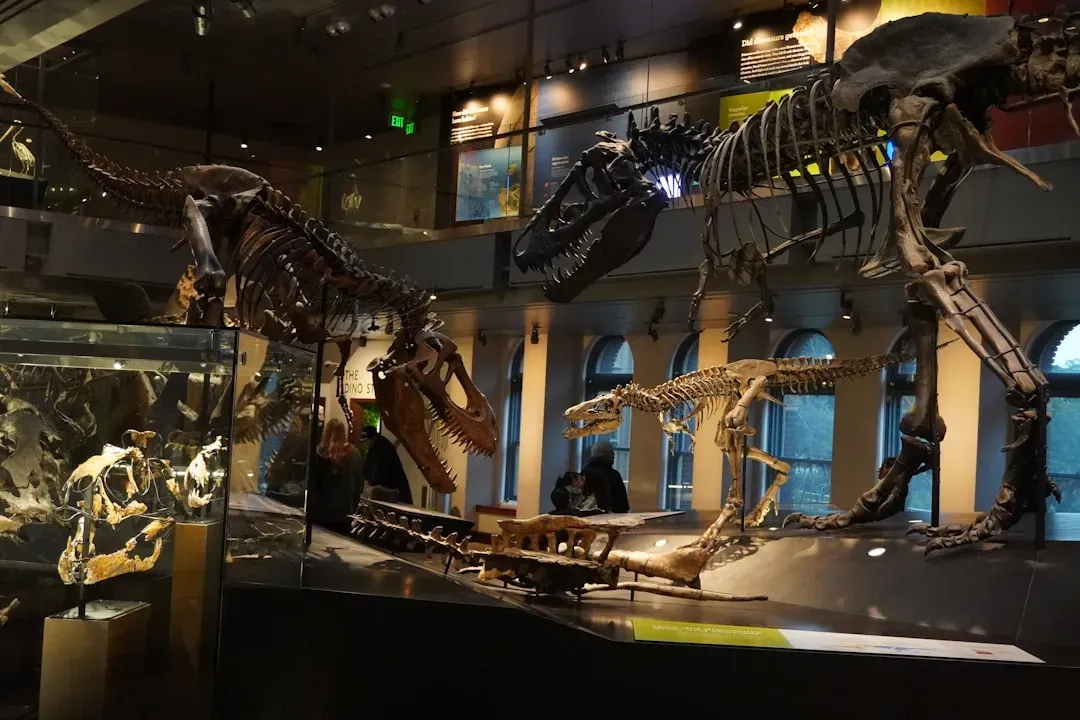
The story of dinosaurs in America is really your story, whether you realize it or not. You live on top of ancient layers of time, and somewhere beneath the suburbs, the farmland, the forests, and the deserts, there are bones that have never been seen by human eyes. Dinosaur fossils have been found across a remarkable number of U.S. states, including Alabama, Alaska, Arizona, Arkansas, California, Colorado, Connecticut, Delaware, Georgia, Idaho, Iowa, Kansas, Louisiana, Maryland, Massachusetts, Minnesota, Mississippi, Missouri, Montana, Nebraska, Nevada, New Jersey, New York, North Carolina, North Dakota, Oklahoma, Pennsylvania, South Carolina, South Dakota, Tennessee, Texas, Utah, Virginia, Washington, and Wyoming. That list is almost certainly going to grow.
Every discovery, from the humble marl pit in Haddonfield to the blade-horned Lokiceratops of Montana, adds another piece to a puzzle that scientists have been trying to solve for nearly two centuries. The extraordinary thing is that the puzzle is still far from complete. So the next time you’re out hiking, gardening, or simply walking across a rocky hillside, take a second look at what’s beneath your feet. The Mesozoic world didn’t fully disappear. It’s just waiting to be found again. What do you think is still out there, undiscovered? Tell us in the comments.