You already know the land dinosaurs. You’ve seen the movies, the museum skeletons, the endless T. rex merchandise. Everybody knows the T. rex. But here’s the thing – while those famous giants were stomping around on dry land, something far more nightmarish was happening beneath the waves. The oceans of the Mesozoic era were not the peaceful, shimmering expanses we imagine today. They were absolute arenas of terror, ruled by creatures so formidable that even a Tyrannosaurus rex would seem outclassed if it dared to wade in too deep.
Before large mammals ever took to the sea, reptiles ruled the ocean. During the Mesozoic, these massive creatures were the top predators in the ocean food chain and fed on fish, cephalopods, bivalves, and even one another. Most people never think about that. We fixate on the land. We forget the water. So let’s fix that – because what was lurking in the prehistoric deep is genuinely shocking.
The Mesozoic Ocean Was a World Unlike Anything You’ve Seen
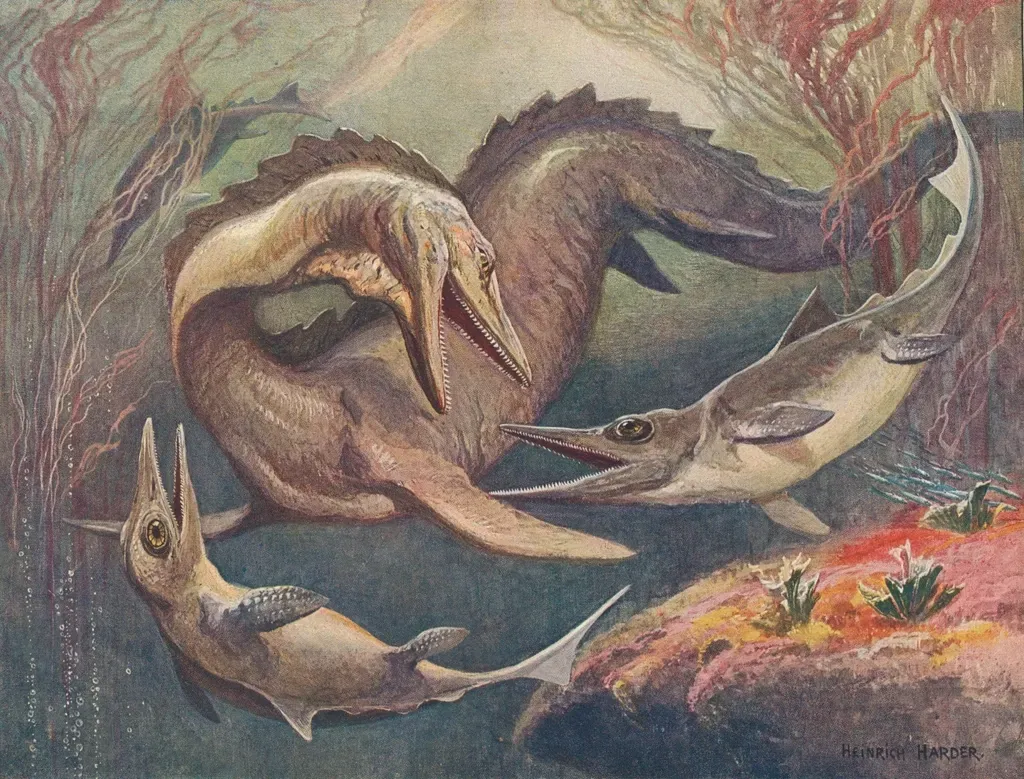
The Mesozoic era was known as the “Age of Reptiles,” a period during which the supercontinent Pangea started to split into the modern continents, and prehistoric animals like dinosaurs, pterosaurs, pliosaurs, and ichthyosaurs roamed the Earth. The seas of this era were not merely alive – they were stacked with layers of predators hunting other predators, in a food web that makes today’s oceans look almost quaint by comparison.
The Mesozoic seas were thriving ecosystems structured much like the ecosystems that exist today, with phytoplankton forming the base of the food web and large predators at the top. The higher sea level during the Jurassic and Cretaceous created large areas of shallow seas where toothed fish, reptiles, birds, and flying pterosaurs stalked their prey. Honestly, if you dropped a modern great white shark into those waters, it would have been a snack – not the apex predator.
Marine Reptiles Were NOT Dinosaurs – And That Actually Makes Them More Fascinating
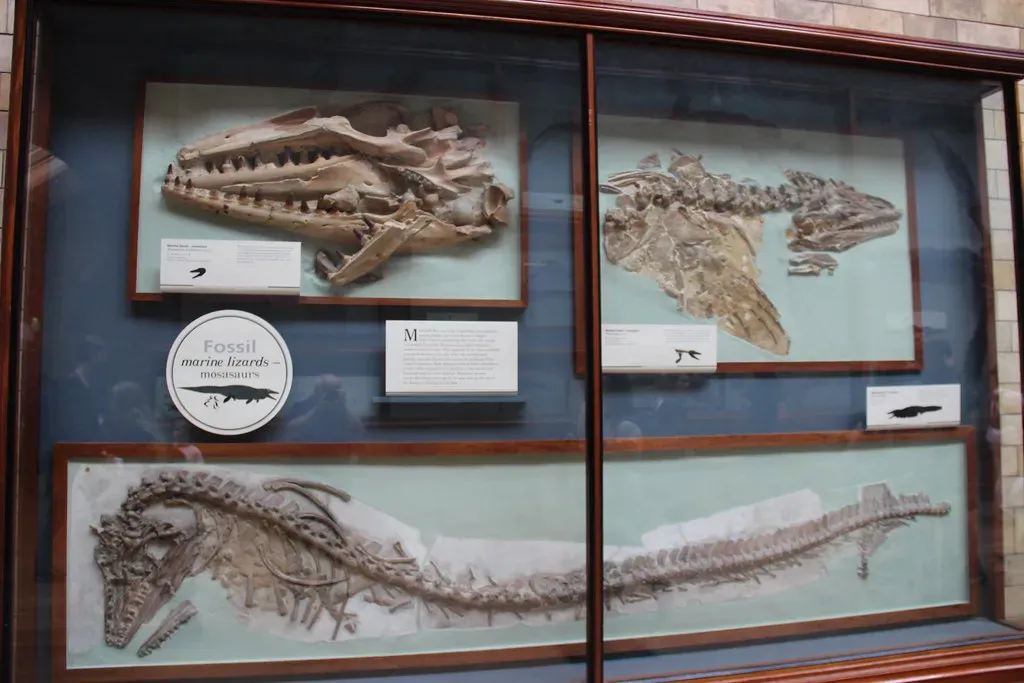
The ancient sea reptiles were not dinosaurs – one of the most important distinctions in paleontology – though they are often closely associated with dinosaurs because they ruled the oceans at the same time dinosaurs ruled the land. This is one of the most common misconceptions you’ll hear at a natural history museum. People point at a mosasaur skeleton and call it a marine dinosaur. That’s not accurate at all.
Marine reptiles were not dinosaurs, since they had different ancestors than dinosaurs. Many marine reptiles were also only distantly related to each other. Think of them less as a unified family and more as an extraordinary convergence of evolution – different reptile lineages, all independently finding their way back to the sea, and all independently becoming monsters at it.
Ichthyosaurs: The Dolphins That Could Have Swallowed Your Boat
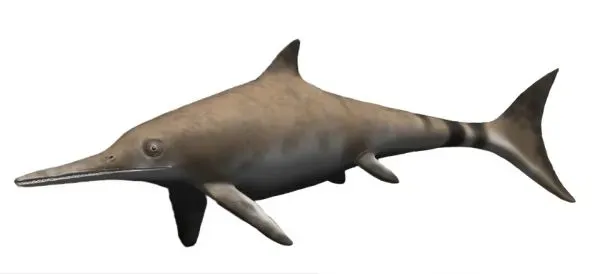
If you try to picture a reptilian version of a dolphin, you won’t be far off the appearance of an ichthyosaur. This diverse group of pointed-nose predators evolved to have dolphin- or fish-like bodies, but they looked far more menacing. Ichthyosaurs evolved around 250 million years ago and went extinct around 90 million years ago. The streamlined, familiar silhouette is deceptive – these were not gentle creatures riding the bow wave of a ship.
The largest species recorded to date is Shonisaurus sikanniensis, collected from British Columbia, Canada. This giant ichthyosaur lived about 215 million years ago and has an estimated length of 21 meters. Some fragmentary finds suggest that ichthyosaurs were probably able to grow even longer, reaching a length of about 25 to 26 meters – around the average size of a blue whale. That means you could have something dolphin-shaped and whale-sized hunting in those ancient waters. I know it sounds crazy, but it’s what the fossil record keeps telling us.
Eyes Like Footballs: The Ichthyosaur’s Secret Weapon
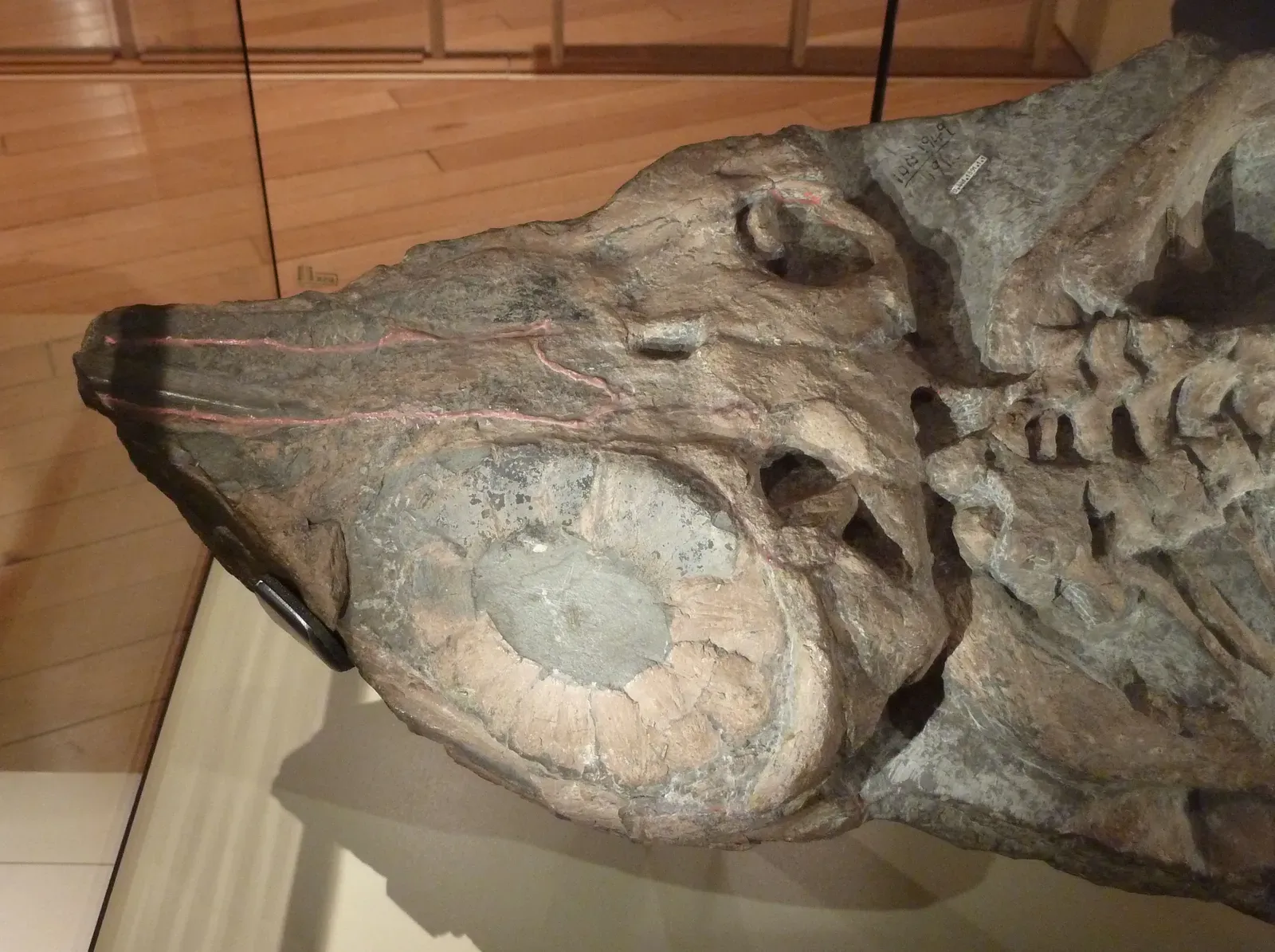
The eyes of ichthyosaurs were large in comparison to the size of the body, suggesting they hunted by sight even in dimly-lit waters or at night. Ichthyosaurs hold the record for eye size among vertebrates: the largest was 264mm in diameter, from the species Temnodontosaurus platyodon. This is the largest eye ever recorded for any vertebrate, though the colossal squid eye is larger still. To put that in perspective, that’s roughly the size of a soccer ball lodged in a skull.
Researchers suggested that ichthyosaurs, with their relatively much larger eye sockets, should have been able to reach great depths. Temnodontosaurus, with eyes that had a diameter of twenty-five centimetres, could probably still see at a depth of 1,600 metres. At these depths, such eyes would have been especially useful to see large objects. That means your ichthyosaur was hunting in the deep ocean in near-total darkness, using eyesight that no other predator could match. Terrifying, honestly.
Pliosaurs: The Undisputed Kings of the Jurassic Sea
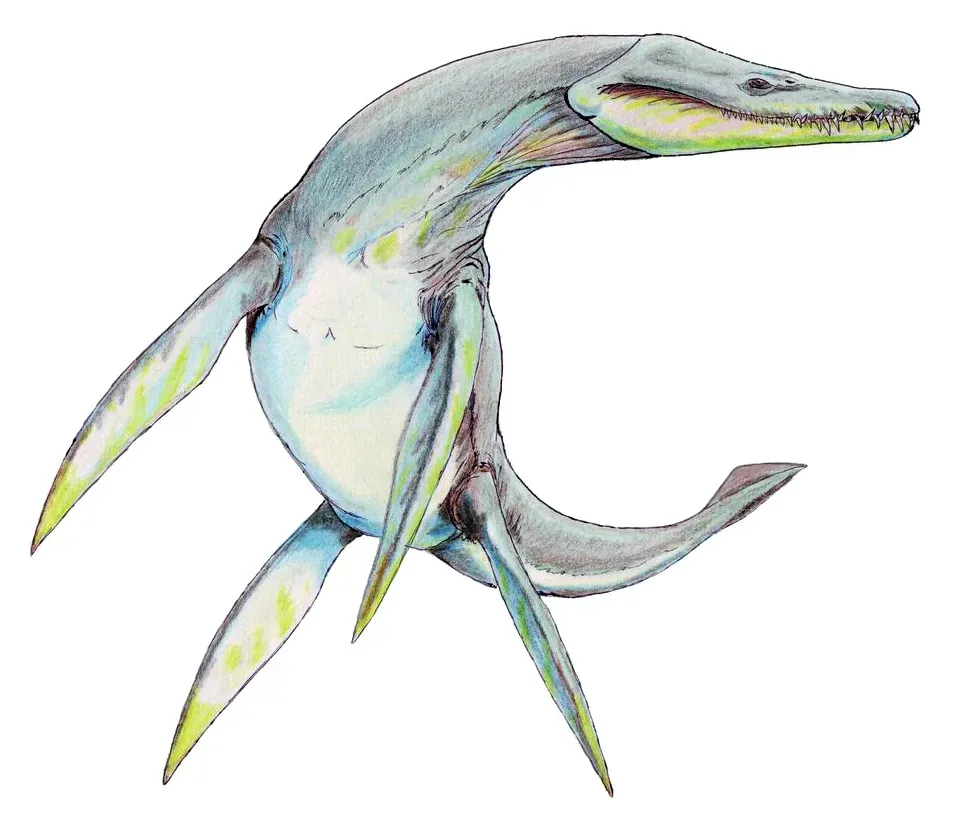
Among the most impressive groups are the pliosaurs, close relatives of plesiosaurs that grew to truly enormous sizes and were the unquestioned top predators of the Jurassic oceans. These were not subtle hunters. The thalassophonean pliosaurs looked like a cross between a crocodile and a whale, with short necks, huge heads, large paddle-shaped flippers, and powerful, hydrodynamic bodies. They were the largest members of Plesiosauria, reaching lengths of more than 11 meters in the case of Kronosaurus and Pliosaurus macromerus. They were also the largest marine reptiles for the majority of their existence, ruling the world’s oceans as apex predators for more than 80 million years.
During 2006 and 2007, a team of researchers from Norway discovered Pliosaurus funkei, also known as Predator X, a new species of pliosaur. The creature lived about 147 million years ago, at the end of the Jurassic period. A pliosaur estimated to have been between 10 and 13 meters in length, it is one of the largest ever found. According to its jaw structure, it was more powerful than both a white shark and a Tyrannosaurus rex. Let that sink in – the bite that dethroned the T. rex belonged to a sea creature.
Mosasaurs: The Last and Perhaps Most Terrifying Rulers
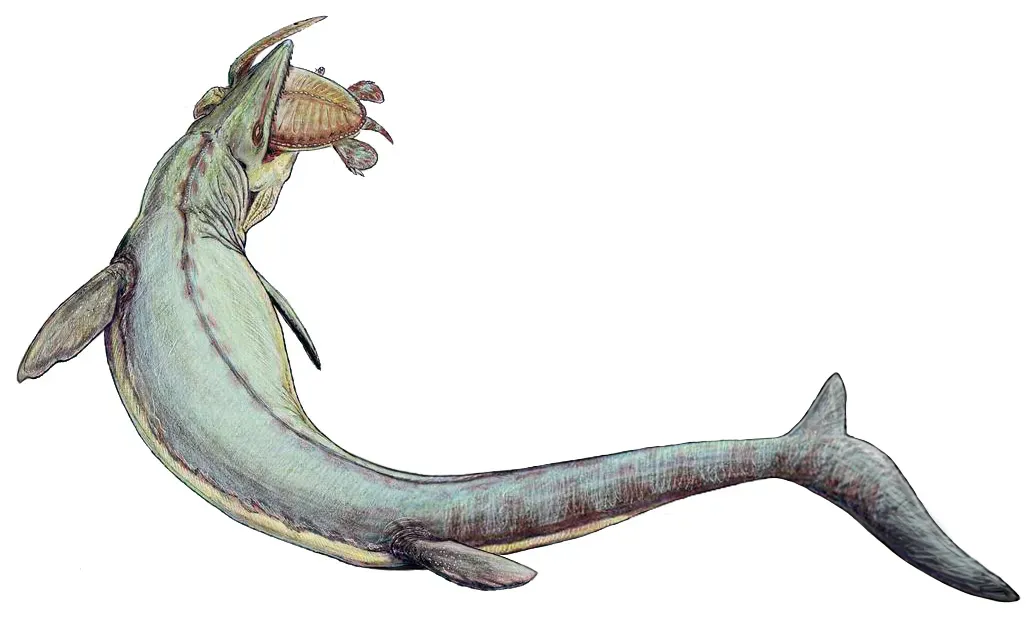
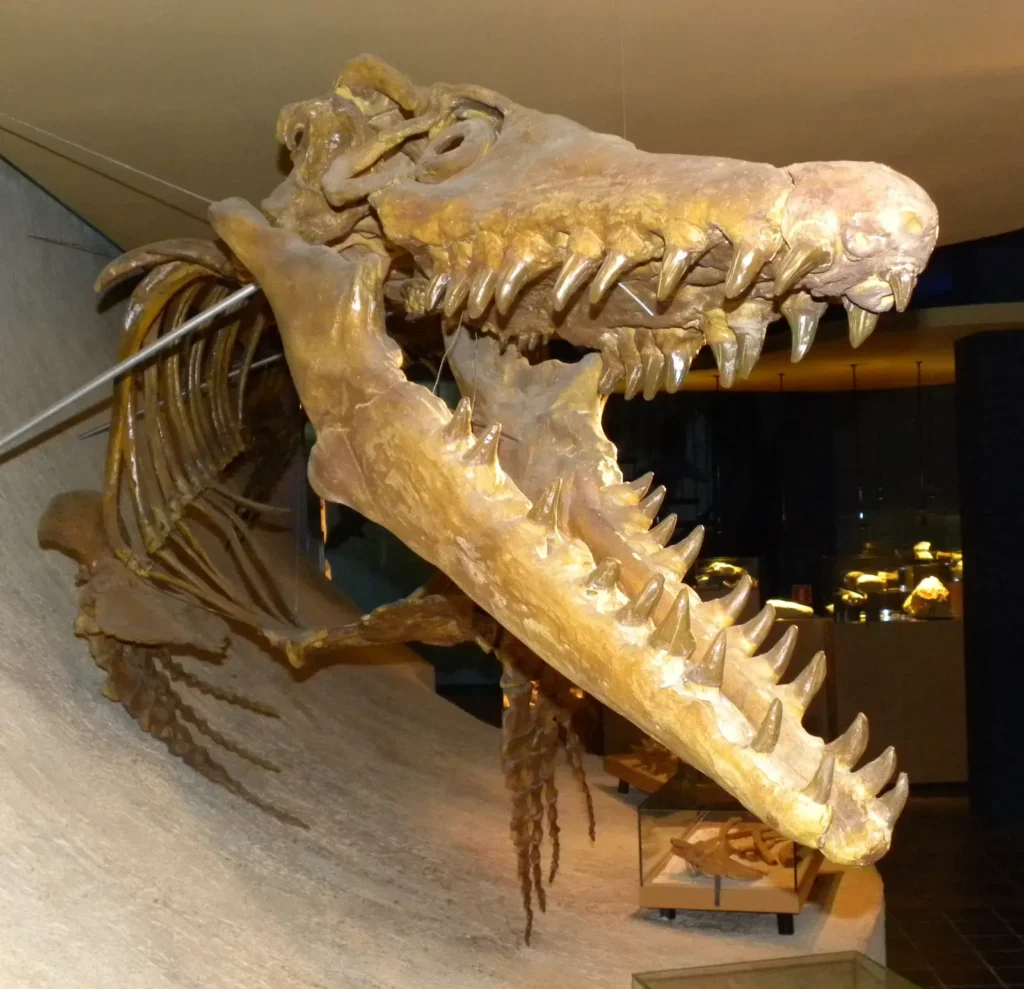
During the last 20 million years of the Cretaceous period, with the extinction of the ichthyosaurs and pliosaurs, mosasaurids became the dominant marine predators. They themselves became extinct as a result of the K-Pg event at the end of the Cretaceous period, about 66 million years ago. Mosasaurs breathed air, were powerful swimmers, and were well-adapted to living in the warm, shallow inland seas prevalent during the Late Cretaceous period. Mosasaurs were so well adapted to this environment that they most likely gave birth to live young, rather than returning to the shore to lay eggs.
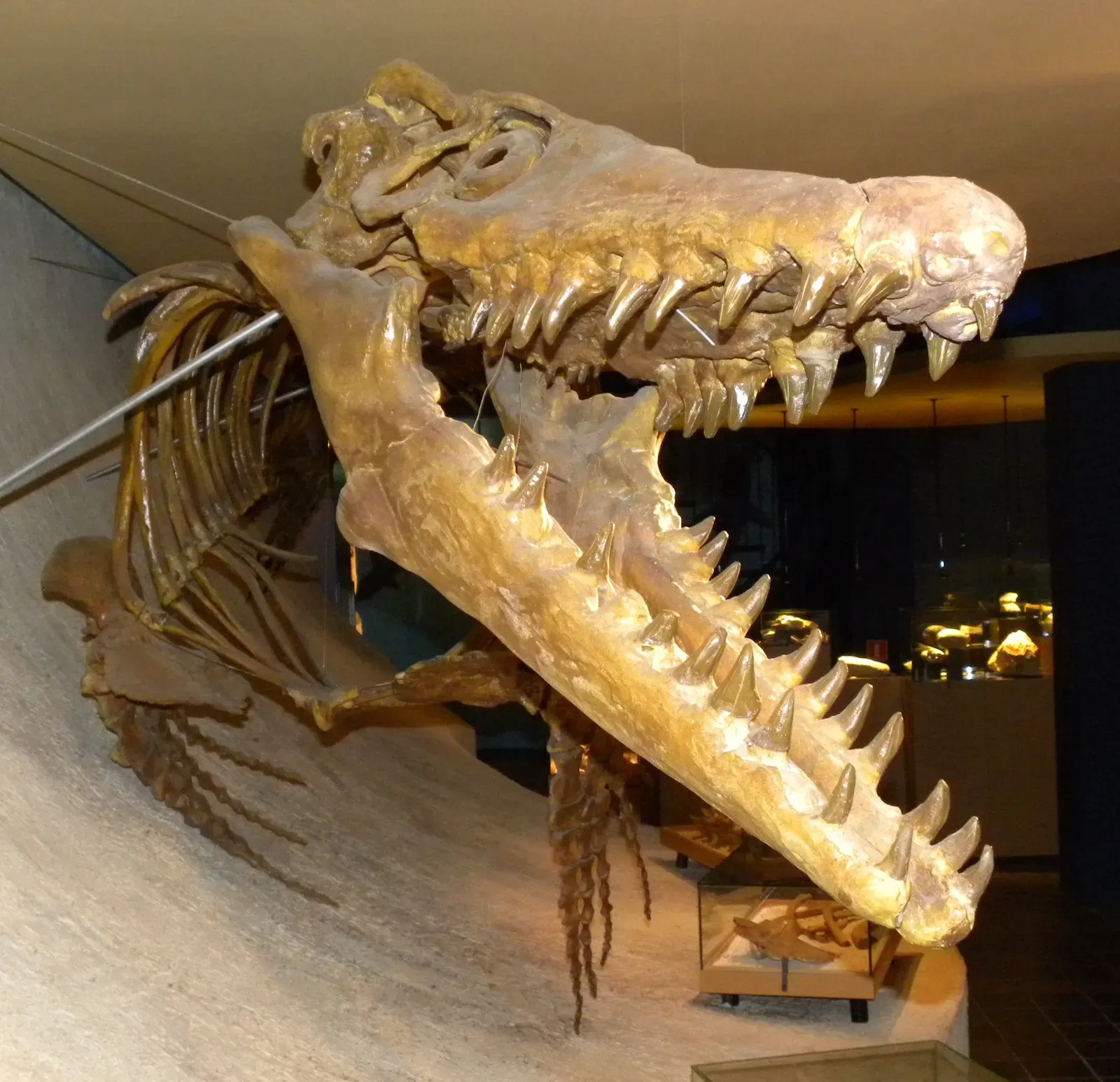
Paleontologists have discovered the preserved remains of mosasaur stomachs containing food like fish, sharks, cephalopods, birds, and even other mosasaurs. It’s likely that mosasaurs weren’t picky and would eat pretty much anything that could fit into their enormous mouths – which, it turns out, was a lot. There’s something almost darkly humorous about a creature that will casually eat a member of its own species as a side dish. One of the most well-known species, Mosasaurus hoffmannii, is estimated to have had a bite force ranging from 13,000 to 16,000 PSI. With its streamlined body and powerful jaws, these reptiles could be potent predators.
Plesiosaurs: Long-Necked Ghosts of the Ancient Deep
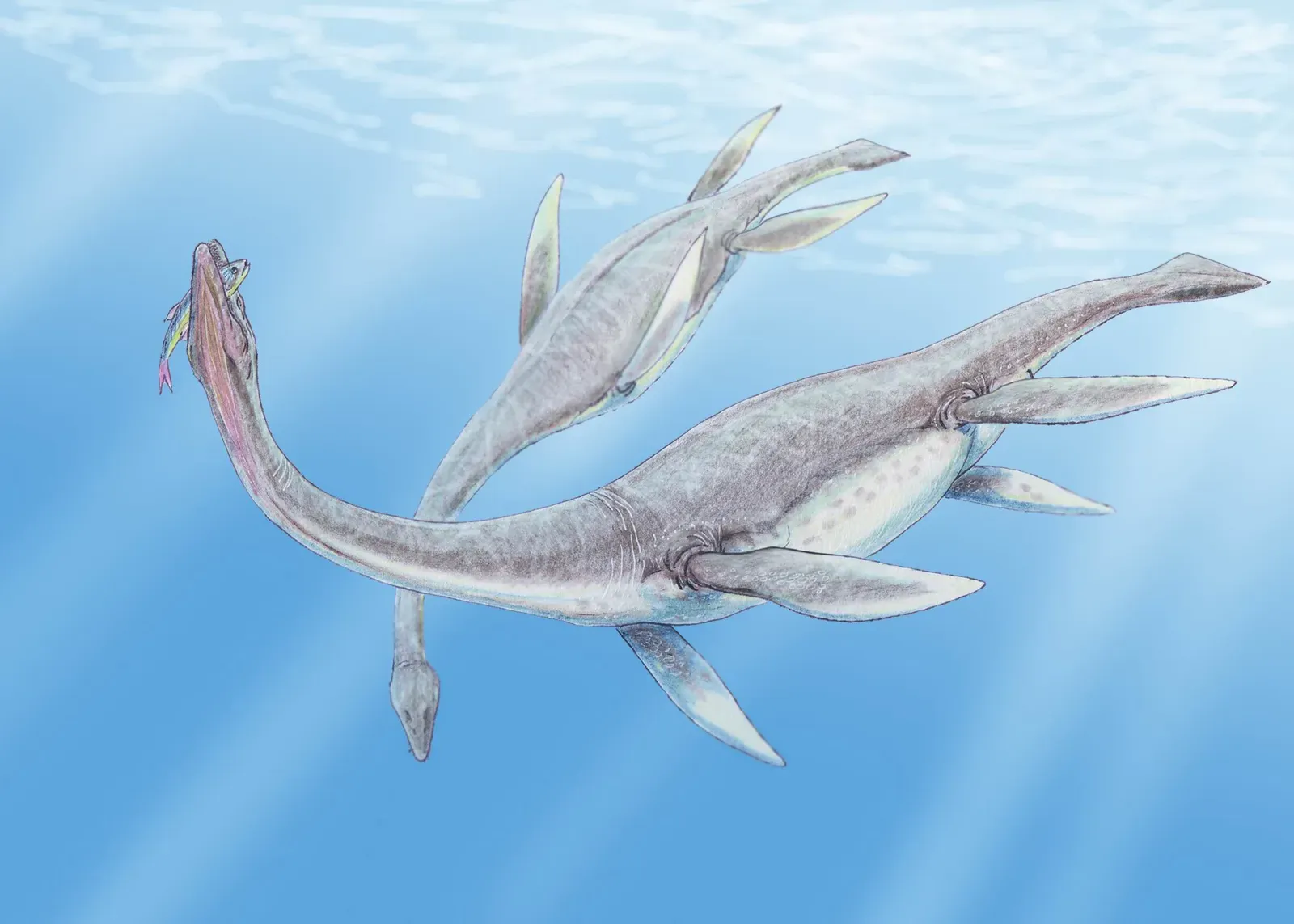
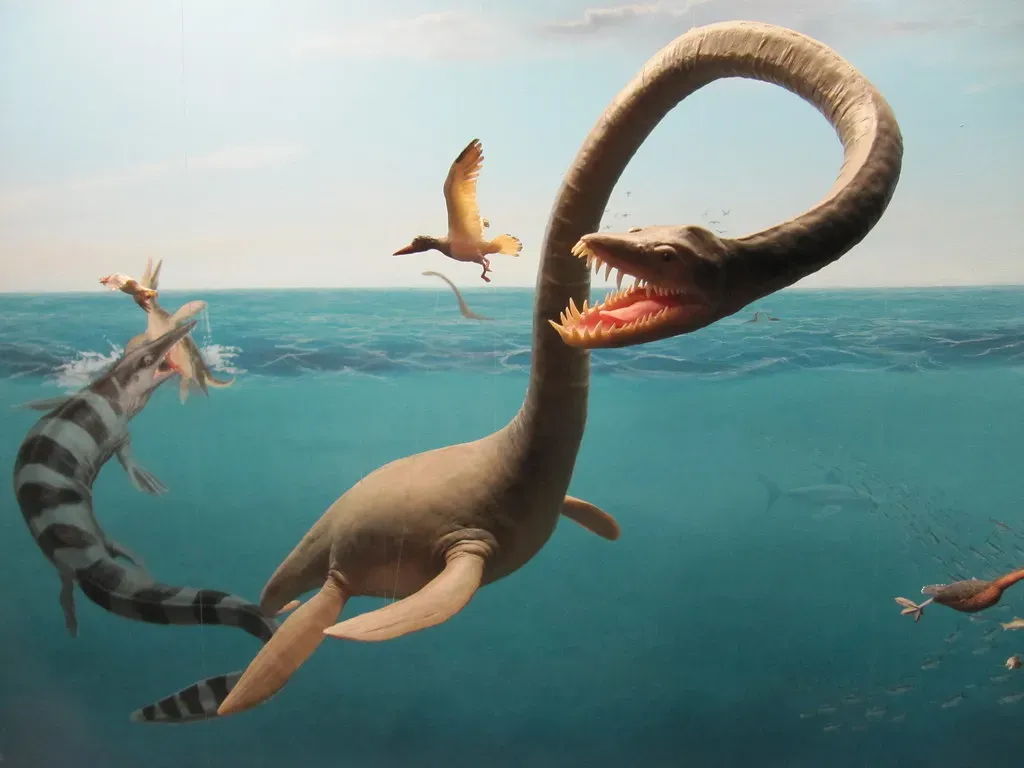
Plesiosaurs were a group of marine reptiles with boat-like bodies and four flippers. You might recognize them as the inspiration behind the legendary Loch Ness monster, and the resemblance is genuinely striking. They were massive, with long necks that made up roughly half the length of their bodies. They grew up to 43 feet – about the size of a very large bus – but their size didn’t stop them from moving with speed through the water. They had four flippers, and researchers believe they moved through the water like penguins, with their front limbs doing the work while the back limbs steered.
In coordinated movements, the four flippers would equally propel the plesiosaur forward – a unique swimming method in the animal kingdom. No other creature alive today moves quite like that. Most plesiosaurs were predators. Some likely grazed along the seafloor looking for soft-bodied prey while others likely aggressively ambushed their prey from below, much like the great white shark of today. Two very different hunting strategies, both devastatingly effective, living under the same name. The plesiosaur family was far more diverse and dangerous than the Loch Ness mythos gives them credit for.
Liopleurodon and the Art of Ambush Predation
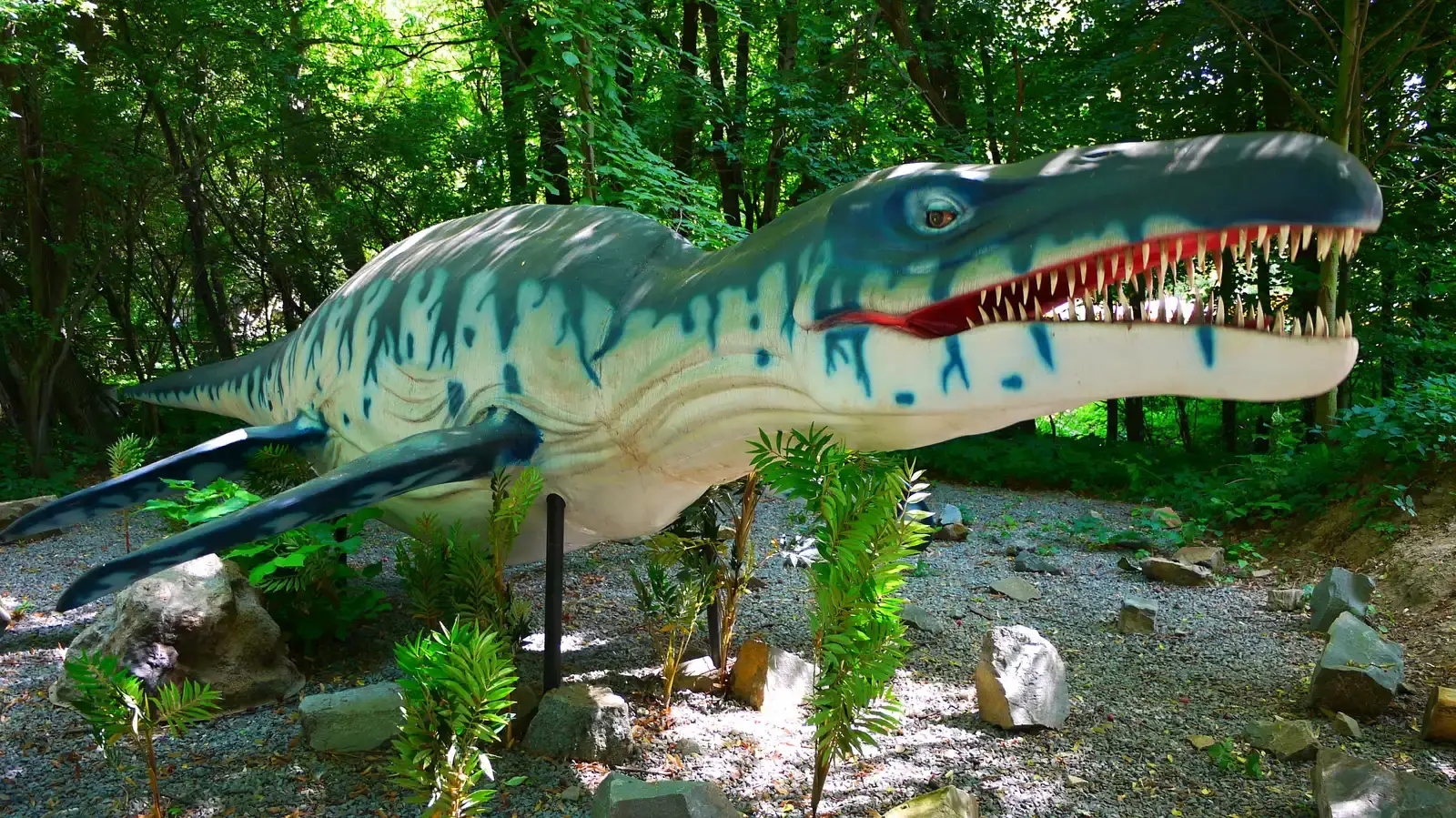
Liopleurodon had some of the largest jaws in the animal kingdom relative to its body size, with roughly 20 percent of its total length made up by its toothy grin. Liopleurodon lived in Western Europe from 166 to 155 million years ago, sharing its open ocean habitat with other marine reptiles such as ichthyosaurs and plesiosaurs. Imagine a predator where one-fifth of its entire body is just jaw. That’s not an exaggeration – that’s the fossil record.
Some anatomical studies have found that Liopleurodon was likely a very fast and agile swimmer, built for ambushing its prey from below. It would lurk beneath its target, then accelerate upward for the kill – a strategy identical to what modern great white sharks use today. Liopleurodon was a large pliosaur equipped with powerful jaws, with which it hunted large prey, including fish, squid, and other marine reptiles. It had a robust body with strong, paddle-like limbs that provided the swift acceleration required for an ambush predator. The Mesozoic oceans essentially invented the ambush strike long before great whites made it famous.
Warm Blood, Blubber, and Surprising Biology You Didn’t Expect
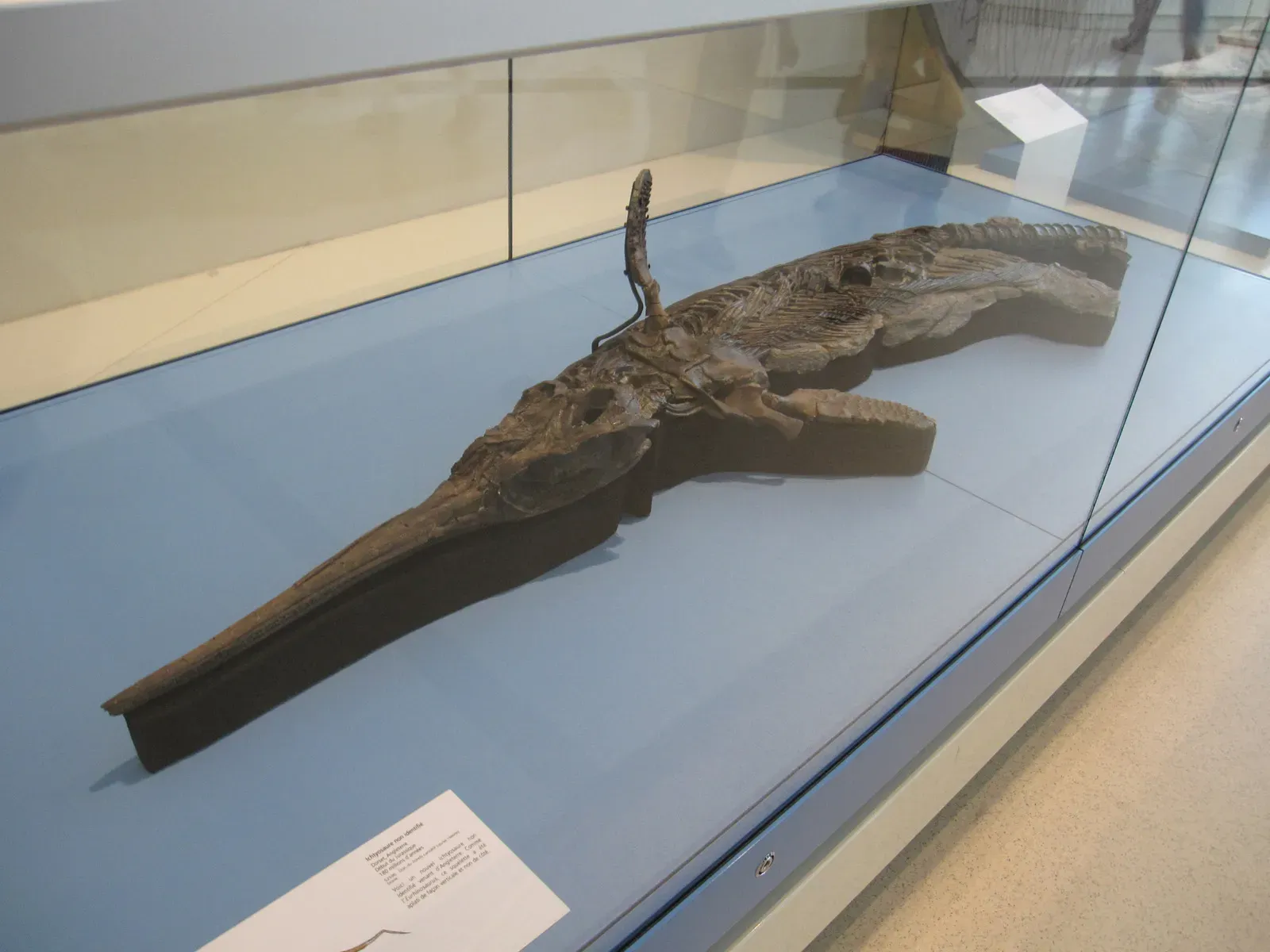
An international team of paleontologists found the exceptionally preserved remains of a Stenopterygius ichthyosaur that lived 180 million years ago. The fossil is so well-preserved that its soft tissues retain some of their original flexibility. Molecular and microstructural analyses revealed that this creature was warm-blooded, had insulating blubber, and used its coloration as camouflage from predators. For a long time, scientists assumed these reptiles were cold-blooded. That assumption turned out to be completely wrong.
Additional evidence from oxygen isotopes in ichthyosaur teeth indicates a body temperature of between 35 and 39 degrees Celsius. A 2025 study suggested that ichthyosaurs were homeothermic endotherms, having a body temperature of 31 to 41 degrees Celsius. In other words, they ran warm like mammals, which gave them enormous advantages in endurance, cold-water hunting, and deep-sea diving. Some Mesozoic specimens lived near the poles, and analysis of stable oxygen isotopes in their bones shows they may have had a high body temperature – as much as 35 or 36 degrees Celsius in the case of plesiosaurs and ichthyosaurs. These were not sluggish, sun-dependent lizards. They were high-performance predators.
The Oceans Were Reset After Earth’s Worst Extinction – And Recovered Faster Than You’d Think
The end-Permian mass extinction, the most devastating die-off in Earth’s history, struck about 252 million years ago and was followed by extreme global warming. In its aftermath, modern-style marine ecosystems began to take shape at the start of the Age of Dinosaurs, or Mesozoic era. During this critical window, the earliest sea-going tetrapods, including amphibians and reptiles, emerged and quickly became dominant aquatic apex predators.
A recently rediscovered cache of 250-million-year-old fossils from Australia has rewritten part of the story of life after Earth’s worst mass extinction. Instead of a single marine amphibian species, researchers uncovered evidence of a surprisingly diverse community of early ocean predators. One of these creatures had relatives stretching from the Arctic to Madagascar, showing that some of the first sea-going tetrapods spread across the globe with remarkable speed. Recovery, in evolutionary terms, can be astonishing. Life didn’t tip-toe back into the oceans – it exploded.
Conclusion: The Deep Had More Fangs Than the Land Ever Did
It’s hard to say for sure which prehistoric creature was truly the most terrifying of all time, but if you step back and look at the evidence, the case for the sea is surprisingly strong. The ichthyosaurs outgrew the blue whale. The pliosaurs out-bit the T. rex. The mosasaurs ate each other for sport. These were not minor players in the story of prehistoric life. They were the stars of the most violent underwater drama that ever played out on this planet.
We’ve spent generations obsessing over Jurassic Park and its land-dwelling giants, but the real horror show – the actual apex of prehistoric terror – was always in the water. The Mesozoic seas were not a background detail. They were the main event. Next time you stand at the shore and stare out at the ocean, remember that the water has always been the most dangerous place on Earth. What would you have guessed if someone asked you where the most terrifying creatures in Earth’s history actually lived?