
Walk into a swamp in Florida and you might spot an alligator gliding silently through dark water. Step onto a nature trail in the Rockies and a pronghorn might dart across your path. These animals look perfectly ordinary today – familiar, even unremarkable. Yet beneath their skins, in their bones and DNA, lives a legacy so ancient it would take your breath away.
The animals sharing your continent didn’t just appear. They are the thinned-out, evolved-down, sometimes scaled-back descendants of genuinely colossal creatures that once ruled North America. Think the size of small trucks. Think claws the length of your forearm. Think predators that made the T. rex nervous. Long before evolution downsized them, these giant prehistoric ancestors roamed the Earth, giving rise to the animals we know today – from giant sloths the size of small trucks to massive apex predators that reshaped entire ecosystems. You might want to look at the wildlife around you a little differently after this. Let’s dive in.
The American Alligator: Heir to the “Terrible Crocodile”
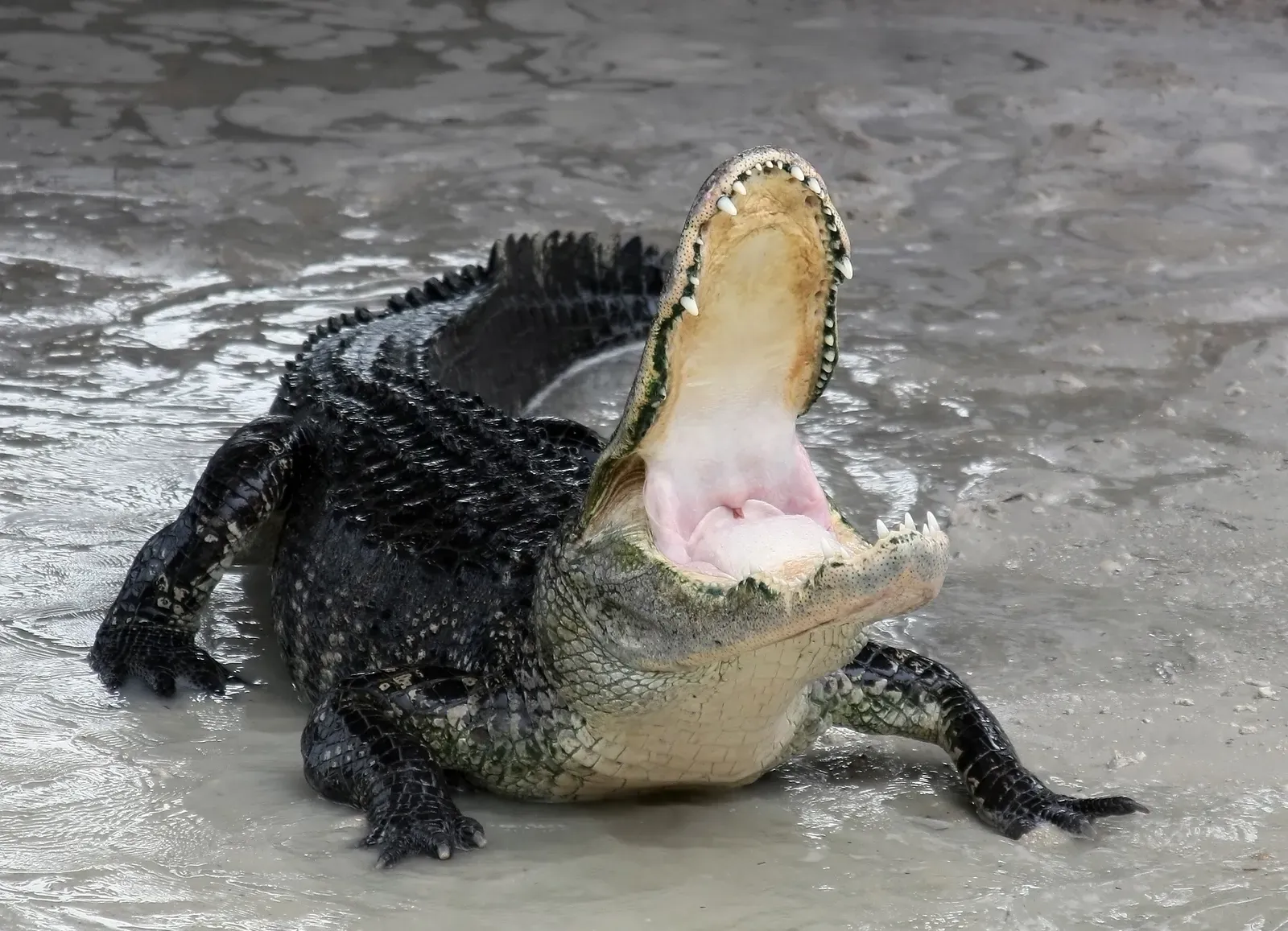
You’ve probably seen an alligator and felt a shiver of primal fear. Good instincts. Because the creature lounging in that Louisiana bayou carries the ancestral echo of something far, far worse. Around 75 million years ago, North America’s largest and most formidable carnivore was not a dinosaur – it was a croc. Deinosuchus, the “terrible crocodile” in Greek, could reach more than 35 feet in length and weigh over five tons. For context, today’s American alligator maxes out at around 14 feet. The ancient version was eating dinosaurs for lunch.
Although Deinosuchus was far larger than any modern crocodile or alligator, with the largest adults measuring around 35 feet in total length, its overall appearance was fairly similar to its smaller relatives. Honestly, that’s somehow more unsettling. More than 75 million years ago, the monstrous Deinosuchus roamed the waters of North America, and scientists long thought it was a relative of modern alligators – though a new study now suggests the reptile sits far from alligators on the family tree. So while the exact relationship is still being debated, one thing is crystal clear: the alligator’s lineage runs deep into a bloodline of apex predators that once ruled this continent.
The North American Beaver: Shadow of a Bear-Sized Rodent
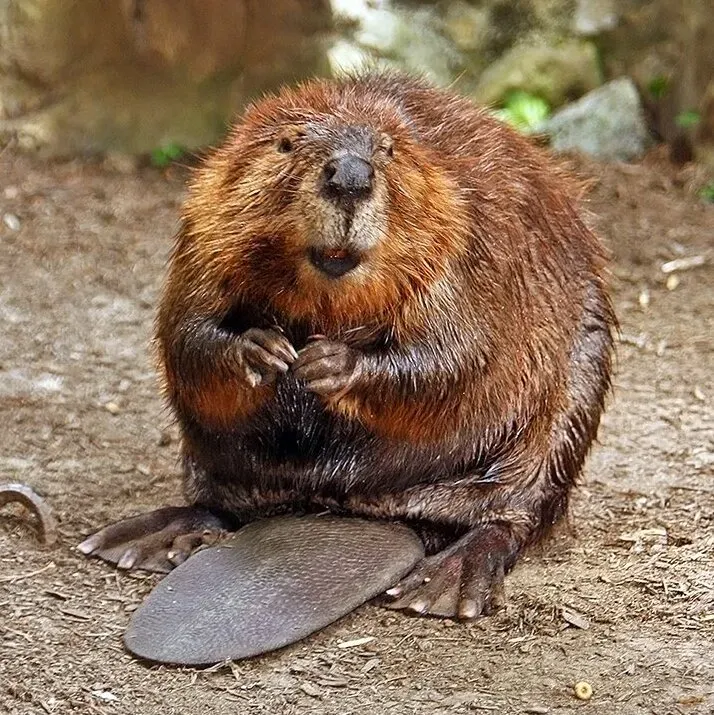
You probably think of beavers as industrious little engineers, gnawing trees and building dams. Cute, right? Now imagine that same creature the size of a black bear, with incisors longer than your hand. Imagine a beaver taller than a human, weighing 200 pounds with six-inch incisors, and you’ve imagined the genus Castoroides. This shaggy-haired giant beavered away in North American woodlands from 3 million to 10,000 years ago. That’s the ancestor lurking behind every beaver you’ve ever seen at a national park.
The giant beaver, Castoroides ohioensis, is an extinct rodent that lived in North America between 1.4 million and 10,000 years ago. It was a distant cousin to modern beavers, but in many ways may have been more similar to modern capybaras. Here’s a twist though – stable isotopes suggest that Castoroides probably predominantly consumed submerged aquatic plants, and there is no evidence that giant beavers constructed dams or lodges. The shape of the incisors would have made it much less effective at cutting down trees than living beavers. So the very thing beavers are famous for today – building those extraordinary dams – was an evolutionary innovation that came after the giant. Not bad for a descendant.
The American Bison: Descendant of an Even Bigger Beast
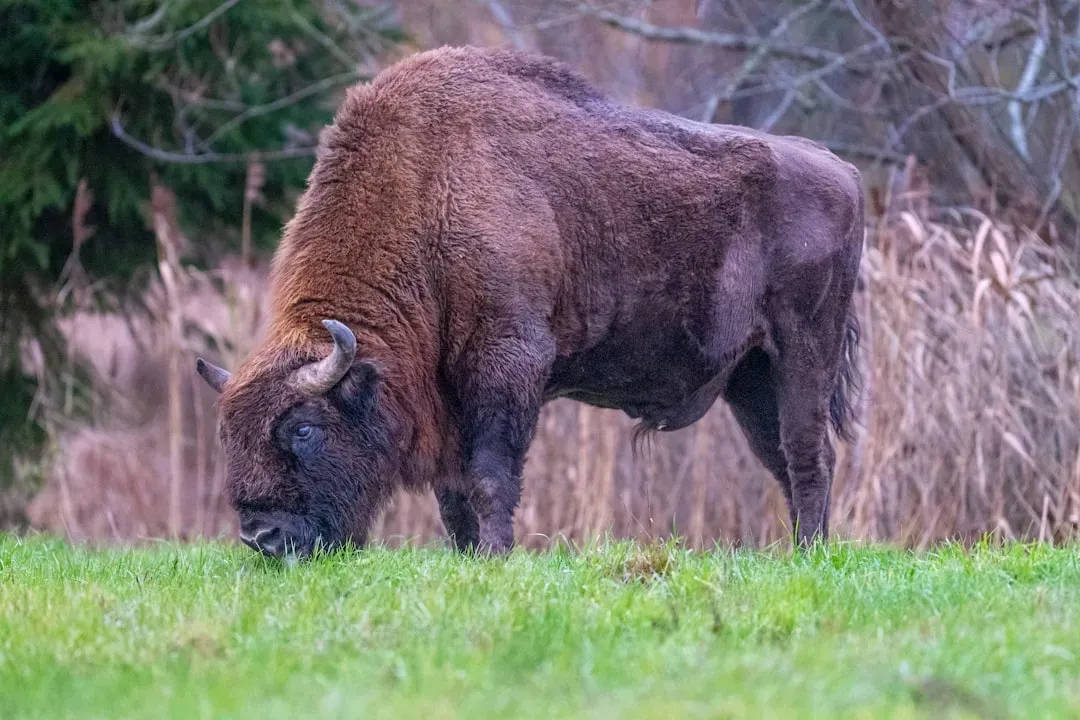
You’ve seen bison on the Great Plains and thought, well, that’s already a pretty big animal. The ancient bison Bison latifrons was roughly 25 percent larger than the modern American bison at 7.5 feet high, 15 feet long and weighing 3,500 pounds. Its horns were also longer than those of modern bison, and these herbivores are likely ancestral to the American bison. If you’ve ever stood next to a modern bison and felt small, just picture its predecessor.
Most of these prehistoric animals existed during the Pleistocene, otherwise known as the Ice Age era, which lasted from around 2.58 million to 11,700 years ago. It was a glacial period where most of the northern hemisphere was covered in ice. The bison that survived this extreme era were tougher, more adaptable versions of a much larger lineage. Until the end of the last ice age, enormous armadillo-like creatures and giant sloths called North America home. The megafauna heavier than 100 pounds went extinct about 10,000 years ago, with rapid warming periods and, to a lesser degree, ice-age hunters responsible for the disappearance. The bison was one of the lucky survivors, and we’re all better for it.
The Nine-Banded Armadillo: Pocket-Sized Heir to an Armored Giant
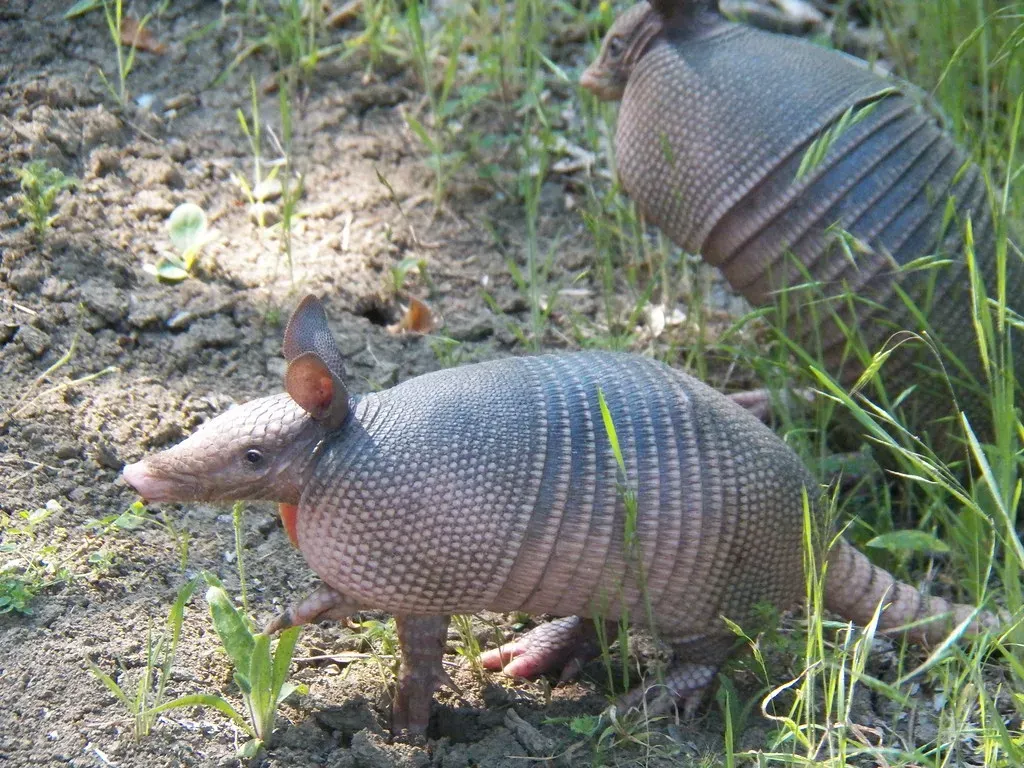
The nine-banded armadillo is one of those animals that looks like evolution had a sense of humor. Trundling around Texas and the Southeast, it’s oddly endearing. But its prehistoric ancestor, the Glyptodon, was no joke. Glyptodonts like Doedicurus went extinct 11,000 years ago and could grow to 13 feet long. They had huge armored shells and a spiked club at the end of their tail – and their shells were so big that ancient humans used them as shelters. Think about that. People once used the shell of this creature’s ancestor as a roof over their heads.
The Glyptodon looked like a giant version of its distant relative, the armadillo. The shell of Glyptodon was made of bony plates, just like an armadillo. From South America, the armored, one-ton creature probably traveled across the Isthmus of Panama to North America, flourishing in what is now coastal Texas and Florida about 2 million years ago. Today’s armadillos, like the nine-banded armadillo, don’t grow much longer than two or three feet in length and are much less fearsome. From a walking fortress to a small animal that rolls into a ball when startled – that’s evolution doing its thing.
The Three-Toed Sloth: A Tiny Echo of a Towering Giant
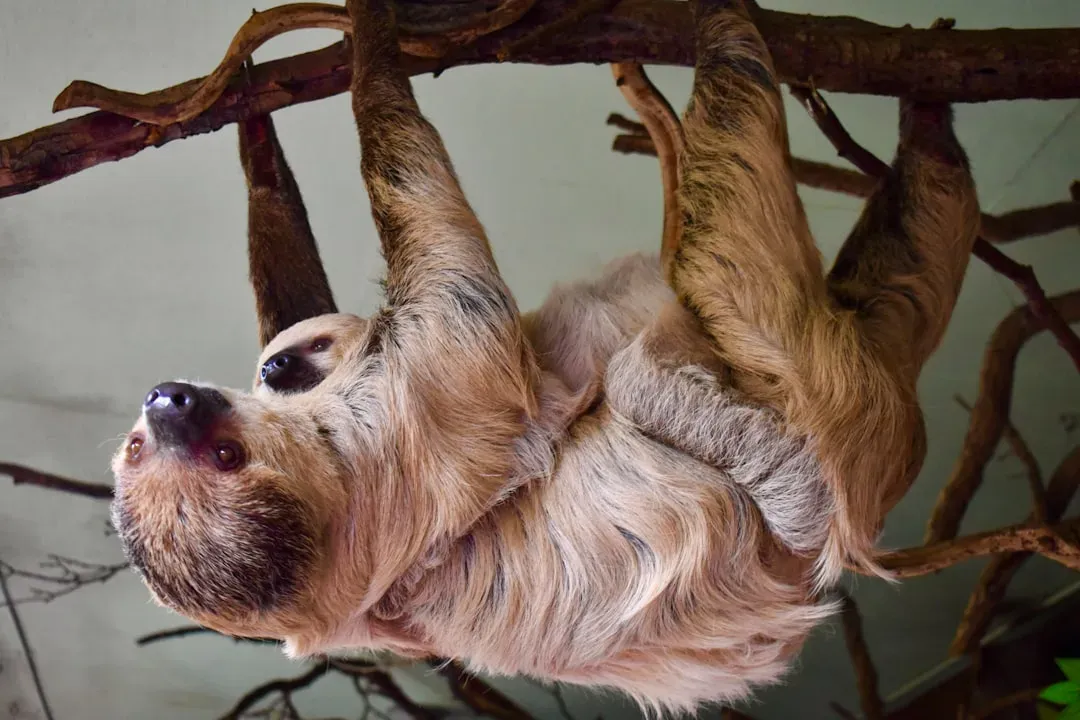
I think sloths might be the most striking example of evolutionary downsizing on this list. The three-toed sloth you see dangling lazily from a tropical tree today is almost incomprehensibly small compared to its ancient relatives. Modern three-toed sloths weigh around 8.8 pounds and stand about 2 feet tall – but their prehistoric ancestors were massive. The largest species, Megatherium americanum, weighed around 8,000 pounds, roughly the size of a modern Asian elephant. These prehistoric creatures looked similar to today’s grizzly bears, but were much larger, standing up to 12 feet tall on their hind legs.
Prehistoric giant ground sloths once roamed the Americas – including one colossus that weighed 4 tonnes and stood 3.5 meters tall, yet couldn’t run. Ground sloths used their size and their ability to stand on two legs to reach vegetation that would have been out of reach to most other herbivores of the time. One giant sloth species, the Jefferson ground sloth, was actually named for Thomas Jefferson, who initially believed that sloth fossils were a type of colossal cat. Like modern sloths, these huge ground sloths were probably slow, awkward walkers. Jefferson thought he’d found a monster lion. It turned out to be a very large, very slow plant-eater – still impressive.
The Gray Wolf and Coyote: Cousins to the Dire Wolf
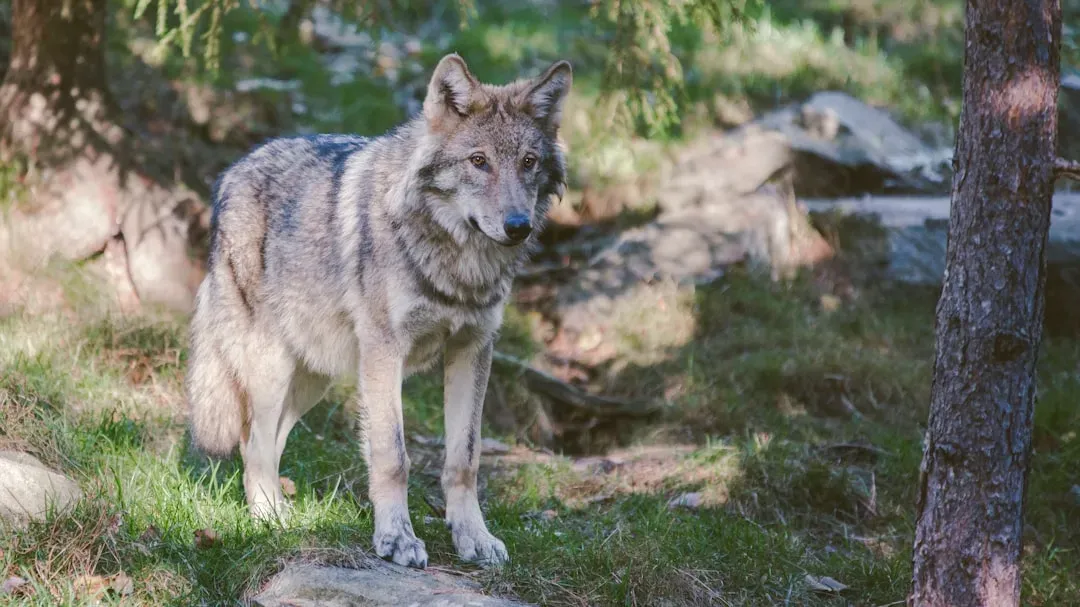
If you’ve ever watched a gray wolf lope across a field and thought it looked ancient, you were picking up on something real. North America’s wolves and coyotes share a family tree with the famous dire wolf, a creature that hunted alongside early humans and became a pop culture icon. Although often depicted as huge wolves in popular culture, the dire wolf was actually smaller than some living northern timber wolves, reaching five feet long and weighing around 110 pounds. Making up for their relatively small size, they had massive teeth and hunted in large packs. Dire wolves spread across North and Central America, coexisting with the smaller grey wolves.
Dire wolves are the largest of the Genus Canis group, which includes wolves, coyotes, jackals, and domestic dogs. Although dire wolves went extinct about 13,000 years ago, their bones are abundant in California’s La Brea Tar Pits and Wyoming’s Natural Trap Cave. About 5.7 million years ago, dire wolves split from wolves, making them distant relatives of today’s wolves on the canid family tree. Like gray wolves, dire wolves hunted in packs of 30 or more and fed on large prey like mammoths, giant sloths and Ice Age horses. The social intelligence and pack structure you see in modern wolves today? That was being tested and refined millions of years ago.
The American Black Bear: Successor to the Short-Faced Giant
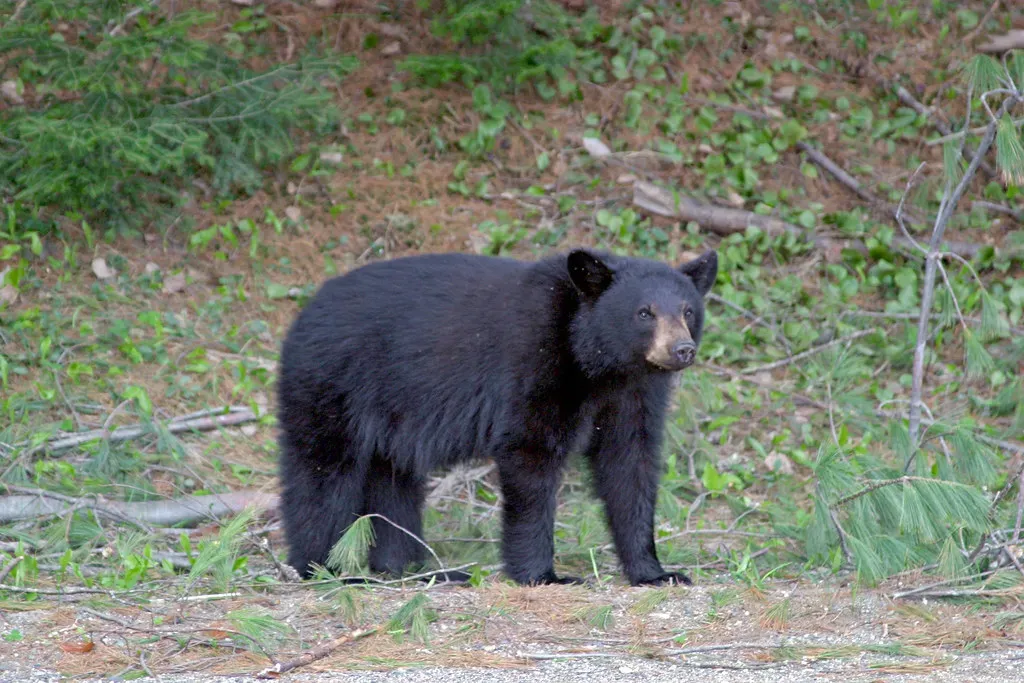
You might think the black bear you spot in the Smoky Mountains is a big deal. At up to 600 pounds, it definitely commands respect. Still, it’s essentially the polite, shrunk-down cousin of a prehistoric nightmare. The giant short-faced bear, Arctodus simus, was the largest carnivorous mammal to ever roam North America. Standing on its hind legs, an adult giant short-faced bear boasted a vertical reach of more than 14 feet. That’s almost touching the ceiling of a two-story house.
The most striking difference between modern North American bears and the giant short-faced bear were its long, lean, and muscular legs. Paleontologists calculate that the short-faced bear could reach speeds topping 40 miles per hour, making it the fastest bear to ever live. Combined with large nasal cavities, it’s likely the short-faced bear used its powerful sense of smell to detect nearby carcasses and its speed and size to chase off competition. Claiming the title for the largest mammalian land carnivore of its time was, indeed, the giant short-faced bear. Today’s black bear is a peaceful forager by comparison. Evolution clearly decided that running fast and being terrifying wasn’t strictly necessary anymore.
The American Elephant Relative: The Modern Elephant’s North American Cousin
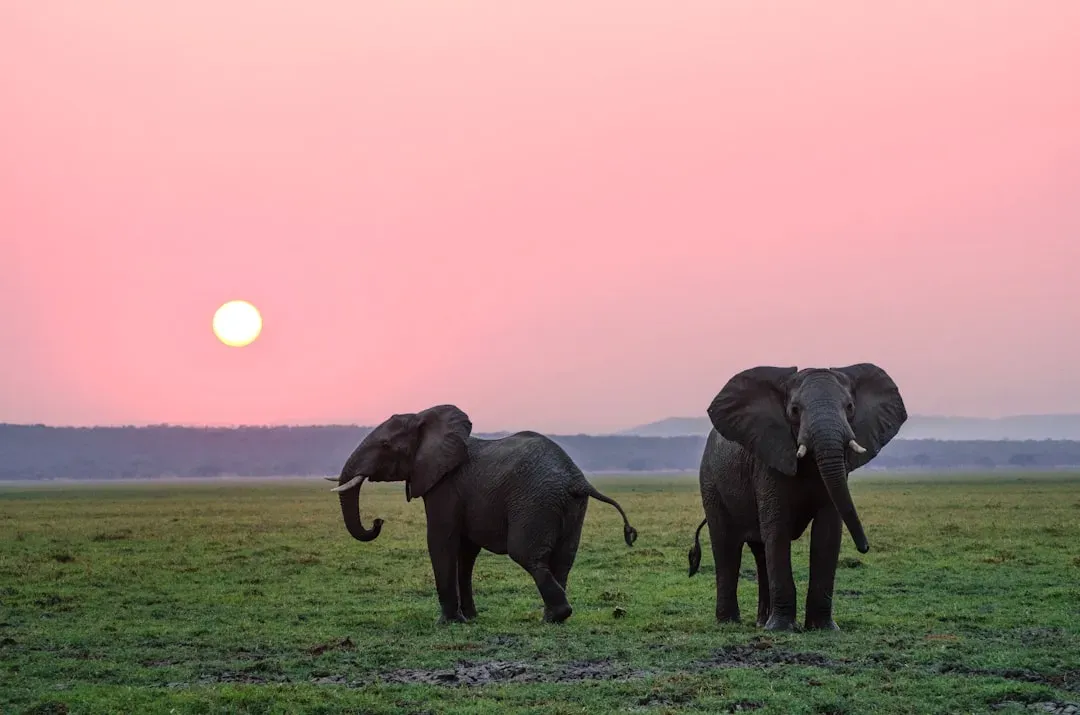
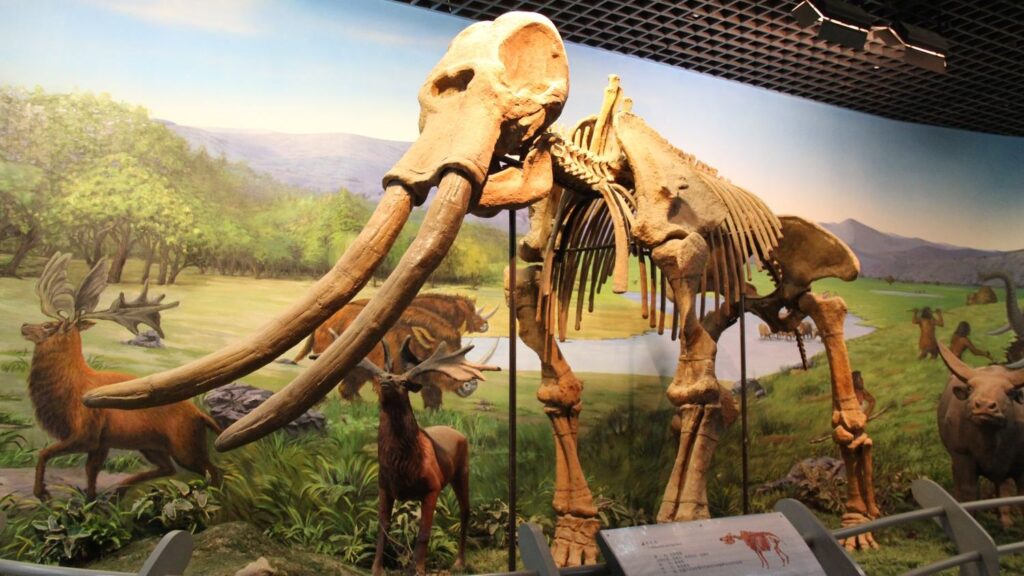
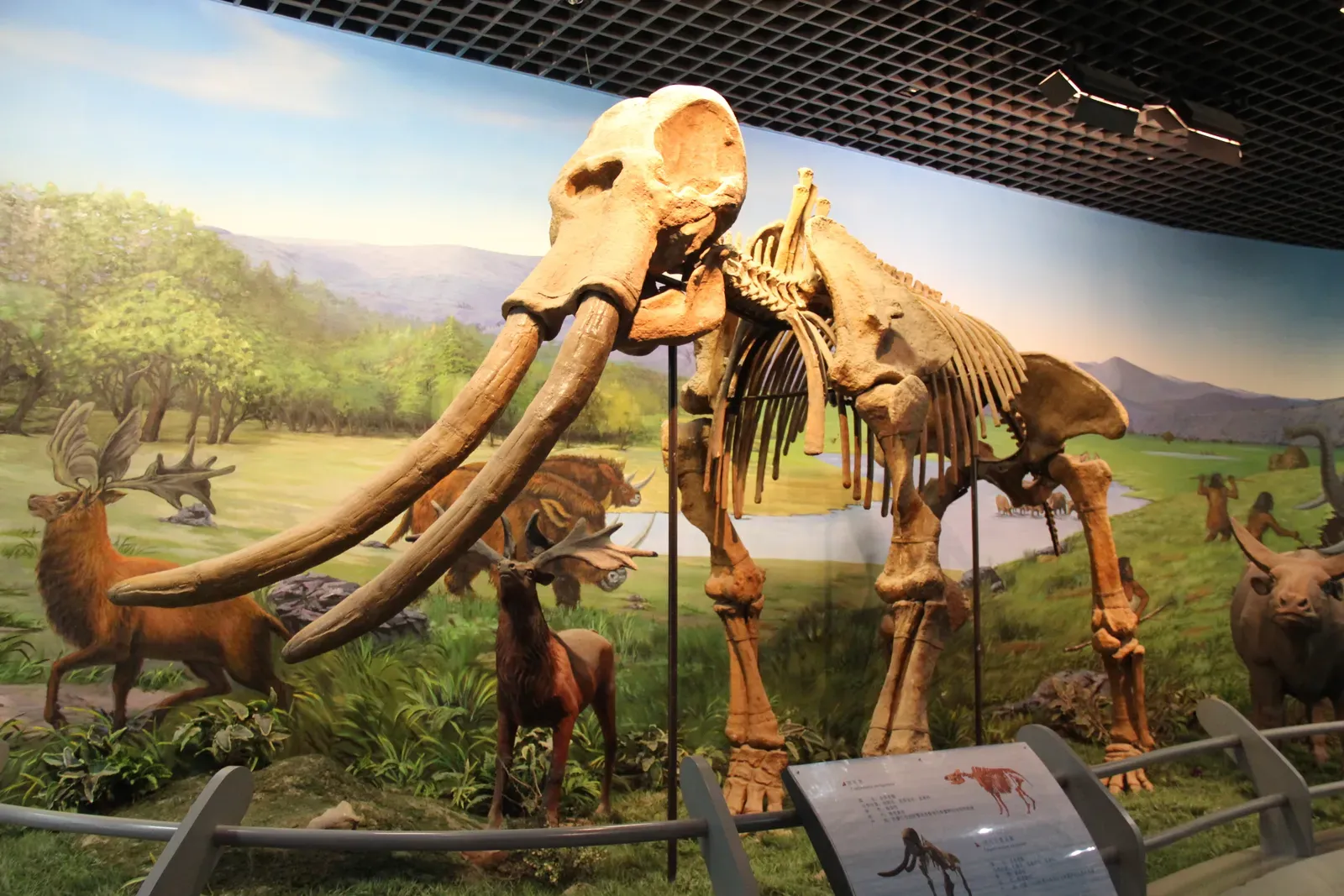
You won’t find elephants roaming the United States today, but this continent was once home to its own spectacular proboscideans – the mastodon and the mammoth. Their legacies echo through the continent’s soil and fossil record, and their evolutionary cousins, the modern Asian and African elephants, carry traits first shaped right here in North America. The American mastodon, Mammut americanum, is the most ancient of the North American “elephants.” Its ancestors crossed the Bering Strait from Asia roughly 15 million years ago and evolved into the American mastodon 3.5 million years ago.
Standing 12 feet tall at the shoulders and weighing six to eight tons, the woolly mammoth grazed the northern steppes of Ice Age North America using its colossal, 15-foot curved tusks to dig under the snow for food and defend itself against predators. Mastodon fossils have been found across North America – from Florida to Alaska – making them one of the most well-documented Ice Age animals on the continent. Their bones, teeth, and tusks are frequently uncovered during construction projects or natural erosion. One of the most famous discoveries was the Cohoes Mastodon, found in New York in 1866, still on display at the New York State Museum. Every time a construction crew in the Midwest hits an unexpected bone, there’s a real chance they’ve just found the echo of an Ice Age giant.
Conclusion
The next time you watch a beaver gnawing at a riverbank, or spot an armadillo waddling across a Texas highway at dusk, take a moment to really see what you’re looking at. These aren’t just ordinary animals. They live on in smaller, humbler descendants – grazing in meadows, prowling savannahs, or lazing in tropical treetops. They are the living footnotes of a world that was once far wilder, larger, and more ferocious than anything we can fully imagine.
Over the eons, animals have changed greatly, and many of these lineages have become smaller over time, often appearing much cuter and more approachable than their prehistoric counterparts. But the blood is still there. The evolutionary memory is still there. North America’s wildlife is, at its core, a thinned-out gallery of prehistoric giants – and that, if you ask me, makes every nature walk a little more thrilling.
Which of these ancestral connections surprised you the most? Drop your thoughts in the comments – we’d love to know which prehistoric giant you’d least like to have encountered on an evening stroll.