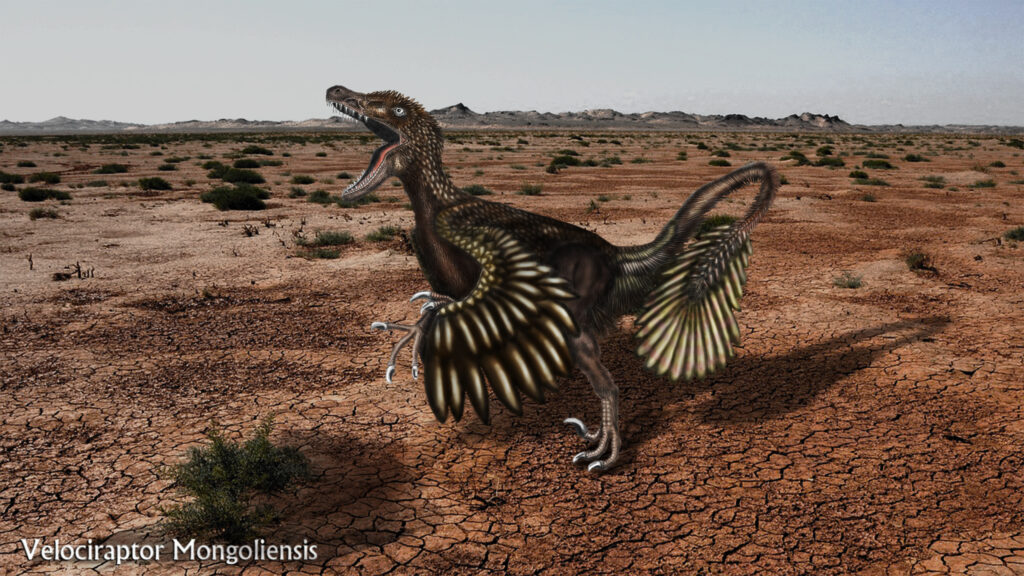
There’s something absolutely magnetic about people who look at a dusty rock on the ground and wonder what story it might be hiding. Most of us walk right past those rocks. A select few stop, crouch down, and spend the next twenty minutes turning it over in their hands. If you’ve ever been that person, you might already know what this article is about.
The early pioneers of paleontology weren’t just scientists. They were obsessives, adventurers, and relentless questioners who refused to accept the world at face value. The question is, do you share their spirit? Let’s dive in and find out.
1. You Are Endlessly, Almost Embarrassingly Curious

If you are driven by a deep-seated curiosity about life’s history, you are already thinking like a paleontologist. Not just a passing interest, but the kind of curiosity that keeps you up at night wondering why something exists the way it does. You’re the person at a party who steers every conversation toward “but why, though?” and nobody can really stop you.
Paleontologists tend to be predominantly investigative individuals, which means they are quite inquisitive and curious people that often like to spend time alone with their thoughts. Sound familiar? If your inner monologue sounds more like a nature documentary than a grocery list, you’re probably wired exactly like those early fossil hunters who changed our understanding of life on Earth.
2. You Notice What Others Completely Overlook
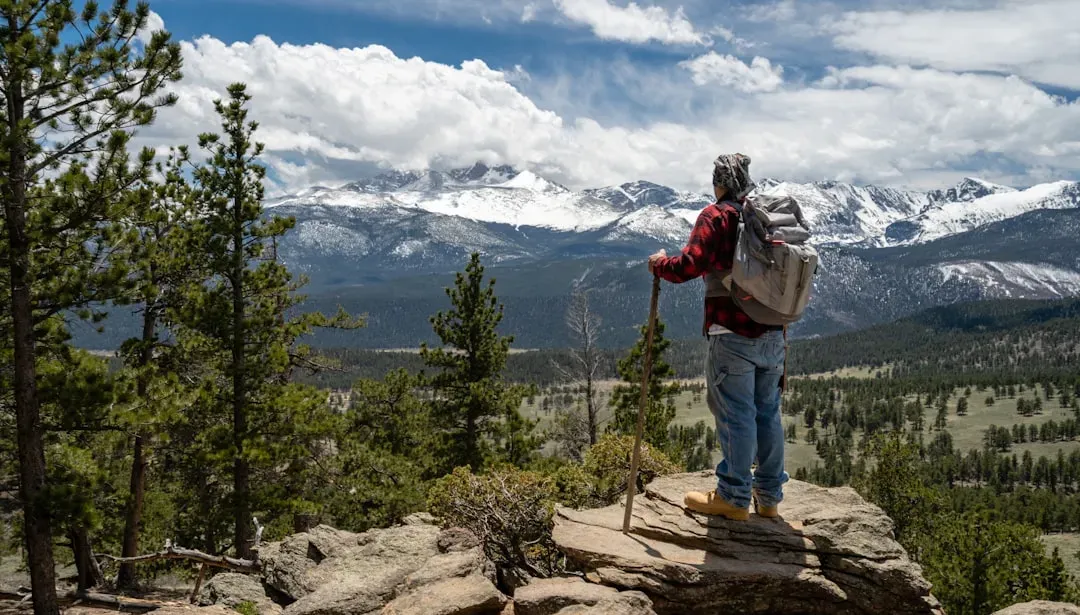
Honestly, this one separates the explorers from the bystanders. Once you arrive at a new location, you feel compelled to physically walk around and search for clues that something fascinating may be around or underneath you. It’s almost instinctive. While others see a hillside, you see layers, textures, anomalies. You’ve always been that way.
Paleontologists must meticulously document findings and interpret incomplete data. Cognitive styles favoring analytical reasoning, pattern recognition, and systematic problem-solving are common, supported by research linking these traits to success in scientific fields. In everyday terms, you’re the one who notices the weird pattern in the floor tiles, reads the small print on every sign, and spots the one thing in a photo that doesn’t belong. That’s not a quirk. That’s a superpower.
3. You Are Completely Comfortable Being in the Unknown

You tend to be intellectual, introspective, and inquisitive. You are curious, methodical, rational, analytical, and logical. Those traits help enormously when you find yourself in situations with no obvious answers, because the unknown doesn’t unsettle you. It excites you. Most people want answers handed to them. You? You’d rather earn them.
Every claim and discovery you encounter is open to close inspection and refutation based on new evidence, and you actually love that. You know that certainty is overrated and that the most interesting space in any investigation is the gap between what we know and what we don’t. Early paleontologists lived in that gap almost exclusively, and they thrived there.
4. You Think of Time in a Completely Different Way

The influence of paleontology in public consciousness may be due to a number of causes such as the mystery, the immense scale of time, the size of some organisms, or the similarities between myths of dragons and giants and their representation in extinct faunas. For you, deep time isn’t just an abstract concept. It’s a framework. You naturally think in timescales that others find overwhelming, from centuries to millennia, without breaking a sweat.
Different layers of rocks can tell you not only what type of rock a layer is made of, but also approximately how old that layer is. When you think about it, you basically do this with everything. You read rooms. You read people. You read landscapes. You instinctively try to layer history onto the present, understanding things not just as they are but as they came to be. That’s a rare and remarkable way to move through the world.
5. You Have an Unshakeable Ability to Be Patient
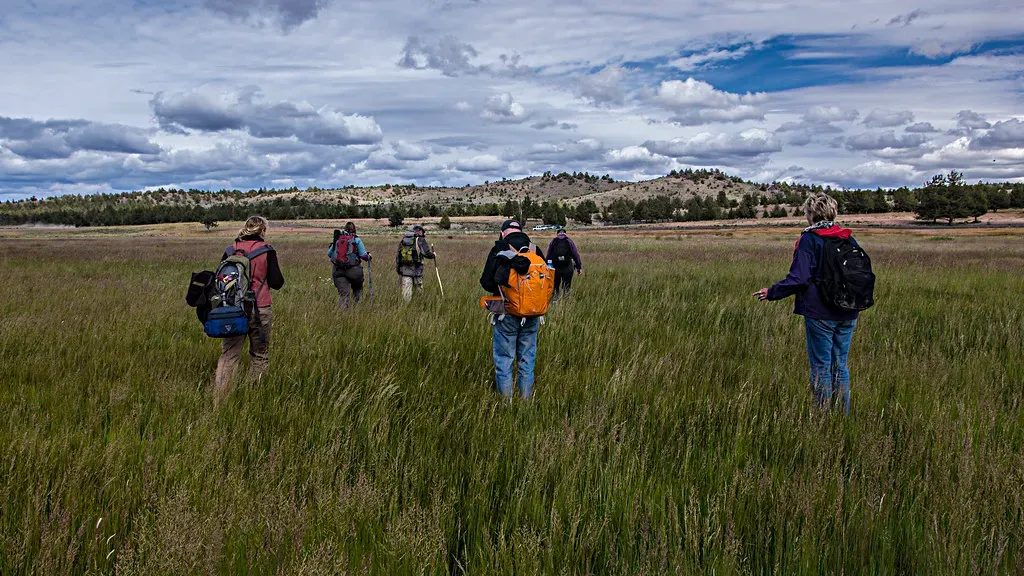
Searching for fossils is like traveling back in time to get a peek at Earth’s past. You don’t have to be a professional paleontologist to collect the remains of ancient life. Anyone can find fossils. All you need is some basic information, a good location, and a lot of patience. Let’s be real, patience is the trait most people say they have but very few actually possess. If you can spend hours on a task without losing your mind, you’re already ahead of roughly the vast majority of your peers.
Think of it like fishing, except instead of fish, you’re hunting for evidence of a world that vanished millions of years ago. For fossil hunters, what’s required is patience, a good eye, and a lot of curiosity. If you’ve ever sat quietly observing something long after everyone else walked away, you know exactly what this feels like. The reward isn’t just what you find. It’s the stillness you develop in the process.
6. You Love Making Sense of Incomplete Information

By studying the evidence available to you, you try to reconstruct the physical and behavioral characteristics of things, the environments they lived in, and the patterns of change that have shaped the world over time. This is basically what you do in everyday life, isn’t it? You piece together fragments and build a bigger picture from scraps. You are the person friends call when they need help making sense of something complicated and messy.
Paleontologists are inquisitive by nature, and they gather evidence of all kinds to test their hypotheses. Evidence about the lifestyle of something ancient may come from the enclosing rocks, associated fossil remains, associated trace fossils, and particular features of the body fossils themselves. You approach problems exactly this way, methodically gathering clues from every angle before drawing a conclusion. Sherlock Holmes energy, basically.
7. You Are Resilient When Things Fall Apart
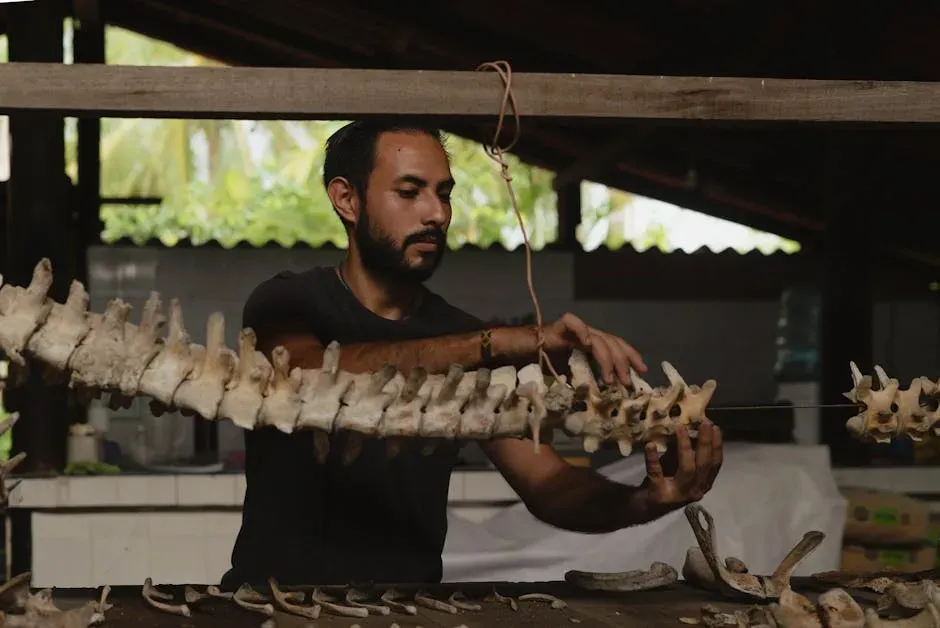
The work of exploration often involves setbacks such as damaged findings, ambiguous data, or funding constraints. Emotional stability helps professionals manage frustration and maintain focus. You’ve been there. Plans collapse, answers don’t come, weeks of effort lead nowhere. You dust yourself off and keep going, not because it’s easy, but because stopping feels even more wrong. That’s the explorer’s instinct, right there.
Early paleontologists faced ridicule, harsh field conditions, and decades of working in obscurity before their discoveries were accepted. Conclusions were largely ignored for decades before the discovery of additional fossils and the rejection of scientific hoaxes led to serious recognition of groundbreaking work. If you have ever stayed committed to something despite the world not yet catching up to your vision, you know exactly how those early pioneers felt.
8. You Are Wildly Imaginative, Even Within the Bounds of Science

Reconstructing ancient life forms and ecosystems requires creative thinking. The ability to think abstractly and hypothesize beyond available evidence is vital, aligning with theories of divergent thinking in scientific innovation. You’ve probably always lived partly in a world that doesn’t exist yet, or one that no longer does. You read a single fact and your brain immediately projects an entire universe around it. Some people call that daydreaming. Paleontologists call it hypothesis formation.
Think about it this way. When you look at a single footprint in wet sand, you don’t just see a footprint. You see the creature that made it, where it was going, what it might have been running from. Trace fossils provide insight into animal behavior. For example, footprints can shed light on whether an animal walked on two or four legs. Eggs and nests offer insight into brooding behavior. Your imagination doesn’t wander aimlessly. It builds narratives from evidence. That’s a skill, not a distraction.
9. You Genuinely Crave the Thrill of Discovery
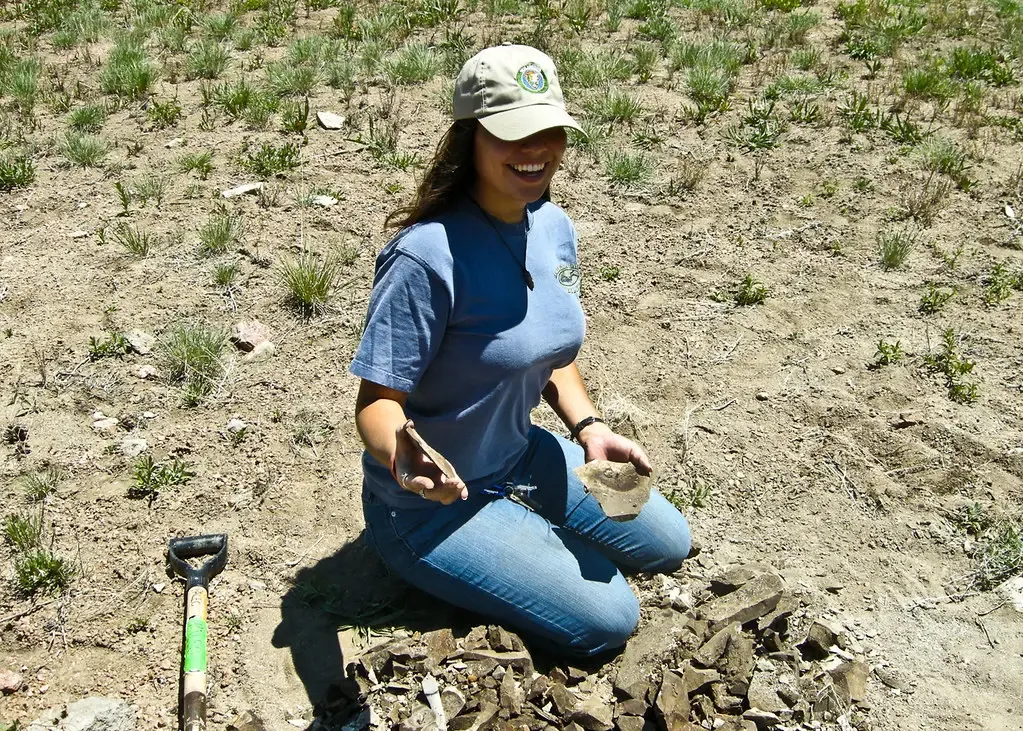
There’s a specific kind of electricity in discovering something before anyone else does, and you live for it. On a good day, you find some fossils. On a great day, you find fossils that you didn’t expect to find. That unexpected find feeling, the surprise, the rush, the moment of “wait, what is this?” is the feeling you are always quietly chasing in everything you do.
Paleontology, the study of fossils, is one of the few fields where discoveries can come from experts and amateurs alike. You love that about any pursuit you throw yourself into. You don’t need a credential to make a meaningful contribution. You need eyes, curiosity, and a willingness to go where others haven’t. That’s the spirit that drove early paleontologists into deserts, cliffs, and remote wilderness with little more than a hammer and an obsession.
10. You Are Deeply Drawn to Collaboration and Shared Knowledge

Working within research teams or networks provides social support, shared expertise, and emotional resilience. You probably know instinctively that no great discovery happens in total isolation. The best ideas grow when people with different angles of vision look at the same problem together. You seek out those partnerships, even in your personal life. You’re the one who builds the group, not just joins it.
Being someone who stays connected to modern life means you are never bored. After all, the record of discovery gets better every day, thanks to all of the people out there looking and finding. You also get to travel to fascinating places and meet lots of incredible people who teach you, inspire you, and indulge your curiosity. That sentence is basically a blueprint for how you already choose to live, isn’t it? You don’t just consume knowledge. You participate in it.
11. You Feel That Unanswered Questions Are a Gift, Not a Problem

Here’s the thing most people get completely backwards. They think the goal of science and exploration is to eliminate mystery. True explorers know the opposite is true. It’s more the unanswered questions about a subject that are genuinely interesting rather than the already-solved parts. You feel this in your bones. A mystery isn’t a failure of understanding. It’s an invitation.
Even after hundreds of years of collecting, studying, and cataloging, we still don’t know everything there is to know about the geology and diversity of ancient organisms. In fact, we don’t. Every year, we continue to make new discoveries. That thought doesn’t discourage you. It absolutely delights you. Because it means the exploration never has to end. There will always be another rock to turn over, another layer to read, another story to uncover.
Conclusion: You Were Built for This Kind of Curiosity

If you recognized yourself in more than a handful of these signs, there’s a very good chance you carry the same restless, wonder-driven spirit that sent early paleontologists scrambling across deserts and cliffs to uncover the secrets of our planet. You don’t need to hold a degree or carry a field kit to embody that spirit. You just need to keep asking “why,” keep looking where others don’t bother to look, and keep treating every unanswered question as a door worth opening.
The world has always needed explorers. Not just in remote landscapes, but in boardrooms, kitchens, classrooms, and conversations. Being a true explorer is about finding your passion and sharing it with others. Whatever your field, wherever your path leads, let that curiosity run wild.
So, which of these signs hit closest to home for you? Tell us in the comments.