
Wildlife researchers now rely on cutting-edge software to tally thousands of bats emerging from roosts in complete darkness, overcoming longstanding obstacles in nocturnal monitoring.
Swarming Speeds Challenge Traditional Methods
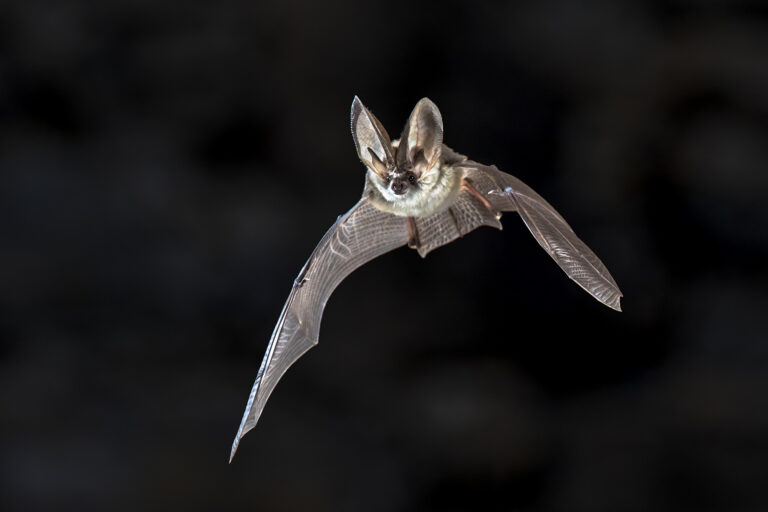
Swarming Speeds Challenge Traditional Methods (Image Credits: Imgs.mongabay.com)
Thousands of bats can erupt from caves or bridges at dusk, hurtling through the air at high velocities while forming dense clouds that blur individual identities. Manual video review demands hours of painstaking frame-by-frame analysis, prone to human error amid the frenzy. Even slight miscalculations skew population estimates critical for conservation efforts. These nocturnal mammals evade easy observation, complicating efforts to track colony sizes and migration patterns. Scientists previously spent eight to ten hours per recording on counts alone.
Thermal imaging offered a breakthrough by detecting the animals’ body heat against cooler backgrounds. Affordable cameras mounted on drones or tripods captured footage effectively. Yet processing remained labor-intensive, limiting scalability for large-scale studies.
Thermal Videography Meets Advanced Analytics
Affordable thermal cameras, such as the DJI Zenmuse XT2, enabled clear views of bat emergences from altitudes up to 80 meters. Videos revealed intricate swarm dynamics invisible to the naked eye. Researchers still faced bottlenecks in extracting quantitative data from raw footage. Background subtraction techniques struggled with cluttered scenes or low-contrast environments like water surfaces. Innovations in computer vision promised to automate these tasks.
ThruTracker Delivers Automated Precision
Dr. Aaron Corcoran developed ThruTracker after two decades studying bat behavior, initially releasing it as open-source software in 2021. The tool processes thermal, near-infrared, and visible videos through Gaussian mixture models for detection and Kalman filters for tracking. It handles both 2-D counts from single cameras and 3-D reconstructions from synchronized multi-camera setups. Users configure parameters like sensitivity and minimum track length without coding expertise. ThruTracker Analytics now offers version 3.0 in public beta, rebuilt in Python with AI enhancements for even greater accuracy. The platform supports offline processing to ensure data privacy.
Key features include:
- High-throughput batch processing of lengthy videos.
- Exportable CSV files for detections, tracks, and behavioral metrics.
- Calibration tools using environmental objects like wind turbine blades.
- Custom AI models tailored for bat species identification.
- Academic discounts and a 10-day free trial.
Tested Accuracy Validates Reliability
ThruTracker matched human observers with remarkable fidelity across field tests. At bridges hosting big brown bats, it achieved 100% detection accuracy from 50-meter altitudes and 93% from 80 meters. Gray bat cave emergences showed errors as low as 0.6% during peak rates of 103 bats per second. A study on endangered Mexican long-nosed bats reported 90.8% overall correspondence, ranging from 64% to 99%. Operator time dropped to about 10 minutes per recording, slashing labor by 48 to 60 times.
| Study Site | Species | Accuracy |
|---|---|---|
| Bridge (50m alt.) | Big brown bat | 100% |
| Cave (high density) | Gray bat | 99.4% (0.6% error) |
| Mexican long-nosed | Endangered roost | 90.8% |
Conservation Gains from Nighttime Insights
Precise counts inform strategies to protect declining populations, especially amid threats like wind energy development. Three-dimensional tracking at turbines reveals collision risks without specialized markers. The software scales monitoring to remote sites, aiding long-term trend analysis. Ongoing beta testing refines models with user-submitted videos. Wildlife agencies benefit from its compliance-ready design.
Key Takeaways
- ThruTracker reduces counting time from hours to minutes with over 90% accuracy.
- Supports 2-D emergence counts and 3-D flight path analysis.
- Empowers conservation by enabling frequent, reliable bat population surveys.
ThruTracker stands as a pivotal advance, turning raw thermal footage into actionable conservation data and heralding an era of efficient wildlife surveillance. What role do you see such tools playing in protecting bats? Share your thoughts in the comments.