Billions of years of life on Earth have produced extraordinary creatures, but for every winner that survived, countless species vanished without a trace. Some were massive, some were terrifying, and some were so perfectly specialized that when the world changed around them, they simply had nowhere to go. It’s one of nature’s most sobering truths – being impressive is not the same as being adaptable.
You might think that only weak or poorly designed animals go extinct. Honestly, that’s one of the biggest misconceptions in all of natural history. Some of the most powerful, breathtaking, and dominant creatures to ever walk, swim, or fly across this planet hit hard evolutionary dead ends, and the stories of how and why they disappeared are fascinating, heartbreaking, and sometimes downright surprising. Let’s dive in.
The Woolly Mammoth: Built for a World That Disappeared
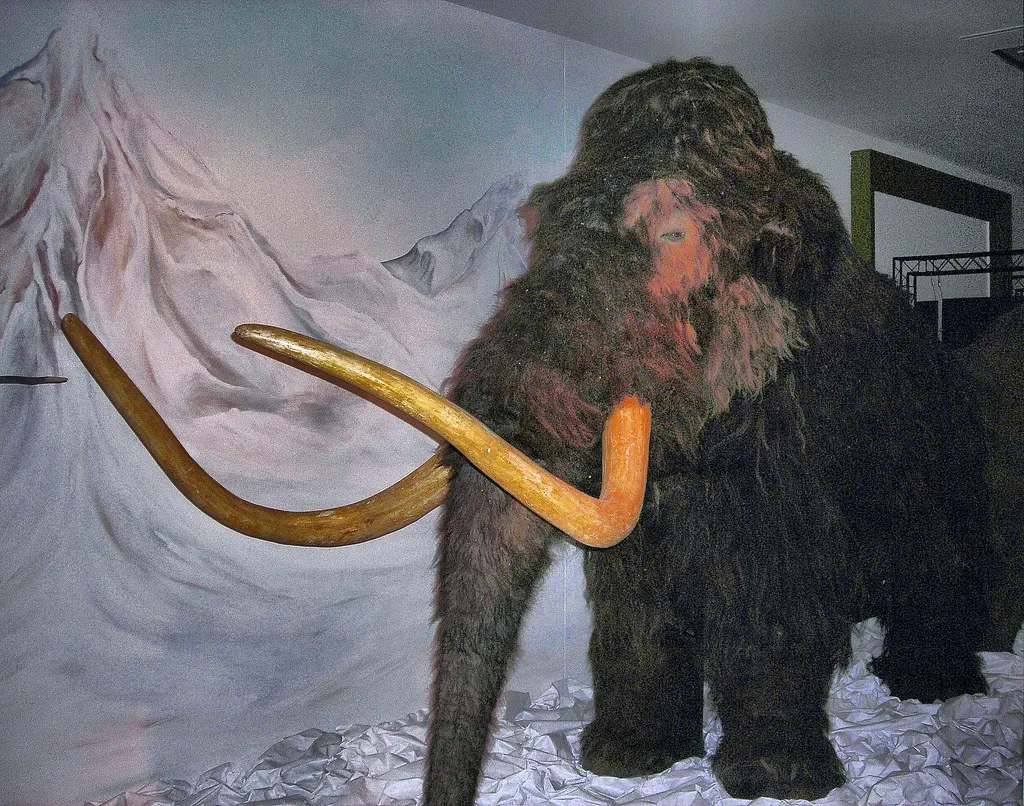
If you ever wanted a creature that looked absolutely built to survive, the woolly mammoth would be your top pick. The woolly mammoth was a massive, elephant-like creature that roamed the northern tundra during the last Ice Age, standing up to eleven feet tall and weighing up to six tons, with long curved tusks that could grow to fifteen feet in length. Think about that for a second. Fifteen-foot tusks. That’s longer than most people’s living rooms.
Adapted for life in freezing climates, mammoths had smaller ears than modern elephants to minimize heat loss and used their tusks to dig through snow in search of vegetation, mainly grasses and shrubs, but they went extinct around 4,000 years ago, likely due to a combination of climate change and human hunting. What makes their story so compelling is that it wasn’t one fatal flaw that did them in. Their extinctions are thought to have occurred due to a combination of a quickly changing climate, changing vegetation, and increases in human hunting. Sometimes the world simply changes faster than any species can keep up.
Megalodon: The Ocean’s Ultimate Killing Machine
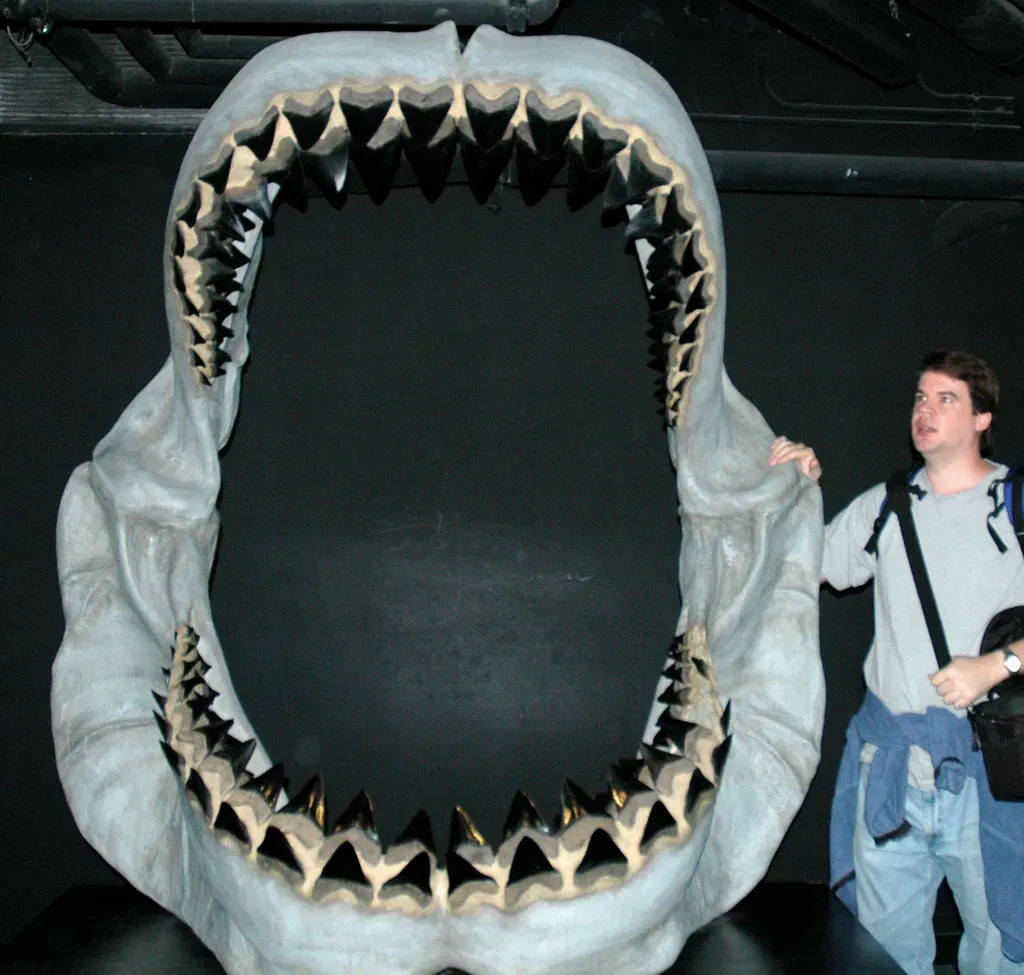
Let’s be real – Megalodon is the stuff of nightmares. Estimates suggest it could grow up to sixty feet long, making it three times the size of the largest great white sharks today, and it had a bite force strong enough to crush the bones of large marine mammals, with teeth some as large as seven inches found worldwide. This was not a creature you’d want to encounter during a morning swim. It was, without exaggeration, the most formidable ocean predator that ever lived.
This apex predator thrived from about 23 to 3.6 million years ago, and its extinction is attributed to a combination of climate change, a decline in prey populations, and competition with other marine predators like the ancestors of modern great white sharks. Here’s the thing – being the most powerful predator in the sea means absolutely nothing when the prey you depend on disappears. Their extinction is believed to have been caused primarily by a cooling trend from one of the planet’s ice ages, which would have lowered sea levels and led to a loss of prey large enough to sustain them. Megalodon was so specialized as a mega-predator that it couldn’t pivot. A tragic lesson in the dangers of putting all your eggs in one enormous basket.
The Irish Elk: When Beauty Becomes a Burden
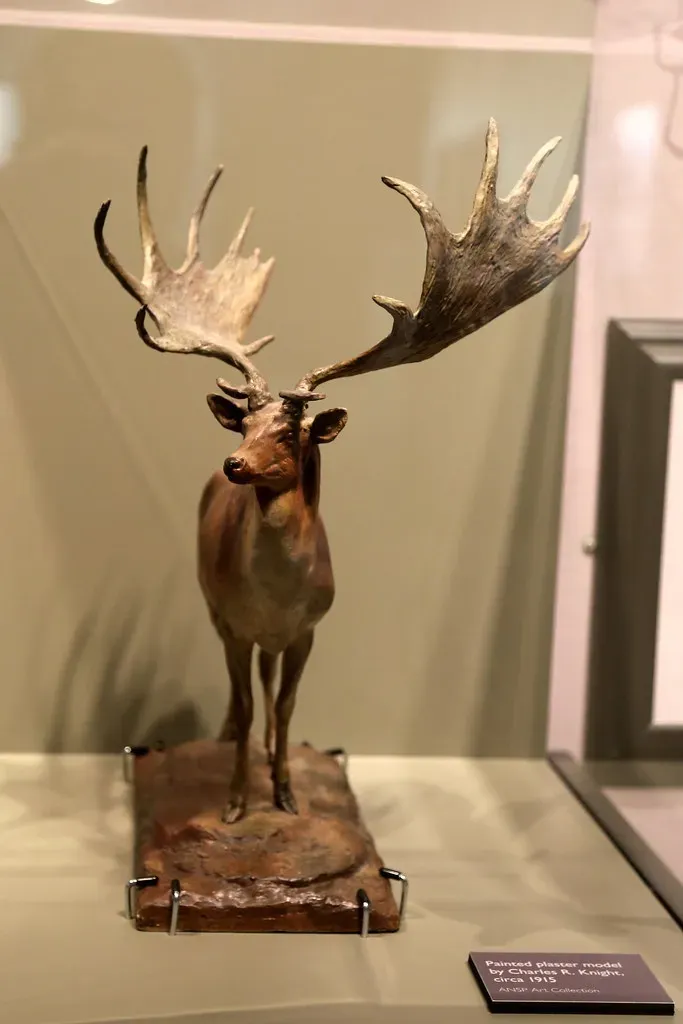
The Irish elk was one of the largest deer species to have ever existed, with males sporting enormous antlers spanning up to twelve feet from tip to tip, standing about seven feet tall at the shoulder and weighing up to 1,500 pounds. That’s not just a deer. That’s practically a piece of living architecture. These animals roamed Eurasia during the last Ice Age, and despite its name, the Irish elk was widespread, with fossils found as far east as Siberia.
I think the Irish elk story might be one of the most poetic in all of natural history. One theory points to habitat degradation that triggered nutritional stress, mainly among males, as their adaptation to mineral metabolism required for forming antlers depended on high amounts of phosphate and calcium compounds that changed with the loss of habitat. In simpler terms, those spectacular antlers – the very things that made the males attractive to females – may have become a metabolic millstone they could no longer afford to carry. The species likely went extinct due to habitat changes and over-hunting, with its massive antlers possibly becoming a disadvantage as forests grew denser. Evolution sometimes creates beauty that is also a trap.
The Dodo: Fearless in the Wrong World
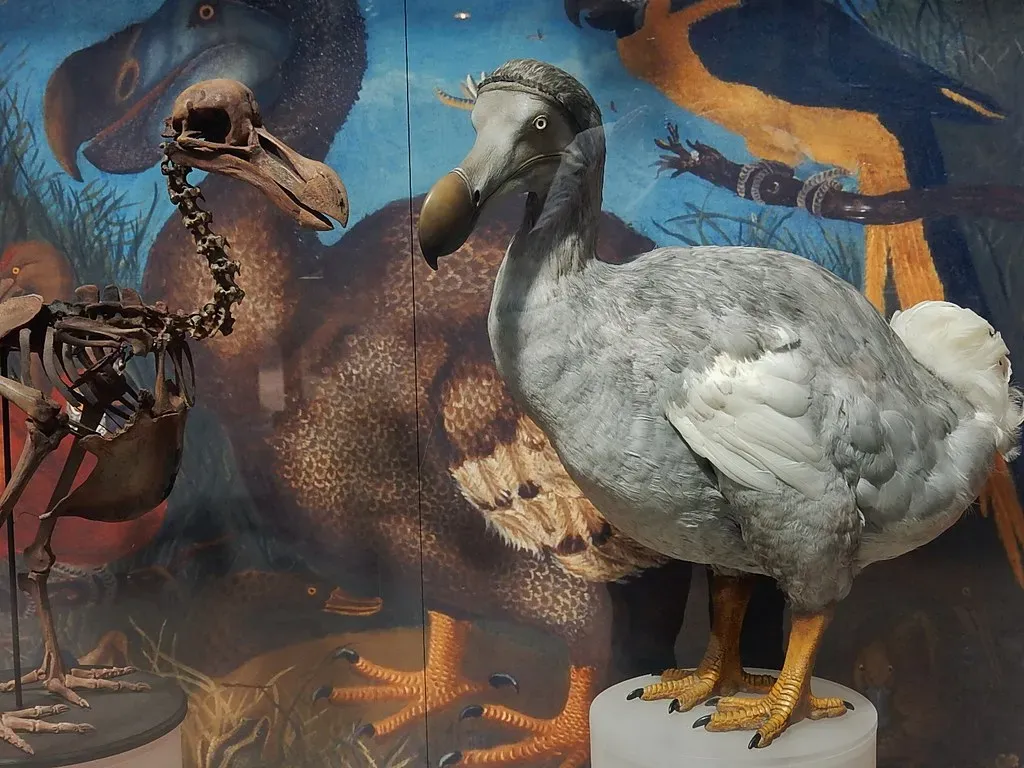
The dodo was a flightless bird native to Mauritius in the Indian Ocean, standing about three feet tall and weighing up to forty pounds, with a large hooked beak and greyish feathers. It had evolved in an environment with no natural predators, which meant that over millions of years, it simply had no reason to develop fear or a flight response. That sounds peaceful, right? It was, until humans arrived.
With no natural predators, the birds were unfazed by the Portuguese sailors that discovered them around 1507, and these and subsequent sailors quickly decimated the dodo population as an easy source of fresh meat, while the later introduction of monkeys, pigs, and rats to the island proved catastrophic to the languishing birds as the mammals feasted on their vulnerable eggs. The dodo’s demise has become a symbol of human-induced extinction. Its tragedy is that it was perfectly adapted for its world. You just can’t prepare for a world that has never existed before. That’s the brutal honesty of evolution.
Haast’s Eagle: A Hunter Undone by Its Own Specialization
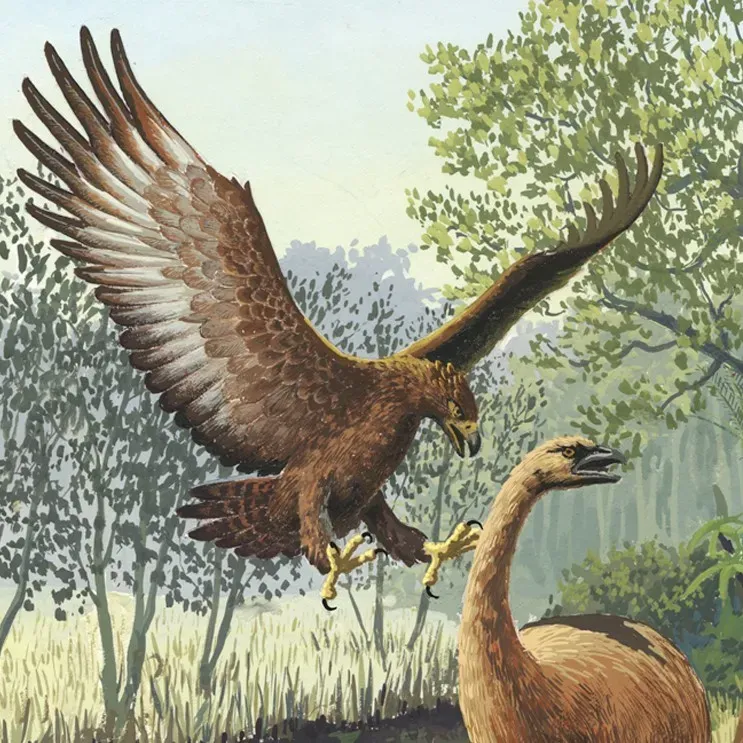
Haast’s eagle was the largest eagle to have ever existed, with a wingspan of up to ten feet and weighing around thirty-three pounds, native to New Zealand, where it preyed primarily on large flightless birds like the moa, with powerful talons that could crush bone and deliver a killing blow. Picture a bird with the wingspan of a small aircraft and the hunting instincts of a precision weapon. For centuries, it was the undisputed apex predator of its island world.
This happened to the Haast’s eagle in New Zealand, which had evolved to prey exclusively on the flightless moa bird, and when humans arrived in the 13th century, the moa were hunted to extinction within 200 years, leaving the Haast’s eagle unable to adapt to find new prey, so it went extinct too. At the species’ population height, it was estimated there were up to 4,500 breeding pairs, yet by 1400, the Haast’s eagle was extinct. Specialization is evolution’s double-edged sword. The very thing that made it extraordinary also made it utterly fragile. It couldn’t adapt. It couldn’t pivot. It simply vanished.
Saber-Toothed Cat: Six-Inch Fangs and a Fatal Dependency
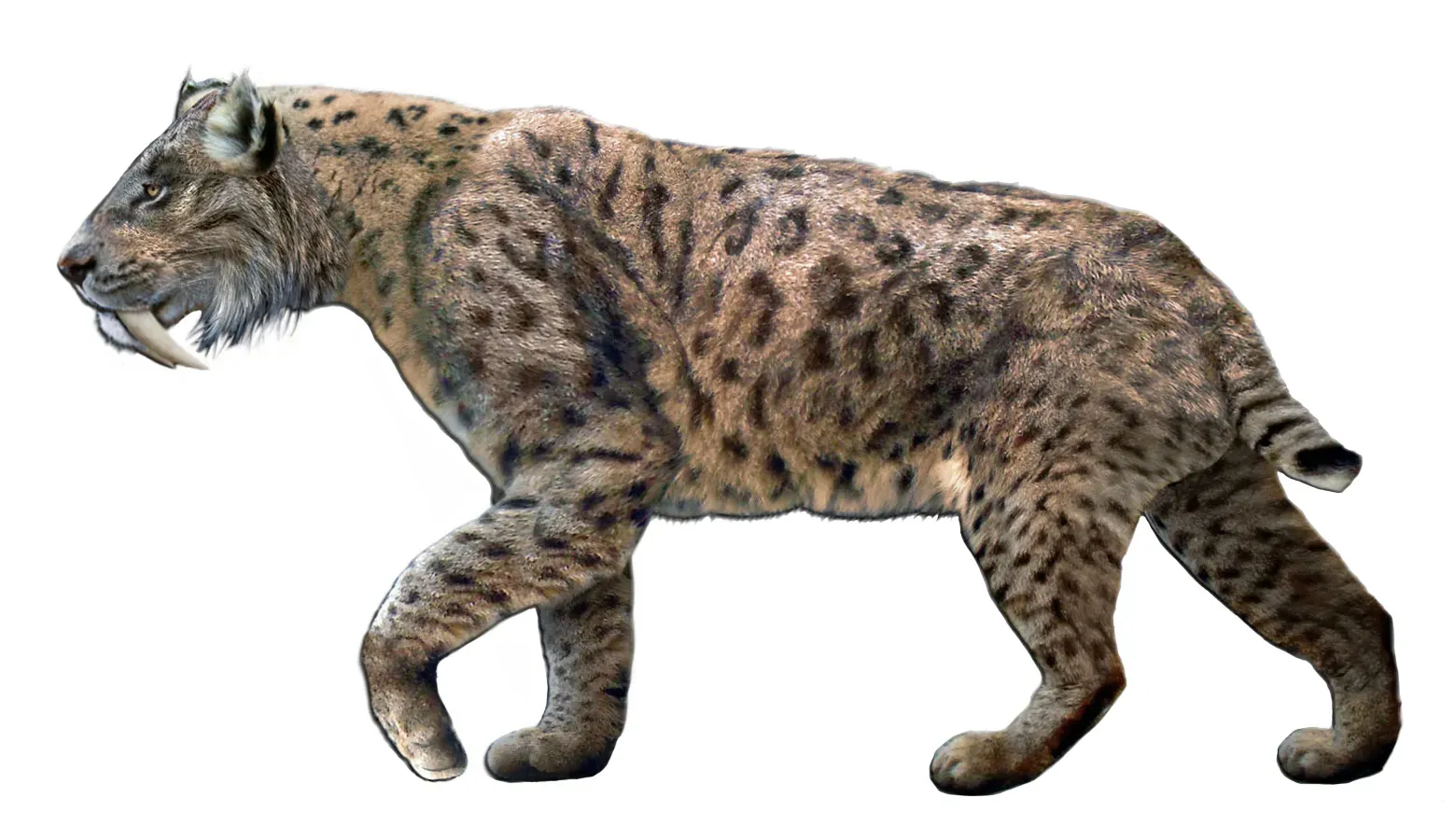
The Smilodon lived in North America until around 13,000 years ago, which means it probably overlapped with early human inhabitants, and these saber-toothed cats were not only hypercarnivores with six-inch-long fangs, but evidence indicates that they hunted in packs. Six-inch fangs and pack-hunting behavior. Honestly, it sounds like something a screenwriter invented. It was very real, and for thousands of years it worked brilliantly.
A new analysis suggests that woolly mammoths and other large mammals more than 10,000 years ago may have fallen victim to the same type of ecosystem disruption, and around 15,000 years ago the problem was not the loss of a key predator, but the addition of one – human hunters with spears. When the megafauna that saber-toothed cats depended on collapsed, their hyper-specialized anatomy became a liability rather than an asset. Those spectacular fangs required large prey with thick hides to be effective. Although specialization allows species to be highly adapted to their environment, it doesn’t mean they’re adaptable, and if conditions change, they are likely to be more at risk. The saber-tooth paid dearly for that lesson.
The Giant Ground Sloth: A Colossus That Couldn’t Outrun Change
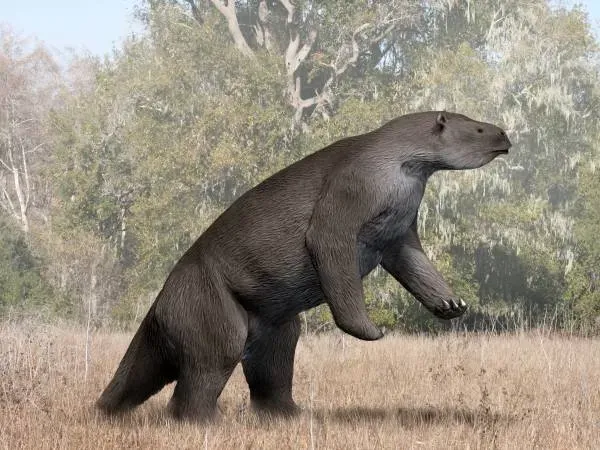
There were roughly thirty species of ground sloths that may have overlapped with humans in the Americas, and the biggest among them was Megatherium, a tank-sized sloth that stood almost 3.5 meters tall on its hind legs and weighed 4,000 kilograms. To put that into perspective, that’s roughly the same size as a modern elephant. A sloth. The size of an elephant. Evolution, as always, had a wild sense of imagination.
Ground sloths were an extremely diverse group native to the Americas during the Pleistocene, with some growing to the size of modern elephants, and they died out on the mainland around 11,000 years ago, primarily due to climate change, with some researchers suspecting that their size and slowness made them easy targets for early humans. There is direct evidence of humans interacting with a ground sloth at a fascinating site in White Sands National Park, New Mexico, where researchers found human footprints inside a ground sloth footprint, suggesting they were either hot on its tail during a hunt or dodging its attacks as they attempted to take it down. Slow, massive, and suddenly surrounded by clever, tool-using hunters – the giant ground sloth never stood a chance in a rapidly shifting world.
The Moa: A Giant Brought Down by a Single Species
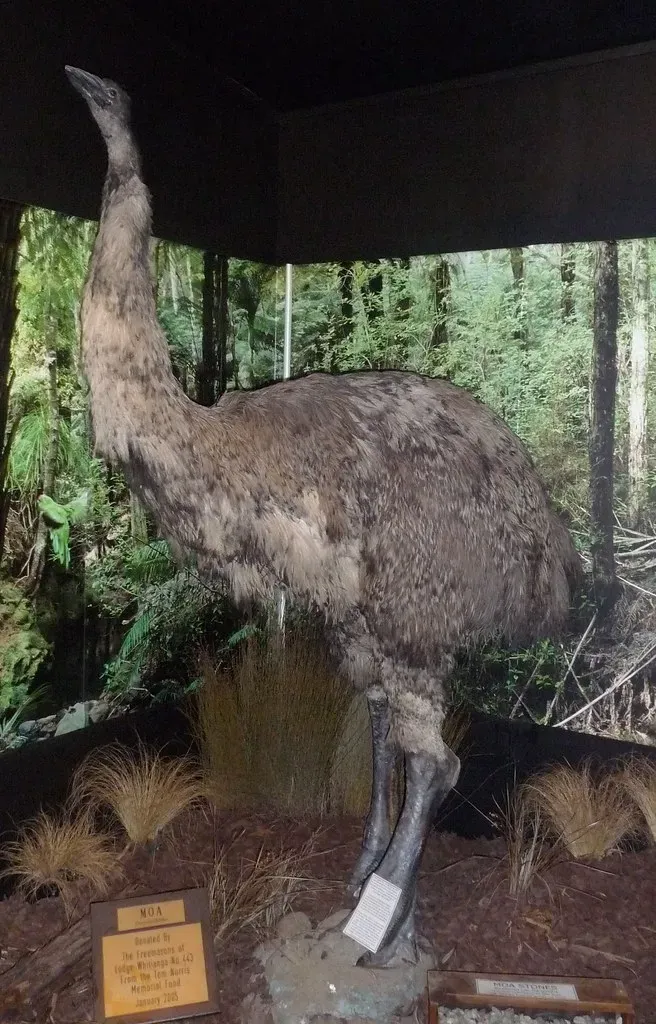
The eradication of the moa in New Zealand stands as one of history’s most striking examples of extinction driven by a single factor, as it had been isolated for millions of years, leaving the giant birds with only one natural predator – the Haast’s eagle. The moa had essentially lived in a bubble of evolutionary safety. No mammalian predators, no pressure to develop the instincts needed to flee or hide. It was, in a very real sense, perfectly unprepared for what was coming.
When Polynesians eventually arrived on the island around 1300, they saw the moa as a perfect food source, and because the birds had not encountered humans before, they made for easy targets, so that by 1445 they had all been hunted, and since they were the Haast’s eagles’ main prey, those died out soon after as well. Both avians serve as proof that forced extinction can permanently impact entire ecosystems. The moa’s story is a chain reaction written in feathers and bones. One species gone, another follows, and an ecosystem collapses like a house of cards. It’s a pattern we’d do well to remember.
Conclusion
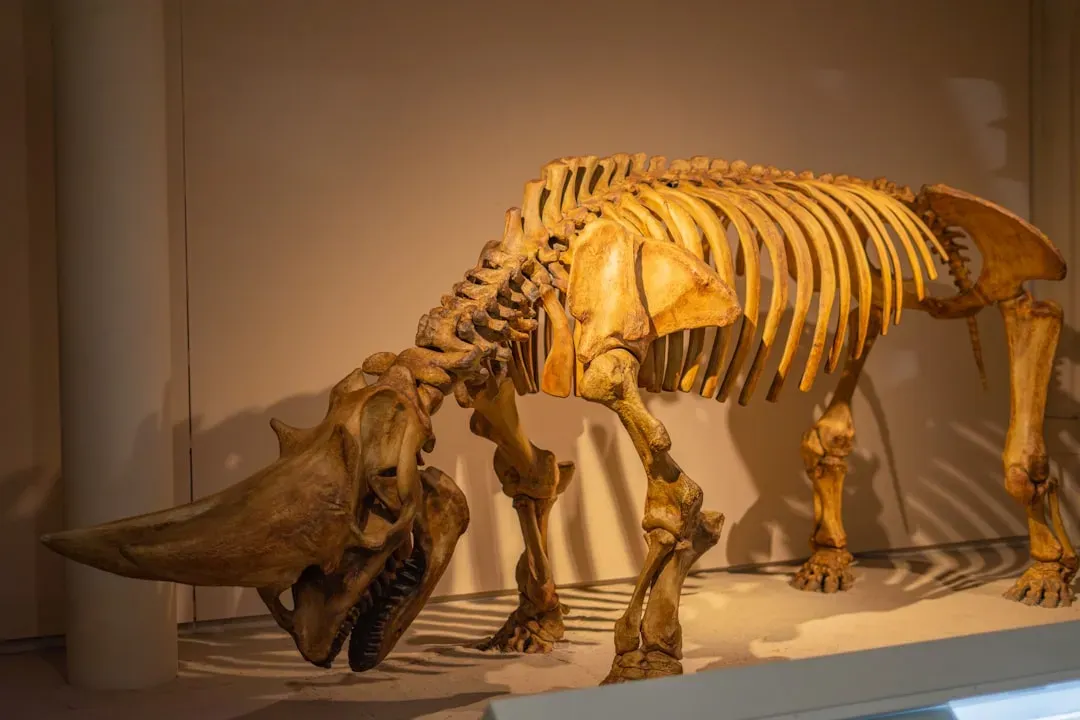
What you’ve just read isn’t simply a list of creatures that failed. It’s a masterclass in the limits of perfection. Every single one of these animals was extraordinary in its own time, superbly adapted to a world that eventually transformed around it. Overhunting, climate shifts, habitat loss, over-specialization – the culprits differ, but the outcome is always the same: silence where there was once something magnificent.
The fossil record, as researchers at the University of Chicago note, documents the dead branches of evolution, showing that not every animal species directly evolves into another species, and some branches on the evolutionary tree simply end. What unites all eight of these animals is something worth sitting with for a moment. Their greatest strengths – size, power, speed, specialization – were also the very things that made them vulnerable. That’s not a comforting thought when you consider how many species alive today are walking the same tightrope.
Which of these eight creatures do you find most fascinating – and which extinction do you think was the most avoidable? Share your thoughts in the comments below.