
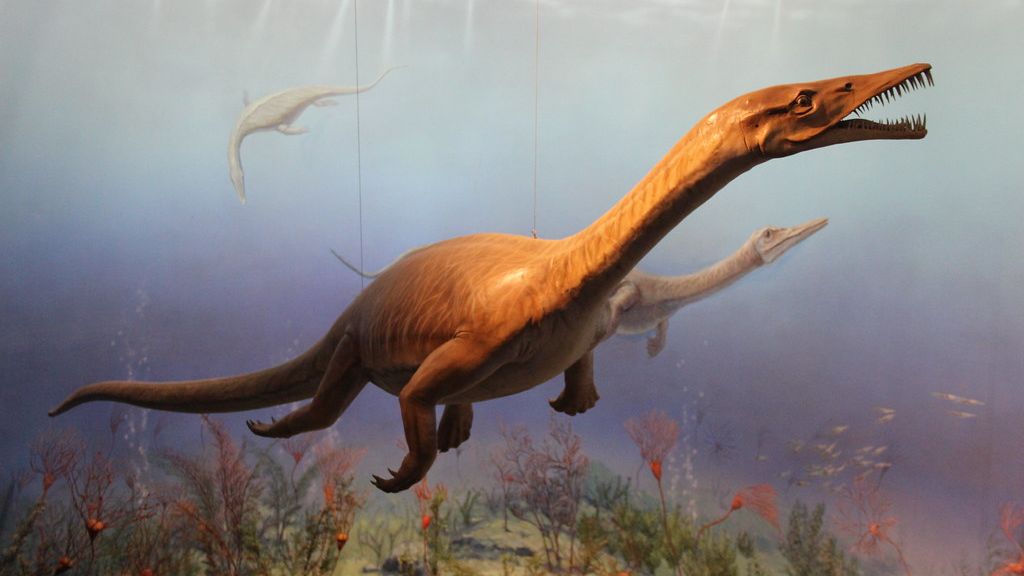
When you think of prehistoric life, your mind probably jumps straight to thundering T. rexes and towering sauropods. Totally understandable. Dinosaurs have hogged the spotlight for decades. Yet long before a single dinosaur set foot on land, something far stranger, far more alien, and arguably far more spectacular was already thriving deep in the world’s ancient oceans. These creatures didn’t just exist. They dominated. They evolved solutions to survival that still leave scientists scratching their heads today.
The prehistoric ocean was a place so wild and so relentlessly inventive that no science fiction writer could have dreamed it up. You’d be swimming next to living buzz saws, five-eyed mini-monsters, armored killing machines, and sea serpents the size of buses. Ready to dive in? Here are ten of the most fascinating prehistoric sea creatures that ruled the oceans long before the age of dinosaurs – and some that overlapped with them in the most terrifying ways possible.
1. Anomalocaris: The Bizarre “Abnormal Shrimp” That Ruled the Cambrian Seas
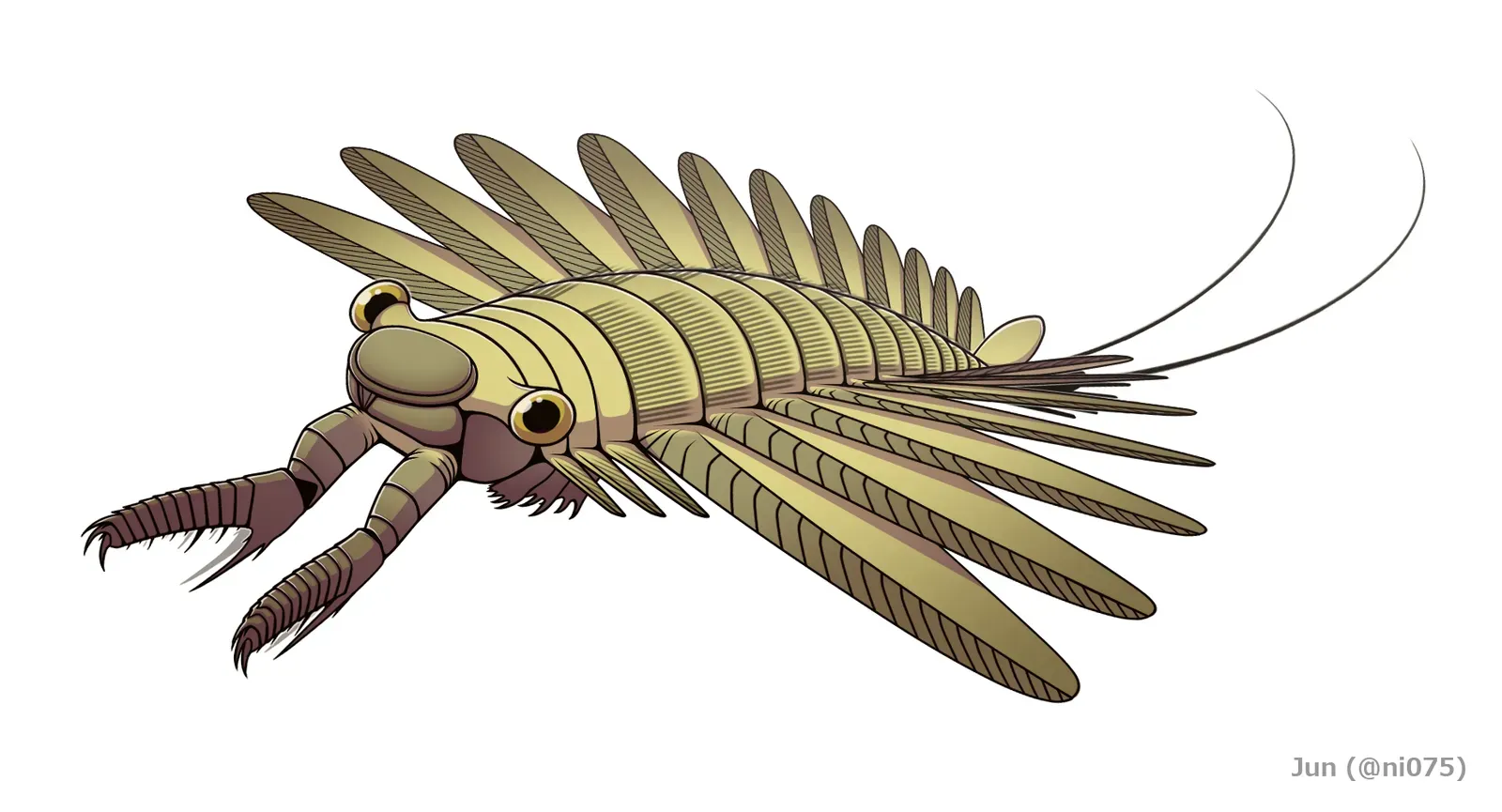
Here’s a wild opening thought: the most fearsome predator to ever stalk the world’s oceans was once mistaken for a shrimp’s abdomen. Anomalocaris, from Ancient Greek meaning “unlike” and “shrimp,” was an extinct genus of early marine arthropod, and for decades, scientists couldn’t agree on what they were even looking at. Different body parts of Anomalocaris were described as separate creatures before being recognized as one animal, which is honestly one of the most embarrassing mix-ups in paleontological history.
Regarded as one of the first apex predators, Anomalocaris prowled the ancient seas over 500 million years ago. Resembling a large shrimp with long, segmented bodies, it had mouthparts that formed a circular disc of sharp plates to crush prey, and its compound eyes were among the most advanced of its time. With frontal appendages outstretched, Anomalocaris could swim with maximized speed, and its eyes were suitable for hunting prey in well-lit waters. Think of it as the great white shark of the Cambrian, only far weirder and, honestly, more impressive.
2. Dunkleosteus: The Armored Fish With a Bite Stronger Than a T. Rex
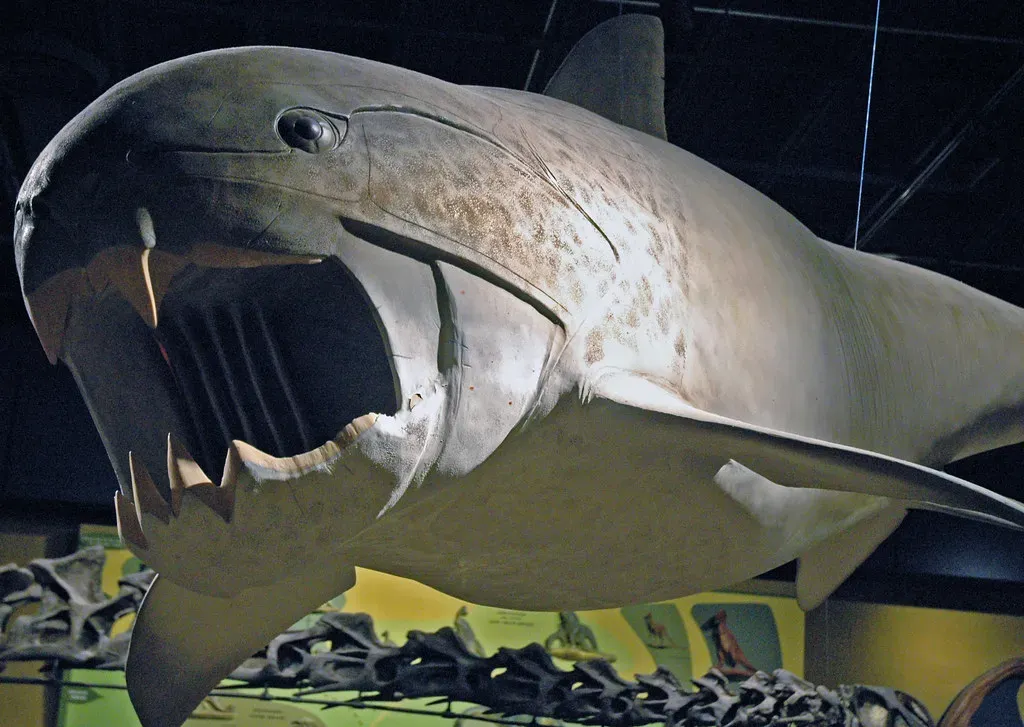
Let’s be real, if you picture a prehistoric fish, you probably imagine something scaled and streamlined. Dunkleosteus was nothing like that. Dunkleosteus terrorized Devonian seas 380 million years ago, growing up to 33 feet long with armor-plated head shields instead of teeth, and it could snap its jaw shut with remarkable force. Fossils show its bony plates developed self-sharpening edges that sliced through prey like scissors, making it one of history’s most efficient hunters before sharks took over.
Dunkleosteus was one of the largest and most fearsome prehistoric fish, with a heavily armored head and thorax. Its jaws were equipped with sharp, bony plates that acted like shears, capable of cutting through the toughest prey, and it is thought to have had one of the strongest bite forces of any known animal. You can picture it as a living tank with a trap door for a mouth. Terrifying doesn’t quite cover it.
3. Hallucigenia: The Thumb-Sized Terror That Had Scientists Completely Baffled
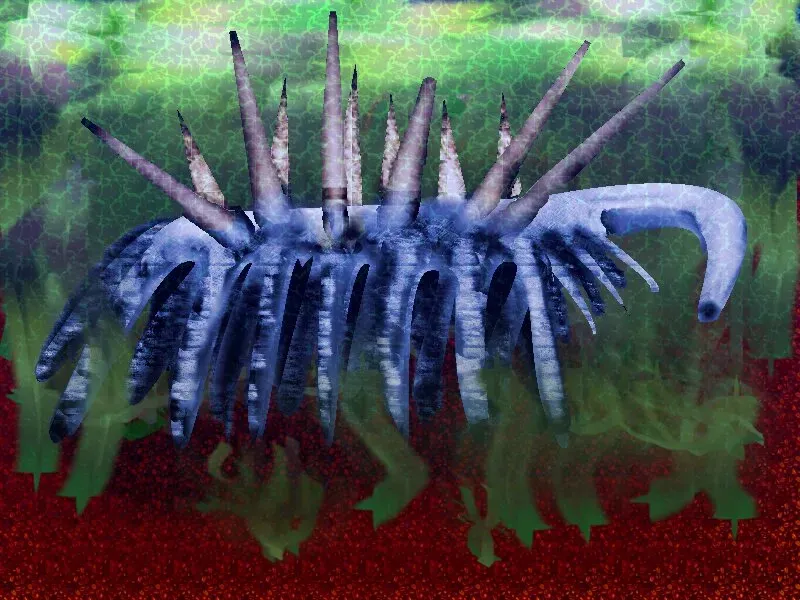
Honestly, Hallucigenia might be the single most confusing animal ever discovered. For decades, scientists couldn’t figure out which end was which on this tiny creature. Hallucigenia stumped researchers with its row of spikes, tentacle-like appendages, and seemingly impossible body structure. Originally discovered in the Burgess Shale, paleontologists first reconstructed it upside down and backward. This thumb-sized oddity from 505 million years ago forced scientists to reconsider how early animals evolved.
Named for its bizarre form, Hallucigenia was a worm-like organism with elongated, spiny appendages protruding from its back. Living roughly 508 million years ago during the Cambrian Explosion, it had a conical head and multiple pairs of articulated legs. Initially, scientists struggled to identify its head from its tail, but now it’s known as an early ancestor of modern-day velvet worms, reflecting just how experimental evolution was getting in those ancient seas.
4. Opabinia: The Five-Eyed Creature That Made Scientists Laugh Out Loud
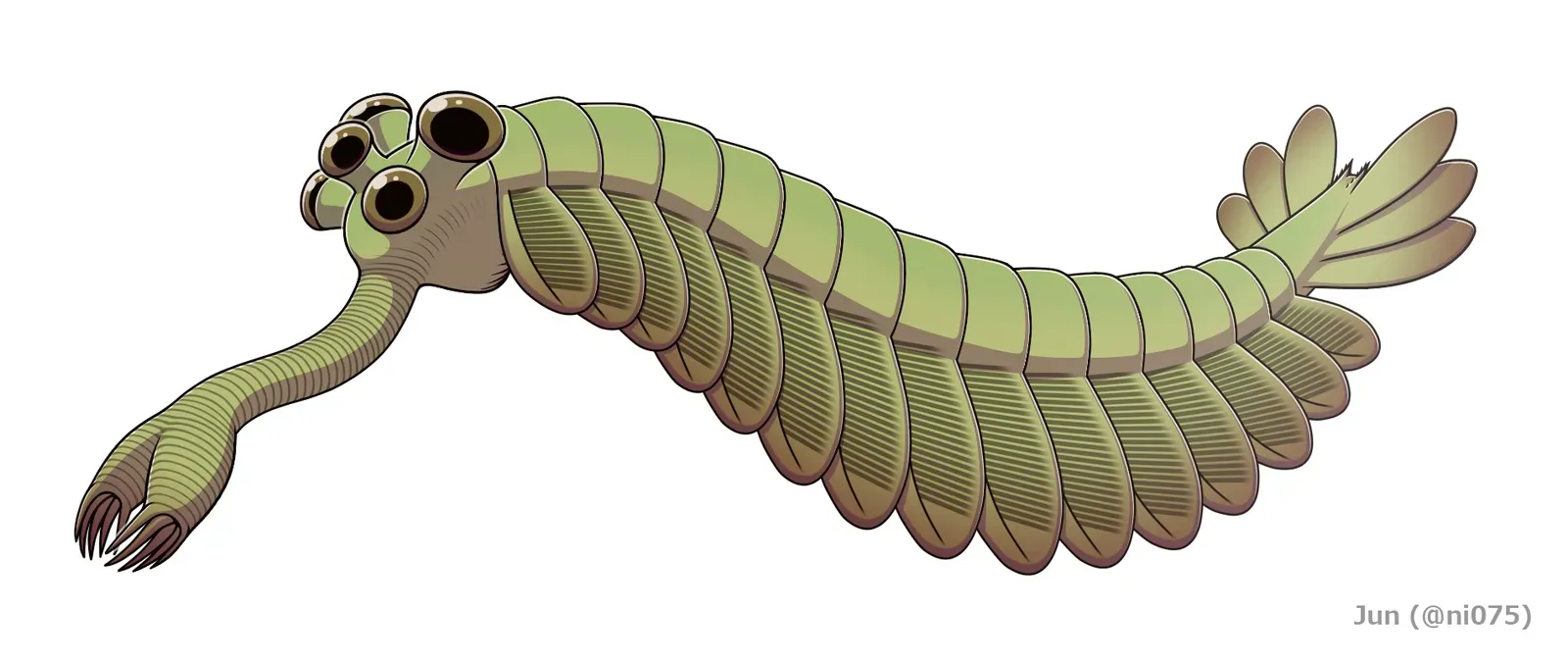
I know it sounds crazy, but the first time paleontologists properly presented Opabinia to their scientific colleagues, when Stephen Jay Gould first presented Opabinia to colleagues in the 1970s, they laughed because it looked so bizarre. This five-eyed creature with a front-facing nozzle seemed too strange to be real. And honestly? Who could blame them.
Opabinia regalis is an extinct, stem-group marine arthropod found in the Middle Cambrian Burgess Shale, approximately 505 million years ago. It was a soft-bodied animal with a segmented trunk with flaps along its sides and a fan-shaped tail. Its head showed unusual features: five eyes, a mouth under the head facing backwards, and a clawed proboscis that most likely passed food to its mouth. Found in the famous Burgess Shale, this 7-centimeter oddity used its flexible frontal appendage to capture prey and pass it to its mouth, and it forced scientists to reconsider how early animal body plans evolved.
5. Helicoprion: The Shark With a Chainsaw for a Jaw
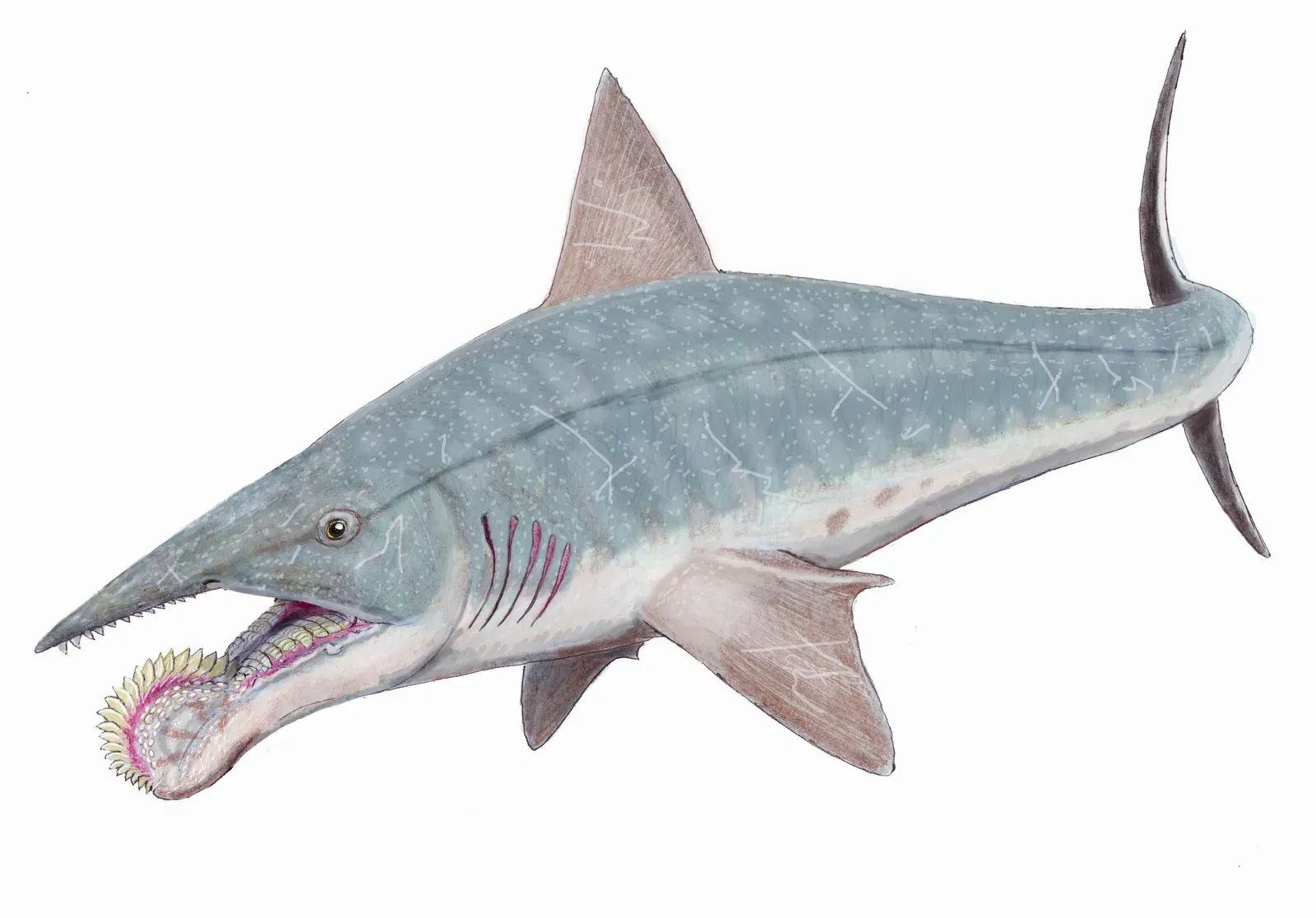
The Helicoprion is an ancient shark-like creature that lived during the Permian, a time just before the dinosaurs. Its most distinctive feature, the tooth whorl, is a massive spiral of teeth that filled its lower jaw, continually growing throughout its life. When the first tooth whorl was originally found, it was thought to be an ammonite, a fossilized spiral shell. Imagine accidentally mistaking a jaw full of spinning teeth for a harmless shell. Paleontology can be humbling.
Researchers were finally able to solve the mystery using a CT scan to find bits of cartilage left behind. They confirmed that this spiral of teeth was part of the lower jaw, and that the Helicoprion had no other teeth. The teeth would rotate outward when it opened its mouth and then turn backward like a circular saw once the mouth was closed to tear at its prey. With a torpedo-like body and large, forked tail, Helicoprion was likely a fast-moving predator of the open oceans.
6. Ichthyosaur: The Ocean’s Dolphin-Shaped Reptile Giant
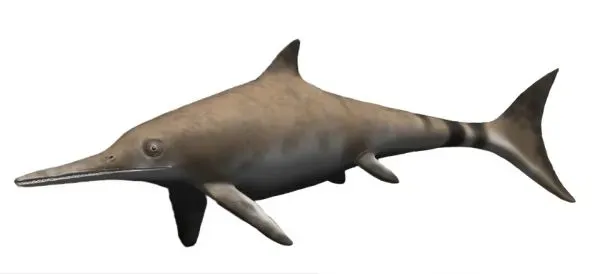
Ichthyosaurs were a group of marine reptiles that resembled modern dolphins and fish, with streamlined bodies, elongated snouts, and large eyes. They were highly adapted to life in the ocean, possessing strong, paddle-like limbs and tails for efficient swimming. The name “Ichthyosaurs” means “fish lizard,” and their resemblance to living fish and dolphins is an example of convergent evolution, the phenomenon of unrelated animals developing similar characteristics. You’d be forgiven for doing a double-take if you saw one.
Fossilized bones of an ichthyosaur were recently found in the Swiss Alps, estimated to be between 200 and 250 million years old. What’s more, these creatures weighed as much as 80 tonnes and measured more than 20 meters long. Ichthyosaurs were likely top predators, feeding on fish, squid, and other marine organisms, and they are known for giving live birth, as evidenced by fossilized remains of pregnant individuals. That last detail, live births in a sea full of apex predators, is honestly remarkable.
7. Plesiosaur: The Long-Necked Legend That Inspired the Loch Ness Myth
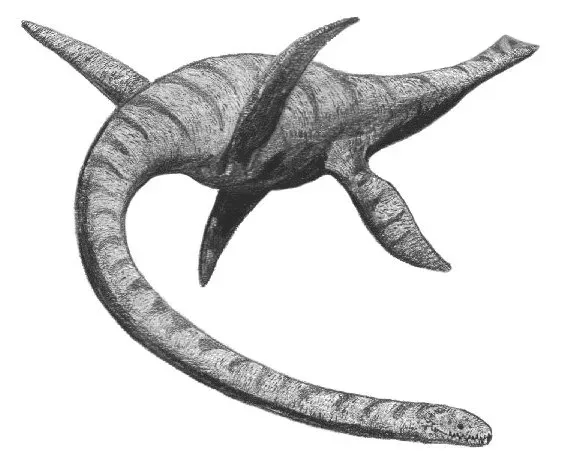
Plesiosaurs are identified by their four flippered limbs and, for most, a long neck. In coordinated movements, the four flippers would equally propel the plesiosaur forward, a unique swimming method in the animal kingdom. Think of it like a creature that swam the way an underwater bird flies. Strange, elegant, and utterly alien. The term plesiosaur refers to a group of extinct Mesozoic Era marine reptiles that thrived during the Jurassic Period, some 203 million years ago, and were prevalent throughout the Cretaceous Period.
One thing that separates Plesiosaur from other prehistoric marine reptiles is how it reproduced. They gave birth to live young, which means they may have been warm-blooded. They were massive, with long necks that made up half the length of their bodies, growing up to 43 feet, about the size of a very large bus, but their size didn’t stop them from flying through the water. It’s easy to see why people mistook fossils of these creatures for sea serpents and monsters.
8. Mosasaurus: The Real Sea Monster Behind Jurassic World’s Most Iconic Scene
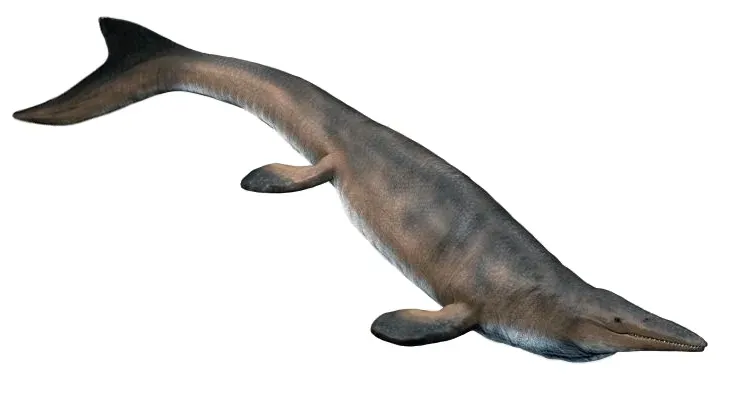
Towards the end of the dinosaurs’ reign on land, a group of fearsome marine reptiles called mosasaurs dominated the oceans, named after Mosasaurus, the most famous member of the group. These large, predatory marine reptiles belong to the reptile group Squamata, which is also home to lizards and snakes. They are thought to have evolved from small, coastal lizards and may be related to monitor lizards. Yep, your garden lizard has a distant cousin who was built like a nightmare.
Mosasaurus, named after the Meuse River where its first remains were discovered, was a truly colossal prehistoric sea creature, reaching lengths of up to 18 meters, prowling the shallow seas covering Europe during the late Cretaceous period. The strong jaws of mosasaurs were lined with sharp teeth, enabling them to hunt a wide variety of prey, including fish, sharks, cephalopods, and even other marine reptiles. Their anatomy suggests they were fast and agile swimmers, capable of ambushing or pursuing their prey, and mosasaurs are considered one of the top marine predators of their time.
9. Xiphactinus: The Cretaceous Ocean’s Fanged, High-Speed Assassin
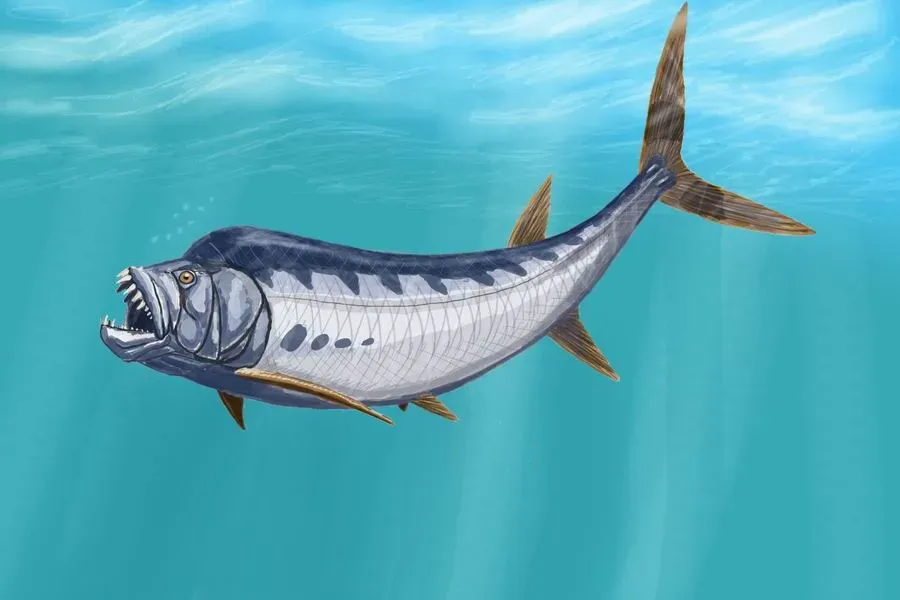
Xiphactinus was a large, predatory bony fish known for its robust body, elongated, streamlined shape, and large, fang-like teeth. It had a strong, upturned lower jaw, which gave it a formidable appearance. Picture something resembling a modern tarpon, then triple its size and give it teeth like daggers. That’s Xiphactinus. Often described as resembling giant fanged harpoons and currently the largest known bony fish of the Cretaceous period, Xiphactinus was a voracious predator, growing to lengths of around 16 to 20 feet.
Xiphactinus was an apex predator in its marine environment, capable of fast swimming and likely ambushing or chasing down prey, which included smaller fish and other marine animals. Several fossils of Xiphactinus have smaller fish preserved within their stomachs, which paints a vivid picture of its last meal being interrupted by its own demise. Scientists call these “fish within a fish” fossils, and they’re as spectacular as they sound.
10. Megalodon: The Tooth-Dropping Shark That Still Haunts Our Nightmares
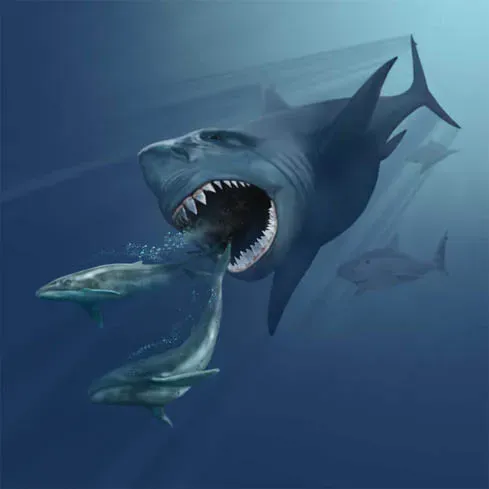
The megalodon is likely the most well-known prehistoric sea creature. It was a gargantuan shark that lived from around 23 million to 3.6 million years ago during the Early Miocene and Pliocene epochs. The great white shark’s close relative, the megalodon, is considered one of the most powerful and deadly predators to have ever lived in our oceans. Its teeth alone are the size of your hand, and people are still finding them washed up on beaches today.
This colossal shark, estimated at 15 to 17 meters long, dominated the oceans from the late Oligocene to the Early Pleistocene. For centuries, its massive teeth, some reaching 18 centimeters in height, were believed to be the petrified tongues of dragons. It wasn’t until 1667 that they were correctly identified as shark teeth, thanks to Danish naturalist Nicolas Steno. Megalodon’s global distribution, evidenced by fossil teeth found on every continent, points to its success as an apex predator. This gigantic shark likely maintained a warm body temperature through gigantothermy, allowing for increased activity and a wider range, and its preferred prey included whales, sea turtles, and dugongs.
Conclusion: The Ocean’s Ancient Hall of Legends
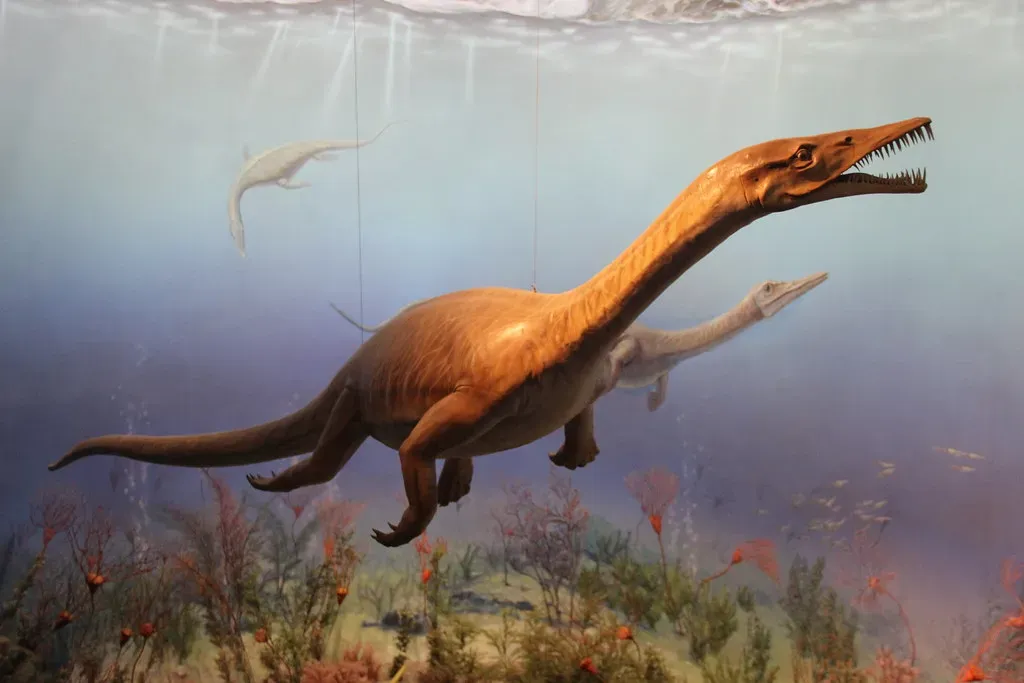
The prehistoric ocean wasn’t just a backdrop to the age of dinosaurs. It was its own universe, teeming with creatures so strange and so powerful that they make today’s great white sharks look almost polite. From Anomalocaris prowling Cambrian shallows half a billion years ago, to Megalodon ruling seas just a few million years before humans arrived, these animals remind you of something profound: life on Earth has always been deeply, wonderfully, and sometimes terrifyingly inventive.
What’s perhaps most humbling is how much we still don’t know. Each new fossil find rewrites the rulebook, sometimes quite literally turning creatures upside down and backward, just ask Hallucigenia. The ancient oceans hold secrets that paleontologists are still decoding, and every new discovery has the potential to shock even the most seasoned experts. Which of these ten creatures surprised you the most? Drop your thoughts in the comments, because the conversation about Earth’s most extraordinary ocean rulers is only just getting started.