
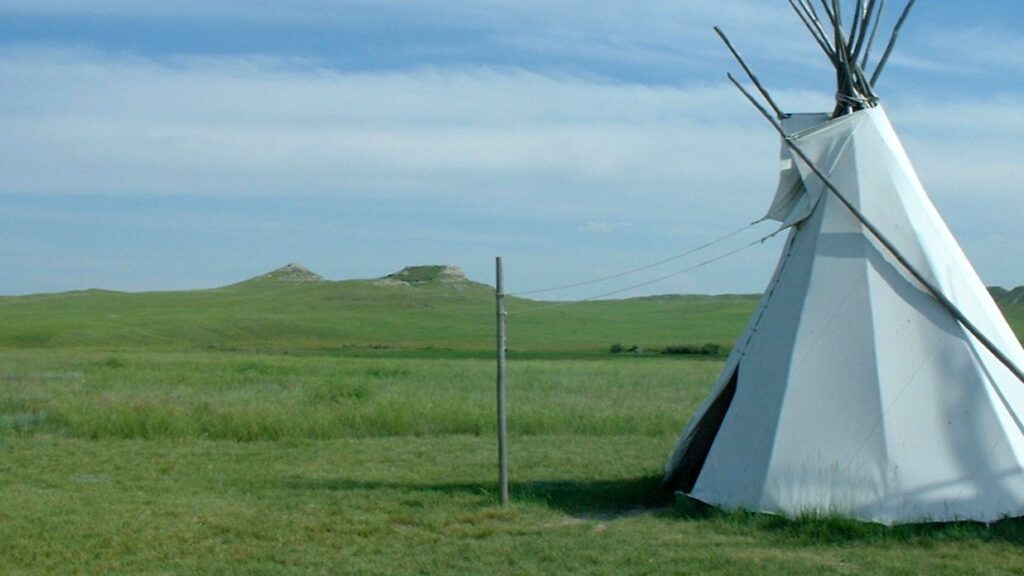
There is a version of American history most people have never been told. Long before university-trained geologists arrived with their tools and notebooks, Indigenous peoples across this continent had already been living alongside bones the size of boulders, shells pressed into cliffsides, and forests turned to stone. They interpreted these discoveries, incorporated them into ceremony, and built knowledge systems around them.
Paleontology in the United States can first be traced to Native Americans, who had been familiar with fossils for thousands of years. They both told myths about them and applied them to practical purposes. That history has largely been sidelined. Honestly, that alone should make you curious. These seven places are where that suppressed story roars back to life. Let’s dive in.
Badlands National Park, South Dakota: Where Lakota Wisdom Meets an Ancient Sea of Bones
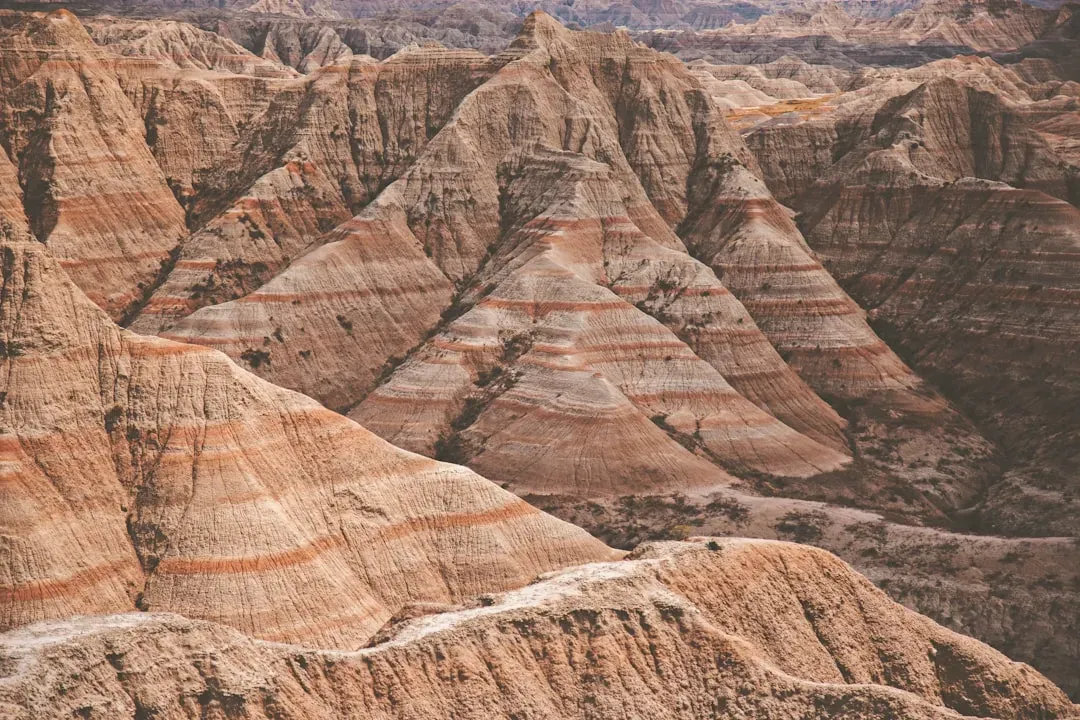
You might think the Badlands are just a dramatic backdrop for road trip selfies. Think again. Long before paleontology existed as a formal discipline, the people of the Oglala Lakota Nation discovered large fossilized bones and turtle shells. They also found fossilized seashells and were the first to realize this area had once been underwater. That is not a minor footnote. That is original scientific deduction, made without microscopes or laboratories.
Centuries before paleontologists discovered the multitude of fossils there, the Lakota people referred to these creatures as Unk-tegila, or “water monsters.” They even played a role in the Oglala Lakota creation story. Today, the National Park Service manages the park, with the South Unit being co-managed with the Oglala Lakota Tribe. Although some visitors are disappointed when they learn that Badlands National Park is not home to dinosaurs, the rich diversity of extinct mammal life becomes fascinating. Ancestors of the modern-day rhinoceros, horse, dog, and many other species are present.
Petrified Forest National Park, Arizona: Stone Trees and a Thousand Years of Pueblo Life
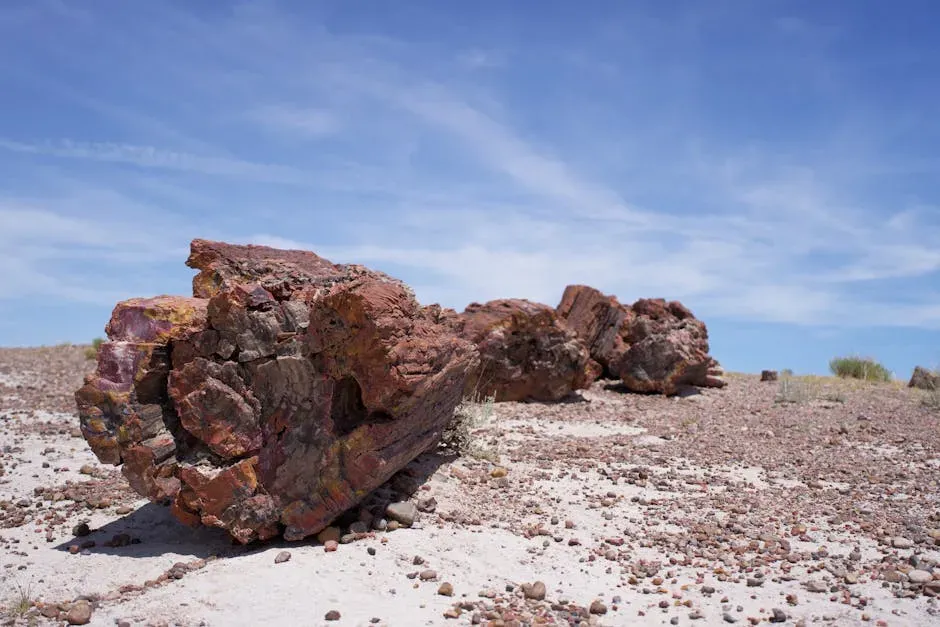
Walking through Petrified Forest feels like stepping into a dream someone else had millions of years ago. Petrified Forest encompasses approximately 221,416 acres and protects globally significant fossils, including petrified wood and one of the most comprehensive records of Late Triassic vertebrate evolution in North America. The national park contains one of the largest and most colorful concentrations of mineralized fossil wood in the world. Here’s the thing though: the human story layered on top of that is just as staggering.
The park’s earliest human inhabitants arrived 13,000 years ago. These Clovis-era people are the ancestors of Native Americans. By about 2,500 years ago, Ancestral Pueblo farmers were growing corn and living in subterranean pit houses in what would become the park. By one thousand years ago, Ancestral Pueblo farmers lived in above-ground, masonry dwellings called pueblos and gathered in large communal buildings called great kivas. Today, descendant communities including the Hopi, Zuni, and Navajo maintain ties to the area, viewing it as part of their ancestral homeland. The park’s staff works with tribal partners to protect cultural sites and share Indigenous perspectives.
Standing Rock Sioux Reservation, North and South Dakota: A Living Paleontology Nation
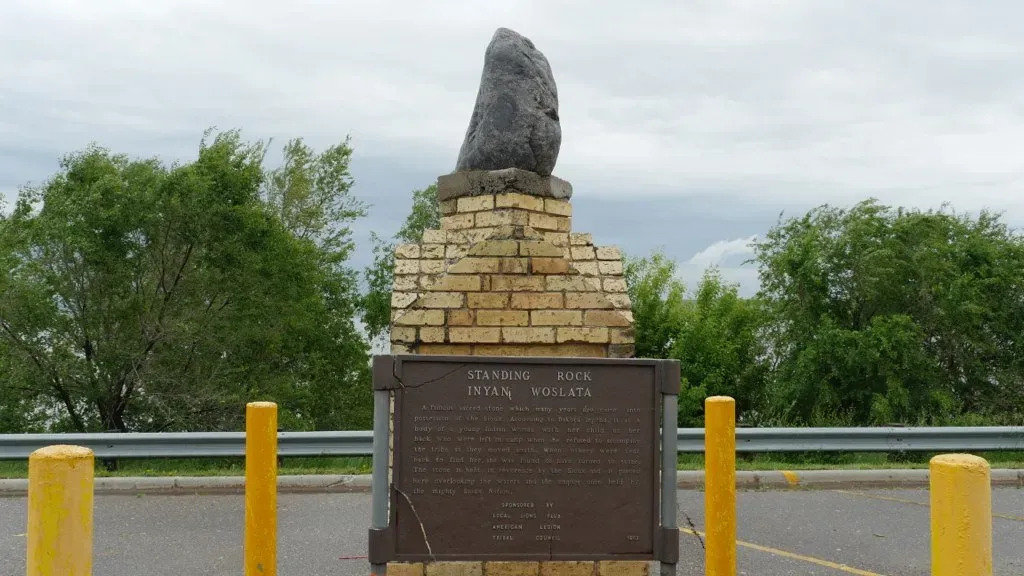
Most people have heard of Standing Rock in the context of pipeline protests. Far fewer know that the land beneath those protests sits atop one of the most fossil-rich formations on Earth. Much of the land contains the Hell Creek Formation, in which famous dinosaurs such as Edmontosaurus, T. rex, and Triceratops have been unearthed. That’s not a coincidence. It’s a convergence of deep time and living culture that is unlike anywhere else on the planet.
The Standing Rock Sioux Tribe is the first in the nation to create its own paleontology code that sets out rules for fossil collection on its land. The code defines a fossil and says that the Standing Rock Sioux Tribe is the owner of all fossils found on its land, “no matter what.” This is deeply significant. Based on an educated guess from the museums surveyed by researchers, anywhere from roughly half to three quarters of the fossil specimens in those museums’ collections were from tribal land. Standing Rock is actively reclaiming that narrative, and it is one of the most important things happening in American paleontology right now.
Hopewell Culture National Historical Park, Ohio: Shark Teeth, Burial Mounds, and the Meaning of Deep Time
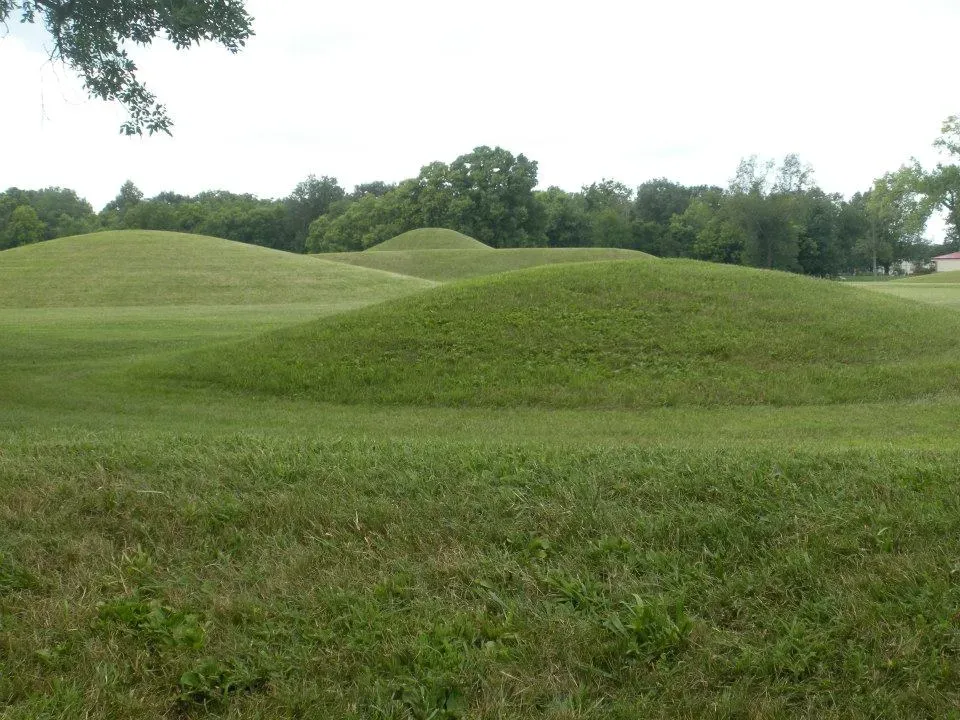
Ohio is not the first place most people think of when they picture dramatic prehistoric history. That is precisely what makes this place so quietly extraordinary. This park protects five different archaeological sites containing artifacts of the broadly defined Hopewell culture, chiefly earthworks and ancient mounds. The people who flourished in this area practiced a wide array of spiritual, political and social customs, but are considered related due to their similar construction of earthen-walled enclosures and mounds.
What really sets this place apart is what was found buried inside those mounds. Hopewell Culture National Historical Park in Ohio has collections of fossil shark teeth and other fossils discovered in the mortuary offerings of prehistoric Native Americans. Thirteen fossil shark teeth are believed to have been incorporated into a necklace. Age dating of these archaeological resources indicates these artifacts date between 200 BC to AD 500, during the Middle Woodland period. Think about that for a moment. Someone carried shark teeth hundreds of miles inland and placed them with the dead as objects of deep meaning. That is not just archaeology. That is emotion preserved in stone.
Effigy Mounds National Monument, Iowa: Crinoid Jewelry and the Woodland Spirit World
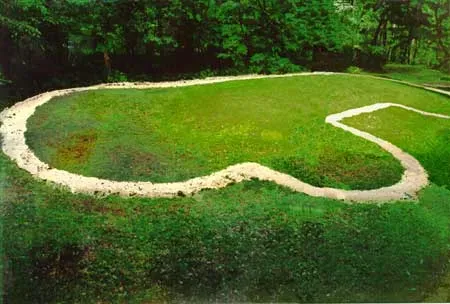
You would drive right past this place without a second glance if you did not know what you were looking for. Set above the Mississippi River in northeastern Iowa, Effigy Mounds contains more than 200 prehistoric mounds built by Indigenous people. Some are shaped like bears and birds. The landscape is extraordinary. Still, the paleontological twist here is what gives the whole place an almost magical quality.
At Effigy Mounds National Monument in Iowa, a collection of crinoid columnals were discovered in a rockshelter. These fossil remains suggest the crinoids were used as jewelry objects by prehistoric Woodland Period Indians. Crinoids are ancient marine animals, sometimes called sea lilies, and their fossilized stem segments are visually striking. The people who lived here recognized their unusual beauty, gathered them, and wore them as ornaments. American Indians have always had a poorly explored tie with fossils, but yet they have a spiritual connection, they have used fossils for medicinal purposes, and they have scientific theories regarding fossils. Effigy Mounds is a quiet but profound reminder of just how sophisticated that relationship was.
Big Bone Lick State Historic Site, Kentucky: The Swamp Where Oral History Became Science
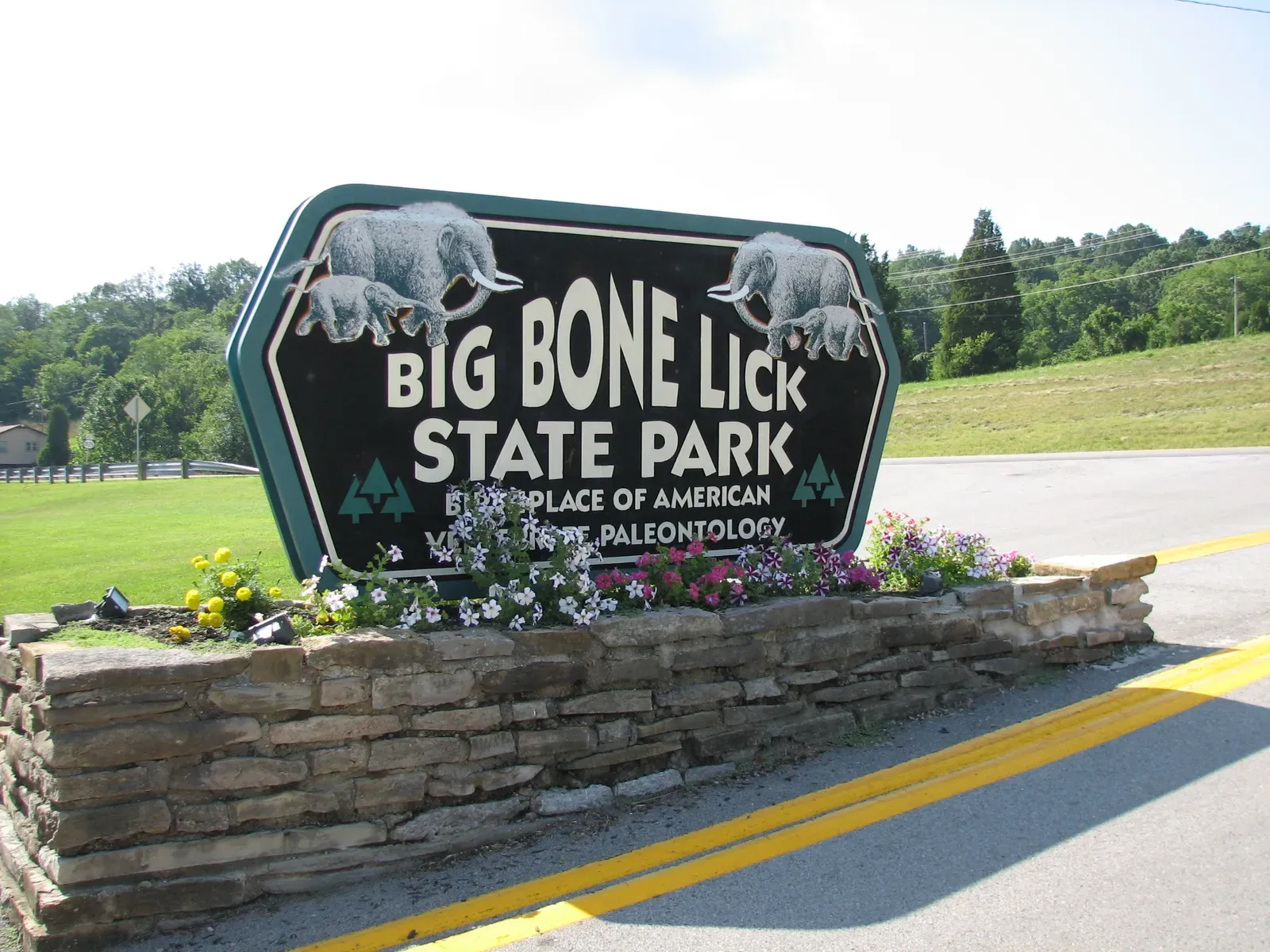
I find this place genuinely moving. It sits at the exact crossroads of Indigenous legend, early paleontology, and the kind of deep human curiosity that transcends culture. The Lenape, Shawnee, and other Native groups had known about this site for many years as an area rich with game and as a site for collecting much-needed salt. Over the course of hundreds of years, sulfur springs located there had deposited salt into the earth. Mammoths and mastodons, along with other prehistoric creatures, were drawn to the area because of it and many died there, becoming stuck in the marshy bog land surrounding the springs.
Some Native peoples believed that the huge bones found there were from the mythological white buffalo that had died from drinking the salty water. Some Algonquian peoples held that the bones were from monsters killed by the transformer trickster known as Nanabosho. It sounds like mythology until you realize these oral traditions were encoding real observations about actual megafauna. That same swamp, now called Big Bone Lick State Historic Site, is where Abenaki guides discovered mastodon fossils in 1739. The first major fossil discovery to attract the attention of formally trained scientists was the Ice Age fossils of Kentucky’s Big Bone Lick. These fossils were studied by eminent intellectuals like France’s Georges Cuvier and local statesmen like Benjamin Franklin and Thomas Jefferson.
Kimmswick Bone Bed at Mastodon State Historic Site, Missouri: Proof That Humans and Mastodons Coexisted
Uploaded by Kbh3rd, CC BY-SA 2.0)
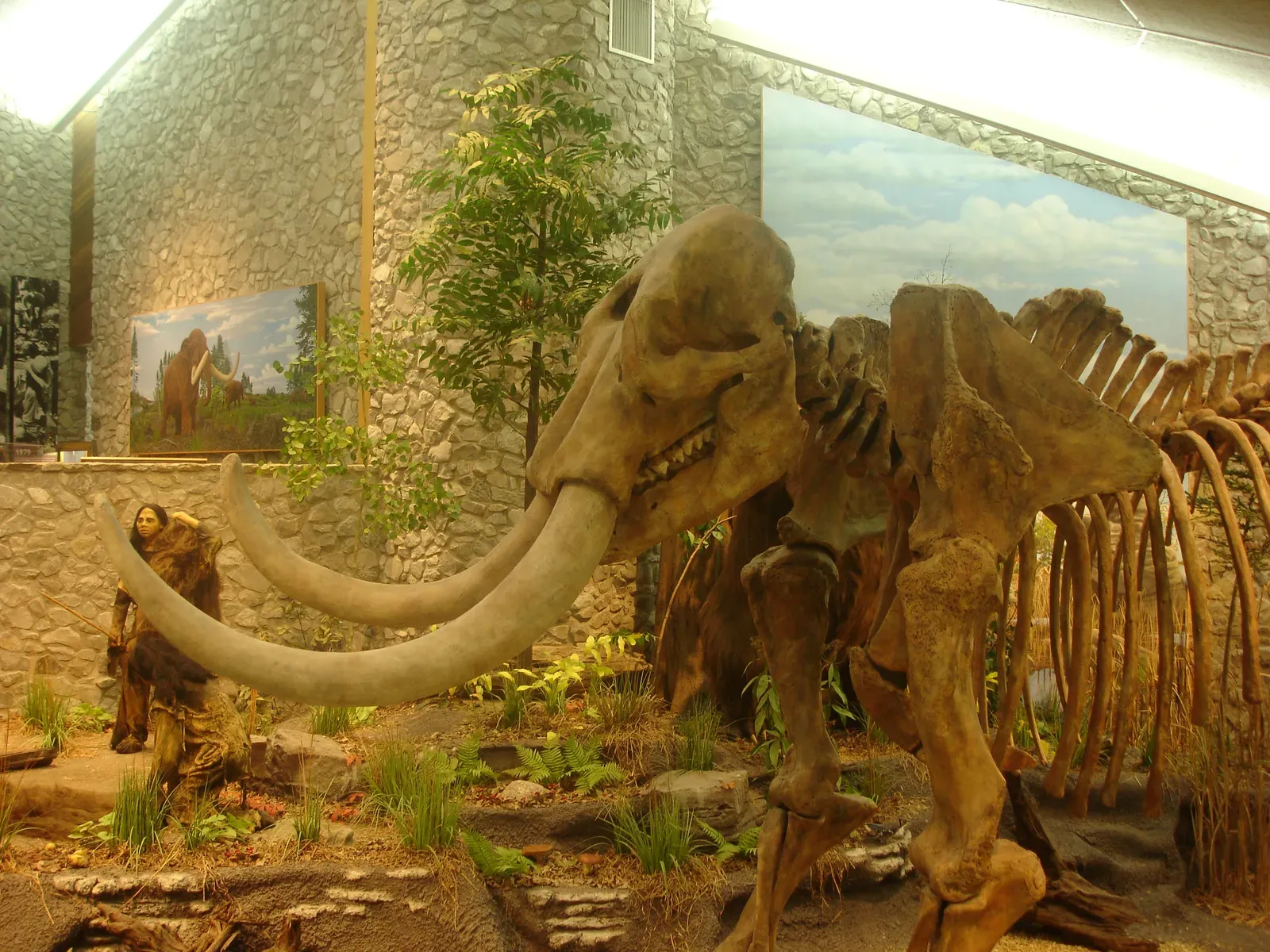
This one flies almost completely under the radar, and that is a genuine shame. Tucked away in Jefferson County, Missouri, this site quietly holds one of the most scientifically significant discoveries in North American prehistory. Mastodon State Historic Site contains an important archaeological and paleontological site known as the Kimmswick Bone Bed. Here, scientists discovered the first solid evidence for the coexistence of humans and the American mastodon in eastern North America.
Let that sink in. Actual proof that people and mastodons shared the same landscape, at the same time, in the same place. The site features a museum with an interpretive video, displays of ancient artifacts and fossils, and an impressive mastodon skeleton replica. Their distant ancestors had lived alongside mammoths and mastodons, giant sloths, saber-toothed tigers, and giant bison, extinct animals that lived on in Native oral histories backed up by fossils. The Kimmswick Bone Bed turns those oral histories into hard evidence, and visiting it feels like standing at the exact moment where legend and science shake hands.
Conclusion: The Stones Beneath Your Feet Have Always Had a Story
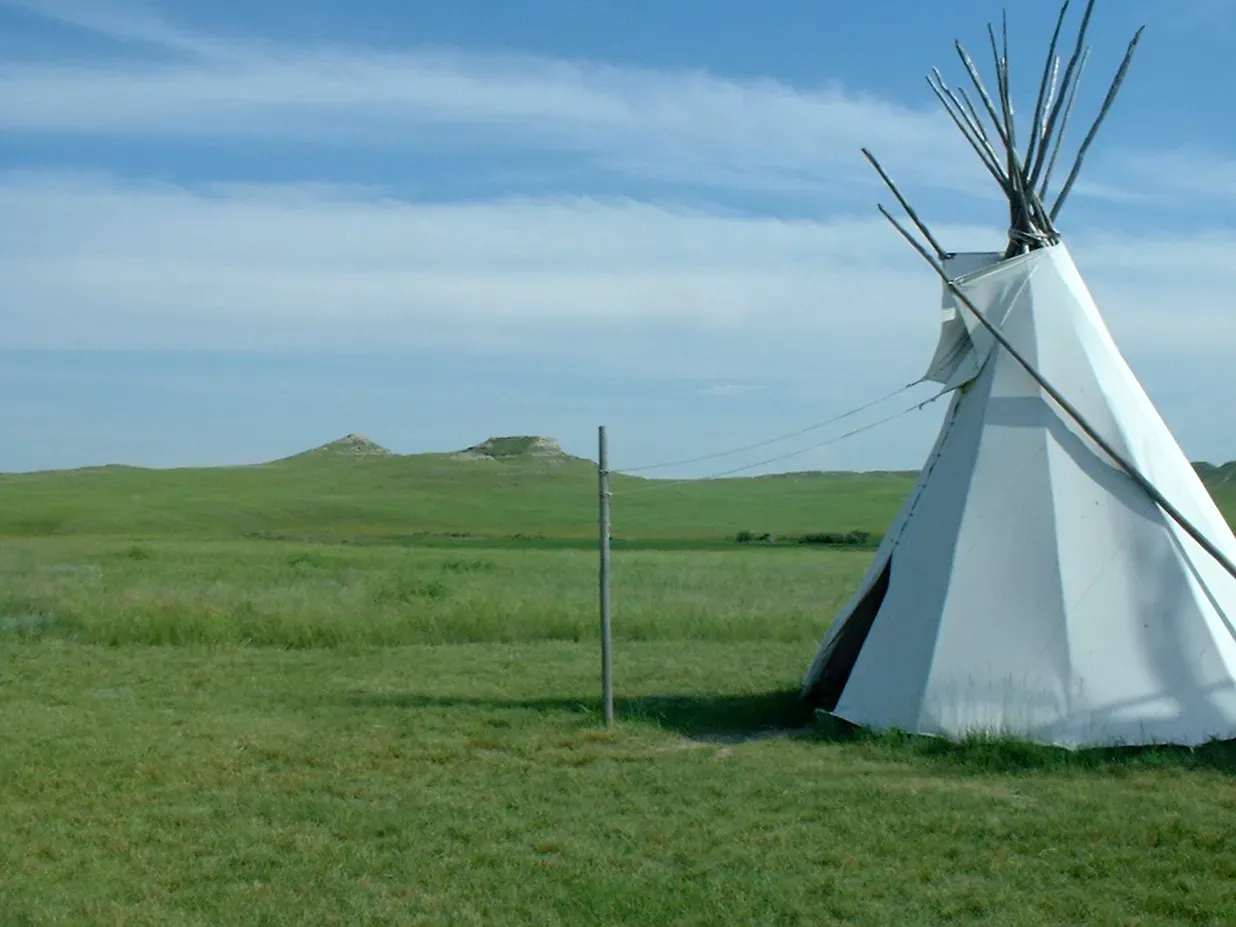
Here is what strikes me most after spending time with all of this: the separation between tribal history and paleontology is, in many ways, artificial. It was created by a scientific tradition that often erased Indigenous knowledge rather than engaging with it. American Indian tribes should be allowed to aid in the interpretation of paleontological specimens, especially if those specimens were altered through human processes. The call is to relate paleontological finds with ethnographic histories through tribal consultation.
According to folklorist Adrienne Mayor, a common theme in indigenous American fossil legends is “the eternal struggle for natural balance among earth, water and sky forces.” Indigenous fossil legends also frequently show motifs resembling major themes in scientific paleontology like deep time, extinction, change over time and relationships between different life forms. These seven places are not just travel destinations. They are invitations to rethink who gets credited for understanding the ancient world.
The bones were always there. The people who first noticed them never stopped watching. What would you have guessed about who the real first paleontologists of this land truly were?