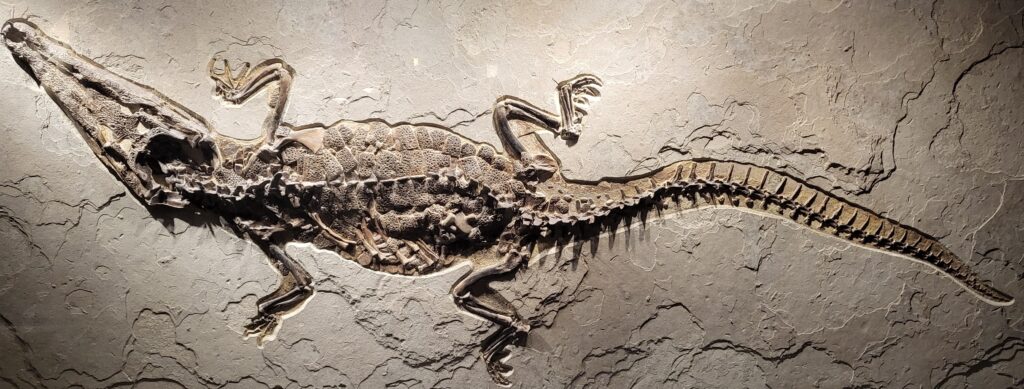
Picture this: 55 million years ago, a massive crocodilian lurks beneath the murky waters of ancient North American rivers, its powerful jaws snapping shut on unsuspecting prey. This isn’t your typical modern crocodile story—this is the tale of Borealosuchus, a prehistoric giant that dominated waterways from coast to coast when the world was a much warmer, wilder place. While today’s crocodilians are impressive enough, they pale in comparison to their ancient relatives who ruled the waters during the Paleocene and Eocene epochs.
The Discovery That Changed Everything
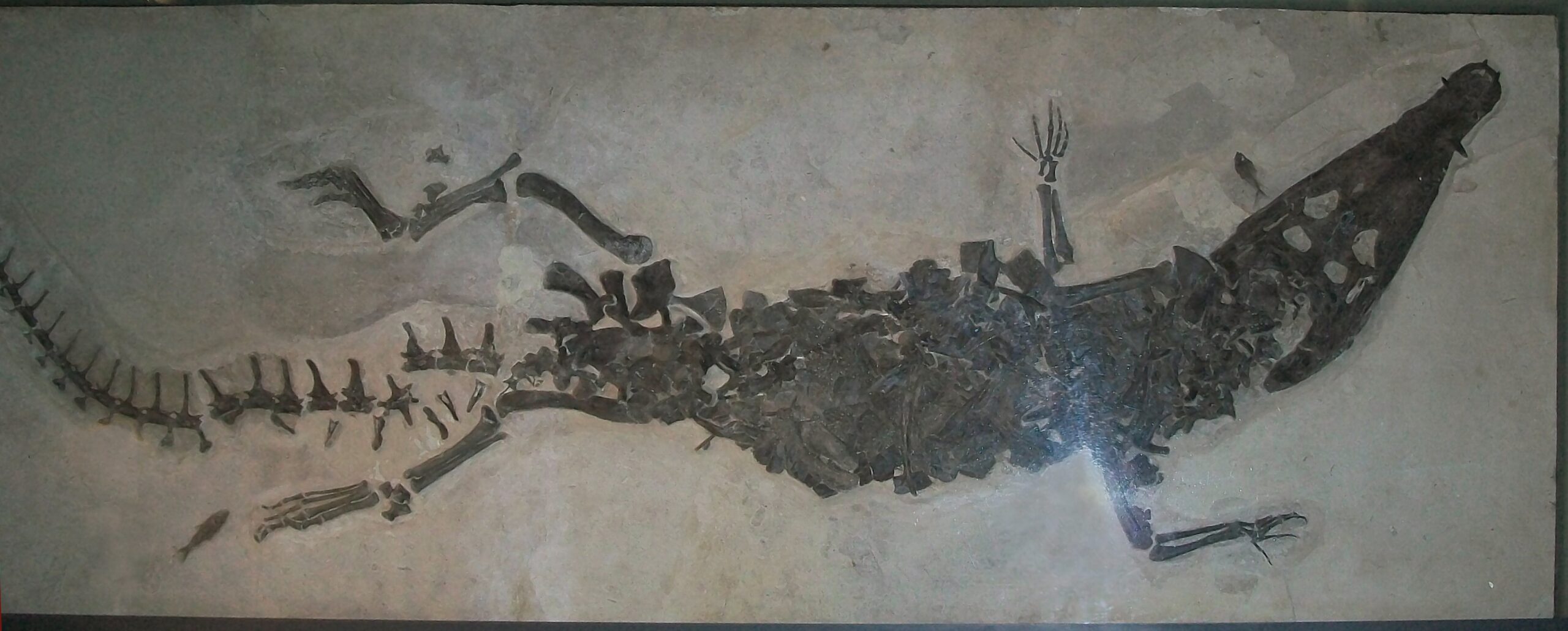
The first Borealosuchus fossils emerged from the badlands of Wyoming in the early 1900s, but scientists initially mistook them for something entirely different. These massive skull fragments and vertebrae sat in museum drawers for decades, misidentified and overlooked.
It wasn’t until the 1990s that paleontologists realized they had stumbled upon something extraordinary. The distinctive skull features and robust build told a story of an apex predator unlike anything swimming in today’s waters. Dr. Christopher Brochu’s detailed analysis in the early 2000s finally gave this ancient beast its proper scientific recognition.
A Name That Tells a Story
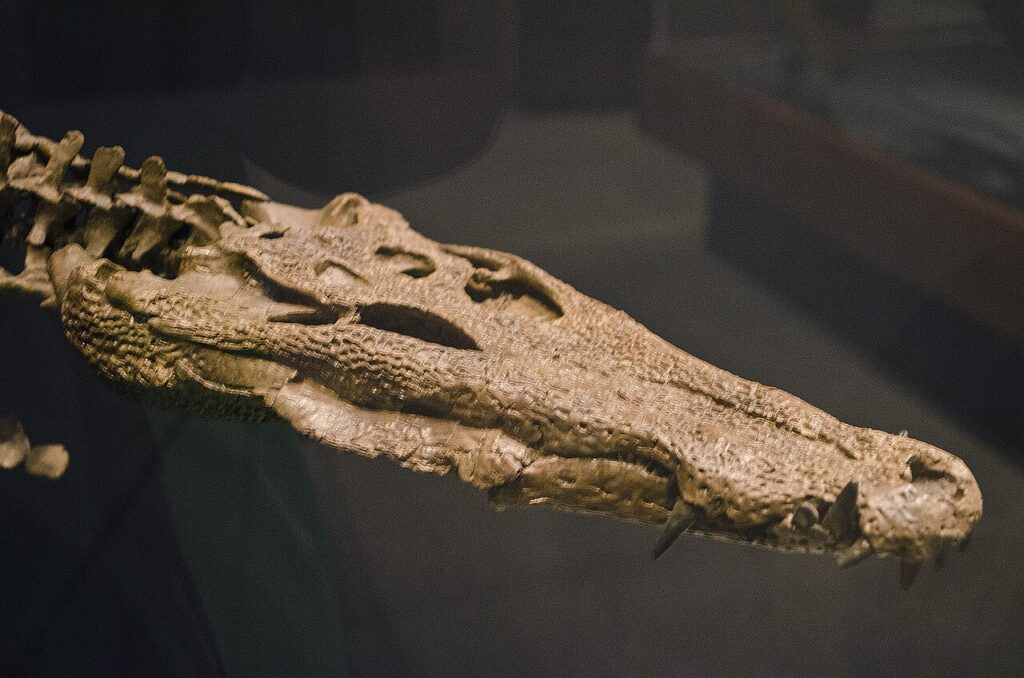
The name “Borealosuchus” literally translates to “northern crocodile,” and it couldn’t be more fitting. This genus thrived in regions that would seem impossible for modern crocodilians—places like Montana, Wyoming, and even parts of Canada where winters now freeze solid.
The species name “wilsoni” honors the paleontologist who first collected significant specimens. Sometimes the most important discoveries hide in plain sight, waiting for the right person to recognize their true significance.
When Giants Ruled the Rivers
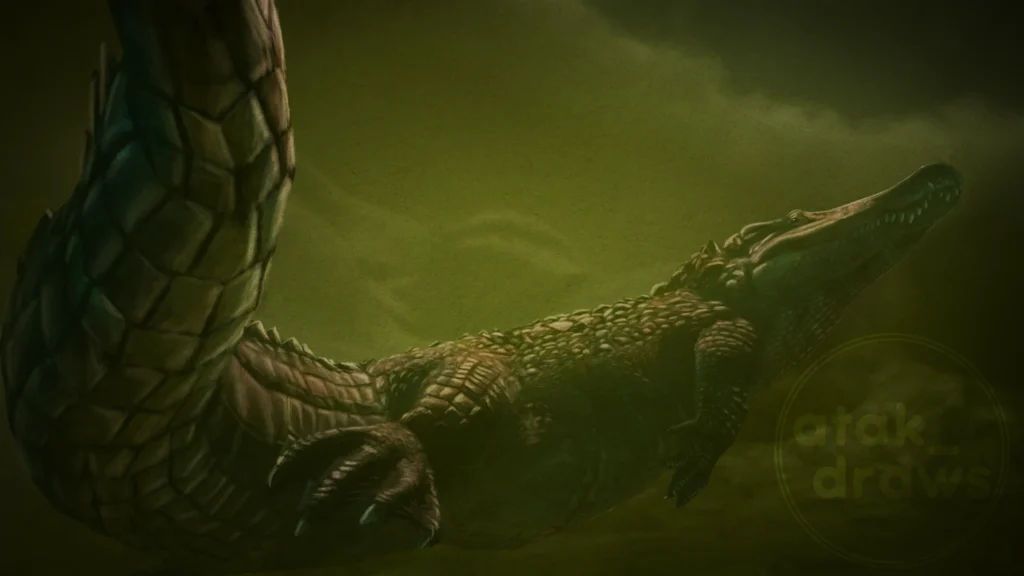
During the Paleocene epoch, roughly 56 to 66 million years ago, Earth looked nothing like today. Global temperatures soared, and lush tropical forests stretched across continents. In this greenhouse world, Borealosuchus found the perfect environment to grow to tremendous sizes.
These weren’t just slightly larger versions of modern crocodiles—we’re talking about animals that could reach lengths of up to 30 feet. That’s longer than most school buses and significantly larger than today’s biggest saltwater crocodiles. The warm climate allowed cold-blooded reptiles to achieve sizes that would be impossible in cooler conditions.
Fossil evidence suggests multiple species existed within the genus, each adapted to specific environments across the continent. Some preferred river systems, while others may have ventured into coastal areas where freshwater met ancient seas.
Built Like a Prehistoric Tank
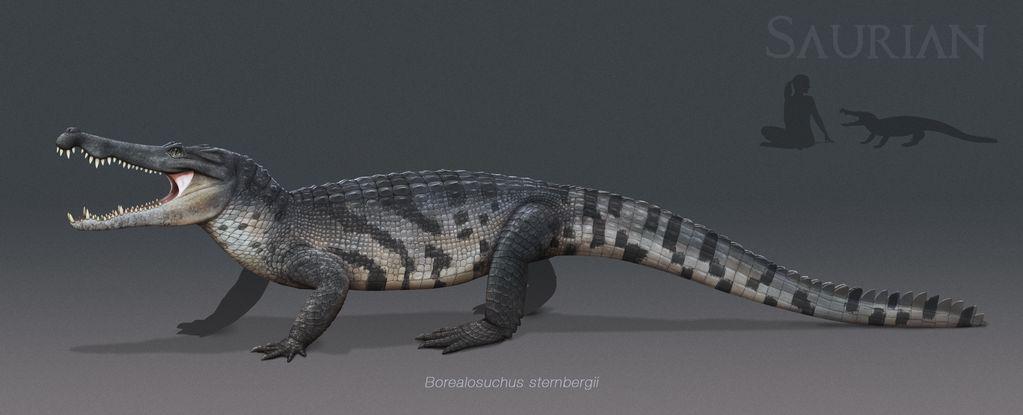
Borealosuchus possessed a skull that would make modern crocodiles jealous. Measuring over four feet in length in the largest specimens, these heads were equipped with dozens of conical teeth designed for grabbing and crushing. The jaw muscles attached to massive bony crests, generating bite forces that could easily snap large bones.
Unlike their modern relatives, Borealosuchus had a more robust build overall. Their vertebrae were thicker, their ribs more pronounced, and their limbs surprisingly well-developed for such aquatic specialists. This suggests they were comfortable both in water and on land, making them incredibly versatile predators.
The tail, while not completely preserved in most specimens, likely featured the same powerful swimming adaptation seen in modern crocodilians—a flattened, muscular appendage that could propel these giants through water with surprising speed.
The Ultimate Freshwater Predator
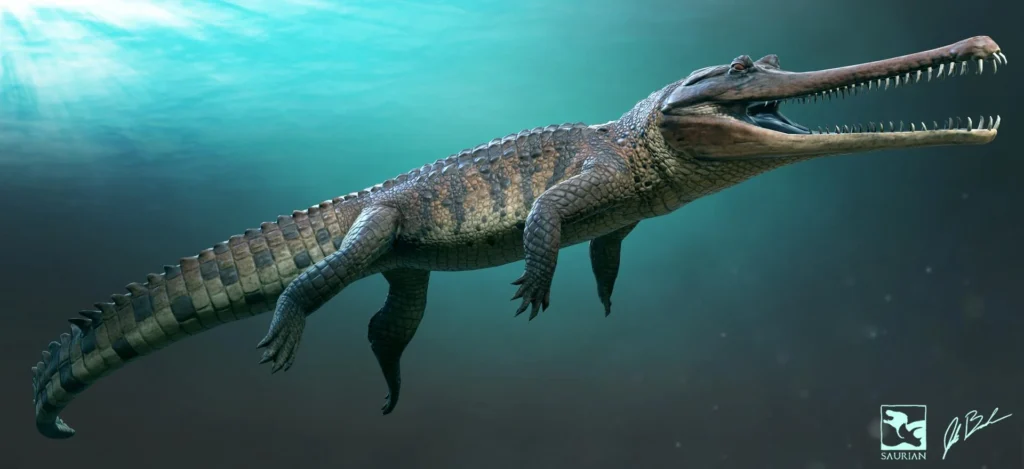
In the ancient river systems of North America, Borealosuchus sat firmly at the top of the food chain. Their diet likely included large fish, turtles, early mammals, and possibly even smaller crocodilians. Tooth marks on fossilized bones suggest they weren’t picky eaters—if it moved and fit in their mouth, it was fair game.
Their hunting strategy probably resembled that of modern crocodiles but on a much grander scale. Picture a school bus-sized predator lying motionless near a riverbank, waiting for the perfect moment to explode into action. The element of surprise, combined with their massive size, made escape nearly impossible for most prey.
Evidence suggests they may have engaged in cooperative hunting behaviors, though this remains speculative. What’s certain is that few animals of their time could challenge a fully grown Borealosuchus in its aquatic domain.
Coast-to-Coast Dominance
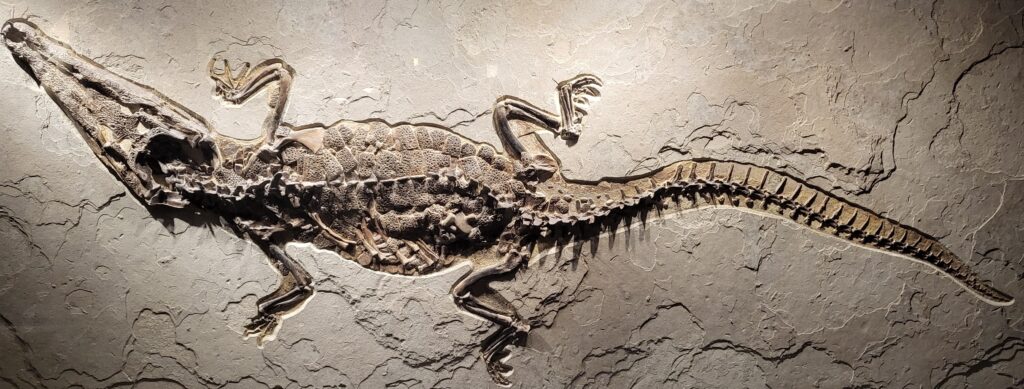
Perhaps the most remarkable aspect of Borealosuchus is how widely distributed they were across North America. Fossils have been found from Montana to New Jersey, suggesting these animals successfully colonized river systems across the entire continent. This widespread distribution indicates incredible adaptability and possibly impressive migration abilities.
The fact that they thrived in both inland river systems and coastal environments shows just how versatile these predators were. While modern crocodilians tend to be more geographically restricted, Borealosuchus seemed capable of conquering any waterway they encountered.
The Mystery of Their Extinction
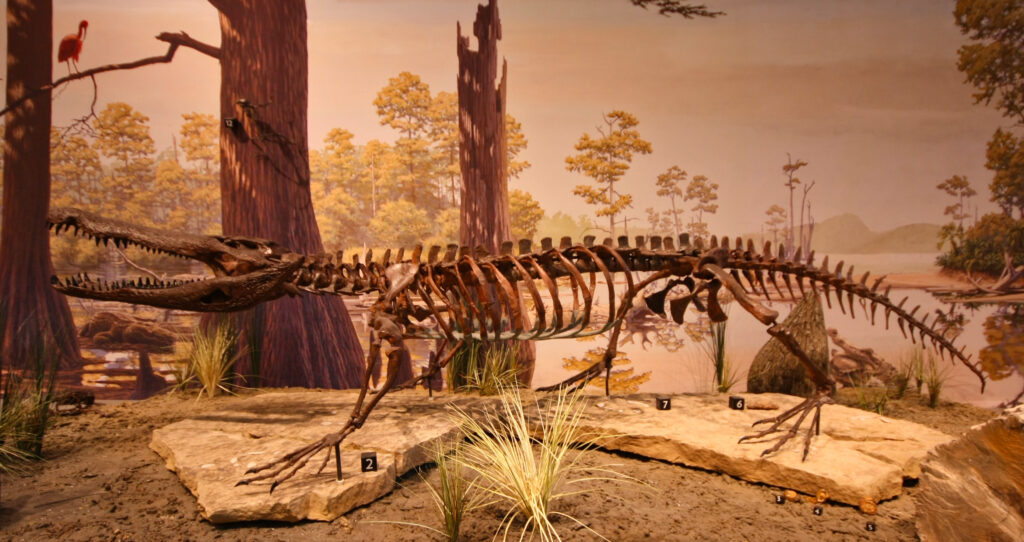
Despite their success spanning millions of years, Borealosuchus eventually vanished from the fossil record around 40 million years ago. The reasons for their extinction remain hotly debated among paleontologists, but climate change likely played a significant role.
As global temperatures began to cool during the late Eocene, the tropical conditions that supported these giants gradually disappeared. Rivers that once flowed year-round began experiencing seasonal variations, and the abundant prey species that sustained such large predators became scarce.
Competition from other predators, including early whales in coastal areas and large terrestrial mammals, may have also contributed to their decline. Sometimes even the mightiest predators can’t adapt fast enough to changing circumstances.
Legacy of the Northern Giants
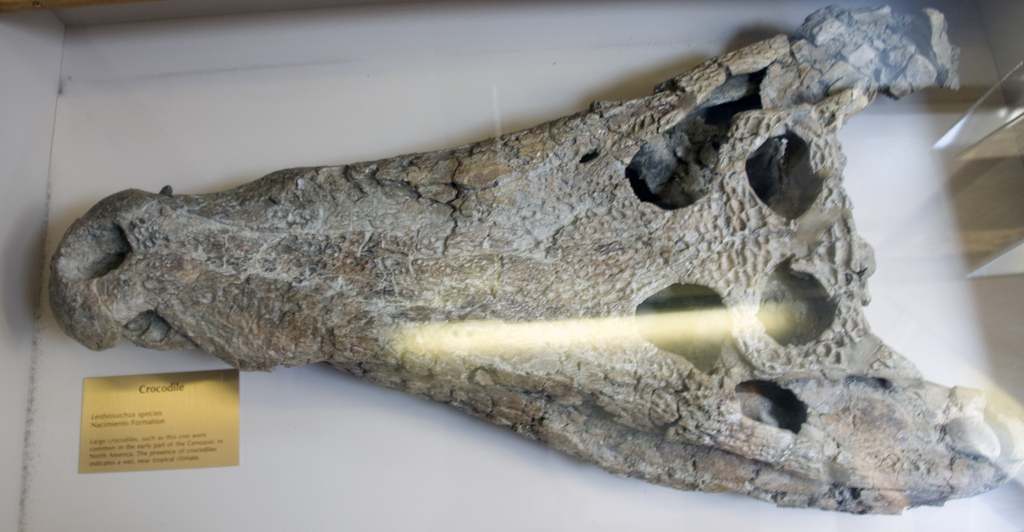
The story of Borealosuchus serves as a powerful reminder of how dramatically Earth’s climate and ecosystems have changed over geological time. These massive predators thrived in a world so different from today that it might as well be an alien planet. Their success and eventual extinction highlight the delicate balance between organisms and their environment. Even the most dominant predators are vulnerable to large-scale environmental changes, a lesson that resonates strongly in our current era of rapid climate change. Modern crocodilians, while smaller than their ancient relatives, represent an unbroken lineage stretching back hundreds of millions of years. In them, we can see echoes of Borealosuchus and gain appreciation for the incredible diversity of life that has existed on our planet.
As we continue to uncover the secrets of Borealosuchus through ongoing fossil discoveries and advanced analytical techniques, we gain a deeper appreciation for the incredible diversity of life that once flourished on our planet. These ancient giants remind us that Earth has hosted creatures far more spectacular than anything alive today, yet they also demonstrate the fragility of even the most dominant species when faced with environmental upheaval. What other prehistoric giants might be waiting in the rocks, ready to rewrite our understanding of ancient ecosystems?