
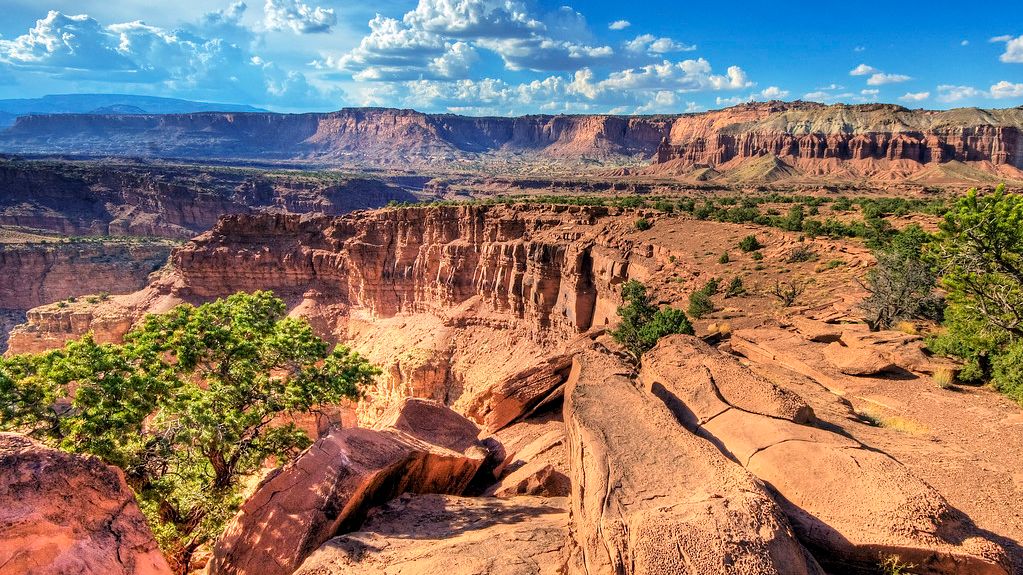
Picture standing in the middle of a desert, miles from any ocean, and realizing that the rock beneath your boots was once a thriving seafloor teeming with creatures that vanished hundreds of millions of years ago. It’s the kind of thing that makes you stop and genuinely question everything you think you know about the world. The United States, for all its geographic variety, harbors some of the most jaw-dropping windows into ancient oceans right within its national parks and natural reserves.
What makes these places so extraordinary isn’t just the science locked inside their stone walls. It’s the fact that you can actually walk through it, touch it, and if you look closely enough, find yourself face to face with a creature that last breathed seawater before the dinosaurs ever existed. So let’s dive in.
Grand Canyon National Park, Arizona: A Billion-Year Open Book of Marine History
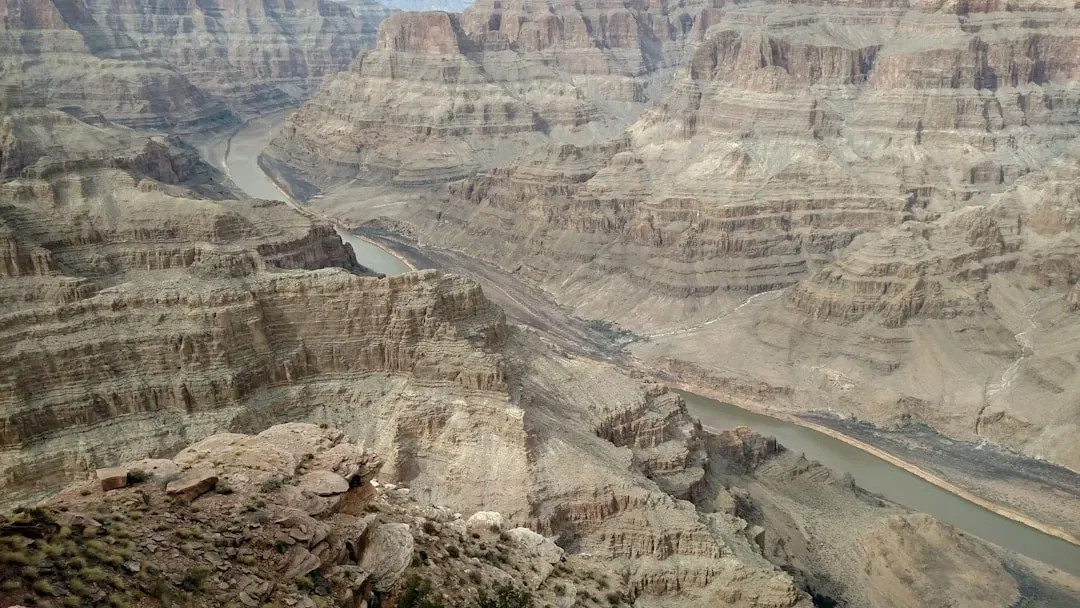
There’s a reason geologists treat the Grand Canyon like sacred ground. Few places on Earth offer you such a complete, uninterrupted record of ancient life stacked right in front of your eyes. The Grand Canyon offers glimpses into roughly a third of Earth’s entire geologic history, along with one billion years of plant and animal fossils. That’s not a small thing. That’s practically incomprehensible.
Trilobites are among the oldest fossils to appear in the Grand Canyon’s fossil record. These sea creatures, related to insects and crustaceans, roamed a shallow ocean between roughly 525 to 505 million years ago, and their fossils can be found in the Tapeats Sandstone, Bright Angel Shale, and Muav Limestone rock layers. Think about that next time you’re walking a trail there. You might be stepping over the remnants of something that crawled across an ocean floor before complex life on land even existed.
The Redwall Limestone layer was laid down in a retreating shallow tropical sea near the equator during roughly 40 million years of the early-to-middle Mississippian period. Researchers have found many fossilized crinoids, brachiopods, bryozoans, horn corals, nautiloids, and sponges within it, along with other marine organisms including large and complex trilobites. Honestly, if you visit and don’t take a moment to look at the canyon walls with this knowledge in mind, you’re missing half the experience.
You can even search for hardened fish teeth near Hermit’s Rest, and maybe find the grainy skeleton of a sponge, one of the simplest and earliest organisms ever to evolve on Earth. A great starting point for experiencing the fossil record on foot is the Trail of Time, an interpretive walk along the South Rim’s Rim Trail.
Guadalupe Mountains National Park, Texas: A Whole Mountain Range Made of Ancient Reef
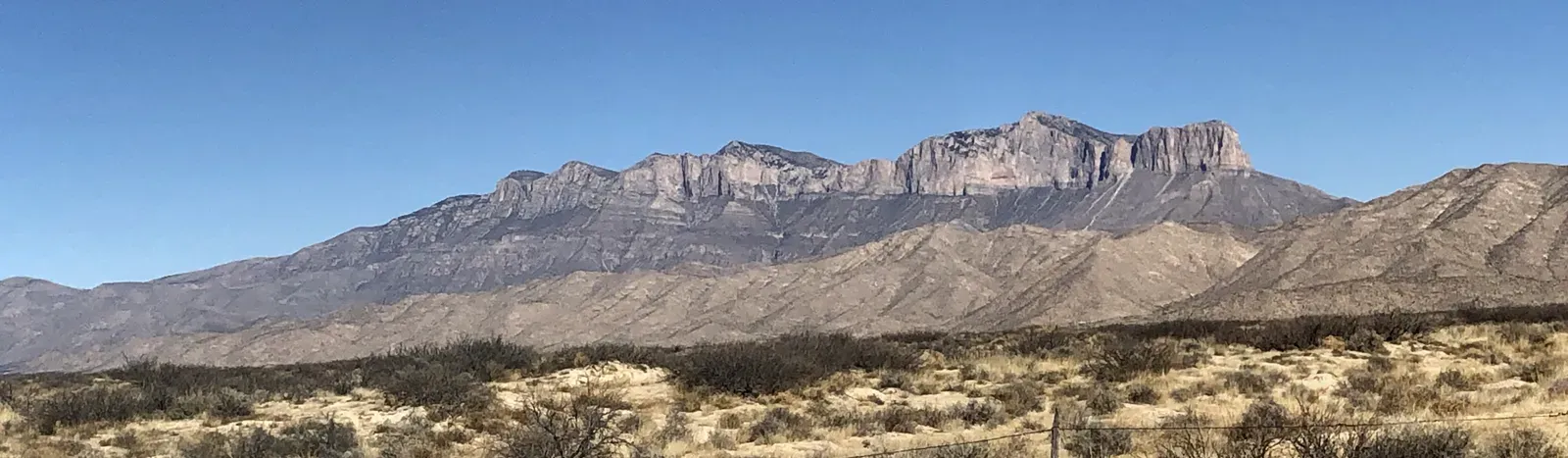
Here’s something that will genuinely stop you in your tracks. The mountains you’re looking at in West Texas? They’re not just rock. This wilderness area preserves the largest exposed fossil reef on Earth, showcasing remnants from an underwater world that existed 260 million years ago when this part of West Texas was covered by the sea. The sheer audacity of geology never gets old.
The Delaware Basin once contained the Delaware Sea, which covered the area of present-day Guadalupe Mountains National Park, and the deposition of the Capitan Reef system formed there between 275 and 277 million years ago. The Capitan Reef complex now makes up the Guadalupe Mountains and is considered one of the best-preserved Permian fossil reefs in the entire world. Standing beneath El Capitan’s sheer limestone face, you’re basically looking at a fossilized ocean structure turned mountain peak. It doesn’t get more dramatic than that.
Investigators have found more than 500 Permian fossil species in the Guadalupe Mountains. The variety is extraordinary. Fossilized marine life found here includes ammonites, bivalves, brachiopods, crinoids, snails, and trilobites. Every trail you walk is essentially a stroll through a vanished ocean ecosystem.
The Permian Reef Trail brings visitors close to fossil beds and serves as a tour through the former marine environment, from seafloor to reef, as it ascends the north side of McKittrick Canyon. The canyon itself is sometimes referred to as the “most beautiful spot in Texas.” You’ll want to bring good hiking shoes and plenty of water for this one.
Big Bend National Park, Texas: Desert Canyons Hiding Cretaceous Ocean Floors
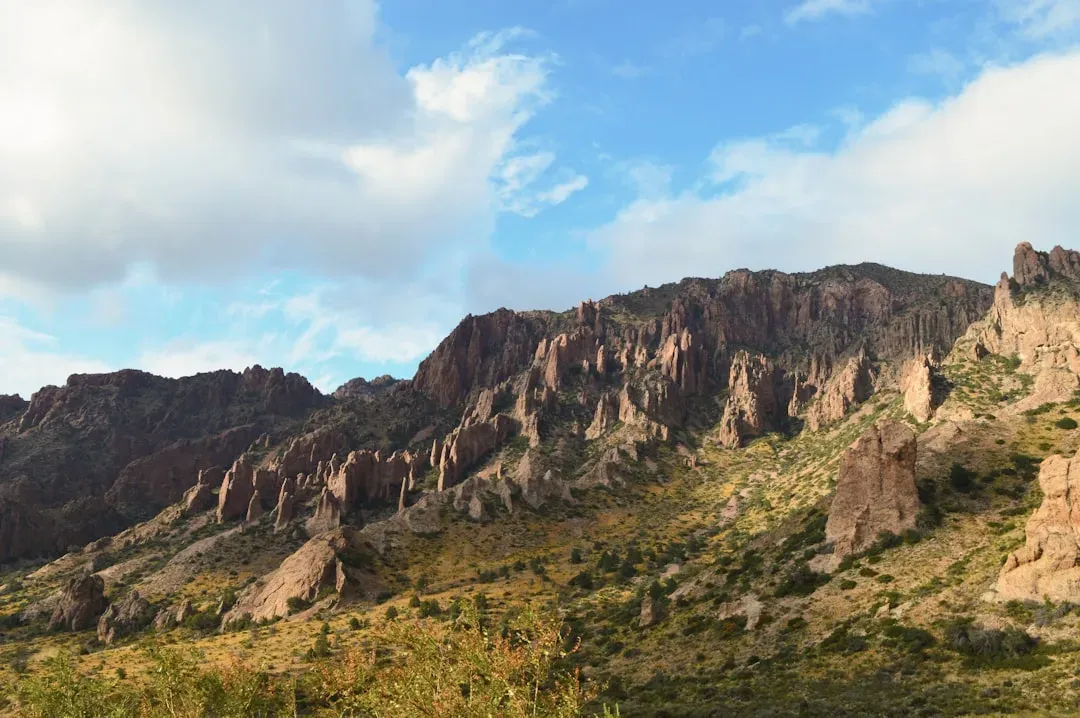
If you told someone that this stark, sun-baked desert in southwest Texas was once beneath a shallow sea crawling with ammonites and sea turtles, they’d probably laugh. Yet that’s precisely what the rocks here reveal. Long before humans traversed its canyons and mountains, Big Bend National Park was a vibrant ecosystem teeming with diverse ancient life, and geological forces and erosion have meticulously uncovered layers of rock, revealing fossilized remains that tell tales of a time when this arid desert was covered by seas or lush forests.
Big Bend National Park has a remarkable fossil record, including fossils that visitors can see in the wild. Marine invertebrate fossils of Cretaceous age, including ammonites and other mollusks, are visible along several trails in the park, and the Santa Elena Canyon Nature Trail is one of the best places to find them. The 1.6-mile roundtrip trail is also one of the most scenic short hikes in the park, and trailside signs actually point out marine invertebrate fossils in the limestone canyon walls.
Some shells found at Big Bend are up to 3 feet across and can be mistaken for dinosaur tracks, and this type of fossil is considered an index fossil, meaning it is used to help identify the geologic age of the surrounding rock. You can also find fossilized shark teeth, sea urchins, and even evidence of ancient sea turtles. Let’s be real, that’s an astonishing cast of characters for a place that looks like something from a Western film set.
A large ammonite is even located within the trail surface of the Hot Springs Trail, and fossil oysters are visible in the trail tread of the Rio Grande Overlook Trail. You’re literally walking on top of ancient ocean life with every step. It’s humbling in the best possible way.
Penn Dixie Fossil Park, New York: The Hands-On Devonian Sea Experience
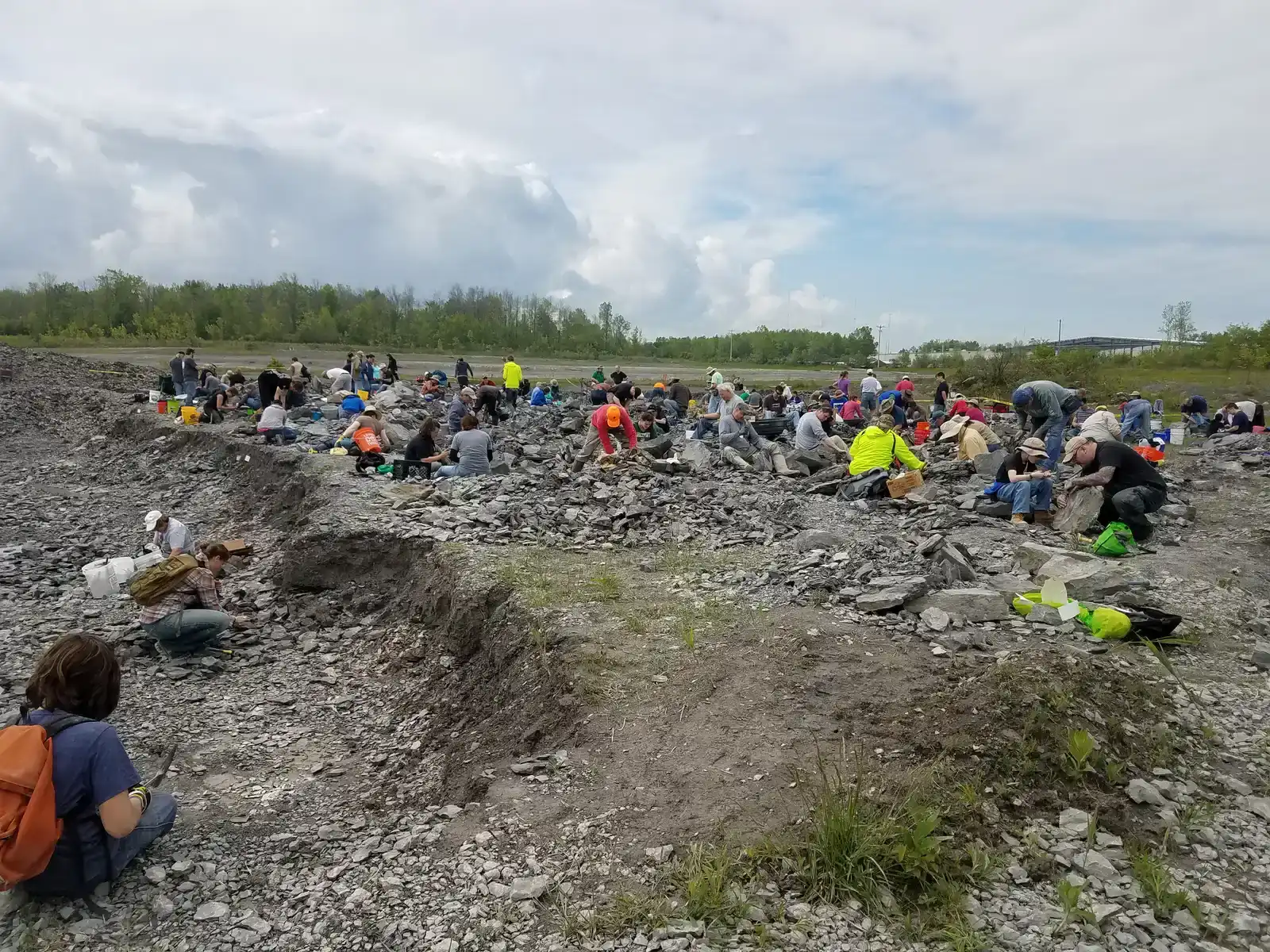
Most fossil sites ask you to look but not touch. Penn Dixie near Buffalo, New York, breaks that rule completely, and that’s exactly what makes it so special. Penn Dixie Fossil Park and Nature Reserve lets visitors collect and keep Devonian marine fossils. It is run by the Hamburg Natural History Society, a nonprofit dedicated to the hands-on study of nature. You find it, you keep it. That’s a rare deal in the fossil world.
The rocks in this area belong to the Hamilton Group, layers filled with fossils from the middle of the Devonian Period, and Penn Dixie is particularly known for its Eldredgeops and Greenops trilobite fossils. These trilobites are among the most beautifully detailed you’ll find anywhere, their intricate compound eyes and segmented bodies still clearly visible after more than 300 million years. I think that’s just staggering to imagine.
The rock layers at Penn Dixie are fine-grained calcareous shales, and those tiny sediment grains were especially good at preserving fossils. Small creatures like brachiopods and delicate crinoid stems are found all over the site, and you can also find rare pieces of ancient armored fish and fragments of fossilized plants that once washed out to sea.
The fossils at Penn Dixie belong to the Middle Devonian period, making them over 300 million years old. Apart from trilobites, you can find crinoids, starfish, shells, coral, snails, and prehistoric crabs. It’s a full ancient marine community, waiting for you in a former quarry near Buffalo. Honestly, who needs a fancy expedition when this is just down the road?
Devonian Fossil Gorge, Iowa: A Tropical Seafloor Revealed by Floodwater
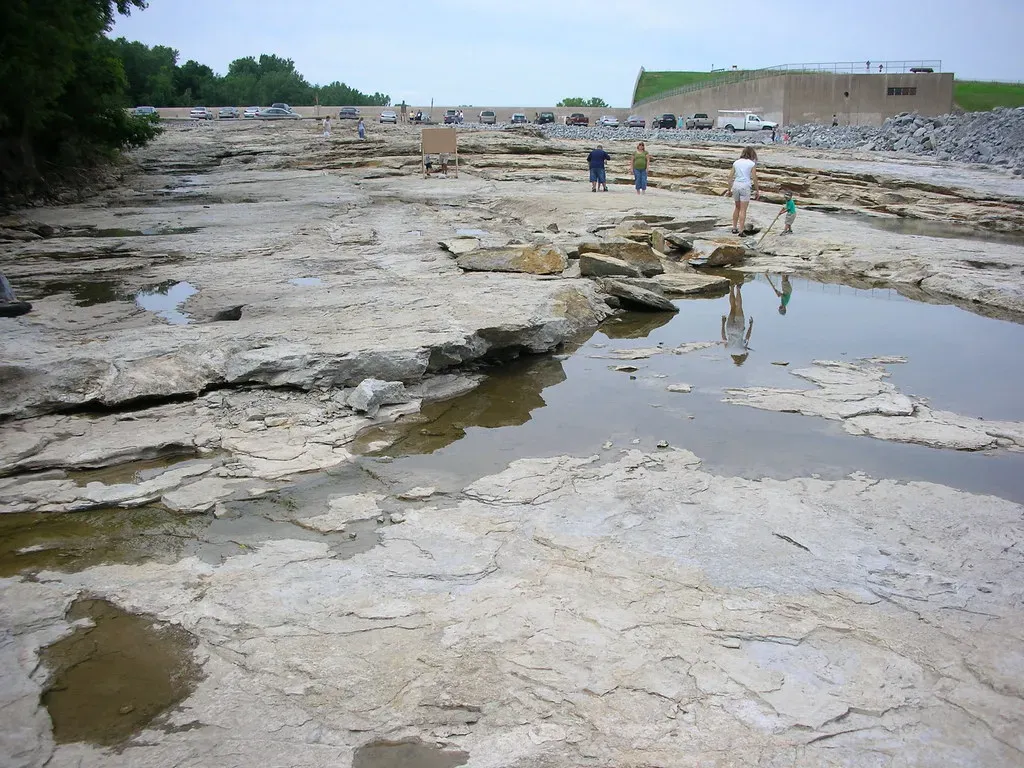
Here’s a story that only geology could write. Hidden within Coralville Lake in Iowa is a place that didn’t even exist until nature itself decided to unveil it. Devonian Fossil Gorge provides you with the opportunity to discover ancient fossils that are 200 million years older than dinosaurs. During the summers of 1993 and 2008, significant rainfall caused Coralville Lake’s emergency spillway to be overtopped, exposing the Devonian bedrock and the wide array of fossils embedded in the seafloor of what was once a tropical marine environment. A flood literally did the excavation work for you.
The exposed bedrock essentially gives you a direct look at a tropical seafloor from roughly 375 million years ago. The Silica Formation of the Devonian preserved that marine environment, and due to the specific sediment conditions in the area, the fossils are extremely well-preserved and abundant, with the preservation condition of these Devonian marine creatures considered among the best in the world. The majority of the fossils are the remains of early fish, corals, brachiopods, and echinoderms, and many are lodged in soft shale so you can release them from the matrix with relatively little effort.
With nearly two dozen specific locations to discover fossils and geologic features, you’ll want to allow plenty of time for your visit. It’s the kind of place where you walk in thinking you’ll spend an hour and end up losing an entire afternoon. The whole surface feels like a carefully preserved museum exhibit, except nobody built it. The planet just did what it always does, and in doing so, handed us a front-row seat to an ancient ocean.
Conclusion: Ancient Oceans Are Closer Than You Think
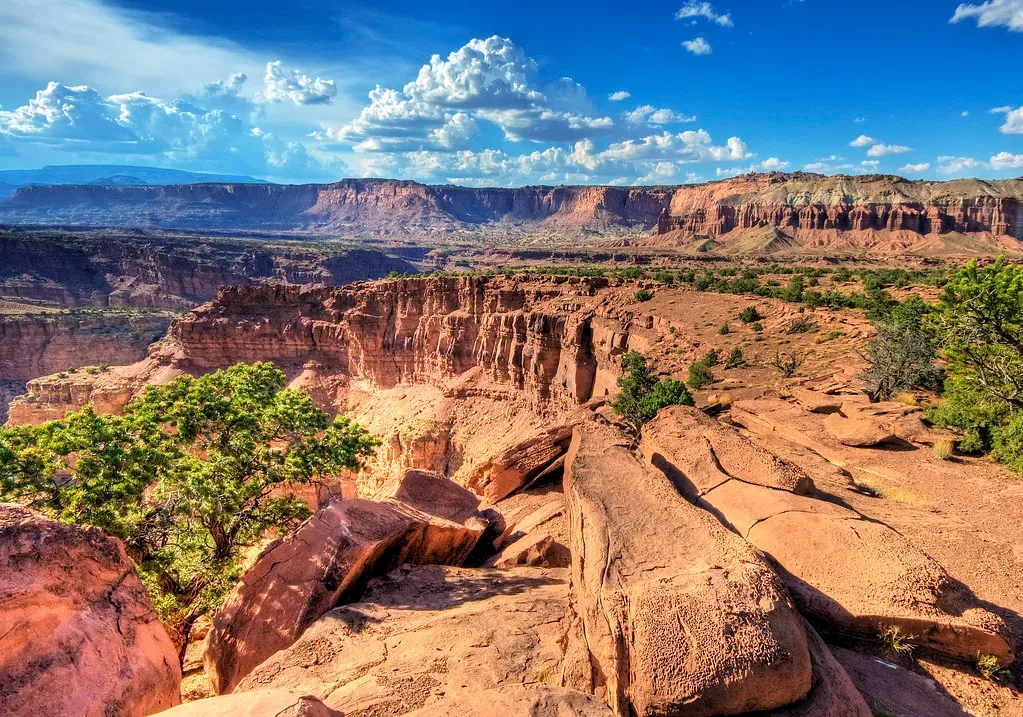
It’s easy to think of fossils as distant, dusty things locked behind glass in natural history museums. These five sites prove otherwise. From the mile-deep walls of the Grand Canyon to a former quarry near Buffalo where you can pocket a 375-million-year-old trilobite, ancient marine life is literally built into the American landscape. You just have to know where to look.
What makes each of these places remarkable isn’t only the scale of time they represent. It’s the accessibility. You can hike through the remnants of a Permian reef in Texas, watch canyon walls tell the story of Cambrian seas in Arizona, or walk a trail in Big Bend where ammonites are pressed right into the ground beneath your feet. No PhD required. Just curiosity and a willingness to look closely at the world around you.
The next time you’re standing on seemingly ordinary ground, it might be worth asking yourself: what was this place before? Beneath nearly every landscape in this country, there’s a chapter of Earth’s ocean history still being told in stone. Which of these five places would you put at the top of your bucket list?