
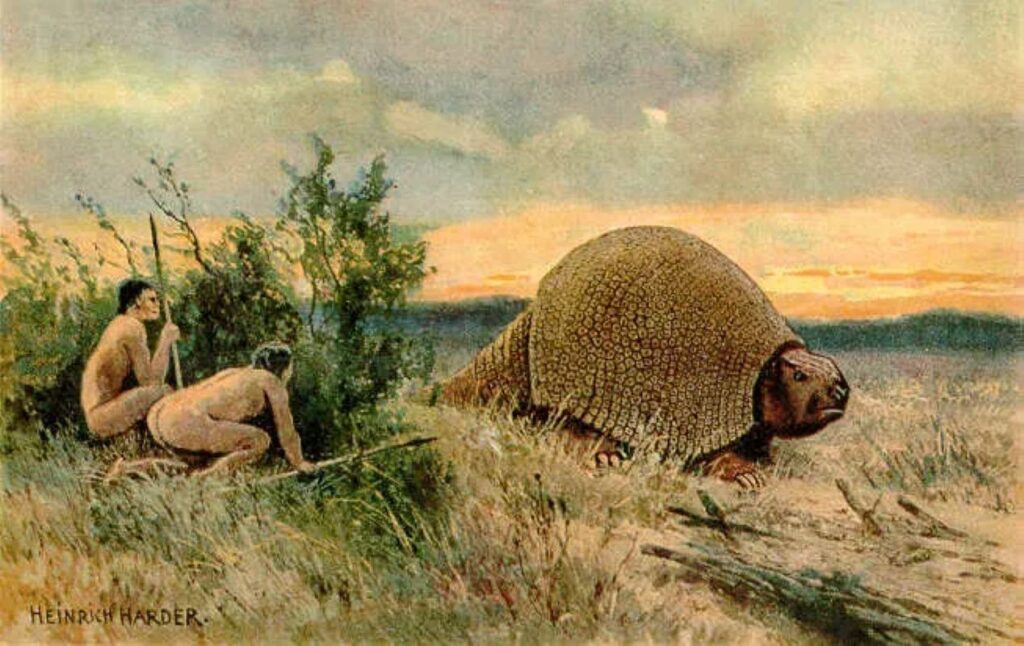
Picture a world where the ground shook beneath the footsteps of creatures so enormous they make today’s elephants look modest. A world where saber-toothed cats prowled the tree line, mammoths stripped bark from ancient forests, and giant sloths lumbered across open plains. Now imagine early humans – your distant ancestors – sharing that same landscape, not as terrified bystanders, but as active participants in one of history’s most dramatic ecological stories.
For decades, science thought it had a relatively tidy answer to when and how humans first encountered these Ice Age giants. Turns out, that answer keeps getting rewritten. New archaeological discoveries, forensic breakthroughs, and fresh dating technologies are forcing researchers to rethink everything – from when humans first arrived in the Americas, to how they lived alongside megafauna, to what ultimately caused those colossal creatures to vanish. The story is messier, richer, and far more fascinating than anyone expected. Let’s dive in.
Footprints Frozen in Time: The White Sands Discovery That Changed Everything
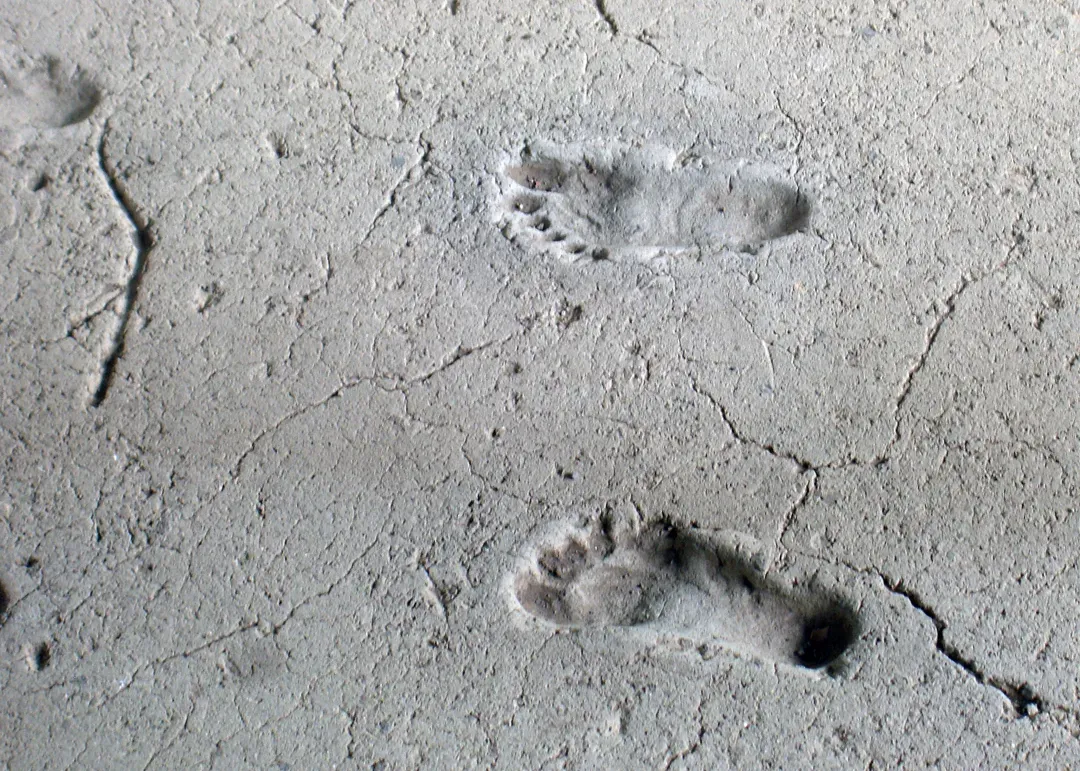
(Original text: self-made), CC BY-SA 3.0)
Imagine stumbling across something during a routine patrol of a national park that essentially rewrites human history. That’s exactly what happened at White Sands National Park in New Mexico, where footprints pressed into ancient lakebed mud have become one of the most debated and compelling discoveries in modern archaeology. A study published in Science Advances provides some of the strongest evidence to date that ancient human tracks found at White Sands are approximately 23,000 years old. That’s not a small revision to the timeline – that’s a seismic shift.
These discoveries confirm that humans were present in North America for nearly two thousand years during the Last Glacial Maximum, adding evidence to the antiquity of human colonization of the Americas and providing a temporal range extension for the coexistence of early inhabitants and Pleistocene megafauna. Even more striking, tracks of extinct late Pleistocene fauna found alongside the human prints include those of mammoths, ground sloths, canids, felids, bovids, and camelids, most of which are associated with the human footprints. You are, in a very real sense, looking at the world’s oldest traffic intersection.
Walking Alongside Giants: What the Tracks Tell You About Daily Life
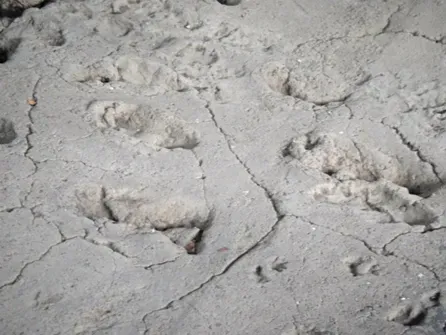
Here’s the thing – it’s one matter to know that humans and megafauna shared the same continent. It’s a completely different and far more thrilling thing to find evidence of them sharing the same muddy lakeshore on the same afternoon. One set of prints appears to show human hunters actively tracking a giant sloth, with variations in the sloth’s tracks showing that it stood on its hind legs and spun around, possibly out of fear, though there is no evidence the hunt was ultimately successful. Think about that. You’re watching a hunt frozen in geological time.
The dates of the footprints suggest that humans were coexisting with, and probably hunting, these animals for 10,000 years before they became extinct, pointing to much more sustainable subsistence practices that allowed people to live alongside these species for millennia. In the Tularosa Basin, lake levels dropped during an abrupt warming event, exposing an expansive lake margin where humans and megafauna then walked across the patchwork of wet and dry ground, leaving behind footprints and trackways preserved in multiple sediment layers. It’s almost poetic, honestly.
The Forensic Revolution: Blood on Ancient Weapons Speaks Volumes

If footprints are the poetry of prehistoric encounters, then the blood residue found on ancient stone tools is its hard evidence. Researchers have been quietly borrowing a technique straight from modern crime scene investigation and applying it to 13,000-year-old weapons – and the results are astonishing. Forensic scientists have used an immunological blood residue analysis technique called immunoelectrophoresis for decades to identify blood residue on objects from crime scenes, and researchers have applied this method to identify animal blood proteins preserved within ancient stone tools by comparing aspects of ancient blood with blood antigens derived from modern relatives of extinct animals.
In a study of 120 Paleoamerican stone tools from across North and South Carolina, researchers used crossover immunoelectrophoresis and found immunological support for the exploitation of both extant and extinct megafauna, including Proboscidea, Equidae, and Bovidae, on Clovis points and scrapers. There is something deeply strange and fascinating about realizing that ancient mammoth blood, locked inside the microscopic fractures of a flint spearpoint, is still there – still readable – thousands of years later. Mammoth or mastodon blood residues are found on Clovis artifacts, while blood residues for ancient horses appear on both Clovis points and on points that are slightly more recent, suggesting the extinctions of mammoths and mastodons were complete in certain regions by the end of the Clovis period, while horse extinction took longer.
South America’s Hidden Story: Giant Sloths on the Menu
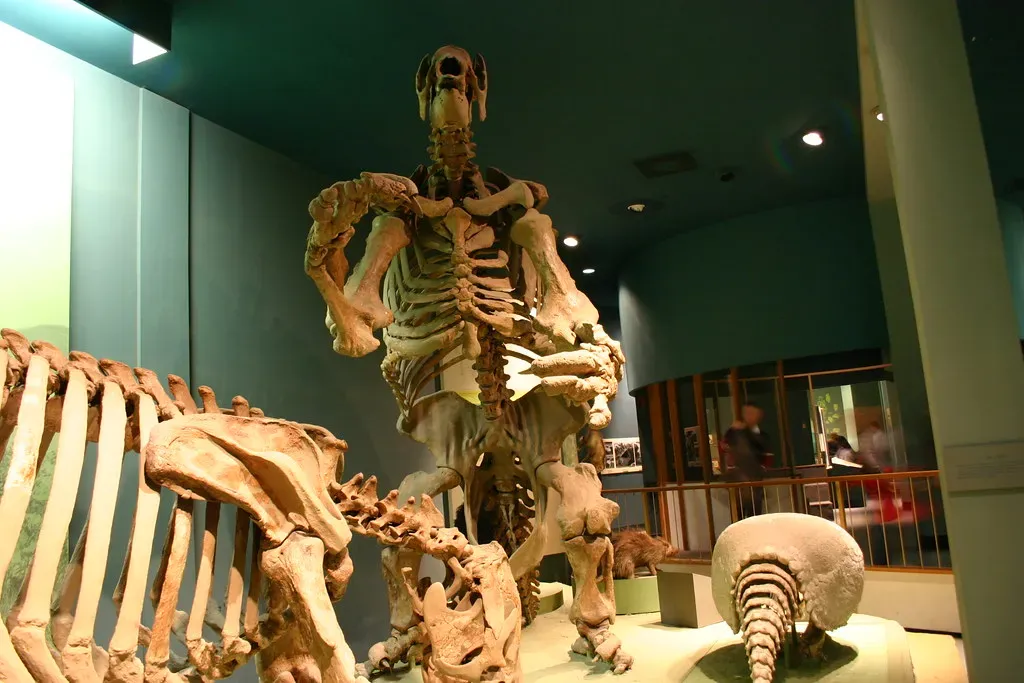
North America gets most of the headlines, but the story unfolding in South America is every bit as gripping. According to a team of archaeologists in Argentina, the answer to what early humans liked to eat was extinct megafauna such as giant sloths and giant armadillos, with these enormous animals serving as a staple food source for people in southern South America around 13,000 to 11,600 years ago. For years, the dominant narrative said otherwise. Honestly, this is one of those cases where the evidence completely overturned accepted wisdom.
For years, the prevailing theory about the extinction of South America’s last great Ice Age megafauna was that climate change was the primary driver, with humans previously believed to have played only a minor role as they hunted smaller prey such as guanacos and cervids. One of the most widely cited objections to hypotheses defending a central human role in South American megafaunal extinctions was the assumption that extinct megafauna was a marginal resource in early human economies, but researchers have now demonstrated that extinct megafauna were the principal prey item of early foragers from roughly 13,000 to 11,600 calibrated years before the present. That is a remarkable reversal.
The Overkill Debate: Did Humans Cause the Great Extinction?
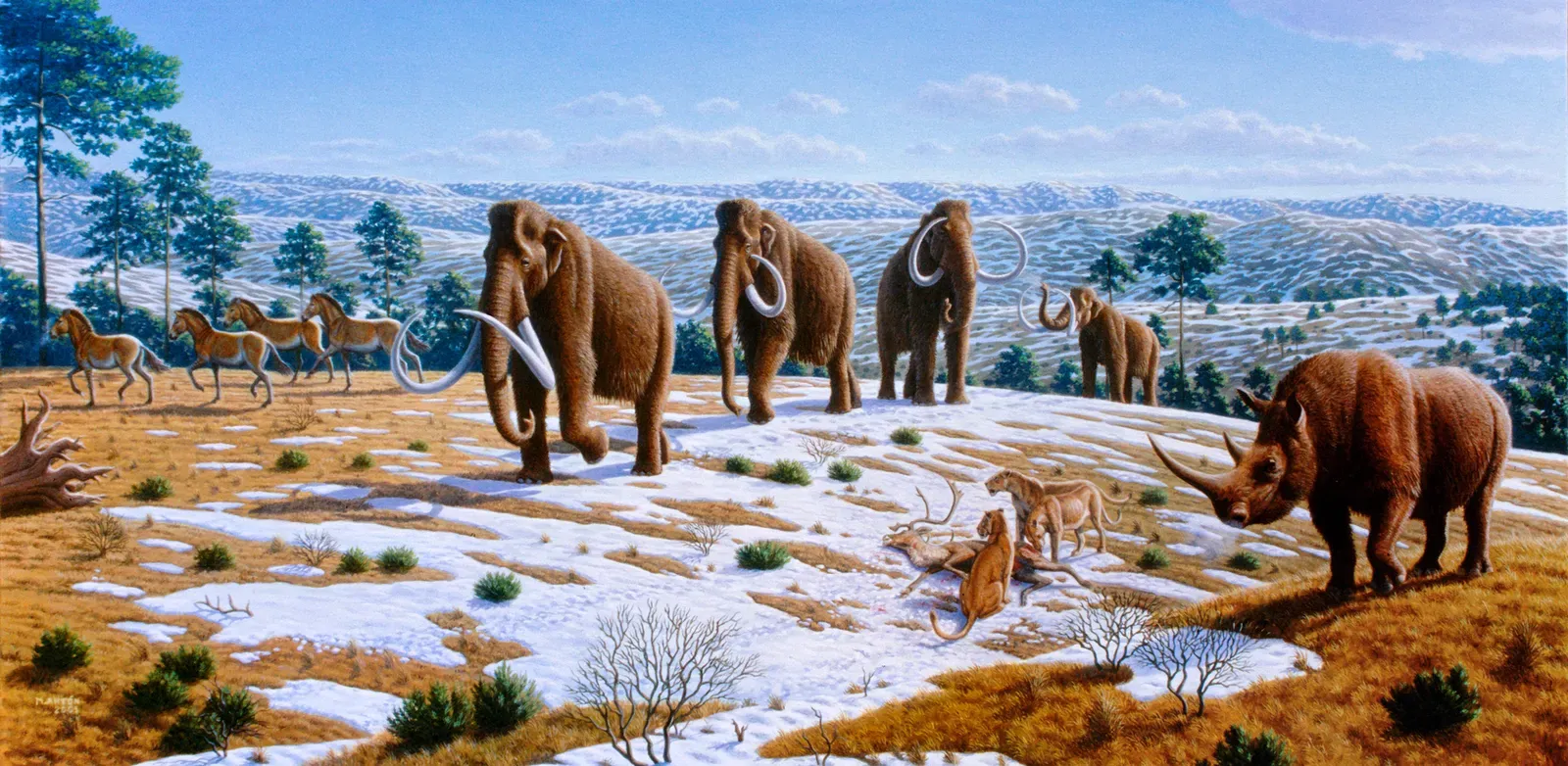
Few questions in archaeology generate as much heat as this one. Did early humans hunt the mammoths, giant sloths, dire wolves, and saber-toothed cats to oblivion? Or were other forces – climate change, habitat loss, ecological cascades – the real culprits? Let’s be real: the debate is far from settled, and the evidence points in frustratingly different directions. The timing and severity of Ice Age extinctions varied by region and are generally thought to have been driven by humans, climatic change, or a combination of both.
Extinctions in northern Eurasia were staggered over tens of thousands of years between 50,000 and 10,000 years ago, while extinctions in the Americas were virtually simultaneous, spanning only around 3,000 years at most. During the Late Pleistocene, roughly two thirds of all megafaunal species worldwide became extinct, rising to nearly three quarters in North America, over four fifths in South America, and nearly nine tenths in Australia. Meanwhile, radiocarbon dating of Ice Age megafauna from the Rancho La Brea Tar Pits reveals that climate change and human-ignited wildfires, rather than direct hunting alone, likely drove their extinction. The picture is never as clean as anyone hopes.
A World in Transition: What the Megafauna Extinctions Mean for You Today
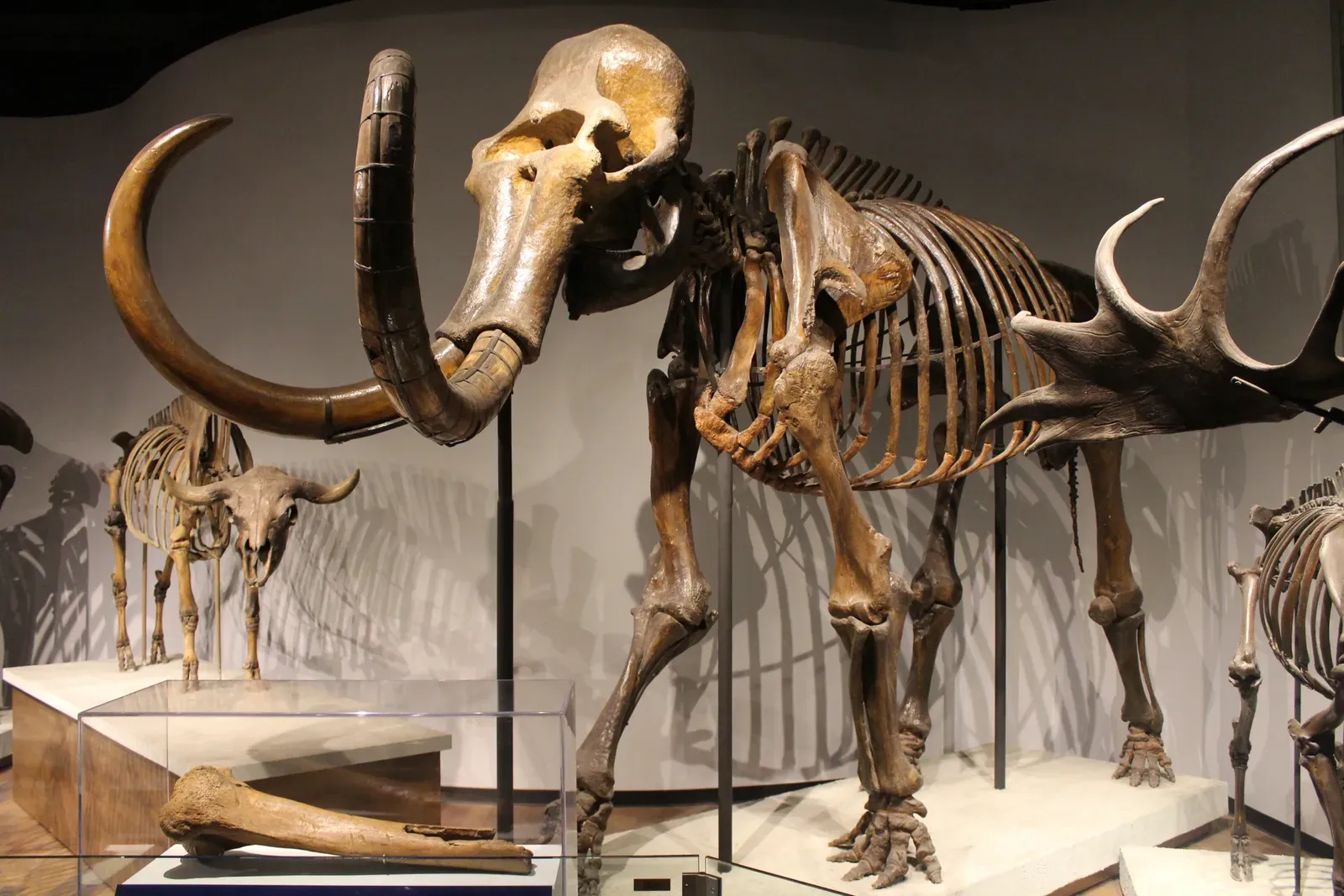
It’s tempting to treat all of this as ancient history – fascinating, certainly, but remote. It’s hard to say for sure where the full implications lead, but I think the extinction of Pleistocene megafauna is actually one of the most relevant ecological events in human history. The proportion of megafauna extinctions is progressively larger the further the human migratory distance from Africa, with the highest extinction rates in Australia and North and South America, mirroring the migration pattern of modern humans as the further away from Africa, the more recently humans inhabited the area, the less time those environments and their megafauna had to become accustomed to humans. That’s a pattern that stretches right up to the present day.
Evidence supporting the relationship between human arrival and megafaunal collapse includes the persistence of megafauna on certain islands for millennia past the disappearance of their continental counterparts – ground sloths survived on the Antilles long after North and South American ground sloths were extinct, woolly mammoths survived on remote Wrangel Island 6,000 years after their mainland extinction, and Steller’s sea cows persisted off the uninhabited Commander Islands for thousands of years after vanishing from continental shores. The pattern is almost painfully consistent. Where there were no humans, the giants survived. Where humans arrived, the giants eventually disappeared. That is a lesson still echoing across our modern biodiversity crisis.
Conclusion
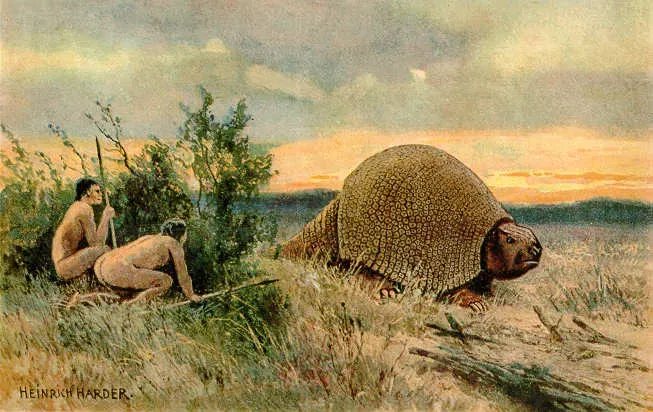
What you’re witnessing in these discoveries is not just a rewriting of ancient timelines. It’s a slow, evidence-driven revelation of what it means to be human. Your ancestors walked alongside creatures of extraordinary size and power, shared lakeshore mud with mammoths, and hunted giant sloths across the Pampas. They coexisted for thousands of years before something – hunting pressure, habitat destruction, fire, or climate – tipped that balance irreversibly.
The forensic blood residue on a 13,000-year-old spearpoint, the ghostly footprints at White Sands, the butchered sloth bones in Patagonia – each discovery tightens the story without quite finishing it. Science keeps pulling the thread. Every answer seems to unspool three new questions. And honestly, that’s what makes this field so endlessly compelling. Somewhere beneath the sand, in the frozen proteins of ancient stone tools, and in the faint impressions left by Ice Age children running across a mudflat, the full truth is still being uncovered.
What do you think – were our ancestors the primary force behind the extinction of the megafauna, or were they simply one pressure among many on a world already in transformation? Tell us what you think in the comments.