
You might think we’ve already figured out most of nature’s big secrets. We’ve mapped the human genome, sent rovers to Mars, and can identify a bird species from a photo on a smartphone. Yet, right here on Earth, there are creatures wandering forests, floating through oceans, and burrowing beneath caves that completely defy our understanding of biology, life, and what it even means to evolve. Some of them seem borrowed from science fiction. Others look like nature made a mistake, then doubled down on it.
Honestly, the more scientists study these animals, the more questions pile up. Each new discovery peels back one layer only to reveal three more underneath. So if you’re ready to have your assumptions about the natural world quietly dismantled, you’re in the right place. Let’s dive in.
1. The Axolotl: Evolution’s Master Rebuilder
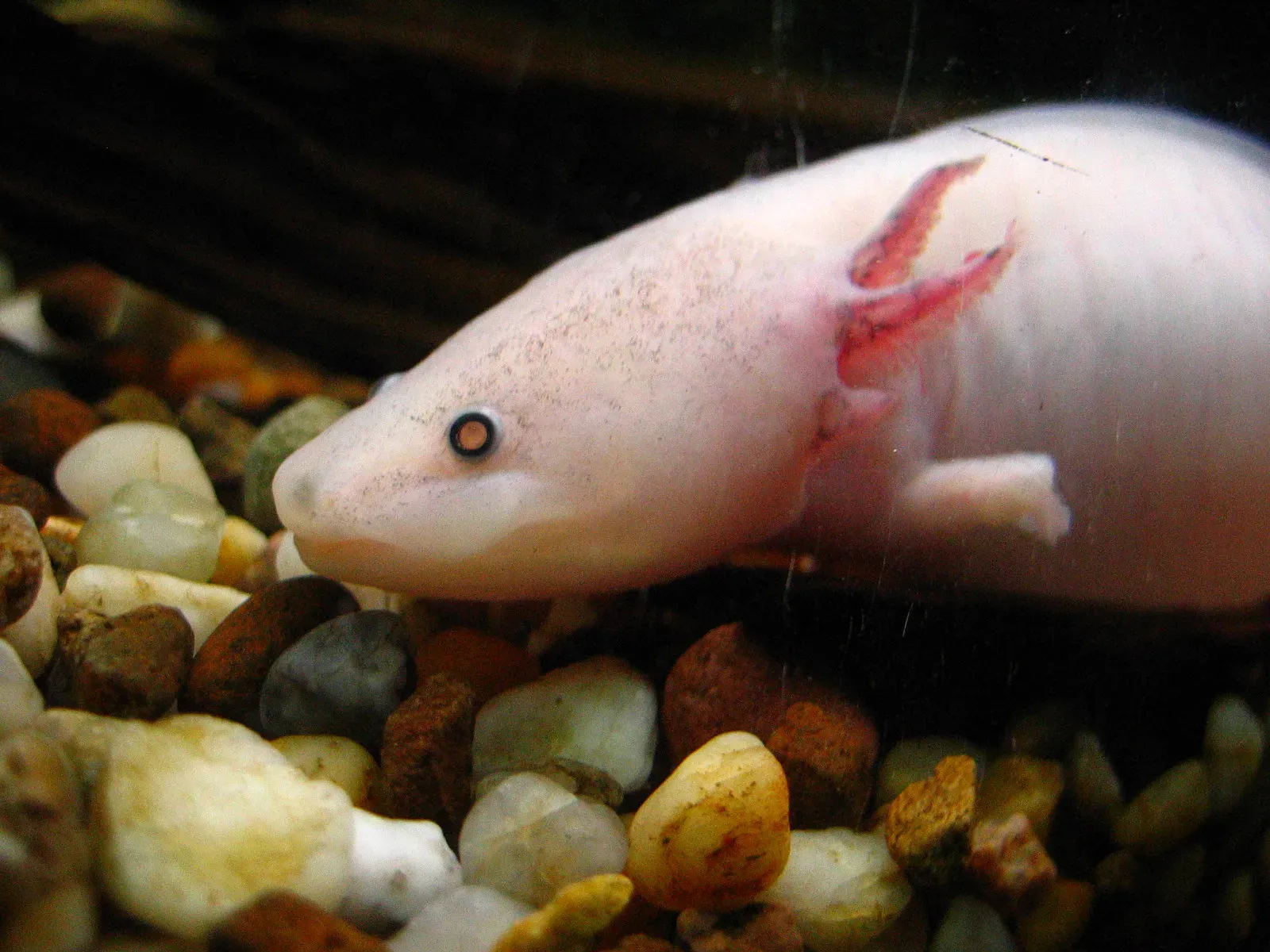
There’s a creature living in the ancient lake system of Xochimilco near Mexico City that can do something no other animal does quite as completely. The axolotl is a Mexican salamander that exhibits a rare biological phenomenon called neoteny, meaning it retains its juvenile features throughout its entire life, living permanently in its larval stage, complete with external gills that resemble feathery pink fronds protruding from its head. Think about that for a second. It never truly grows up. It’s like being permanently suspended in the most useful version of yourself.
This species can regenerate entire limbs, spinal cord sections, and even parts of its heart and brain. Even more astonishing, axolotls regenerate without scarring. In scientific terms, they can “turn back the clock” on their cells, reverting them to a stem-cell-like state before rebuilding tissue. If humans could harness even a fraction of this power, it could revolutionize medicine, helping us heal spinal injuries, regrow organs, and recover from trauma in ways that today seem like science fiction.
2. The Immortal Jellyfish: Cheating Death on a Loop
Here’s the thing. Most living things age, deteriorate, and die. It’s basically the contract of being alive. Except one tiny jellyfish apparently never got the memo. The immortal jellyfish, Turritopsis dohrnii, possesses a rare biological superpower: the ability to reverse its aging process. When threatened or injured, this tiny jellyfish can transform its adult cells back into their earliest form, essentially reverting to a juvenile polyp and restarting its life cycle. This age reversal ability means it could, in theory, avoid death from old age and potentially live indefinitely under the right conditions.
Through his endeavours, researcher Shin Kubota has reported that over a two-year period, captive colonies of the jellyfish naturally rejuvenated themselves up to ten times, sometimes at intervals of just one month. How this process works at the cellular and genetic level is still largely a mystery. The jellyfish’s regenerative cycle defies biology’s most fundamental law: everything must age and die. Researchers hope understanding its secret might one day help humans slow, or even reverse, aging itself. I know it sounds crazy, but imagine if this tiny, coin-sized creature turns out to hold the blueprint for human longevity.
3. The Platypus: Evolution’s Beautiful Mistake
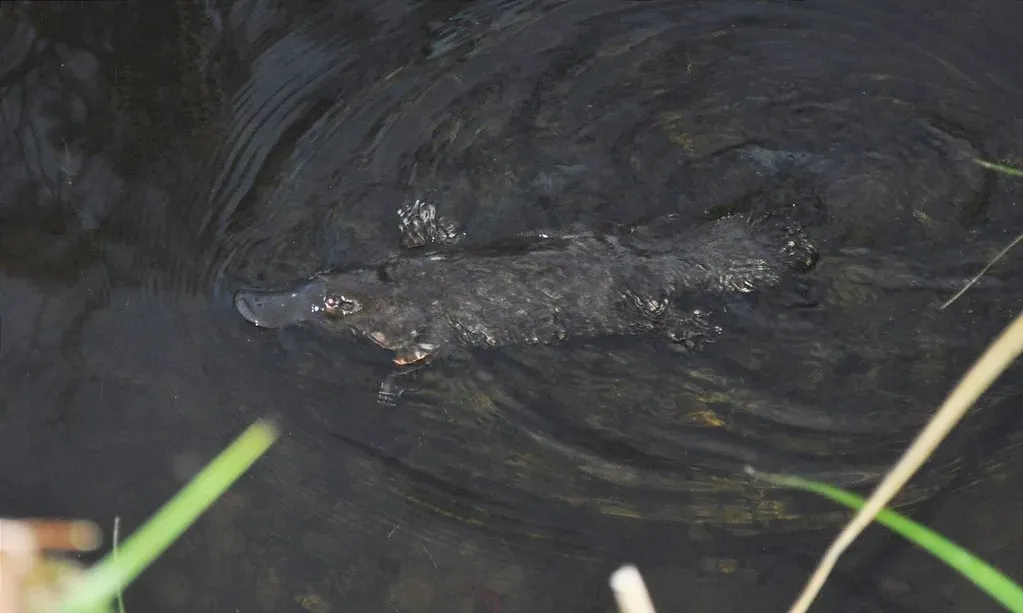
When European scientists first encountered the platypus in 1798, many believed it was an elaborate hoax created by stitching together parts from different animals. Honestly, who could blame them? It lays eggs like a reptile, nurses its young like a mammal, and hunts using electroreception like a shark. Males even have venomous spurs on their hind legs, the only mammals known to deliver venom. Its genetic code reads like a biological time capsule, blending traits of mammals, birds, and reptiles.
As it hunts underwater with its eyes, ears, and nose closed, the platypus detects electric fields generated by the muscle contractions of its prey. Its bill is lined with over 40,000 electroreceptors, allowing it to sense the faintest electrical signals. During the breeding season, those venomous spurs can deliver a painful toxin, strong enough to incapacitate small animals and cause excruciating pain in humans, sometimes compared to snake bites. This unusual adaptation is a powerful reminder that even mammals can evolve venom for self-defense. The platypus is not a mistake. It’s evolution showing off.
4. The Tardigrade: Built to Survive Everything
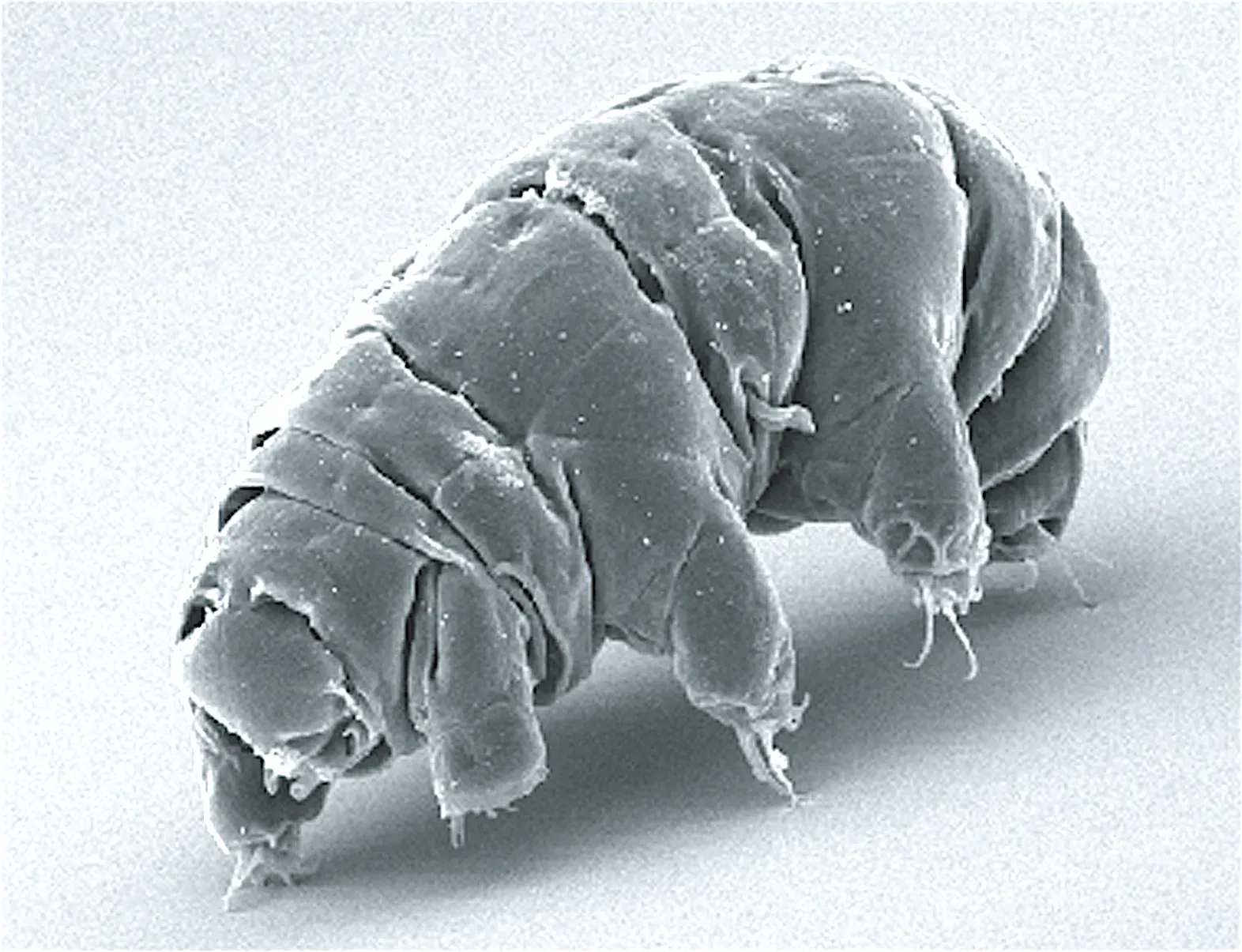
Let’s be real, the tardigrade deserves its own action movie. Tiny, tough, and nearly indestructible, the tardigrade, also known as the “water bear,” is perhaps the most resilient creature ever discovered. Barely visible under a microscope, these eight-legged micro-animals can survive conditions that would instantly kill almost any other life form. We’re talking radiation, the vacuum of outer space, crushing ocean-level pressures. You name it, the tardigrade shrugs it off.
These eight-legged micro-animals can survive extreme conditions that would kill virtually any other organism, including temperatures from near absolute zero to over 300 degrees Fahrenheit, pressures six times greater than those in the deepest ocean trenches, and exposure to radiation levels hundreds of times higher than lethal doses for humans. Tardigrades can also survive in the vacuum of space and can enter a state of suspended animation called cryptobiosis for decades, reviving when conditions improve. Scientists are studying tardigrade proteins called Dsup (damage suppressor), which protect DNA from radiation. One day, this research could help preserve human cells for space travel, or even extend life itself.
5. The Mantis Shrimp: Eyes That See Beyond Imagination
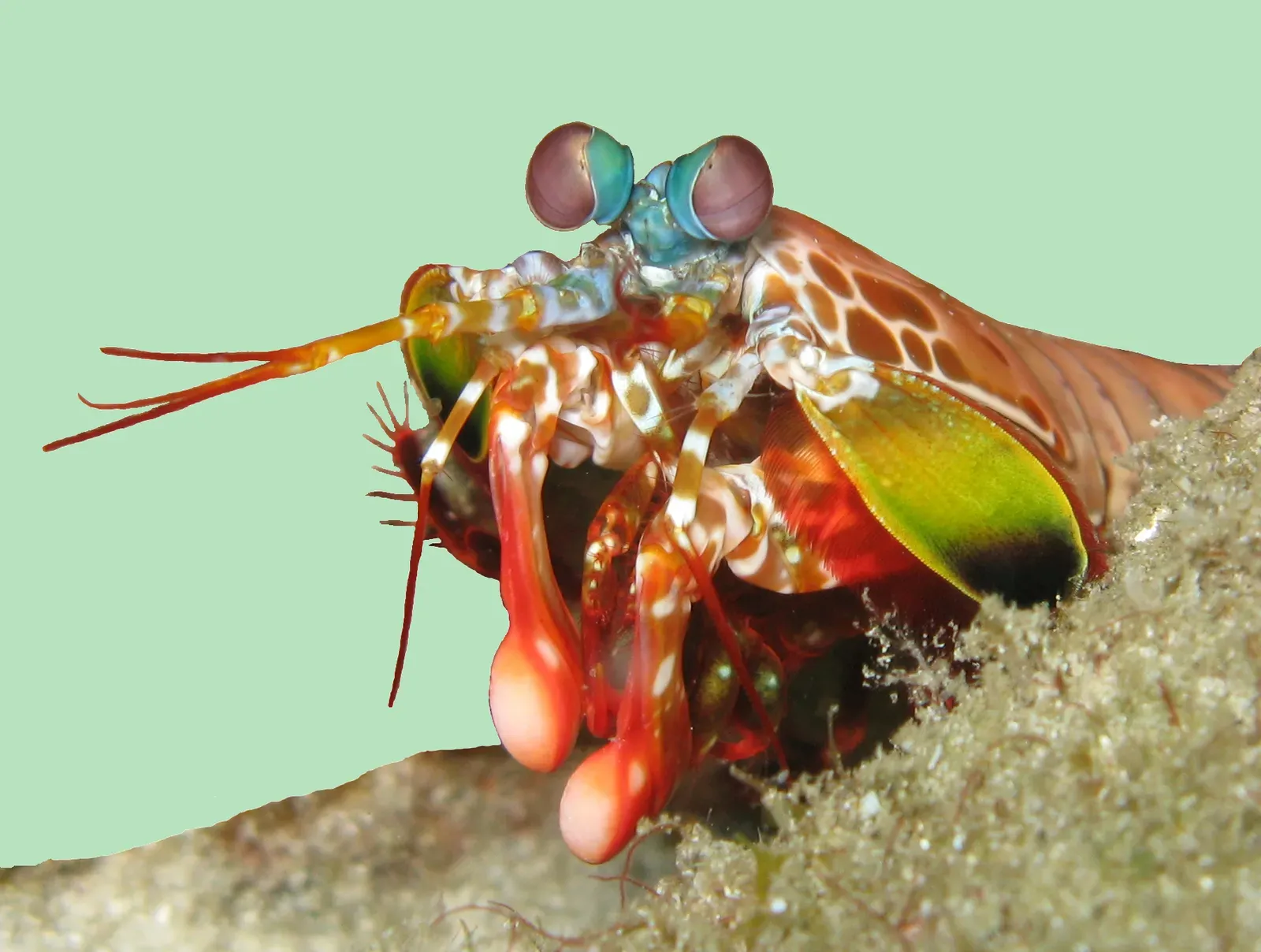
At first glance, the mantis shrimp might look like a vividly colored undersea curiosity. But look closer and you’ll find one of the most remarkably over-engineered creatures in existence. Mantis shrimp possess the most complex eyes known to science. While humans see in three color channels (red, green, blue), mantis shrimp see in up to sixteen. Sixteen. The visual world they experience is so far beyond human perception that we genuinely cannot imagine it.
This tiny predator can deliver a punch so fast it vaporizes water. Its club-like appendages accelerate at over fifty miles per hour, creating a shockwave that reaches temperatures nearly as hot as the surface of the sun. The strike can shatter aquarium glass and crack open crab shells in an instant. Scientists call this phenomenon cavitation: tiny bubbles forming and collapsing with explosive force. Yet, scientists are still trying to understand how these marine crustaceans process such a broad spectrum of light. What evolutionary pressures led to such a complex visual system, and how does it benefit the mantis shrimp in its natural habitat? Nature, it seems, created the mantis shrimp just to remind us that we still have a lot to learn.
6. The Kakapo: A Flightless Parrot That Defies Logic
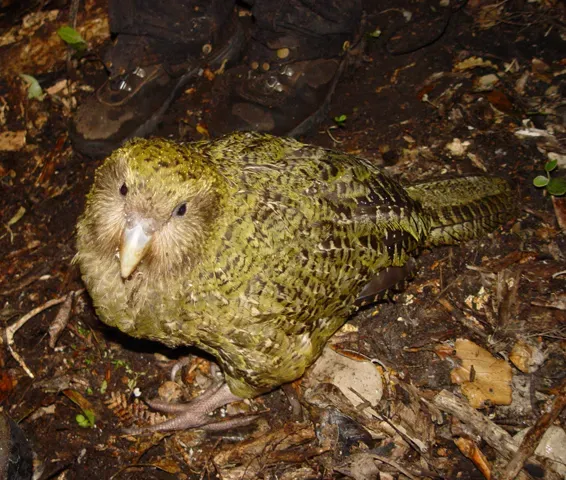
Strigops_habroptilus_1.jpg: Mnolf, CC BY-SA 3.0)
The kakapo is a giant, flightless parrot from New Zealand and one of the rarest birds on Earth. With its mossy green feathers and owl-like face, it seems more a creature of dreams than of forests. It’s nocturnal, smells like honey, and cannot fly, a combination no other bird possesses. If you designed a parrot by committee and everyone had completely different ideas, you might end up with something like the kakapo.
What truly mystifies scientists is how such a species evolved to thrive without flight, relying instead on stealth and scent in a world once free of mammalian predators. Human arrival brought cats and rats, and the kakapo nearly vanished. Today, a small population survives through intense conservation. Still, its quirky biology, from mating behavior to vocal communication, continues to fascinate and puzzle researchers. Every recovered kakapo chick is essentially a small miracle, a living testament to what evolution built on a predator-free island over millions of years.
7. The Maned Wolf: The Fox That Isn’t a Fox
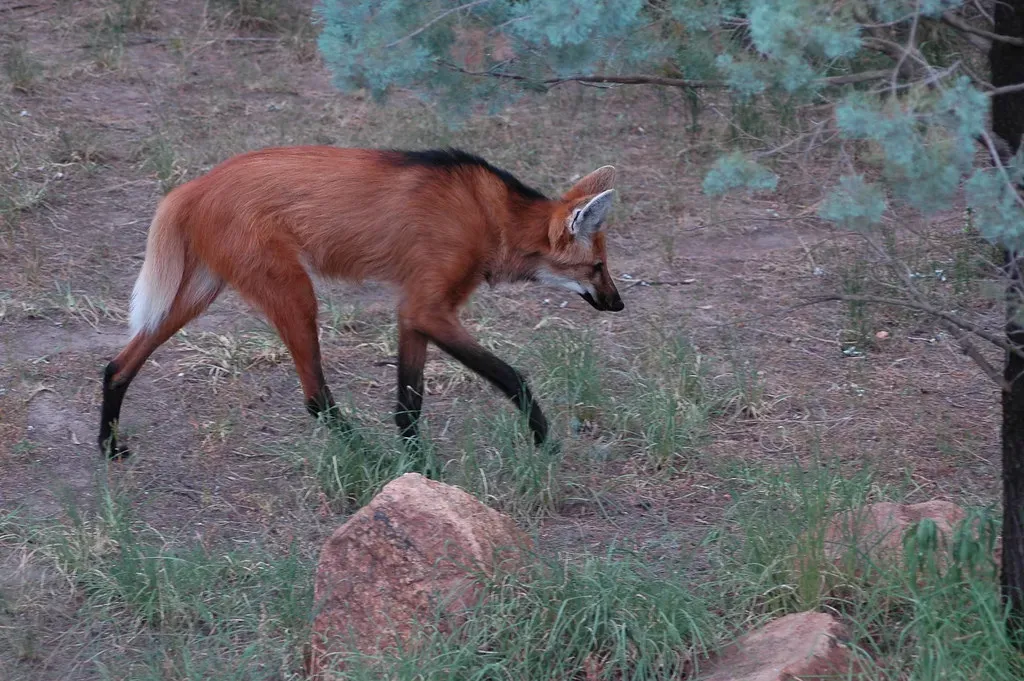
There is much that’s unusual about the maned wolf. Known as the “fox on stilts,” it is the tallest of the canid species and indeed looks part fox, though it isn’t actually related. The wolf’s gangly legs are thought to enable it to spy across the tall savanna grasslands it calls home. Its distinctive bark, called a roar-bark, is also quite unlike any other species. It occupies its own evolutionary category, a solo act in the natural world with no close relatives to compare it to.
The maned wolf is a unique species native to South America, resembling a large fox with elongated limbs. Unlike true wolves, it has a reddish coat and primarily feeds on both plant and animal matter. This species inhabits the open grasslands and scrub forests across Brazil, Paraguay, Argentina, and Bolivia. Its habitat choice is influenced by the availability of its varied diet, which includes small animals and fruits. What’s more, its urine smells almost identical to cannabis, a trait scientists believe is used as a territorial warning signal. You really can’t make this stuff up.
8. The Tarsier: Eyes Bigger Than Its Brain
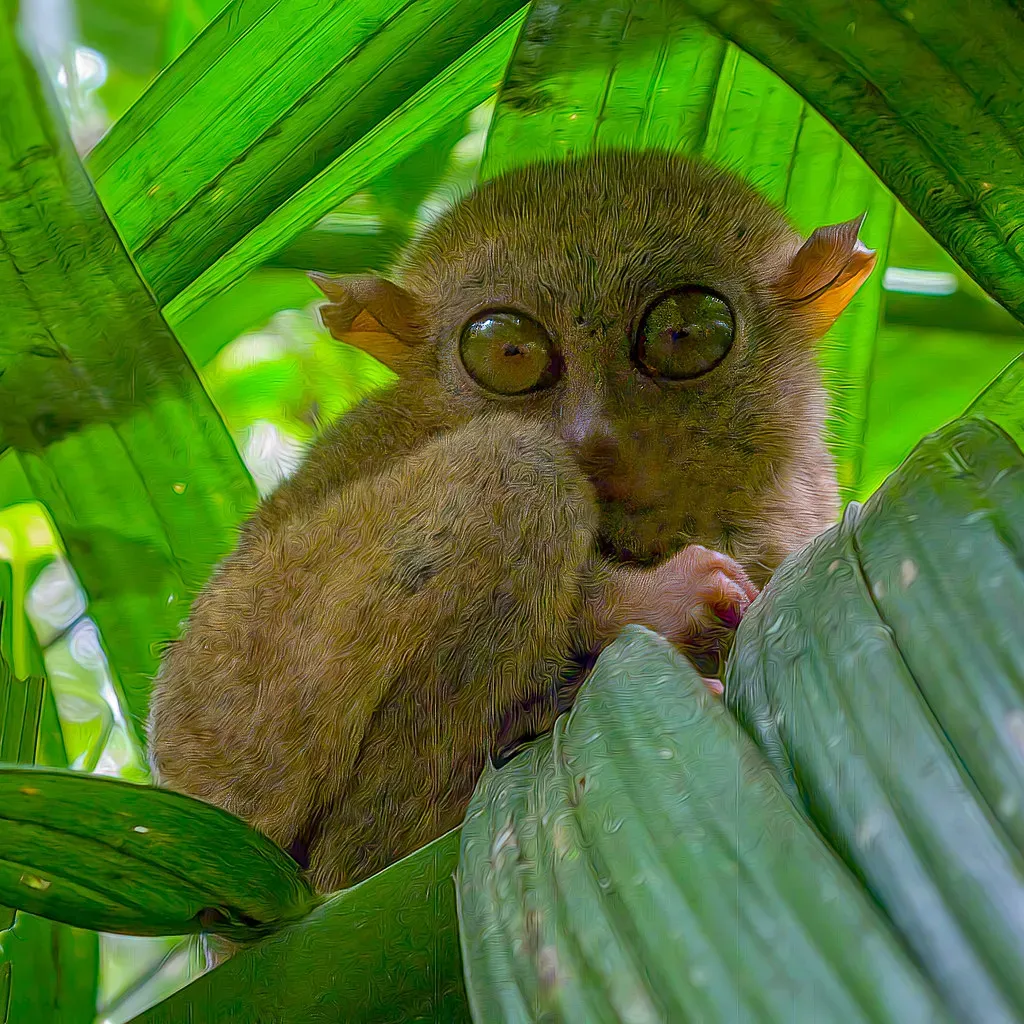
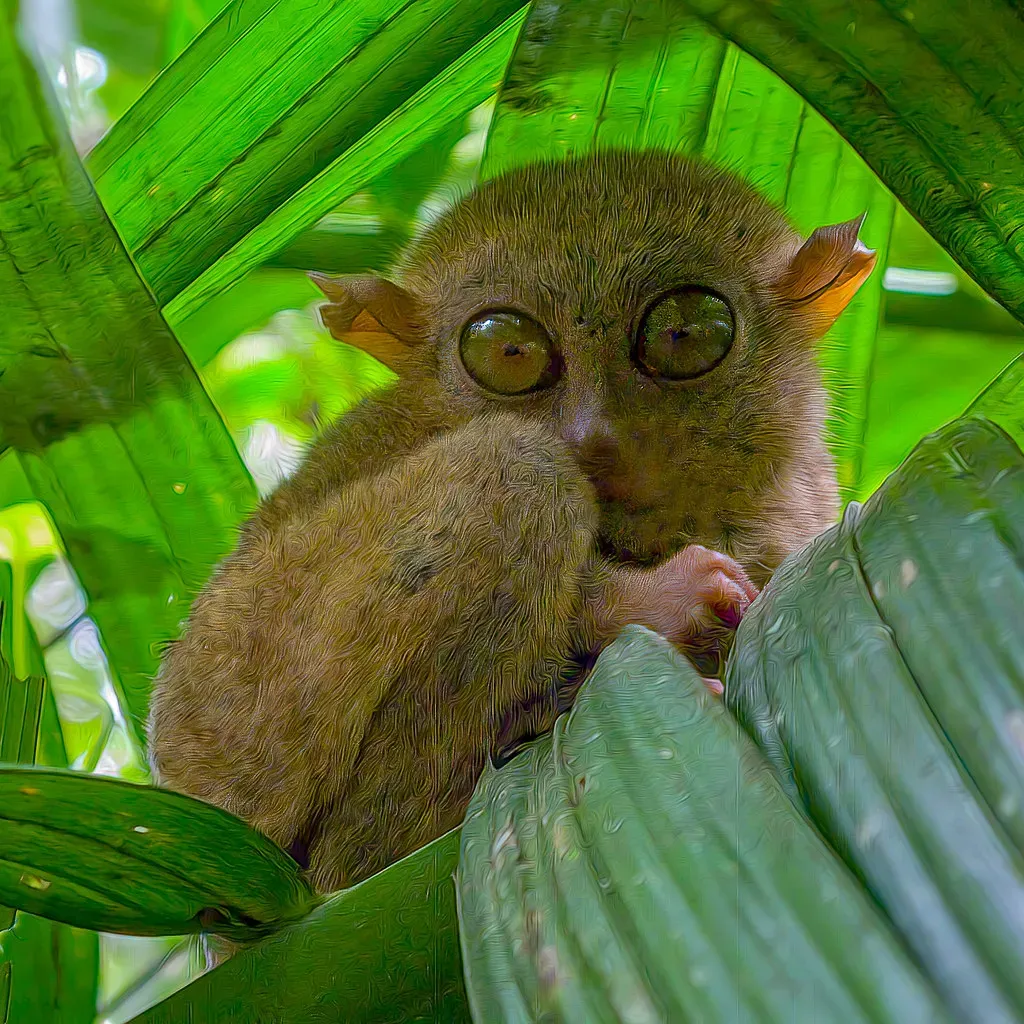
Philippine tarsiers are some of the strangest-looking extant mammals on Earth. With eyes that take up half of their head, tarsiers grow only to be the size of a human fist. Their heads can rotate 180 degrees, an evolutionary trait that surfaced in response to the fixation of their eyes in their head. Think about the engineering involved in that. Because its eyes can’t move within the sockets, evolution simply built a head that can spin instead. Problem solved, nature style.
They have powerful hind legs that allow them to jump up to three feet at a time. As suggested by the size of their optics, they have fantastic night vision, which at times results in their pupils covering the entirety of their eyes. The tarsier is one of the world’s oldest surviving primate lineages, a living relic that connects us to the very early days of primate evolution. Scientists continue to debate its precise placement in the primate family tree, and that debate itself shows just how uniquely isolated the tarsier’s evolutionary path has been.
9. The Olm: A Blind Cave Ghost With a Century-Long Life
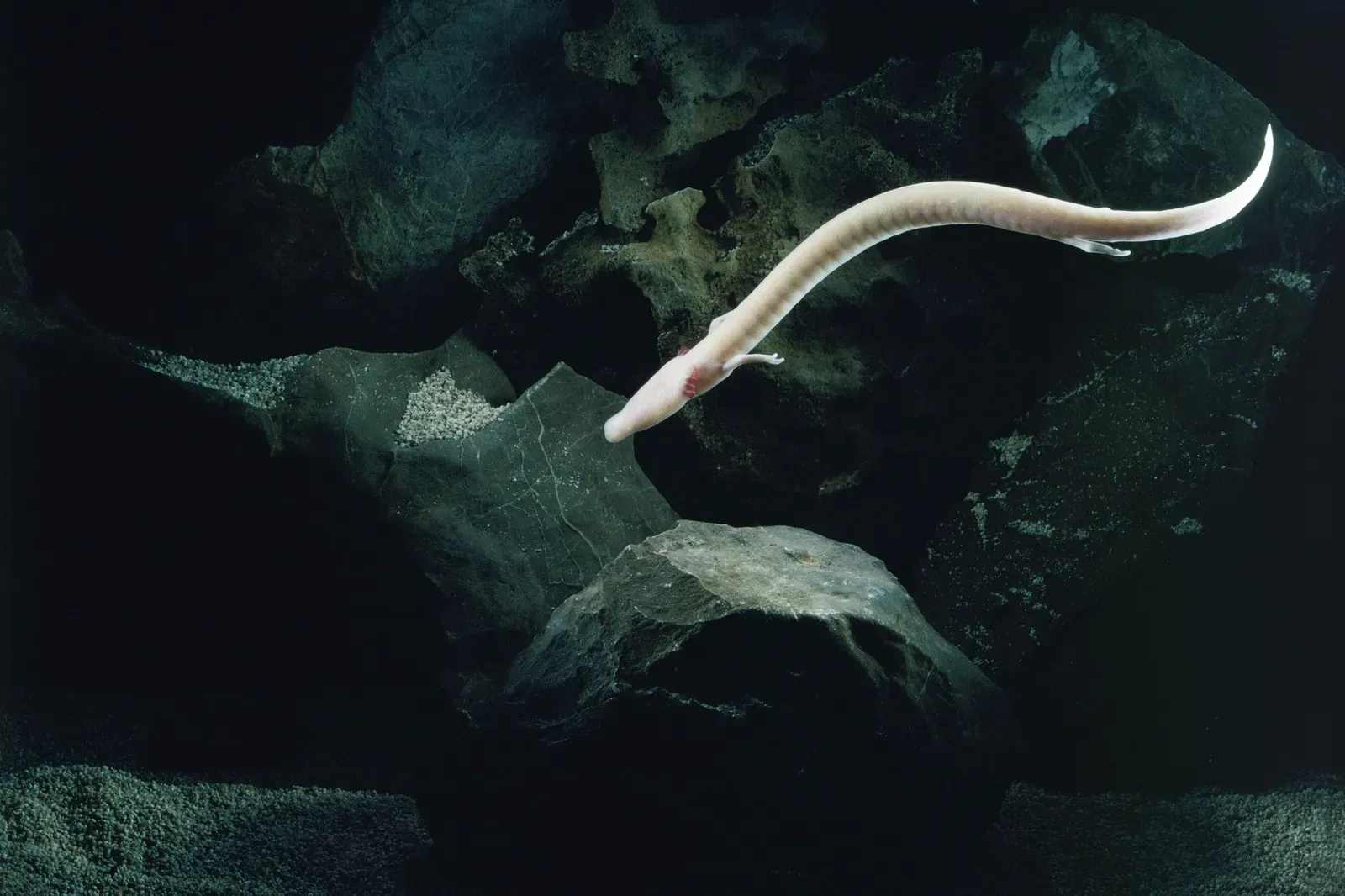
Hidden in the limestone caves of the Balkans lives the olm, a pale, eel-like amphibian that can survive for over a century and go without food for up to ten years. Completely blind, it navigates its pitch-black world using specialized sensory organs that detect changes in water pressure and electric fields. It’s the sort of creature that sounds like it belongs in a fantasy novel, not in European cave systems you could theoretically visit on a weekend trip.
Despite decades of study, scientists still cannot fully explain how the olm’s metabolism slows to near stasis, allowing it to survive in nutrient-starved environments. It’s a ghost of evolution, adapted perfectly to eternal darkness. The olm sacrificed sight entirely and in return gained extraordinary longevity and sensory abilities that still puzzle biologists today. It’s hard to say for sure, but the olm may be one of the most underappreciated evolutionary wonders on the planet.
10. The Wood Frog: It Literally Freezes Solid and Comes Back to Life
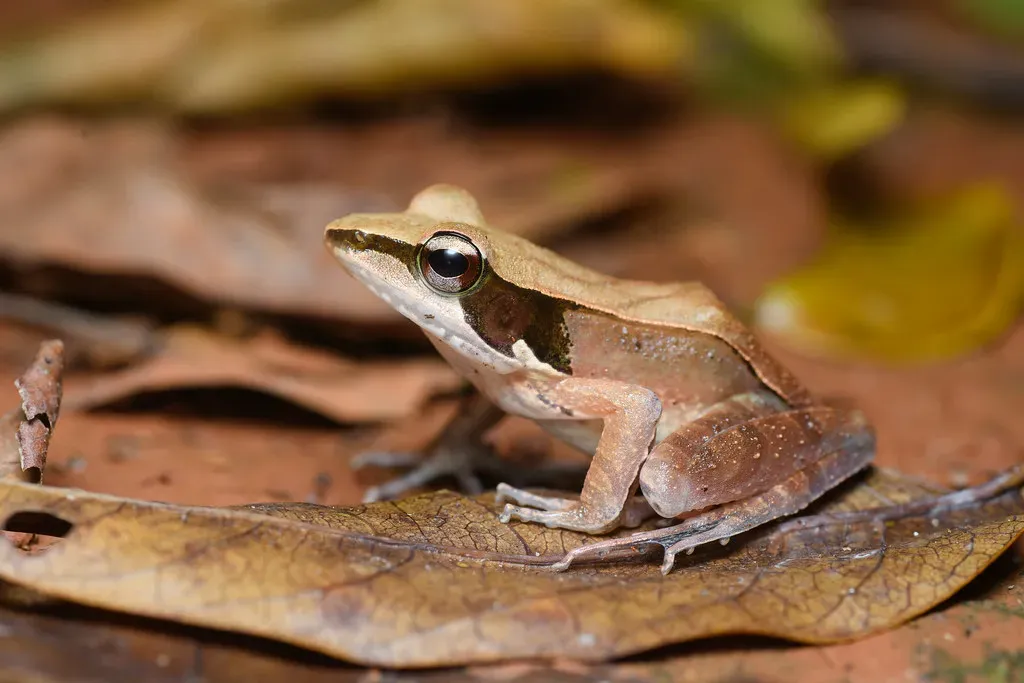
Wood frogs are a true marvel, able to survive winters in one of the world’s most frigid locations. These tree-dwelling frogs range from Alabama to Alaska, where most of this species lives. Up to roughly sixty percent of the amphibian’s body will freeze during the winter, allowing it to withstand winter lows far below zero degrees Fahrenheit. When spring arrives, the frogs thaw out and resume life as usual. It essentially dies every winter, then wakes up in spring. As if nothing happened.
Glucose in the wood frog’s cells protects its body from damage caused by freezing. The frog floods its cells with a natural antifreeze before temperatures drop, preventing the kind of cellular destruction that would kill any other vertebrate. Human activities are causing wildlife species to evolve faster than scientists once thought possible in a phenomenon known as rapid evolution. The wood frog, however, needed no nudging. It spent millions of years perfecting its trick entirely on its own, and scientists are still studying its cellular chemistry for potential applications in organ preservation and cold-storage medicine.
Conclusion: Nature’s Imagination Has No Limits
If there’s one thing these ten species collectively teach us, it’s that evolution is not a neat, predictable process. It’s messy, creative, surprising, and often completely bewildering. These remarkable creatures demonstrate that evolution is not a straightforward process; instead, it is a complex tapestry of adaptations that often defies expectations. By studying these extraordinary animals, scientists gain invaluable insights into biology’s innovative processes, offering endless inspiration and uncovering potential applications for human advancement.
We tend to imagine nature as something already fully known, already catalogued and filed away. Experts estimate that fewer than twenty percent of Earth’s species have been documented by Western science, with potentially millions more unknown and unnamed. The axolotl that regrows its heart, the jellyfish that reverses its own aging, the frog that freezes solid and wakes up for spring. These are not myths. They are your neighbors on this planet, and they have been quietly astonishing the scientific community for decades.
The natural world does not run out of ideas. Maybe the most humbling realization is that for all our technology and all our satellites and sequencing machines, nature is still comfortably ahead of us. Which of these creatures surprised you the most? Drop your thoughts in the comments below.