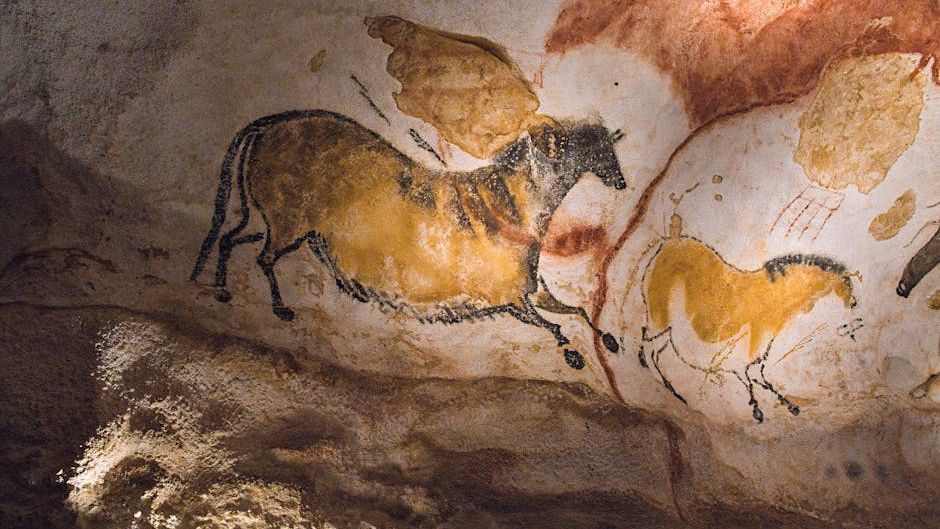
Something extraordinary happens when you stare at a stone carving or a faded cave wall and realize the creature painted there doesn’t exist anywhere in the modern animal kingdom. It has tusks where they shouldn’t be, a neck that stretches impossibly long, or limbs that belong to three different animals at once. You’re left asking the same question researchers have been wrestling with for decades: what exactly did these ancient people see?
The truth is more fascinating than most history books admit. Scattered across seven of the world’s most remarkable ancient civilizations are works of art that depict creatures science still can’t fully explain. Some were clearly inspired by real but extinct megafauna. Others may have been born from fossil discoveries made thousands of years before paleontology existed as a science. Let’s dive in.
1. The San People of South Africa and the Dicynodont Mystery
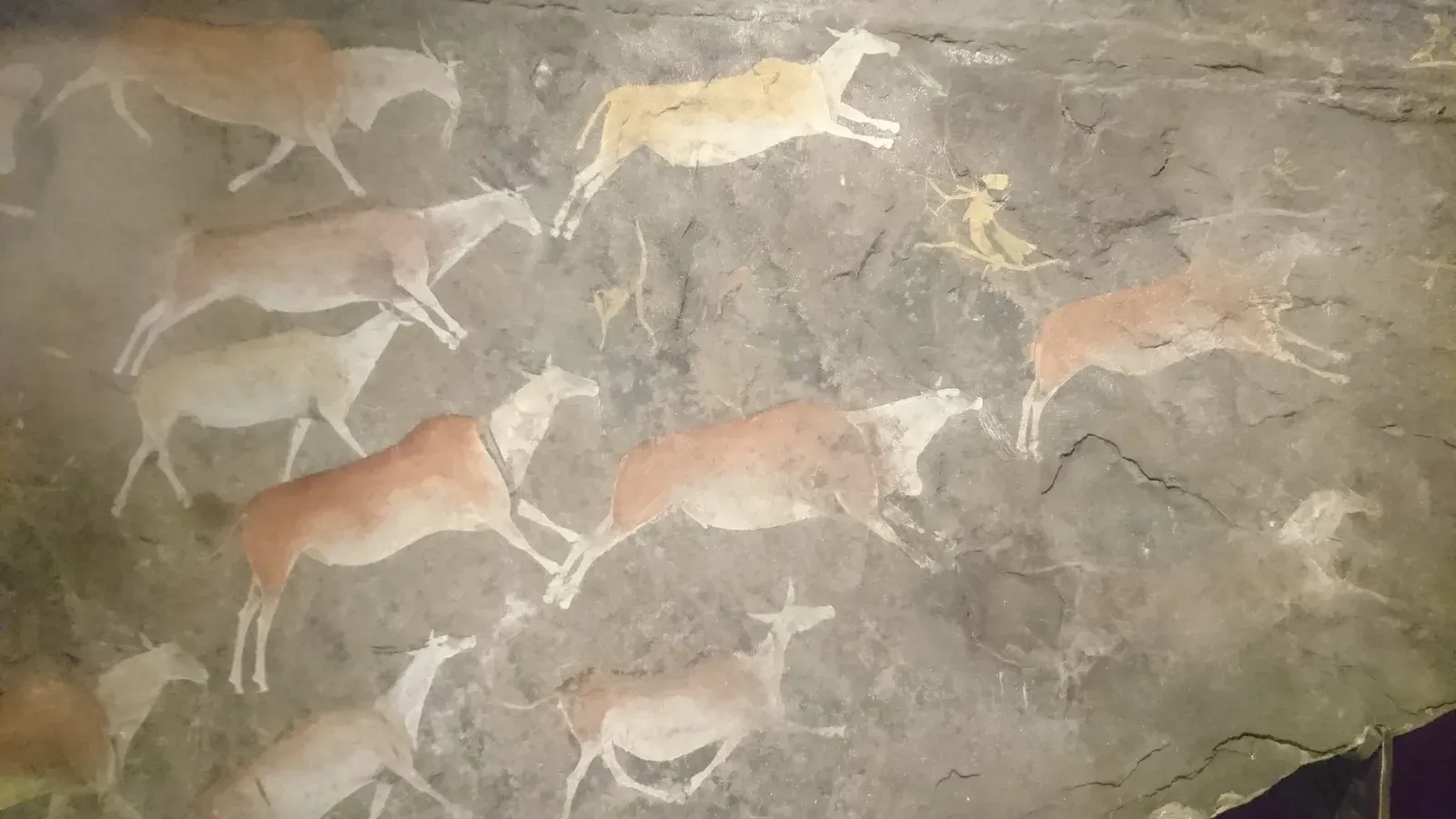
You might not expect a 200-year-old rock painting in the Karoo Basin of South Africa to send modern paleontologists into a spin, but that is exactly what happened. The artwork, known as the “Horned Serpent Panel,” is part of a famous rock art site and features familiar animals alongside one that looks strikingly out of place: an elongated creature with short legs, a small head, and downward-curving tusks. It bears an almost walrus-like appearance in a region where no walrus has ever roamed.
Researchers now suggest that the San people may have drawn inspiration from the fossilized remains of an extinct species, the dicynodont, which roamed the Earth millions of years ago. These stocky, plant-eating therapsids had squat bodies, short legs, and curved tusks, almost identical to the features painted on the cave wall. Honestly, when you line up the fossil skull and the painted creature side by side, the resemblance is difficult to dismiss. If dicynodont fossils influenced the painters of this tusked rock art figure, then that portrayal preceded the first scientific description of dicynodonts in 1845, and these animals generally lived from around 270 million to nearly 200 million years ago.
2. Ancient Egypt and the Baffling Beast of Set
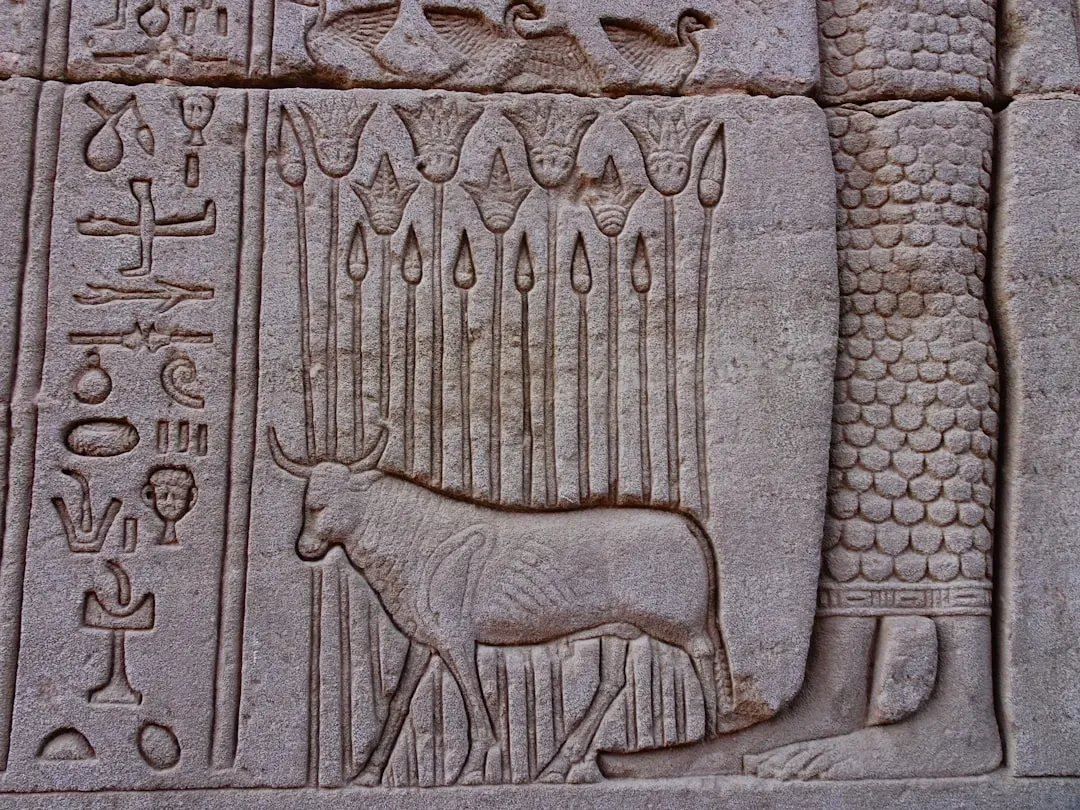
Egypt gave the world the Sphinx, Ammit, and the serpent god Apep. Yet none of these creatures is quite as puzzling to modern scholars as the Set animal, a creature known as the “sha.” Unlike other totemic animals, the Set animal is not easily identifiable in the modern animal world, and there is a general agreement among Egyptologists that it never existed as a real creature, existing only in ancient Egyptian religion. Still, some researchers aren’t so sure that’s the full story.
Depictions of the Set animal appear in Egyptian art from Naqada III to the New Kingdom, spanning about two thousand years, found on various artifacts including the Scorpion Macehead and serekhs of kings. Some scholars have historically suggested the Set animal may be a stylized representation of some other animal, such as an oryx, donkey, fennec fox, jerboa, aardvark, or that it might represent a species that was rare and has since become extinct. The fact that ancient Egypt almost exclusively based its divine animal symbols on real creatures makes the Set animal’s complete unidentifiability all the more striking. You can’t help but wonder what beast roaming those desert wastelands inspired it.
3. Ancient Egypt’s Serpopard and a Creature Born of Chaos
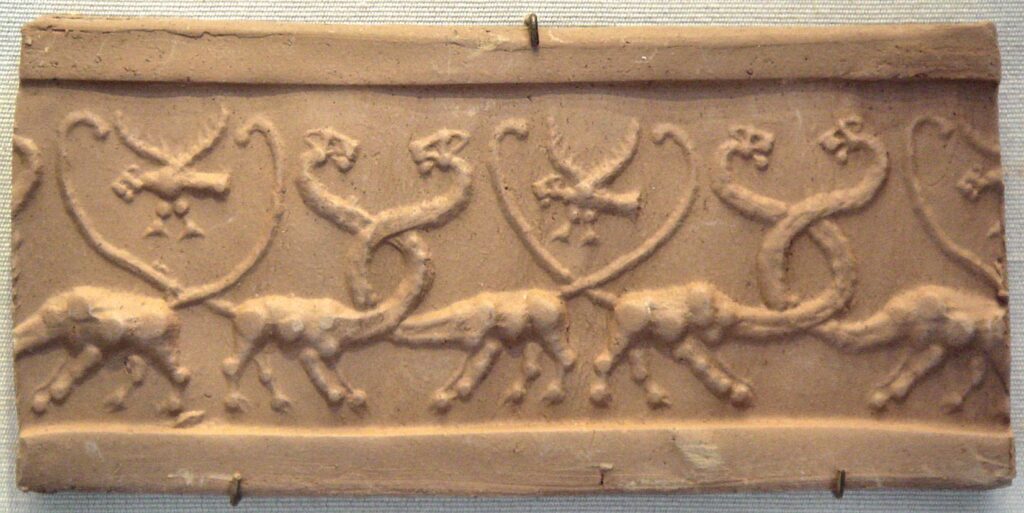
Egypt appears again, and for good reason. Beyond the Set animal, Egyptian artists also created a beast called the Serpopard. The Serpopard, a mythical creature with the body of a leopard and a long snake-like neck, appears in ancient Egyptian art. This creature is less known but carries significant symbolic meaning, and Serpopards are often depicted in a state of chaos, symbolizing the wild and untamed forces outside the civilized world.
The largest engravings on the Narmer Palette, carved around 3100 BCE, are two men interweaving the serpentine necks of unknown beasts called serpopards, and this section of the palette is highly mysterious. The Egyptians seem to have considered these animals to be real, since they were often represented as living in the wild, among antelopes and lions, in the deserts surrounding the Nile River Valley. Think of it like ancient Egyptians creating a field guide that included something no living naturalist has ever catalogued. Pairs of Serpopards in Mesopotamia were also depicted with interwoven necks, suggesting this mysterious long-necked beast was not uniquely Egyptian in origin.
4. Ancient Mesopotamia and the Dragon-Beasts of Babylon
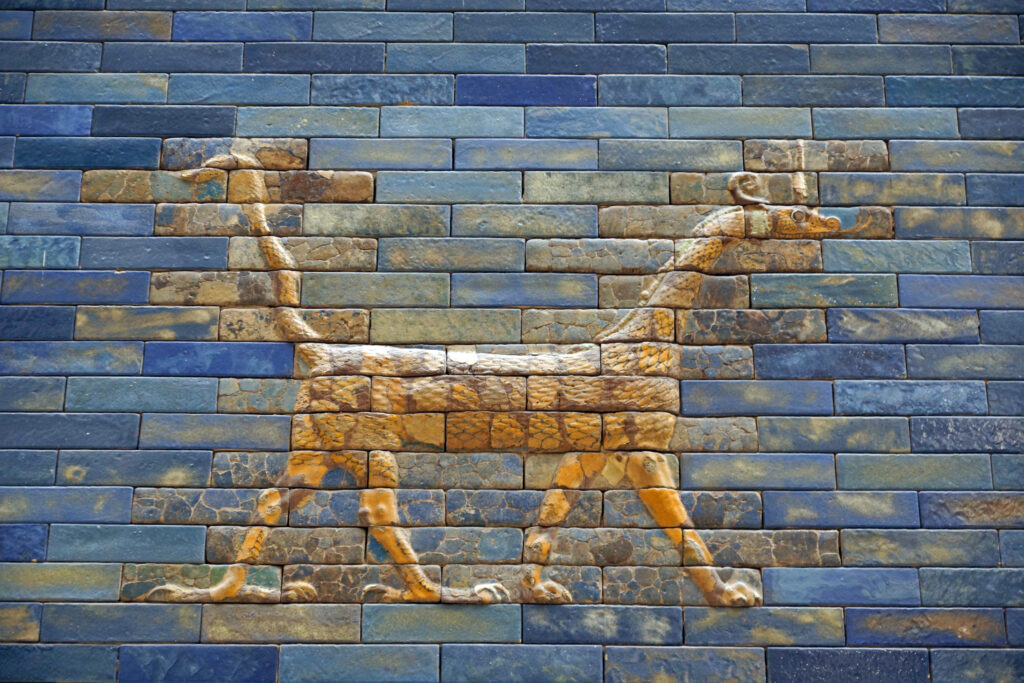
When you look at Mesopotamian art spanning thousands of years, one recurring figure stands out above all others. It is neither lion nor eagle, but something that combines both in deeply unsettling ways. A draconic creature with the foreparts of a lion and the hind-legs, tail, and wings of a bird appears in Mesopotamian artwork from the Akkadian Period, around 2334 to 2154 BC, all the way until the Neo-Babylonian Period, from 626 BC to 539 BC. This is not a brief artistic phase. This creature persisted across multiple empires and dynasties.
This creature may have been known as the “roaring weather beast,” and may have been associated with the god Ishkur. A slightly different lion-dragon with two horns and the tail of a scorpion appears in art from the Neo-Assyrian Period, from 911 BC to 609 BC. Let’s be real here. Mesopotamians were meticulous record-keepers and careful observers of the natural world. For them to sustain the image of a hybrid beast across nearly two thousand years of art tells you something important: this creature carried deep cultural weight, possibly rooted in something they encountered in nature, or in fossils eroding from the ancient riverbanks of the Tigris and Euphrates.
5. The Indus Valley Civilization and Its Unicorn Seal Creature
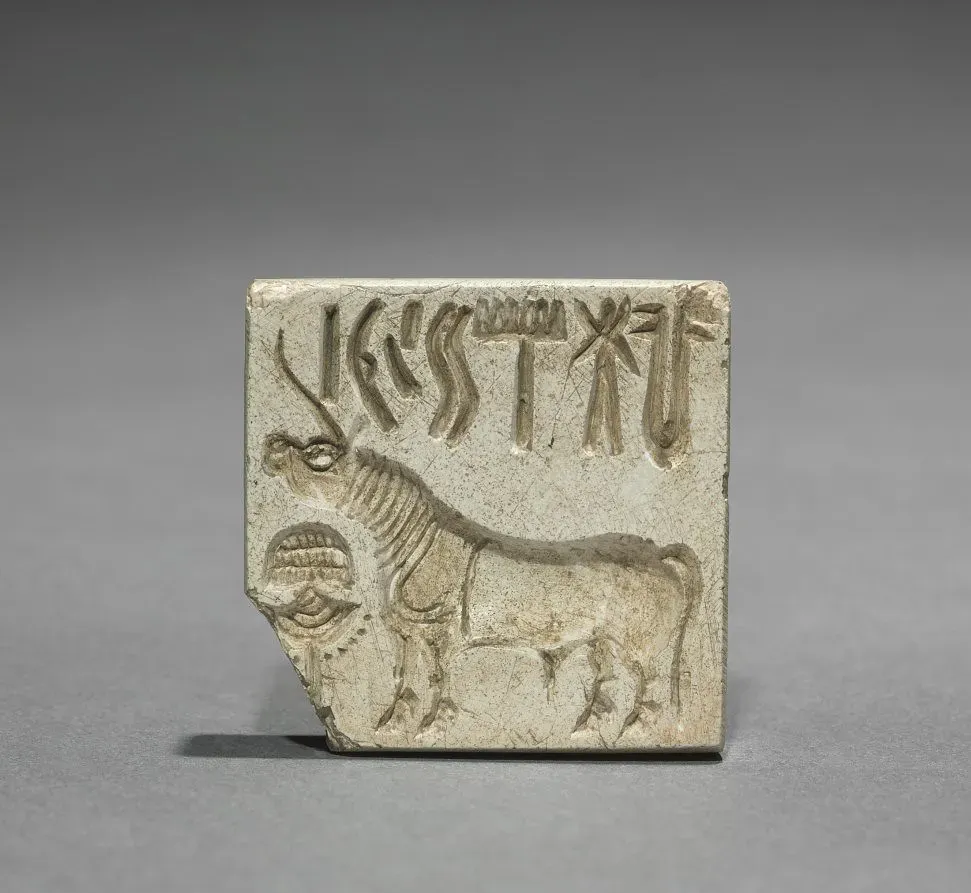
Here is one that truly confounds researchers. The Indus Valley civilization, which flourished in what is now Pakistan and northwestern India, left behind thousands of small stamp seals. Archaeologists have uncovered thousands of small square seals, typically made of soapstone, exquisitely carved with realistic depictions of animals including bulls, elephants, and rhinos, as well as mythical creatures like unicorns. These seals were remarkably naturalistic, which makes the single-horned beast stand out as particularly strange.
The creature usually labeled a “unicorn” on Indus seals does not quite resemble any surviving horse or bovine species. It carries itself with a posture no modern animal holds, standing stiffly before what appears to be a ritual object. Much about this civilization remains a mystery because its writing system has not yet been deciphered; however, its art and artifacts provide important clues about its culture. It’s hard to say for sure whether this was a real creature observed in the wild, an extinct species long before written memory, or a purely mythological being. The mystery deepens when you realize the Indus script next to these images has also never been decoded. Two ancient riddles standing side by side.
6. The Olmec of Mesoamerica and the Were-Jaguar
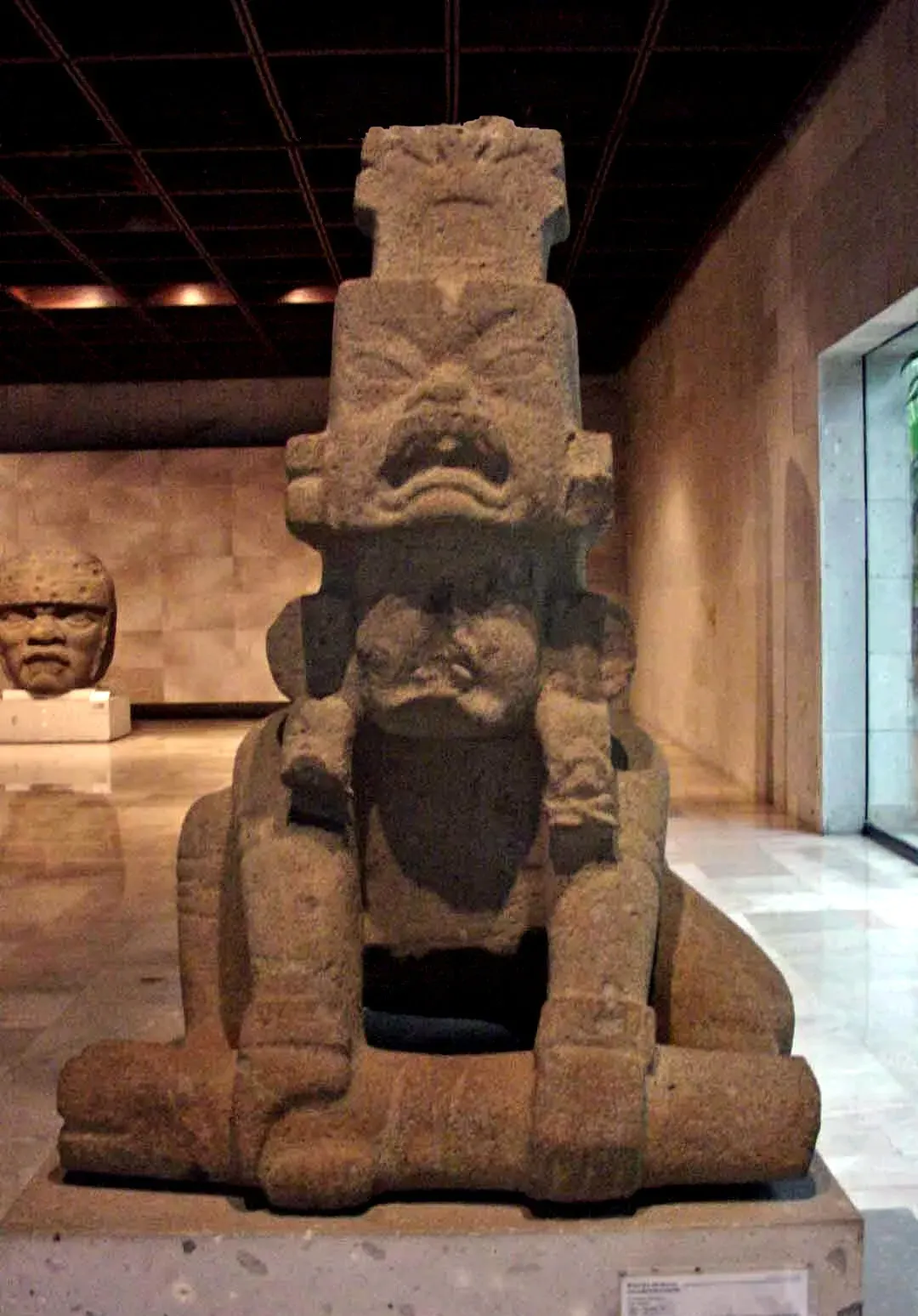
The Olmec, often called the “mother culture” of Mesoamerica, produced some of the most haunting composite creature imagery in the ancient world. Other Olmec artifacts include so-called baby-faced figures and figurines that display a rounded facial form, thick features, heavy-lidded eyes, and down-turned mouths, and they are sometimes referred to as were-jaguars. The were-jaguar is not simply a stylized cat. It is something stranger, a being that fuses infant human features with the body and essence of a big cat.
Shamanism played a central role in Olmec religion, involving communication with the spirit world, and shamans were believed to have the ability to transform into jaguars or other powerful animals. A common theme in Olmec art is to be found in representations of a divine jaguar. Some scholars believe the were-jaguar imagery references a real ritual transformation, a shaman merging with the most powerful predator of the rainforest. Others argue these sculptures are something more literal, representing an entirely different category of being. The fin on top of certain Olmec figurines evokes shark or fish imagery, and sharks were deified early in Mesoamerican society, with research highlighting linkages between shark or fish motifs, maize imagery, human creation, and royal identity. The Olmec clearly saw the animal world as far more layered than we do today.
7. The Ancient Peoples of Indonesia and Australia’s Forgotten Megafauna
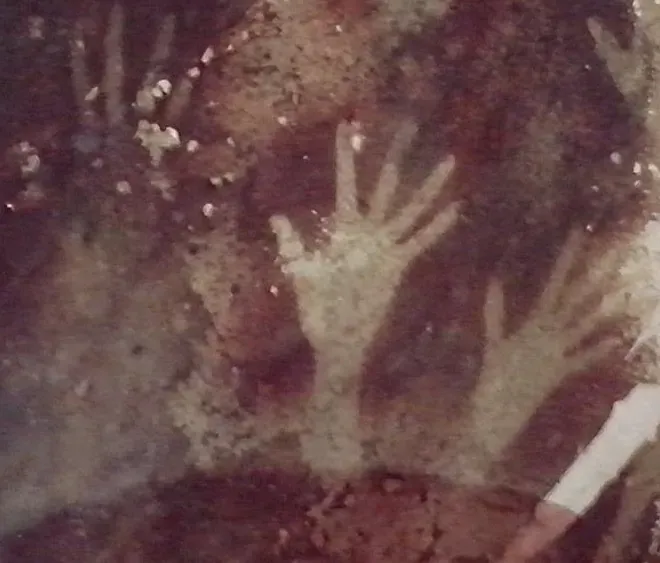
Two regions separated by ocean but united by one staggering fact: their ancient peoples painted creatures that no longer exist. In a cave on Sulawesi, a spectacular painting portrays hybrid human-animal figures hunting Sulawesi warty pigs and dwarf buffalos. This hunting scene is at least 43,900 years old, and it features what may be the oldest depictions of supernatural beings. Think about that scale. This was painted before most of the famous prehistoric cave art in Europe.
In Australia, the story gets even richer. Australia has more prehistoric cave paintings than any other country in the world, and most of these paintings can be found in Arnhem Land, located on the northern edge of the Northern Territory, a region thought to have been the place Australia’s first settlers entered around 60,000 years ago. Some paintings appear to show the features of an ancient species called thylacoleo, also known as the marsupial lion. The jaws of thylacoleo were broader and shorter than those of the smaller and more delicately built Tasmanian tiger, and the marsupial lion also had large, heavy forelimbs with long claws. These weren’t imaginary monsters. They were real animals, now extinct, captured in paint by the people who actually lived alongside them.
Conclusion
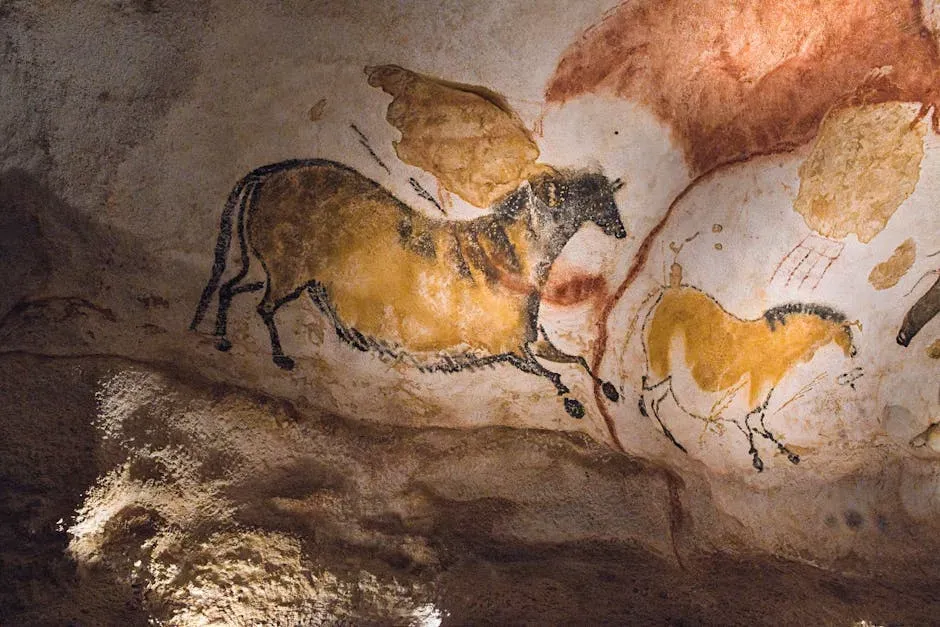
What you find, when you travel through the art of these seven civilizations, is something that reshapes how you think about human history. These were not primitive people stumbling blindly through an unexplained world. They were careful, intelligent observers who recorded what they saw, including creatures we have spent centuries trying to rediscover. The figurative depiction of hunters alongside strange creatures may also represent the oldest evidence for our ability to imagine the existence of supernatural beings. Or, just as plausibly, they simply painted what was real.
The San people of South Africa may have documented a dicynodont before any Western scientist gave it a name. The Egyptians painted a creature for two thousand years that no zoologist has ever conclusively identified. The Olmec carved a jaguar-human hybrid that still defies easy explanation. As researchers continue to explore the connections between fossils and folklore, they may uncover even more evidence that ancient peoples were the earliest interpreters of deep time, turning prehistoric bones into the stuff of legend. Perhaps the most honest thing you can say is this: ancient people knew things we are still catching up to. What creature painted on a forgotten wall are you most convinced was real?