Imagine standing face to face with a creature that ruled the earth over 66 million years ago. Its bones towering above you, its eye sockets hollow and dark, yet somehow still unsettling. That eerie, jaw-dropping sensation is what makes paleontology exhibits unlike anything else in the world of museums. There’s a raw, almost spiritual quality to standing next to a real fossil – something that no photograph, documentary, or virtual reality can truly replicate.
Across the United States, some of the world’s most extraordinary prehistoric discoveries are waiting for you to explore them in person. From a T. rex locked in a death battle with a Triceratops, to a 122-foot dinosaur too big for its own exhibit hall, the stories behind these finds are as wild as the creatures themselves. So let’s dive in.
1. SUE the T. rex at the Field Museum, Chicago
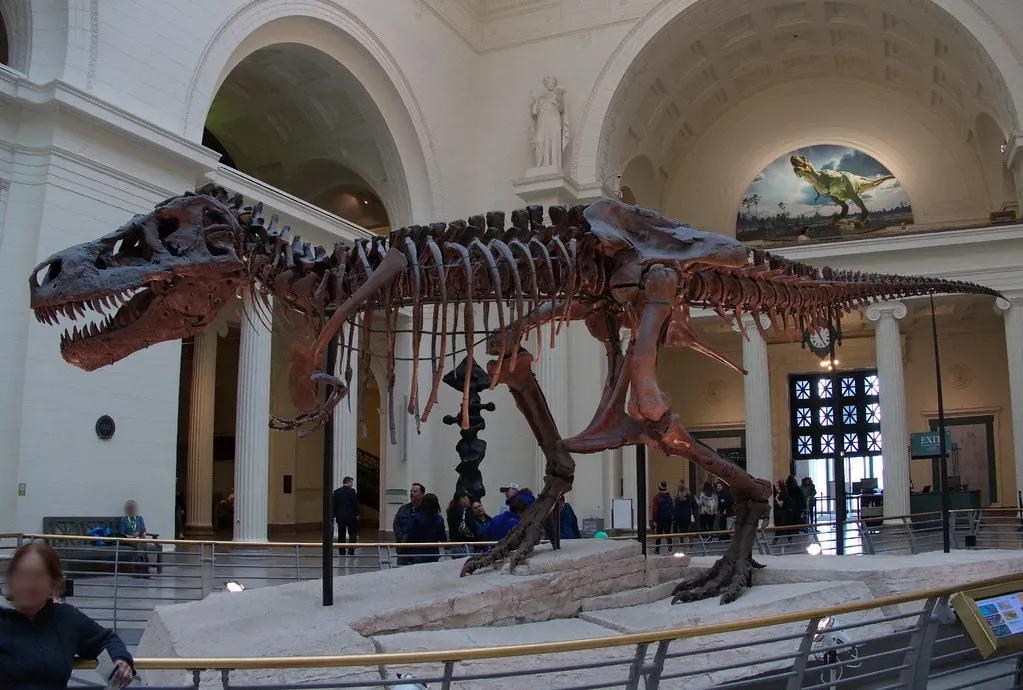
Let’s be real: when people think of the most famous fossil in the world, SUE almost always tops that list. At more than 40 feet long and 13 feet tall at the hip, SUE is physically the largest Tyrannosaurus rex specimen ever discovered, out of more than 30 T. rex skeletons found – and is also the most complete, at around 90 percent. That’s not just impressive; that’s almost unbelievable for an animal that died roughly 67 million years ago.
After her landmark discovery, three parties embarked on a five-year custody battle that ended in a public auction in 1997, where the Field Museum won with a staggering $8.4 million – the most money ever paid for a fossil at auction. You can now see SUE in a dedicated gallery within the Evolving Planet exhibition, where the context does full justice to what science has learned from this extraordinary specimen. Honestly, no trip to Chicago is complete without stopping in to say hello.
2. The Titanosaur at the American Museum of Natural History, New York City
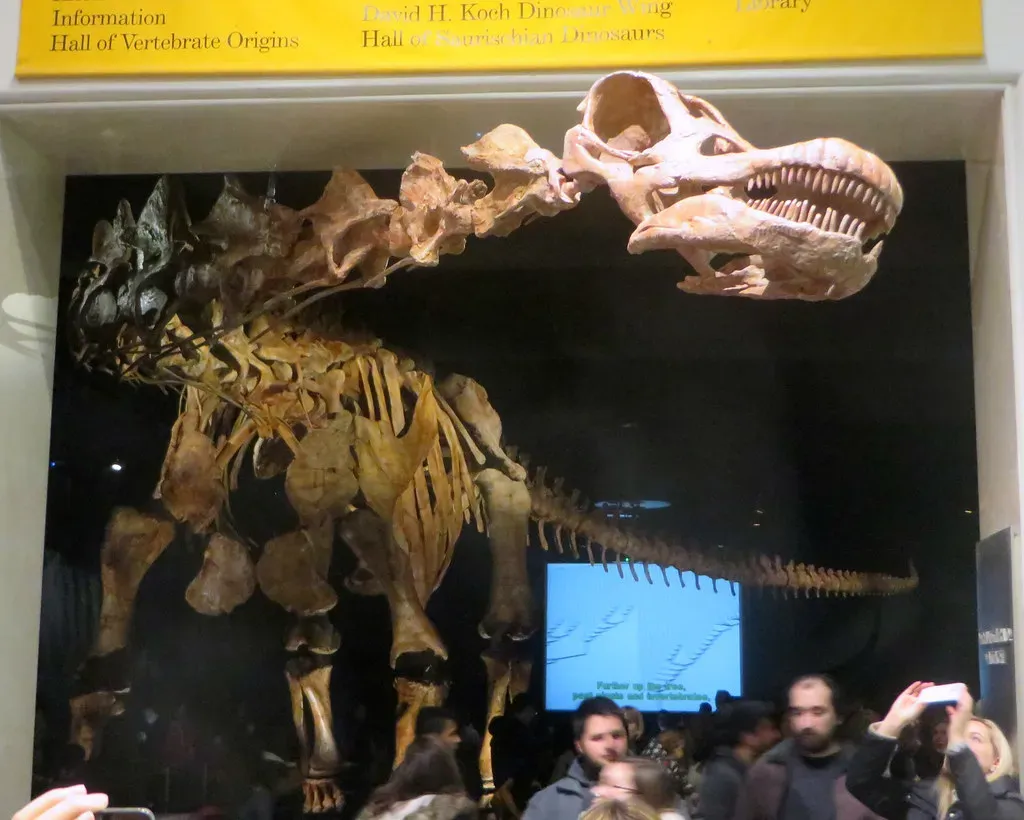
The Titanosaur grazes the Wallach Orientation Center’s approximately 19-foot-high ceilings, and at 122 feet, is just a bit too long for its new home – its neck and head extend out towards the elevator banks, welcoming visitors to the “dinosaur” floor. Think about that for a moment. This creature is so enormous it literally doesn’t fit inside the room.
A remarkable 85 percent of specimens in the fourth-floor fossil halls are actual fossils rather than casts or reproductions. The Titanosaur itself is a life-sized cast of a 122-foot-long sauropod dinosaur, Patagotitan mayorum, discovered in 2014. Whether you’re seven or seventy, the moment you turn a corner and suddenly look up at this animal, something shifts inside you. It’s one of those genuinely unforgettable museum moments.
3. The T. rex vs. Triceratops Battle at the Smithsonian’s Deep Time Fossil Hall, Washington D.C.
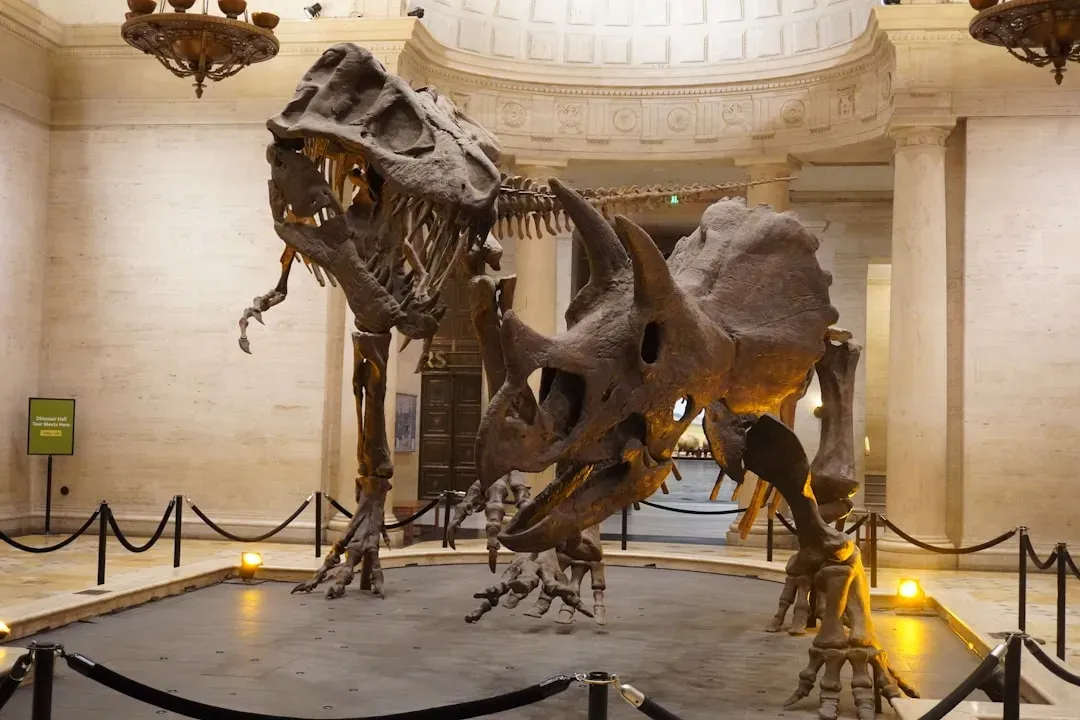
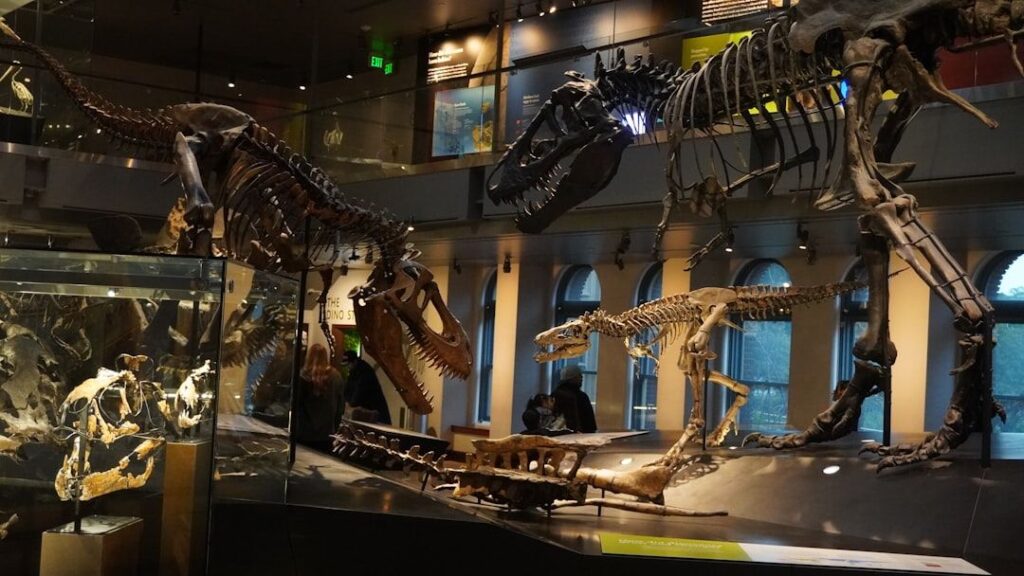
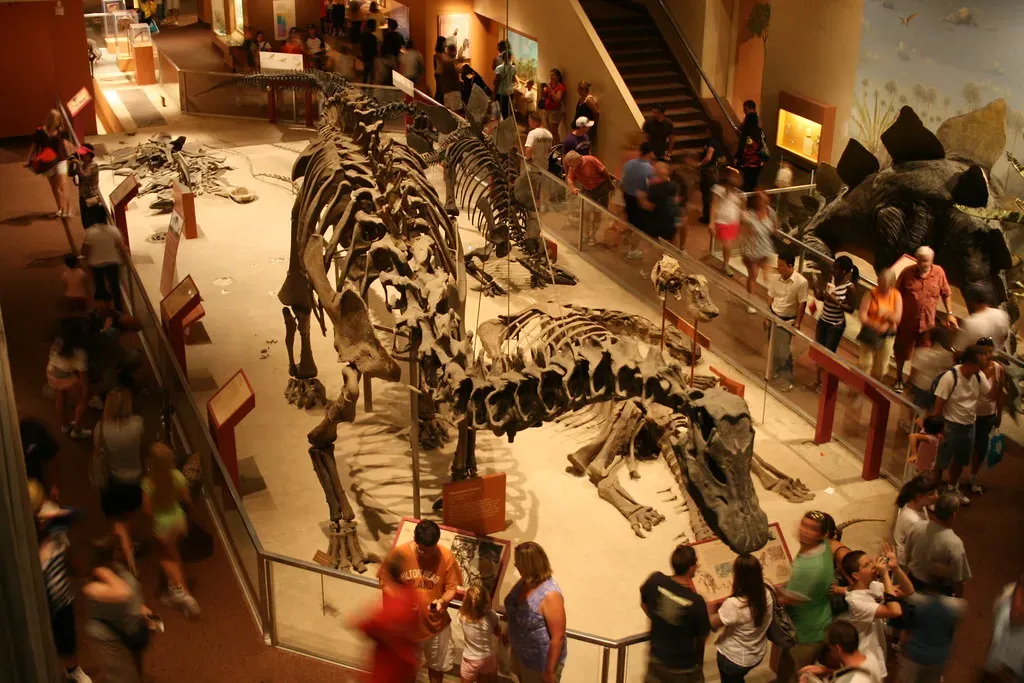
You can travel through ancient ecosystems, witness the evolution of planet and animal life, and get up close to some 700 fossil specimens, including a fight to the death between a Tyrannosaurus and a Triceratops, early reptiles and mammals, and the woolly mammoth. This dramatic centerpiece is breathtaking in a way that static dinosaur poses simply cannot replicate.
The museum’s “David H. Koch Hall of Fossils – Deep Time” exhibit, which reopened in 2019 after a five-year, $110 million renovation, is nothing short of spectacular. It’s not just a dinosaur hall; it’s a sprawling, immersive journey through Earth’s entire history. The dinosaur section is a highlight within this larger narrative, beautifully integrated to show how these creatures fit into the grand scheme of life’s evolution. Few museum experiences in the country match this one for sheer scope and scientific depth.
4. Montana’s T. rex at the Museum of the Rockies, Bozeman, Montana
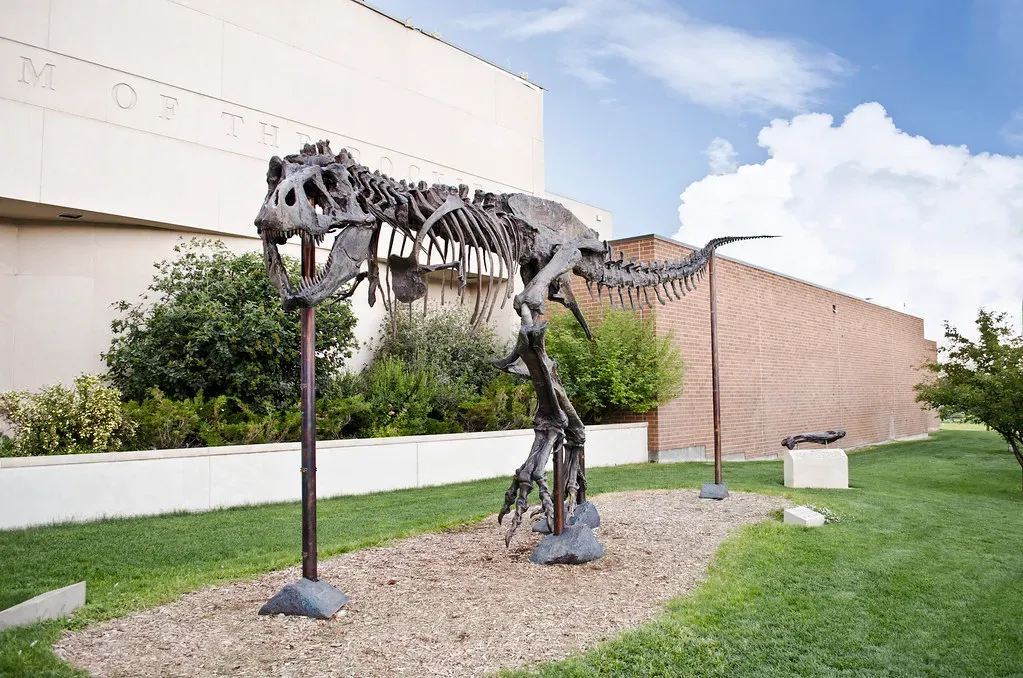
The Museum of the Rockies hosts one of the most extensive and significant collections of dinosaur fossils in North America. The massive skeleton of “Montana’s T. rex” and other prehistoric animals stand as a testament to the giants that once ruled these lands 66 to over 150 million years ago. There’s something special about seeing a T. rex that was literally pulled out of the very region you’re standing in.
The museum houses an extensive collection of hundreds of thousands of individual fossils, representing a wide range of species including ancient clams, fishes, amphibians, lizards, and mammals – plus one of the most significant collections of North American dinosaurs in the world. Notably, it is home to the largest collections of Tyrannosaurus rex and Triceratops fossils, many of which are prominently displayed in the Siebel Dinosaur Complex. It’s hard to say for sure which exhibit is more jaw-dropping, but the sheer volume of genuine material here is staggering.
5. The Pregnant Plesiosaur at the Natural History Museum of Los Angeles County
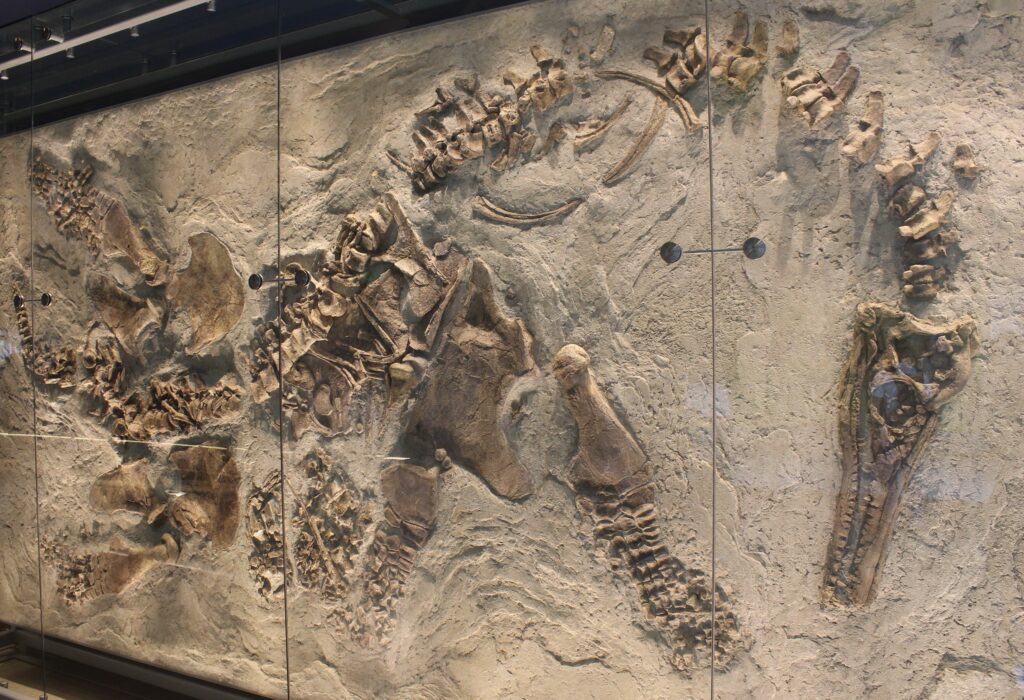
Visitors to the Natural History Museum can see the pregnant plesiosaur on display in the Dinosaur Hall. The specimen is 15.5 feet wide and 8 feet tall. It is the only pregnant plesiosaur fossil ever discovered. Pause and let that sink in. Of every plesiosaur fossil ever found anywhere on Earth, this single specimen in Los Angeles is the only one ever found carrying an unborn offspring inside it.
The stunning centerpiece of the second gallery is the Tyrannosaurus rex growth series, featuring a baby, juvenile, and sub-adult T. rex. It’s the only series of its kind in the world. You’ll find yourself standing in this gallery longer than you expected, moving between these life stages and trying to imagine what it looked like for a tiny T. rex hatchling to eventually grow into the apex predator of the Cretaceous. It’s a museum within a museum, honestly.
6. The Dinosaur Mummy at the American Museum of Natural History, New York City
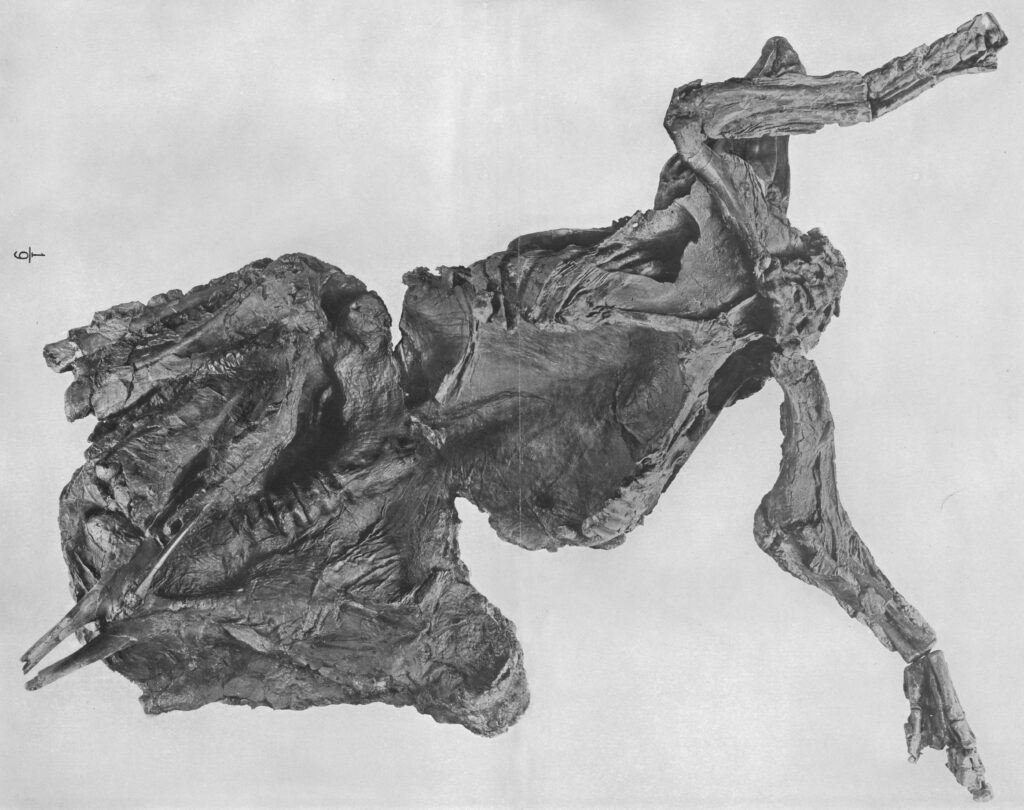
The museum’s dinosaur mummy is a fossilized imprint of the carcass of a duck-billed dinosaur. This is one of those exhibits that makes you stop mid-step and do a double take. Most fossils preserve bones. This one preserved the outer form of the entire animal, skin and all, like nature’s own cast mold left across millions of years.
The museum even has a duck-billed dinosaur mummy. The fossilized imprint of the Anatotitan is one of the greatest discoveries in the history of paleontology. Located near Central Park, NYC’s American Museum of Natural History is a key player in paleontological research, with one of the largest dinosaur fossil collections in North America. From the towering Tyrannosaurus rex to the massive Titanosaur, these exhibits bring prehistoric creatures to life through innovative displays and scientific interpretation. The mummy, though, is something uniquely haunting and wonderful.
7. Teen Rex at the Denver Museum of Nature and Science, Colorado
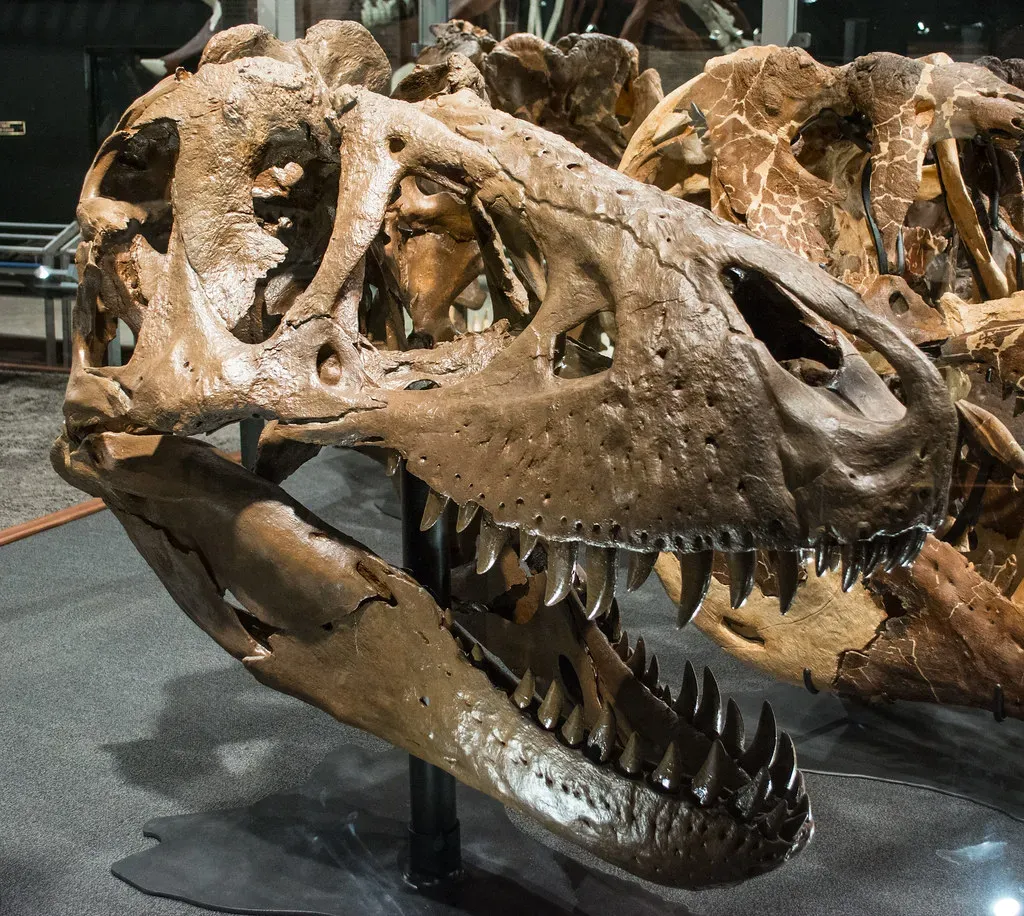
The Denver Museum of Nature and Science features one of only four adolescent T. rex fossils found worldwide – being cleaned, preserved, and studied by renowned paleontologists directly on the museum floor before the public. That’s right – you’re not looking at a finished exhibit. You’re watching the science happen in real time, which makes this one of the most unique museum experiences in the country.
The discovery of a teenage T. rex is significant because many T. rex fossils found are from older, larger animals. The teenage specimen provides researchers with an opportunity to study the growth and development of T. rex during this crucial phase of their life, the period of fastest growth, offering insights into how these formidable predators matured. In January 2025, the museum made a significant fossil find under its own parking lot during a geothermal test drilling project, leading to the discovery of a nearly 70 million-year-old partial bone fossil located 763 feet below the surface – the deepest and oldest fossil ever found within city limits, now on display in the Discovering Teen Rex exhibition.
8. Diplodocus carnegii at the Carnegie Museum of Natural History, Pittsburgh
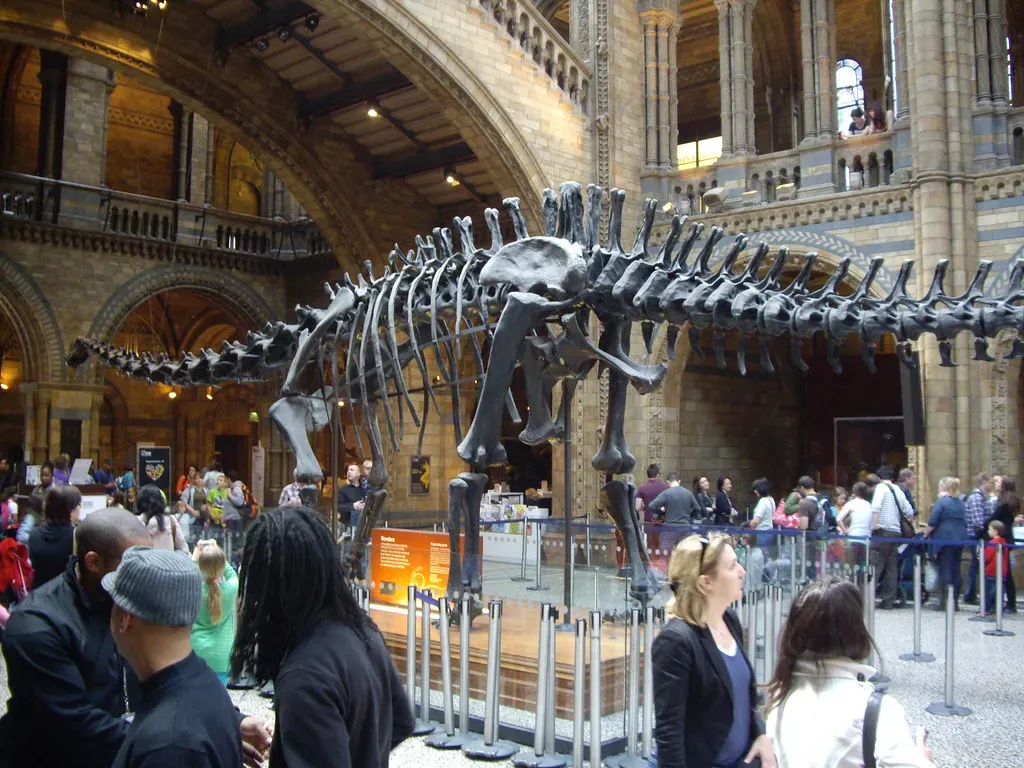
Heading back East, the Carnegie Museum of Natural History in Pittsburgh holds a very special place in the history of paleontology. This museum was at the forefront of the “Great Dinosaur Rush” of the late 19th and early 20th centuries and continues to be one of the top dinosaur museums in the US, boasting one of the world’s most impressive collections. History runs through every hall here in a way that feels almost tangible.
The Carnegie Museum’s “Dinosaurs in Their Time” exhibit is a marvel of curation and scientific presentation. What makes it unique is its chronological arrangement, displaying dinosaurs and their contemporaries – plants, insects, other animals – in fully articulated, scientifically accurate reconstructions of their ancient environments. It’s like walking through different chapters of the Mesozoic Era. The star, “Dippy” the Diplodocus carnegii, is a species named directly for the museum’s original benefactor. You simply cannot find that kind of legacy anywhere else.
9. Zed the Columbian Mammoth at La Brea Tar Pits, Los Angeles
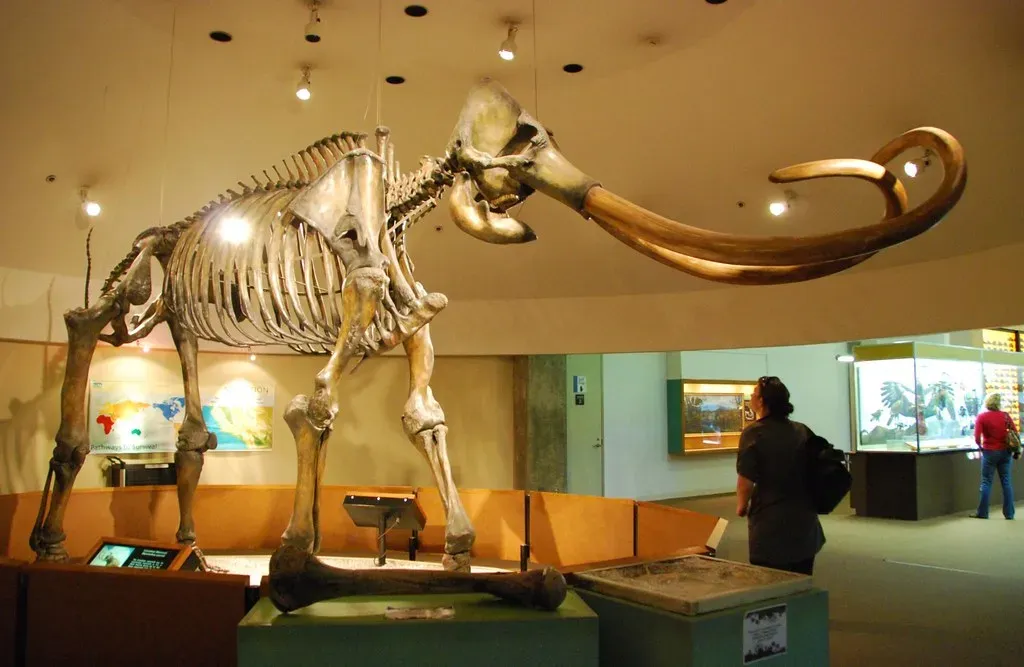
La Brea Tar Pits is the only active paleontological research site in the world located in a major urban area, situated within the eastern portion of Hancock Park in Los Angeles’s Miracle Mile district. That’s almost surreal when you think about it – millions of Ice Age fossils sitting right beneath one of the busiest cities on the planet, and researchers are still actively digging them up today.
One of the things that makes Zed such a big deal among the more than 3.5 million specimens recovered from the Tar Pits is his completeness. His remains were preserved by the asphalt after death, resulting in roughly 80 percent of the individual being preserved – making him the most complete Columbian mammoth ever found at the site. Among the prehistoric Pleistocene species associated with the La Brea Tar Pits are Columbian mammoths, dire wolves, short-faced bears, American lions, ground sloths, and the state fossil of California, the saber-toothed cat (Smilodon fatalis). It’s a lineup of Ice Age giants that reads like a prehistoric all-star roster.
10. The Apex Stegosaurus at the American Museum of Natural History, New York City
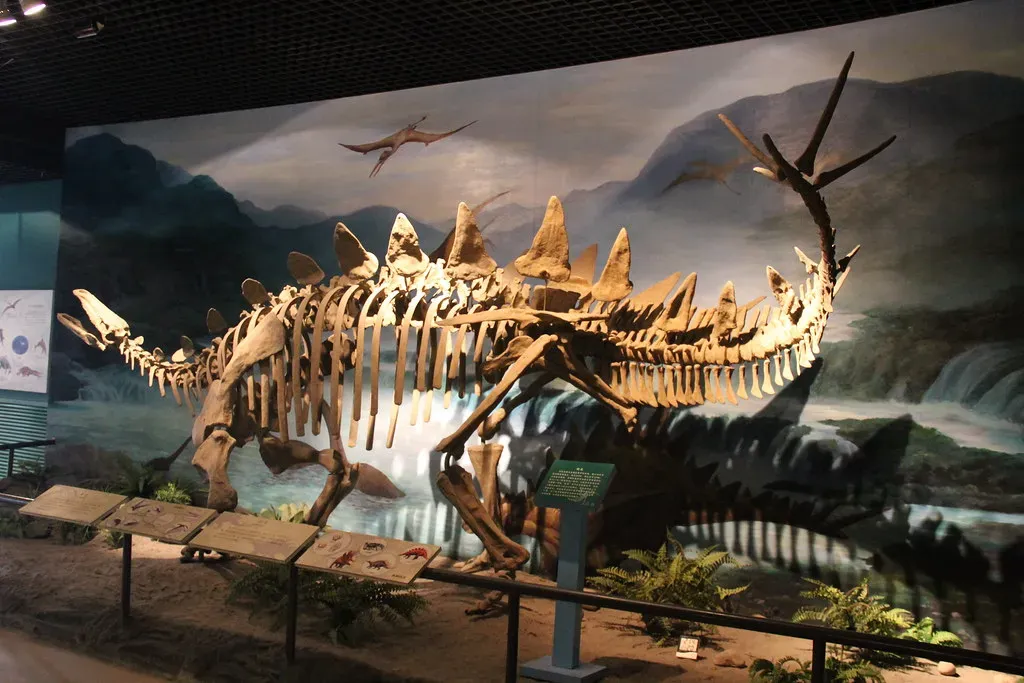
The Apex Stegosaurus fossil at the AMNH is thought to be the largest and one of the most complete Stegosaurus specimens ever uncovered. Stegosaurus has always had a certain goofy charm – that tiny brain, those enormous plates, the spiked tail – but seeing the Apex specimen in person puts a completely different perspective on just how large and formidable these animals actually were.
The complete Stegosaurus skeleton highlights its combination of passive and active defense with protective plates and a spiked tail. Recent studies indicate these plates might have aided in temperature regulation. So those iconic plates that everyone assumes were just armor might actually have functioned more like a biological radiator. That’s the kind of detail that transforms a trip to a museum into something genuinely mind-expanding.
11. The Fossil Wall at Dinosaur National Monument, Jensen, Utah
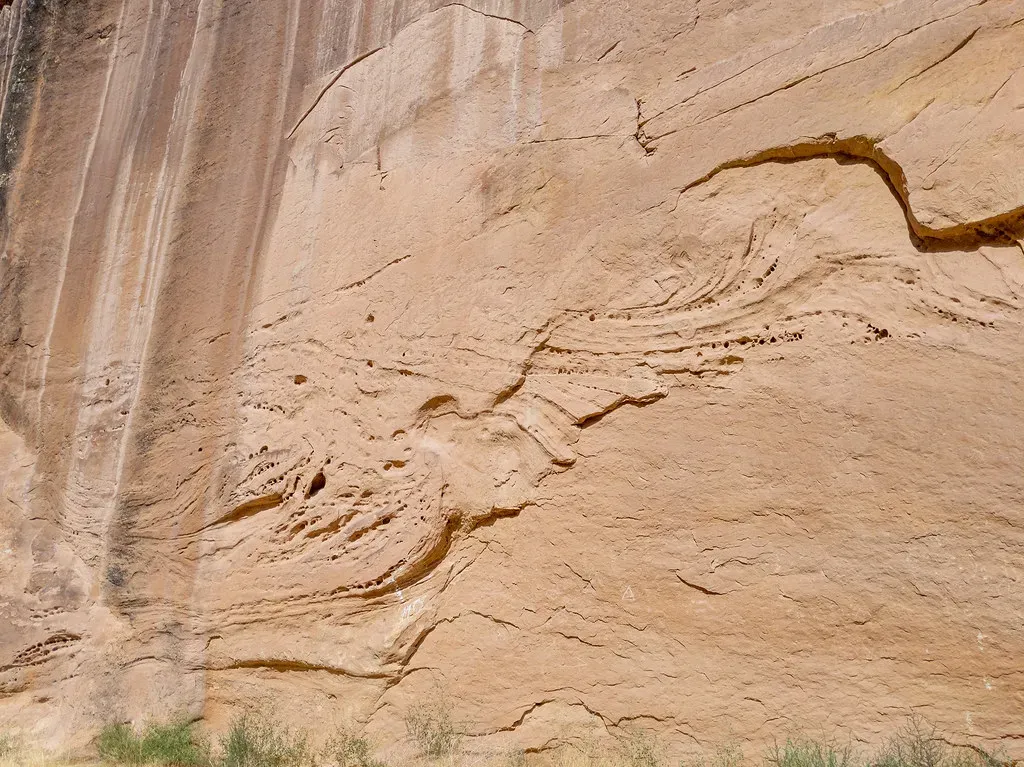
Utah is a hotbed of dinosaur discoveries, with some of the most diverse and abundant fossil sites in the world. The Utah Museum of Natural History (UMNH) in Salt Lake City stands tall as one of the top dinosaur museums in the US. Perched on a hillside with panoramic views of the city and the Great Salt Lake, the museum itself is an architectural gem, but it’s the dinosaurs inside that truly steal the show. Still, it’s the state’s raw fossil landscape that gives the region its real mystique.
The “Past Worlds” exhibit at UMNH is a spectacular showcase of Utah’s rich paleontological heritage. The state’s unique geology means that fossils from all three periods of the Mesozoic Era – Triassic, Jurassic, and Cretaceous – are found within its borders, and the museum does an incredible job of presenting this vast timescale. This kind of geological diversity, all within a single state, makes Utah’s prehistoric exhibits unlike anything you’ll find in the eastern half of the country.
12. The Deep Time Fossil Hall FossiLab at the Smithsonian, Washington D.C.
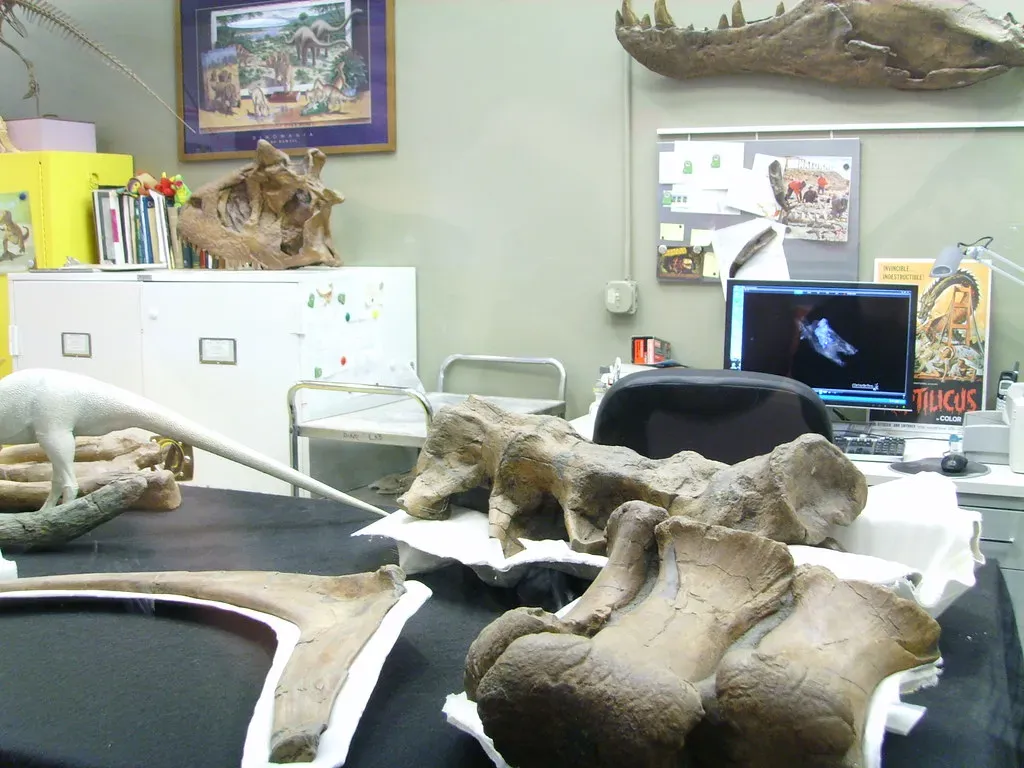
Scientists in the Department of Paleobiology at the Smithsonian travel to field sites in the United States and around the world to search for fossils, shipping many of their discoveries to FossiLab, where they prepare them for study. Most of the current FossiLab projects are fossil discoveries from the US, but work on specimens from Zimbabwe, Africa, and South America has also been completed there. Think of it as a working backstage pass to real paleontology, tucked inside one of the world’s great museums.
All of the fossils worked on in FossiLab are real. The Last American Dinosaurs exhibit that surrounds the lab includes both real fossils and precise replicas. The rarest and most historically important fossils are irreplaceable, so casts of these are exhibited while the real fossils are stored under more controlled conditions that preserve them for future research. It’s a rare museum experience where you see the science, not just the result of it – and that distinction makes FossiLab one of the most intellectually honest exhibits in American paleontology.
13. The Prehistoric Journey Exhibit at the Denver Museum of Nature and Science, Colorado
The Prehistoric Journey exhibit at the Denver Museum of Nature and Science is a wonderful trip through Earth’s history as seen in the fossils on display. The largest display in the Prehistoric Journey is hard to miss – it’s a huge Diplodocus, a species originally discovered in Cañon City, Colorado in 1877. Colorado has been a hotbed of dinosaur discovery since the very beginning of the “Bone Wars,” and this exhibit wears that legacy with real pride.
There are plenty of interesting fossils at the Denver Museum, including a pair of Pteranodons – one depicted in flight, the other perched on a rock. Other favorites include a pair of Coelophysis, several ceratopsian skulls, and a wall filled with prehistoric fish and sea reptiles including a large Xiphactinus and a terrific fossil of the mosasaur Platecarpus. Some other highlights of note include a Stegosaurus fossil discovered near Cañon City by a high school teacher and an Allosaurus skeleton found by a 13-year-old girl in Moffat County. Those are origin stories that remind you that paleontology isn’t only for scientists in lab coats – sometimes it’s a curious kid with good eyes and the right pair of hiking boots.
Conclusion: Fossils Are the Original Time Machines
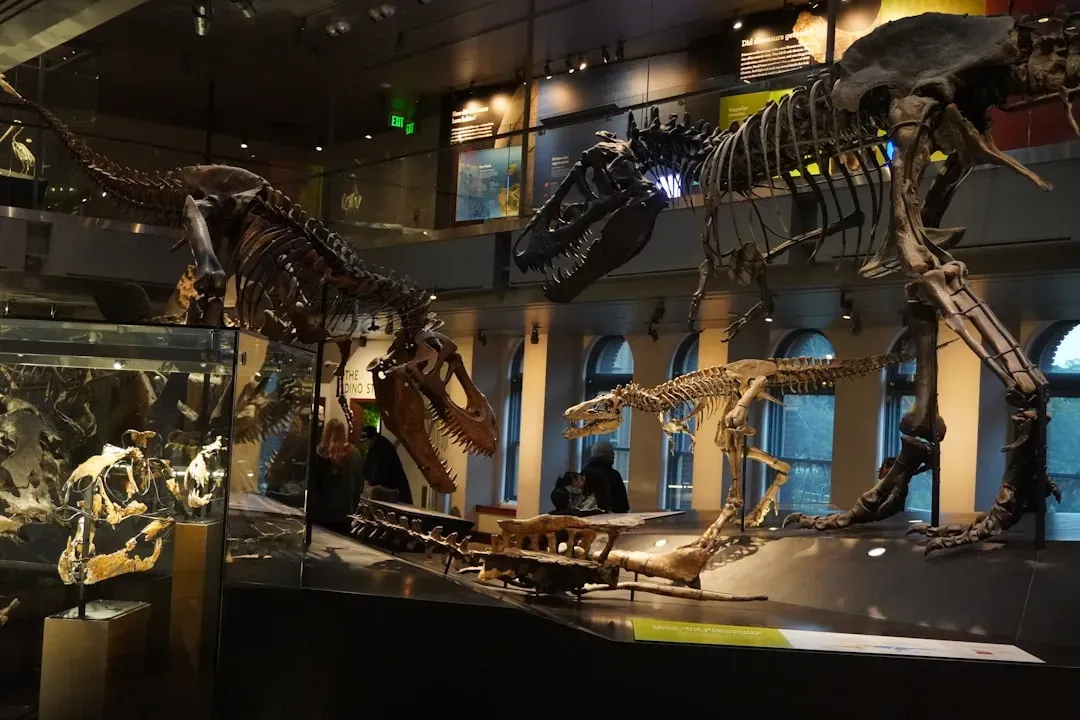
You don’t need a physics degree or a wormhole to travel back in time. You just need a good museum and a willingness to look. These 13 discoveries – scattered across America’s greatest institutions – represent millions of years of life on this planet, captured in bone and stone, waiting patiently for you to visit.
What’s remarkable is that this list barely scratches the surface. New finds are being made every year, sometimes by children hiking in the badlands, sometimes by construction workers accidentally digging into a parking lot. The Earth, it turns out, is still sharing its secrets. The only question is whether you’re paying attention.
Which of these exhibits surprised you the most? Drop your thoughts in the comments – we’d love to know which fossil discovery sparked something in you.