Picture this: you’re standing in what is now Nevada, maybe near the edge of a Joshua tree forest, and lumbering toward you is a creature the size of a small elephant. It doesn’t growl. It doesn’t sprint. It just moves, slow and unstoppable, raking leaves from branches with claws the length of your forearm. That wasn’t a monster from a fantasy novel. That was just a Tuesday, roughly 15,000 years ago.
Giant ground sloths were among the most awe-inspiring animals that ever walked this continent. They left fossils from Alaska to Florida, dung in desert caves, and claw marks carved into rock walls that still exist today. Yet most people have never even heard of them. Let’s change that.
Ancient Origins: A South American Story That Traveled North
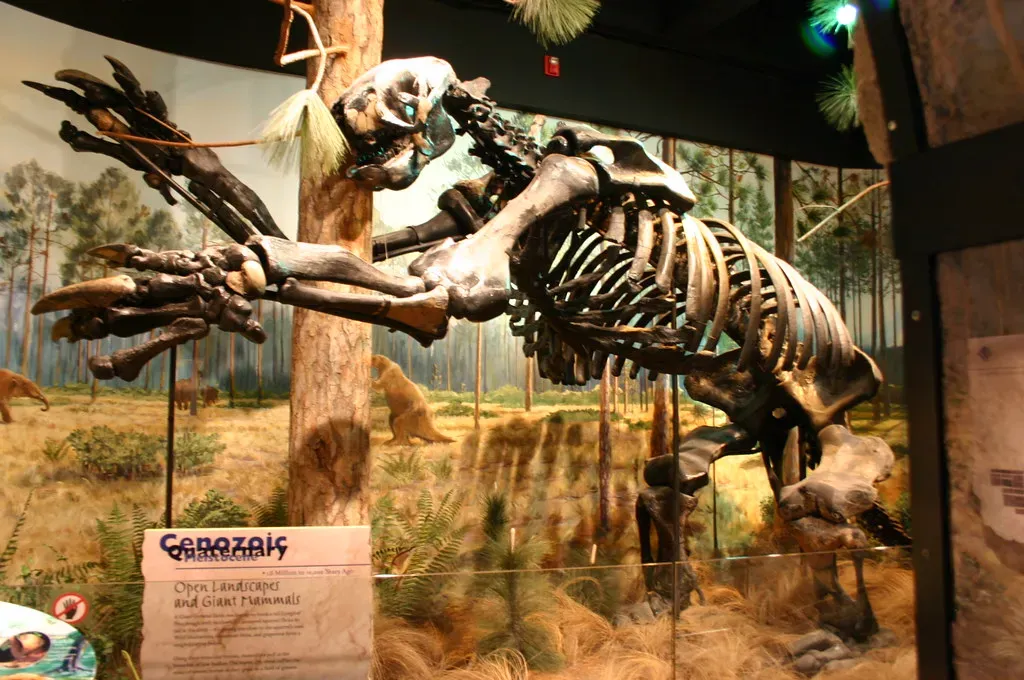
Giant ground sloths evolved in South America around 35 million years ago, and around 8 million years ago, they began migrating into North America. If you think about that timeline for a moment, it’s genuinely staggering. These animals were already ancient by the time early humans even appeared on the evolutionary stage. They weren’t newcomers. They were the established residents.
During the Pliocene and Pleistocene, as part of the Great American Interchange, additional lineages of sloths migrated into Central and North America. Prior to their extinction, there were over 30 living species of ground sloths across the Americas during the Late Pleistocene. Thirty species. That’s not just a presence. That’s a full-blown dynasty spread across two continents, shaped by millions of years of adaptation and survival.
Truly Enormous: Just How Big Were These Creatures?
![Truly Enormous: Just How Big Were These Creatures? (from English Wikipedia[1], CC BY-SA 3.0)](https://nvmwebsites-budwg5g9avh3epea.z03.azurefd.net/dinoworld/b3acc93c084567b459f43f8060146042.webp)
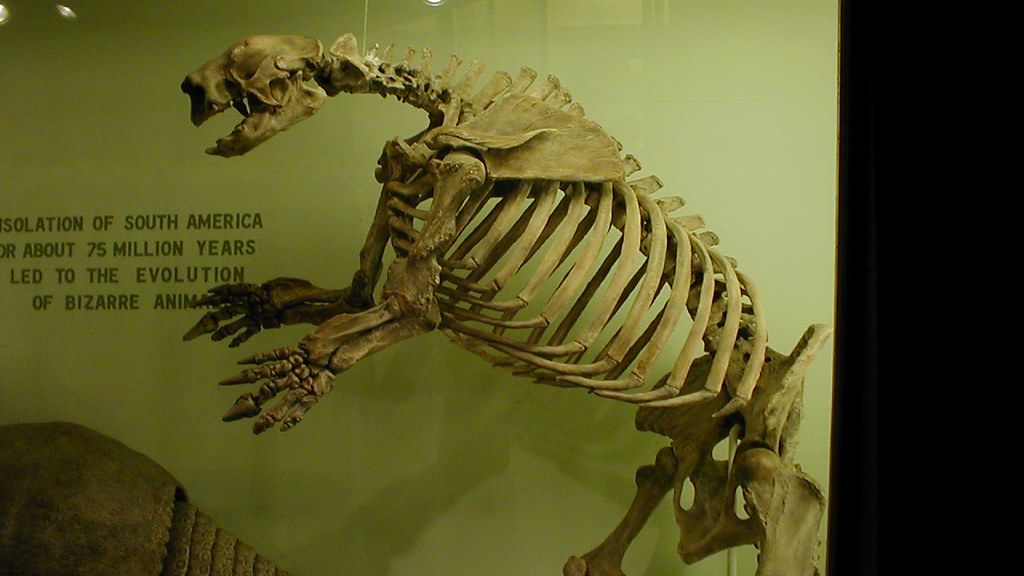
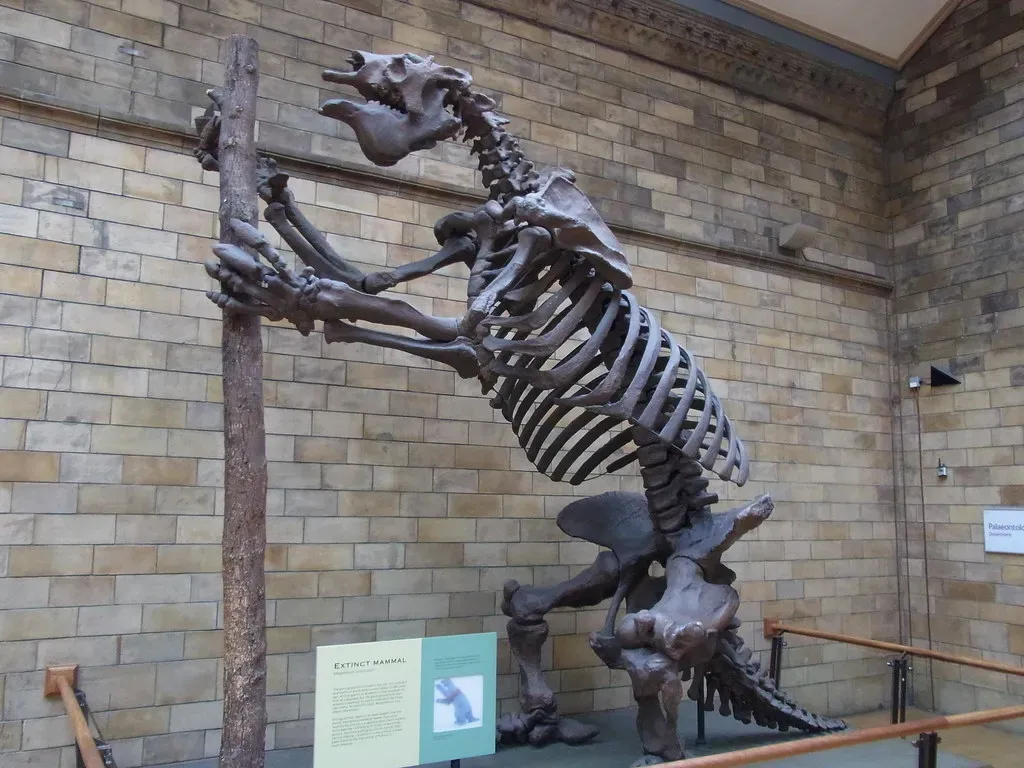
Honestly, no description quite does justice to the sheer scale of these animals. The largest sloths, in the genus Megatherium, were about the size of Asian bull elephants and weighed roughly 8,000 pounds. To put that in perspective, that’s heavier than most pickup trucks. Now picture something that heavy moving through a forest and tearing branches off trees like you’d peel a banana.
One of the most impressive large-bodied mammals from North America was Eremotherium, the largest of the ground sloths found during the Pleistocene. It stood roughly 4.5 meters tall, almost 15 feet, and weighed over 3 metric tons. Meanwhile, even the smallest North American ground sloth wasn’t exactly petite. The Shasta ground sloth was one of the smallest ground sloths to live in North America during the late Pleistocene, yet it was approximately 9 feet long and weighed up to 550 pounds.
The Anatomy of a Giant: Claws, Teeth, and Armored Skin
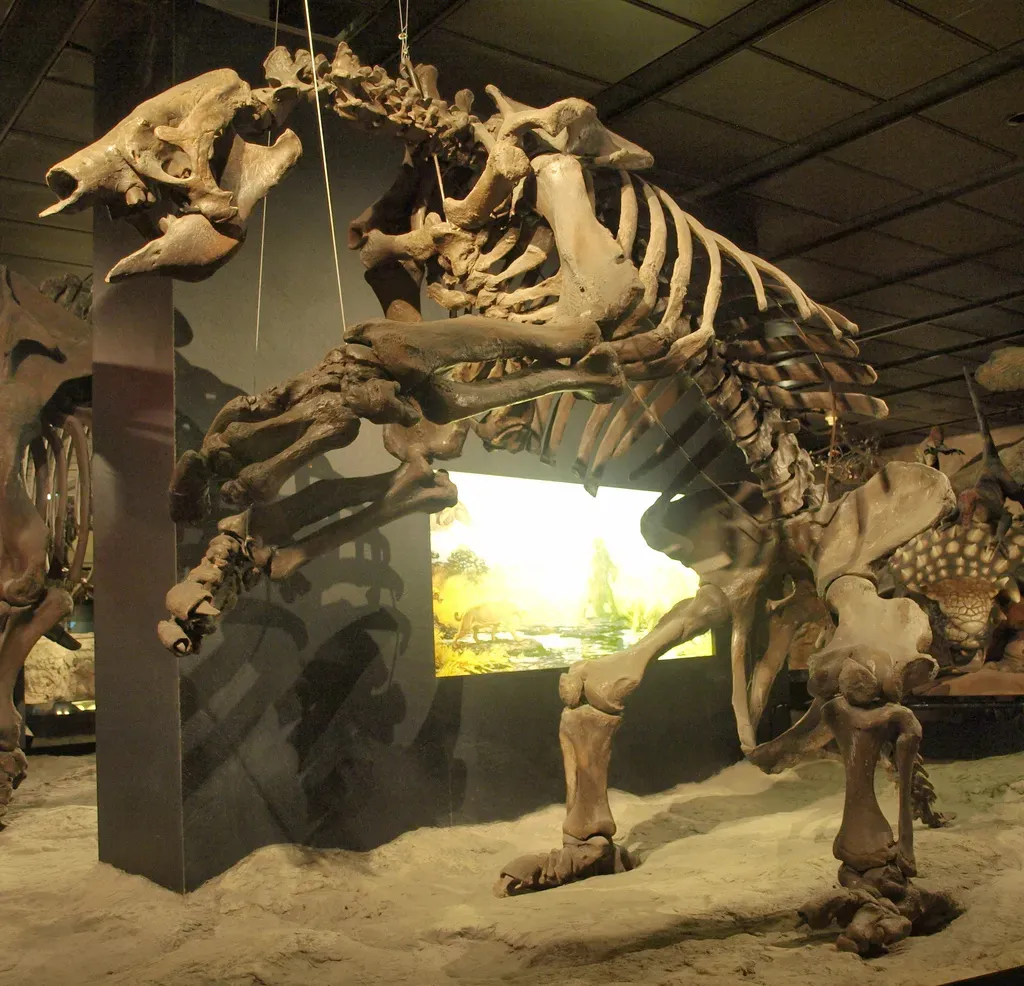
The most imposing aspect of these sloths, aside from their great size, were their long claws. Modern tree sloths use claws for climbing, but ground sloths were much too large to use their claws in the same fashion. Instead, those massive claws served a completely different set of purposes. The hind limbs allowed them to rear up into a semi-erect position to feed on tree leaves, and the forelimbs had three highly developed claws that were probably used to strip leaves and tear off branches.
Here’s something even more remarkable. A strange anatomical feature of some ground sloths was the presence of dermal ossicles, small nodules of bone which formed in the skin, under the fur. Found frequently in reptiles, these ossicles are extremely rare in mammals. In modern mammals, similar structures are only seen in armadillos. Think of it as a built-in suit of armor, hidden beneath fur and thick hide. These ossicles across the shoulders, neck and back must have functioned like a coat of armor, adding an extra layer of protection to the thick skin and coarse hair covering the sloth’s body.
What Did They Eat? A Continent-Wide Buffet
Ground sloths are generally regarded as herbivores, with some being browsers, others grazers, and some intermediate between the two as mixed feeders, though a number of authors have argued that some ground sloths may have been omnivores. I think the sheer variety of their diets is one of the most underappreciated things about this group. These weren’t picky eaters. They figured out how to survive almost everywhere.
The Shasta ground sloth was an herbivore. From fossil dung, paleontologists were able to determine that they ate Joshua tree fruits, desert globemallow, cacti, and yucca, along with other desert plants. On the other hand, Megalonyx jeffersonii may have specialized in eating leaves and twigs from trees such as willow and other trees of moist habitats. Megalonyx weighed nearly a ton, about the size of a bison. Different species had carved out completely different ecological niches, which is exactly how you dominate a continent.
Where They Roamed: From Alaska to the Desert Southwest
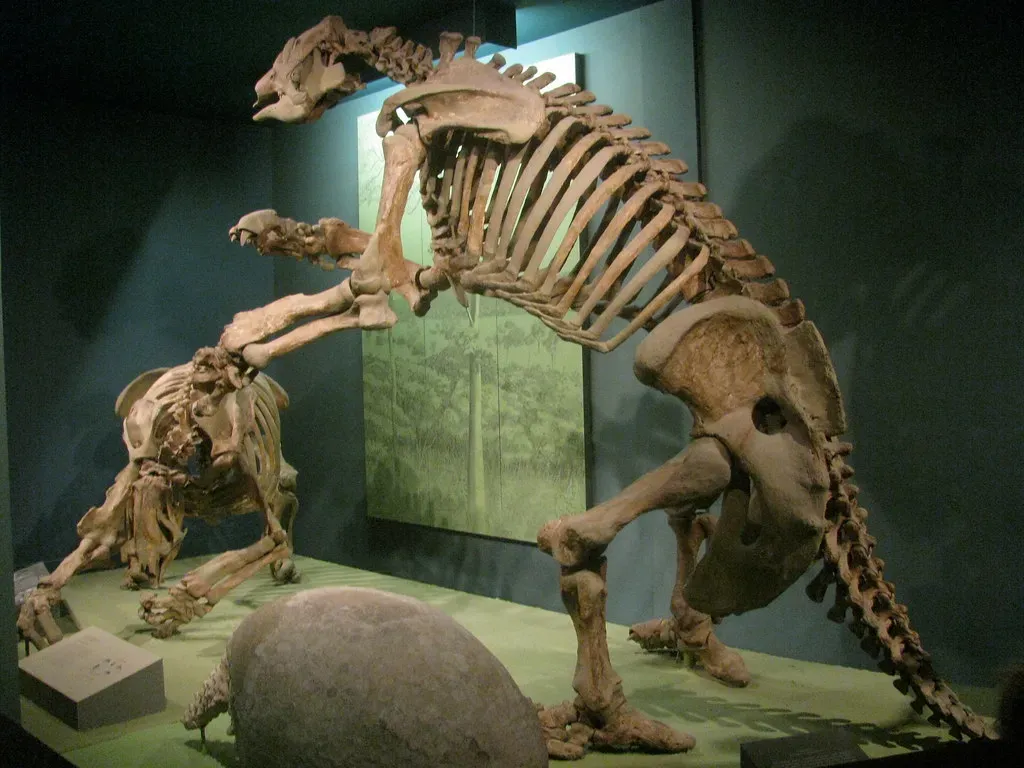
Megalonyx fossils have been recovered from about 150 sites across North America. Some have been found as far north as Alaska and the Northwest Territories of Canada. They have also been found in California, Arizona, and New Mexico, as well as northern Mexico. That’s an extraordinary range. You’re talking about a single species showing up in both Arctic-adjacent tundra and sun-baked desert terrain.
And the evidence they left behind isn’t just bones. Partial mummified ground sloths have been found in desert caves in Arizona and New Mexico, including a cave in Grand Canyon National Park that was full of Shasta Ground Sloth dung. Meanwhile, larger sloths weren’t restricted to pre-existing caves. Using claws among the largest of any known mammal, living or extinct, they could carve their own from bare earth and rock. Many of the caves they left behind are still around with claw-mark décor along the interior walls. Honestly, stumbling upon one of those caves today would send chills down your spine.
Thomas Jefferson and the Fossil That Sparked American Paleontology
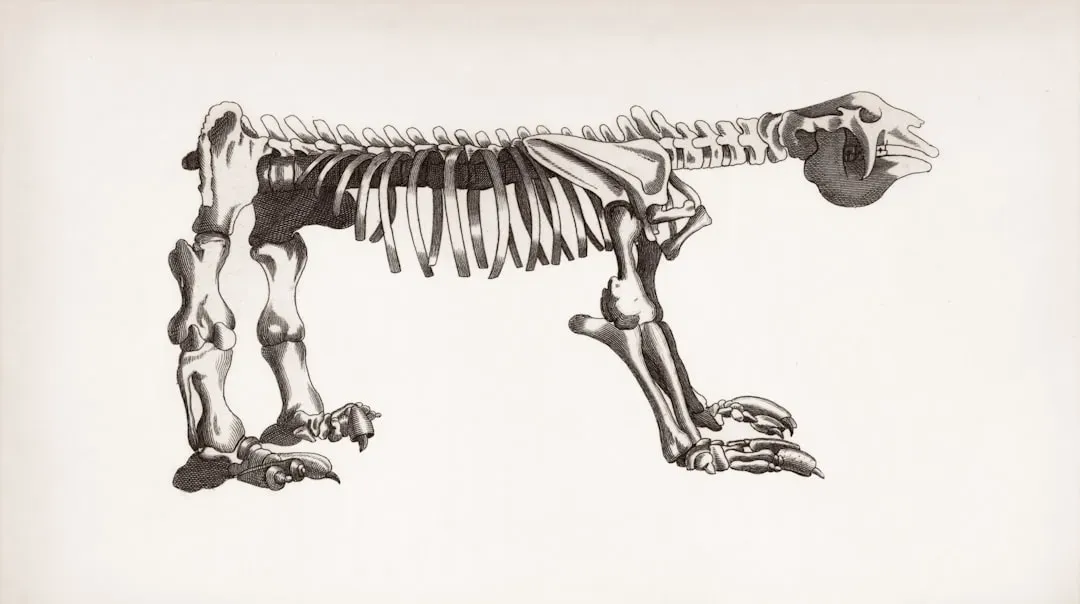
Here’s a fact that never gets old: one of the founding fathers of the United States played a key role in introducing giant ground sloths to the scientific world. A friend had sent Jefferson some bones found in a cave in West Virginia. Jefferson first thought the bones belonged to a large lion and called it the “Great Claw,” or Megalonyx. In 1797, as he was preparing a paper on the find for the American Philosophical Society, he saw an engraving of a sloth skeleton and realized his classification was wrong.
Jefferson’s ground sloth has a special place in modern paleontology, for Thomas Jefferson’s letter on Megalonyx, read before the American Philosophical Society of Philadelphia in August 1796, marked the beginning of vertebrate paleontology in North America. It gets even more fascinating. Following the Louisiana Purchase in 1803, Jefferson commissioned Meriwether Lewis and William Clark to lead an expedition to explore the Louisiana Territory. They were also instructed to return with evidence of live mastodons and giant ground sloths. Jefferson genuinely believed these animals might still be out there somewhere. He was wrong, but you can’t blame him for hoping.
The Great Disappearance: What Wiped Them Out?
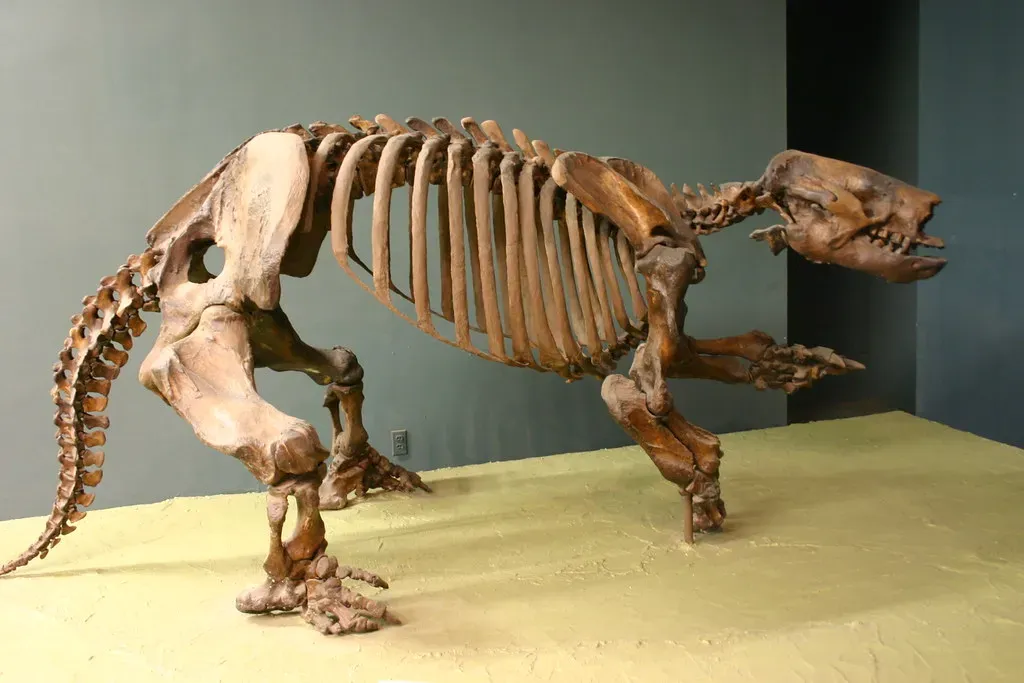
About 15,000 years ago, as Homo sapiens expanded into the Americas, large ground sloths began to disappear. By 12,000 years ago, they were gone from the mainland. The timing is hard to ignore. It’s one of those historical coincidences that doesn’t really feel like a coincidence at all. Their extinction has been posited to be the result of hunting by recently arrived humans and climate change. A number of known kill sites, where ground sloths were butchered by humans, date to just prior to their extinction.
In northern Ohio, a Megalonyx jeffersonii skeleton dubbed the “Firelands Ground Sloth” has cut marks indicative of butchery, dating to 13,738 to 13,435 years before present. Yet the story has one last, almost poetic twist. The Caribbean ground sloths, the most recent survivors, lived on Cuba and Hispaniola, possibly until 1550 BCE. Radiocarbon dating suggests an age of between 2819 and 2660 BCE for the last occurrence in Cuba. They survived 5,000 to 6,000 years longer in the Caribbean than on the American mainland, which correlates with the later colonization of this area by humans. The pattern speaks for itself.
Conclusion: Ghosts of a Vanished World
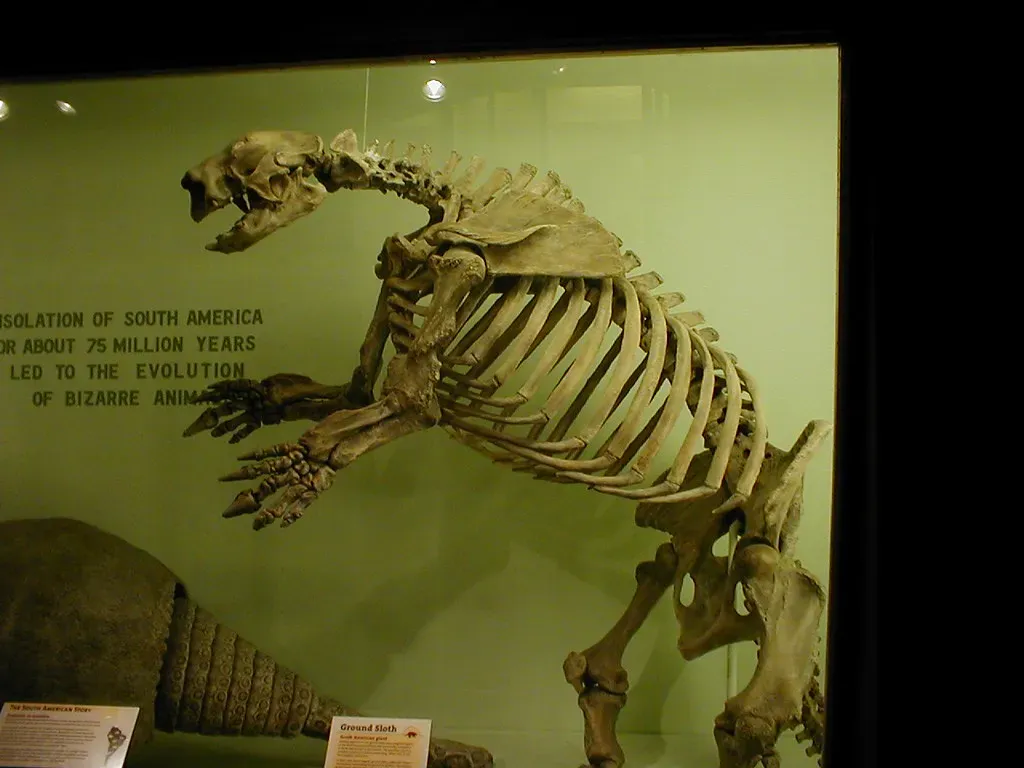
Giant ground sloths weren’t a footnote in the story of North America. They were one of its longest-running, most successful chapters. For tens of millions of years, they adapted, migrated, diversified, and thrived across nearly every landscape this continent had to offer. They carved their presence into cave walls. They left their dung in desert hollows. They shaped entire ecosystems simply by existing.
Despite surviving for tens of millions of years of natural change, they could not withstand the rapid, disruptive forces brought about by humans: hunting, habitat alteration, and ecosystem destabilization. There’s a lesson buried in that. A creature that outlasted ice ages, volcanic eruptions, and continental shifts was ultimately undone in a geological blink of an eye. The heyday of sloths is over, but they’re not finished yet. There are two remaining species of sloth, and if cared for correctly, they may survive and diversify.
The next time you see a photo of a tiny, sleepy tree sloth hanging lazily from a branch, spare a thought for its ancient ancestors that once shook the ground beneath their feet across an entire continent. What do you think it would have felt like to stand face to face with one? Tell us in the comments.