North America holds secrets that most people never hear about. Beneath its soil, inside its caves, resting at the bottom of its lakes, and buried under centuries of forgotten sand dunes lies a story far older and far richer than most history books dare to tell. These are not distant myths. These are real artifacts, discovered by real people, often by remarkable accident, and each one rewritten what we thought we knew about this continent.
If you think ancient history belongs only to Egypt, Rome, or Mesopotamia, prepare to think again. From a farmer spotting bones in a groundhog hole, to a scuba diver stumbling upon a carved tree trunk under a frozen lake, the story of North America’s deep past is stranger, older, and more captivating than you might imagine. Let’s dive in.
1. The Prehistoric Tools of Cooper’s Ferry, Idaho: Rewriting the Arrival of Humans
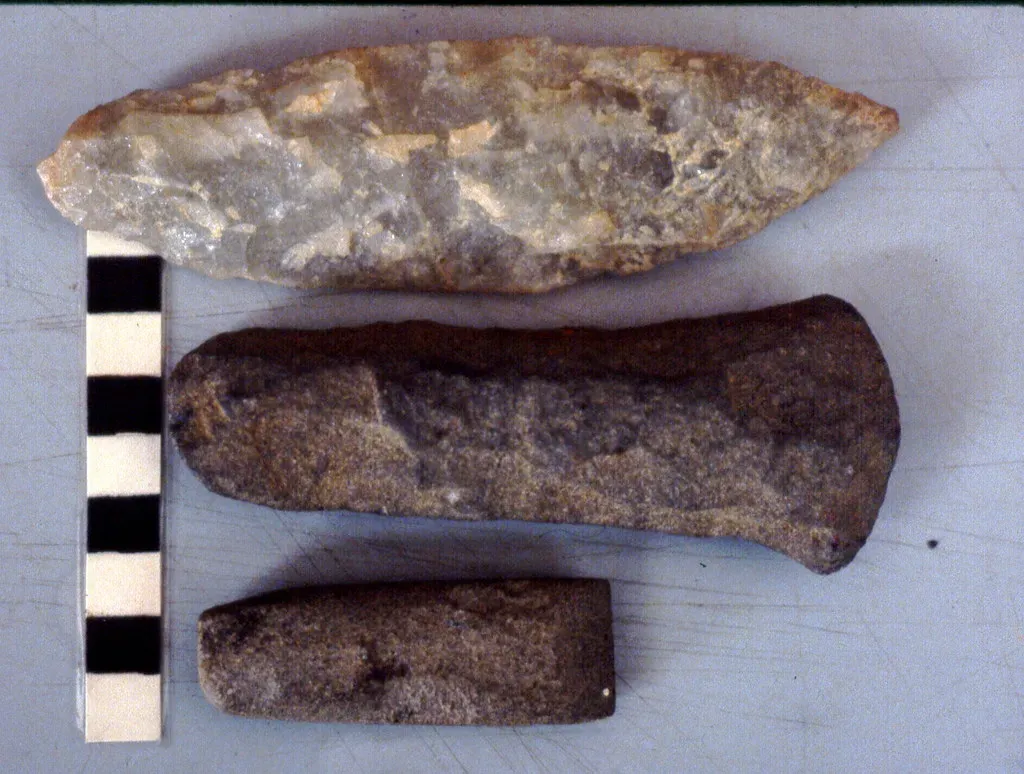
Ancient human artifacts found in a remote corner of northwestern Idaho have delivered a major blow to the long-held theory that North America’s first humans arrived by crossing a land bridge from Asia. The artifacts have been dated to as far back as 16,500 years ago, making them the oldest radiocarbon-dated evidence of humans in North America. That’s a number worth sitting with for a moment. Long before the pyramids, long before Stonehenge, people were living, cooking, and making tools in Idaho.
Over ten years of excavations, the Cooper’s Ferry team uncovered dozens of stone spear points, blades, and multipurpose tools called bifaces, as well as hundreds of pieces of debris from their manufacture. The spear points unearthed here are roughly 15,700 years old, making them 3,000 years older than the Clovis points found throughout North America. Their similarity to points found in Hokkaido, Japan, dating back 16,000 to 20,000 years, supports the idea of early genetic and cultural connections between the ice age peoples of Northeast Asia and North America. Honestly, it’s one of the most mind-bending connections in all of North American archaeology.
2. Meadowcroft Rockshelter, Pennsylvania: The Accidental Discovery That Changed Everything
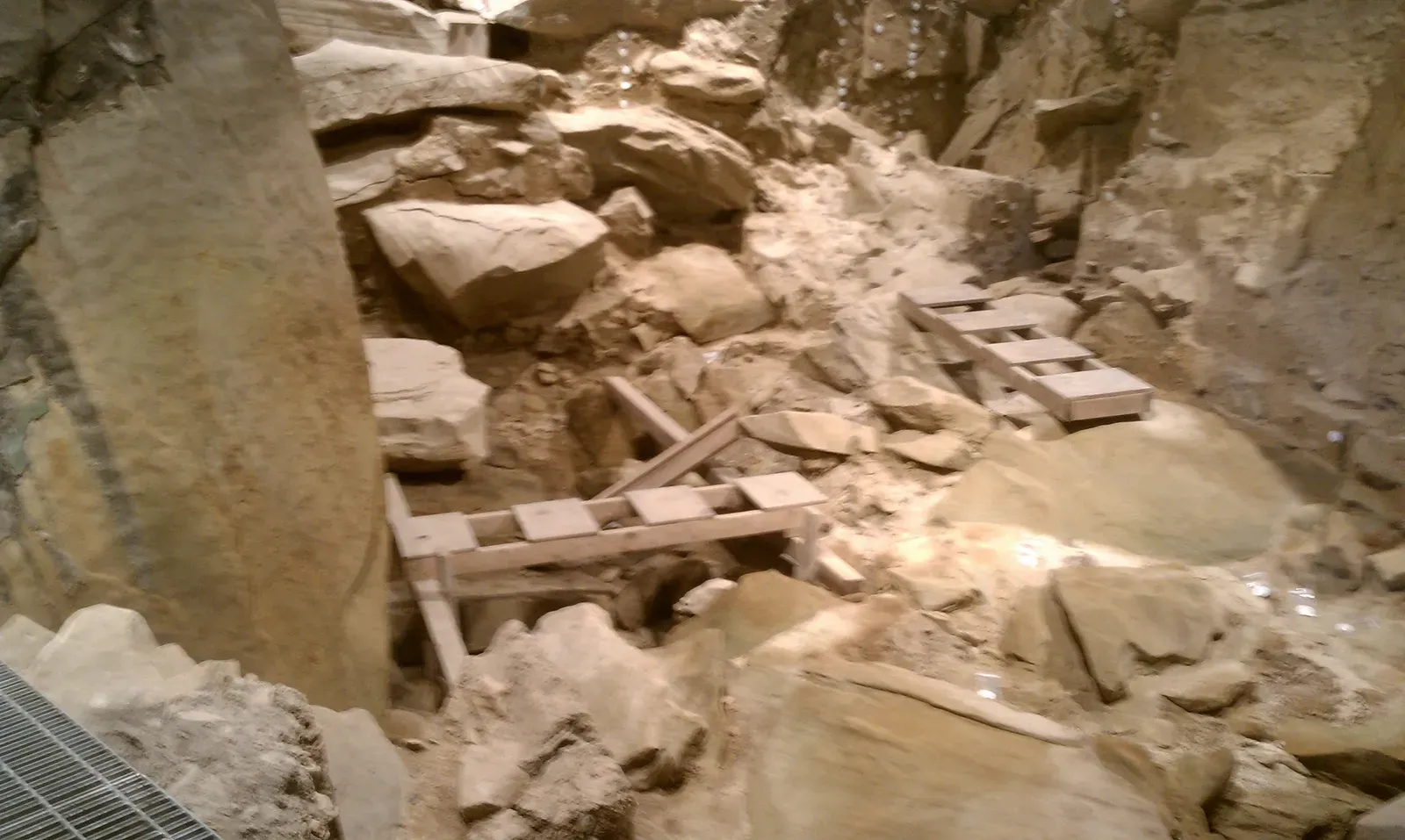
In 1955, Albert Miller stumbled upon a groundhog hole on his family’s farm in Avella, Pennsylvania, and uncovered what looked to be a prehistoric tool. Miller chose to cover up the hole and carefully search for a professional archaeologist who could properly assess the historical significance of the site. Almost two decades later in 1973, Miller finally connected with University of Pittsburgh anthropology professor Dr. James Adovasio. What happened next genuinely shocked the scientific world.
The Meadowcroft Rockshelter is located near Avella in Jefferson Township, Pennsylvania. The site is a rock shelter in a bluff overlooking Cross Creek and contains evidence that the area may have been continually inhabited for at least 16,000 years and up to 19,000 years. The site has yielded many tools, including pottery, bifaces, bifacial fragments, lamellar blades, a lanceolate projectile point, and chipping debris. Remains of flint from Ohio, jasper from eastern Pennsylvania, and marine shells from the Atlantic coast suggest that the people inhabiting the area were mobile and involved in long-distance trade. Let’s be real, that’s an ancient trade network that would impress even modern logistics companies.
3. The Poverty Point Clay Balls and Artifacts, Louisiana: Engineering Before Its Time
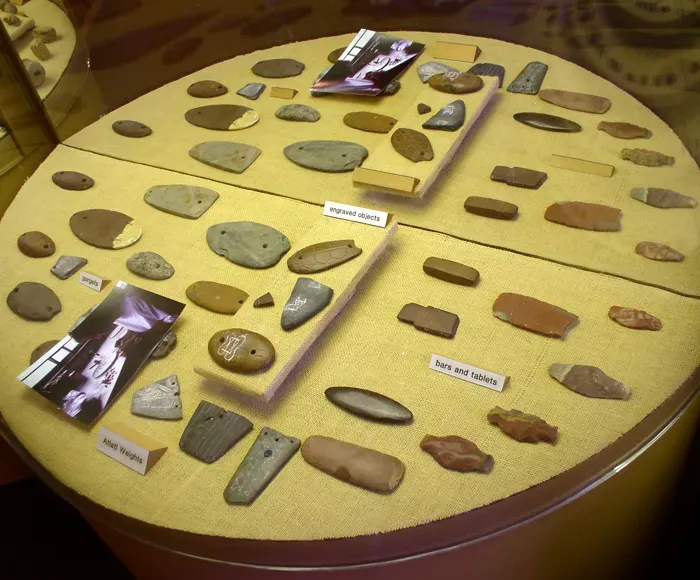
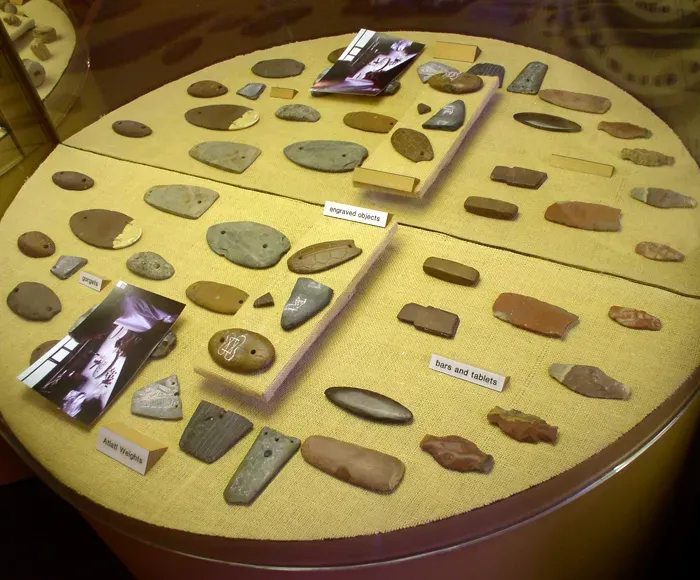
The Poverty Point site contains earthen ridges and mounds, built by indigenous people between 1700 and 1100 BCE during the Late Archaic period in North America. The Poverty Point culture in northeastern Louisiana flourished at the same time as the Minoan civilization, the rise in Babylon of the law-giving King Hammurabi, and the rule of Akhenaton and Queen Nefertiti in Egypt. Think about that parallel for a second. While ancient Egypt was at its height, people in Louisiana were building massive earthworks by hand.
Among the most curious artifacts found here are small, hand-formed clay balls that were used to cook food. These were placed in a hole, and a fire was built to heat them. When the fire died down, raw meat or fish was added, and the hole was covered with dirt to cook the meat. Other native cultures used rocks for the same purpose, but at Poverty Point, where stones were costly to obtain, prehistoric cooks found an ingenious workaround. Intricate owl designs carved from red jasper stone and ceramic human figurines are particular to this place, telling us that art was important to these ancient people, and the images may have held spiritual significance.
4. The Ancient Dugout Canoe of Lake Mendota, Wisconsin: A 3,000-Year-Old Boat
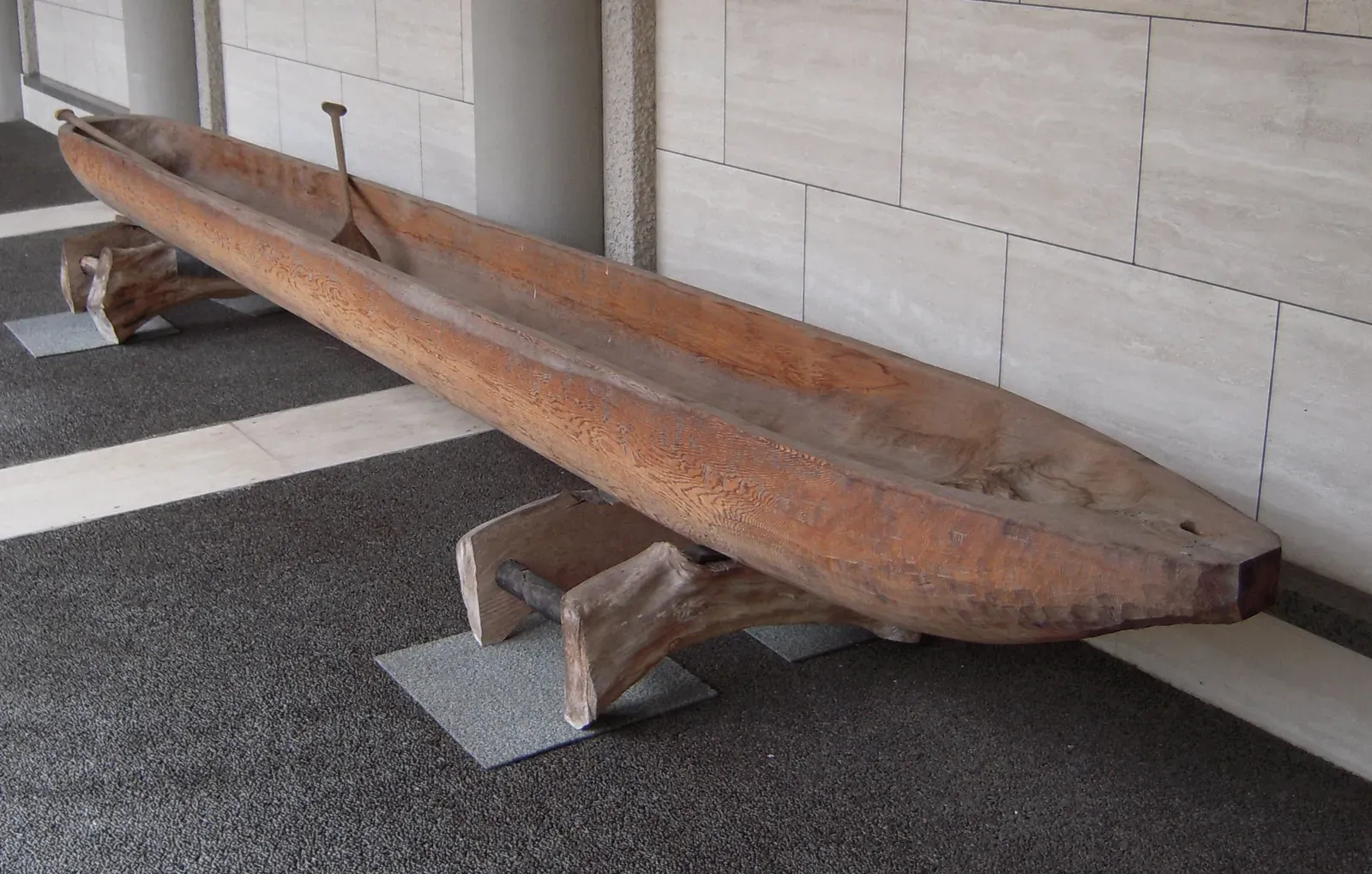
In May 2022, a scuba diving instructor stumbled across a carved tree trunk at the bottom of Lake Mendota. Thanks to a similar find the previous year, remarkably by the same person, maritime archaeologists quickly confirmed that it was a dugout canoe, a boat carved from a single piece of oak. They carefully raised it from the lake’s sandy bottom and set about conserving the waterlogged wood. You couldn’t script a more unlikely discovery story if you tried.
Radiocarbon dating indicates that the craft was built around 1000 BC, making it the oldest ever found in the Great Lakes region by more than 1,000 years. In 2024, divers discovered pieces of at least eleven 4,500-year-old ancient canoes dating back to 2500 BCE. These canoes were found in the area of the Ho-Chunk Nation’s ancestral territory, leading archaeologists to believe that the ancestors of modern-day Indigenous people built them. The canoes were likely stored in the lake to prevent freezing and warping during the winter but became buried over time. A fleet of ancient vessels resting silently on a lake floor for thousands of years. Remarkable doesn’t quite cover it.
5. The 13,000-Year-Old Needle Fragments of Wyoming: The Oldest Tailoring Evidence
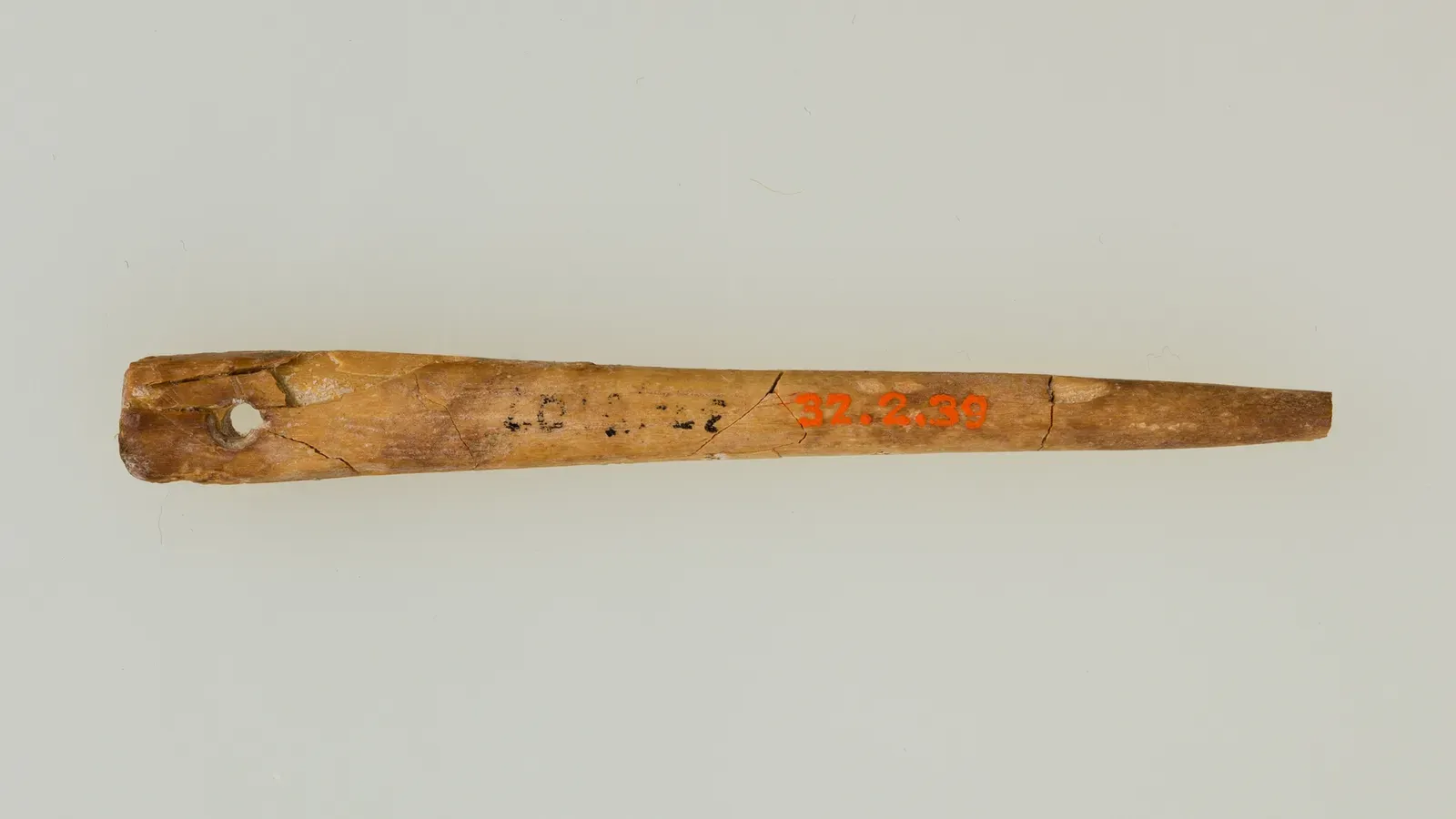
A collection of 32 prehistoric needle fragments dating back 13,000 years were unearthed in Wyoming between 2015 and 2022. The discovery of these tiny artifacts, now held at the University of Wyoming, provides strong evidence of the earliest tailored garment production. Tiny as they are, these fragments carry enormous implications. We’re talking about evidence that ancient North Americans weren’t just surviving, they were crafting fitted clothing with real skill and intention.
These garments, warmer and more robust than simple draped fabrics, enabled modern humans to travel to northern latitudes and eventually colonize the Americas. A 2024 study found that they were made from the limbs and paw bones of small mammals such as red foxes, bobcats, hares, rabbits, and the now-extinct American cheetah. Here’s the thing, it’s hard to say for sure what everyday life looked like back then, but these needles are as intimate as artifacts get. They tell you someone sat down, focused, and made something to wear. That’s deeply human.
6. The White Sands Footprints, New Mexico: The Oldest Known Human Presence in North America
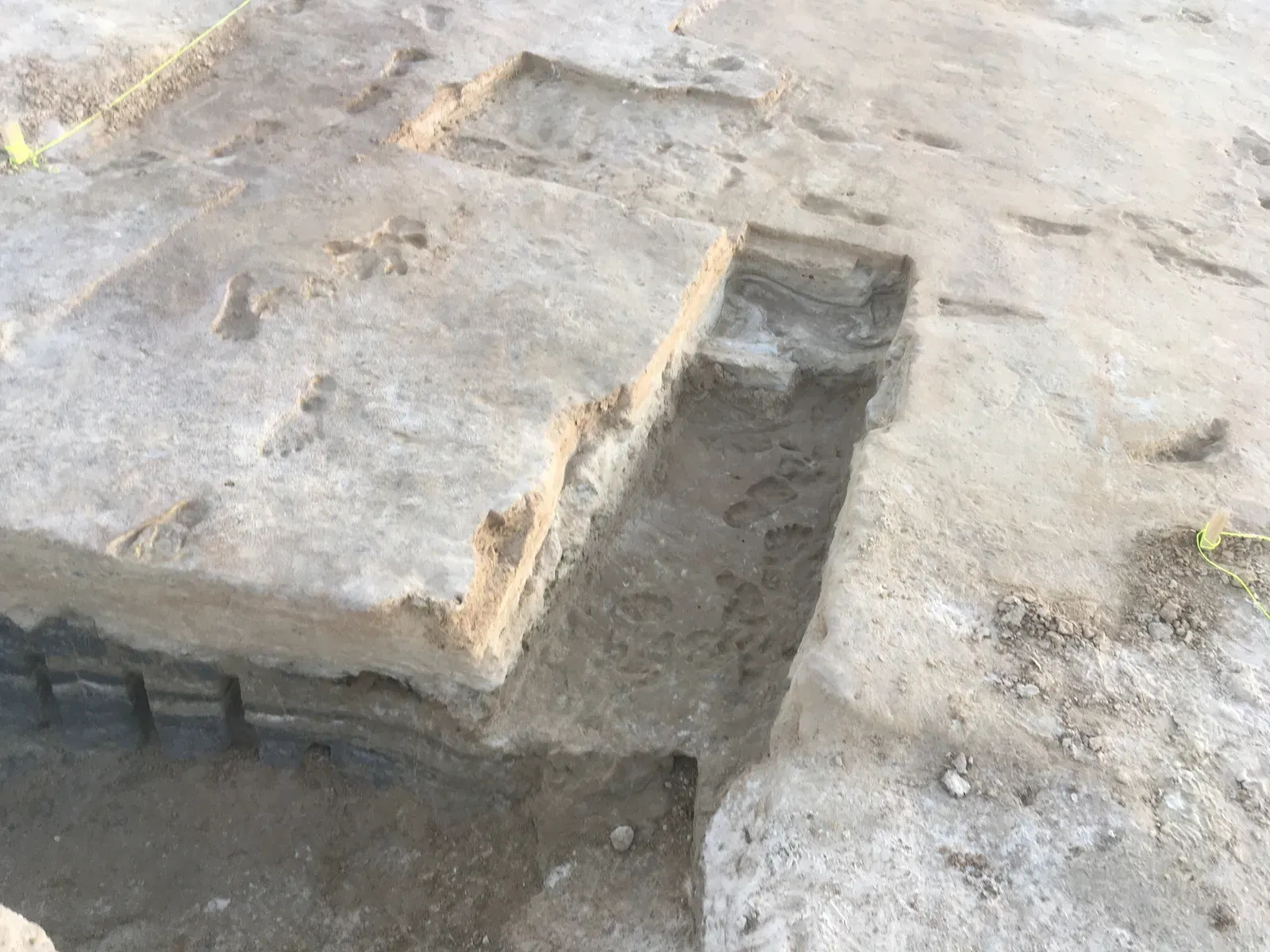
In 2021, scientists reported finding 61 fossilized footprints preserved in ancient lake sediment at White Sands National Park in New Mexico. These footprints, estimated to be between 21,000 and 23,000 years old, are the oldest known evidence of human presence in North America. The footprints, mostly belonging to teenagers and children, tell the story of how early North American inhabitants lived. Imagine standing where a child stood 23,000 years ago, staring out at what was once a vast inland lake.
Based on the presence of more footprints from teenagers, scientists believe that they were responsible for fetching supplies while the adults performed more skilled tasks. Scientists also suspect early North American children made more footprints than adults simply from playing. A recent 2025 study also dated the footprints to around 21,000 BC. There is something almost overwhelming about that image. Ancient children running and playing by a lake that no longer exists, their footsteps still pressed into the earth for us to find millennia later.
7. The Kennewick Man Skeleton, Washington: 9,000 Years of Controversy
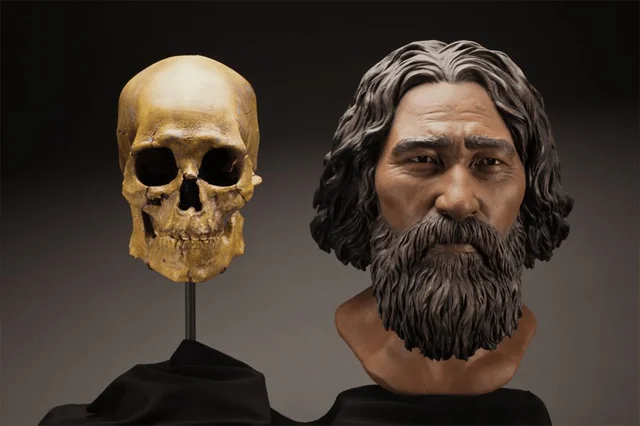
Kennewick Man, unearthed in Washington, is one of the most complete ancient skeletons found in North America, dating back 9,000 years. Dubbed “The Ancient One,” his discovery sparked significant legal and scientific debates over ancestry and the rights of indigenous peoples. DNA analysis eventually confirmed his Native American heritage, reinforcing deep ties to the continent’s past. Few artifacts in North American history have generated as much debate, emotion, and legal drama as these bones.
Considered the most significant human remains found in the United States, Kennewick Man is a skeleton excavated in 1996. The remarkably well-preserved bones date back over 9,000 years. Sparking hot debate between scientists and Native American tribes about the ownership of the remains, the Kennewick Man was the subject of a legal battle that ultimately favored the scientists. Since the discovery was first made, it has proven invaluable for the analysis of the origins and migration of early humans in North America. I think this case captures something much bigger than archaeology alone. It forces us to ask whose history we’re really studying, and who gets to tell it.
Conclusion: The Ground Beneath Your Feet Has Stories to Tell
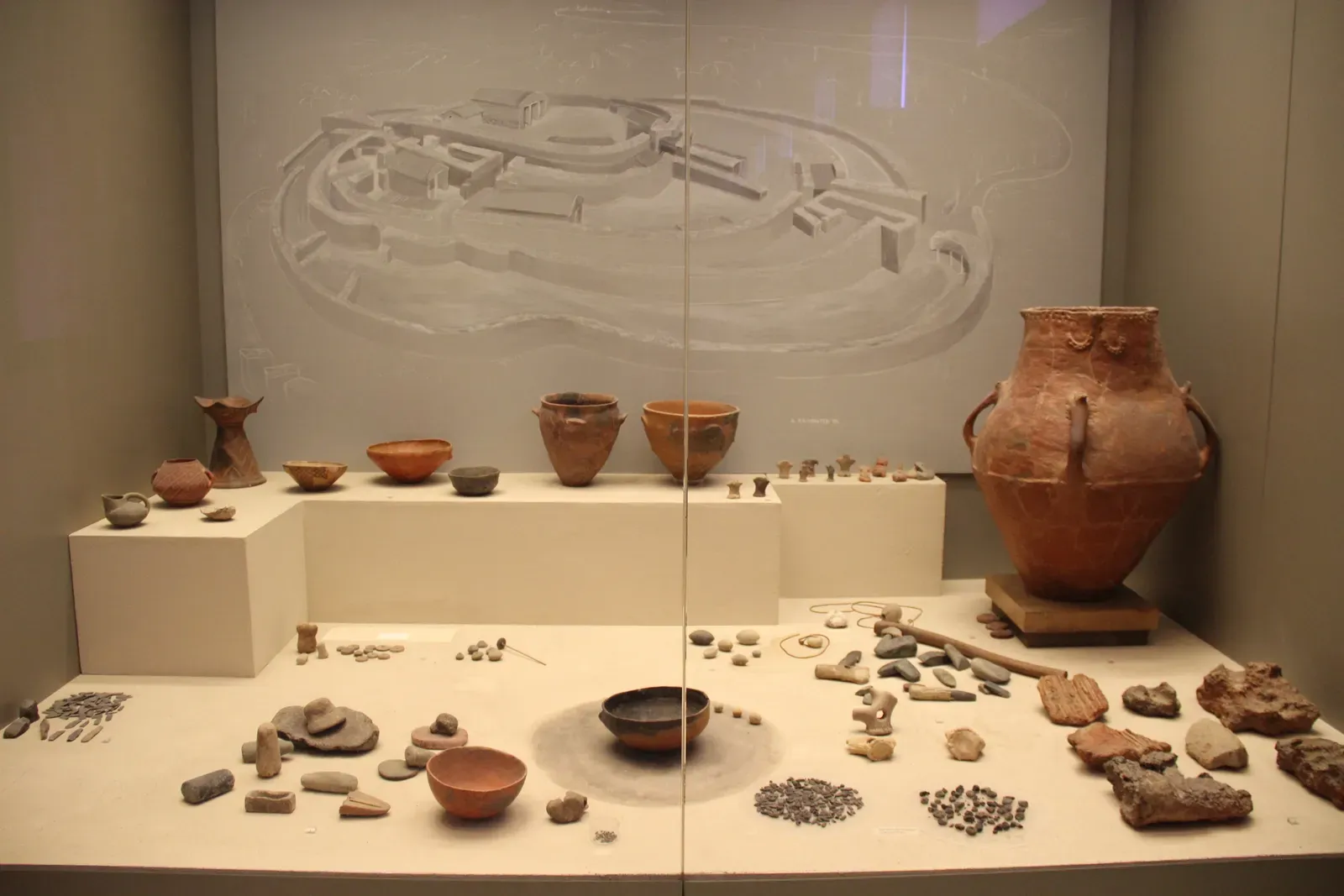
North America’s ancient past is not buried in some far-off, inaccessible ruin. It is beneath the lakes people sail on, under the sand dunes people drive past, and inside the hillside caves that farmers walk by every day. What makes these seven discoveries so gripping is how utterly ordinary the moments of their finding were. A groundhog hole. A scuba dive. A hiking trail. A child playing thousands of years ago.
Each artifact forces a reconsideration of what this continent once was, how long humans have truly been here, and how sophisticated, creative, and deeply connected those early people really were. The more archaeologists dig, the more the old, tidy story of North American history unravels and is replaced by something far more layered and astonishing. The question is no longer whether there is more to discover. The real question is, what still lies waiting just beneath the surface?
What do you think would be the most stunning discovery yet to be unearthed? Share your thoughts in the comments below.