The story of how North America came to be populated is one of the most dramatic and debated chapters in all of human history. Think about it – entire civilizations, languages, and ways of life trace their roots back to a handful of bold, ancient movements across ice, ocean, and vast wilderness. These weren’t planned expeditions. They were driven by survival, curiosity, and the same restless human impulse that still pushes us to explore the unknown today.
What you may not realize is just how layered and complex this story has become. New genetic tools, ancient DNA research, and surprising archaeological discoveries have overturned almost everything we once thought we knew. The neat, tidy textbook version barely scratches the surface. Let’s dive in.
The Beringian Crossing: The Original Journey That Started It All
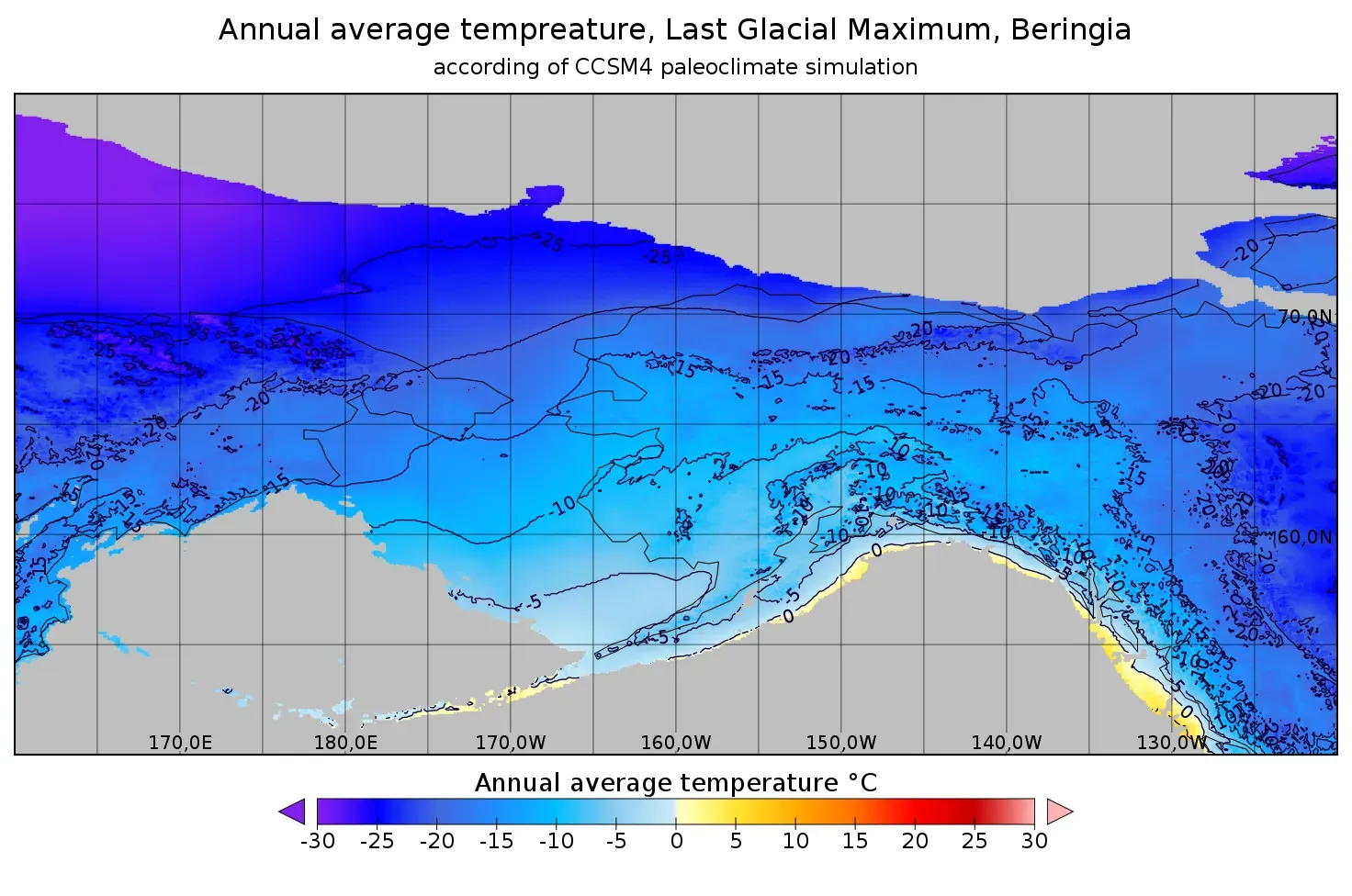
If you had to point to one event that set everything else in motion, this would be it. The Bering Strait migrations refer to the ancient movement of peoples from Siberia into North America across the land bridge known as Beringia, which emerged during periods of glacial advance. It was not a narrow footbridge. At various times, it formed a land bridge up to 1,000 km wide at its greatest extent, covering an area as large as British Columbia and Alberta together, totaling about 1.6 million square kilometers, allowing biological dispersal to occur between Asia and North America.
During the last ice age, which peaked around 19,000 BCE and ended around 8,700 BCE, global sea levels were up to 100 meters lower than they are today because colder temperatures resulted in large amounts of water becoming frozen in glaciers, and the Bering Land Bridge existed during this time of low sea levels. People did not simply decide to cross into a new world. Beringia featured a tundra-like climate and supported a variety of migratory Pleistocene animals, such as mammoths and reindeer, which attracted nomadic peoples from northeast Asia. They were, in essence, following their food supply.
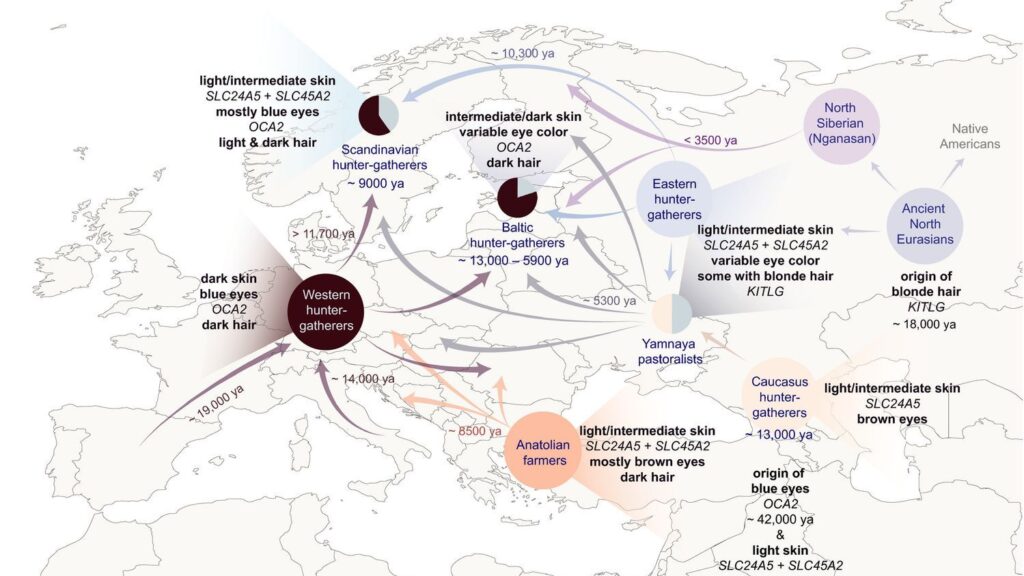
The Ancestral Native American lineage was estimated as having been formed between 20,000 and 25,000 years ago by a mixture of East Asian and Ancient North Eurasian lineages, consistent with the model of the peopling of the Americas via Beringia during the Last Glacial Maximum. Honestly, it is staggering to imagine a small group of people unknowingly founding an entire continent’s worth of civilizations. This early movement is significant as it lays the groundwork for understanding the ancestry of Native American tribes and their diverse cultural heritages, shaped by thousands of years of adaptation and resilience.
The Clovis People: North America’s First Recognizable Culture
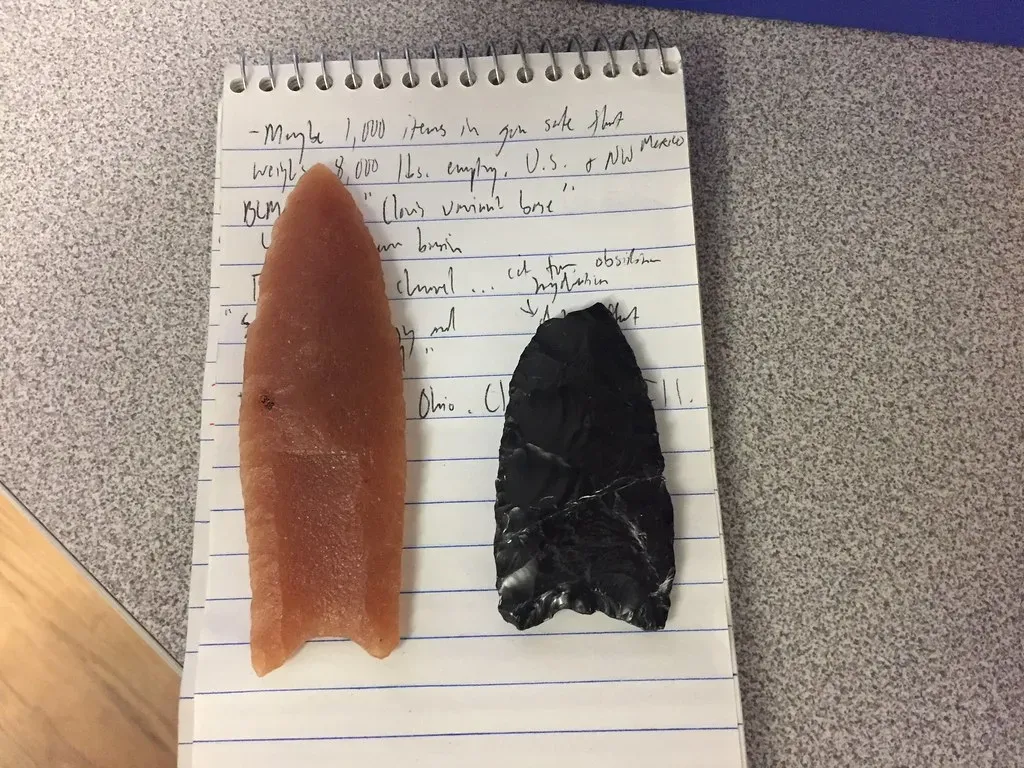
Here is where things get really fascinating. For decades, you would have been taught that the Clovis people were the undisputed first Americans. The Clovis people, with their finely crafted spear points, were long considered the first Americans, arriving around 13,000 years ago and spreading rapidly across the continent. Their sudden appearance, advanced hunting tools, and association with the bones of mammoths and mastodons made them seem like the undisputed pioneers. It was a satisfying story. Too satisfying, as it turns out.
The Clovis First theory refers to the hypothesis that the Clovis culture represents the earliest human presence in the Americas about 13,000 years ago. Evidence of pre-Clovis cultures has since accumulated and pushed back the possible date of the first peopling of the Americas. The Clovis migration itself still matters enormously, though. Their journey was made possible, according to archaeologists far and wide, by a corridor that had opened up between giant ice sheets covering what is now Alaska and Alberta. Thus did the Clovis people move down through the North American continent, carrying their distinctive tools to various sites in the Plains States and the Southwest and then moving eastward.
Characterized by their distinctively fluted projectile points, Clovis artifacts date back to approximately 13,500 to 12,800 years ago. The cultural fingerprint they left behind is unmistakable. Think of Clovis technology like a smartphone operating system. Once it existed, it spread fast and far. As these groups spread out across the continent, they adapted to various environments, leading to the development of distinct cultures and societies. This included different hunting techniques, tool-making practices, and social structures.
The Pacific Coastal Route: The Kelp Highway That Rewrote History
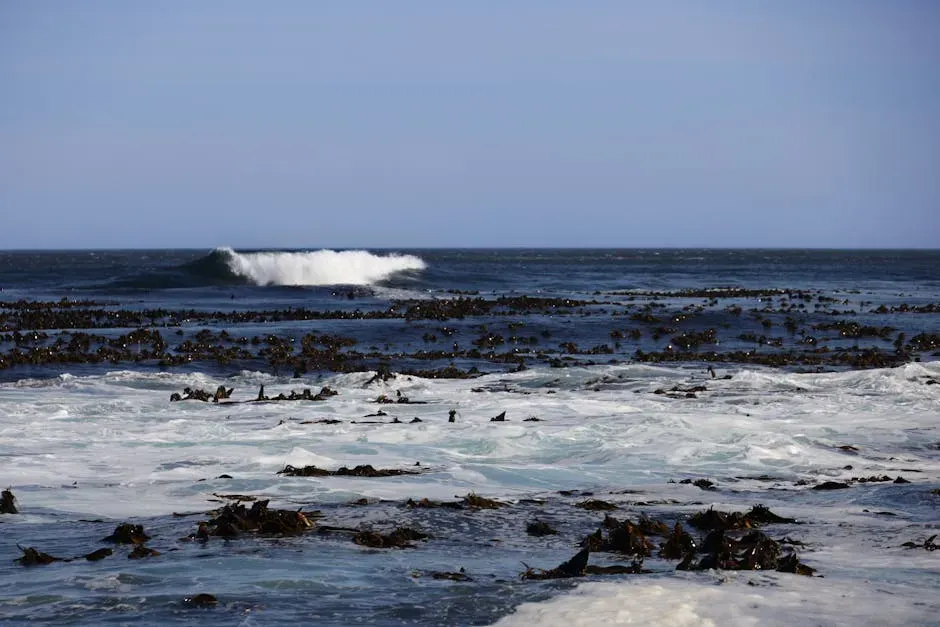
Let’s be real. This is the migration story that completely blew up the old textbooks. In recent decades, archaeologists have uncovered strong evidence that the earliest migrations from Siberia took place when Asian explorers in small boats skirted the Pacific Coast as they moved south. Glaciers and ice fields that developed during the Pleistocene era still blocked overland routes through the center of the North American continent, but beginning roughly 17,000 years ago, melting glaciers along the Pacific Coast opened a marine route for migration.
By providing a linear corridor entirely at sea level that was filled with enormous quantities of edible fish, shellfish, marine mammals, birds, and seaweed, the richness of these environments allowed a rapid dispersal for ancient people in boats. This route is now known as the Kelp Highway. Along North America’s west coast, “Western Stemmed Points,” distinct stone tools dating back 16,000 years, appear before the inland Clovis culture and resemble tools from Northeast Asia, suggesting a Pacific connection. You can picture it like an ancient coastal freeway, fully stocked with food at every stop.
Pre-Clovis occupation sites have been found from Vancouver Island in Canada to northern California, offshore from southern California in the Channel Islands, in Baja California, and coastal Peru and Chile. The most dramatic of these finds is at Monte Verde, Chile. The Monte Verde site has become accepted as the earliest settlement in South America, dating to at least 14,500 years ago. This is believed to indicate migration through northern coastal regions before that date, and the Monte Verde site produced the remains of nine types of seaweeds, including kelp. If people were that far south that early, the coastal route almost certainly played a major role in populating North America too.
The Na-Dene Migration: A Second Wave That Reshaped the Interior
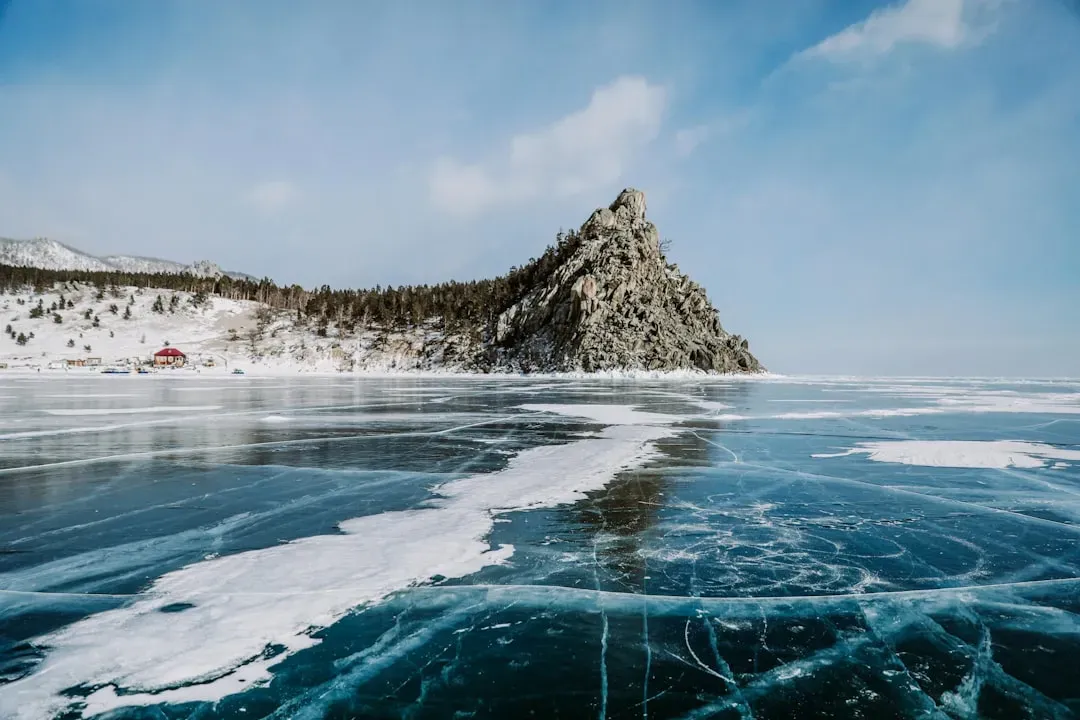
Most people know the “first wave” story, but far fewer are aware that a distinct second major migration brought an entirely different group of people into North America thousands of years later. About 9,000 years ago, a different group of people who probably had ancestry with groups that lived in the Lake Baikal area in Northeast Asia migrated into North America, the ancestors of the Na-Dene people. This dispersal expanded eastward into Alberta, Canada and southward along the British Columbia coast, eventually populating part of Southwest United States, today represented by groups such as the Apache and Navajo.
I think this is one of the most underappreciated chapters in North American prehistory. The Na-Dene migration did not just add more people. It added entirely new languages, technologies, and cultural structures to the continent. Na-Dene languages include the Tlingit, Eyak, and Northern and Southern Athabaskan languages, spoken across much of Alaska and northwestern Canada, with additional isolated Na-Dene languages spoken further south along the Pacific Coast and in southwestern North America.
Researchers were able to show that a substantial proportion of the genetic heritage of all ancient and modern American Arctic and Chukotkan populations comes from Paleo-Eskimos. This includes people speaking Eskimo-Aleut languages, such as the Yup’ik, Inuit, and Aleuts, and groups speaking Na-Dene languages, such as Athabaskan and Tlingit speakers, in Canada, Alaska, and the lower 48 states of the United States. The cultural ripple effects were enormous. The success of Paleo-Eskimos and Na-Dene in occupying territories previously populated by First Americans, in some cases moving very far from the original homeland in Alaska and northwestern Canada, might be partially attributed to archery, a technological advance lacking among the local populations.
The Paleo-Eskimo and Thule Migrations: The Arctic’s Epic Human Drama
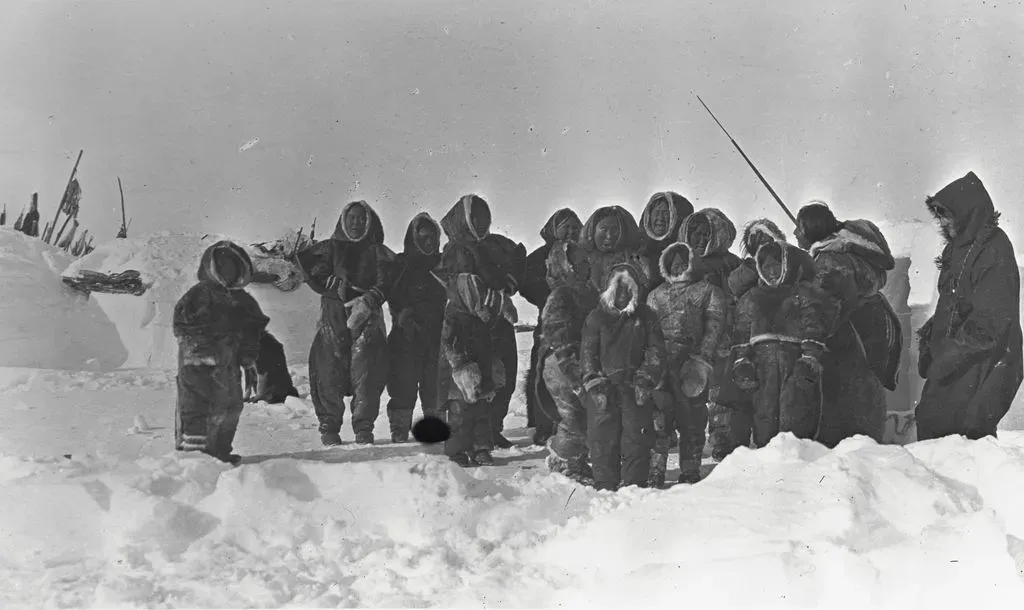
If you thought the earlier migrations were dramatic, the story of the Arctic is something else entirely. Based on the genome, scientists believe there was a distinct, separate migration of peoples from Siberia to North America some 5,500 years ago. They noted that this was independent of earlier migrations, whose descendants comprised the historic cultures of the Indigenous peoples of the Americas. By 4,500 years ago, descendants of this migration had reached Greenland. Think about that speed. From Alaska to Greenland in roughly a thousand years.
Archaeologists have found many distinct cultures in the New World Arctic’s past that belong to the Paleo-Eskimo tradition. First came the Saqqaqs, people who lived in tent camps and chased caribou and seals about 4,000 years ago. Succeeding them were the Dorsets, walrus hunters whose culture went through three distinct phases 2,800 years ago. Finally came the Thules, ancestors to modern Inuits, who sailed in large skin boats and hunted whales 1,000 years ago.
Then the Thule arrived and everything changed again. The whale-hunting Thules lived in large, well-organized villages and boasted advanced technologies such as dog sleds and sinew-backed bows. The Dorsets, on the other hand, lived in small villages of 20 to 30 people and hunted with chipped stone blades. What intrigues researchers most is why the Paleo-Eskimo lineage disappeared after the late Dorsets, around the same time that Neo-Eskimo Thules expanded rapidly to the Arctic. Archaeologists have found no evidence of violent conflict between the Thules and the Dorsets, but it would be hard to ignore the contrasts between the two groups. It is one of prehistory’s most haunting mysteries. An entire people, simply gone.
Conclusion: A Continent Built by Extraordinary Journeys
![Conclusion: A Continent Built by Extraordinary Journeys (Skin colour and vitamin D: An updateProvided under Creative Commons free license (p.1, with link to Attribution 4.0 International (CC BY 4.0) page)"This is an open access article under the terms of the Creative Commons Attribution License, which permits use, distribution and reproduction in any medium, provided the original work is properly cited. © 2020 The Authors. Experimental Dermatology published by John Wiley & Sons Ltd" [1], CC BY-SA 4.0)](https://nvmwebsites-budwg5g9avh3epea.z03.azurefd.net/dinoworld/5c0caa84ff9b200276143667595846ed.webp)
Provided under Creative Commons free license (p.1, with link to Attribution 4.0 International (CC BY 4.0) page)
“This is an open access article under the terms of the Creative Commons Attribution License, which permits use, distribution and reproduction in any medium, provided the original work is properly cited. © 2020 The Authors. Experimental Dermatology published by John Wiley & Sons Ltd” [1], CC BY-SA 4.0)
What you walk away with from all of this is not just a list of migrations. It is a profound sense of how dynamic, layered, and deeply human the story of North America truly is. DNA sequences acquired from a handful of ancient human remains found at archaeological sites in the Americas suggest that the peopling of the Americas is far more complex than a single population of Clovis people crossing Beringia some 13,000 years ago. Every Native culture, every ancient language, every tradition and ceremony has roots that stretch back through ice and ocean and time in ways that are only now coming into focus.
As the Ice Age ended and glaciers retreated, the landscapes of the Americas transformed. Grasslands gave way to forests, lakes formed, and animals adapted or went extinct. Megafauna like mammoths and saber-toothed cats disappeared, possibly due to a combination of climate change and human hunting. In this changing world, the descendants of the first Americans spread across the continent, developing distinct cultures. These were not passive survivors. They were bold, adaptive, and extraordinarily resilient human beings who shaped a continent through sheer determination.
It’s hard to say for sure just how many more secrets are still buried beneath rising seas or waiting in the permafrost. But every new discovery reminds us that the true history of North America is far older, far richer, and far more astonishing than any one theory could ever contain. Which of these five ancient migrations surprised you the most? Let us know in the comments.