Millions of years before a single human ever walked the Earth, the planet’s ecosystems were already locked in high-stakes dramas of pursuit, survival, and dominance. Ancient apex predators ruled landscapes and oceans with a ferocity we can only begin to imagine today. They were titans of their time. Yet what the fossil record keeps revealing, piece by painstaking piece, is that the story of these creatures is far stranger and more connected than anyone expected.
You might think of ancient predators as solitary rulers of isolated worlds, each supreme in its own era. The reality, it turns out, is far more entangled. The bones, bite marks, and buried evidence left behind tell a story of overlapping lives, shared ecosystems, and evolutionary relationships that are genuinely startling. Let’s dive in.
When the First Hunters Left Their Mark on History
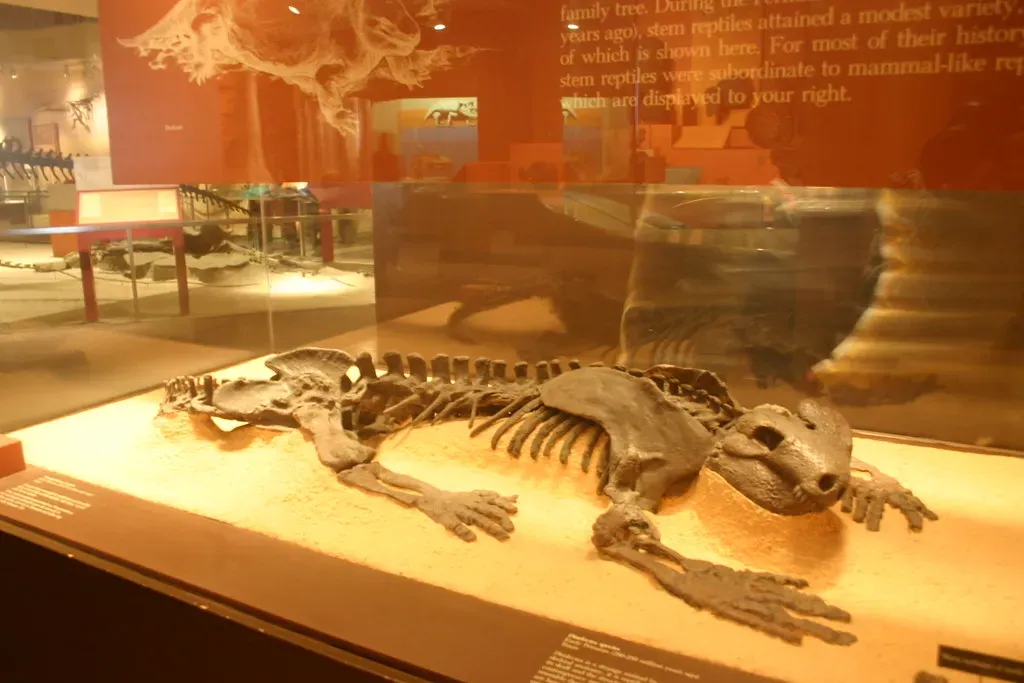
You could be forgiven for assuming that clear evidence of predator-prey relationships only begins with the dinosaurs. That assumption, it turns out, is completely wrong. Paleontologists at the University of Toronto Mississauga found dozens of tooth marks on the fossilized bones of three juveniles of Diadectes, one of the earliest large plant-eating vertebrates to walk on land, offering what researchers describe as the oldest direct evidence of predator-prey interactions between terrestrial carnivores and herbivores.
As the first terrestrial vertebrate herbivores, diadectids occupied a crucial eco-morphological space of the terrestrial community, serving as primary consumers able to orally process and consume high-fiber plants, a previously unexplored resource. Think of them as the original lawnmowers of a brand-new world. And where there are herbivores, predators always follow.
Although paleontologists long knew that apex predators stalked Permian landscapes, clear physical proof that they fed on the first large herbivores had been elusive. Unlike the Mesozoic Era, famous for dinosaur bite marks, the earlier fossil record had yielded little direct evidence of such encounters. This discovery blew that gap wide open.
Bite Marks Tell a Brutal and Surprisingly Intimate Story
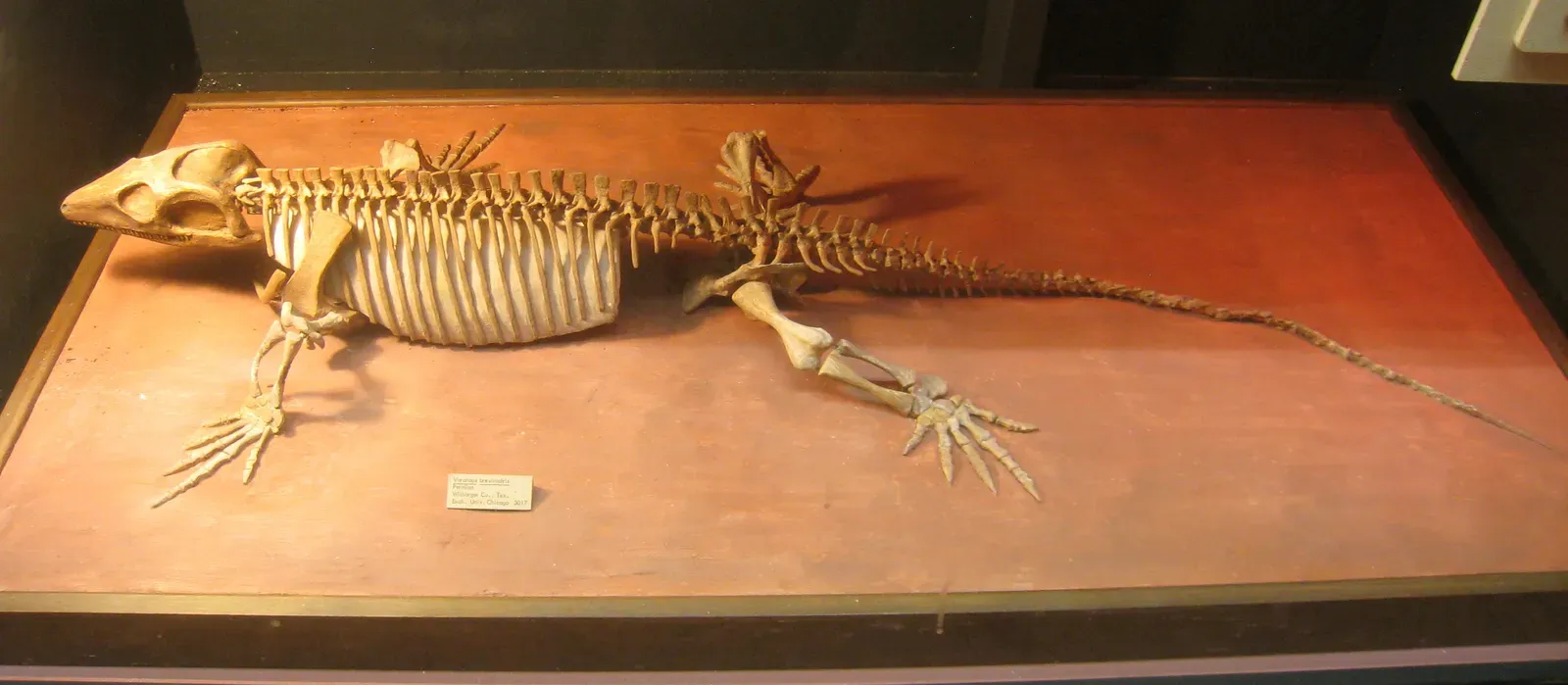
Here’s the thing about bite marks on ancient bones. They are not just evidence of feeding. They are, in a very real sense, a kind of prehistoric handshake between species, a record of interaction frozen in stone. The paleontologists documented five distinct kinds of damage on the bones, including shallow scoring, deeper pitting, furrows carved along shafts, conical punctures, and tiny boreholes, with many marks clustering around joints rich in cartilage, suggesting that predators were stripping muscle and prying into connective tissues.
The tooth marks indicate that feeding behavior included both muscle de-fleshing and scavenging on cartilage-rich joint areas, and the anatomy of those marks suggests various predators could have produced them, including the apex predators Varanops and Dimetrodon. That’s a fascinating detail. Multiple predators were likely feeding on the same prey, suggesting a shared hunting ground, perhaps even competition between different apex species for the same meal.
Some furrows run parallel to the long axis of the bones, consistent with a head-pulling motion as flesh was torn free. You can almost picture it, two early Permian predators circling the same carcass, reading each other’s movements, calculating risk. It was already a complex world.
Dimetrodon and the Hidden Sophistication of Early Apex Predators
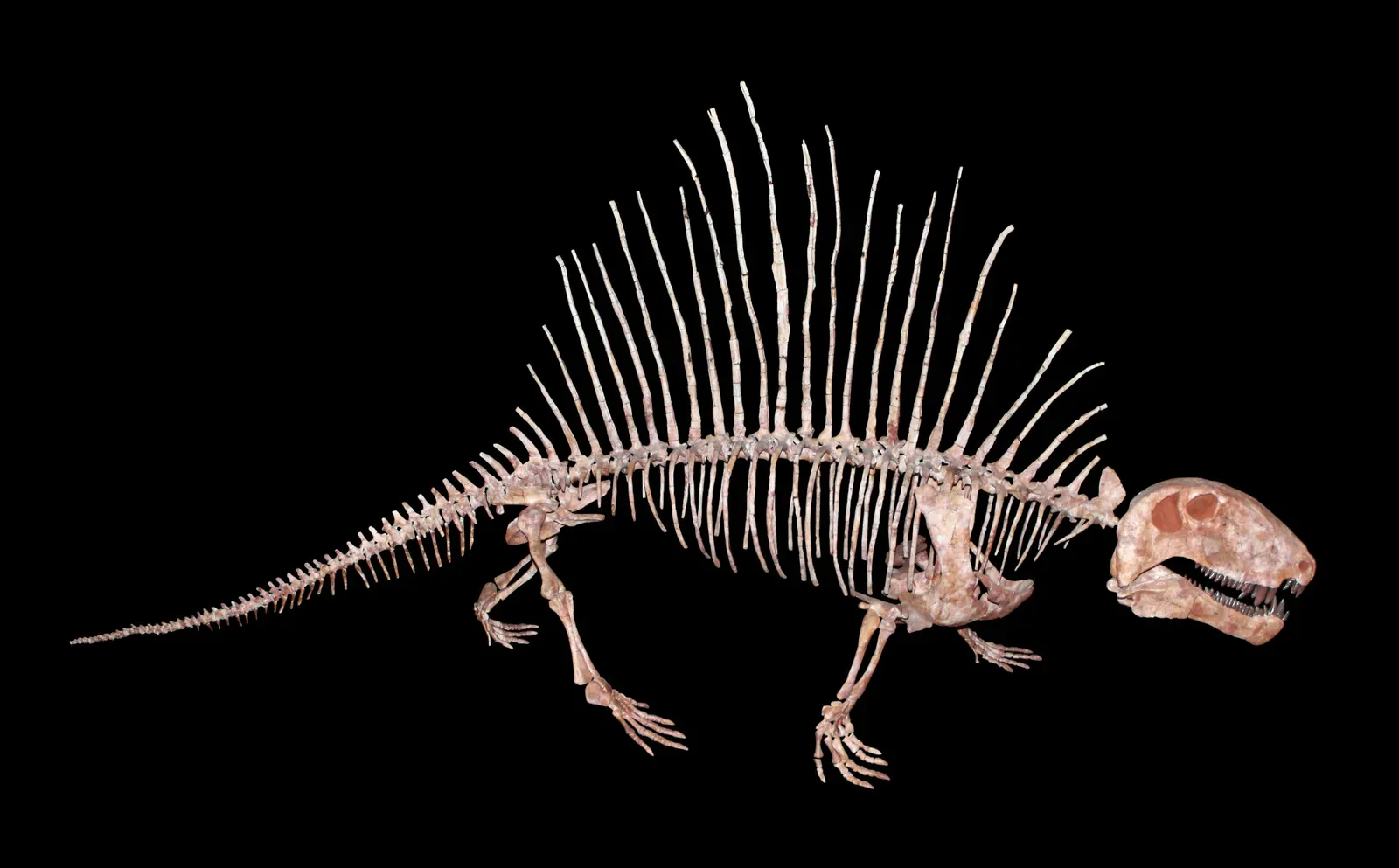
Dimetrodon is one of those prehistoric creatures that tends to get lumped in with dinosaurs by casual audiences, even though it predates them by roughly 40 million years. Honestly, it deserves far more respect on its own terms. Early Permian sphenacodontid synapsids, the group that includes Dimetrodon, were the first terrestrial large-bodied apex predators in the evolutionary history of land animals.
Tooth morphology in this group includes simple carinae with smooth cutting edges and elaborate enamel features, including the first occurrence of cusps and true denticles, known as ziphodonty, in the fossil record. A time-calibrated phylogenetic analysis indicates that changes in dental morphology occur in the absence of any significant changes in skull morphology, suggesting that the morphological change is associated with changes in feeding style and trophic interactions.
The available evidence also indicates that ziphodonty evolved for the first time in the largest known species of the genus Dimetrodon and independently from the ziphodont teeth observed in some therapsids. Independent evolution of the same dental feature in separate predator lineages. That is a theme you will keep seeing in this story, and it never stops being remarkable.
A 260-Million-Year-Old Predator That Rewrites the Timeline
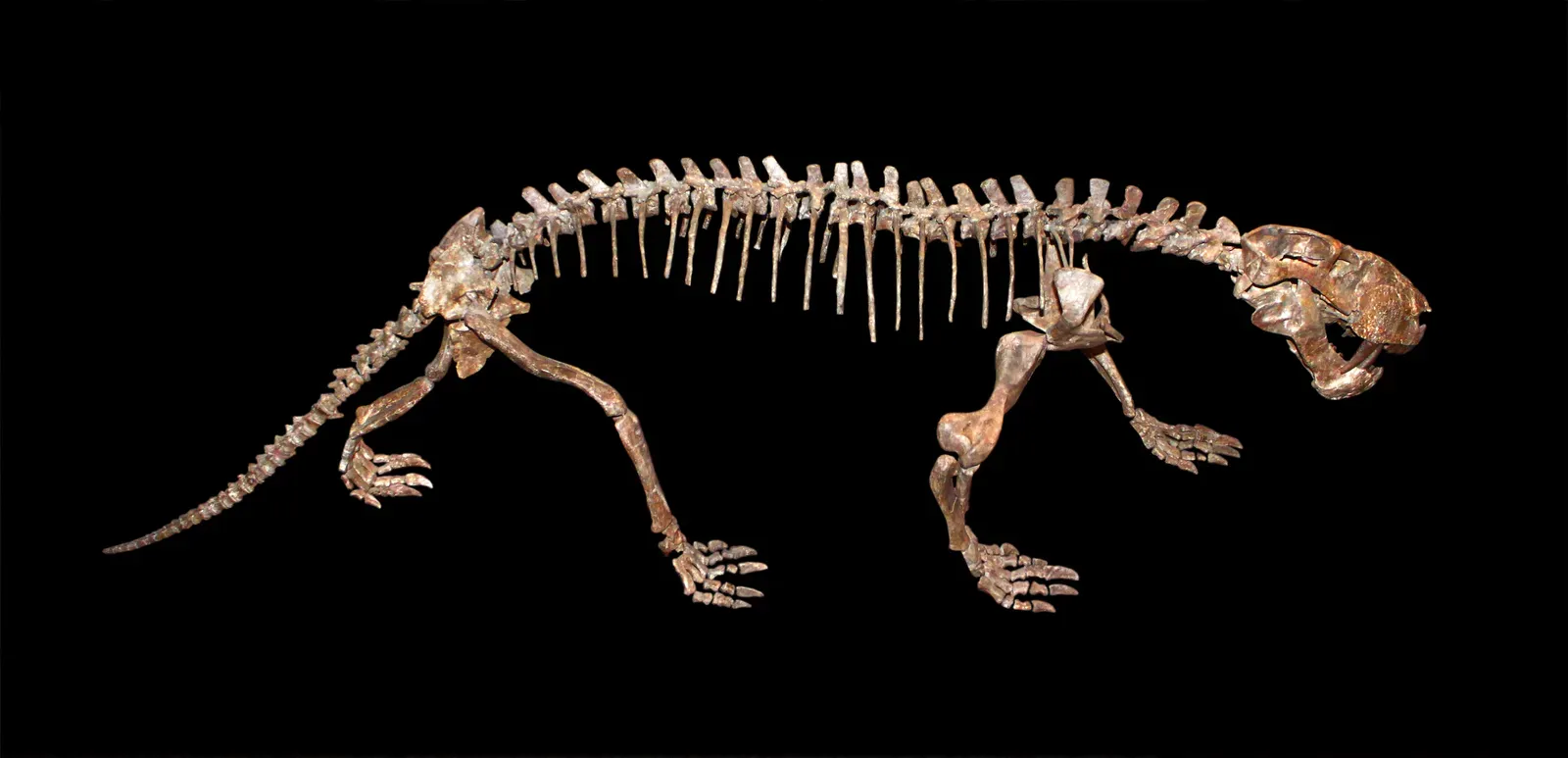
In South Africa’s Karoo Basin, a discovery was recently announced that genuinely stopped paleontologists in their tracks. I know it sounds like science hyperbole, but this one really delivered. A newly identified species of prehistoric predator is forcing scientists to rethink the evolution of early land carnivores, with researchers describing Jirahgorgon ceto, a large-bodied gorgonopsian that lived around 260 million years ago, far earlier than expected for predators of its size and specialization.
The discovery of Jirahgorgon ceto challenges a long-standing assumption about how early predators evolved. For decades, scientists believed that gorgonopsians, primitive relatives of mammals, started small and only developed large body sizes and specialized skulls much later in the Permian period. This fossil overturns that timeline.
This reshapes how scientists understand the buildup to the Permian-Triassic extinction event, the most catastrophic extinction in Earth’s history. If complex predators were already established, then ecosystems leading up to this event were likely more intricate and competitive than once believed. The world before the great dying was, in short, already a sophisticated predator-saturated place.
When Two Apex Predators Crossed Each Other’s Paths
Uploaded by FunkMonk, CC BY 2.0)
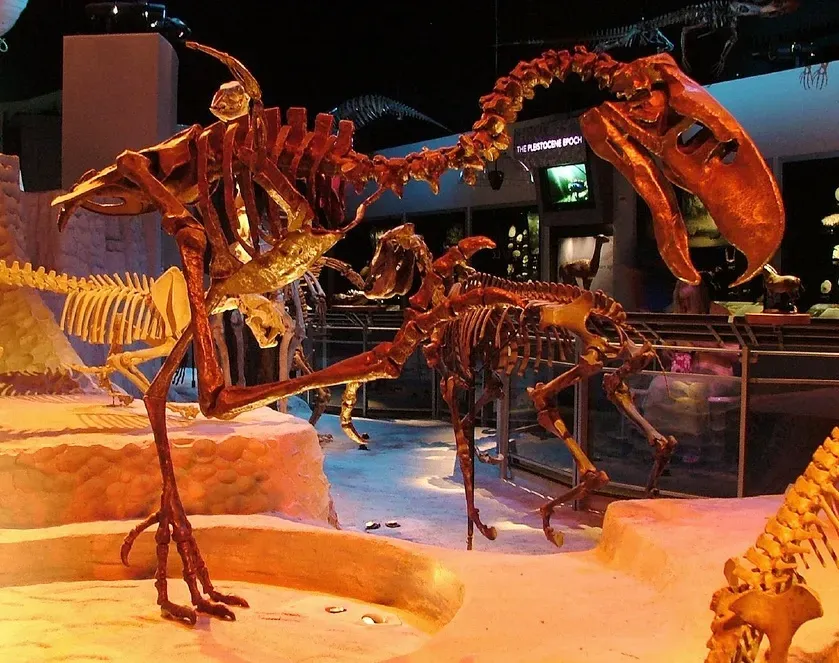
One of the most gripping chapters in fossil-record detective work involves not just predators hunting prey, but predators hunting each other. A groundbreaking discovery at the La Venta fossil site in Colombia sheds new light on the complex interactions between two apex predators from the middle Miocene epoch, with researchers unveiling evidence that a giant caiman species may have preyed on the mighty terror bird, a towering predator of the ancient world, based on a fossilized leg bone found with distinct tooth marks.
Researchers uncovered the leg bone of a terror bird bearing distinct tooth marks, and upon closer inspection, these marks matched the teeth of Purussaurus neivensis, an ancient caiman species that roamed the region at the same time. This finding represents direct evidence of a trophic interaction between two apex predators. Two creatures, each a dominant killer in its own domain, colliding in a single moment of prehistoric violence.
While it was long believed that the terror bird, a terrestrial predator, and the caiman, an aquatic predator, had minimal overlap, this evidence challenges that assumption. The fact that the terror bird’s bone showed no signs of healing suggests it likely died from the wounds shortly after the encounter. There was no recovery. Just the quiet permanence of fossilized bone, waiting 13 million years to tell its story.
Convergent Evolution: Nature’s Habit of Reinventing the Perfect Predator
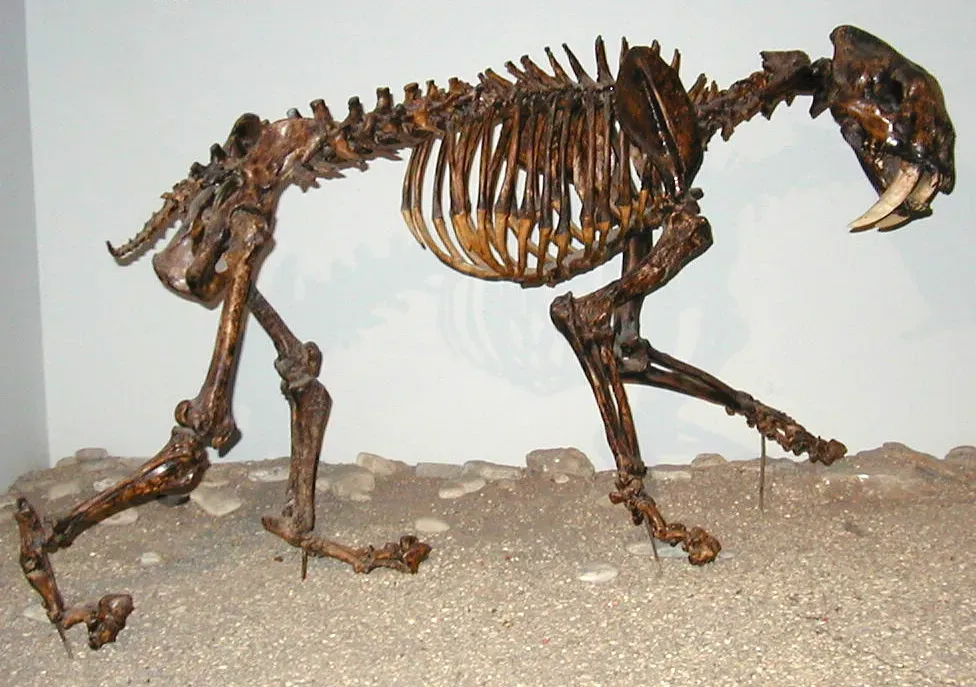
One of the most mind-bending threads running through the fossil record of apex predators is convergent evolution. It is essentially nature repeating the same great idea across completely unrelated lineages, as if evolution keeps arriving at the same answer independently. Convergent evolution is the independent evolution of similar features in species of different lineages, creating analogous structures that have similar form or function but were not present in the last common ancestor of those groups.
Catlike saber-toothed predators evolved in three distinct lineages of mammals, including carnivorans like the saber-toothed cats, nimravids known as false saber-tooths, the sparassodont family Thylacosmilidae known as marsupial saber-tooths, the gorgonopsids, and the creodonts, all of which also developed long canine teeth but with no other particular physical similarities. Three entirely separate evolutionary experiments, all arriving at the same terrifying dental solution.
The ultimate cause of convergence is usually a similar evolutionary biome, as similar environments will select for similar traits in any species occupying the same ecological niche, even if those species are only distantly related. It is less surprising once you understand it that way. When the environment demands a certain kind of killer, life tends to build one, regardless of what materials it has to work with.
Ancient Marine Ecosystems and the Super Predators That Dominated Them
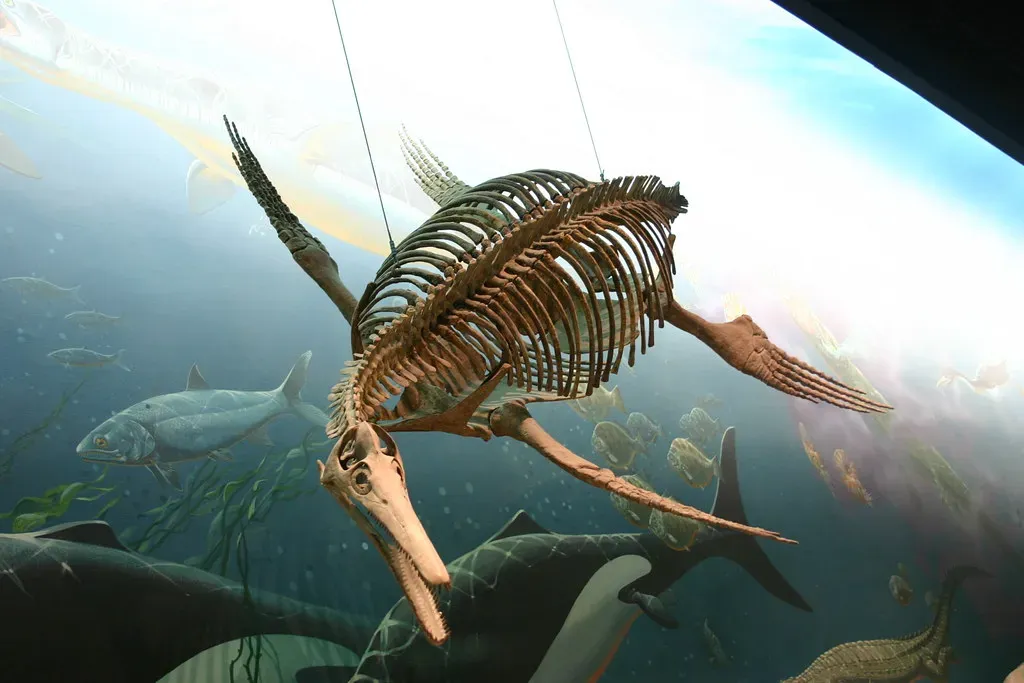
Scientists have reconstructed a 130-million-year-old marine ecosystem from Colombia and found predators operating at a food-chain level higher than any seen today. Let that sink in for a moment. The oceans of the ancient world supported trophic relationships of a complexity and intensity that modern seas simply cannot match.
The Paja Formation dates back to the Mesozoic era, a time shaped by rising sea levels and warmer global temperatures. These conditions fueled a surge in marine biodiversity. The region supported plesiosaurs, ichthyosaurs, and large numbers of invertebrates, creating one of the most intricate marine food webs ever identified. Picture a world where the ocean’s top tier was not just a single killer whale or great white shark, but an entire layered society of marine giants, each preying on the next.
Fossil evidence likely represents the oldest evidence for predation on megafauna by marine tetrapods, specifically a thalattosaur of roughly four meters found in the stomach of a Middle Triassic ichthyosaur of roughly five meters. The predator had grasping teeth yet swallowed the body trunk of the prey in one to several pieces. There were many more Mesozoic marine reptiles with similar grasping teeth, so megafaunal predation was likely more widespread than presently conceived, probably starting nearly simultaneously in multiple lineages around 242 to 243 million years ago.
Conclusion: The Past Predators and What They Still Teach You
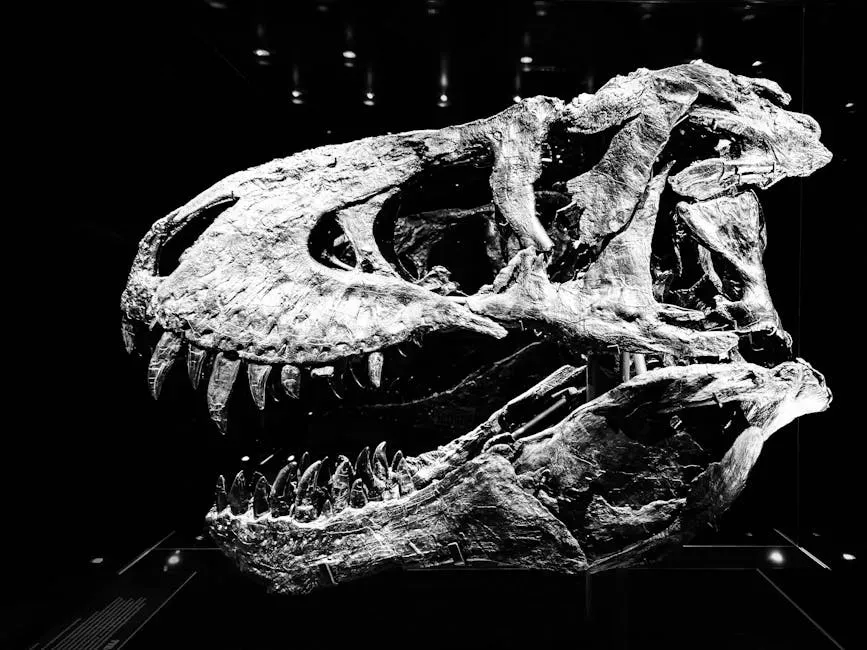
You might walk away from all of this simply marveling at the ferocity of ancient life. That is a fair reaction. Yet the deeper takeaway is something more nuanced. The fossil record not only enables scientists to reconstruct the morphology of long-extinct individuals but also provides evidence from which ecological relationships, including interactions between different organisms and the structure of ancient communities, can be inferred. Every scratch on a bone, every stomach contents frozen in stone, every convergent feature shared across millions of years is a data point in the greatest story ever told.
What the fossils reveal is not just a world of violence and competition, though it was certainly that. They reveal a world of deeply interconnected lives, where apex predators shaped ecosystems, drove evolutionary innovation in prey species, competed with rival predators, and sometimes fell victim to each other. Each new fossil has the potential to refine or even overturn current theories, and as more evidence emerges, the timeline of evolution may continue to shift, revealing a prehistoric world far more complex and surprising than previously imagined.
The deeper you look into the fossil record, the more it feels less like ancient history and more like a mirror. The same ecological pressures, the same evolutionary responses, the same brutal logic of survival. It was all there, hundreds of millions of years before us. So here is a thought to leave you with: if convergent evolution means nature keeps building the same kind of predator independently, over and over again, what does that tell you about what the world’s environments have always truly demanded? What do you think? Drop your thoughts in the comments.