Bangladesh – A determined conservationist completed a nationwide campaign to revive the boilam tree, Bangladesh’s tallest forest giant, by planting its saplings across every district. Mahbubul Islam Polash, a 34-year-old from the northern Sirajganj district, ended his journey on January 23, 2026, in the Teknaf area of southeastern Cox’s Bazar, roughly 600 kilometers from his home. His initiative, launched on World Environment Day in 2024, demonstrated how personal commitment can bolster broader wildlife protection efforts for the critically threatened Anisoptera scaphula.
One Man’s 597-Day Quest Across the Country
One Man’s 597-Day Quest Across the Country (Image Credits: Unsplash)
Mahbubul Islam Polash began his mission on June 5, 2024, in Rajshahi district, driven by concerns over the boilam tree’s decline and its impact on bird habitats. He germinated 74 saplings from 2,000 seeds collected from mature trees in the Chittagong Hill Tracts districts of Bandarban and Khagrachhari. After nurturing them for a year to reach 30-45 centimeters in height on land near his home, Polash transported them to planting sites nationwide.
The effort required 597 days and cost him 246,000 takas, approximately $2,000, all from his own funds. Polash selected locations based on local insights, favoring areas where jackfruit trees thrive, as they share sensitivities to salinity and waterlogging. This approach suggested the boilam could adapt beyond its traditional hilly forests to Bangladesh’s plains. “Even if it was just one species, I wanted to spread it countrywide,” Polash stated.
The Boilam: A Towering Symbol Under Threat
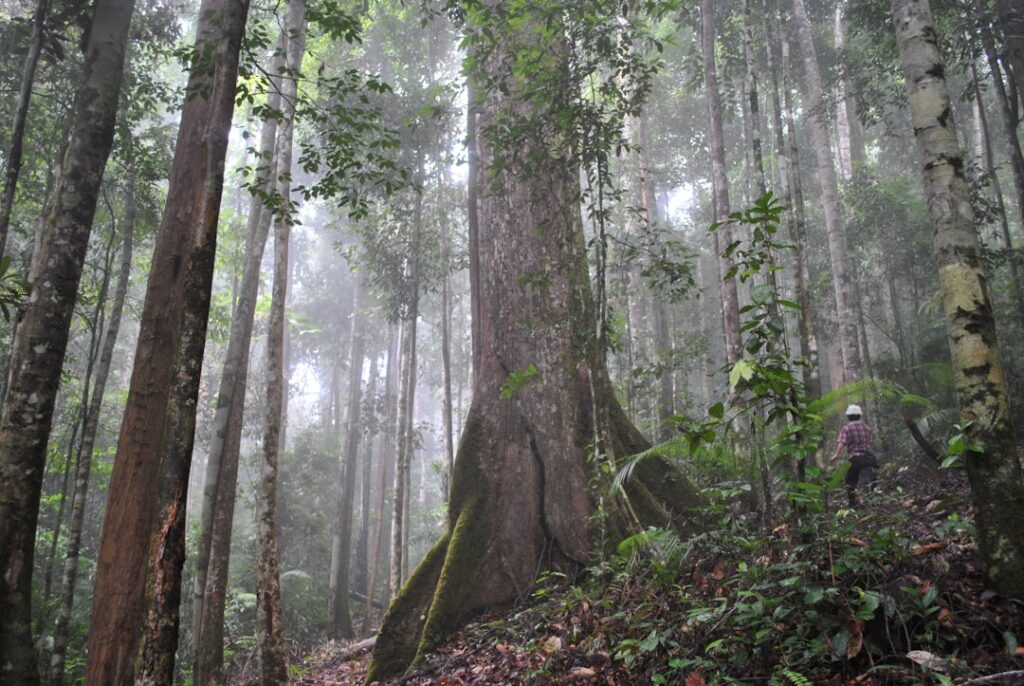
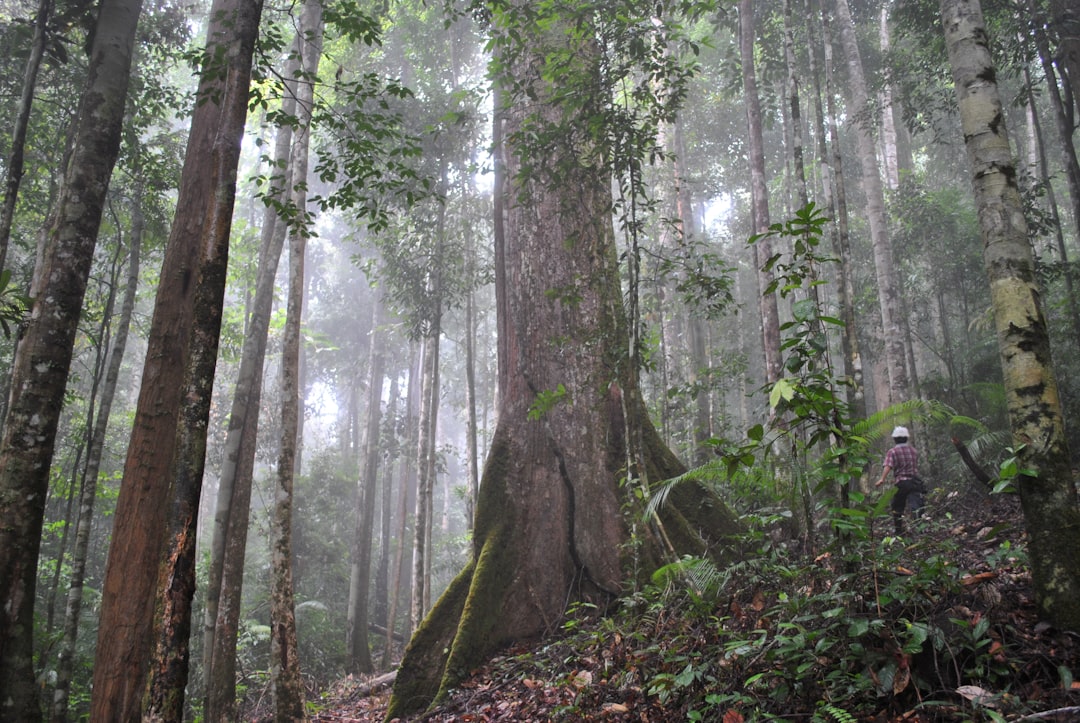
Anisoptera scaphula, known locally as boilam, stands as one of Bangladesh’s tallest trees, reaching 30 to 45 meters with a straight bole and durable timber. Native to semi-evergreen and evergreen forests in undulating terrain, it supports diverse wildlife, including nesting sites for kites and vultures as well as numerous orchid species. The International Union for Conservation of Nature listed it as endangered in 2017, citing declining populations across its range in Bangladesh, Laos, Myanmar, Peninsular Malaysia, and Thailand.
Deforestation and overexploitation for timber have confined the species to small patches in the Chattogram district, Chittagong Hill Tracts, and Cox’s Bazar. The Bangladesh National Herbarium identifies it among 446 threatened plants. Principal scientific officer Sarder Nasir Uddin noted, “Conservation of the endangered boilam is important on ethical grounds, as every species has the right to survive.” Its role in shaping hilly forests and high commercial value further underscore the urgency.
Scientific Foundations Pave the Way
Efforts to propagate boilam date back to 1994, when Professor M. Kamaluddin of Chittagong University’s Institute of Forestry and Environmental Sciences collected seeds from the Hazarikhil area, now a wildlife sanctuary. He planted saplings on campus, where three survivors remain, one producing fruit annually. Professor Md Aktar Hossain advanced this work in 2011, following a nationwide survey that located a single flowering tree in Cox’s Bazar’s Ukhiya subdistrict.
Hossain’s team produced thousands of saplings at a dedicated nursery and distributed them to suitable sites in Sylhet, Moulvibazar, Habiganj, Cumilla, the Chittagong Hill Tracts, and Cox’s Bazar. Recent studies revealed optimal germination techniques: soaking seeds for 12 hours in water, followed by 12 hours of air drying, achieved an 84.2% success rate. Removing wings and sowing seeds inverted – wing side down – ensured straight root and shoot growth. Today, Chittagong University hosts around 2,000 boilam trees, bolstering seed supplies.
Collaborative Push Strengthens Revival
Polash’s campaign built on institutional support from the Bangladesh Forest Department, the U.S. Department of Agriculture Forest Service, and the Arannayk Foundation. These partners provided germplasm, funding, and expertise for distribution in sandy loam soils and hilly terrains. Hossain praised Polash, saying, “He is continuing the work I started.”
- Bangladesh Forest Department: Coordinated seed sourcing and site selection.
- U.S. Department of Agriculture Forest Service: Offered technical propagation guidance.
- Arannayk Foundation: Supported nursery operations and planting logistics.
- Chittagong University IFES: Led research and maintained seed orchards.
Biodiversity consultant Leng Guan Saw highlighted the absence of similar actions elsewhere in Southeast Asia, positioning Bangladesh as a potential model and global seed source.
Key Takeaways
- 74 saplings planted in all 64 districts mark a personal milestone in boilam conservation.
- Scientific methods boosted germination to over 84%, enabling scalable propagation.
- Bangladesh now holds promise as a hub for reintroducing the species regionally and worldwide.
Polash’s journey not only spread the roots of an endangered icon but also inspired a blueprint for grassroots conservation amid habitat loss. As boilam saplings establish in diverse landscapes, they signal resilience for Bangladesh’s forests. What steps can individuals take in your area to protect threatened species? Share your thoughts in the comments.