Tokara Islands, Japan – Scientists have identified a new bird species lurking among familiar foliage on remote subtropical isles, marking Japan’s first such discovery in 45 years. The Tokara leaf warbler, a small olive-green songbird, had long been mistaken for its close relative, the Ijima’s leaf warbler. Advanced genetic and acoustic analyses revealed the split, highlighting hidden biodiversity in a nation rich with avian life.
A Cryptic Split Rewrites Ornithological History
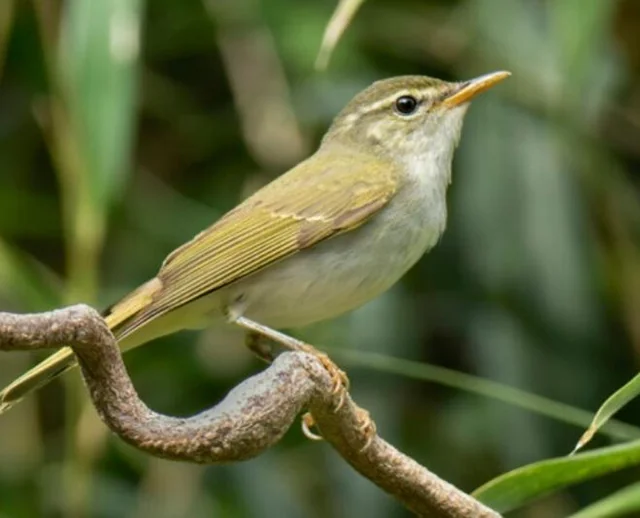
A Cryptic Split Rewrites Ornithological History (Image Credits: Reddit)
Researchers first noted a distinct population of these songbirds on Nakanoshima, the largest island in the Tokara archipelago, back in 1988. For decades, experts classified them as part of the Ijima’s leaf warbler, found over 1,000 kilometers away on the Izu Islands south of Tokyo. Doubts persisted due to the vast distance and isolation.
An international team, led by Per Alström of Uppsala University and Takema Saitoh of Japan’s Yamashina Institute for Ornithology, took a deeper look. Their work, published in PNAS Nexus in March 2026, confirmed the Tokara birds as a separate species, Phylloscopus tokaraensis. This marked the first new bird named in Japan since the Okinawa rail in 1981.
DNA and Dialects Expose the Divide
Visual cues offered few clues; both species share an olive-green back, gray head, whitish underparts, and a pale orange lower bill. Subtle measurements showed Tokara males with slightly shorter legs and smaller heads on average. Yet genomes told a clearer story.
Whole-genome sequencing revealed a deep evolutionary split, with lineages diverging 2.8 to 3.2 million years ago. No gene flow occurred between populations, despite potential overlap on wintering grounds in the Philippines. Song recordings sealed the distinction: Tokara warblers produce faster, lower-pitched, repetitive rattling notes, while Ijima’s offer smoother, more complex phrases. Acoustic analysis classified recordings with 100% accuracy.
Per Alström noted, “The new species is a little cryptic and tricky to define. In terms of appearance, it doesn’t differ from the Ijima’s Leaf Warbler. It is DNA analyses and differences in song that show that this is a separate species.”
Fragile Lives on Volcanic Outposts
The Tokara leaf warbler breeds primarily on Nakanoshima within the 100-square-kilometer Tokara archipelago in Kagoshima Prefecture. Fieldwork confirmed nesting in bamboo undergrowth, with foraging in the forest canopy. Though common locally on Nakanoshima, its range remains tiny and isolated.
Both species exhibit low genetic diversity and scars from past population bottlenecks, though signs of recovery appear. Still, vulnerabilities loom large for island endemics. The Yamashina Institute highlighted the challenge: “How to protect them from extinction and conserve them is the challenge.”
- Invasive predators like introduced weasels threaten nests.
- Feral goats degrade undergrowth through grazing.
- Pine wilt disease has ravaged forests.
- Volcanic activity endangers the geologically active islands.
- Climate shifts and habitat loss compound risks.
Urgent Calls for Safeguarding Hidden Diversity
The Ijima’s leaf warbler already holds Vulnerable status on the IUCN Red List and protection as a Japanese Natural Monument. Researchers urge the same for the Tokara species, plus targeted monitoring. Genomics proved essential here, uncovering what eyes and ears alone missed.
Alström emphasized, “This shows how important it is to use genetic methods to reveal hidden biodiversity at a time of global biodiversity crisis. These methods can help provide more complete knowledge on which to base future nature conservation efforts.”
Key Takeaways
- Tokara leaf warbler split from Ijima’s via 3-million-year divergence, confirmed by DNA and song.
- Tiny populations on remote islands face multiple extinction threats.
- First new Japanese bird species since 1981 underscores value of modern tools in conservation.
This discovery reminds us that nature still holds secrets, even in well-studied regions. As threats mount, swift action could secure the Tokara leaf warbler’s future. What steps should Japan take next to protect its avian treasures? Tell us in the comments.