Pijao, Quindío, Colombia – A decade ago, young Sebastián Montilla spotted a creature with glowing red eyes peering from the treetops on his family’s coffee farm. That fleeting nocturnal encounter ignited a scientific pursuit that now challenges long-held views on primate distribution. Researchers have found that Colombia’s mighty Magdalena River, rather than towering Andean peaks, serves as the primary barrier separating genetically distinct night monkey populations.
A Boy’s Nighttime Discovery Sparks Decades of Research
A Boy’s Nighttime Discovery Sparks Decades of Research (Image Credits: Upload.wikimedia.org)
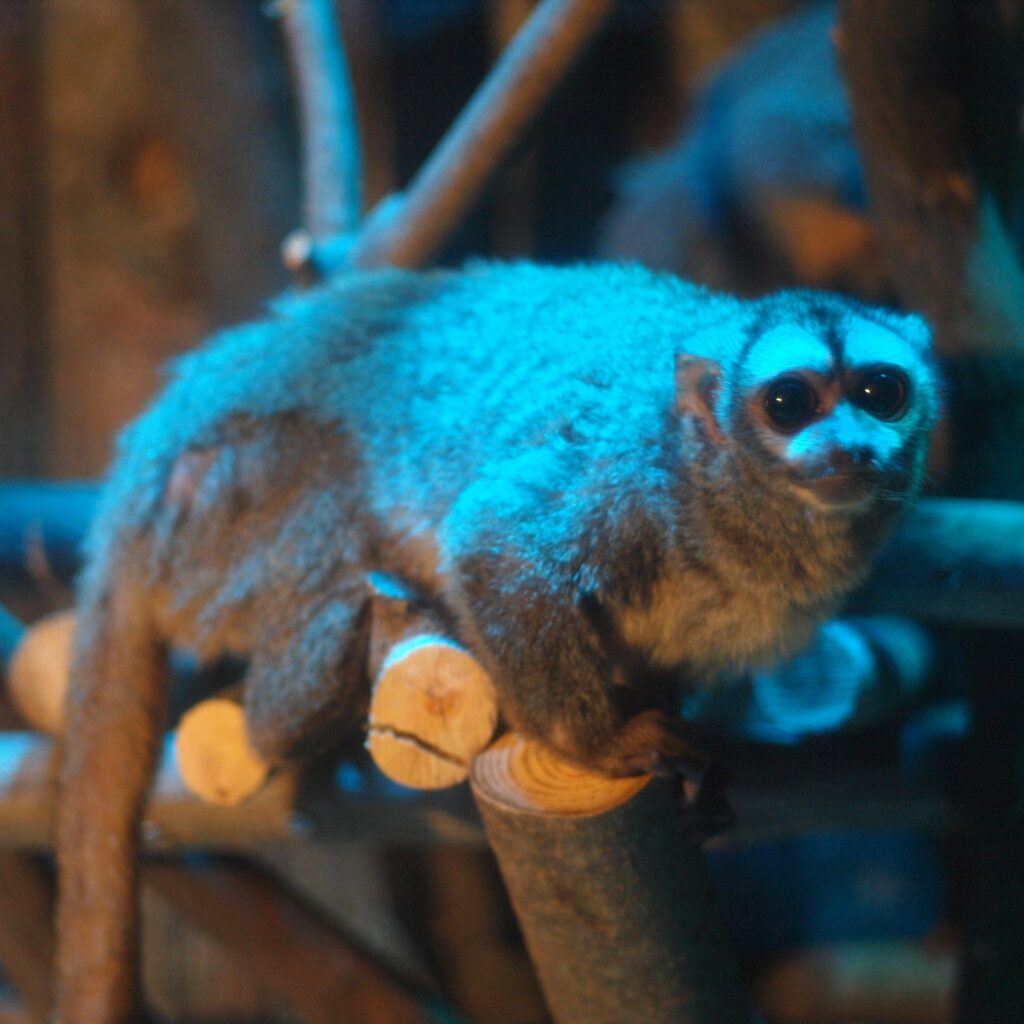
Ten-year-old Montilla heard rustling overhead one evening and aimed his lantern skyward. The animal, a night monkey from the genus Aotus, locked eyes with him briefly before vanishing into the canopy. This moment on the farm in Colombia’s coffee-rich Quindío department fueled his dedication to these elusive primates.
Montilla, now a doctoral student at the University of the Andes in Bogotá, reflected on the obscurity of his subjects. “I’m very surprised by the fact that [night monkeys] have gone unnoticed for so long, both in the scientific community and in the public sphere,” he said. “It’s astonishing because at midnight they are moving right past our houses and we don’t even notice.” Over nearly 20 years, he tracked their behaviors, documented unique traits like albinism, and contributed to Quindío’s first conservation plan for the Andean night monkey, Aotus lemurinus.
Secrets of the Americas’ Only Nocturnal Primates
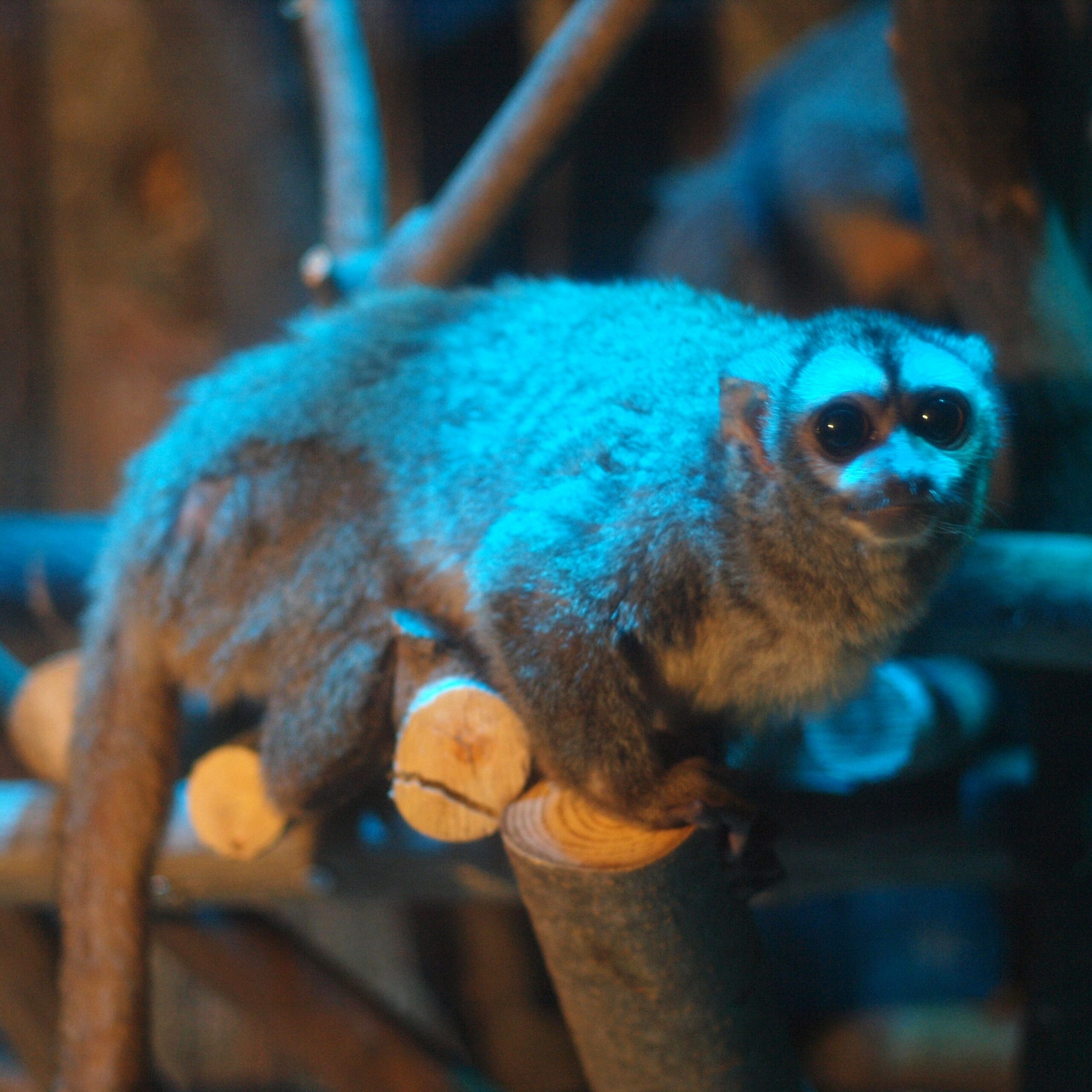
Night monkeys, also called owl monkeys, stand out as the New World’s sole nocturnal primates. Their massive round eyes feature retinas 50% larger than those of diurnal counterparts, enabling vision in dim light. Unlike solitary nocturnal species in Asia and Africa, these monkeys form lifelong monogamous pairs and care for one to three offspring together.
Colombia hosts five species, including A. lemurinus, A. griseimembra, and A. zonalis. Yet their cryptic nature – appearing identical across vast ranges from Panama to Argentina – has long puzzled scientists. Montilla described them as “complex twin species. A night monkey in the Amazon, in the Caribbean, [and] in the Andes looks exactly the same.”
- Adapted enormous eyes for low-light foraging.
- Monogamous family units unlike Asian/African nocturnal kin.
- Diets include fruits, insects, and leaves, studied mostly in captivity.
- Threatened by habitat loss and illegal pet trade.
- Data-deficient on IUCN Red List due to wild study challenges.
DNA from 92 Sites Upends Geographic Assumptions
Montilla’s recent study, published in the International Journal of Primatology, analyzed droppings from 92 locations nationwide. Earlier models pinned species divides at 1,000 meters elevation in the Andes, with hairier monkeys higher up. His data revealed a different story in the Magdalena Valley.
Populations just 100 meters apart across the river showed stark genetic differences, a pattern repeating along its 1,540-kilometer course. The Magdalena, Colombia’s longest river, originates in Cauca’s highlands, drains Andean slopes, and empties into the Caribbean, sustaining rich biodiversity. This waterway, not mountains, limits monkey dispersal between Antioquia and Santander departments.
Redrawing Maps for Better Protection
The findings promise to overhaul conservation strategies for Colombia’s primates. Accurate boundaries matter for the pending National Primate Conservation Program, targeting 38 species. Sebastián García, president of the Colombian Primatological Association, noted, “These kinds of research will impact where conservation efforts are located throughout the country.”
Threats like cattle ranching, oil palm expansion, mining, and pet trafficking endanger these monkeys. Eduardo Fernandez-Duque, a Yale anthropologist, praised the work: “What our Latin American colleagues are doing is impressive. They’ve accomplished things that… are undoubtedly the most advanced in Colombia.” Montilla plans to probe chromosomes, calls, and other traits next, eyeing other rivers’ roles.
Key Takeaways
- Magdalena River acts as genetic barrier for Aotus griseimembra, reshaping distribution maps.
- Night monkeys’ cryptic traits demand genetic studies for effective conservation.
- Five Colombian species face urgent threats; national program could safeguard them.
This breakthrough underscores how rivers carve invisible lines in biodiversity. As Colombia refines its primate protections, such insights could prevent overlooked extinctions. What do you think about these hidden primate divides? Tell us in the comments.