You tend to imagine dinosaurs as a few giant celebrities stomping across an empty landscape, but the real prehistoric world was more like a crowded city than a lonely desert. Forests, floodplains, coasts, and inland seas all hosted layered communities of animals and plants, with dinosaurs just one part of a buzzing, living system. When you look closely at the fossils, you start to see neighborhoods, niches, rivalries, and quiet background characters that made those worlds work.
What makes this even more fascinating is that ancient ecosystems were not experimental prototypes of today’s nature; they were fully functional, long-lasting systems that thrived for tens of millions of years. You’re not peeking at a rough draft of life but at alternate versions of Earth’s complexity, built around reptiles instead of mammals. Once you recognize that, dinosaur bones stop being isolated curiosities and become snapshots of intricate food webs that rose, changed, and finally disappeared.
The Dinosaur World Was Packed, Not Empty
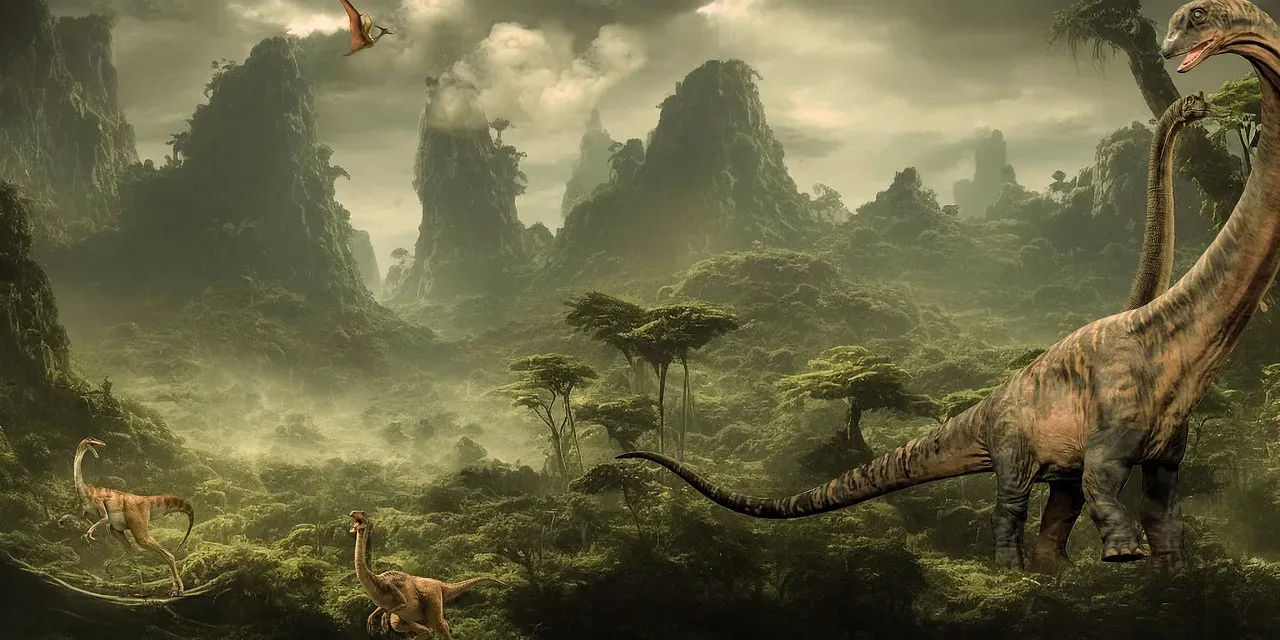
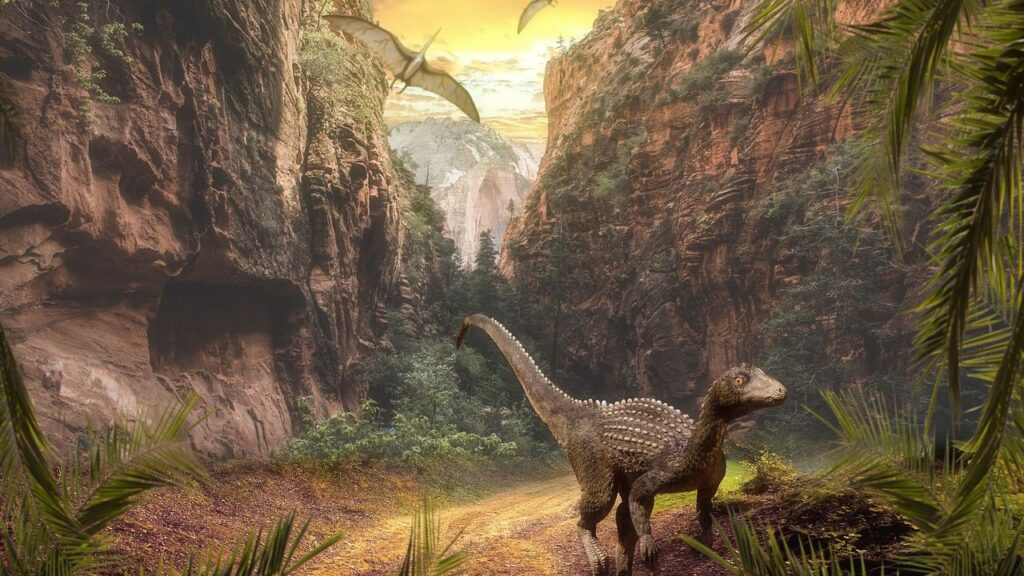
If you could stand in a Late Jurassic valley, you would not see just a lone long-necked giant wandering by. You would be surrounded by herds of sauropods stripping leaves from tall conifers, smaller plant-eating dinosaurs browsing shrubs, quick predators darting between trunks, and flocks of early birds overhead. Around your feet, you would notice lizards, tiny mammal ancestors, insects, frogs, and freshwater fish in nearby streams. The scene would feel closer to a busy African savanna than a quiet movie set.
Fossil sites like those in North America and China show that multiple dinosaur species often lived shoulder to shoulder in the same region. You see large predators, mid-sized hunters, small scavengers, giant herbivores, and nimble browsers all preserved together in the same rock layers. This tells you that ancient communities spread life across different sizes, diets, and behaviors, much like modern ecosystems do. In other words, there was no single “typical dinosaur”; there was an entire cast filling different roles at the same time.
Plants Built the Foundation of Dinosaur Food Webs
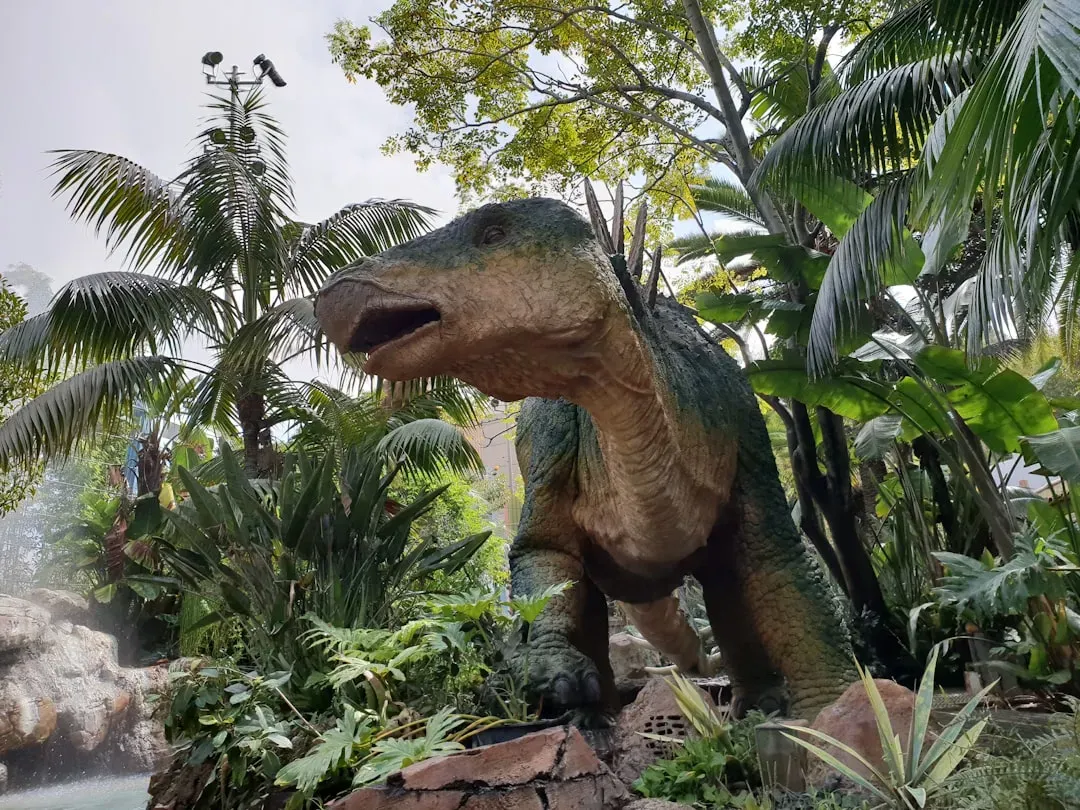
You cannot talk about dinosaur ecosystems without talking about plants, because plants quietly ran the whole show. Before flowering plants took off, many landscapes were dominated by conifers, cycads, ginkgoes, and ferns, forming towering forests and thick understories. Herds of long-necked sauropods, beaked ornithopods, and armored dinosaurs depended on this green foundation, each group shaped by what and how it ate. You can almost think of a sauropod as a living crane, designed to harvest high foliage that others could not reach.
Later in the Cretaceous, flowering plants spread through many regions and reshaped the menu for plant-eaters. This likely affected everything from the shape of dinosaur jaws to how fast certain species grew. When plant communities changed, herbivores had to adapt, migrate, or disappear, and their predators felt the ripple effects. You can see this in the fossil record as shifts in which dinosaurs dominate particular times and places, echoing the way modern grazers follow the grass in seasonal African plains.
Predators, Scavengers, and the Power of Apex Hunters
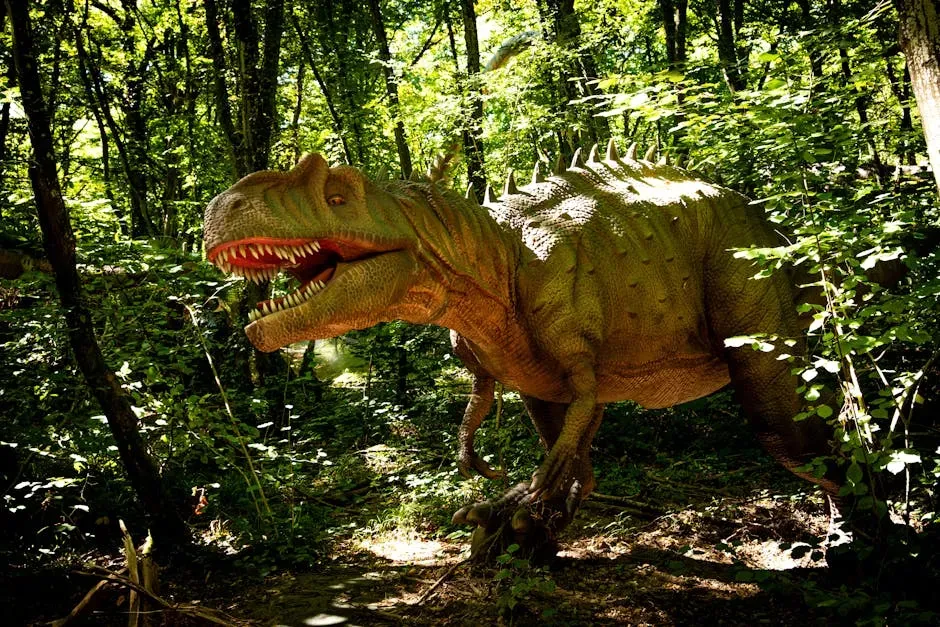
When you think of dinosaur ecosystems, your mind probably jumps straight to the apex predators, and that instinct is not wrong. Large theropods such as tyrannosaurs and their relatives sat at the top of food webs in many Cretaceous environments, preying on big herbivores and competing with one another. Their presence shaped how herbivores behaved, where they moved, and even how tightly they gathered in groups. A single large predator type could influence the entire structure of a community simply by existing.
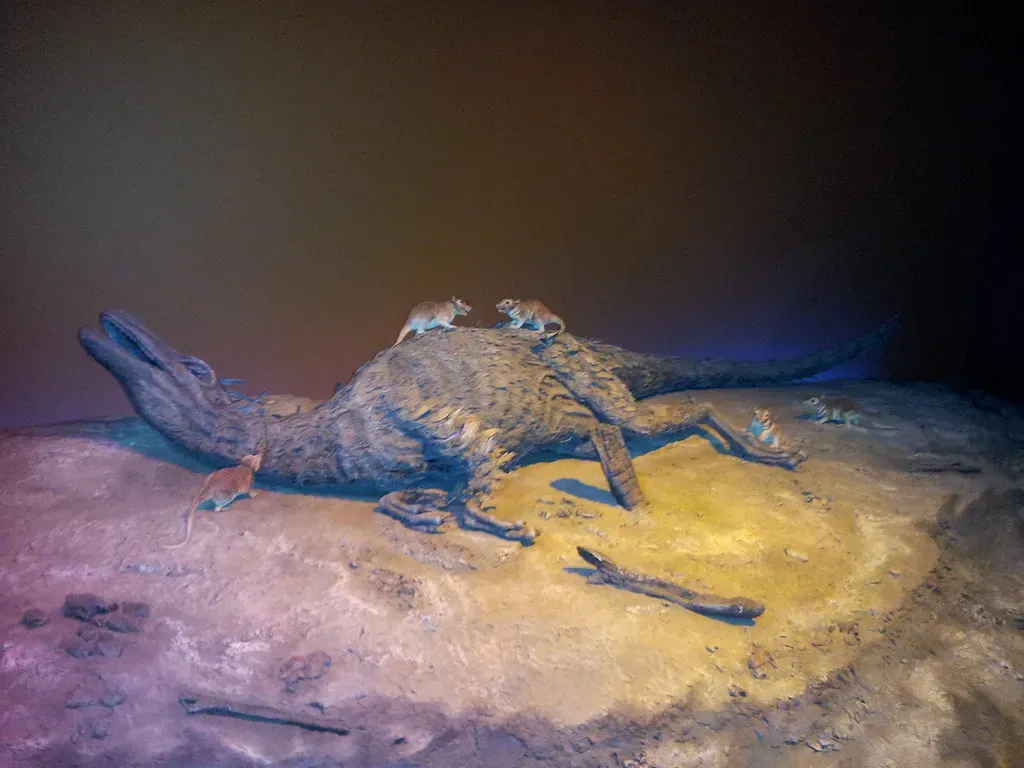
But you also find smaller meat-eaters – nimble, lightly built dinosaurs that likely hunted small prey, stole eggs, or scavenged leftovers from big kills. These mid-level carnivores and opportunistic feeders filled in the gaps, ensuring that very little biomass went to waste. When you picture a carcass on a floodplain, you should imagine a parade: giant predator feeds first, then smaller dinosaurs, then mammals, reptiles, and finally insects and decomposers. Just like today, every stage of a kill became a resource for someone else, knitting predators and scavengers into a continuous chain.
Small Creatures Quietly Held Everything Together
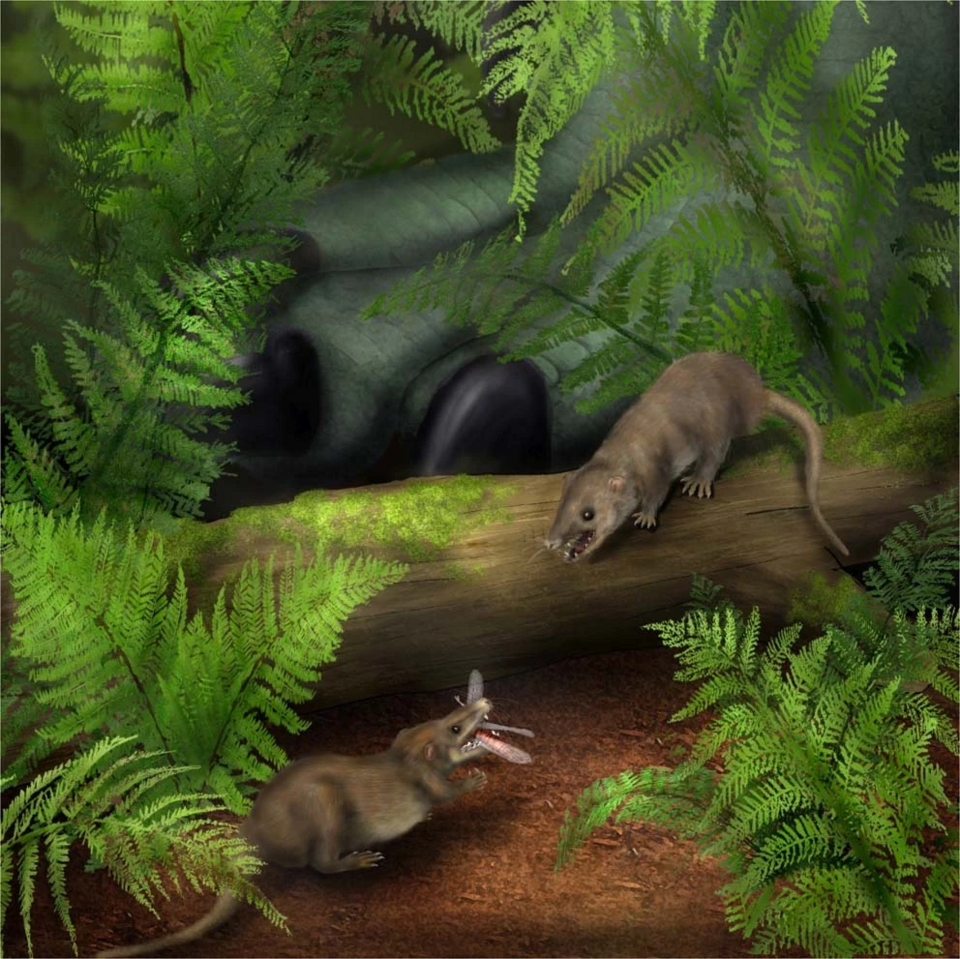
Your attention is naturally drawn to animals the size of buses, but ancient ecosystems would have collapsed without the small, easily overlooked life. Early mammals, though tiny and outnumbered, filled insect-eating, seed-eating, and burrowing roles that are crucial to soil health and plant dynamics. Lizards, salamander-like amphibians, and invertebrates such as beetles and termites chewed through dead wood, recycled nutrients, and aerated the ground. They may not leave impressive skeletons, but their traces in sediments, burrows, and coprolites tell you they were busy.
When you add in freshwater fish, turtles, and early crocodyliforms in rivers and lakes, you start to see how many layers there were beneath the headline dinosaurs. These smaller animals transferred energy between water and land, moved seeds, and became prey for larger hunters. Even insects played starring roles by pollinating plants, breaking down carcasses, and providing protein-rich snacks for nearly everything. If you try to imagine a dinosaur ecosystem without these smaller actors, you end up with something unrealistic, like a city without insects, rodents, or songbirds.
Different Dinosaurs Shared Space by Splitting Niches
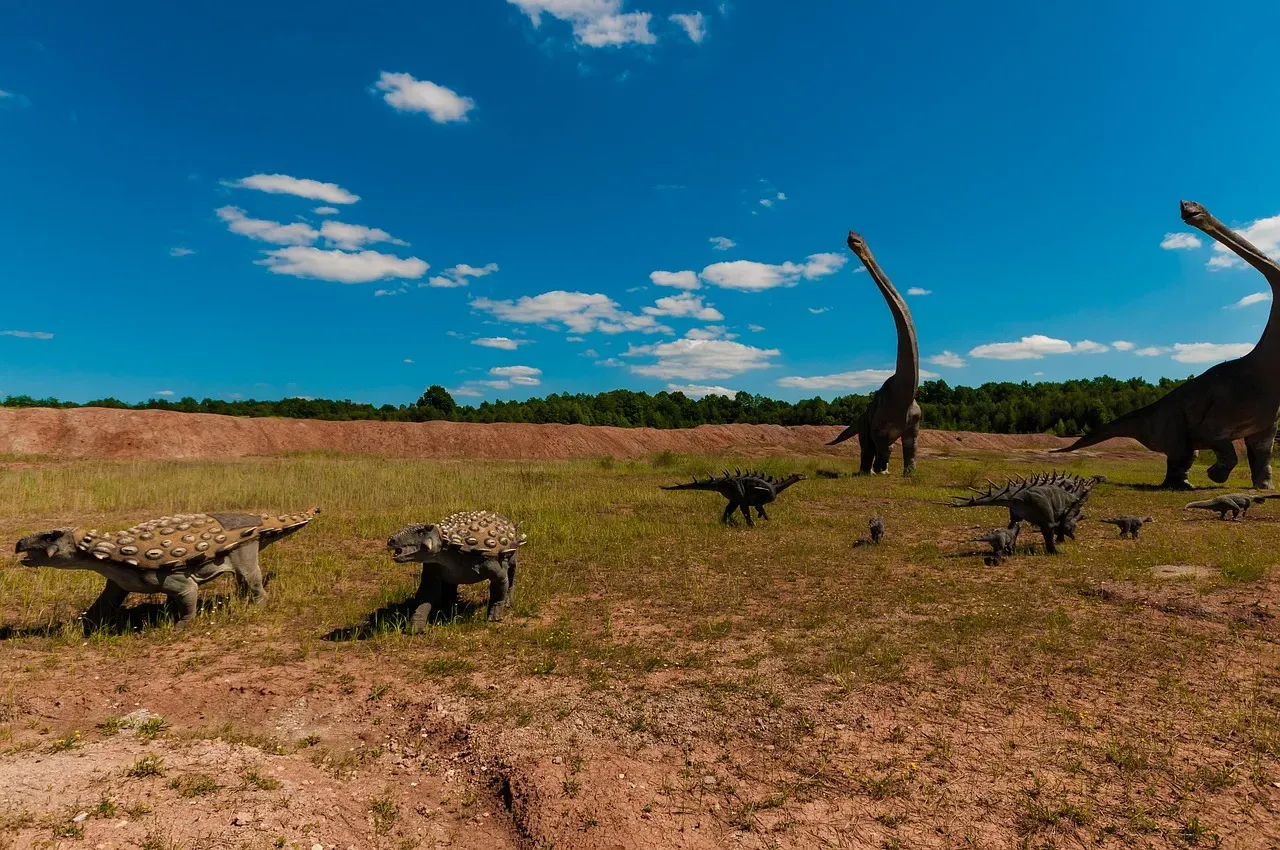
One of the most mind-stretching ideas you run into is niche partitioning – the way multiple similar species can coexist by specializing in slightly different resources. In some Cretaceous formations, you see several large plant-eating dinosaurs preserved together, yet they all seem to have survived in the same environment. The likely explanation is that each focused on particular types of plants, heights, or feeding strategies. One might have shaved low-growing ferns, another stripped mid-level shrubs, and a third targeted tree foliage high above.
Predators likely split up the world in similar ways. Differences in skull shape, tooth design, and body size suggest some carnivores targeted massive herbivores, while others chased smaller, faster prey. You can think of it as different brands carving out segments of the same market rather than all fighting for exactly the same customers. This fine-grained division of labor let many species live side by side without immediately wiping each other out, showcasing just how tuned and balanced some dinosaur communities became over long stretches of time.
Land, Water, and Sky Were All Connected
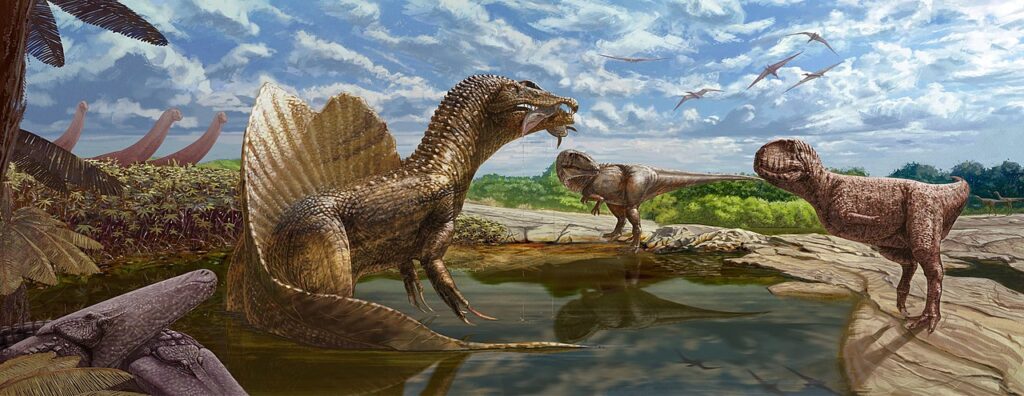
Ancient ecosystems did not stop at the edge of a riverbank or the line of a shoreline. You see strong connections between land-dwelling dinosaurs, flying reptiles, early birds, and marine reptiles living in nearby seas and lakes. Rivers moved nutrients and carcasses from inland floodplains out to coastal regions, where scavengers and marine animals could take advantage of the influx. Migrating herbivores may have carried seeds and parasites across huge distances, linking different habitats into broad ecological networks.
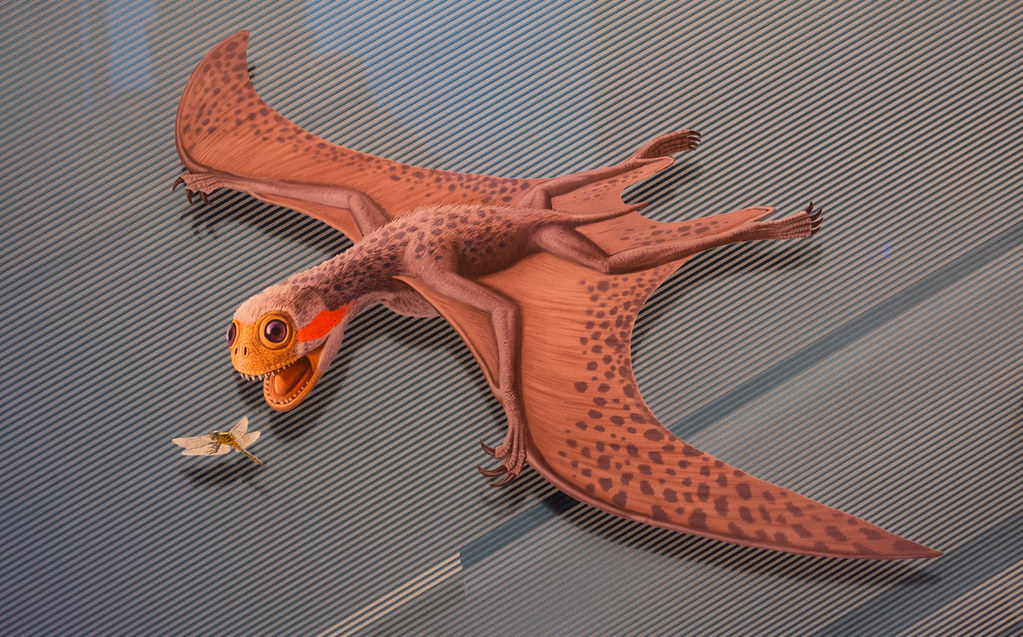
In the skies, early birds and pterosaurs added yet another dimension, feeding on insects, fish, and small vertebrates. Their movements crossed boundaries that might otherwise isolate ecosystems, allowing diseases, plant pollen, and even tiny invertebrates to hitch rides. When you zoom out, you do not see a patchwork of separate systems; you see a mesh of interacting environments where changes in one part – like a drying inland sea or a rising mountain range – could ripple across entire regions. Dinosaur life was not just local; it was tied into landscape-scale and even continental-scale patterns.
Climate Change and Catastrophe Reshaped Dinosaur Communities
Over the roughly 165 million years that dinosaurs dominated land, climate never stayed perfectly stable. You had intervals that were warmer, others more seasonal, some with widespread shallow seas, and others with expanding deserts. Each shift forced ecosystems to reorganize as some plant types expanded and others retreated, dragging their herbivores and predators along with them. You can trace these adjustments in rock layers, where the types of fossils and sediments change as conditions swing.
Then, of course, you eventually reach the boundary where a massive asteroid impact triggered global chaos. Instead of wiping out only a handful of species, that event shattered entire food webs, particularly those depending on large-bodied dinosaurs and stable plant communities. Many smaller animals, including some birds and mammals, managed to survive, probably because their diets were flexible and their bodies required fewer resources. When you look at this moment through the lens of ecosystems, you see not just the death of famous dinosaurs, but the collapse and rebuilding of the entire complex web that had supported them.
What Dinosaur Ecosystems Teach You About Life Today
When you understand how intricate dinosaur ecosystems were, you start to see modern nature differently. You realize that long-lived communities can look very different from today’s but still operate on the same underlying rules: energy flows from plants upward, niches are sliced into fine layers, and stability depends on a mix of big, visible animals and unglamorous background workers. Dinosaurs become case studies in how evolution fills available space with life until almost every role is occupied. Their world was not better or worse than ours, just another way that Earth experimented with complexity.
This perspective also gives you a kind of deep-time humility. You see that even the most dominant, spectacular groups – like giant sauropods or tyrannosaurs – are still bound by ecological limits and vulnerable to rapid environmental shifts. In a way, you are living in the aftermath of their vanished networks, inheriting a planet that has already rebooted at least once from a global crisis. When you think about your own impact on climates, habitats, and food webs, those fossilized ecosystems quietly remind you that nothing, no matter how mighty, stands apart from the web that sustains it.
In the end, when you picture ancient Earth, you are not just imagining monsters on an empty stage – you are seeing dense, interlocking communities that thrived, adapted, and finally vanished. If you let that sink in, it becomes harder to see any species, including your own, as separate from the rest of nature. The dinosaurs’ world may be gone, but the lesson their ecosystems leave you with is simple and unsettling: everything is connected, and nothing lasts forever. What part of that ancient web surprised you the most?