New England – Conservationists at Zoo New England have pioneered a method to unravel the mysteries of predator-prey dynamics among local turtle populations. Researchers examine bite marks and scars on turtle shells to identify the culprits behind attacks. This technique draws from field observations and controlled experiments, offering vital clues for protecting threatened species. The effort highlights how everyday wildlife encounters leave lasting evidence on these resilient reptiles.
Scars That Tell Stories
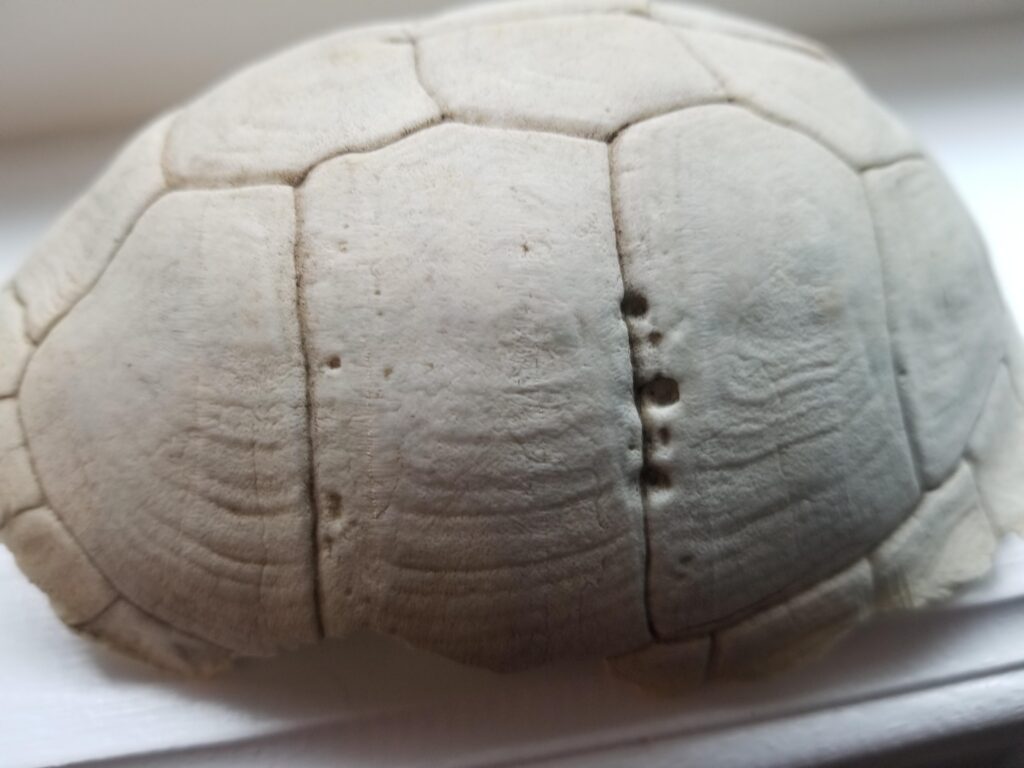
Scars That Tell Stories (Image Credits: Reddit)
A single turtle shell can bear multiple scars, each marking a brush with danger. Zoo New England’s team recognized that predators leave distinctive signatures through their bites. A raccoon’s marks stand apart from those of a fox, while avian predators produce yet different damage. This variation allows scientists to reconstruct encounters without witnessing them firsthand.
Field biologists deploy trail cameras to capture these interactions in real time. By studying the footage, they catalog bite patterns on decoy shells. Later, similar marks on live turtles point to specific threats. The approach transforms passive shell examinations into active predator profiling.
Tools of the Trade: Technology Meets Fieldwork
Radio telemetry plays a central role in the study. Teams fit turtles with transmitters to monitor their movements and survival. When a tagged turtle suffers an attack, researchers recover the evidence from its shell. This data helps correlate live events with shell damage.
Innovative decoys enhance the process. Zoo New England crafts 3D-printed turtle shells and positions them in habitats to lure predators. Trail cameras record interactions, providing a library of attack styles. These controlled observations bridge the gap between rare wild sightings and common shell findings. The method proves especially useful for elusive species like wood turtles.
Identifying the Usual Suspects
New England’s wetlands host several predators that target turtles. Raccoons often crush or puncture shells with their dexterous paws and teeth. Foxes deliver shearing bites suited to their narrower jaws. Birds of prey, such as hawks, strike with talons that leave gouges rather than tooth imprints.
Coyotes pose a growing risk, as evidenced by recovered wood turtle shells showing large canine punctures. Domestic dogs also contribute scars from opportunistic attacks. The table below summarizes common predators and their shell signatures:
| Predator | Typical Shell Damage |
|---|---|
| Raccoon | Crush and puncture marks |
| Fox | Shearing bite patterns |
| Bird of Prey | Talon gouges |
| Coyote | Large punctures |
These distinctions enable precise threat assessments across habitats.
Broader Impacts on Turtle Survival
Wood turtles and Blanding’s turtles face multiple pressures, including habitat loss and road mortality. Predator insights guide targeted protections, such as nest fencing. Headstarting programs release juveniles with better survival odds.
By mapping predator hotspots, conservationists prioritize interventions. The shell-reading technique integrates with ongoing monitoring to track population trends. Ultimately, it strengthens efforts to safeguard these slow-moving icons of New England ecosystems. For more details, visit the Zoo New England Conservation Blog.
Key Takeaways
- Turtle shells record predator attacks through unique bite patterns.
- Trail cameras and 3D-printed decoys build a reference library of marks.
- Insights aid conservation for species like wood turtles in New England.
Shell forensics offers a powerful lens on wildlife conflicts, turning scars into strategies for survival. As threats evolve, such innovations keep conservation one step ahead. What predators have you observed in your local area? Tell us in the comments.