You probably grew up with a simple picture in your head: dinosaurs were either terrifying meat-eaters or gentle plant-munchers. But when you look closely at the rare fossils that actually preserve stomach contents, that tidy story starts to fall apart fast. Inside those stone bellies you find surprises that change how you picture daily life in the Mesozoic, from picky eaters to opportunistic scavengers and animals that basically ran entire ancient ecosystems from the inside out.
Fossilized guts are incredibly rare, which makes every single one feel a bit like cracking open a prehistoric time capsule. They do not just tell you what a dinosaur ate; they hint at how it hunted, how it moved, and even how it shaped the land around it. As you walk through these ten remarkable cases, you are not just reading about bones and rocks – you are peeking over the shoulders of creatures that lived more than sixty million years ago and finally seeing what was really on their menu.
The Lucky Few: Why Fossilized Stomachs Are So Rare
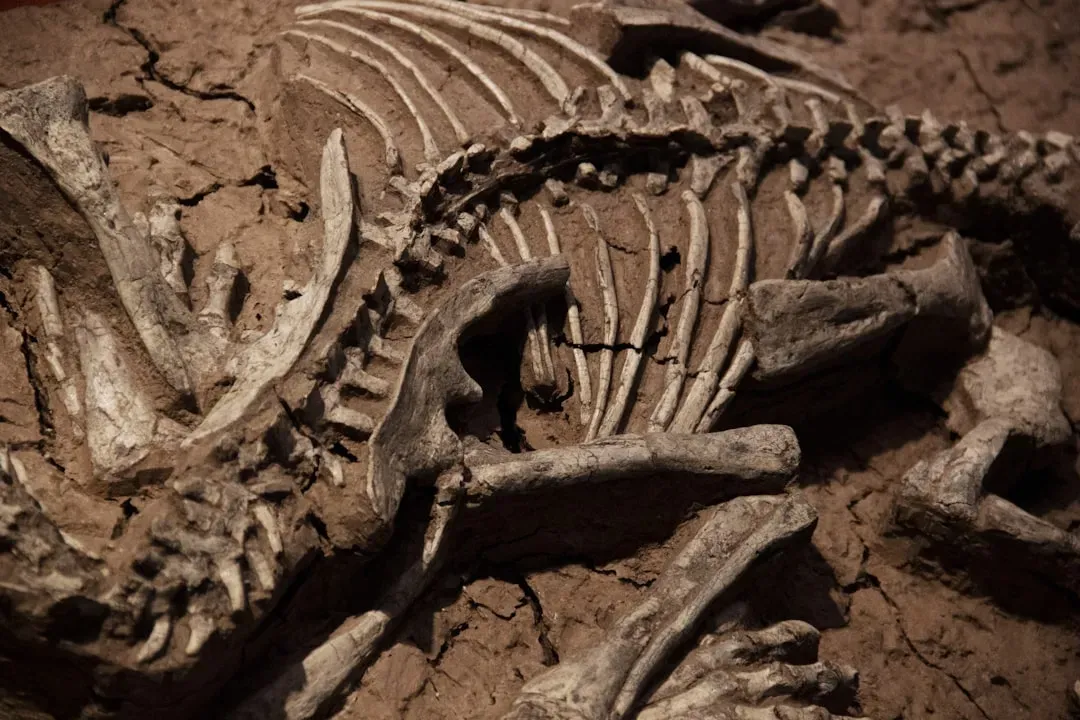
Before you dive into the guts themselves, you need to appreciate how improbable these fossils really are. Soft tissues and stomach contents decay incredibly fast, so for a dinosaur’s last meal to fossilize, a perfect storm of conditions had to hit: rapid burial, low oxygen, and just the right chemistry in the sediment. You are looking at events where a creature died and was covered almost immediately by mud, sand, ash, or silt – often in a flood, a mudslide, or a sudden volcanic event.
That means almost everything you think you know about dinosaur diets is built from clues around the body rather than inside it – teeth, jaws, coprolites (fossilized poop), and wear patterns on bones and plants. Stomach fossils are the rare exception where you get hard proof instead of educated guesswork. When you read that a specific dinosaur definitely ate fish, or leaves, or even other dinosaurs, it usually comes from a handful of specimens where their last meal was literally trapped and preserved inside their ribs.
Bird-Like Dinosaurs With Lizard Lunches: The Case of Sinocalliopteryx
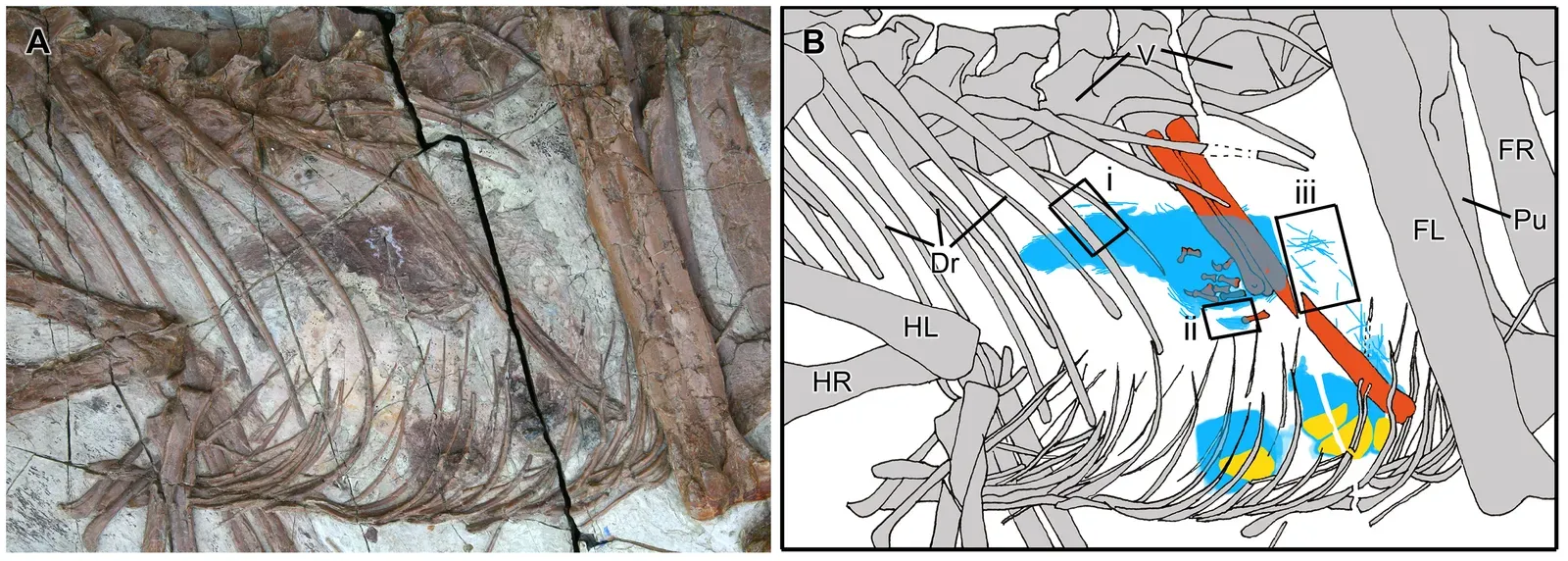
One of the most eye-opening stomach fossils you meet comes from a feathered predator called Sinocalliopteryx, found in what is now northeastern China. When paleontologists cracked open its story, they did not just find bones; they found the remains of other small dinosaurs inside its body cavity. In some specimens, you can see parts of bird-like dinosaurs and even evidence of multiple meals, which tells you this animal was not a one-off hunter but an active, persistent predator chasing quick, agile prey.
If you picture this dinosaur from the outside, it looks like a mid-sized, fuzzy, bird-like hunter on two legs. But the stomach contents push you to see more: an animal that could track, ambush, and consume victims roughly similar to modern ground predators that go after fast birds. You also see that it did not rely on just one type of prey, hinting at an opportunistic lifestyle that would have made it adaptable in changing environments. In other words, its fossilized gut lets you watch it mid-hunt instead of just admiring its skeleton on a museum stand.
Fish on the Menu: Baryonyx and the Riverbank Feast
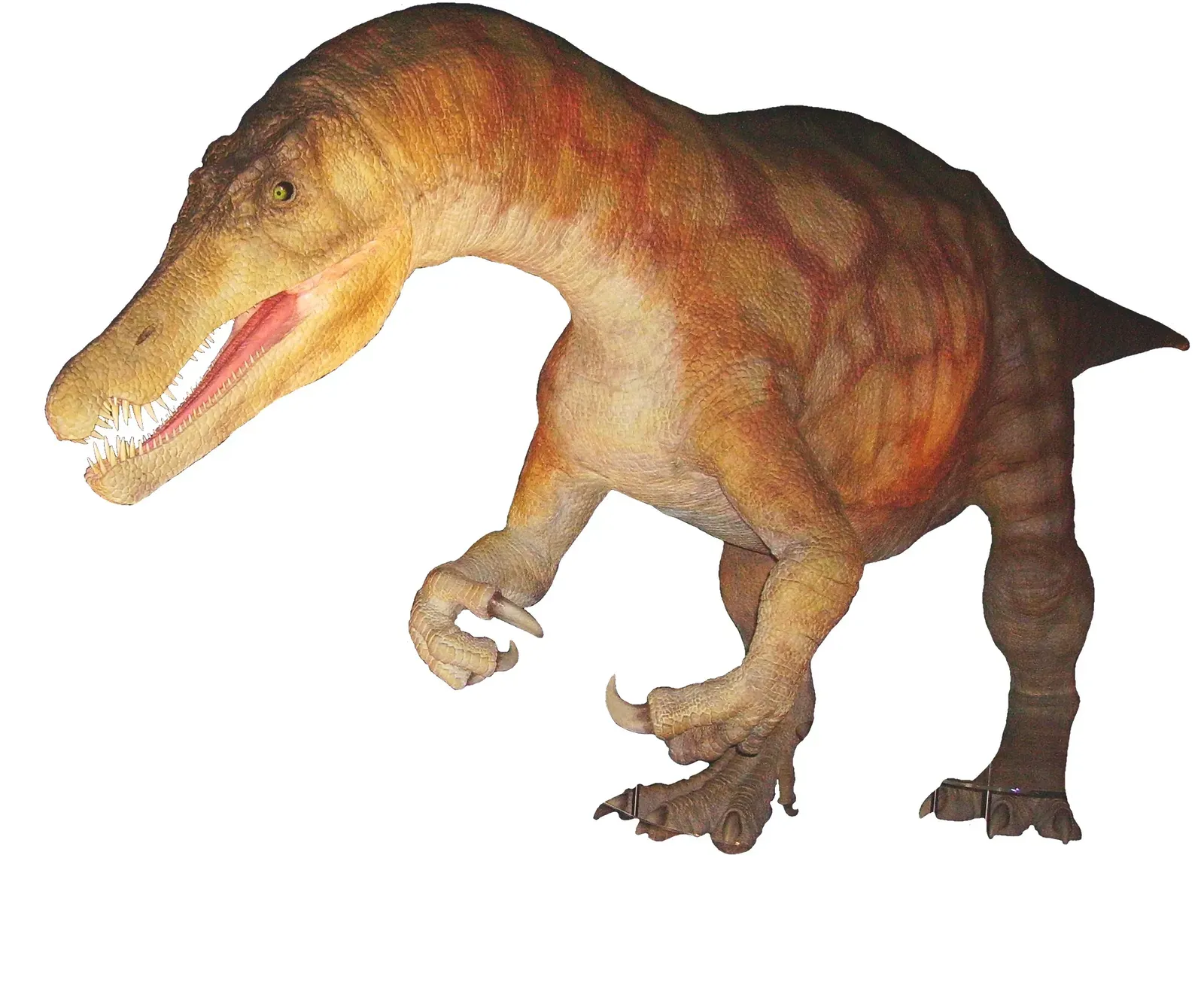
When you look at the long, crocodile-like snout of Baryonyx from early Cretaceous Europe, you can guess that fish might have been part of its diet – but the stomach evidence seals the deal. Inside one Baryonyx specimen, researchers found fish scales and bones, along with possible chunks of other animals. You are not just imagining this dinosaur prowling riverbanks; you have the remains of its actual river-caught meals locked inside its ribcage in stone.
This pushes you to see Baryonyx more like a prehistoric fishing specialist, a bit like a cross between a heron and a crocodile. The long jaws, conical teeth, and strong arms with huge claws suddenly make sense when you picture it lunging into shallow water after slippery prey. And because you also find hints of other food items, you can tell it was not fussy – if a carcass or another animal crossed its path, it probably would not have turned that down either.
Bone-Crunching Scavengers: Gorgosaurus and the Messy Side of Meat-Eating
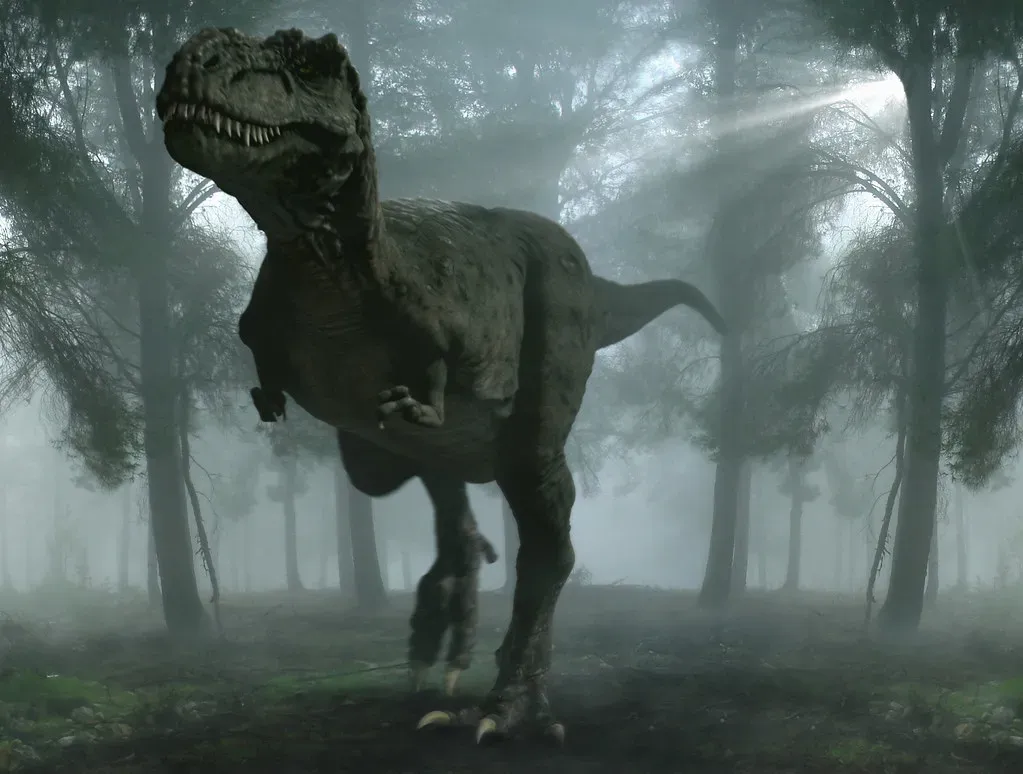
When you think of big theropods like Gorgosaurus from Late Cretaceous North America, you probably imagine clean, cinematic hunts. Stomach fossils tell a messier, far more interesting story. In at least one case, the gut region of a young Gorgosaurus preserved bones from smaller dinosaurs, including heavily chewed and broken fragments that hint at both active hunting and intense scavenging. You are seeing an animal that did not just kill – it tore through carcasses and devoured them almost to the bone.
This kind of evidence reminds you that real ecosystems are rarely tidy. Big predators probably pushed their luck, stealing kills from each other and picking over remains until very little was left. When you see broken bones inside a Gorgosaurus belly, you are looking at more than a meal; you are looking at a recycling system where top predators helped clean up the landscape, much like modern hyenas or vultures that eat almost everything, bones and all.
Prehistoric Salad: Hadrosaurs and Their Plant-Filled Guts
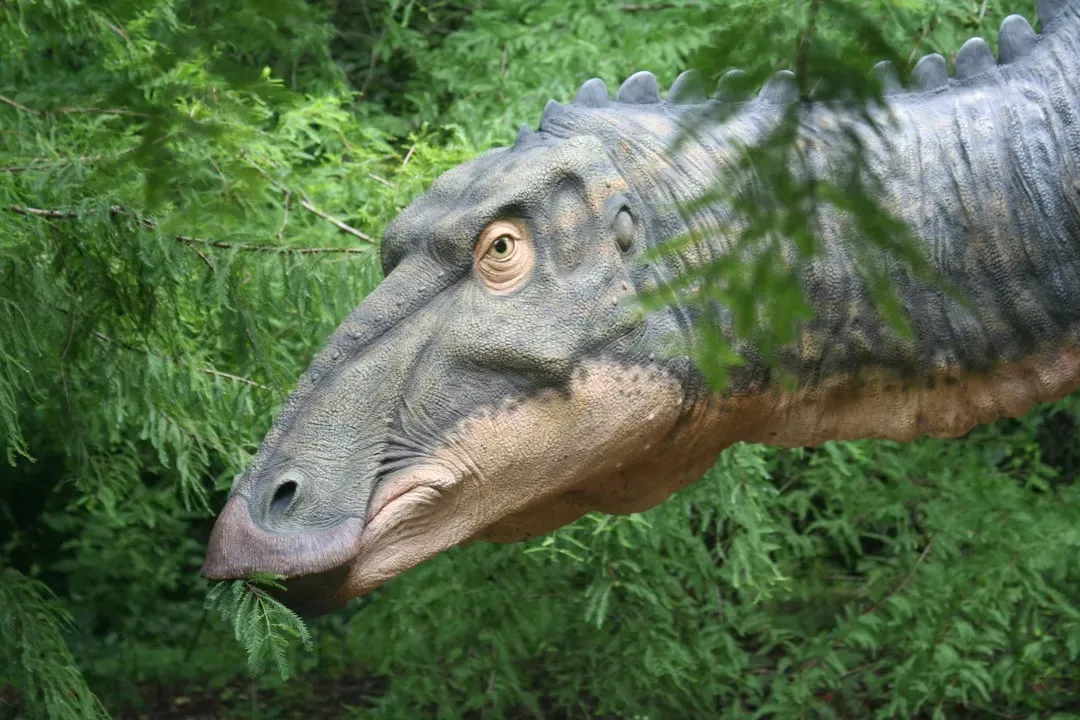
If you have ever wondered what a giant, duck-billed herbivore actually chewed all day, a few exceptional hadrosaur fossils give you a close-up answer. In some individuals, paleontologists have found concentrated masses of plant material in the gut area – often including twigs, leaves, and sometimes conifer needles. When you zoom in on these remains, you see that these dinosaurs were not just random leaf-vacuum cleaners; they were selecting specific types of vegetation that flourished in their local forests and floodplains.
What might surprise you is how varied that plant mix can be. Instead of a single type of leaf, you see evidence of different plants that would have offered a range of nutrients, more like a mixed salad than a monotonous diet. This helps you picture hadrosaurs wandering through ancient river valleys, cropping different plants throughout the day, using their complex jaws and teeth to grind it all down in a way that rivals modern grazing mammals for efficiency.
Gastroliths: The Dino Version of Internal Grindstones
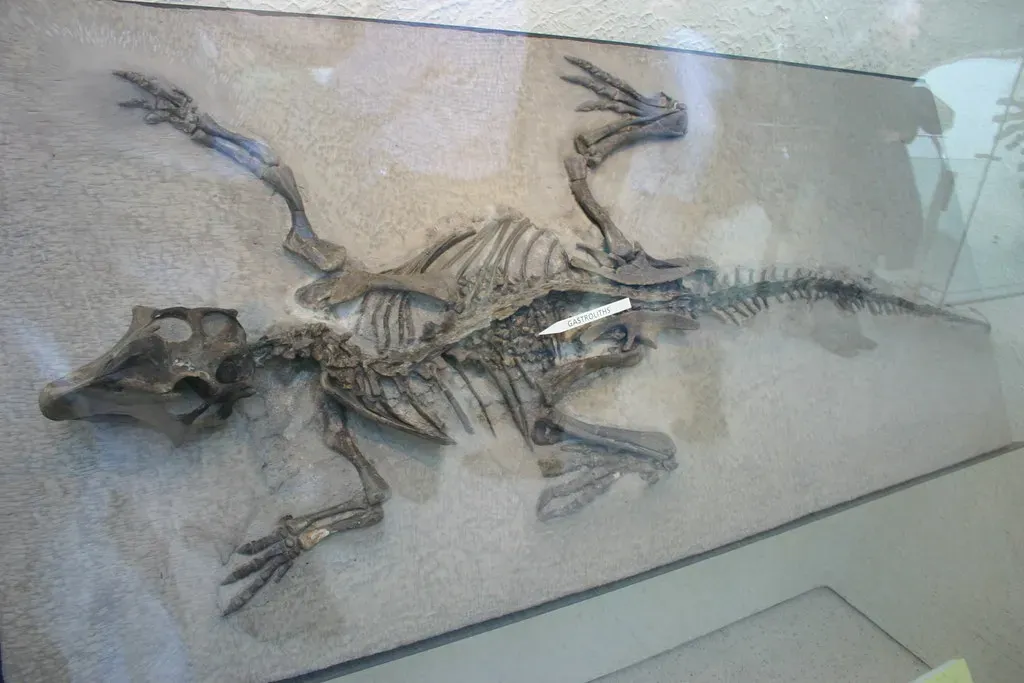
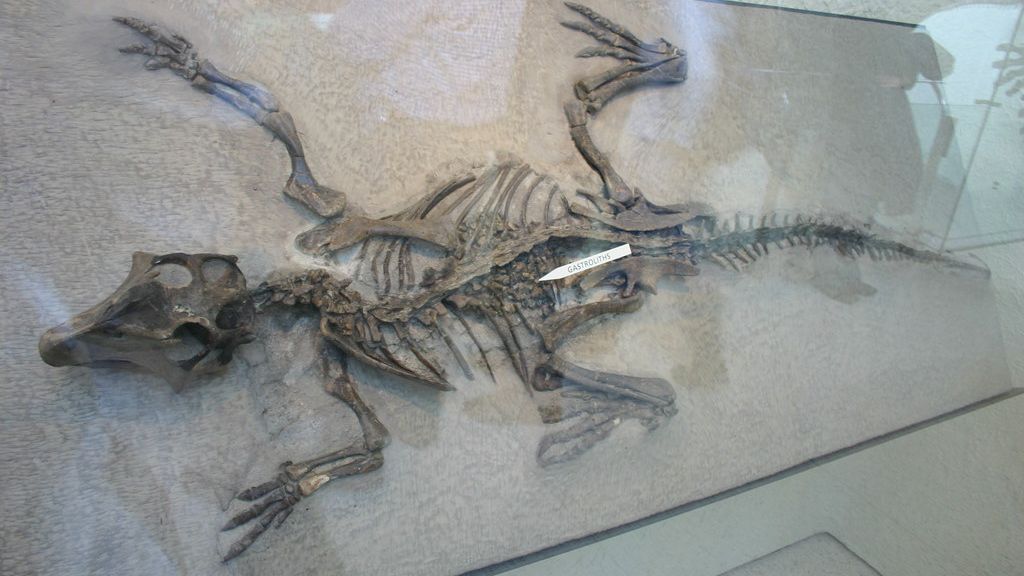
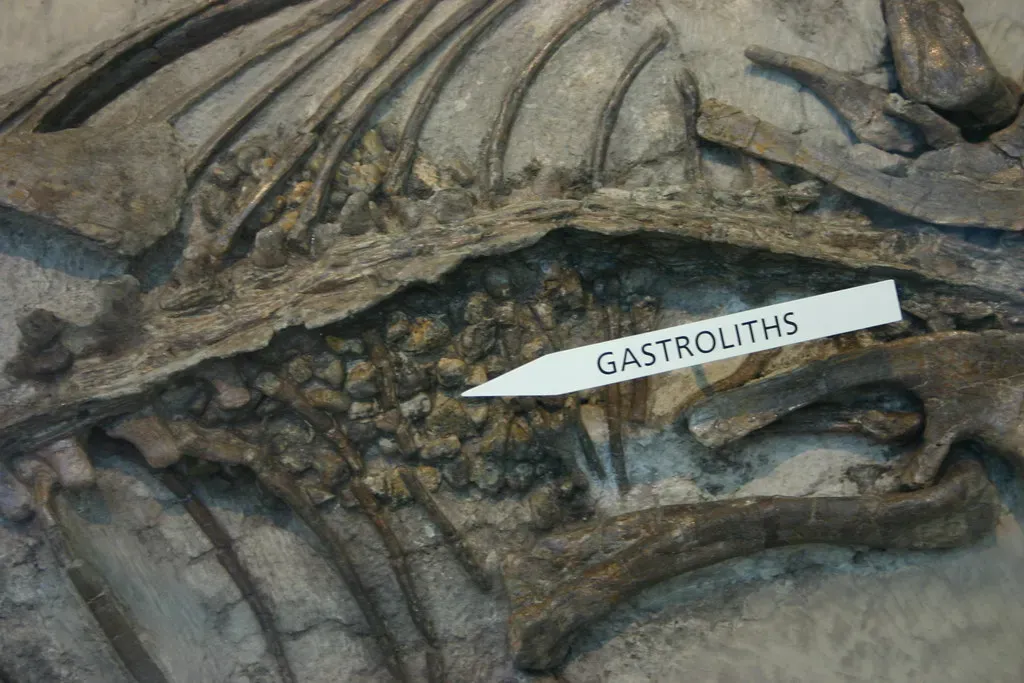
Some dinosaur stomachs do not just hold food; they hold stones. In several species, especially long-necked sauropods and some bird-like theropods, you find smooth, polished rocks clustered in the area where the stomach would have been. These gastroliths, or “stomach stones,” show you that at least some dinosaurs relied on an internal grinding system, similar to how modern birds use a gizzard to crush tough plant material or shells. You can imagine them swallowing small stones intentionally as part of their regular feeding behavior.
When you understand that, the whole picture of their digestion shifts in your mind. Instead of depending only on teeth, these dinosaurs effectively moved part of the chewing process inside their bodies. That means they could strip plants or gulp food relatively quickly, then let those stones do the slow, heavy work of breaking everything down. You are seeing a clever, evolved solution to the problem of processing large amounts of fibrous, low-calorie food in a world without modern grasses or flowering plants dominating the landscape for much of dinosaur history.
Unexpected Omnivores: Therizinosaurs and the Mixed-Menu Mystery
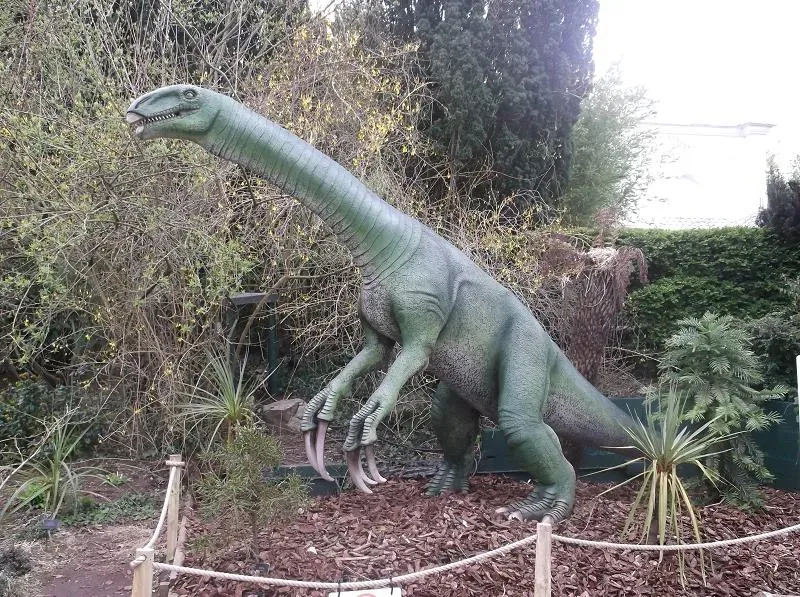
Therizinosaurs are some of the strangest dinosaurs you will ever picture: massive claws, pot-bellied torsos, small heads, and feathers. For a long time, their diet was a mystery. While direct stomach fossils are extremely rare for this group, preserved gut regions and associated plant-rich sediments in some related animals suggest they leaned heavily into plant eating, yet their anatomy leaves the door open for omnivory. When you combine what is known from partial gut contents and tooth structure, you are looking at animals that might have mixed leaves, shoots, and possibly small animals or insects.
Thinking about them this way helps you see how dinosaur diets were not always cleanly divided into “carnivore” and “herbivore.” In the modern world, plenty of animals you label herbivores sneak in the occasional insect or small vertebrate, and the same kind of flexible behavior likely existed in the Mesozoic. Even though the stomach evidence is thinner here than in some other dinosaurs, what you do have encourages you to picture therizinosaurs as eclectic foragers, experimenting their way through the buffet of ancient forests.
Fish-Eating Birds of the Dinosaur Age: Early Avian Guts
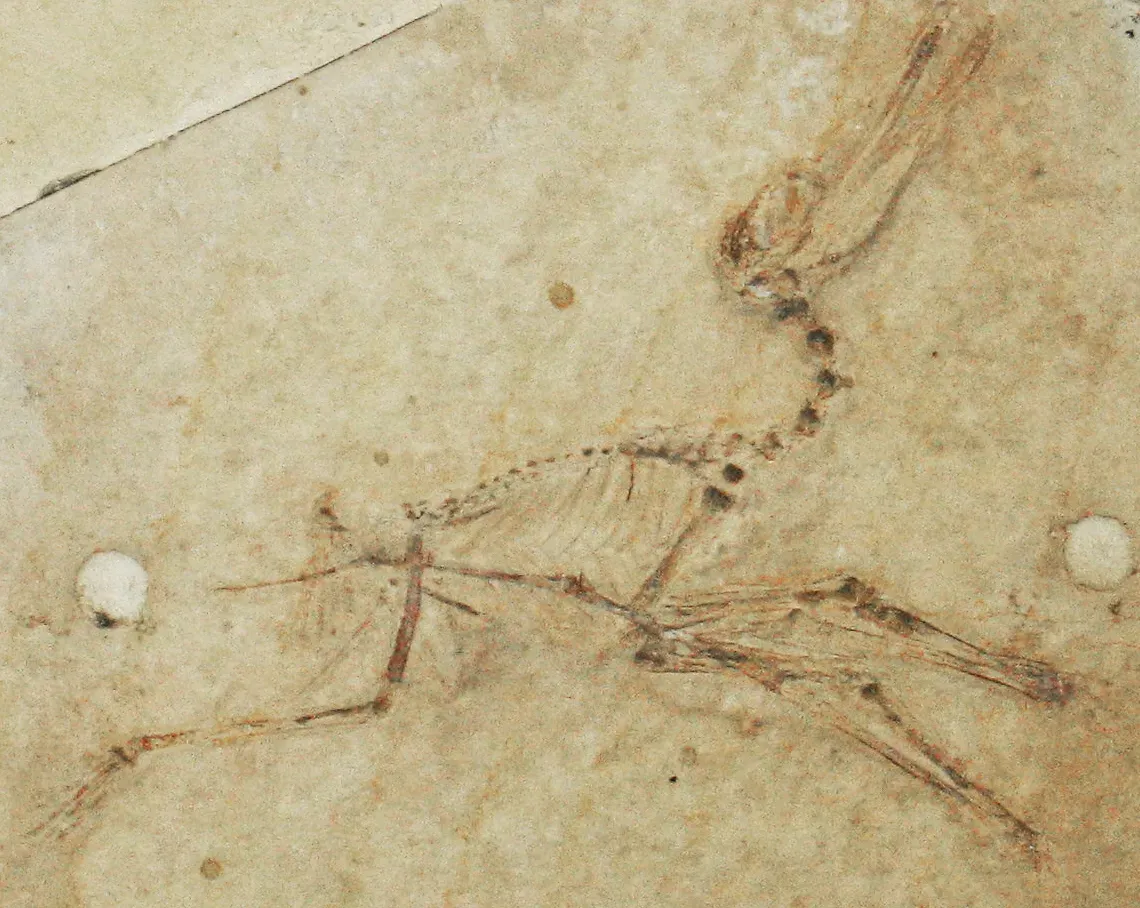
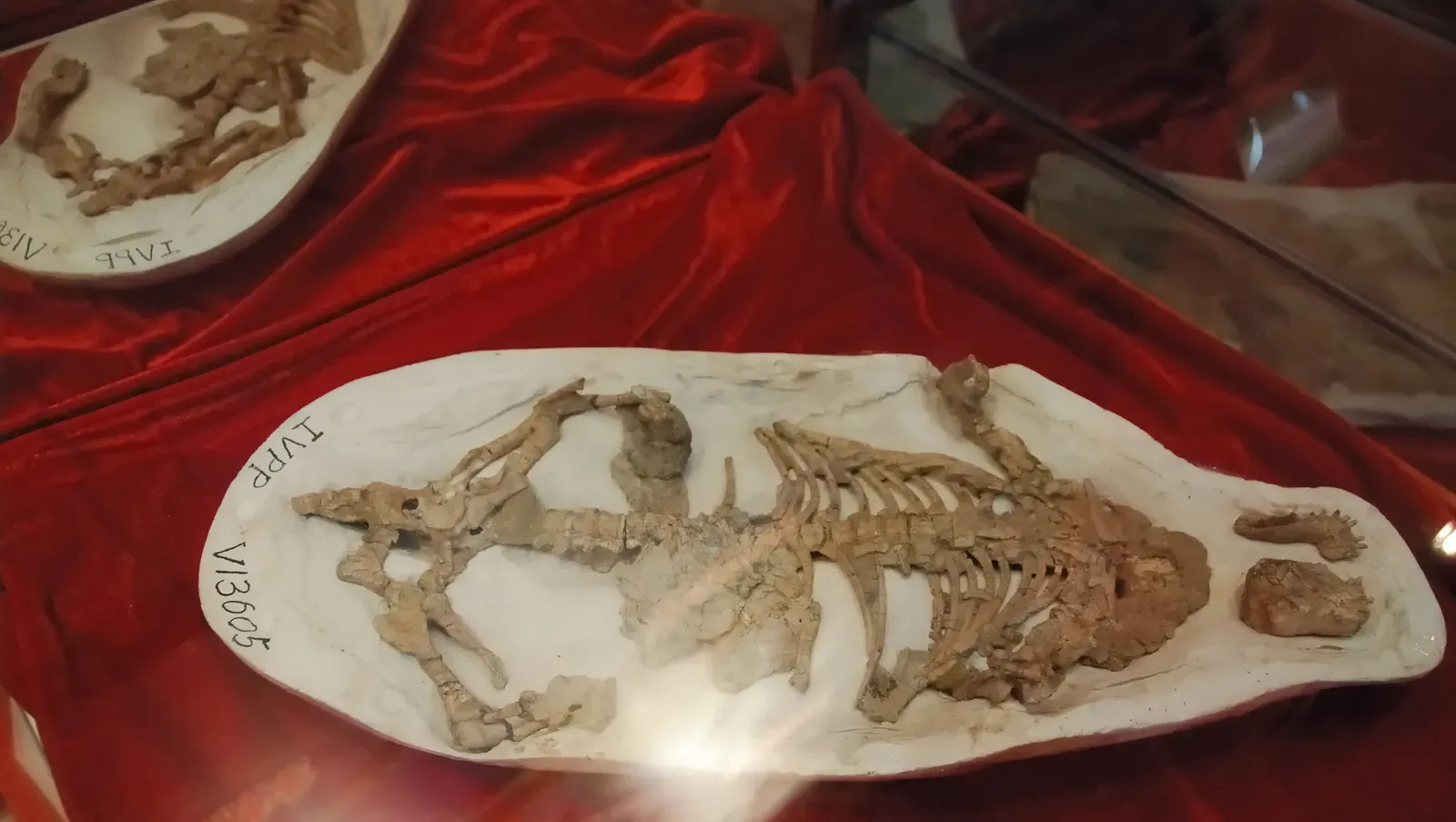
Because modern birds are living dinosaurs, their early relatives give you another angle on prehistoric diets. Some fossils of early bird-like creatures preserve stomach or gizzard regions filled with fish bones, tiny stones, or even seeds. When you see a delicate skeleton with a cluster of fish vertebrae in its belly, you realize that fish-eating birds are not some recent twist of evolution; they have been skimming water and snapping up prey since deep in the age of dinosaurs.
In others, you find seed-filled guts that look very similar to the diets of modern granivorous birds. That tells you that even before the mass extinction at the end of the Cretaceous, some small dinosaurs had already carved out lifestyles that feel familiar to you today – dabbling in specific niches like seed-cracking, insect-hunting, or fish-catching. Those fossilized stomachs show you a world where the early branches of the bird family tree were already testing the full spread of what was on offer in prehistoric lakes, forests, and shorelines.
Armored Plant-Eaters and Their Low-Browsing Lifestyle
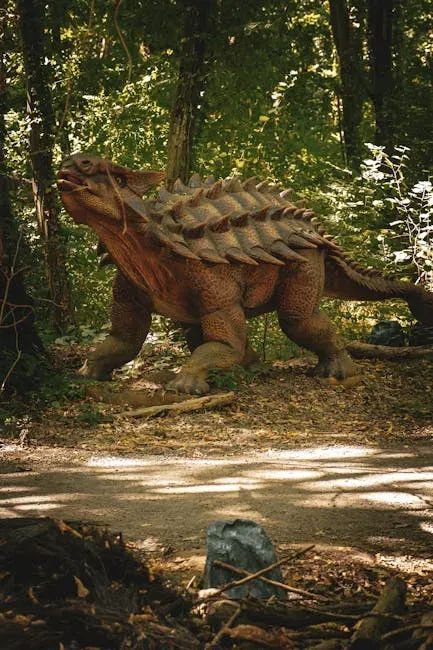
For armored dinosaurs like ankylosaurs and some stegosaurs, stomach contents and closely associated plant material hint at a low-browsing diet. In several fossils, you find remnants of ferns, cycads, and low-lying shrubs near or within the ribcage area. That lines up with what you see in their body design: heavy armor, low-slung heads, and teeth best suited for cropping and shredding rather than delicate nibbling up in the canopy. You can picture them sweeping through undergrowth like living tanks, hoovering up vegetation close to the ground.
These gut clues also tell you something about the habitats they preferred. If their bellies are full of low-growing plants, they were probably spending much of their time in open woodlands, floodplains, or forest edges where that growth was thick and continuous. Instead of picturing them randomly trundling through any landscape, you begin to see them as specialists that built their entire way of life around a certain vertical slice of the plant world, shaping that layer through constant grazing and trampling.
Last Meals and Sudden Death: What Timing Tells You
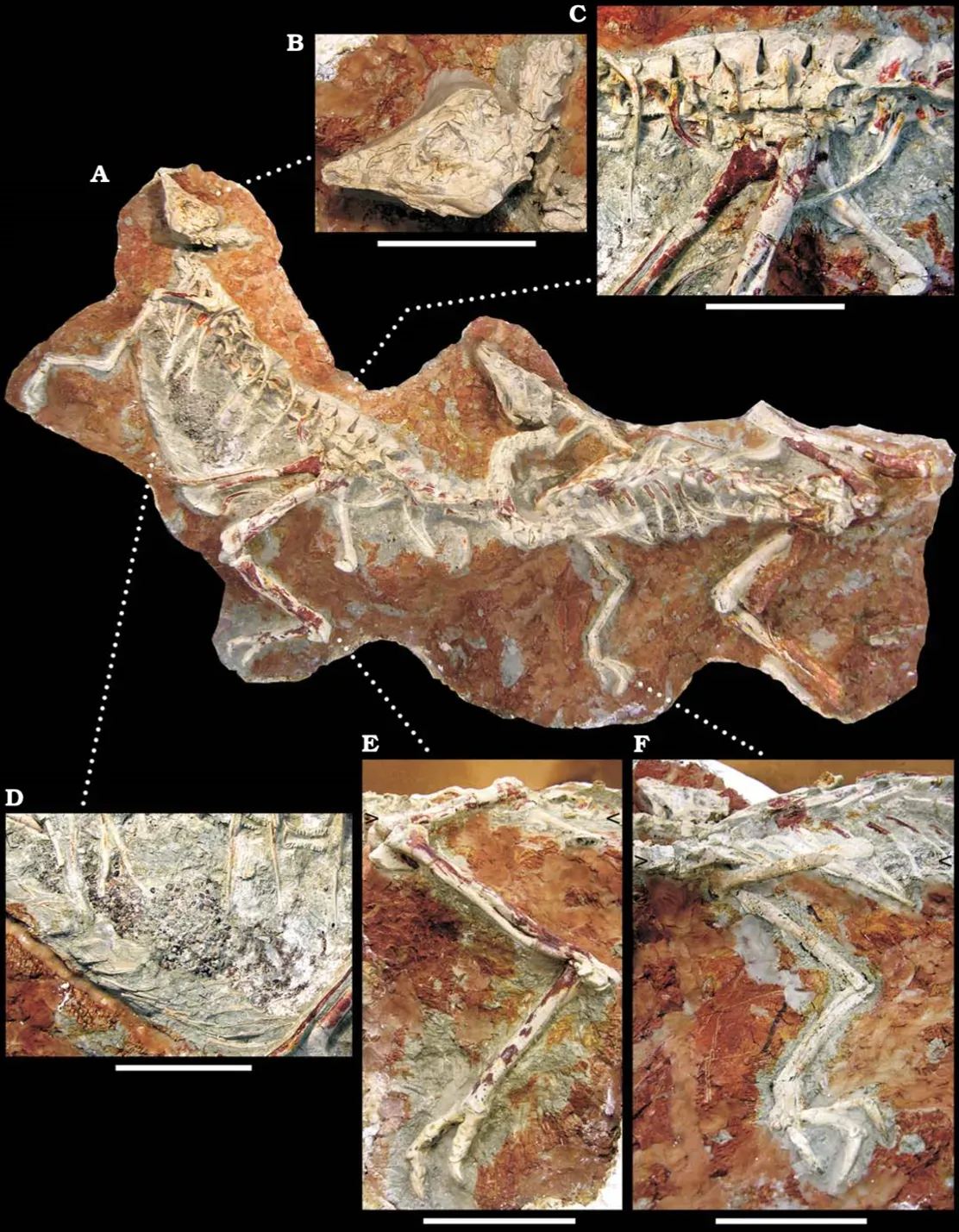
One subtle but powerful detail you get from fossil stomachs is timing. When food in the gut is still relatively intact, it suggests the animal died not long after eating. In some cases, you can almost reconstruct the last hour or so of a dinosaur’s life: a hunt completed, a plant patch raided, or a fish snatched from a stream, followed quickly by a flood, a collapse, or an attack that ended everything. You are not only seeing what they ate; you are catching the moment their story abruptly stopped.
In other fossils, where the stomach contents are more digested or scattered, you learn something about how long they survived after a meal or how the carcass was moved before burial. That might sound technical, but it matters because it helps you tell whether you are looking at a genuine stomach snapshot or a pile of debris washed into the body cavity after death. Either way, when you pay attention to how fresh or broken up the contents are, you get a clearer sense of how fast ancient ecosystems moved and how thin the line could be between an ordinary feeding and a fatal event.
What These Stone Stomachs Really Change About Dinosaurs
Uploaded by FunkMonk, CC BY 2.0)
When you step back from all these examples, you realize fossilized stomachs do not just add trivia – they challenge your stereotypes. They show you feathered hunters chasing other dinosaurs, semi-aquatic predators fishing like crocodiles, herbivores with surprisingly diverse plant menus, and bird-like creatures already experimenting with seeds and fish long before mammals took center stage. You are pushed to trade in the cartoon version of dinosaur life for something much messier, more flexible, and far more familiar.
They also remind you how little of that world you normally get to see. For every fossil with preserved stomach contents, there are countless skeletons that tell you nothing about the animal’s last meal. Yet even this tiny sample proves that diets were complex, behavior was adaptable, and many dinosaurs blurred the lines you try to draw between predator, scavenger, omnivore, and specialist. Once you have looked inside those stone bellies, it is hard to go back to thinking of dinosaurs as simple monsters or gentle giants – you start to picture them as real animals, making choices, taking risks, and living in a world as intricate and unforgiving as your own.
Conclusion: Reading the Past Through Ancient Appetites
When you follow the trail of these ten fossilized stomachs, you are really following a map of how life worked in deep time. Each one is a frozen moment that links anatomy, behavior, and environment into a single story: who ate whom, what plants dominated a landscape, how rivers and forests supported entire food webs. Instead of guessing from teeth alone, you get to read the fine print of prehistoric life written right inside the animals themselves, in the form of fish bones, leaf fragments, stones, and shattered remains of other dinosaurs.
Those stone-filled bellies leave you with a humbling thought: if this much complexity appears from just a handful of lucky fossils, imagine how rich the full, unseen picture must be. As new specimens turn up and technology improves, you will almost certainly see more diets rewritten, more assumptions overturned, and more nuance added to how you understand these long-extinct creatures. Next time you stand in front of a dinosaur skeleton, you might find yourself wondering less about its teeth and more about that hidden space behind the ribs – because now you know that is where some of the most surprising truths are still waiting.