
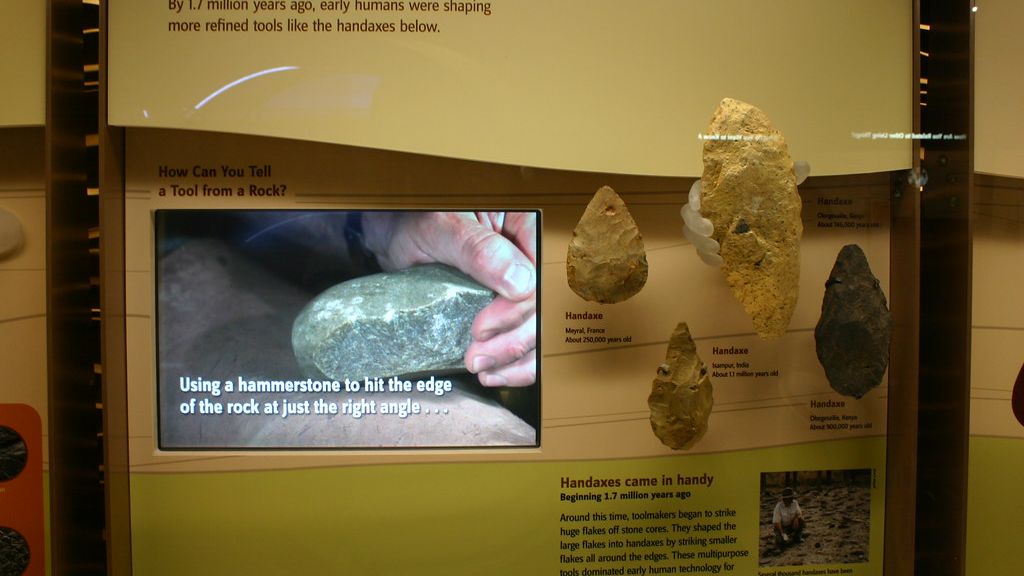
You stand on a continent shaped by stories that began long before recorded history, and one of the most intriguing of those stories centers on a mysterious culture archaeologists call the Clovis people. For decades, they were treated almost like a founding chapter of North America’s human past, a kind of origin point you could trace back to a specific toolkit, a specific time, and a specific way of life. But as new discoveries keep turning up, the story you thought was settled has become much more complicated, and honestly, a lot more interesting.
When you look at the Clovis puzzle today, you’re not just reading about ancient hunters; you’re watching science change in real time. Old ideas are getting challenged, new evidence is forcing you to rethink what “first” really means, and each mammoth bone and stone spear point becomes a clue in a continent-wide mystery. If you like the feeling of standing on uncertain ground where the next discovery could flip the script, the Clovis story is exactly that kind of ride.
The World the Clovis People Stepped Into

If you could drop yourself into North America around thirteen thousand years ago, you wouldn’t recognize the place. Massive ice sheets still lingered to the north, sea levels sat far lower than you’re used to today, and huge animals roamed the landscape: mammoths, mastodons, giant bison, and saber-toothed cats. You’d be living in the late Pleistocene, at the tail end of the last Ice Age, when climate was shifting fast and every ecosystem seemed to be in flux.
In that setting, you’d see the Clovis people as part of a broader wave of humans adapting to a harsh but resource-rich environment. Rivers and meltwater lakes would carve new pathways through the land, opening up routes you could follow as game migrated and plants took hold. The world would feel both dangerous and full of opportunity, and survival would depend on how quickly you could read the changing landscape and move with it. The Clovis story only makes sense when you imagine yourself in that raw, transitional world.
Decoding the Famous Clovis Spear Points
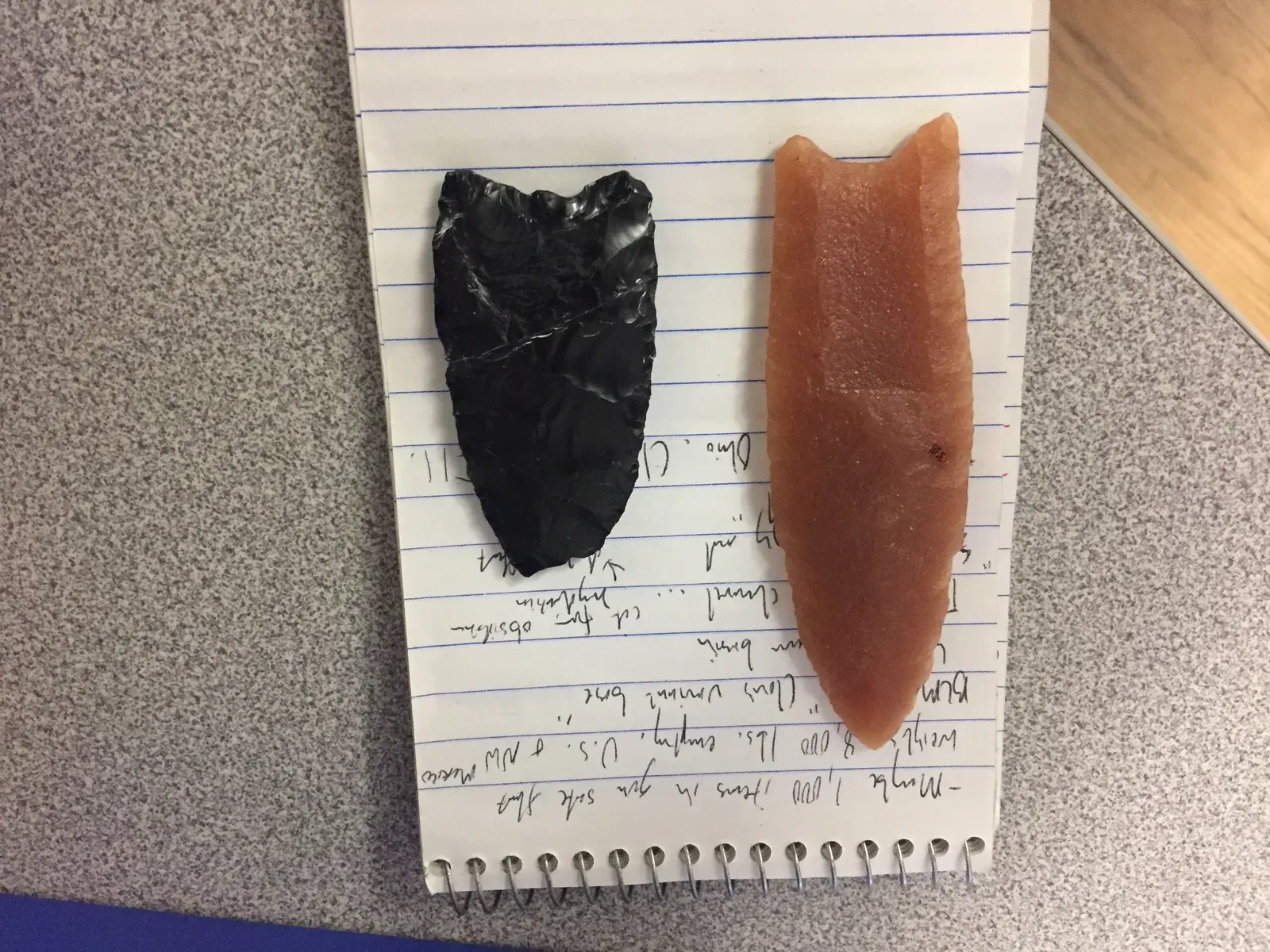
If you’ve ever seen a photo of a Clovis spear point, you know how strangely modern they look for something so ancient. You’re looking at long, leaf-shaped stone blades with careful fluting along the base, a groove chipped out on both sides so the point could be securely attached to a spear shaft. It’s the kind of design that tells you someone was not just improvising; they were perfecting a tool over generations of trial and error. When you hold one, even in a museum case, you can feel the precision in it.
To make a point like that, you’d need patience, skill, and deep knowledge of the stone you were working with. You’d start by selecting high-quality rock – often chert, obsidian, or fine-grained flint – then carefully strike off flakes to thin and shape the blade. The final flute would be the riskiest step; one bad hit and you could snap hours of work in an instant. When archaeologists find similar points scattered from the Great Plains to the Southeast and beyond, you’re seeing evidence of a shared technological tradition that marks the Clovis people like a signature written in stone.
How You Would Have Lived as a Clovis Hunter
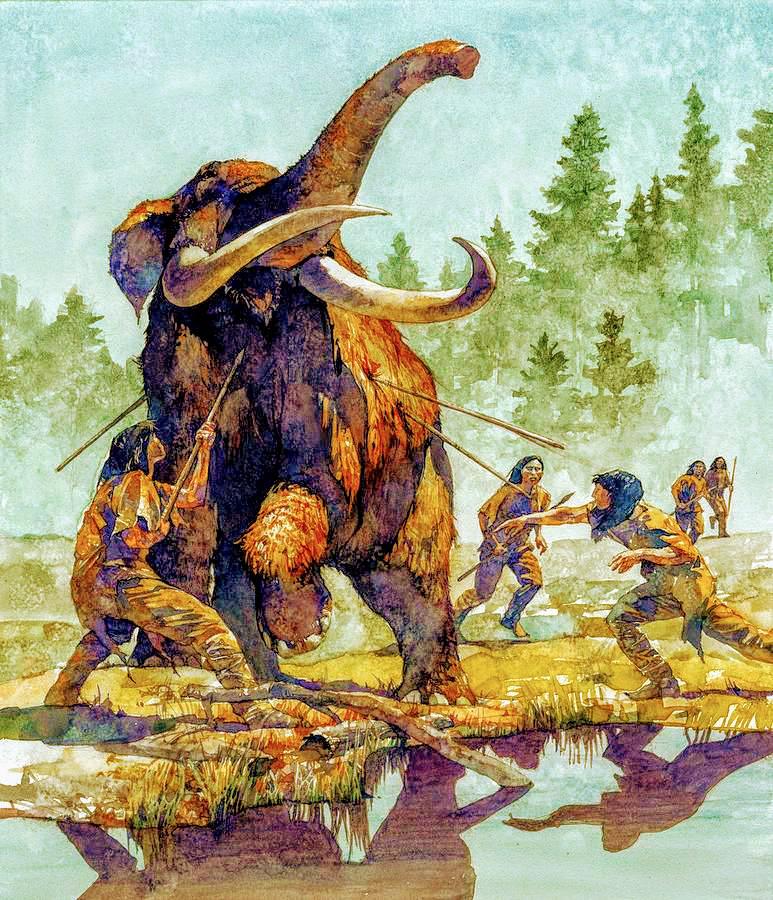
If you lived in a Clovis band, your daily life would revolve around movement and timing. You probably wouldn’t settle in one spot for long; instead, you’d follow the seasonal pulse of the land – migrating herds, ripening plants, and water sources that shifted as the climate changed. Your group might be relatively small, perhaps a few families traveling together, setting up temporary camps near rivers or kill sites, then packing up and moving on when local resources ran thin. Home would be less a place and more a pattern of places you knew well.
Hunting would define a big part of your identity, but it would not be all you did. You’d gather plants, roots, and berries, teach children to recognize tracks and tools, and share stories around a fire about animals, spirits, and distant lands. When your group took down a large animal, you’d work together to butcher it, process the hides, and carry what you could to a safe spot. Life would be physically demanding, but you’d also rely on a tight web of cooperation, memory, and tradition to keep your group alive from one season to the next.
Did the Clovis People Really Arrive First?
For a long time, you would have been told a simple story: the Clovis people were the first humans in the Americas, arriving via a land bridge from Siberia and spreading south once the ice sheets opened a corridor. That idea was so dominant it even had a name in archaeology circles, the “Clovis-first” model, and it shaped how people interpreted almost every new find. If a site was older than Clovis, it was often dismissed or questioned more harshly than younger ones. It felt neat, logical, and easy to remember – but reality rarely stays that tidy.
Over the last few decades, though, you’ve seen that story crack. Multiple sites in both North and South America now appear to be older than classic Clovis layers, sometimes by a thousand years or more, suggesting people were here earlier with different tools and lifestyles. That does not erase the Clovis culture, but it forces you to stop treating it as the starting line and instead see it as one chapter in a longer human presence. When you accept that, the question shifts from “Were Clovis first?” to “How did they fit into a much bigger, older human map?”
Following the Trails of Clovis Across the Continent
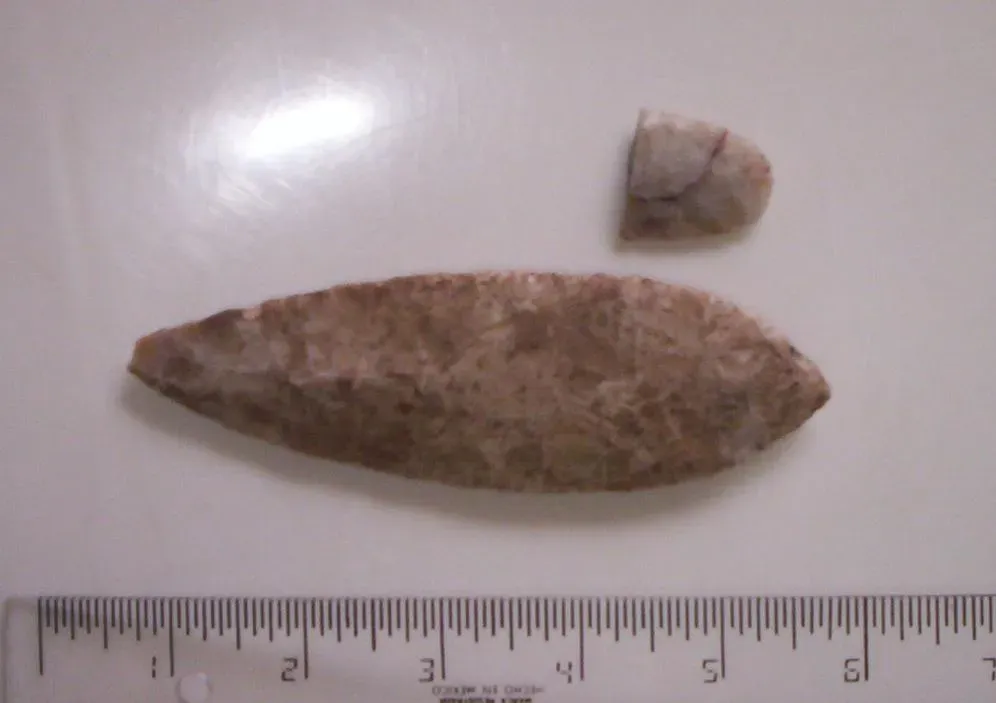
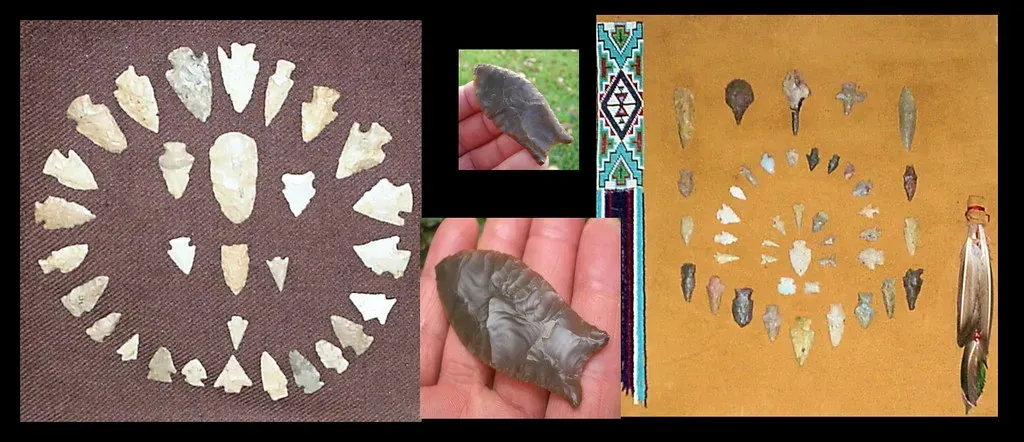
You can trace the footprint of the Clovis people in a surprisingly wide arc if you know what to look for. Archaeologists have found Clovis-style points from the American West and Great Plains to the Southeast and parts of the East Coast, often in association with ancient streambeds, floodplains, and open grasslands. When you imagine these points scattered like breadcrumbs, you start to see that Clovis bands were moving across huge territories. They were not just tucked away in a single valley; they were testing and learning an entire continent.
At major kill sites, you’ll sometimes find clusters of broken points, butchered bones, and tools for processing meat and hides, giving you a snapshot of a single, intense event. In other locations, a lone point might turn up in what was once a campsite, hinting at more ordinary days of cooking, repairing tools, and caring for children. Together, these finds suggest that you’re looking at people who were highly mobile but still deeply familiar with specific landscapes. The Clovis presence becomes less like a brief invasion and more like a systematic exploration and occupation of varied environments.
The Puzzling Disappearance of the Clovis Culture
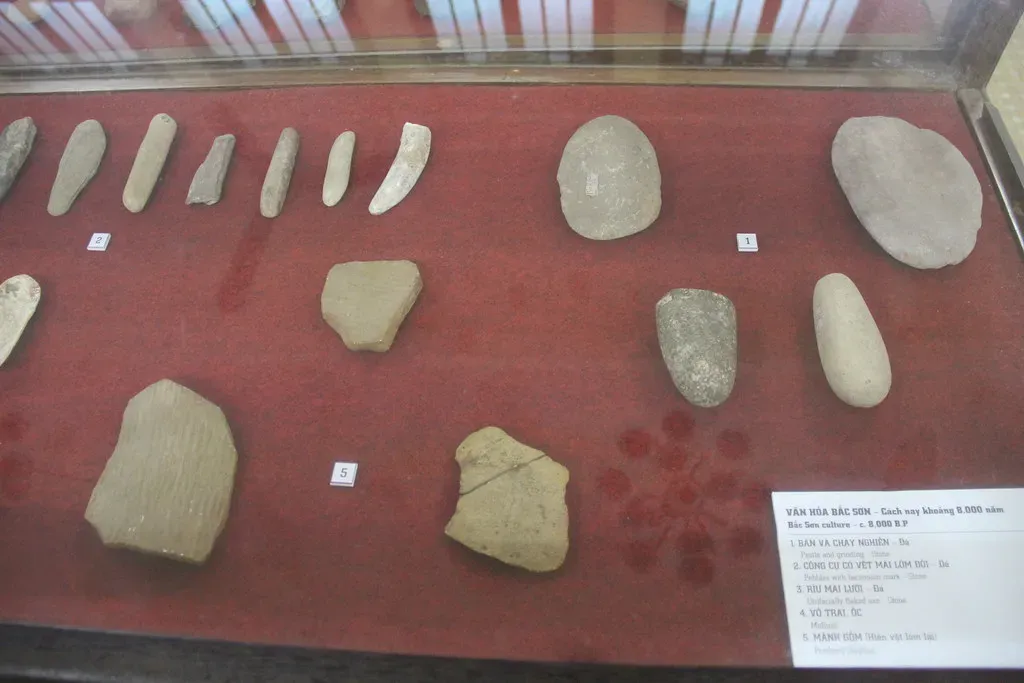
One of the strangest things you notice about the Clovis story is how quickly their classic toolkit seems to fade from the archaeological record. Within a relatively short span of time – on the order of just a few centuries – you start to see new styles of spear points and tools that look related but distinct. It’s as if you walked into a workshop and suddenly saw everyone using a slightly different design, even though they clearly learned from the same ancestors. That shift begs a tough question: did the Clovis people disappear, or did they simply change?
You might be tempted to reach for dramatic explanations, like sudden catastrophes or mysterious extinctions, but the evidence pushes you toward something more nuanced. Around the same period, the climate was warming rapidly, the great Ice Age megafauna were declining or vanishing, and ecosystems were reshaping themselves. In that kind of world, you’d be under pressure to adapt your hunting strategies, your tools, and even your social organization. What looks like the “end” of Clovis may really be the visible trace of people who survived by becoming something new, blending into later cultures you can still detect in stone and bone.
What the Clovis Mystery Teaches You About the Past
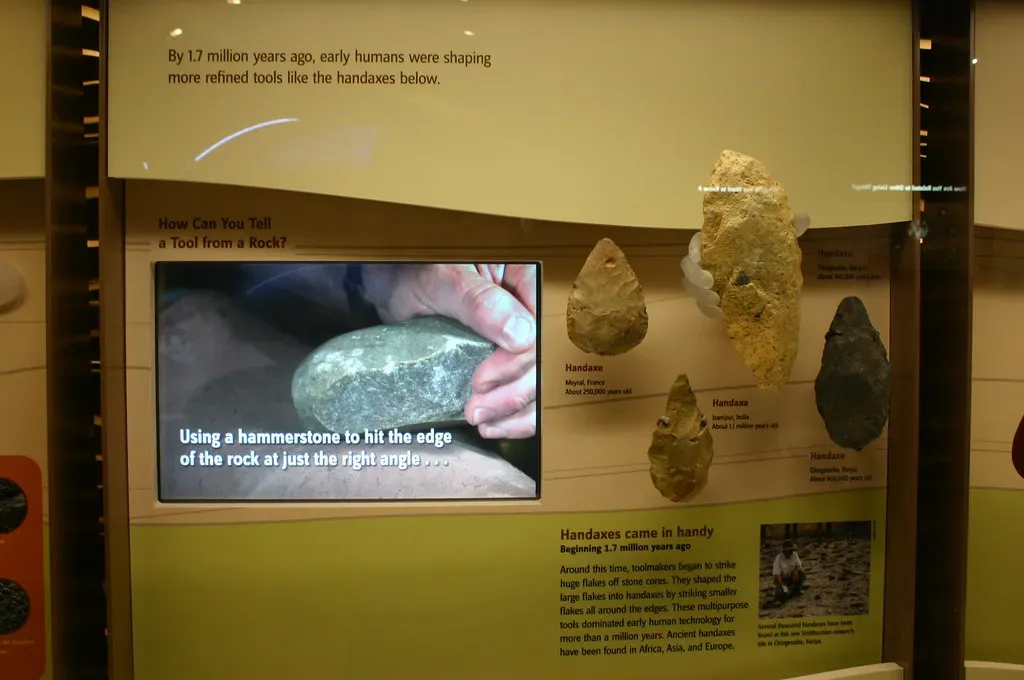
When you step back and look at the Clovis debate, you’re really looking at how knowledge itself evolves. A single discovery in the early twentieth century seemed to lock in a neat origin story, and for years, that story went mostly unchallenged. But as new sites, better dating methods, and fresh perspectives emerged, you had to watch that tidy narrative loosen and bend. If you care about the past, you have to get comfortable with the idea that even the most confident explanations might someday be revised or overturned.
The Clovis people also remind you that your own world is built on forgotten generations of trial, error, and adaptation. You benefit from tools, migration routes, and knowledge that began with people who had none of your modern safety nets or technologies, yet found ways to thrive in a world that was colder, harsher, and less predictable. When you imagine their lives with a bit of empathy, the story stops being just about spear points and dates and turns into something more personal: a reminder that curiosity, resilience, and the drive to explore run very deep in your shared human history.
In the end, the Clovis mystery is less about solving a single puzzle and more about accepting that some questions will stay open, at least for now. You can follow the evidence, weigh the arguments, and update your understanding, but the people themselves will always be just out of reach, visible only through what they left behind. Maybe that’s part of why their story stays so gripping; it leaves room for you to imagine, to question, and to wait for the next discovery. If the ground beneath your feet still holds secrets, you have to wonder: what other stories are waiting to rewrite everything you thought you knew?