You probably grew up with a fairly neat timeline in your head: first simple stone tools, then farming, then cities, then high tech. But when you look closely at some of the strangest prehistoric artifacts ever found, that tidy story starts to wobble. A handful of objects and sites feel like someone slipped a few chapters of human history out of the book and never put them back.
In this article, you’re going to walk through eight of those troublemakers. None of them prove secret lost civilizations, advanced aliens, or time travelers. But each one forces you to admit that your picture of the distant past is less solid than you thought. As you read, notice how often the honest answer is not a dramatic theory, but a simple, humbling one: you just do not know for sure.
Göbekli Tepe: Hunter‑Gatherers Who Built a Stone Cathedral
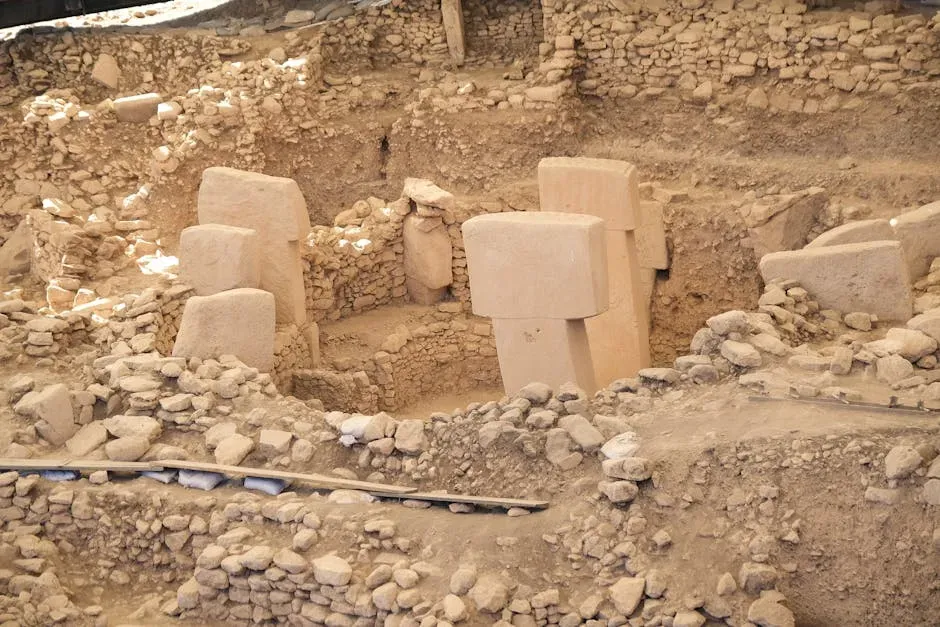
Imagine you are in southeastern Turkey about eleven and a half thousand years ago, long before the pyramids, long before Stonehenge, before pottery, before metal. According to the story you were taught, you are a wandering hunter‑gatherer, living in small bands, moving with the seasons, with no permanent monuments and no real architecture. Now picture your community carving twenty‑ton T‑shaped limestone pillars, arranging them in massive stone circles, and covering them with intricate reliefs of animals and abstract symbols. That is Göbekli Tepe: a site that says, very bluntly, that supposedly “simple” foragers were doing something astonishingly complex.
When you look at Göbekli Tepe through modern eyes, it upends your usual cause‑and‑effect. You have always been told that first farming created surplus food, then villages, then temples. Here, the order might be reversed: it may be that the urge to build shared ritual spaces pulled people together and nudged them toward farming afterward. On top of that, someone deliberately buried much of the site in antiquity, as if they were closing a chapter of their own story. You will not find definitive answers about what the carvings mean or why it was covered over; instead, Göbekli Tepe quietly insists that your standard model of “primitive” and “advanced” is far too simple.
The Antikythera Mechanism: A Bronze “Computer” Centuries Ahead of Its Time
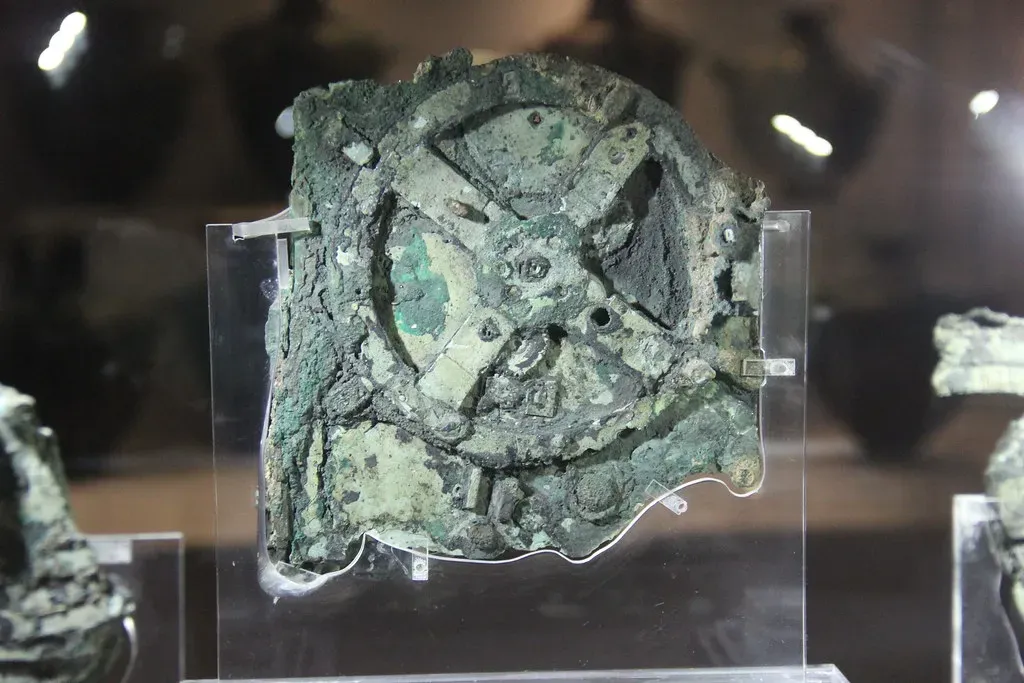
Now shift from Stone Age Turkey to a Roman‑era shipwreck off the Greek island of Antikythera. Divers bring up statues, pottery, and a lump of greenish bronze that looks like scrap. When you put that corroded chunk under X‑rays, though, you see a dense forest of precision‑cut gears. The more closely you study it, the clearer it becomes that you are looking at an extraordinarily sophisticated mechanical device, built around two thousand years ago, that could model the motions of the Sun, Moon, eclipses, and probably the visible planets. You are holding something like a hand‑cranked astronomical calculator, centuries more complex than anything else known from that era.
If you have been taught that complex geared mechanisms only really appear in the medieval or early modern period, this machine is deeply uncomfortable. It tells you that ancient Greek technicians could cut tiny, accurate gear teeth, understand subtle astronomical cycles, and translate all that into a portable, working device. What still nags at you is context: you only have this one battered example, fragments from the same wreck, and a thick silence from the rest of the archaeological record. You are left asking how many such devices once existed, who could afford them, what workshops built them – and why the knowledge behind them seems to have vanished for more than a thousand years.
The Phaistos Disc: A Message You Still Can’t Read
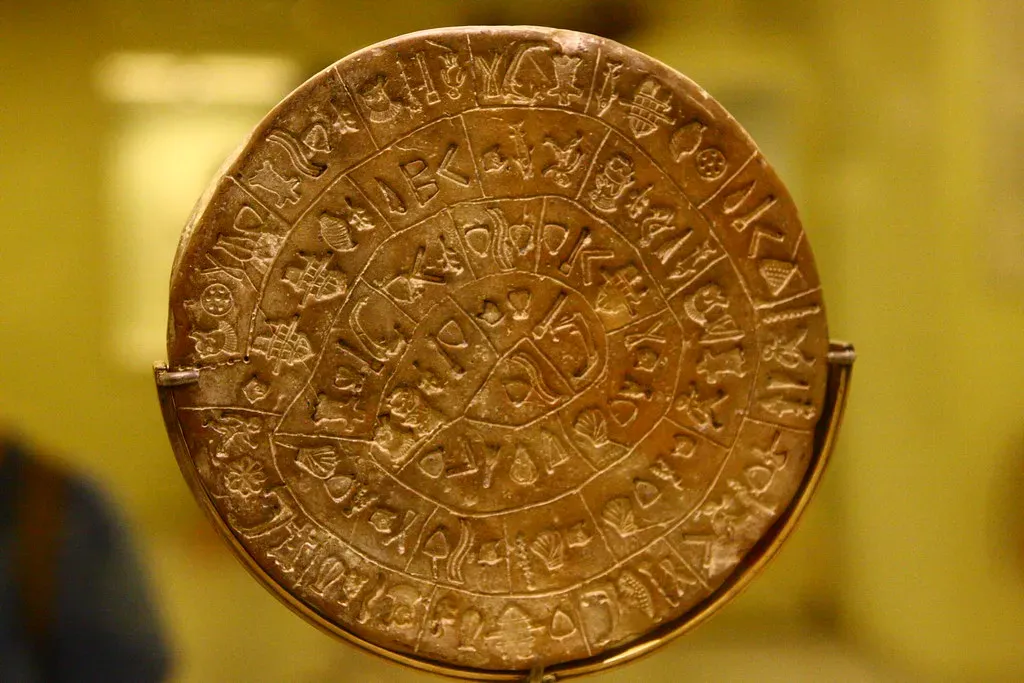
Picture a clay disc, about the size of your hand, unearthed in the early twentieth century at the Minoan palace of Phaistos on Crete. Both sides are covered in a spiral of tiny stamped symbols: human figures, tools, plants, animals, abstract shapes. Someone in the Bronze Age took the trouble to press at least forty‑plus distinct signs into wet clay in a careful pattern and then fire it. You are looking at one of the earliest known examples of movable‑type style stamping, and you still have no clear idea what it says. The script does not match anything you can already read.
When you try to decode the disc, you run straight into the limits of your tools. You have only one example of this writing, not a whole library. You do not know the underlying language, and you have no bilingual “Rosetta Stone” to help you. Some researchers argue it is a hymn, others see a ritual or a list, and a few have even wondered if it is a hoax from the time of its discovery – but the balance of evidence supports it being genuinely ancient. What the Phaistos Disc really does is remind you how fragile written communication is: a script can vanish so completely that three and a half thousand years later, with all your computers and algorithms, you still cannot hear the voice that tried to speak to you.
The Nebra Sky Disc: When Prehistoric Metalworkers Painted the Heavens
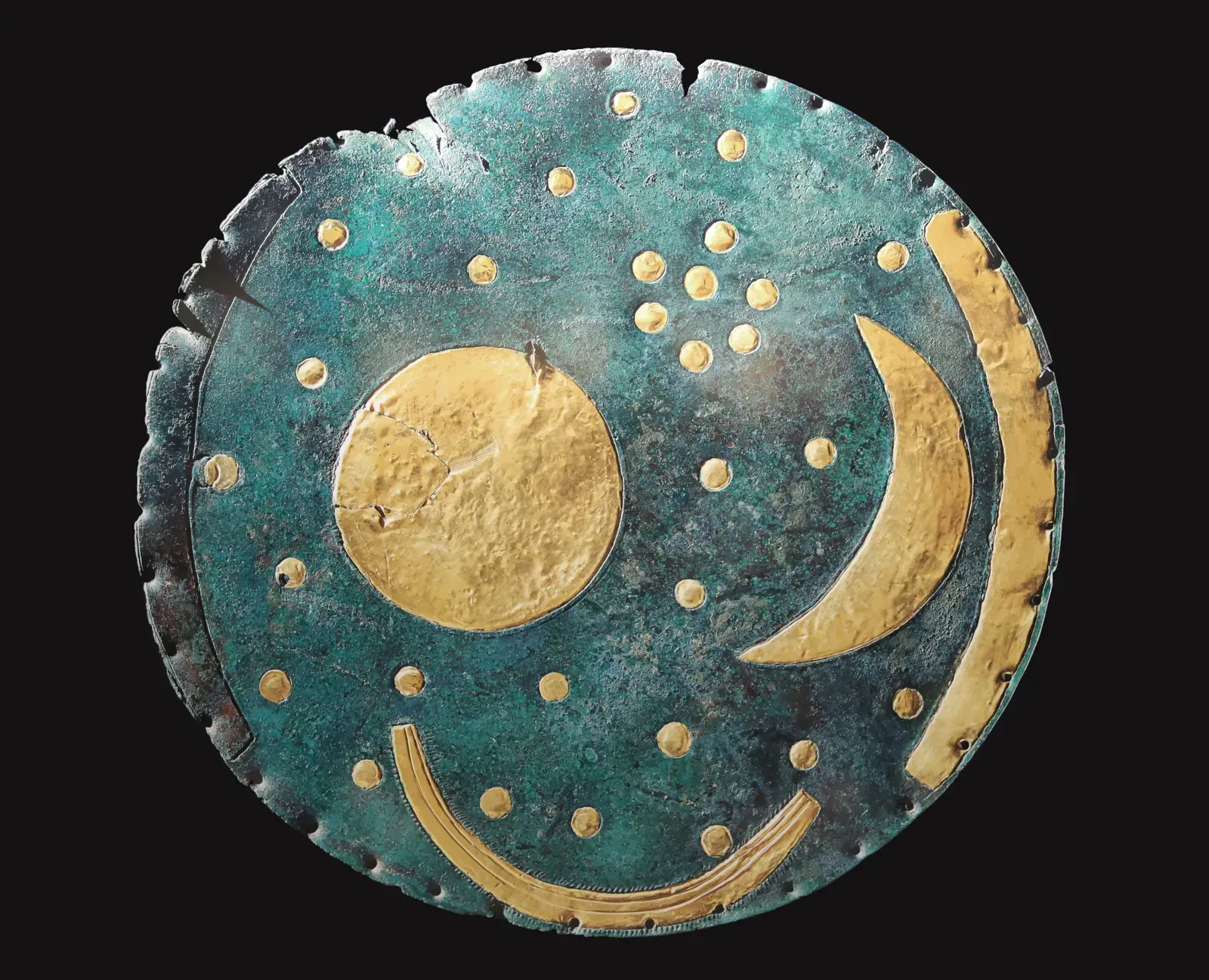
Now head to central Germany about three and a half to four thousand years ago. You uncover a bronze disc, roughly the span of your outstretched hand, with gold inlays forming a crescent Moon, a round Sun or full Moon, and a cluster of dots that matches the Pleiades star group. Additional golden arcs along the sides and bottom seem to mark the range of the Sun’s rise and set at solstices, and maybe even a symbolic “solar boat.” You are not just looking at decoration; you are looking at an intentional, stylized picture of the sky created by Bronze Age craftspeople.
For you, the Nebra Sky Disc knocks down another quiet assumption: that people in this era had only vague, myth‑soaked ideas about the heavens. Here you see someone combining advanced metalworking with careful observation of the Sun and stars, embedding celestial order into a portable object that may have had ritual or practical use. There has been heated debate over its exact date and the details of its interpretation, and researchers have revised their views as new analyses come in. But even with that caution, you are still forced to admit that people you might casually call “prehistoric” were mapping the cosmos with far more nuance than your stereotypes allow.
The Baghdad “Battery”: Early Electricity or Misread Ritual Object?
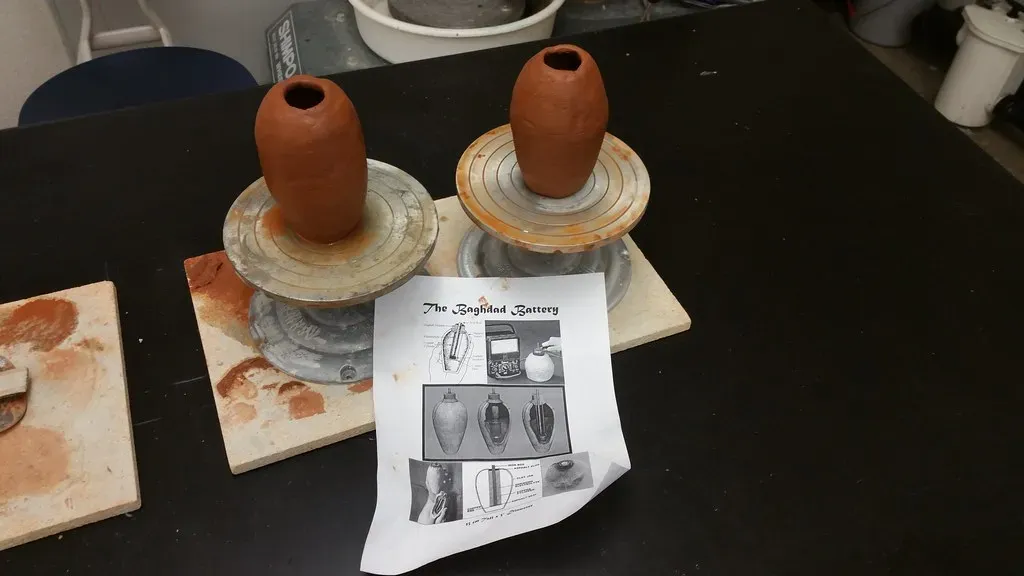
Outside modern Baghdad, archaeologists once uncovered small ceramic jars containing a copper cylinder and an iron rod sealed with bitumen. On paper, you could pour in an acidic liquid and generate a tiny electrical potential. When you hear that, your mind jumps straight to dramatic images: ancient electroplating workshops, lost experiments with electricity, maybe even flashlight prototypes two thousand years early. This is why you keep seeing the phrase “Baghdad Battery” in popular books and documentaries.
But when you step back and ask what you can actually prove, the story becomes messier – and more interesting. You have no ancient text describing these jars as electrical devices, no clear associated equipment, and no consistent design across all examples. Alternative explanations fit the cultural context better: they could simply be containers for scrolls, ritual objects, or vessels used in magical or religious practices. If you hook replicas up with modern wires and electrolytes, yes, they work as crude cells, but that experiment alone does not tell you how they were really used. What the “Baghdad Battery” episode shows you is how eager you are to project modern technology backward, and how important it is to let the limited evidence lead, rather than your imagination.
The Shigir Idol: An Eight‑Meter Puzzle Older Than Your Myths
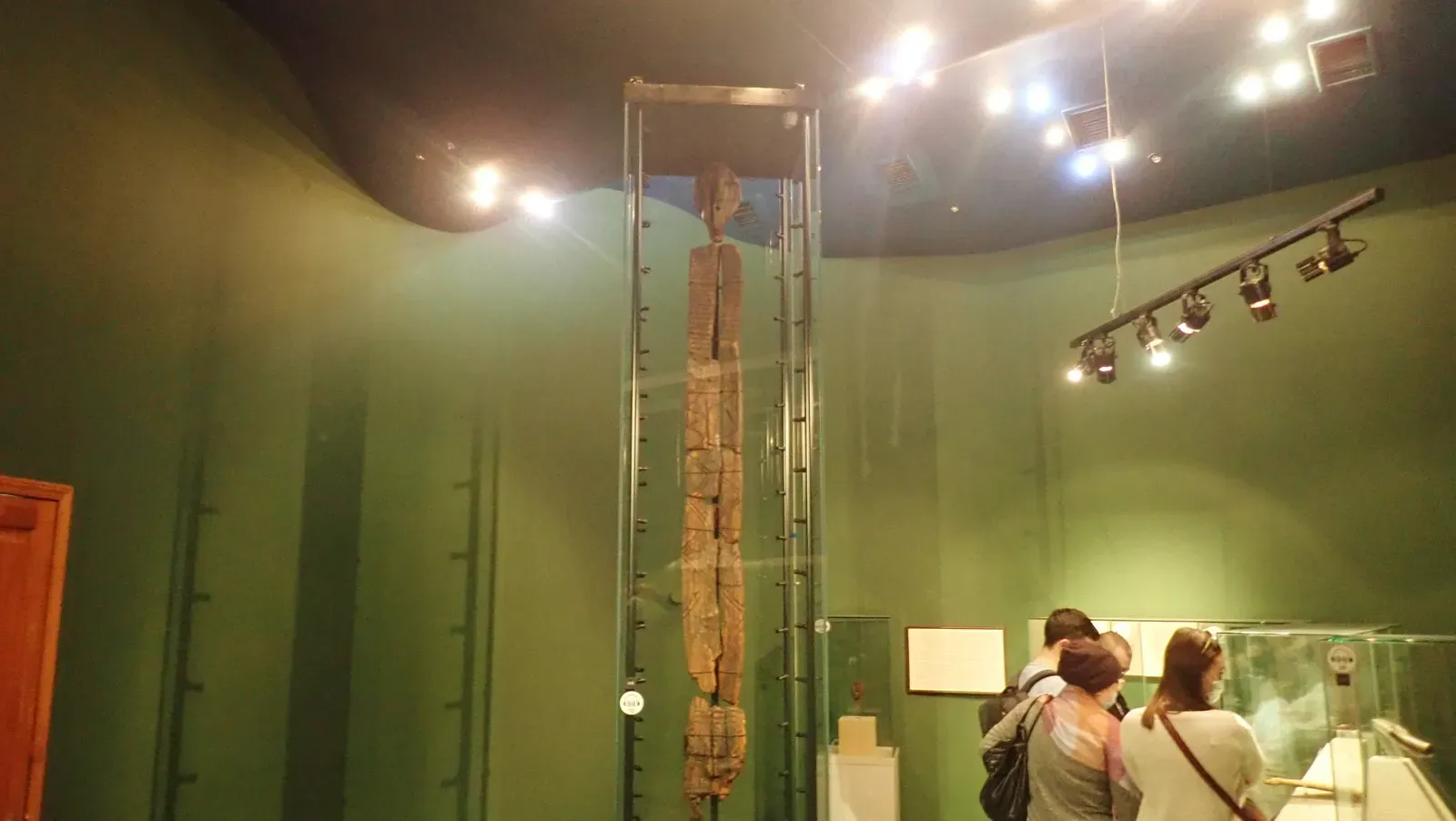
Travel in your mind to a Siberian peat bog in the late nineteenth century, where workers pull out a long, darkened timber. When archaeologists piece the fragments together, they realize they are looking at an enormous carved wooden figure, originally around five meters tall or more, covered in zigzags, faces, and abstract symbols. Later radiocarbon dating pushes its age back to roughly eleven or twelve thousand years ago, making it one of the oldest known monumental wooden sculptures on Earth. You are staring at a work that is roughly as old as Göbekli Tepe, but made of a material that almost never survives.
The Shigir Idol quietly wrecks the idea that deep prehistory was visually and symbolically empty. Here you have a hunter‑gatherer culture in the forests of Eurasia investing huge effort into an abstract, possibly sacred object, richly encoded with meaning you can barely guess at. Some researchers think the patterns might represent a kind of map or a cosmological story, others see totemic faces stacked along a vertical axis. You do not have a key, and you probably never will, but you can no longer pretend that sophisticated symbolic art began only with famous stone temples or written myths. This one carved log tells you entire artistic traditions could have flourished and decayed in perishable materials, leaving almost nothing for you to find.
Ancient Megalithic Alignments: Stones That Track the Sky
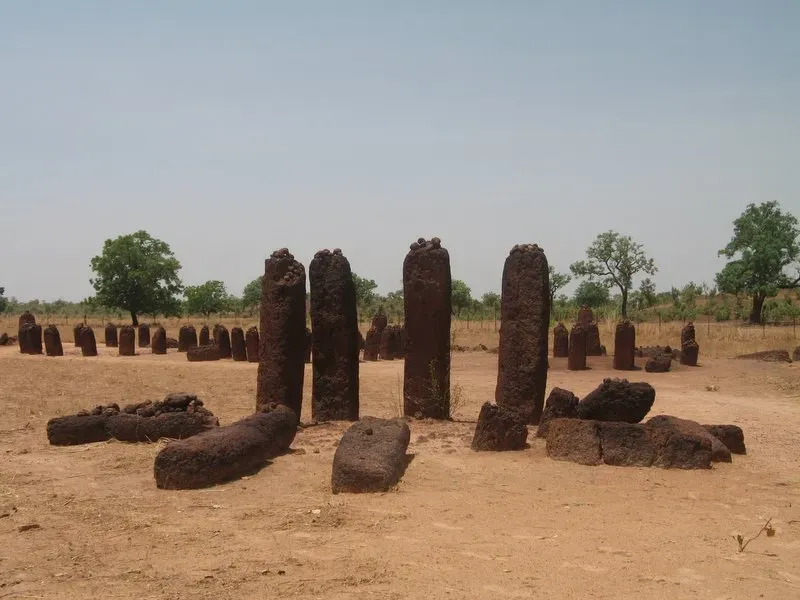
When you picture prehistoric stone monuments, you might first think of Stonehenge – but similar, and sometimes older, alignments of standing stones and earthworks stretch from Europe to the Middle East and beyond. Again and again, when you map these sites carefully, you find alignments to solstice sunrises, lunar standstills, or specific star positions. Even when the exact purpose is debated – calendar, ritual, burial, or all of the above – you keep seeing the same pattern: people moving enormous stones to mark cycles in the sky they observed for generations.
For you, these alignments challenge the idea that early farmers and herders were only concerned with immediate survival. To build and maintain such monuments, you need long‑term planning, social organization, and a willingness to coordinate many hands around a shared vision that stretches far beyond one lifetime. Think of it like a community‑built long‑exposure photograph of the heavens, except your exposure time is decades. You may never pin down every symbolic layer built into these circles and avenues, but at a minimum they tell you that prehistoric societies were tracking celestial cycles with patience and accuracy that deserves the word “science,” even if they wrapped it in sacred stories.
Mysterious Cave Art and Deep Time Symbolism
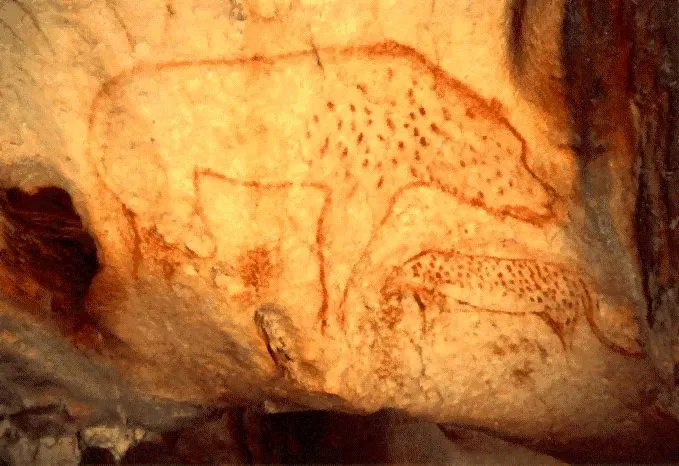
Step into a dark cave lit only by a flickering lamp, and you begin to understand why ancient wall paintings still hit you in the gut. From Europe to Indonesia, you see images of animals, human‑like figures, and strange signs painted or engraved tens of thousands of years ago. Some panels show sophisticated perspective, motion, and composition that would not embarrass a modern artist. Others combine animals with hand stencils, dots, ladders, and abstract marks whose meanings remain stubbornly out of reach. You are not just seeing decorations; you are seeing minds at work across a chasm of time.
Recent studies have suggested that arrangements of dots and lines near animals might encode seasonal information, like a kind of proto‑calendar, while other researchers argue for more symbolic or shamanic interpretations. You are stuck with partial evidence: pigment stains, overlapping layers, and the bare rock itself. There is no way for you to run a definitive experiment on what was in the painter’s head. So you are left with a sobering realization: even when the artwork is literally in front of your face, your understanding is filtered through your own culture and expectations. Cave art reminds you that complex abstract thought and shared symbolism have been part of being human far longer than writing or cities, and that much of that inner life will always stay just beyond your reach.
Conclusion: Living With Questions Instead of Neat Stories
By the time you step back from these eight examples, you can feel your mental timeline stretching and creaking. Göbekli Tepe and the Shigir Idol tell you that so‑called “simple” foragers could organize grand monuments and deep symbolic art. The Antikythera mechanism and the Nebra Sky Disc show you that ancient craftspeople were modeling the heavens with a precision and creativity you might have dismissed as impossible for their eras. The Phaistos Disc, the Baghdad jars, megalithic alignments, and cave paintings all confront you with messages whose full meanings remain stubbornly out of reach.
None of this forces you to accept wild claims about lost super‑civilizations, and you do not need aliens to explain any of it. What you do need is a willingness to hold uncertainty without filling the gaps with comforting stories, whether “they were primitive” or “they were impossibly advanced.” The real lesson is that people like you – curious, imaginative, flawed – have been wrestling with the sky, with time, with death, and with meaning for far longer than your neat charts suggest. As you look at these artifacts, maybe the most unsettling question is also the most honest one: how much of your own past are you still underestimating?