
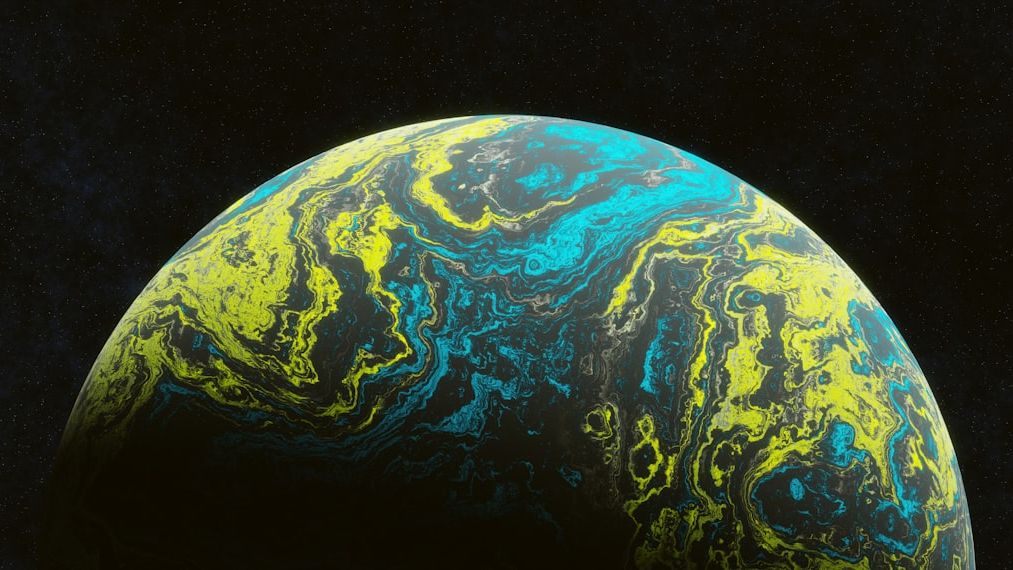
When you picture the early Earth, you might think of a quiet blue planet slowly settling into calm oceans and gentle skies. In reality, if you could step back in time more than three and a half billion years, you would be dropped into an alien world so violent, toxic, and unfamiliar that you probably would not survive a single breath. Yet in those extreme conditions, tiny, fragile life somehow took hold and refused to let go.
In this article, you are going to walk through that unimaginable world and see how the first microbes could have clawed their way into existence. You will explore boiling vents, lightless oceans, and a sky without oxygen, and you will see why scientists still argue passionately about where life actually began. Along the way, you will notice a surprising theme: the same forces that would kill you today may have been exactly what early life needed to get started.
The Hellish Face of Early Earth You Would Never Recognize
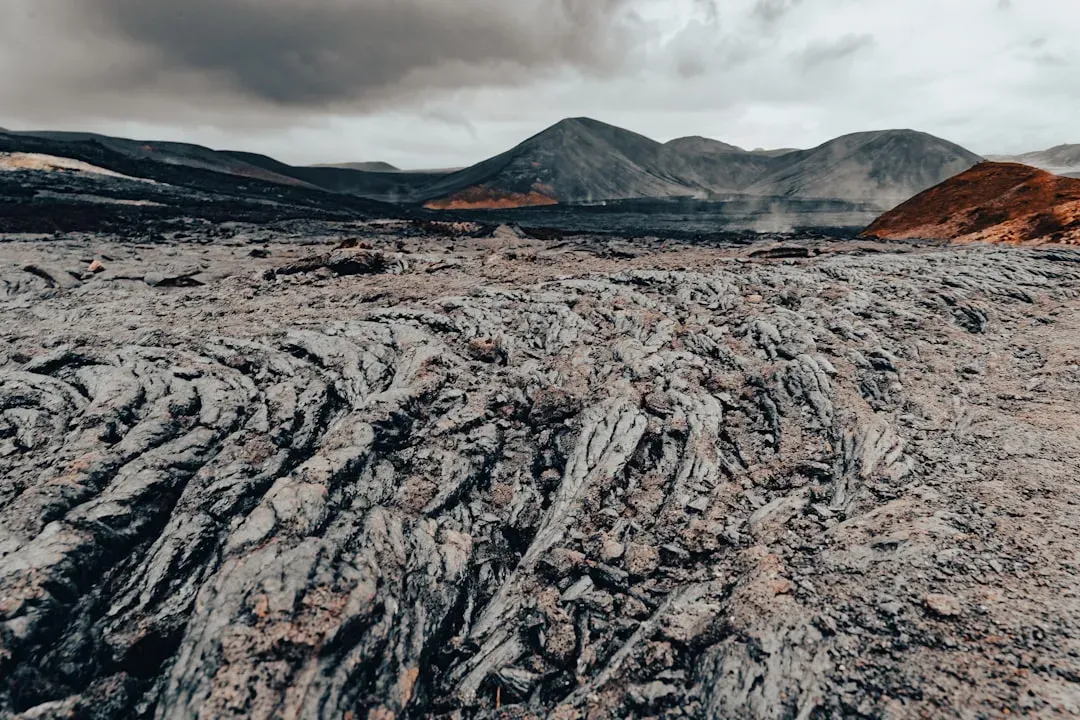
If you could land a time machine on Earth about four billion years ago, you would probably call it a nightmare planet. Instead of blue skies, you would look up at a hazy, thick atmosphere loaded with volcanic gases like carbon dioxide, nitrogen, and sulfur compounds, with almost no free oxygen for you to breathe. The surface would be hammered by frequent volcanic eruptions, meteor impacts, and constant geological upheaval, reshaping continents before they even had time to fully form. Oceans, if you could call them that, would be hot, mineral-rich, and often choked with dissolved metals that would be poisonous to most modern organisms.
On top of that, you would be blasted by intense ultraviolet radiation from the young Sun because there was no protective ozone layer yet. Lightning storms would crackle across the sky, and enormous plumes of steam and ash would billow from supervolcanoes rising out of a restless crust. To you, this would feel like a hostile, deadly wasteland. But from the perspective of early chemistry, this world was not just chaos; it was a giant, unstable experiment constantly mixing energy, water, and molecules in ways that might allow life to emerge.
Why You Would Struggle to Breathe, but Microbes Would Thrive
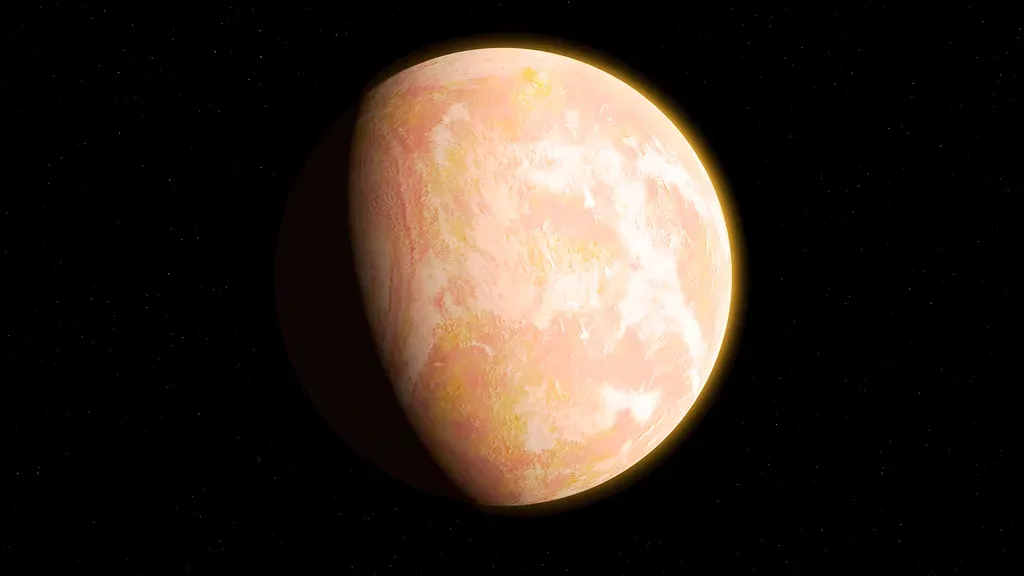
One of the most shocking differences between your world and the early Earth is the air itself. Today you are used to breathing oxygen-rich atmosphere, but in the beginning, free oxygen was practically nonexistent. If you tried to inhale back then, you would suffocate quickly, and your lungs and tissues would not know what to do with the thick mix of gases like carbon dioxide, methane, ammonia, and hydrogen. To you, it would feel like stepping into a room filled with exhaust fumes and no air at all.
For the first microbes, however, that strange cocktail of gases was not a deadly flaw; it was a starting kit. Many early microorganisms likely relied on chemical reactions that did not need oxygen, such as using hydrogen, iron, or sulfur compounds to gain energy. You can think of them as microscopic chemists, tapping into the raw ingredients floating in the air and water. Over hundreds of millions of years, they turned that suffocating atmosphere into a laboratory for metabolism, long before photosynthesis and oxygen-based life ever appeared.
Boiling Seafloor Vents: Ovens That May Have Baked the First Cells
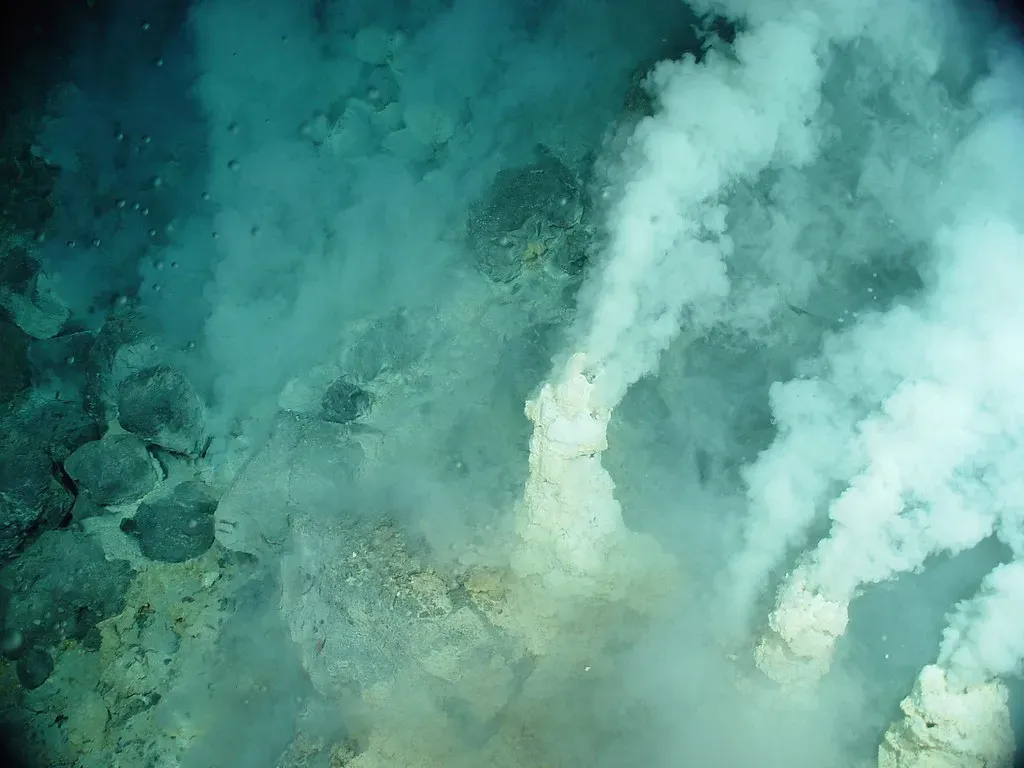
If you followed scientists to one of the leading suspects for the birthplace of life, you would find yourself deep beneath the ocean, near hydrothermal vents on the seafloor. These vents spew superheated, mineral-rich fluids where hot rock meets cold seawater, creating steep chemical and temperature gradients. To you, that setting sounds deadly: water near the vent could be hot enough to cook most modern organisms, and the pressure at those depths would crush your body instantly. Yet when you zoom in on the microscopic scale, you see something else entirely.
Inside the porous walls of some vents, especially those known as alkaline hydrothermal vents, you find countless tiny cavities and surfaces covered with metal-rich minerals. These act almost like natural batteries and reaction chambers, providing energy and structure for simple molecules to link together. If you imagine trying to build a house, the vents provide both the scaffolding and the tools. Some researchers think you can picture early life as starting in those mineral pores, with primitive membranes and simple metabolic networks slowly forming, until a true cell finally stepped out into the ocean.
Another school of thought points you toward shallow volcanic pools and tidal zones instead. In those places, pools of water rich in organic molecules could repeatedly dry out and refill, forcing molecules to concentrate and react. When you dry something like a soup down to a crust, the flavors intensify; in a similar way, drying cycles could push simple molecules to form longer, more complex chains like RNA or primitive proteins. You would see sunlight, lightning, and geothermal heat all contributing bursts of energy that could drive these reactions forward in unpredictable ways.
From your perspective, these sites would feel chaotic and unstable, with pools boiling, evaporating, and refilling as volcanic activity shifted the landscape. But that very instability might have been the key. You would witness endless rounds of trial and error, where some fragile structures fall apart and others survive a little longer. Over a vast span of time, the pools could act like nature’s version of a rough draft, constantly revising molecular systems until something robust enough to be called “alive” finally appeared.
How You Can Think About Life Emerging from Simple Chemistry
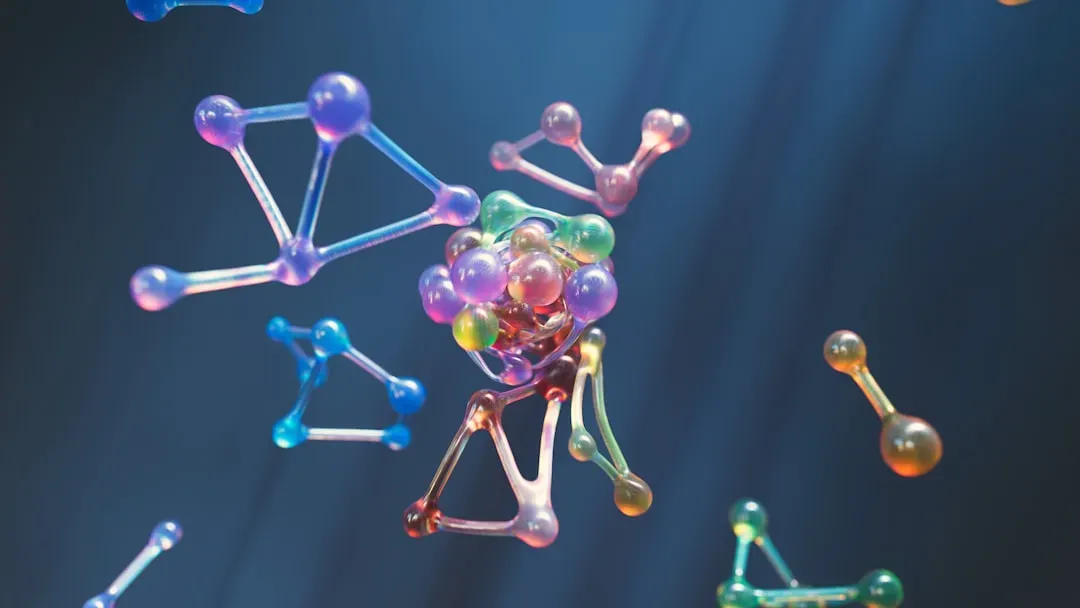
It helps if you strip away your image of life as something instantly complex and instead imagine a slow ladder of increasing organization. At the bottom rung, you have simple building blocks like amino acids, nucleotides, and fatty acids, which can form spontaneously under the right conditions of energy and chemistry. You can picture them bumping into each other in a chaotic soup, forming and breaking apart endlessly. Over time, some of these molecules begin to stick together into longer chains that can store a little information or fold into useful shapes.
As you climb up the ladder, a few rare combinations start doing something special: they help other reactions along. These early catalysts, possibly made of short RNA-like strands or simple peptides, would give certain molecular networks a survival edge. If you look at it this way, life does not appear all at once but emerges gradually from chemistry that becomes better at copying, organizing, and protecting itself. You can think of the first living systems not as perfect cells, but as messy, leaky, half-formed networks clinging to just enough structure to keep going.
Radiation, Lightning, and Impacts: Threats That Also Powered Possibility
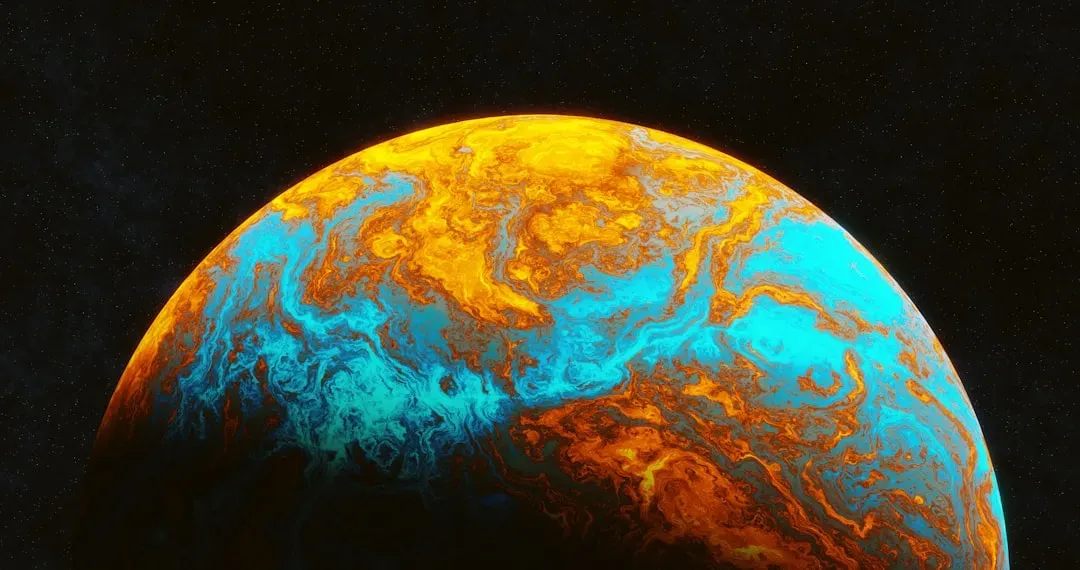
From your point of view, high radiation, constant lightning, and meteor strikes all sound like doomsday triggers. On modern Earth, you tend to associate them with cancer, mass extinction, and global damage. On early Earth, though, those same forces dumped enormous amounts of energy into the environment again and again. Energy is exactly what you need if you want to push simple molecules to do difficult things, like form complex chains or break stable bonds. In that sense, early Earth might remind you of a rough blacksmith’s workshop, with energy slamming into raw materials over and over until new shapes appear.
Of course, this did not mean every strike or burst of radiation moved life forward. Many reactions would destroy delicate structures as quickly as they formed, wiping out dozens of false starts. But if you give a planet hundreds of millions of years of relentless, energetic chaos, you dramatically increase the odds that some self-sustaining chemistry will slip through the cracks. When you look at it that way, what feels to you like a hostile universe can also be read as a giant lottery, and early life simply held on to the winning ticket long enough to build something more durable.
Why You Still Do Not Know Exactly Where or How It Began
![Why You Still Do Not Know Exactly Where or How It Began ([1], CC BY 4.0)](https://nvmwebsites-budwg5g9avh3epea.z03.azurefd.net/dinoworld/b8b6e6f72a1cc9d4529eb5055c197424.webp)
Even today, with all your technology, you cannot point to one single place or one single recipe and say with certainty, “This is where life started.” You are dealing with events that happened more than three and a half billion years ago, on rocks and oceans that have been recycled, eroded, and transformed countless times. Most of the direct evidence has been erased by plate tectonics and geological change. What you are left with are hints in ancient rocks, chemical signatures, and the shared features of all living cells that exist now. From those clues, you can reconstruct likely scenarios, but you still have to live with uncertainty.
This uncertainty is not a failure; it is part of what makes the question so rich. You might favor deep-sea vents because you see similar chemistries in modern vent microbes, or you might lean toward volcanic pools because drying and wetting cycles can help build complex molecules. Some researchers even explore the possibility that life started elsewhere in the solar system and arrived here later on meteorites, although that idea is still highly debated. As you follow this debate, the key is to remember that you are trying to reverse-engineer a story from fragments, and that science advances not by pretending to have all the answers, but by carefully testing each possibility against the limited clues you have.
How This Alien Past Connects to the Life You Know Today
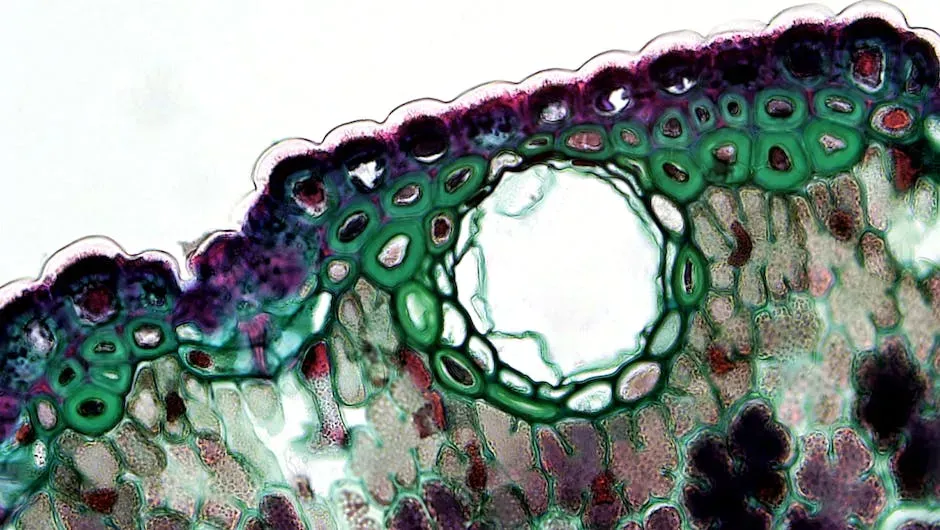
It is tempting to treat those first tiny cells as something completely separate from you, like a forgotten prologue that has nothing to do with your daily life. But if you look closely at your own body, you are packed with evidence of that ancient world. The way your cells generate energy, the genetic code your DNA uses, and the structure of your cell membranes all carry the fingerprints of those early evolutionary experiments. You can think of yourself as a very distant, very complicated descendant of those first stubborn microbes that learned how to survive in boiling vents, toxic pools, or lightless oceans.
When you recognize this, your view of everyday life shifts. The oxygen you breathe was created by later generations of microbes that learned how to use sunlight, slowly turning the atmosphere into something you could one day survive. The minerals in your bones once cycled through ancient seas and volcanic rocks that predated any organism with a spine. You are not just living on a planet that once hosted unimaginable conditions; you are a product of them. Every heartbeat you feel is powered by chemistry that was hammered out on a world that would have killed you instantly if you had arrived too early.
Conclusion: Imagining a World You Could Never Walk Through
When you step back from the details, you can see that the first life on Earth did not emerge in a gentle, garden-like paradise but in a world that would be utterly unlivable to you. Crushing pressures, boiling vents, poisonous gases, and violent storms were not side notes; they were central features of the environment. Yet in that harsh setting, simple chemistry gradually crossed an invisible line and became biology. You may never know the exact moment or location where it happened, but you can appreciate how improbable it was that anything survived long enough to start an unbroken chain leading all the way to you.
If anything, that realization makes your own existence feel strangely fragile and deeply connected to forces far beyond your comfort zone. You are here because tiny, vulnerable systems once learned how to harness hostile conditions instead of being destroyed by them. The next time you look at a quiet beach, a patch of moss, or even your own reflection, you can remember that it all began in a world you could barely stand to visit for a second. When you imagine that first spark of life clinging to hot rock or swirling in a toxic pool, does it change the way you see your place in the universe?