You live on a planet that was once almost entirely run by life in the water, and yet here you are, sitting comfortably on dry land. Have you ever stopped and asked yourself how that even became possible? The story is not just big, it is wild: fins turning into limbs, gills giving way to lungs, simple algae slowly engineering the very air you breathe.
What makes this story truly gripping is that you do not have to take it on faith. The rocks literally keep the receipts. Scattered across cliffs, quarries, and frozen tundra are fossils that capture specific moments when life pushed a little farther out of the water, clung on, and refused to let go. When you walk through these eight fossils, you are not just learning paleontology; you are watching your own distant ancestry fight its way onto land, step by improbable step.
1. Cooksonia: The Tiny Plant That Rewired the Planet
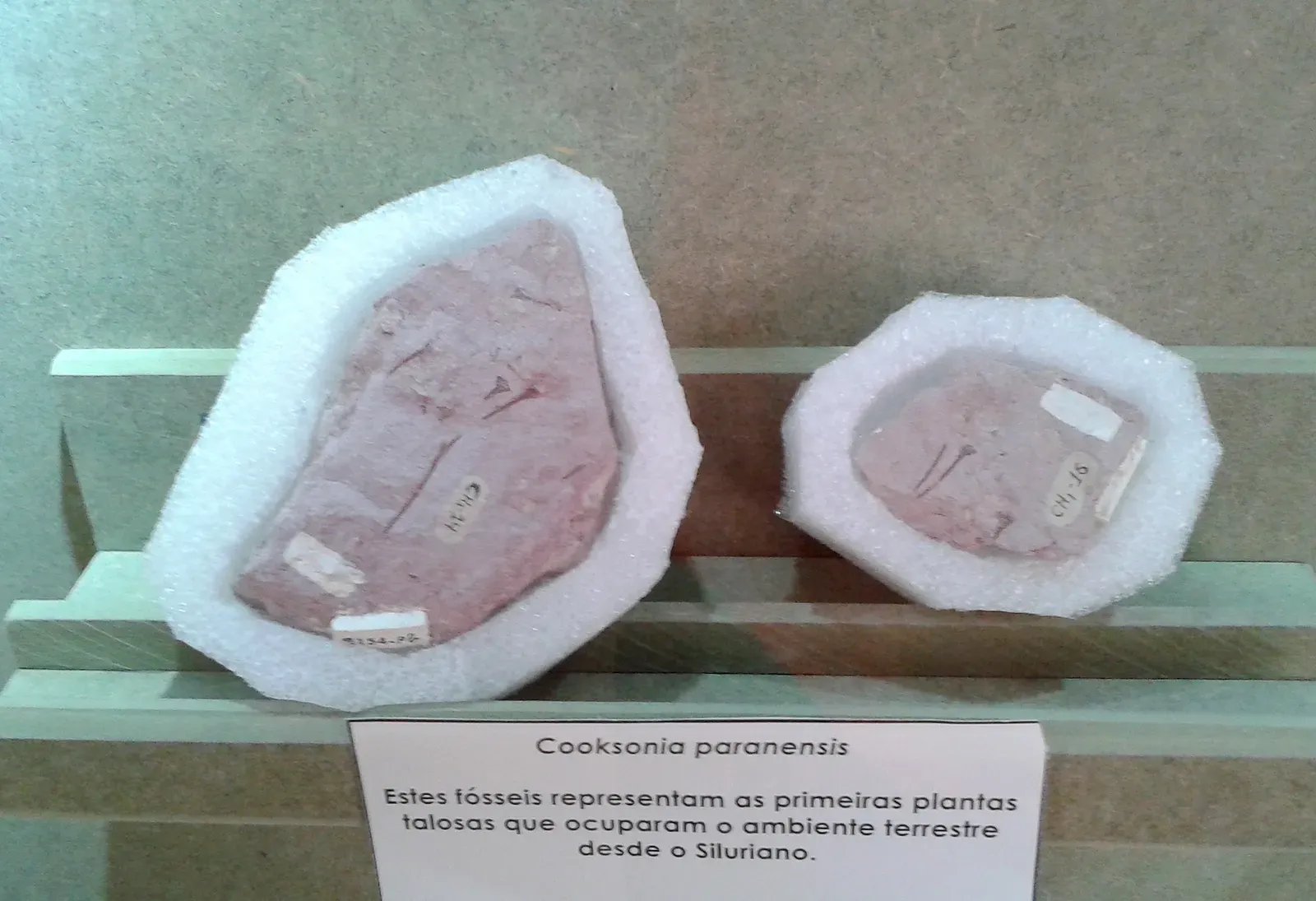
If you could time-travel roughly four hundred twenty million years into the past and shrink yourself down, you might walk through a landscape where the tallest “trees” barely reach your ankle. One of the earliest of these pioneers is Cooksonia, a spindly little plant made of nothing more than thin, naked stems ending in small spore capsules. It had no leaves, no flowers, and no true roots like the plants you know today, yet it did something revolutionary: it stood upright in the air and circulated fluids through a simple vascular system, proving that plant bodies could function outside the buoyant support of water.
For you, Cooksonia matters because it marks the point where land stopped being just bare rock and mud and started to become an ecosystem. By spreading spores across floodplains and river margins, plants like this helped build the first soils, trapping sediment and adding organic matter as they decayed. That, in turn, stabilized shorelines, fed microbes and early terrestrial invertebrates, and slowly altered the atmosphere by pulling carbon dioxide out of the air. When you look at a forest today, you are seeing an extravagant, high-tech outcome of a basic idea Cooksonia helped test: that a plant can stand its ground on land and still thrive.
2. Early Arthropod Trackways: Footprints Before Footbones
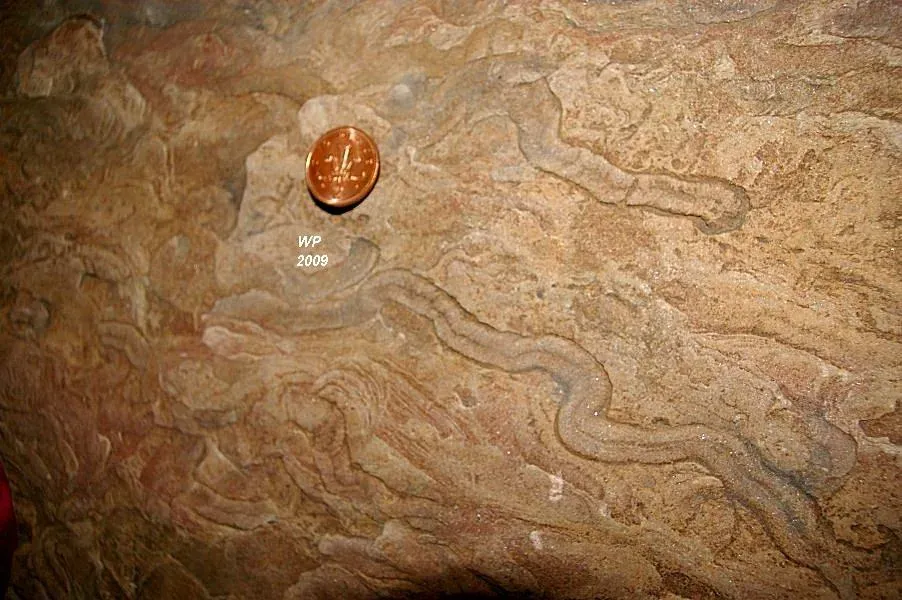
Long before any vertebrate ever dragged itself onto a beach, small jointed creatures were already scuttling around like they owned the place. You can see this in fossilized trackways left by early arthropods – think ancestors of millipedes, insects, and spiders – pressed into ancient mud and sand. These tracks show repeated, orderly patterns of tiny footprints, laid down in parallel rows or gently curving paths, recording a confident, repeated presence on land rather than a desperate, one-off escape from the water.
When you follow these ghostly trails with your eyes, you are reading a diary written in steps instead of words. They tell you that arthropods had already solved problems that vertebrates would struggle with much later: how to support a body without water, how to keep tissues from drying out, and how to breathe air with specialized structures. In a sense, these small, armored wanderers were the advance team, transforming dead rock into habitable terrain and preparing food chains that vertebrates would eventually join. Every time you brush away an ant on the sidewalk, you are dealing with the heirs of some of the earliest land pioneers known to science.
3. Rhynie Chert Ecosystem: A Silica-Frozen Snapshot of Early Land Life
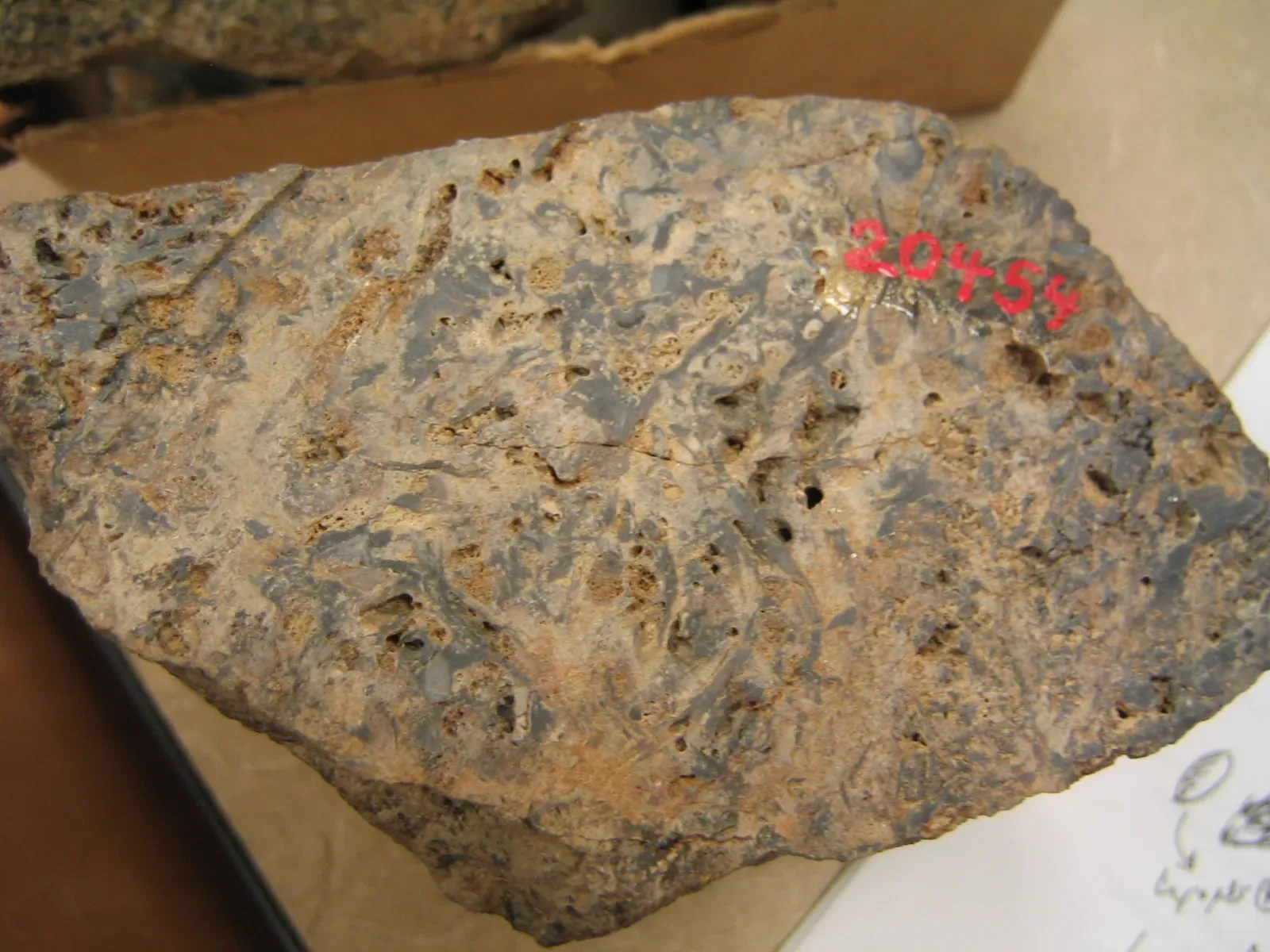
Imagine being handed a time capsule where not just bones, but an entire miniature world has been perfectly preserved. That is what you get with the Rhynie chert in Scotland, a rock deposit from the early Devonian period in which hot spring waters once entombed plants, fungi, and arthropods in silica. Under the microscope, you can see slender plants like Rhynia, moss-like vegetation, intricate fungal networks, and tiny animals – all frozen mid-life. It is as if someone paused the first real terrestrial community and saved it for you to examine millions of years later.
This snapshot matters because it shows you that colonizing land was never a solo performance. Plants in the Rhynie chert worked with fungi to extract nutrients, while arthropods crawled, grazed, and probably hunted across the damp ground. You can trace roots, spores, mouthparts, and even the spaces where soil and water mingled. When you read this fossil ecosystem, you realize that “conquering the land” was really a series of alliances: plants altering the environment, fungi boosting their efficiency, and animals taking advantage of new food sources. You are looking at the first draft of the complex terrestrial webs that now include everything from earthworms to oak trees to you.
4. Tiktaalik: The “Fishapod” That Blurred Water and Land
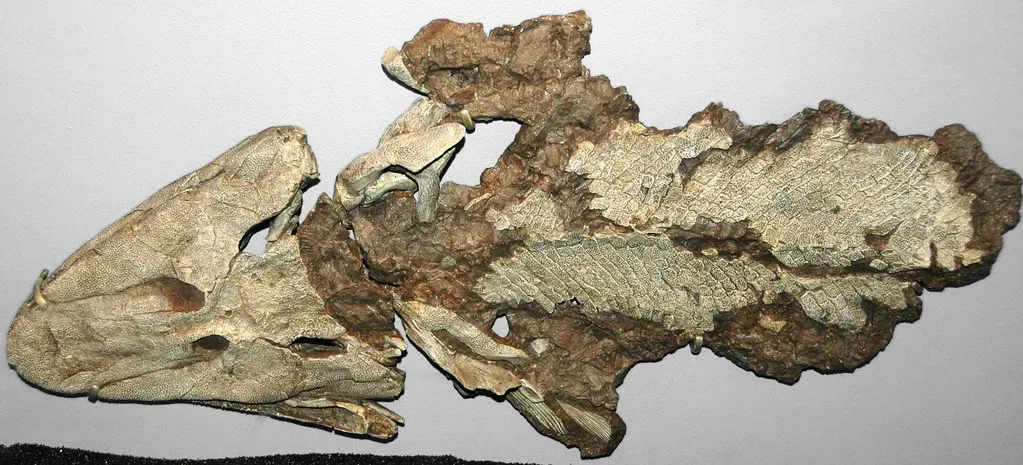
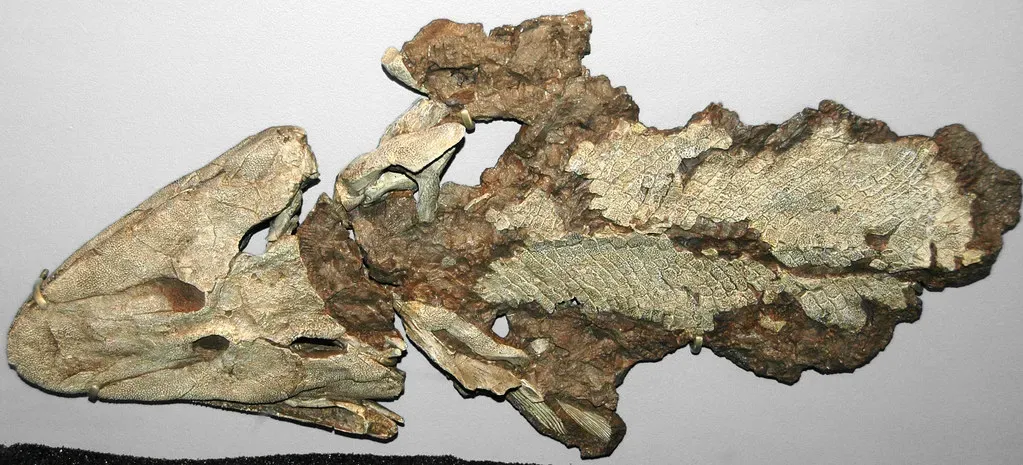
Now picture a creature that looks enough like a fish to fool you at a glance, but the longer you stare, the more wrong it feels. Tiktaalik roseae, discovered in Arctic rocks that once fringed Devonian river systems, had scales and fins like a fish, yet also possessed a flat, crocodile-like head with eyes on top, a neck that could move independently of its body, and robust fins with internal bones arranged like an upper arm, forearm, and wrist. Its ribs and spine were sturdy enough that its body could partly support itself instead of just drifting with the current.
When you stand this animal in your mind’s eye on a muddy river bottom, propping itself up with those limb-like fins, you catch evolution in the act of repurposing old hardware for new tasks. Tiktaalik could probably haul itself into very shallow water or onto exposed sandbanks to ambush prey or escape predators, even if it was not strolling far across dry ground. Its fossils tell you that the building blocks of walking – strong shoulders, flexible neck, and wrist-like joints – evolved before vertebrates truly lived on land. It is like seeing the prototype of a car that still looks a bit like a boat: not ready for the highway yet, but clearly heading there.
5. Acanthostega: Limbs With Digits That Still Loved the Water
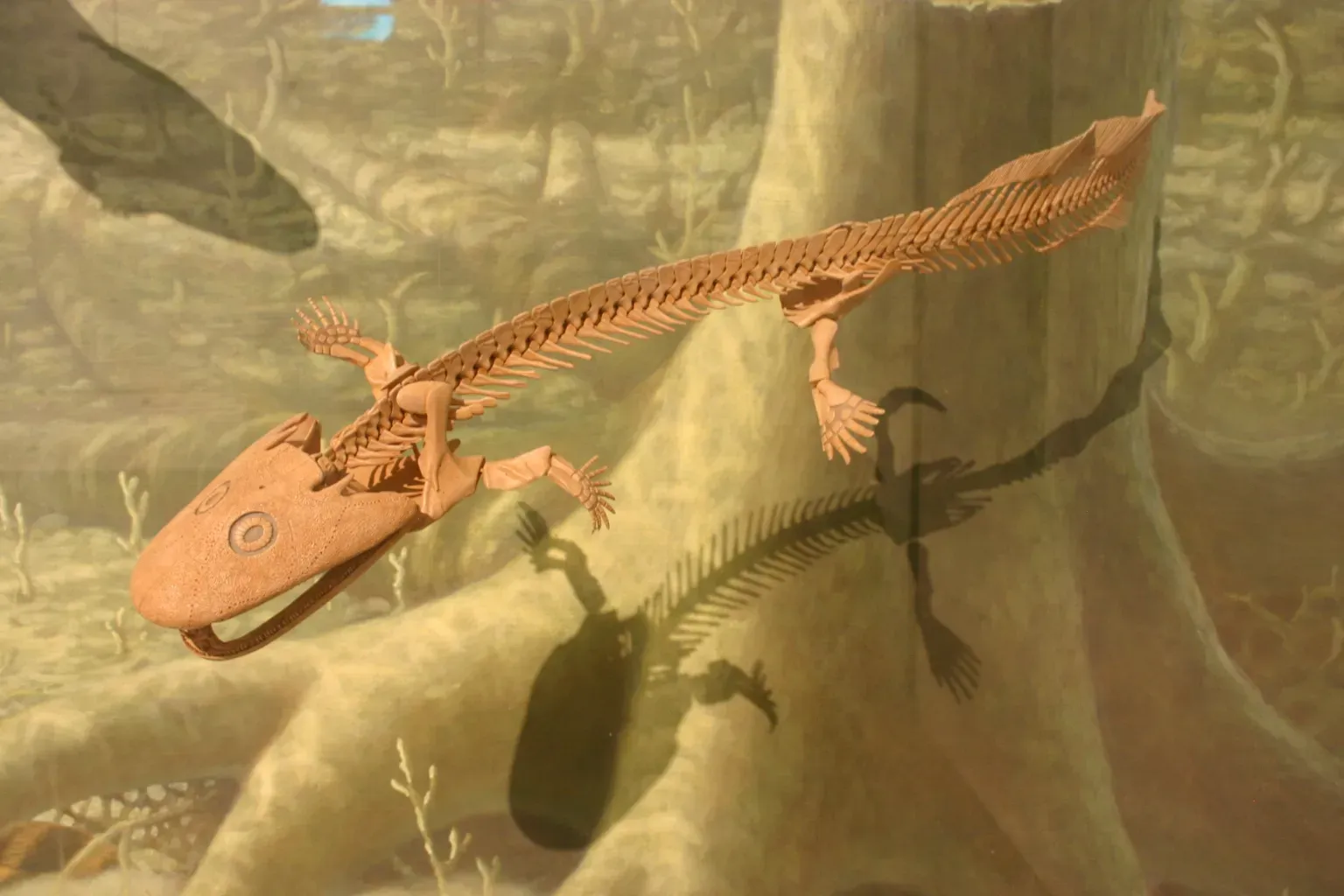
When you meet Acanthostega in the fossil record, you are looking at one of the first vertebrates with unmistakable limbs ending in digits rather than fins. Its forelimbs show eight distinct fingers connected by webbing, and its skull and teeth are clearly tetrapod-like. At first glance, you might assume this animal walked proudly onto shore and never looked back. But its skeleton tells a subtler story: the limbs seem better built for paddling and maneuvering through weed-choked shallows than for holding up weight on dry land.
This matters for you because it breaks the simple “fins turned into feet for walking on land” narrative. Acanthostega shows that limbs with digits may have first been useful in water – helping the animal push through plants, anchor itself, or rise to the surface – before they became true walking tools. You see that key features of your own arms and legs originated in environments where land was more opportunity than destination. In other words, nature started assembling the toolkit for terrestrial life while the users were still mostly aquatic, and only later did those tools become essential for life beyond the waterline.
6. Ichthyostega: The Clumsy Pioneer Testing Life on Shore
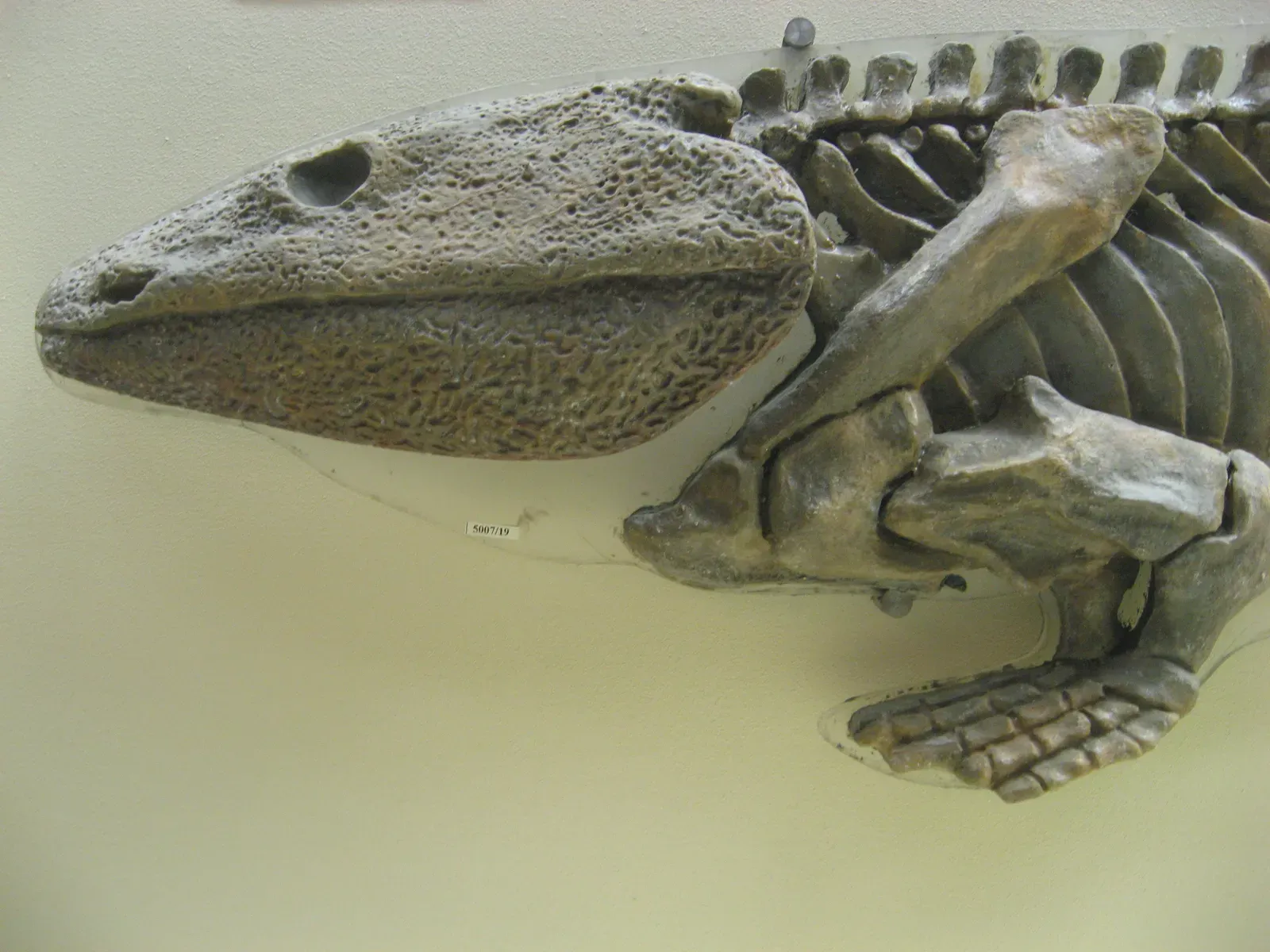
Ichthyostega is one of those fossils that used to be drawn as a triumphant first walker, striding onto land like a scaled-up salamander. When you look closer, though, you find a more awkward pioneer. Its body carries a strong, barrel-shaped ribcage, sturdy shoulders and hips, and hind limbs with multiple digits, all hinting that it could push itself up and interact with solid ground. Yet detailed studies of its joints suggest its gait on land would have been limited and strange – more of an ungainly belly flop and shuffle than a neat four-legged walk.
Instead of seeing this as a disappointment, you can treat Ichthyostega as your window into the messy middle stages of leaving the water. It likely lived a lifestyle where water was still home base, but shorelines offered resting spots, basking areas, or new food sources if it could manage the short, exhausting journey. You can almost imagine it pulling itself from one pool to another across damp mud, like a stranded seal looking for the next wave. That image reminds you that conquering land was not a single heroic leap; it was millions of clumsy, experimental forays by creatures that were only halfway equipped for the job.
7. Early Tetrapod Trackways: When Footsteps Outran Fossil Bodies
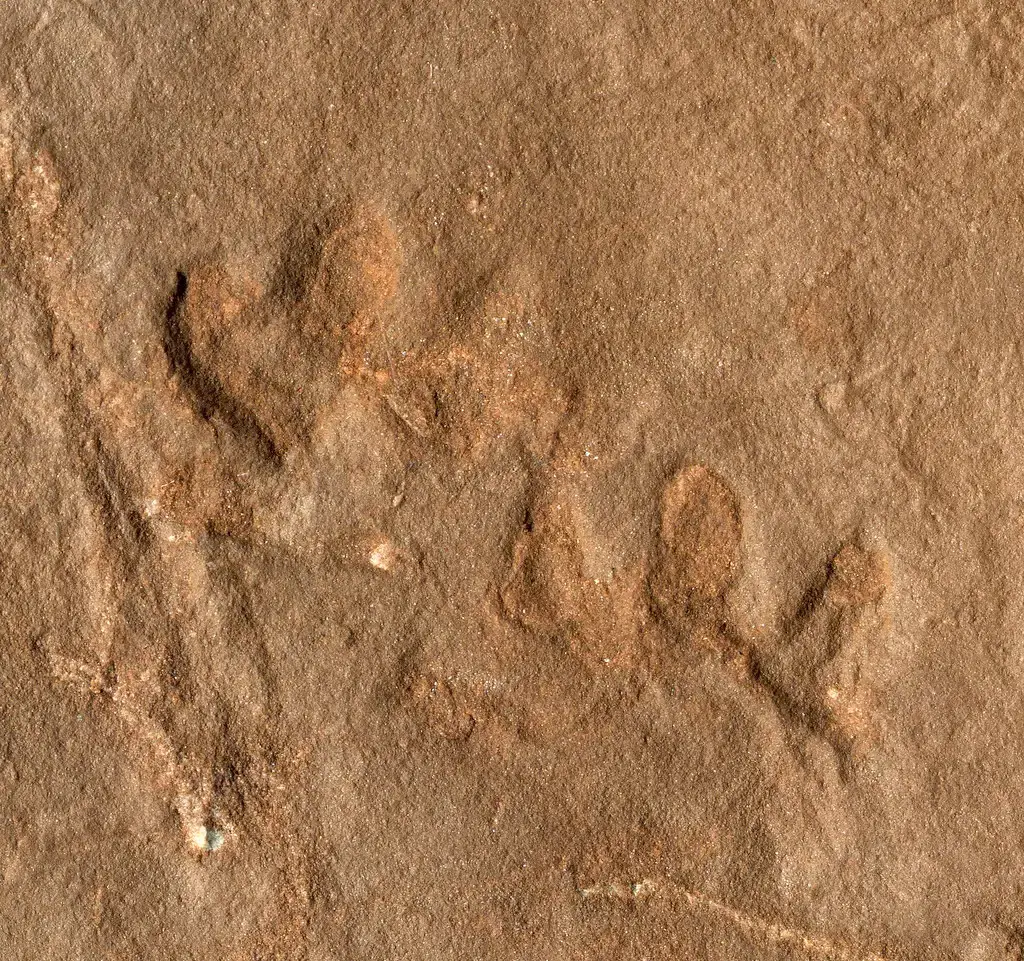
One of the most mind-bending discoveries from the Devonian is not a skeleton at all, but a set of footprints stamped into what was once a shoreline. These early tetrapod trackways show clear alternating steps from limbs that must have belonged to sizable vertebrates, moving confidently across wet ground. The kicker is that some of these tracks appear older than the known body fossils of creatures like Acanthostega and Ichthyostega, telling you that vertebrates capable of at least limited terrestrial walking existed before their bones show up in stone.
For you, these ghostly paths change the tone of the story. Instead of seeing a tidy fossil sequence where bodies neatly progress from finned fish to perfect walkers, you are forced to accept that the record is patchy, and behavior sometimes leaves the clearest trace. The tracks prove that some animals were already experimenting with land in ways their preserved bones have not yet captured, or that lineages you have not discovered were out there hustling across tidal flats. It is a bit like finding footprints in the attic of a house with no staircase – proof that someone was there, even if you do not yet know who, or how they got up.
8. Early Land Vertebrates of the Carboniferous: When Forests Became Home
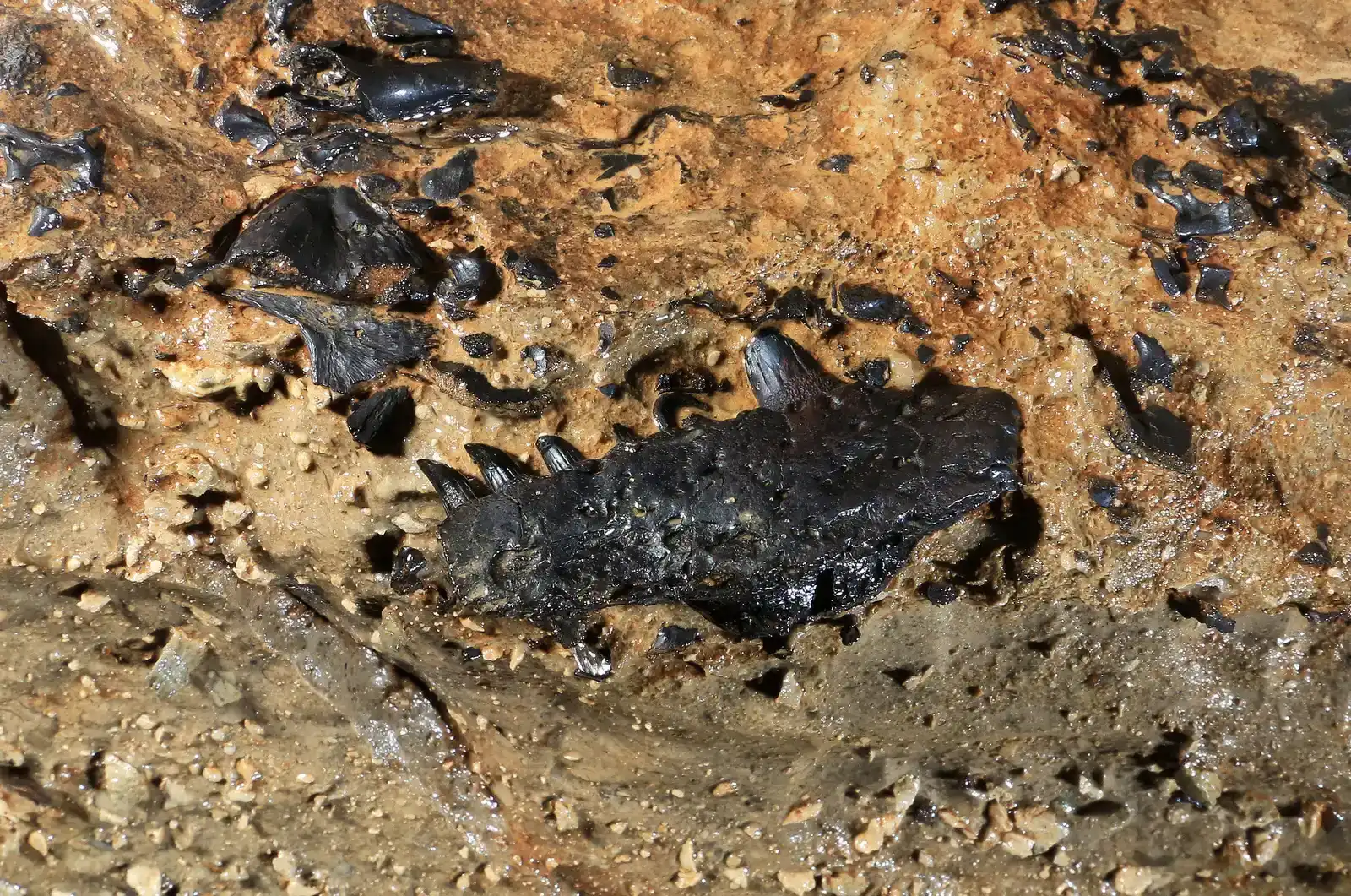
If the Devonian gives you the rehearsal, the early Carboniferous gives you the first real show. By this time, vast swampy forests packed with tall clubmosses, horsetails, and early seed plants stretched across lowlands, and vertebrates with sturdy limbs and stronger backbones were taking advantage. In the fossil record, you start to see animals that show clear adaptations for fully terrestrial life: more robust limb joints, better-developed digits, and skulls with features suggesting they could breathe and feed efficiently in air rather than relying on water.
When you imagine these creatures stalking through dense undergrowth or prowling along fallen logs, you are seeing the point where land stopped being a risky frontier and became a genuine long-term address for vertebrates. Some of these animals still depended on water for breeding, much like modern amphibians, but their day-to-day lives were increasingly rooted in forests, floodplains, and leaf litter. This is where your story on land really starts to feel familiar: predators and prey, shelter and territory, seasonal changes in humidity and temperature. Without this phase, there would be no reptiles, no mammals, no birds – and no you wondering how it all began.
When you step back from these eight fossils and trace the arc from tiny spore-bearing plants to lumbering early tetrapods and finally to confident forest dwellers, you see that conquering the land was not one event but a long relay. Plants, fungi, arthropods, and vertebrates each took a turn reshaping the environment and pushing the limits of what bodies could do. The remarkable part is that your own skeleton, lungs, and senses still carry the imprint of those ancient experiments, from wrist bones first tested in shallow streams to digits that were once better paddles than feet. The next time you walk barefoot across sand or soil, can you feel, even faintly, how many strange, half-aquatic ancestors had to crawl, flop, and stumble so you could take that easy step?