
You carry the story of ancient travelers in every cell of your body, whether you ever leave your hometown or not. The language you speak, the food you eat, even the diseases your ancestors survived are all fingerprints left behind by people who walked, sailed, and rode across the planet tens of thousands of years ago. When you zoom out beyond the boundaries of modern nations, what you see is not a static map but a time-lapse of wandering bands, slow drifts, and sudden waves of movement that remade the world again and again.
In this article, you’ll walk alongside six of the most important ancient migrations that still shape your life today. You’ll see how a relatively small number of people leaving Africa set the stage for all non‑African populations, how ocean voyagers stitched together thousands of islands, and how horse‑riding herders helped spread the languages many of us use every day. None of these movements were simple or clean; they were messy, overlapping, and full of uncertainty. But together, they explain why your own story is far older and more global than it might appear on your passport.
The First Great Journey: Out of Africa
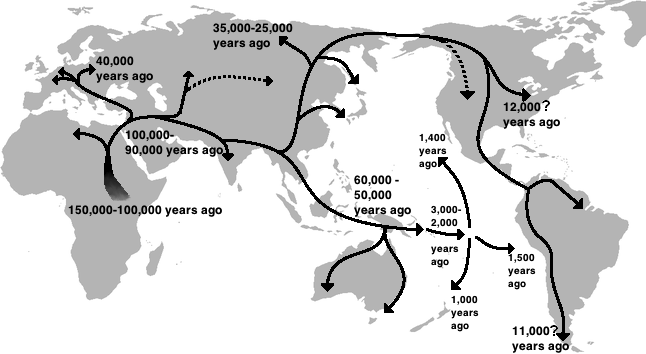
If you trace your family tree back far enough, you eventually find yourself standing somewhere in Africa, looking outward. Genetic evidence shows that all living humans share recent common ancestors in Africa, and that a subset of those people left the continent in one or several major waves roughly between seventy thousand and fifty thousand years ago. You can think of this as the moment when a local story turned into a global one: small groups of hunter‑gatherers following coastlines, river valleys, and game trails, not knowing they were about to populate almost every corner of the planet.
When you hear debates about whether there were one, two, or three main “out of Africa” pulses, what you’re really hearing is just scientists refining the details of your own deep origin story. Different lines of evidence – fossils, stone tools, DNA – do not always line up perfectly, so researchers argue, update models, and revise timelines. But the core picture is robust: you belong to a species that evolved in Africa over hundreds of thousands of years and then expanded outward, mixing a little with older human cousins like Neanderthals and Denisovans along the way. That first bold step out of Africa did not just fill in a blank map; it set up all later migrations as branches of the same original journey.
Into Ice and Forest: Peopling of Eurasia
![Into Ice and Forest: Peopling of Eurasia (Skin colour and vitamin D: An updateProvided under Creative Commons free license (p.1, with link to Attribution 4.0 International (CC BY 4.0) page)"This is an open access article under the terms of the Creative Commons Attribution License, which permits use, distribution and reproduction in any medium, provided the original work is properly cited. © 2020 The Authors. Experimental Dermatology published by John Wiley & Sons Ltd" [1], CC BY-SA 4.0)](https://nvmwebsites-budwg5g9avh3epea.z03.azurefd.net/dinoworld/5c0caa84ff9b200276143667595846ed.webp)
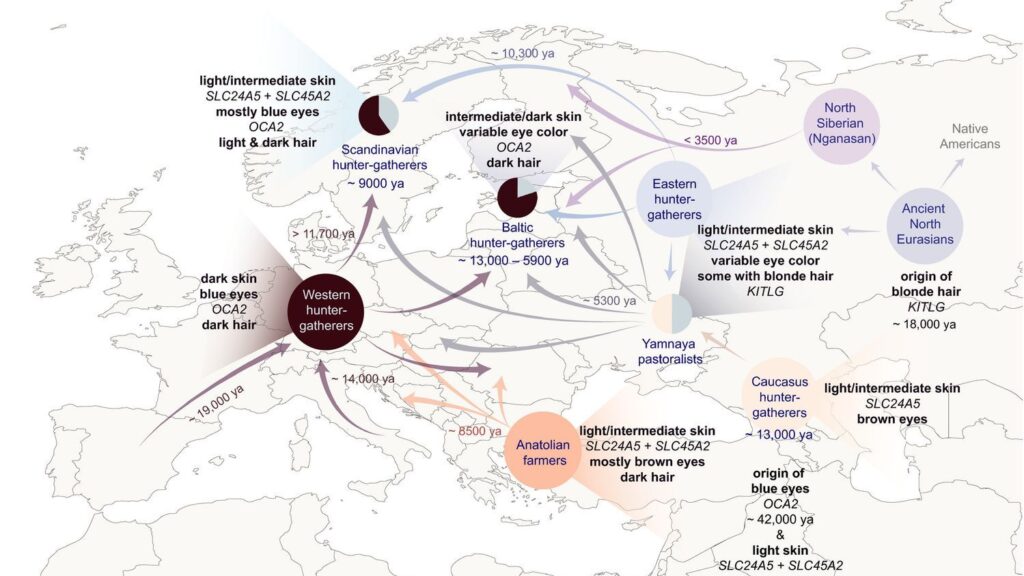
Once humans stepped out of Africa, the vast landmass of Eurasia became your ancestors’ playground and proving ground. You might imagine this as a slow‑motion race between humans and the climate: ice sheets advanced and retreated, deserts expanded and shrank, and your distant relatives tracked habitable corridors through all of it. They moved into the Middle East, then radiated into Europe and deep into Asia, adapting to mountains, forests, and bitterly cold steppes. Over tens of thousands of years, regional populations developed distinct tool traditions, body types, and later, cultural styles – but they never stopped interacting and overlapping at the edges.
When you look at the extraordinary variety of faces, languages, and cultures from Ireland to Indonesia, you’re seeing the long aftermath of this early Eurasian spread. Ancient DNA studies show that your picture of “Europeans” or “Asians” is much more mixed and dynamic than old textbooks ever admitted; people flowed back and forth, replacing some groups, blending with others, and then being reshaped again by later migrations. If you grew up thinking of continents as separate, this period forces you to redraw your mental map: Eurasia was less a patchwork of sealed boxes and more a giant, shifting mosaic of human movement.
Across the Land Bridge: The First Americans
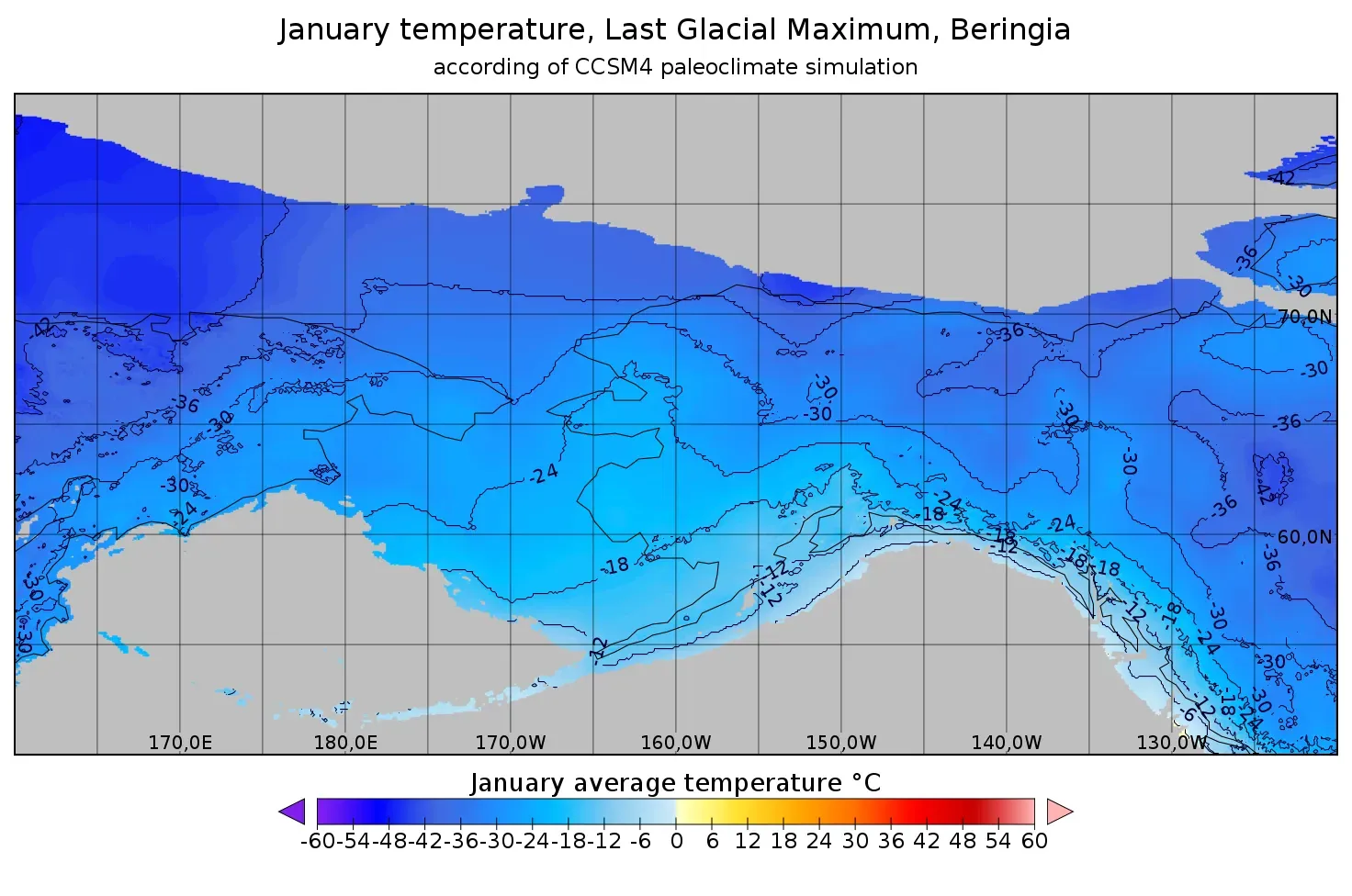
If you live in the Americas, your deepest ancestral story almost certainly includes a long, cold layover in a place that no longer exists: the now‑submerged land of Beringia between Siberia and Alaska. During the last Ice Age, when sea levels were lower, northeastern Asia and northwestern North America were connected by a broad expanse of steppe and tundra. Your distant relatives likely lived and hunted there for generations before some of them finally moved south into the rest of the Americas, probably beginning more than fifteen thousand years ago. Whether they followed an inland ice‑free corridor, a coastal route along the Pacific, or both is still an active research question – but either way, they were entering a whole new world.
The result of that migration is astonishing when you stop and think about it. Within a relatively short time in archaeological terms, humans reached Patagonia at the southern tip of South America and adapted to everything from high Andean plateaus to Amazonian rainforests. If you are Indigenous to the Americas, your languages, stories, and sacred landscapes are living proof of that early creativity and resilience; if you arrived later, you still live in a hemisphere whose deep human history was already rich and complex long before Europeans showed up. Understanding this first peopling of the Americas lets you see the continent not as a “new world,” but as a very old one with its own long arc of exploration.
Riders of the Grass Seas: Steppe Herders and the Spread of Indo‑European Languages
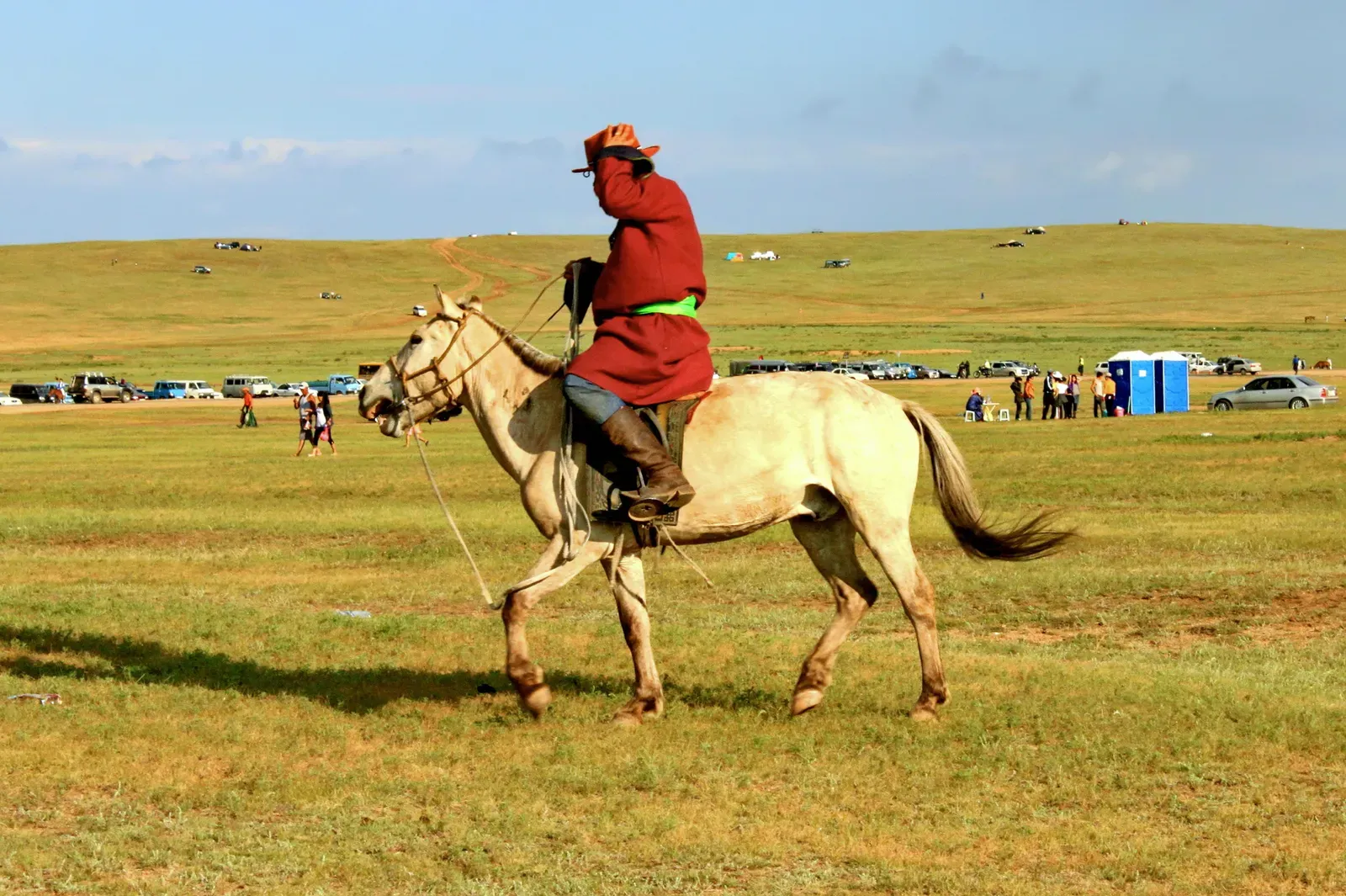
If you speak English, Spanish, Russian, Hindi, Persian, or many other tongues, you owe a surprising debt to herders who rode across the Eurasian steppe thousands of years ago. Genetic and linguistic research strongly supports the idea that communities from the Pontic–Caspian steppe, often associated with what archaeologists call the Yamnaya culture, expanded across large parts of Europe and into parts of Asia around five thousand years ago. These were people who managed herds of cattle and sheep, used wheeled vehicles, and probably took advantage of early horse riding to move farther and faster than most of their neighbors. As they spread, they seems to have carried the ancestral forms of many Indo‑European languages with them.
When you say basic words like mother, brother, or new, you are unconsciously echoing sounds that can be traced back to these and related communities, filtered through millennia of change. The spread of their descendants and related groups helped reshape the genetic and cultural landscape from the Atlantic to the Indian subcontinent, blending with earlier farmers and hunter‑gatherers rather than just replacing them outright. You do need to remember that there are still open debates about the exact routes, timings, and how these expansions interacted with local cultures. But the big picture is clear enough to touch your daily life: every time you open your mouth in an Indo‑European language, you keep a tiny piece of steppe prehistory alive.
Masters of Monsoon and Open Sea: The Austronesian Expansion
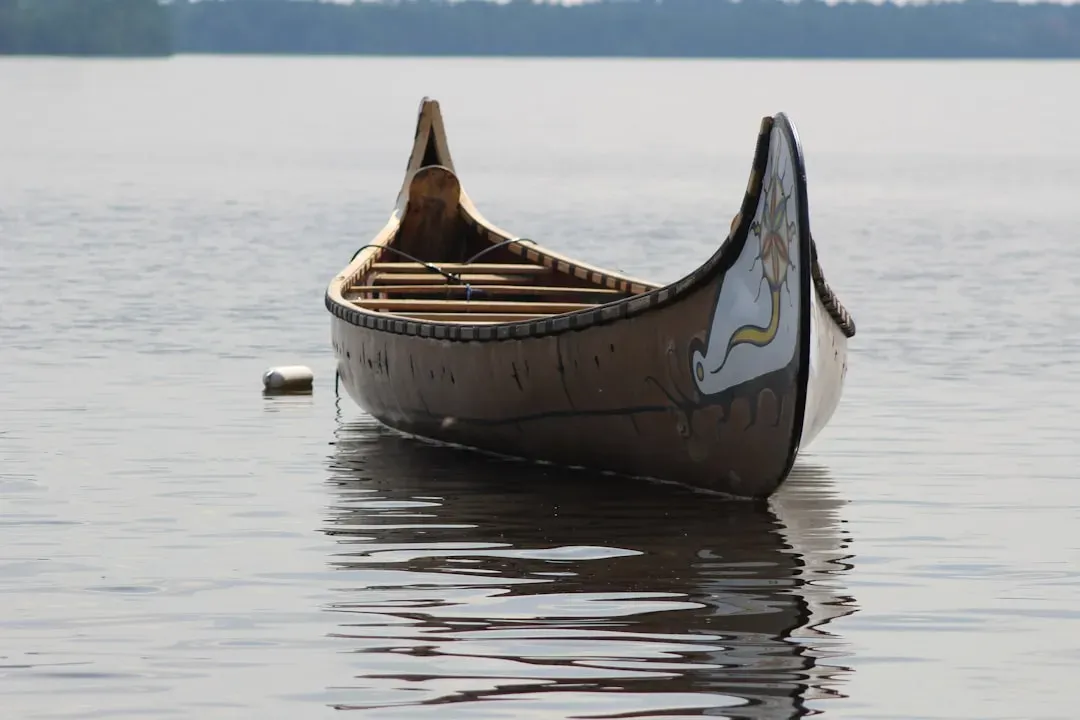
If you’ve ever stood on a beach and stared out at the horizon, imagine choosing to sail not just along the shore, but into the open ocean with no land in sight. That is roughly the level of boldness the Austronesian expansion required. Beginning several thousand years ago from an origin somewhere in Taiwan and nearby regions, Austronesian‑speaking seafarers spread south into the Philippines and Indonesia, then out across the vast Pacific and into the Indian Ocean. They reached places as far‑flung as Madagascar off the coast of Africa and remote islands like Hawaii and Rapa Nui. When you look at a map dotted with tiny islands, you are looking at the waypoints of one of the greatest maritime migrations in human history.
What makes this matter to you today is not just the scale, but the legacy. These voyagers carried crops like bananas and taro, domesticated animals, pottery styles, and sailing technologies that reshaped ecosystems and societies wherever they settled. If you eat certain tropical foods, sing in a Polynesian language, or simply marvel at how humans learned to read winds and waves like a book, you are feeling the ripple effects of their journeys. Modern research, including linguistics and DNA, continues to refine the story, but the core remains solid: ordinary families in extraordinary canoes turned scattered islands into a connected cultural world long before modern navigation existed.
From Villages to Empires: Neolithic Farmers on the Move
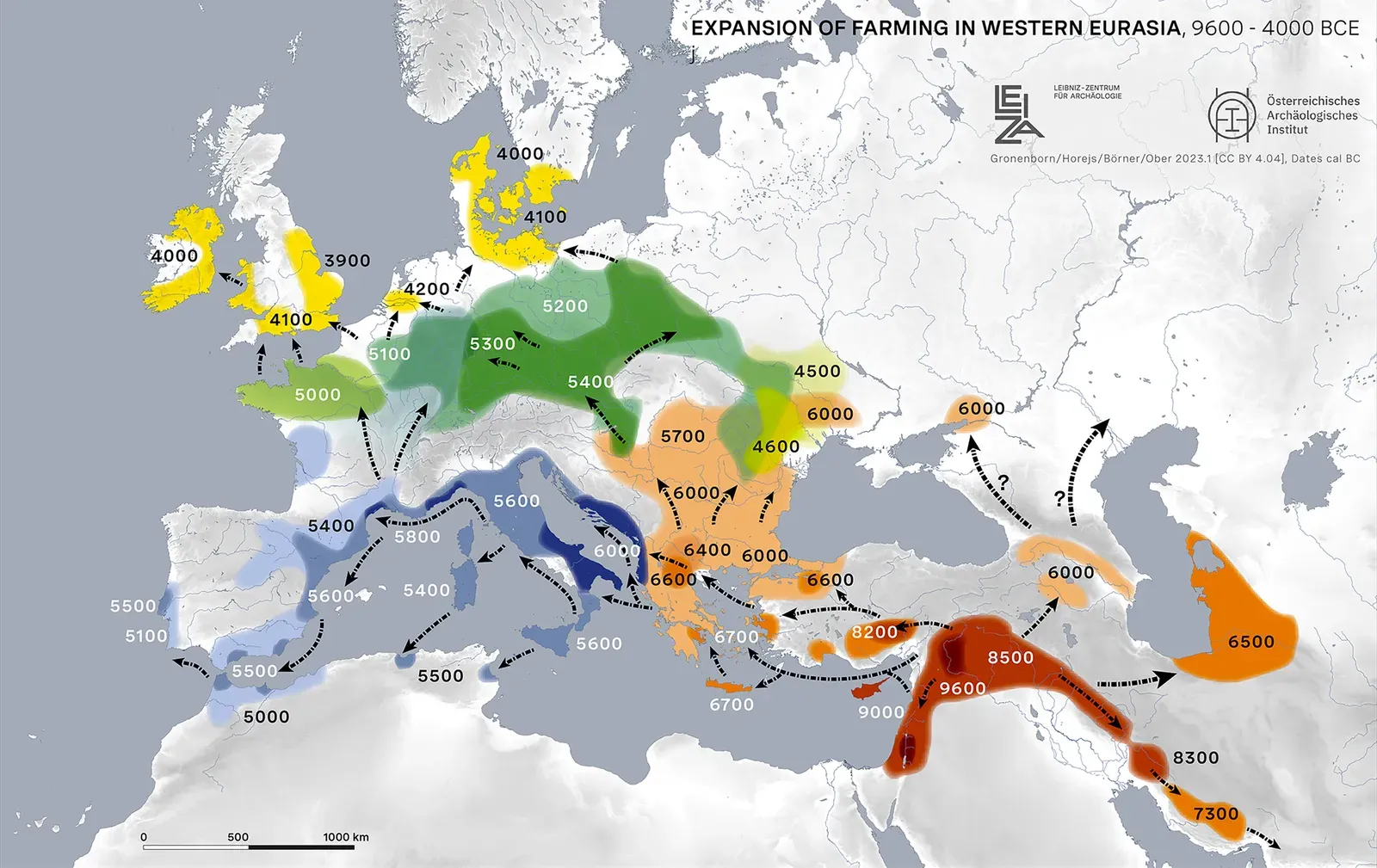
When you bite into a piece of bread or a bowl of rice, you’re tasting the outcome of another massive ancient migration: the spread of farming families out of early agricultural heartlands. Around ten thousand years ago in the Fertile Crescent of Southwest Asia, and later in places like the Yangtze and Yellow River valleys of China, people began growing crops and keeping animals more intensively. Some of those early farmers did not stay put; they moved into new territories in Europe, South Asia, and beyond, often following river systems and fertile soils. As they went, they brought wheat, barley, rice, sheep, goats, and the entire idea that you could shape the land to feed more people in one place.
This farming expansion did more than just change diets; it rewired how you live in community. Sedentary villages grew into towns, then cities, and eventually complex states and empires that could support specialists, armies, and written records. Ancient DNA studies show that these Neolithic farmers often mixed with, but sometimes replaced, local hunter‑gatherer groups, leaving a layered ancestry in many populations today. If your daily life revolves around property lines, harvest seasons, and permanent homes rather than following migrating herds, you are living in a world built on their gamble that seeds and soil could be more reliable than pure mobility.
Deserts, Monsoons, and Trade Winds: The Peopling of South and Southeast Asia
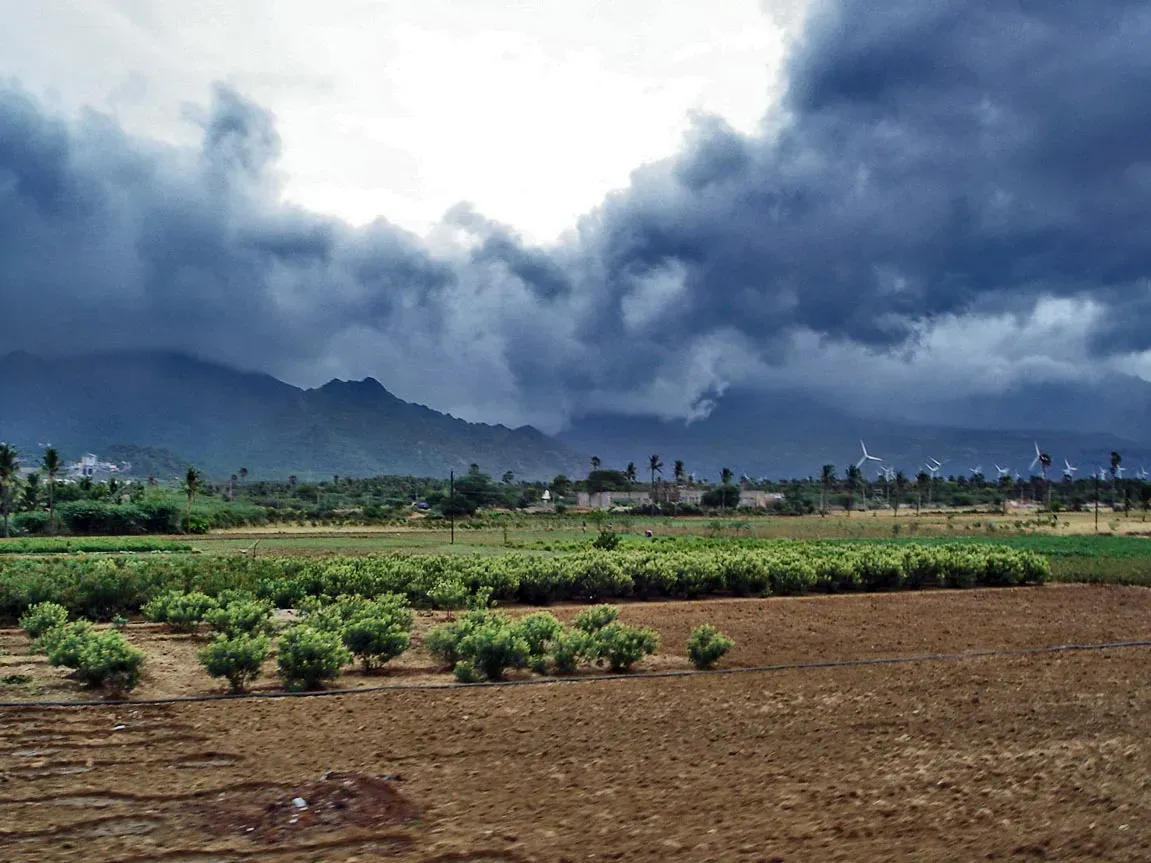
When you look at South and Southeast Asia today, you see an almost overwhelming tapestry of languages, religions, and ethnic groups – and that diversity is the long‑term product of multiple overlapping migrations. Early hunter‑gatherers arrived very soon after humans left Africa, followed later by waves of farmers from what is now Iran and the Fertile Crescent, as well as from East Asia. Over time, steppe‑related groups added yet another layer in parts of northern South Asia, and maritime travelers linked coastal communities into Indian Ocean trade networks. If you live in this region, your DNA and culture probably carry traces of several of these movements woven together.
What makes this story especially important for you is how it breaks the illusion that civilizations in this region grew in isolation. Monsoon winds carried traders, ideas, crops, and sometimes entire communities between South Asia, Southeast Asia, East Africa, and the Middle East. Austronesian seafarers helped shape island Southeast Asia, while mainland areas were influenced by movements out of southern China and beyond. As new genetic and archaeological studies continue to clarify the picture, one takeaway stays remarkably stable: the rich variety you see in cities from Mumbai to Manila is not an accident, but the long‑term outcome of people choosing, or being forced, to move and mix across land and sea.
Conclusion: Your Life as a Map of Ancient Journeys
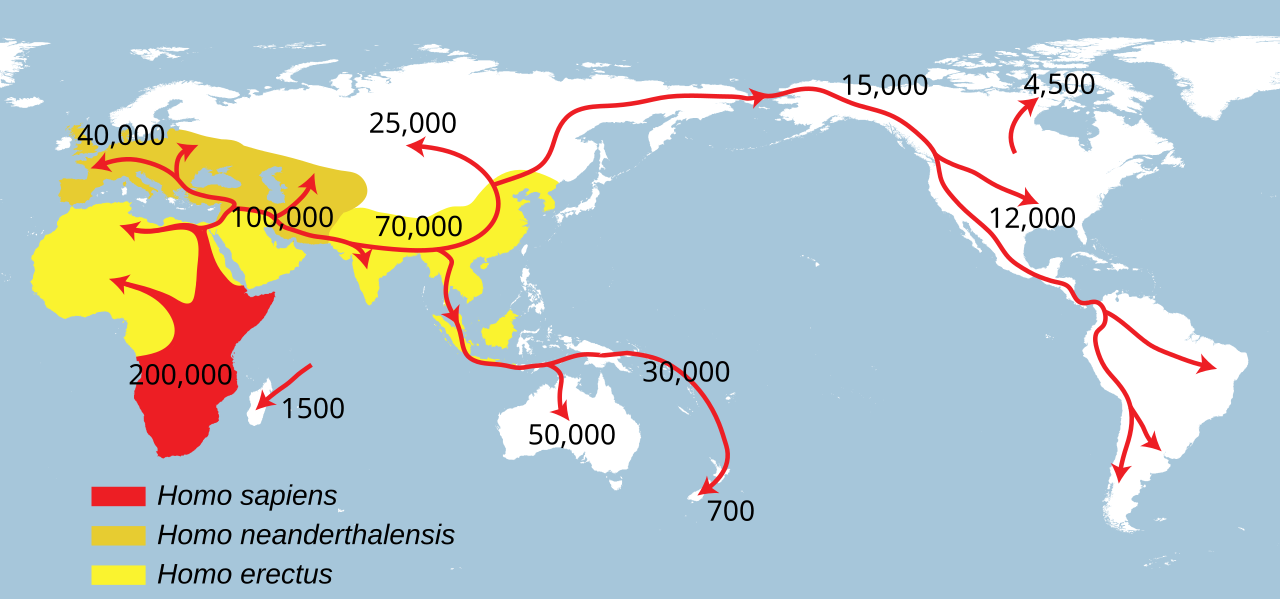
When you step back from these six migrations, you start to see your own life differently. Your language may carry echoes of steppe herders; your staple foods may come from early farmers; your family tree might wind back through island voyagers, land‑bridge crossers, or desert wanderers. Even if your recent ancestors stayed in one village for generations, their deeper story is one of movement and adaptation. You are the living proof that ancient journeys never really ended; they just slowed down and changed shape.
The next time you hear someone talk about “native” populations or fixed national identities, you can remember how fluid the human past really is. Boundaries shifted, peoples mixed, and cultures learned from one another far more than they erased one another. Understanding these migrations does not just give you a history lesson; it invites you to see yourself as part of a much older, wider human family, connected across continents and millennia. Knowing that, how differently do you look at the map hanging on your wall now?