You are looking at a discovery that is quietly reshaping how scientists understand prehistoric life. Along a remote stretch of South Africa’s coastline, dozens of fossilized dinosaur footprints—dating back an astonishing 132 million years—have emerged as powerful evidence that challenges long-held assumptions. These are not just tracks in stone; they are proof that life endured in a region once thought to have gone silent after catastrophic volcanic events.
What makes this discovery remarkable is how it connects you directly to a lost world. Each footprint captures a moment—an animal stepping across ancient sand—preserved across deep time and now revealing a story science is only beginning to rewrite.
A Discovery Hidden in Plain Sight
A Discovery Hidden in Plain Sight (Image Credits: Reddit)
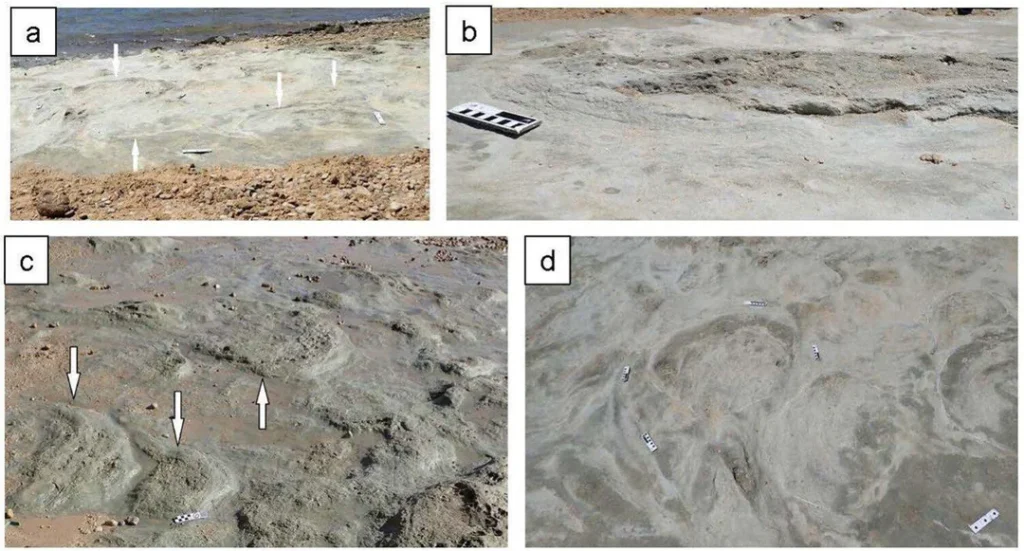
When researchers explored a small rock exposure near Knysna in early 2025, they were not expecting a breakthrough. You would assume such a tiny and partially submerged site might hold limited clues—but what they found instead was extraordinary. A team member spotted the first track, and soon more than two dozen possible footprints were identified.
What you’re seeing here is a rare snapshot of the Early Cretaceous period. These tracks were preserved in a narrow outcrop just 40 meters long, making the density of footprints even more surprising. For scientists, this signals that dinosaurs were not just passing through—they were actively living in this region.
Rewriting a “Lost Chapter” of History
For decades, you would have been told that southern Africa’s dinosaur record went quiet after massive lava flows around 182 million years ago. These eruptions buried ecosystems and seemed to erase evidence of life during a crucial stretch of time.
But these new tracks tell a different story. They reveal that dinosaurs continued to thrive long after the volcanic upheaval. In fact, the footprints are about 50 million years younger than previously known tracks in the region, filling a major gap in the fossil timeline.
Why These Tracks Matter More Than Bones
You might think bones are the most important fossils—but footprints often tell a more dynamic story. Tracks capture behavior: how dinosaurs walked, how many traveled together, and even how fast they moved.
In this case, the variety and number of tracks suggest a lively ecosystem. Some prints appear on flat rock surfaces, while others are preserved within cliff layers, offering multiple angles of study. This allows researchers to reconstruct movement patterns and environmental conditions in ways skeletons alone cannot provide.
A Tiny Site With Massive Implications
It’s almost counterintuitive—such a small site yielding such a massive scientific impact. Yet, that’s exactly what you’re seeing. The concentration of tracks in a confined space indicates that dinosaurs were more common in this coastal region than previously believed.
This discovery also highlights how fragile and rare such evidence is. Much of the rock is submerged during high tide, meaning these ancient footprints could easily have remained hidden or been lost forever.
What This Means for Future Discoveries
You are now witnessing a shift in how scientists approach prehistoric research. Instead of assuming gaps in the fossil record represent extinction or absence, discoveries like this suggest the story may simply be incomplete.
As more coastal and overlooked regions are explored, you can expect further surprises. These tracks are not just a local find—they are a reminder that Earth’s history is still being uncovered, step by step, footprint by footprint.