You are looking at a discovery that feels almost impossible—tiny bees turning fossilized bones into nurseries deep inside a cave. In a remarkable find from the Caribbean island of Hispaniola, scientists have uncovered the first-ever evidence of ancient bees nesting inside the hollow spaces of fossil bones. This unusual behavior is now offering you a rare glimpse into how insects adapted to extreme environments thousands of years ago.
What makes this story even more compelling is how it connects multiple species—owls, rodents, and bees—into one unexpected chain of survival that played out inside a single cave.
A Cave That Became a Natural Archive
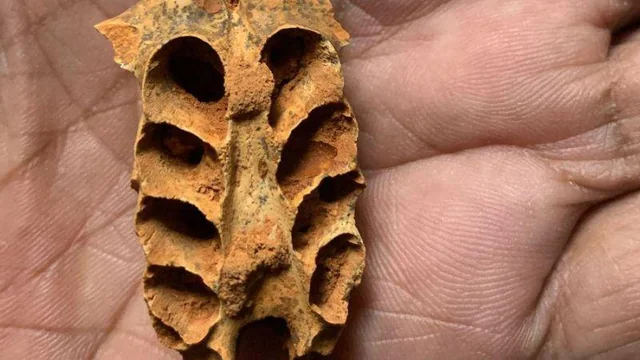
A Cave That Became a Natural Archive (Image Credits: Reddit)
As you step into this ancient cave, you’re entering what was once a feeding ground for giant barn owls. These predators repeatedly brought prey like hutias—rodent-like mammals—back to the cave, leaving behind piles of bones over generations.
What you need to picture is how those remains built up over time. The cave floor slowly filled with skulls, jaws, and vertebrae, mixed with fine sediment. This created a dense fossil deposit—essentially a natural archive of life and death frozen in place.
Bees That Found Opportunity in Death
Much later, you would see a completely different species enter the scene—burrowing bees searching for a place to nest. Instead of digging fresh tunnels in soil, they discovered something unexpected: ready-made cavities inside fossil bones.
These bees used hollow tooth sockets and bone spaces as brood chambers, carefully lining them with smooth, waterproof material. For you, this is a striking example of adaptation—bees turning remnants of ancient animals into safe nurseries for their offspring.
A Behavior Never Seen Before
What makes this discovery truly groundbreaking is that it has never been documented before. You are witnessing the first known case of bees nesting inside pre-existing fossil cavities, rather than burrowing into soil or wood.
Even more fascinating, scientists didn’t find the bees themselves—only the fossilized nests they left behind. These smooth, concave structures inside bones were the key clue that revealed this hidden behavior.
Why the Bees Changed Their Habits
You might wonder why bees would choose such an unusual nesting strategy. The answer lies in the environment around you. The cave existed in a limestone region with very little topsoil, making traditional nesting difficult.
Faced with these conditions, the bees adapted. They used the abundance of bones and sediment inside the cave to create stable, protected nests. This shows you how environmental pressure can push even small creatures to develop completely new survival strategies.
What This Discovery Means for Science
You are not just looking at a strange fossil story—you’re seeing how ecosystems connect across time. This discovery reveals how one species’ leftovers can become another’s opportunity, linking predators, prey, and insects in a single ecological chain.
More importantly, it reminds you that fossils don’t just preserve bones—they capture behavior. As scientists continue to study similar sites, you can expect more hidden interactions like this to emerge, rewriting what we thought we knew about ancient life and its remarkable ability to adapt.