You are looking at a fossil that changes how scientists understand the evolution of one of the loudest insects on Earth. Deep within the Shiobara Group in Japan, a remarkably well-preserved cicada fossil has emerged—complete with wings and body intact. For researchers, this is more than just a rare find; it’s a near-complete snapshot of a species that lived roughly 300,000 years ago during the Middle Pleistocene.
What makes this discovery stand out for you is its completeness and scale. Unlike most insect fossils that survive only as fragments, this specimen offers a full view of an ancient cicada, frozen in time with stunning clarity.
A Rare Fossil From an Unexpected Source
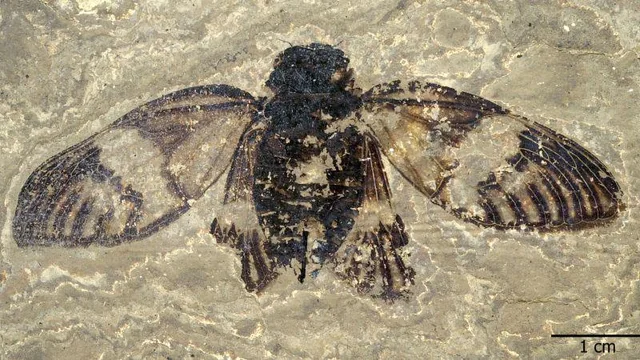
A Rare Fossil From an Unexpected Source (Image Credits: Reddit)
You might expect such a discovery to come from a major excavation—but this fossil was actually found in a small piece of siltstone purchased as educational material. Two young sisters discovered it in 2025, revealing just how unpredictable fossil finds can be.
What you’re seeing is a specimen from the Miyajima Formation of the Shiobara Group, a region already known for preserving insects, plants, and vertebrates. This area represents an ancient lake environment, where fine sediments helped protect delicate structures like wings and body outlines.
The Largest Complete Cicada Fossil Ever Found
As you examine the details, one fact stands out—the size. This cicada measured about 62 millimeters from head to wing tip, making it the largest known fossil cicada with a fully preserved body.
For you, that scale is important. Most cicada fossils consist only of partial wings, but this one includes both wings and the entire body. That level of preservation allows scientists to study fine anatomical features that are usually lost over time.
A Link to Modern Cicadas
You might be surprised to learn that this fossil closely resembles a living species—Auritibicen flammatus. The similarities in wing structure and body shape suggest a strong evolutionary connection between ancient and modern cicadas.
However, there are key differences you should notice. The fossil has longer wings and lacks certain markings seen in its modern counterpart. This raises the possibility that it represents either an extinct species or an ancestral form that eventually evolved into today’s cicadas.
Why Cicada Fossils Are So Rare
You might wonder why such discoveries are uncommon. The answer lies in how fragile insect bodies are. Cicadas, despite being widespread today, rarely fossilize because their soft tissues and delicate wings decay quickly.
In fact, only about 45 cicada fossil species have been identified so far, and most are incomplete. That makes this discovery especially valuable for you—it provides a rare opportunity to study a nearly intact insect from the past.
What This Discovery Means for Evolution
What you’re witnessing is a key piece of evolutionary evidence. This fossil represents one of the youngest known cicada fossils, helping scientists trace how these insects have changed—or stayed the same—over hundreds of thousands of years.
More importantly, it shows you that evolution is not always dramatic. Sometimes, species retain core features for millions of years while making subtle adaptations. As researchers continue to explore sites like Shiobara, you can expect more discoveries that reveal how ancient ecosystems shaped the insects you still hear buzzing today.