You are witnessing a scientific rethink of one of Australia’s most iconic dinosaurs. For decades, Muttaburrasaurus langdoni was imagined with a familiar face—one that appeared in museums, textbooks, and reconstructions worldwide. But now, after the analysis of more than 1,300 newly recovered bone fragments, that image is being completely rewritten.
What this means for you is simple: everything you thought you knew about this dinosaur’s appearance may have been wrong. And the evidence behind this shift is both extensive and compelling.
A Return to the Original Discovery Site
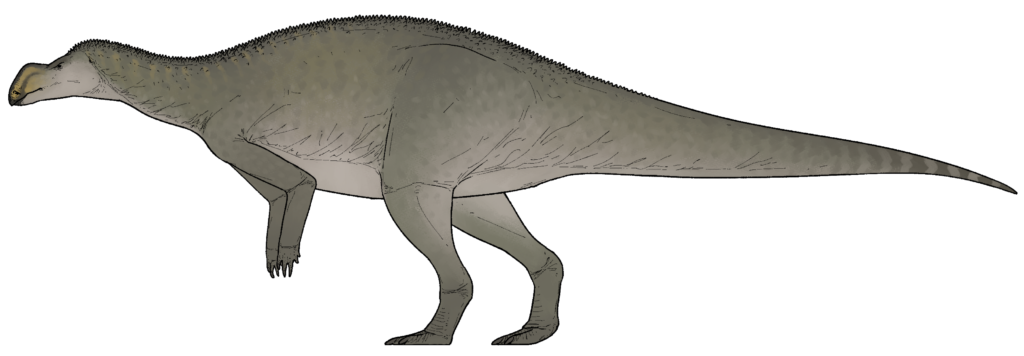
A Return to the Original Discovery Site (Image Credits: Wikimedia)
You’re taken back to the 1960 discovery site in Queensland, where the original fossil of Muttaburrasaurus was found. Decades later, palaeontologist Matthew Herne returned to the same location, determined to uncover what earlier excavations may have missed.
What you need to understand is that this wasn’t a minor revisit. Over multiple field efforts, researchers collected more than 1,300 additional bone fragments linked to the original specimen. These pieces, once scattered and overlooked, turned out to be the key to a much clearer and more accurate reconstruction.
A Face That Looks Nothing Like Before
As you visualize the updated dinosaur, you’ll immediately notice the biggest change—the face. Earlier depictions showed a smoother, simpler skull, but the new analysis reveals a far more complex jaw structure and previously missing dental features.
This means the dinosaur’s bite, feeding habits, and even overall behavior may have been misunderstood. You’re not just seeing a cosmetic update—you’re seeing a functional redesign of how this animal interacted with its environment.
Technology Brings Fossils Back to Life
You might assume this discovery relied only on traditional fossil study, but modern tools played a crucial role. Researchers used advanced imaging, including CT scanning, to examine internal structures that you wouldn’t be able to see with the naked eye.
Through these digital reconstructions, you can now “look inside” the skull and understand how the bones fit together. This process allowed scientists to correct decades-old assumptions and build a far more accurate 3D model of the dinosaur’s head.
Why 1300 Bones Change Everything
At first glance, you might think more bones simply add detail—but in this case, they changed the entire narrative. Each fragment helped refine proportions, confirm connections between bones, and eliminate earlier guesswork.
What you’re seeing is a shift from interpretation to evidence-based certainty. With such a large dataset, scientists could confidently say that previous reconstructions were incomplete—and in some ways, misleading.
A New Era for Dinosaur Reconstruction
You are now entering a phase where even well-known dinosaurs are being re-evaluated. This discovery has already prompted calls for museums and paleo-artists to update their displays and illustrations to reflect the new findings.
More importantly, it shows you that science is never static. Even a dinosaur studied for decades can reveal new secrets when fresh evidence comes to light. As more fossils are revisited with modern tools, you can expect many more “familiar” prehistoric creatures to be reimagined in ways that bring us closer to the truth.