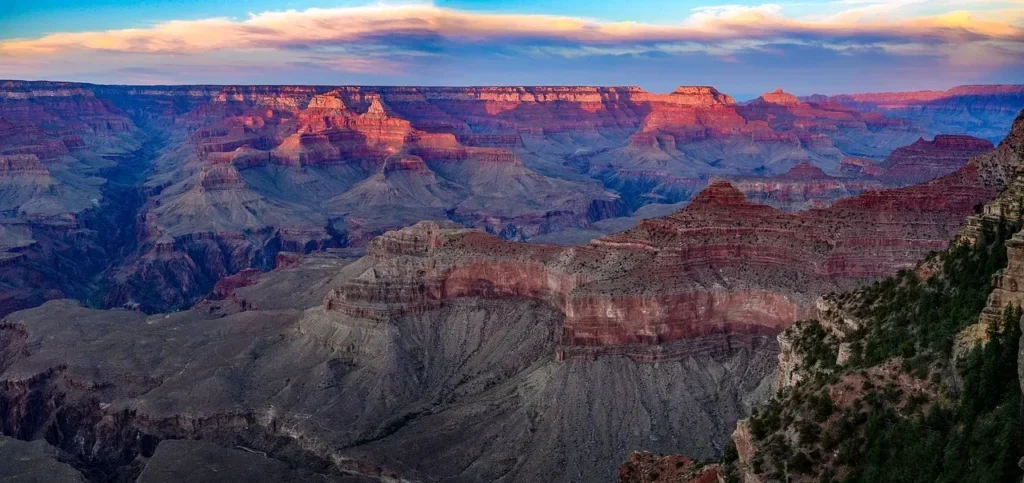
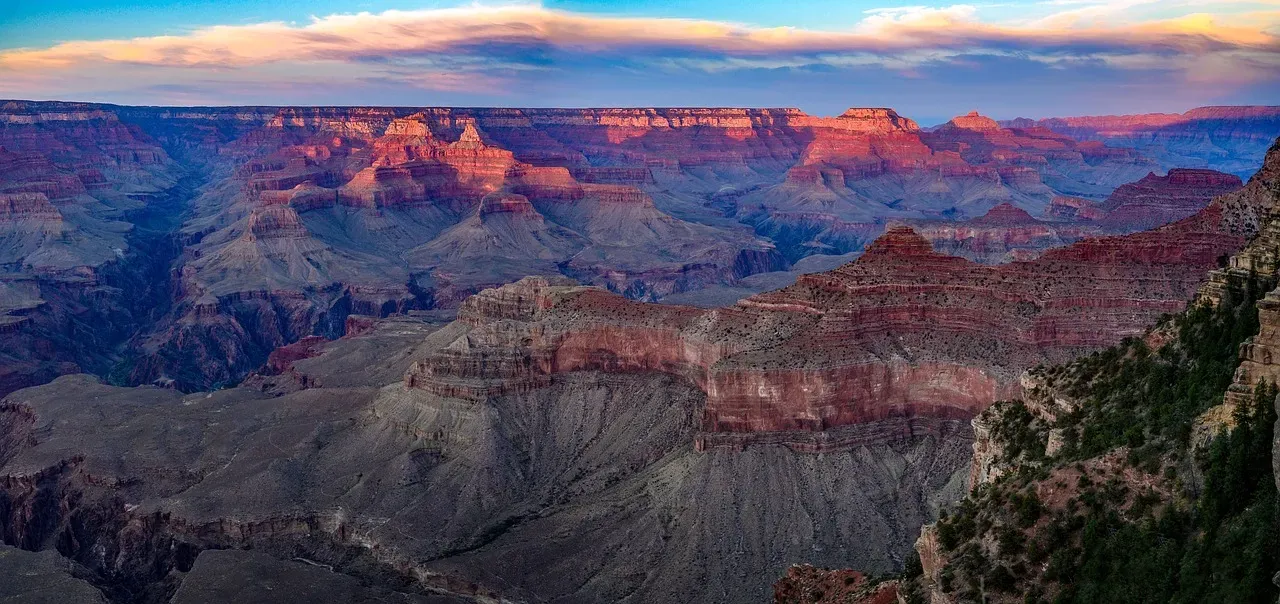
You do not just look at the Grand Canyon; you listen to it. Every cliff, ledge, and shadowed alcove seems to murmur stories from a past so long ago that your sense of time starts to wobble. When you stand on the rim and stare across that vast, carved chasm, you are staring straight into a timeline that stretches back nearly two billion years, layer by layer, color by color.
What makes this place so gripping is not just the view, but the realization that you are reading Earth’s diary in exposed rock. You see the ghosts of vanished oceans, the scars of ancient mountains, and the quiet footprints of early life, all preserved in stone. Once you start to recognize what the different layers mean, the canyon stops being just a pretty landscape and turns into one of the most astonishing history books you will ever “read” with your own eyes.
The Canyon as a Giant Time Machine
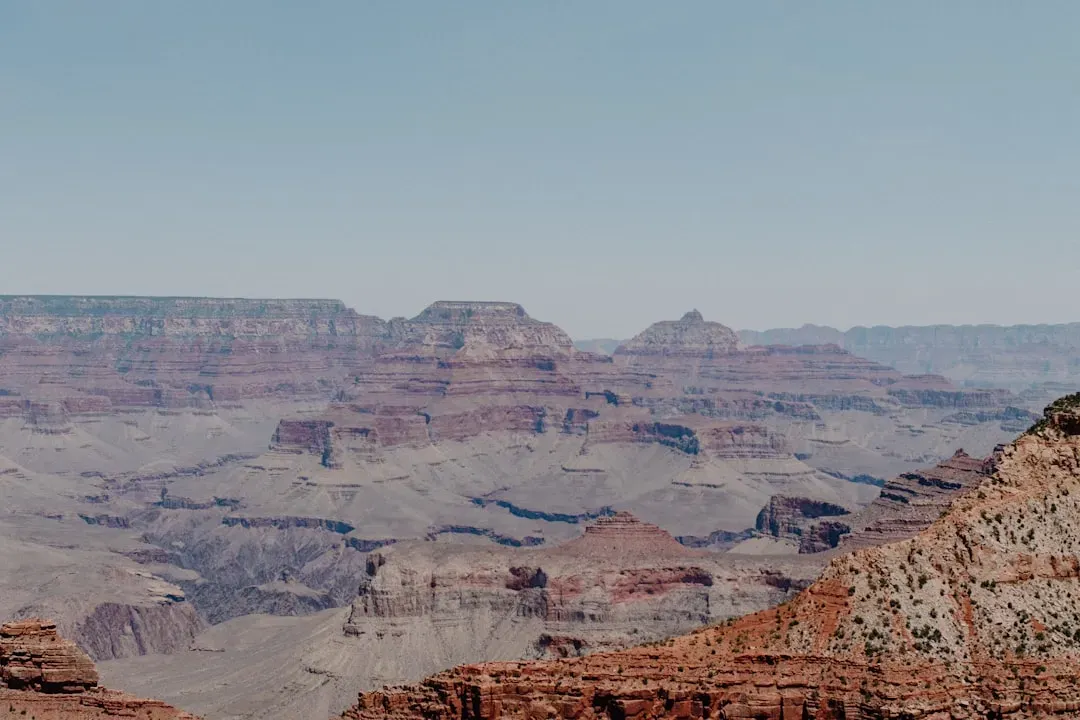
If you could step into a time machine, you might imagine flashing lights and futuristic controls, but at the Grand Canyon, your time machine is much simpler: you just look down. From the youngest rocks along the rim to the oldest dark layers at the river, you are essentially scanning backward through hundreds of millions of years with your own eyes. Each band of color is like a chapter heading marking a different age of the planet.
What really hits you is how much time is stacked right in front of you, far beyond anything human history can offer. While you might think of a few thousand years as “old,” here you are dealing with rock that formed when nothing with bones yet walked the land. The canyon forces you to zoom out, to think in terms of deep time, where millions of years are more like pages and billions are like entire volumes in the story of Earth.
Meeting the Ancient Basement: Vishnu Schist and Zoroaster Granite
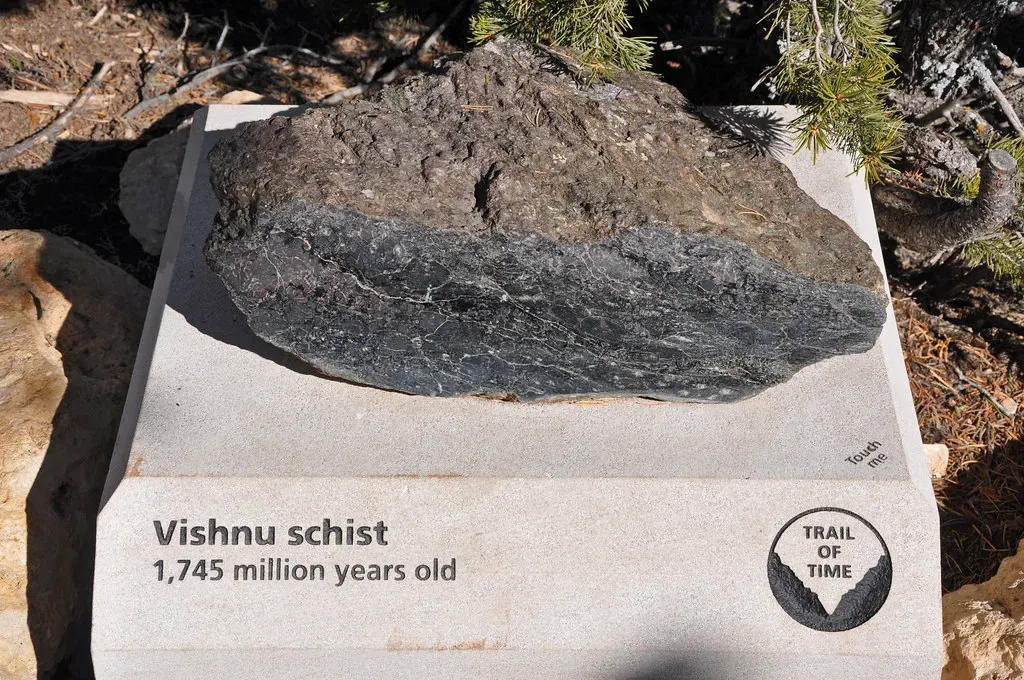
When you finally focus on the dark, crumpled rocks down near the Colorado River, you are looking at some of the oldest chapters in this story. These rocks, known as Vishnu Schist and streaked with ribbons of pinkish Zoroaster Granite, formed roughly about one and three quarter billion years ago. At that time, Earth’s crust in this region was being squeezed, heated, and reshaped deep underground in a world with almost no life on land.
If you could touch these basement rocks, you would be laying your hand on material that has seen continents collide and mountains rise and vanish to dust. You are not just seeing erosion; you are seeing the roots of vanished mountain ranges that were once as massive as anything on Earth today. It is like finding the foundations of a skyscraper long after the building has disappeared, except here the building was an entire ancient landscape.
The Great Unconformity: A Billion-Year Disappearing Act
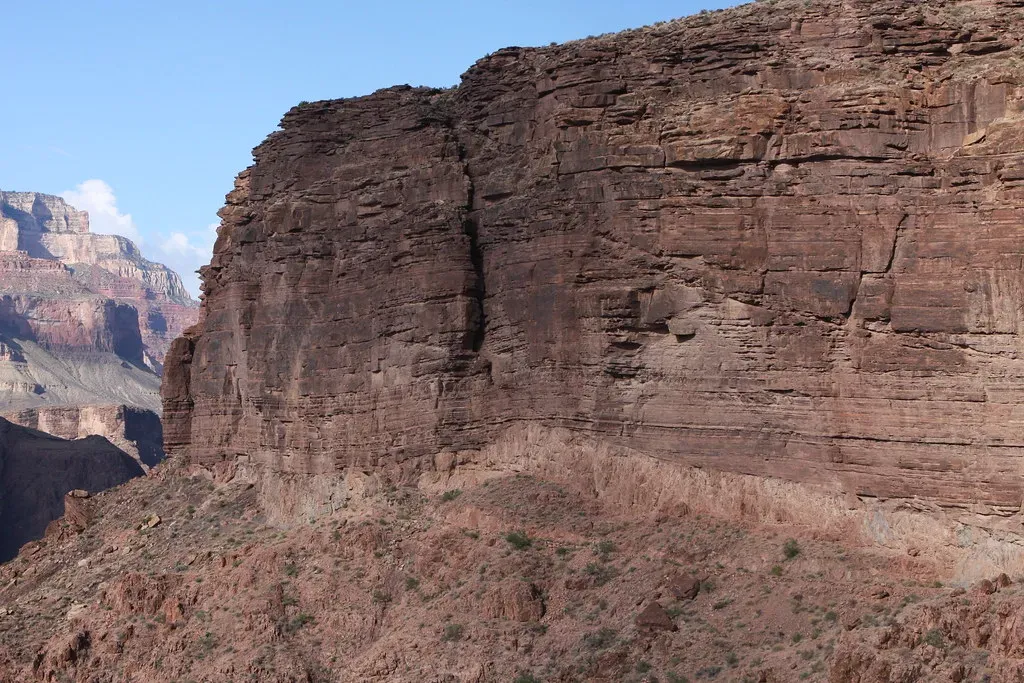
One of the most startling things you can “hear” from the rocks is actually the silence between them. In many parts of the canyon, you can spot a sharp boundary where the tilted, battered Vishnu Schist is abruptly overlain by flat, younger sedimentary rocks. That surface marks what geologists call the Great Unconformity, and it represents an enormous missing slice of time, roughly about a billion years that simply are not recorded here.
When you realize this, it feels like opening a history book and discovering that everything between chapter two and chapter twenty is gone. During that lost interval, continents shifted, climates changed, and life evolved dramatically, but the canyon’s local rock record says nothing about it. Instead, the unconformity itself is your clue: it tells you there was once a long era of uplift and erosion that shaved away earlier layers, leaving a bare, hard surface on which new sediments were later laid down.
Drowned by Ancient Seas: The Tapeats, Bright Angel, and Muav Story
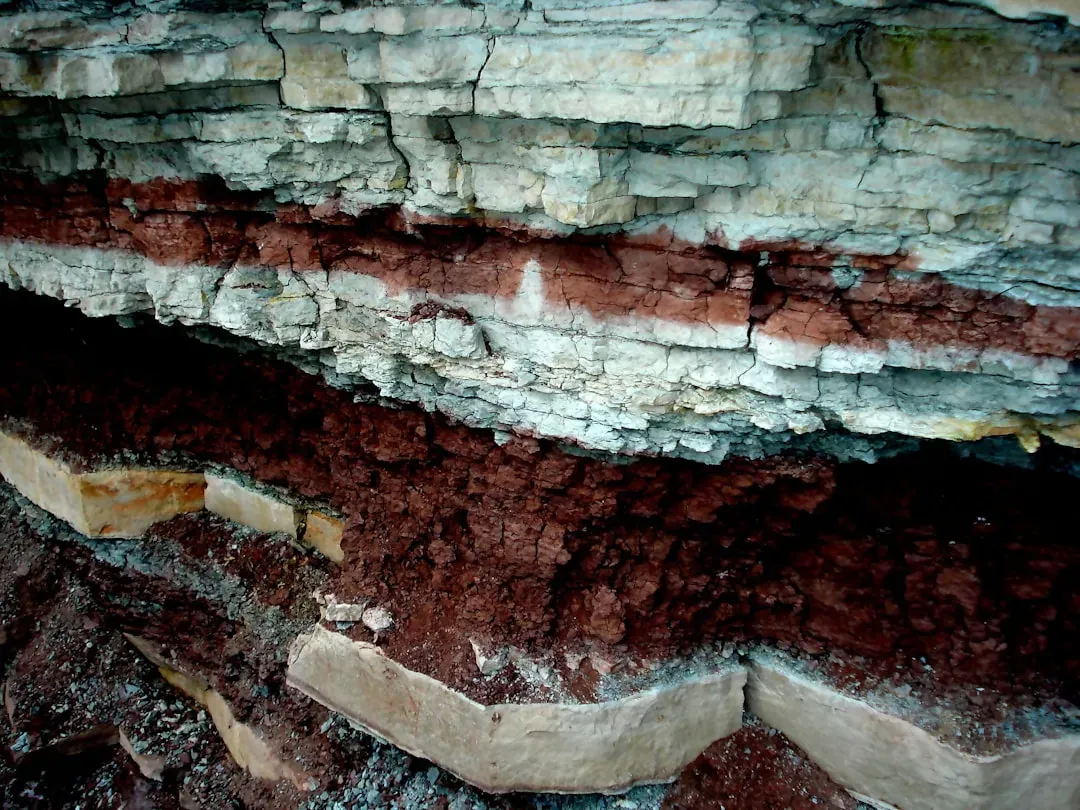
Look up from the basement rocks and you start to see lighter, layered cliffs of sandstone, shale, and limestone. These are the Cambrian-aged layers like the Tapeats Sandstone, Bright Angel Shale, and Muav Limestone, and together they tell you that this region was once swallowed by a shallow, advancing sea around half a billion years ago. You can picture shorelines slowly migrating inland as waves rolled over older landscapes and buried them under sand and mud.
When you see the coarse, gritty Tapeats, you are reading the story of ancient beaches and nearshore sands. Move upward into the softer Bright Angel Shale, and you are stepping into quieter, slightly deeper waters where fine mud settled slowly to the seafloor. By the time you reach the Muav Limestone above, you are in even deeper, clearer water where countless tiny marine organisms helped build up carbonate muds that hardened into rock. With just these three layers, you are watching an ancient shoreline drown and drift away.
Colorful Cliff Builders: The Supai, Redwall, and Coconino Layers
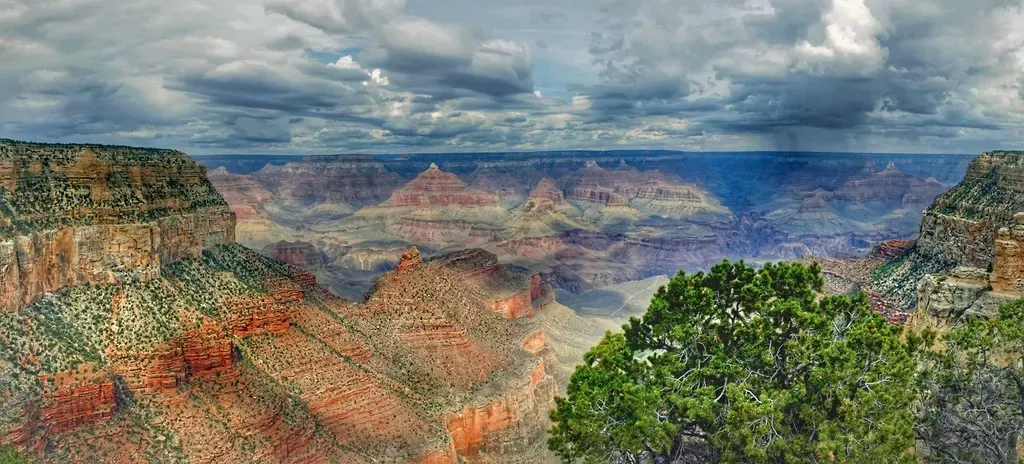
As your eyes wander up the canyon walls, you see bold red cliffs, pale bands, and creamy-white ledges stacked like a giant layer cake. The Supai Group gives you many of those rich red-brown slopes and ledges, the Redwall Limestone towers as a mighty cliff (often stained red by material from above), and the Coconino Sandstone forms light-colored, sheer walls. Together, these layers span a time when the region shifted between seas, coastal plains, and even wind-blown deserts.
If you hike among these rocks, you might notice that some surfaces look like frozen sand dunes, especially in the Coconino Sandstone. Those sweeping, angled layers are cross-beds, formed as wind pushed sand across desert dunes around a quarter of a billion years ago. Elsewhere, fossil traces and the nature of the rocks hint at coastal environments and shallow warm seas. You are watching a landscape flip slowly from ocean to shoreline to desert, over spans far longer than any human civilization.
Life Leaves Its Mark: Fossils, Footprints, and Tiny Clues
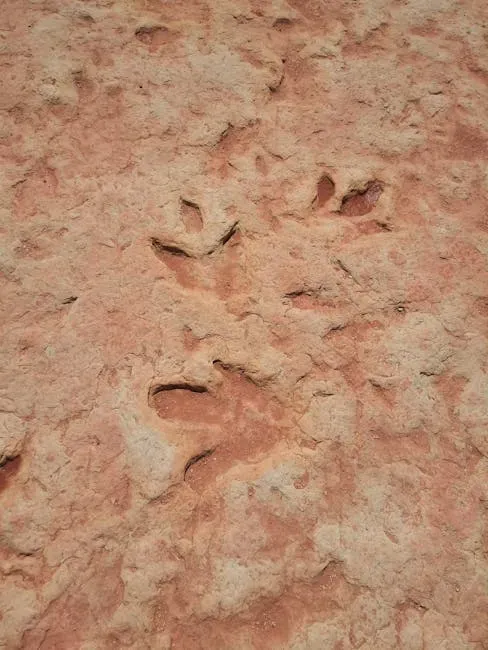
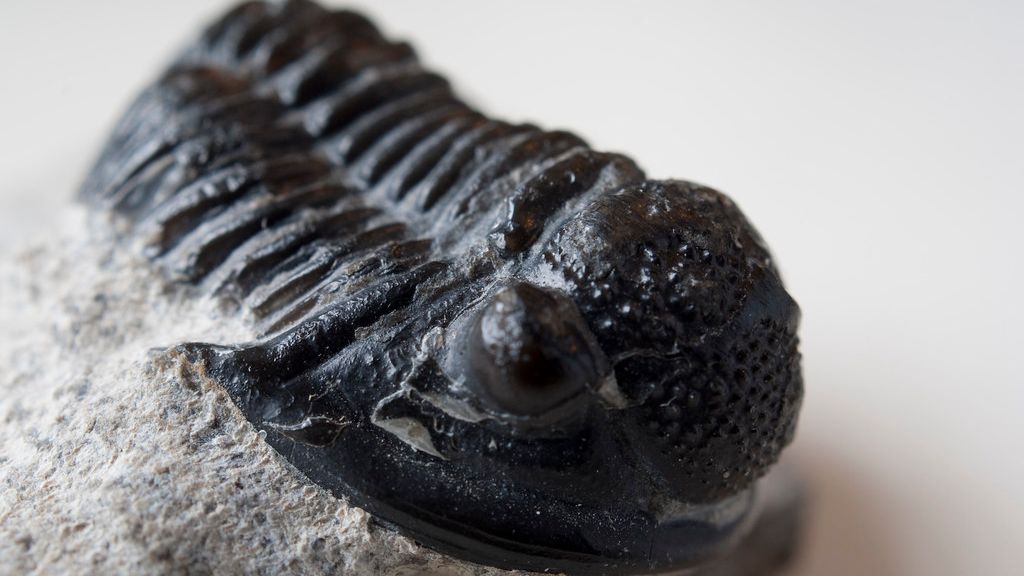
You might not expect a place that looks so dry and empty today to hold such clear signs of ancient life, but the canyon’s rocks are peppered with them. In some layers of limestone and shale, you can find the preserved remains and impressions of early marine creatures like trilobites and brachiopods, the kind of animals that crawled or rested on sea floors hundreds of millions of years ago. Their shells, burrows, and tracks are like small signatures left in the margins of Earth’s old pages.
Higher up, especially in some sandstones, you can come across fossilized footprints from early four-legged creatures or other land animals moving over damp surfaces. These tracks capture moments that lasted only minutes or hours, yet they survived while entire mountain ranges disappeared. When you realize you are looking at the path an animal took across a muddy shore roughly about a quarter of a billion years in the past, it suddenly feels less like geology and more like time travel.
The Colorado River: The Sculptor of a Deep Story
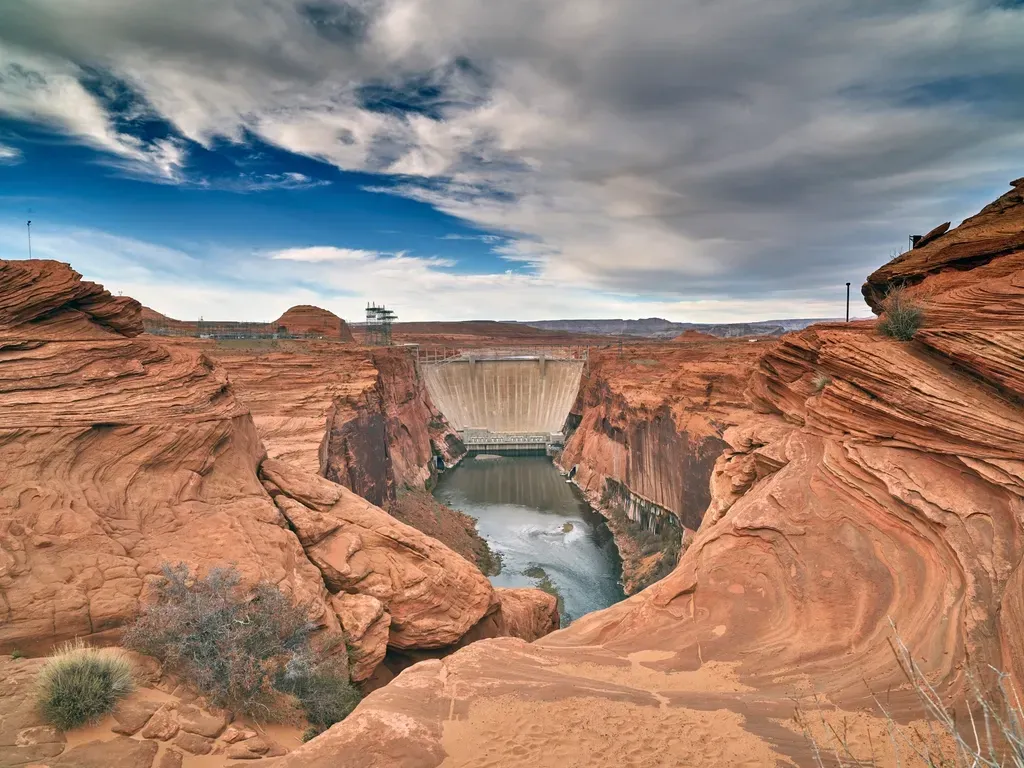
All of these rocks would still be hidden underground if not for one stubborn, carving force: the Colorado River. Over the past several million years, the river has sliced downward through the uplifted Colorado Plateau, steadily sawing its way through older and older layers. You can think of it like a patient sculptor, using water and sediment as its tools, deepening the canyon as the region slowly rose.
It is easy to assume the canyon must be unimaginably ancient in its current form, but the really deep incision of the river is surprisingly recent compared to the age of the rocks. While the exact timing is still debated, the main carving of the modern canyon mostly happened within the last few million years, a blink compared to the billion-year saga recorded in the walls. That contrast drives home a striking point: the story written in rock took eons to assemble, yet the window that lets you read it was cut relatively quickly in geological terms.
Reading the Rocks Yourself: How to “Listen” on Your Visit
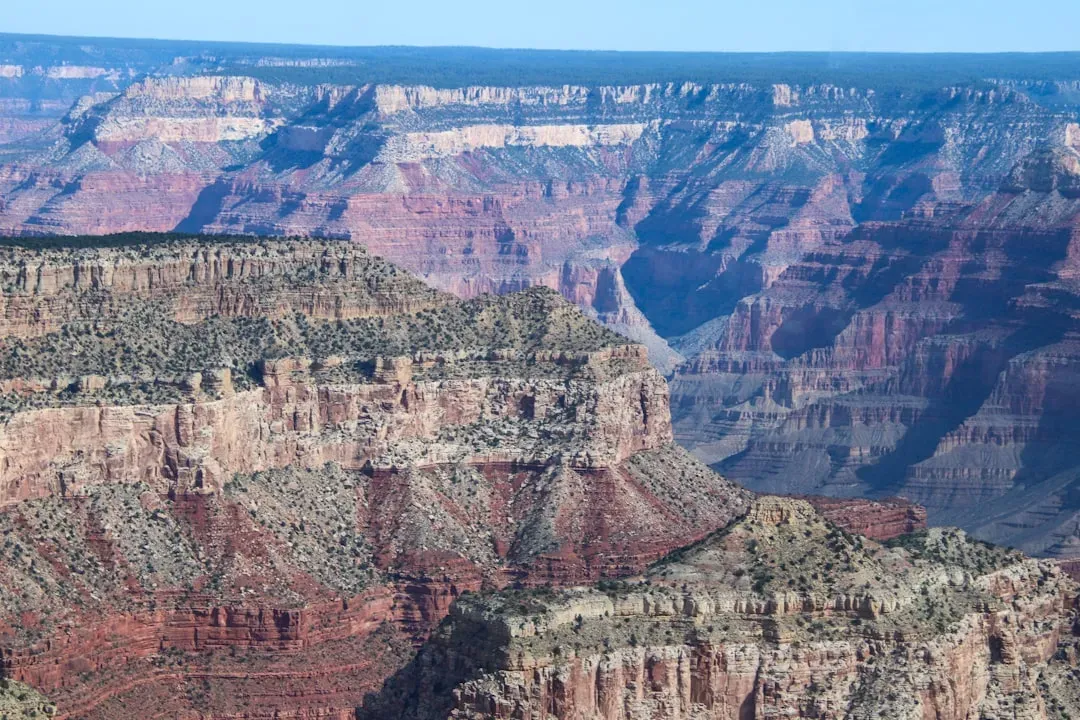
When you actually visit the Grand Canyon, it is easy to feel overwhelmed and just snap photos without understanding what you are seeing. But if you slow down and pay attention to a few simple clues, you can start to “read” the story for yourself. Notice how some layers form bold cliffs while others make gentler slopes; that difference reflects how resistant the rock is to erosion, which is tied to what it was made of and how it formed.
You can also look for color changes, unusual textures, and any signs of layering that might hint at beaches, dunes, or deep-water environments. Park overlooks and visitor centers often have simple diagrams showing which rock layers you are seeing from each viewpoint. Once you match those labels to the cliffs, the view becomes a guided tour through time rather than just a wall of scenery. You stop being a spectator and start acting more like a detective of deep time.
Why This Billion-Year Story Matters to You Today
It might be tempting to treat the Grand Canyon’s geology as a curiosity that belongs only to scientists and tourists, but it actually has a lot to say about your own life. By staring into that chasm, you are forced to face how tiny human timescales really are compared to Earth’s. That perspective can feel unsettling at first, but it can also be oddly freeing, reminding you that many crises and stresses are brief ripples in a much larger, older story.
At the same time, the canyon’s record of changing climates, rising and falling seas, and shifting landscapes offers a quiet warning. Earth has never been static, and the rocks prove that change is the rule, not the exception. Today, as you deal with modern environmental shifts and debates, seeing this long record of transformation can help you weigh your choices with a bit more humility and seriousness. You are, after all, just the latest character to walk across a stage that has been under construction for nearly two billion years.
Conclusion: Standing on the Rim of Deep Time
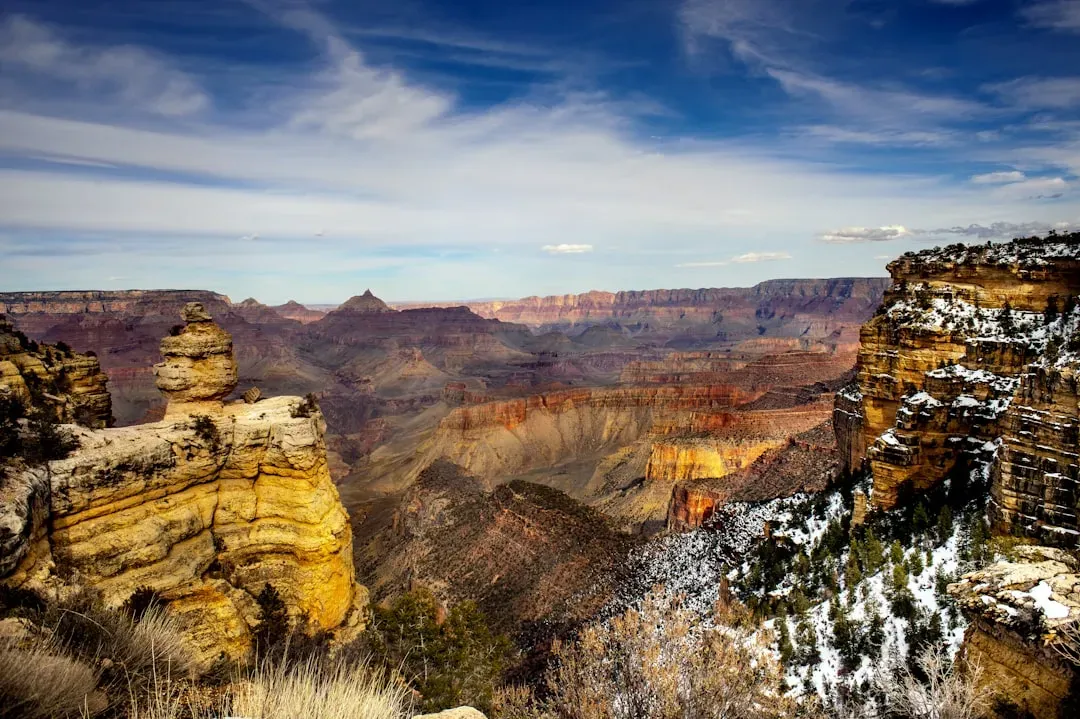
When you stand on the rim of the Grand Canyon, you are not just admiring a famous view; you are putting yourself face-to-face with deep time. The rocks beneath your feet hold memories of vanished mountains, drowned coastlines, ancient seas, and some of the earliest complex life to populate this part of the world. The canyon itself is the final, dramatic cut that lets you look back along that timeline like you are leafing through an impossibly old family photo album of the planet.
If you let the story sink in, it changes the way you see your own moment in history and your place on Earth. You realize that, for all our technology and noise, humans occupy only a sliver of the timeline those rocks record. The canyon’s whisper is simple but powerful: the world was here long before you, and it will keep changing long after. The real question is, now that you have heard a bit of that billion-year tale, what will you do with the time that is yours?