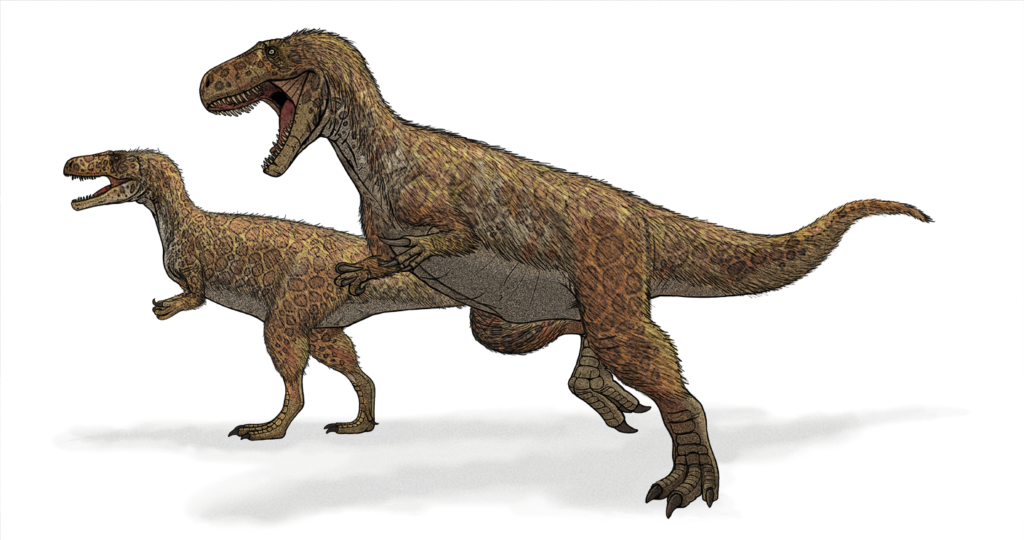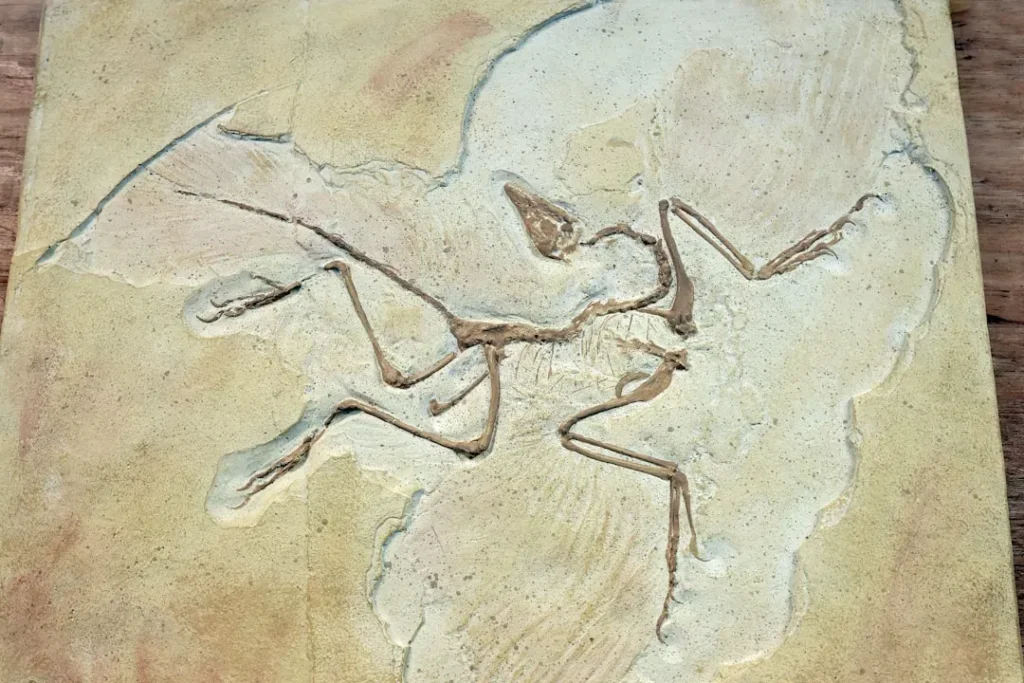
Close your eyes for a second and picture a dinosaur. You probably see a hulking, scaly beast thundering across a primeval landscape, more crocodile than canary. Now imagine that same animal covered in fuzz, quills, and shimmering plumage, looking less like a movie monster and more like a giant murder-chicken. That mental whiplash you feel is exactly what new fossil evidence has been doing to paleontology for the last few decades.
As more fossils come out of the ground, especially from exceptionally well-preserved sites in China, Russia, and beyond, you’re forced to admit something a bit wild: feathers were not a weird side experiment just for early birds. They show up in many branches of the dinosaur family tree, in predators and plant‑eaters alike, from tiny, cat‑sized hunters to turkey‑sized omnivores and maybe even some of the heavyweights. You’re living in the era where the old “giant lizard” stereotype is quietly dying, and the feathered dinosaur is taking its place.
The Fossils That Shattered the Scaly Dinosaur Stereotype
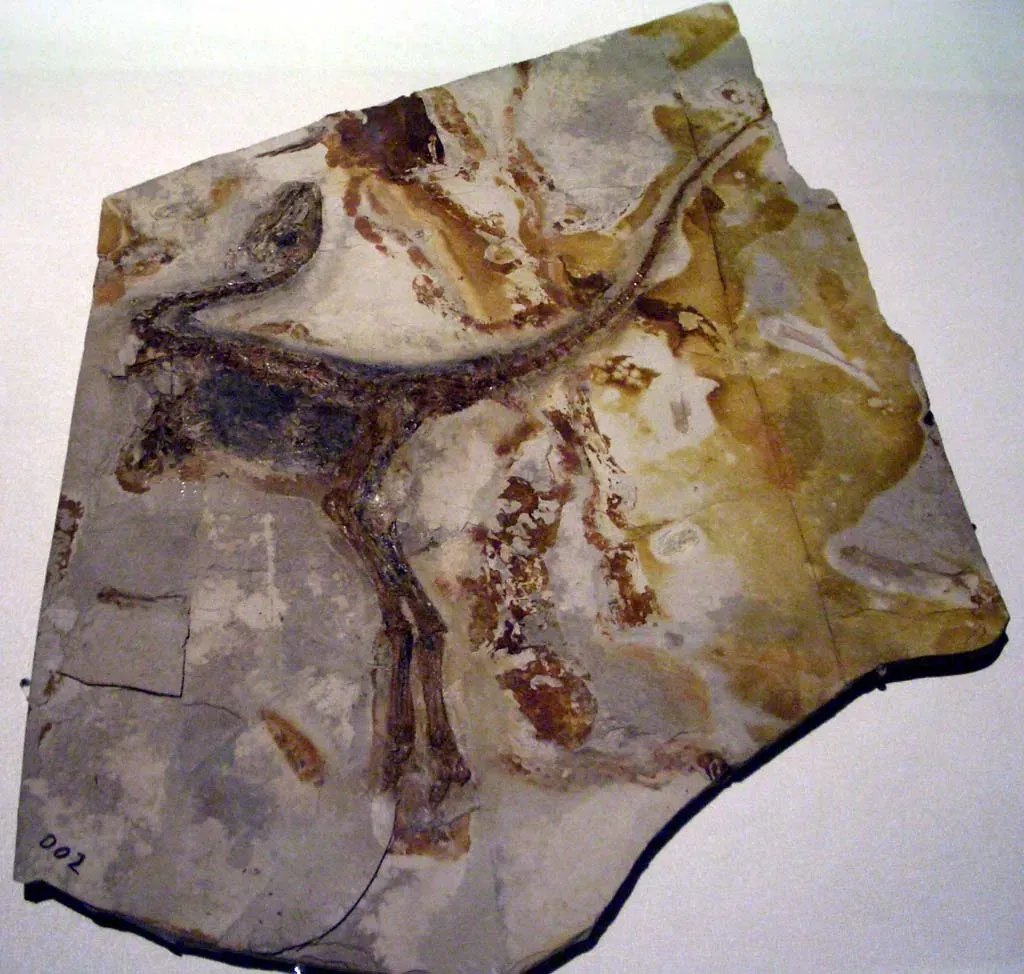
If you had been reading dinosaur books in the early 1990s, feathers on dinos would’ve sounded like pure science fiction. Then you get hit with fossils like Sinosauropteryx from northeastern China, where the surrounding rock preserves a halo of fine filaments all along the body. Instead of bare, crocodile‑like skin, you’re suddenly looking at an animal wrapped in a downy coat, like a scruffy, long‑tailed rooster. Soon after, you meet Caudipteryx and other small theropods with fully formed, modern‑looking feathers on their arms and tails, and your mental image of dinosaurs starts to wobble.
Over time, those discoveries stop being one‑off oddities and turn into a pattern. You see feather impressions in a growing list of non‑avian theropods, from four‑winged Microraptor to strange, pot‑bellied plant‑eaters like Beipiaosaurus. In some fossils, you even find microscopic pigment bodies inside the feathers, letting researchers reconstruct color patterns and shading. That means you are not just learning that feathers were there; you’re actually starting to glimpse how these animals looked in life, stripe by stripe and band by band, in a level of detail that would’ve sounded ridiculous a generation ago.
From Bird Ancestors to Almost the Whole Dinosaur Family Tree
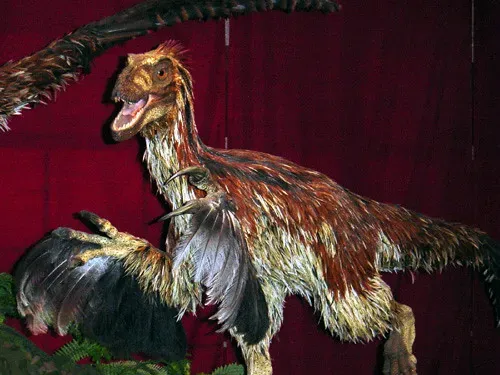
At first, you might have been told a simple story: feathers belong only to the direct ancestors of birds, a narrow slice of meat‑eating theropods. But new fossils keep refusing to stay in that box. Filamentous body coverings show up in species like Sciurumimus, a young predator from a more primitive branch of the theropod family, hinting that fuzz may have appeared earlier than you’d expected. Then you see quill‑like bristles on plant‑eating dinosaurs such as Psittacosaurus and Tianyulong, which live on the opposite side of the dinosaur family tree from birds, and the story gets harder to keep neat and tidy.
When feather‑like structures crop up across both major dinosaur groups – meat‑eating saurischians and largely herbivorous ornithischians – you’re pushed toward a bold idea: simple feathers, or at least hair‑like filaments, may have been present in the common ancestor of all dinosaurs. From there, different lineages could have elaborated, simplified, or even lost them entirely over millions of years. You no longer get to assume that feathers were rare or exceptional; instead, you’re almost forced to treat them as a common toolkit feature that many dinosaurs carried in one form or another.
Why Fossils Hid Feathers From You for So Long
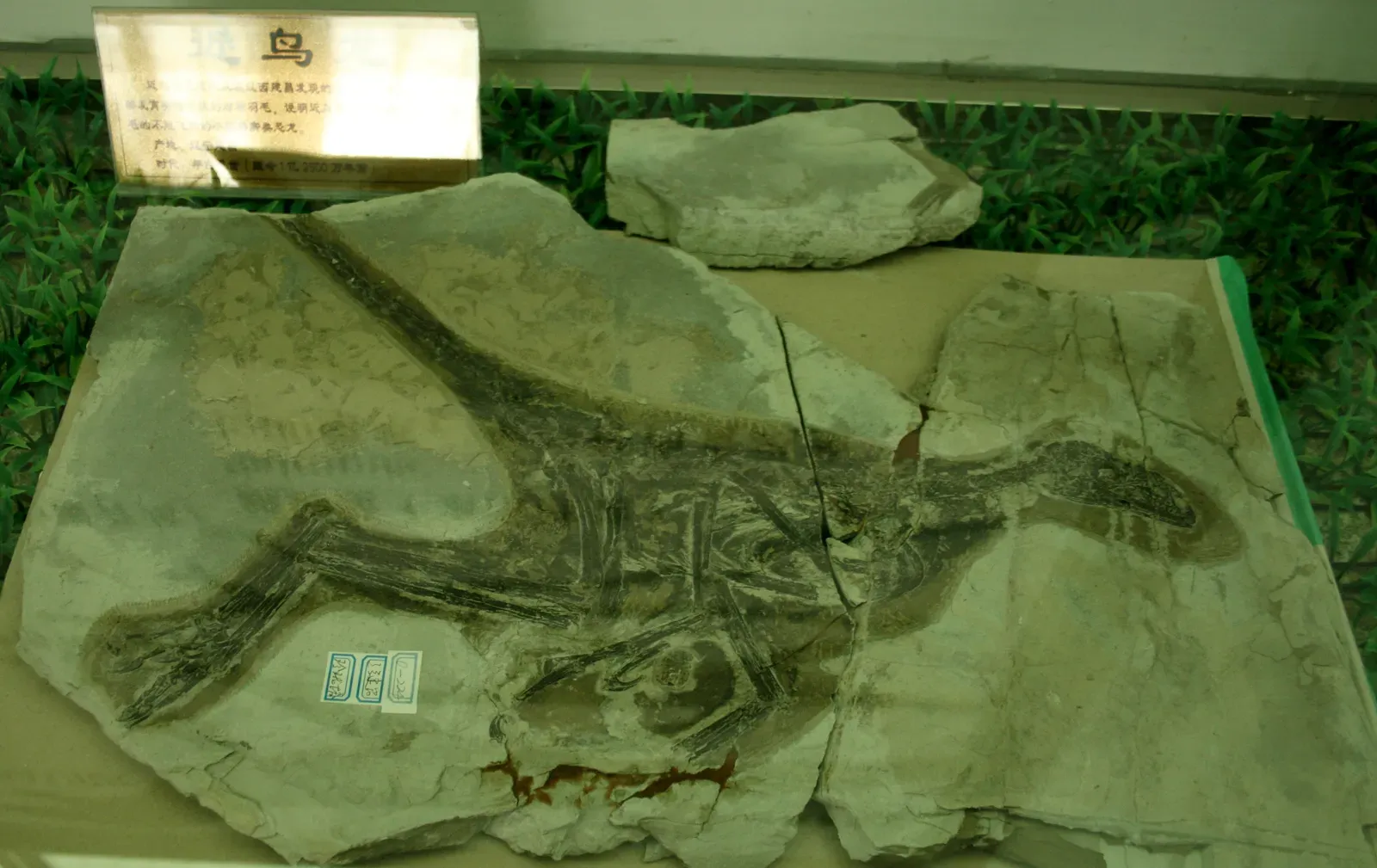
It’s tempting to wonder why nobody noticed all this earlier. The catch is that feathers, skin, and other soft tissues are incredibly fragile, and the fossil record is brutally biased against them. Most of the time, you’re lucky to get bones, teeth, and maybe the outline of a scaly foot. For feathers to show up, you need near‑perfect burial conditions: fine‑grained sediments, low oxygen, rapid coverage, and a lot of good luck. That combination is rare, which means you’ve been working with a heavily filtered view of dinosaur bodies for over a century.
Once you start digging in the right kinds of rocks, especially the volcanic‑ash‑rich lake deposits of northeastern China, your picture changes fast. You suddenly see ghosts of soft tissues you never expected: skin textures, muscle outlines, and delicate feather impressions hugging the skeletons. The more of these “exceptional preservation” sites you find, the more you realize that earlier artists and scientists weren’t necessarily wrong on purpose – they just never got to see what you’re seeing now. You were judging an entire dynasty of animals off a scattered pile of armor plates and skulls, and now the missing wardrobe is finally showing up.
Beyond Flight: What Dinosaurs Actually Used Feathers For
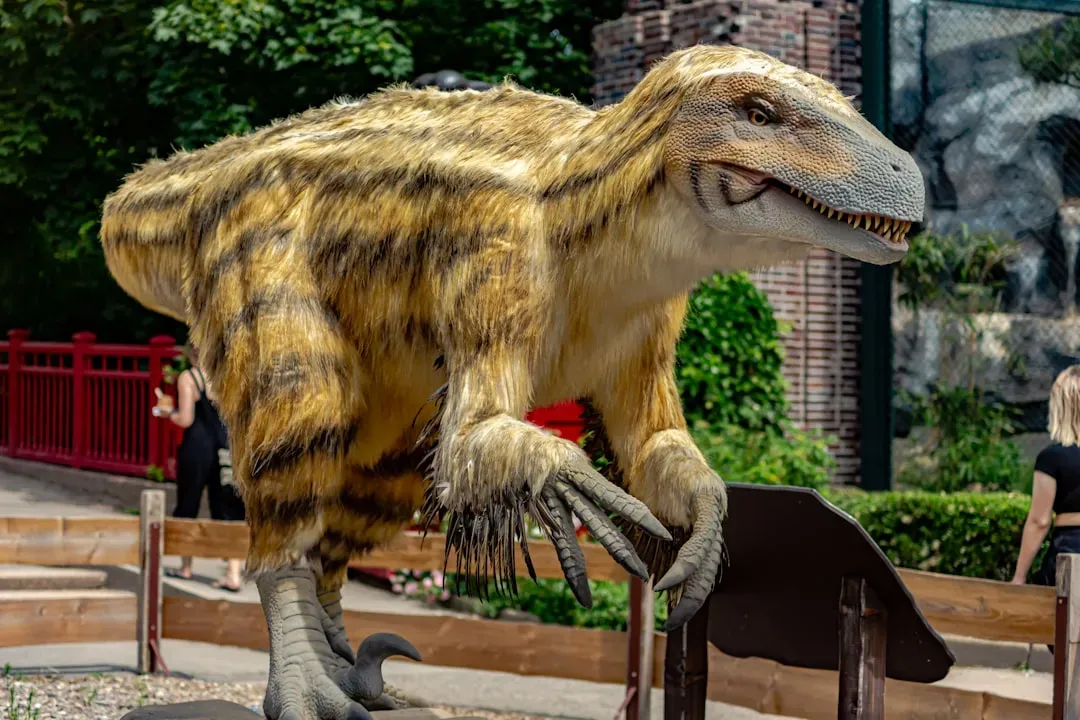
When you hear “feathers,” you probably jump straight to flight, but that’s only part of the story and not even the first chapter. Many feathered dinosaurs you meet in the fossil record are clearly flightless; some are too big, others have stubby arms, and their feathers look more like shaggy fuzz than aerodynamic wings. In those animals, you’re likely looking at insulation, a way to hold onto body heat in cooler environments or during chilly nights. Thin, hair‑like filaments act like a prehistoric parka, hinting that warm‑blooded metabolism was more widespread among dinosaurs than you grew up hearing.
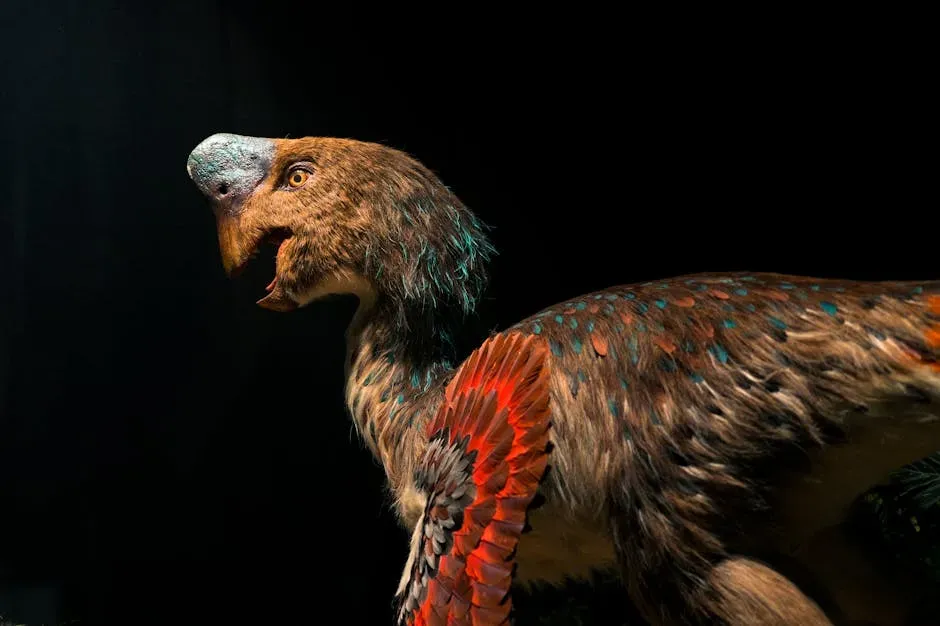
Other species show evidence for feathers that scream display rather than utility. Think of long tail plumes, fan‑like arm feathers, or specialized ornamental filaments on the head and back, more like a peacock than a hawk. In those cases, you’re probably seeing tools for communication: showing off to potential mates, intimidating rivals, or signaling within a group. Feathers could also have helped with camouflage, breaking up body outlines in dappled forests, or flashing bold warning patterns. Only in later, bird‑like dinosaurs do you clearly see fully aerodynamic feathers co‑opted into gliding and then powered flight, turning a multi‑purpose body covering into a technology for leaving the ground.
Did All Dinosaurs Have Feathers? Here’s What You Can and Can’t Say Yet
With all this new evidence, it’s tempting to jump to the most dramatic headline and tell yourself that every dinosaur, from tiny hunters to giant sauropods, strutted around in some kind of fuzzy coat. The truth is more nuanced, and you should sit comfortably with that uncertainty. Some studies of skin fossils suggest many dinosaurs still had scales, especially in lineages where no feathers have been found so far. In a few species, you see clear scale impressions with no hint of filaments, which tells you that at least parts of their bodies stayed scaly, even if small patches of fuzz existed elsewhere.
On the other hand, when you map known feathered species across the dinosaur family tree, they show up so widely that it becomes harder and harder to argue they were rare exceptions. You’re left with a spectrum rather than a simple yes‑or‑no chart: some dinosaurs probably had full body coats of filaments, some mixed scales and feathers in different regions, and some were mostly scaly, perhaps with only bristles in specific spots. Right now, you do not have enough fossils to answer the “all dinosaurs” question cleanly, and responsible scientists keep emphasizing that point. What you can say with confidence is that feathers, in one form or another, were far more common than anyone guessed when your childhood posters were printed.
How New Techniques Are Revealing Even More Hidden Plumage
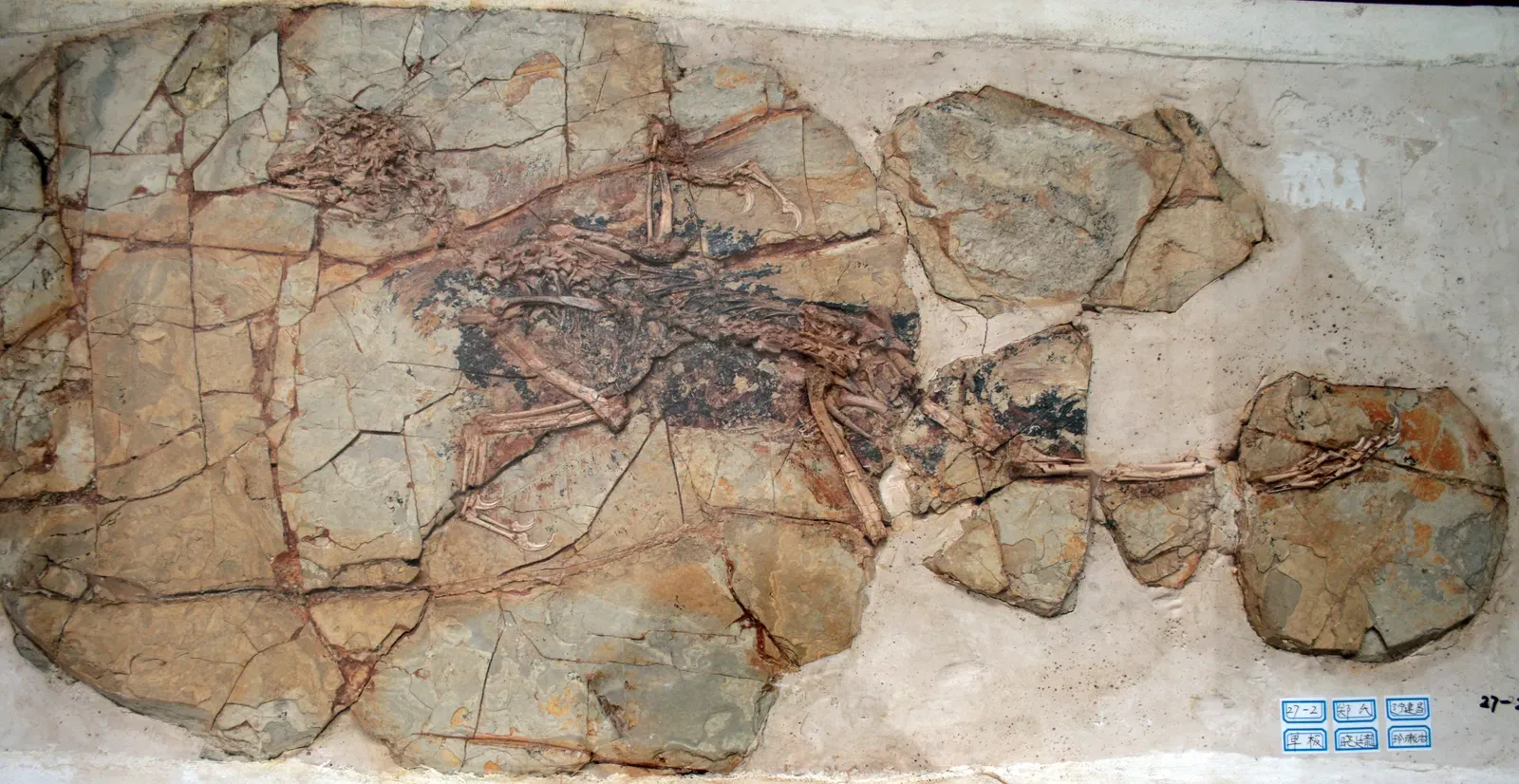
One of the surprising twists is that new technology lets you squeeze more information out of fossils you thought you already understood. Under normal light, a slab might show faint smudges around a skeleton; under ultraviolet illumination, you suddenly see detailed outlines of feathers or skin that were almost invisible before. High‑powered microscopes reveal microscopic structures in those soft tissues, helping you distinguish between true feathers, collagen fibers, and bacterial films that can all look similar at first glance. You’re basically learning to read a much subtler language in the rock.
On top of that, chemical analyses give you clues about original pigments and tissue types. By comparing fossilized microstructures to those in modern feathers, you can infer whether a dinosaur had dark banding, iridescent sheens, or muted tones. In some cases, you find evidence that what used to be interpreted as simple filaments might actually have been more complex feathers altered by the fossilization process. All of this means your estimate of how widespread feathers were is likely conservative. As methods improve and old fossils are reexamined with fresh eyes, you can expect more “wait, this one had feathers too?” moments.
What Feathered Dinosaurs Mean for How You Picture the Past
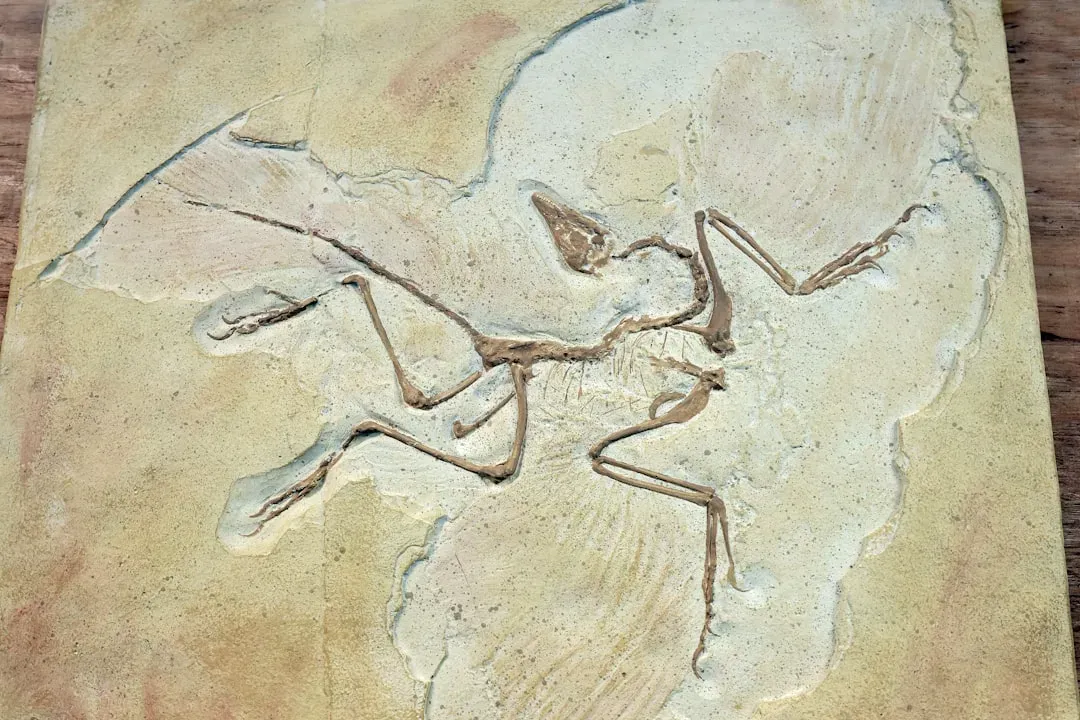
Once you accept that feathers were common, you’re forced to rethink almost everything about how prehistoric landscapes looked and felt. Instead of a world dominated by drab, leathery reptiles, you’re walking into a noisy, visually complex ecosystem full of crests, plumes, and color. Many small and medium‑sized dinosaurs probably fluffed up their feathers when threatened, preened like modern birds, and performed elaborate displays during mating seasons. That brings them emotionally closer to you; they stop feeling like distant monsters and start behaving more like strange, oversized versions of the birds you see in your backyard.
This shift also drives home a bigger point: you’re not looking at birds as something separate from dinosaurs, but as the one dinosaur lineage that made it through a mass extinction and kept going. When you watch a crow tilt its head or a hawk spread its wings, you’re seeing living dinosaurs using the same feather technology that emerged in their Mesozoic relatives. The more you learn about feathers in non‑avian dinosaurs, the more that connection stops being a slogan and starts feeling real. You begin to see deep time not as a closed chapter, but as a story whose last few pages are still flying around above your head.
In the end, the new fossil evidence does something simple but profound: it forces you to let go of the scaly, lumbering cartoon in your mind and replace it with a more complex, feathered reality. Not every dinosaur was a walking ball of fluff, and scientists are still arguing about just how far feathers spread across the family tree. But you now know they were not rare, not confined to a few “almost‑birds,” and certainly not a late, trivial add‑on. They were a crucial part of dinosaur biology, serving warmth, display, and eventually flight, long before the first true bird took off.
The next time you picture a dinosaur, you have a choice: do you stick with the outdated movie monster, or do you let the fossils nudge you toward something stranger, softer, and far more alive‑looking?