

You probably hear a lot about how modern technology helps you survive extreme weather, scarce resources, or remote places. But long before smartphones, weather apps, or even metal tools in some regions, people were already solving brutal environmental problems with astonishing creativity. When you look closely, you start to realize that some of the smartest “engineers” in history never drew a blueprint or filed a patent – they just watched the land, learned patiently, and adapted. In this article, you’re going to walk into ice fields, deserts, cloud forests, high mountains, and open seas, standing side by side with ancient tribes whose daily life was tougher than most disaster movies – yet somehow, they thrived. As you read, try imagining yourself dropped into each of these environments with no gear, no maps, and no modern backup. The question quietly becomes: would you survive even a week without the knowledge these people developed over centuries?
The Inuit: Turning Frozen Desolation Into a Working Toolkit
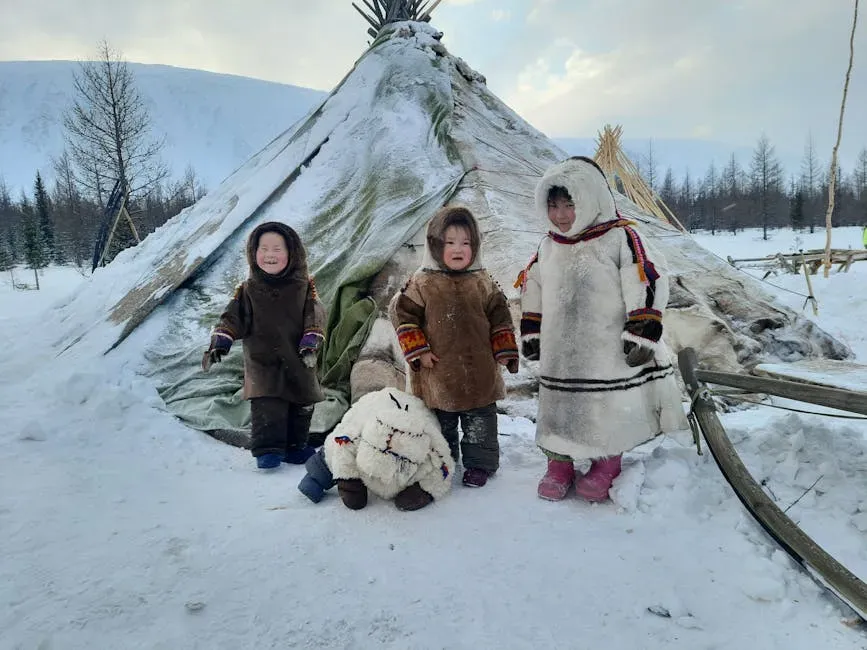
You might look at the Arctic and see an empty, frozen wasteland, but if you approached it the way Inuit communities did, you’d start seeing tools, shelter, and food everywhere. Where you see snowdrifts, they saw perfect building blocks for an insulated dome that traps warmth and blocks wind. Those famous snow houses were not random piles of snow; they were carefully shaped blocks stacked in a spiral, angled so they locked together like a self-supporting arch, with an entrance tunnel lower than the main floor so precious warm air stayed inside. In a place where wood was scarce and stone could be buried in ice, they transformed snow – the very thing that threatens your survival – into a shield against the cold. You’d also notice how nothing went to waste. If you were out on the sea ice, you might feel completely exposed, but the Inuit turned that floating sheet into a hunting highway. They mastered the patterns of seal breathing holes, the behavior of migrating animals, and the shifting dangers of sea ice itself. From bone and ivory, they crafted sled runners, harpoon tips, and tools, while animal skins became weatherproof clothing that still rivals expensive outdoor gear today. Their whole lifestyle shows you that even in the harshest environments, survival is less about brute strength and more about deeply knowing your surroundings and reading subtle signs that others would simply miss.
The San of the Kalahari: Outsmarting Heat and Hunger With Knowledge
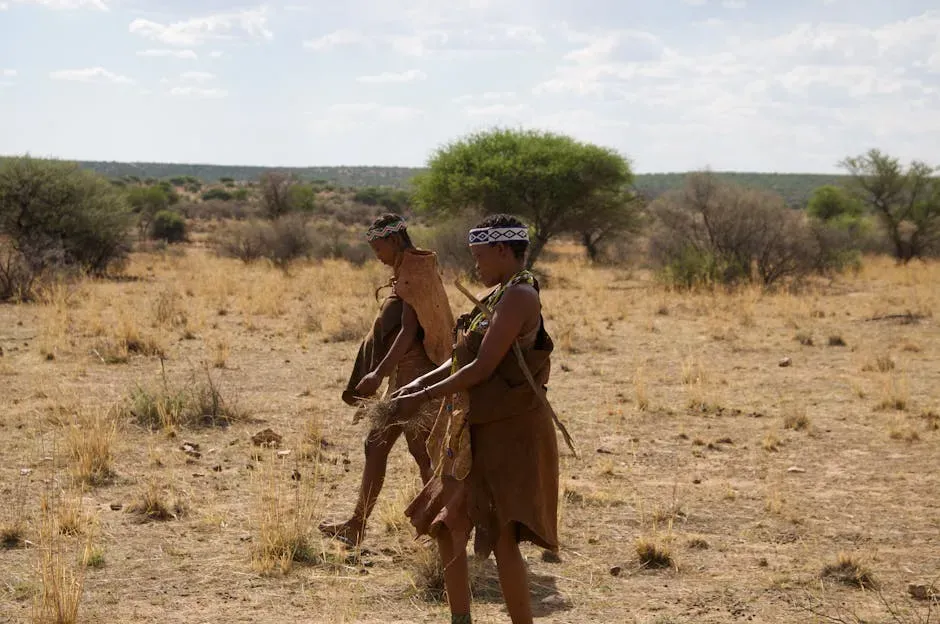
If you dropped into the Kalahari Desert without water, you’d probably see endless sand and scrub and start to panic pretty quickly. The San, however, treated that same landscape as a layered map of hidden resources that you can only read if you’ve been paying attention your whole life. They knew exactly which roots hid moisture, which tubers to dig for, and how to tap water from underground storage in plants. That kind of knowledge is not something you memorize in a weekend; it’s built from generations of observation, storytelling, and careful trial and error, where a mistake could be deadly. Imagine walking past what looks like a dry bush and knowing it can keep you alive for another day. Hunting in such a harsh place also required a different kind of ingenuity. Instead of relying purely on strength or large numbers, the San developed persistence hunting, where you track an animal over long distances until it collapses from exhaustion. To do that, you’d have to read almost invisible footprints, tiny scuffs in the sand, and even the way a broken blade of grass bends. Add in lightweight bows, poisoned arrows carefully prepared from plants or insects, and a deep understanding of animal behavior, and you begin to see a survival system built less on tools and more on knowing. In a world where you can open an app to see the weather or order food, that kind of embodied wisdom feels almost superhuman.
The Polynesian Navigators: Crossing the Empty Ocean Without a Compass

Picture yourself on a small canoe in the middle of the Pacific, with no GPS, no compass, and no visible land in any direction. For most people, that’s pure terror. For ancient Polynesian navigators, it was a familiar workspace. They read star paths like you read road signs, memorizing which stars rose and set over specific islands and following them for days or weeks at a time. When clouds hid the sky, they turned to the ocean itself, using subtle patterns in waves and swells to sense islands beyond the horizon. The movement of birds at dawn and dusk, the color of the water, and even floating debris became clues in a mental map that stretched over thousands of miles. If you tried to copy one of their journeys without that knowledge, you’d almost certainly vanish. Yet these navigators repeatedly crossed huge distances, settling islands from Hawaiʻi to Rapa Nui and beyond, often against prevailing winds and currents. Their canoes were more than boats; they were mobile ecosystems, carrying plants, animals, tools, and social knowledge across the sea. When you think about it, their success required not just courage but a scientific level of long-term observation, refined over generations and stored not in books, but in chants, teaching voyages, and memories. It’s hard not to see their skill as one of humanity’s purest demonstrations of trust in careful, patient learning.
The Nabataeans: Harvesting Desert Water Drop by Drop
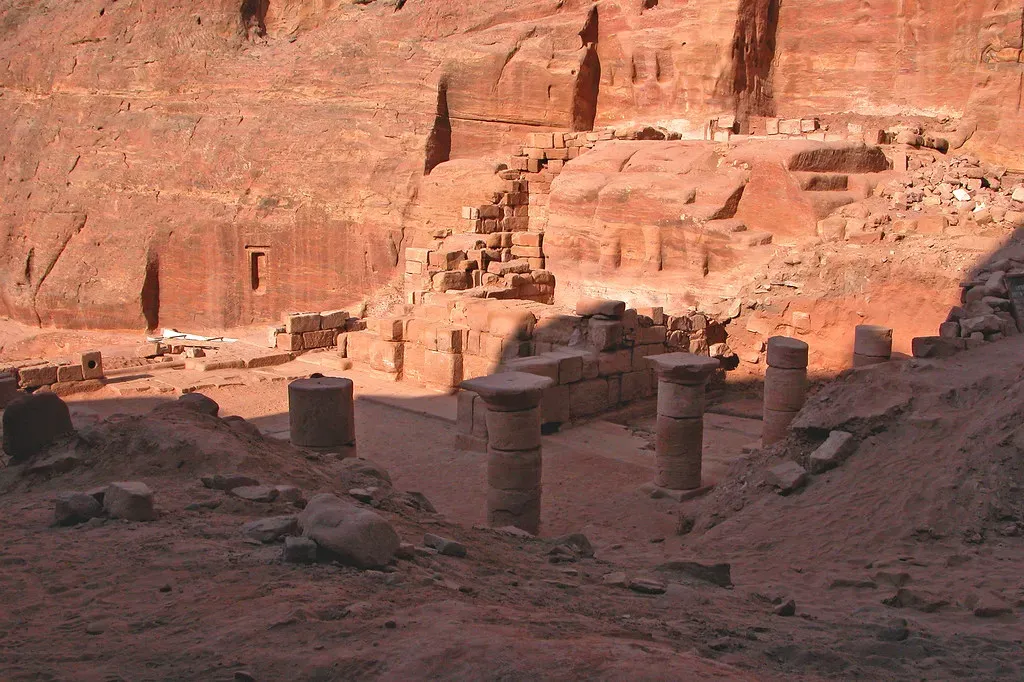
If you walked through the desert landscapes around Petra today, you might wonder how anyone ever built a thriving city here, much less supported trade routes and agriculture. The Nabataeans looked at the same dry canyons and saw water pathways waiting to be engineered. They carved channels into rock, built underground cisterns, and designed catchment systems that guided every rare drop of rain into storage rather than letting it vanish into the sand. Instead of fighting the desert in a crude way, they worked with its gravity and natural slopes, turning flash floods into reservoirs that could last through long dry spells. You’d also notice how their architecture and water systems were inseparable. Many of Petra’s structures were strategically placed to manage runoff, reduce erosion, and protect critical supplies. If you traced their channels, you’d find an entire hidden network woven into cliffs and ravines, tailored to the local geology and rainfall patterns. In modern terms, we’d call this integrated water management or green infrastructure, but they did it with chisels, observation, and stubborn patience. When you realize a desert empire survived not through brute extraction but through subtle hydrological design, it changes how you think about what “advanced” really means.
The Quechua of the Andes: Farming on the Edge of the Sky
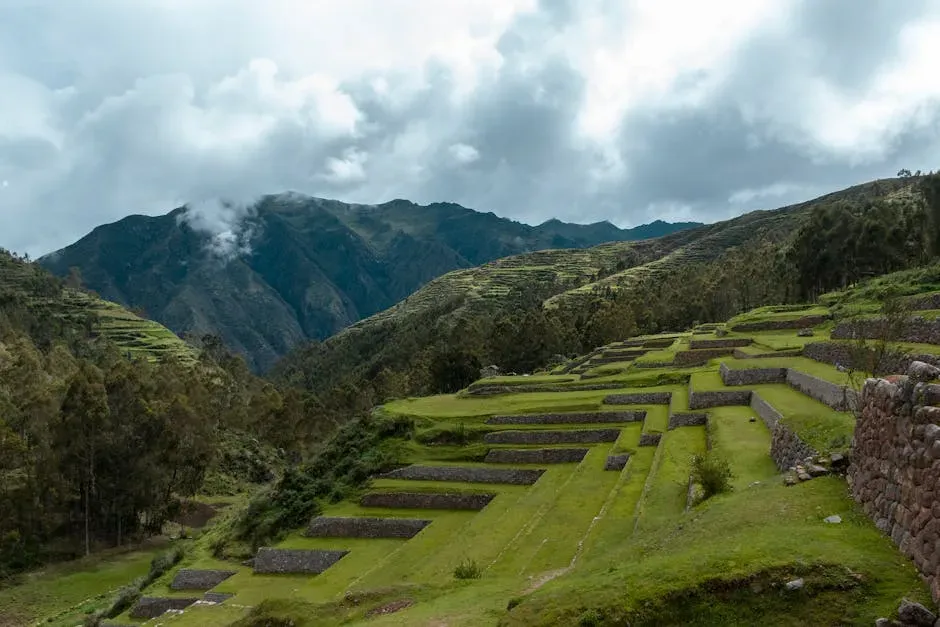
High in the Andes, where the air thins and the weather flips from sunshine to frost and back again in a single day, most people would assume farming is nearly impossible. Quechua communities treated those mountains not as obstacles, but as opportunities. Terraced fields carved into steep slopes turned dangerous hillsides into layered gardens. Those terraces did something clever: they reduced soil erosion, helped manage water, and even created slightly different microclimates from top to bottom. You could grow certain crops on the cooler upper levels and different ones lower down, almost like stacking several farms vertically in one narrow valley. You’d also find that their seed systems were as sophisticated as their stonework. Instead of depending on just one or two crops, they nurtured a huge diversity of potato and maize varieties, each adapted to slightly different conditions. That diversity acted like an insurance policy against unpredictable weather or pests. In modern agriculture, people often talk about resilience and climate-smart practices as if they are new ideas, yet here you have communities that quietly built climate resilience into their daily planting decisions centuries ago. It’s a reminder that you do not always need new chemicals or machines; sometimes you just need variety, patience, and a deep respect for the land’s limits.
The Himba of Namibia: Living With, Not Against, a Harsh Desert

In the semi-arid regions of northwestern Namibia, the landscape can look brutally unforgiving to an outsider: dusty soils, sporadic rainfall, and long dry seasons that test every living thing. Himba communities developed a way of life that treats mobility, not permanence, as the smartest response. Instead of forcing crops to grow where water is unreliable, they focus on semi-nomadic pastoralism, moving herds of cattle and goats to follow grazing and water sources. If you joined them, you’d see that every decision about when and where to move is guided by generations of observation: reading the clouds, the condition of grasses, and even the behavior of animals as early warning signals. You might also notice how their settlements and social structures reflect environmental realities. Homesteads are designed to be functional rather than flashy, with materials that can be repaired or rebuilt using what the land offers. Cultural practices around cattle are not just symbolic; they are practical systems for managing wealth, responsibility, and survival in a place where one failed rainy season can be devastating. When you step back, you realize their ingenuity is not about inventing one flashy device, but about aligning nearly every part of life – from herding patterns to social norms – with what the land can realistically support.
The Ainu of Northern Japan: Reading a Temperamental Forest-Sea Borderland
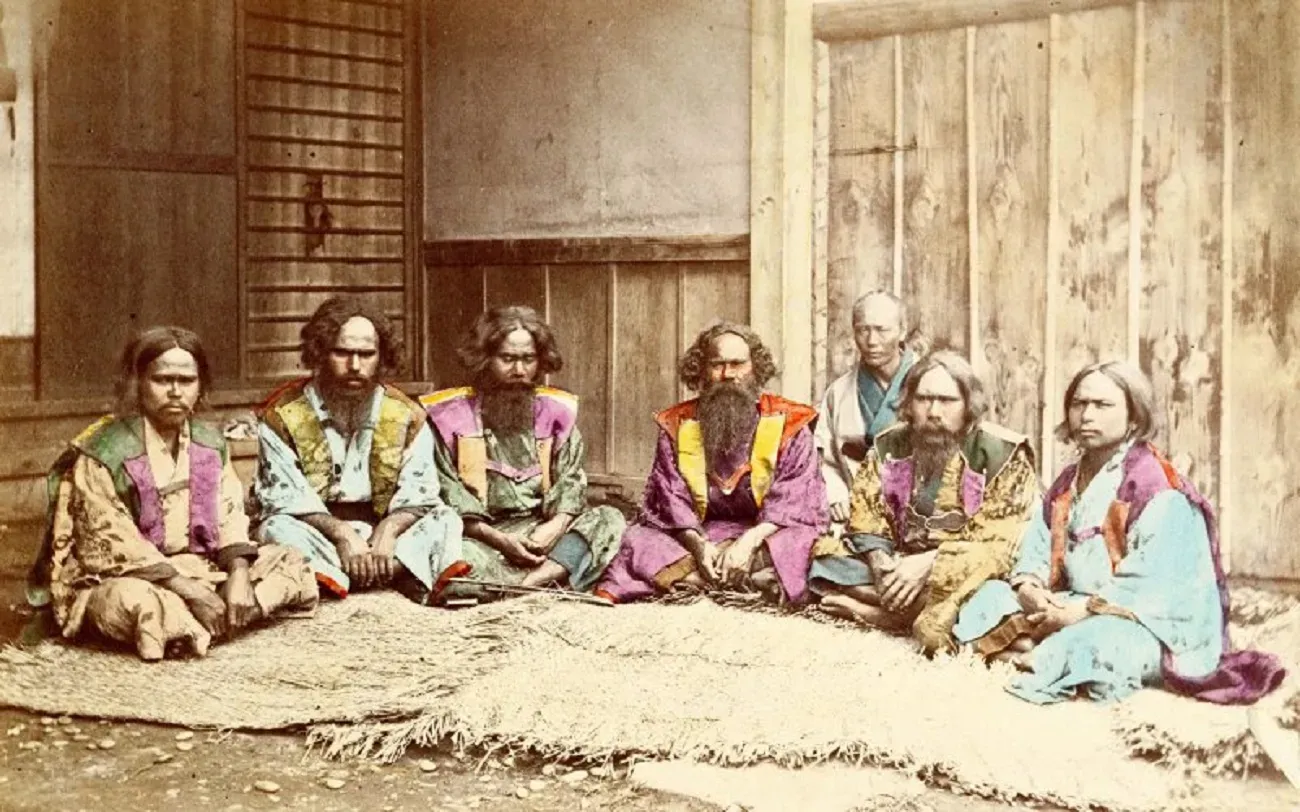
If you picture northern Japan, you might think of snowy forests, rough coastlines, and cold rivers – beautiful, but not exactly easy living. Ainu communities adapted to this borderland between land and sea by becoming masters of both. They harvested salmon from rivers, hunted animals in dense forests, and used plants for medicine and daily needs, but always with rules and timing that prevented overuse. If you followed them through their seasonal rounds, you’d see a calendar built from spawning cycles, plant ripening, animal migrations, and snowmelt, all memorized and passed down so nobody needed a printed schedule. Their material culture was equally careful. Clothing, tools, and houses made use of local woods, fibers, and fish skin, showing you how much can be done with what others might dismiss as scrap. Rituals around hunting and fishing were not empty performances; they were embedded reminders to take only what the environment could replenish. That might sound poetic, but it’s really just a strict survival strategy. In a region where sudden shortages could be deadly, their mix of spiritual respect and practical restraint helped keep ecosystems – and communities – functioning over the long term.
The Chachapoya: Building a Home in the Clouds
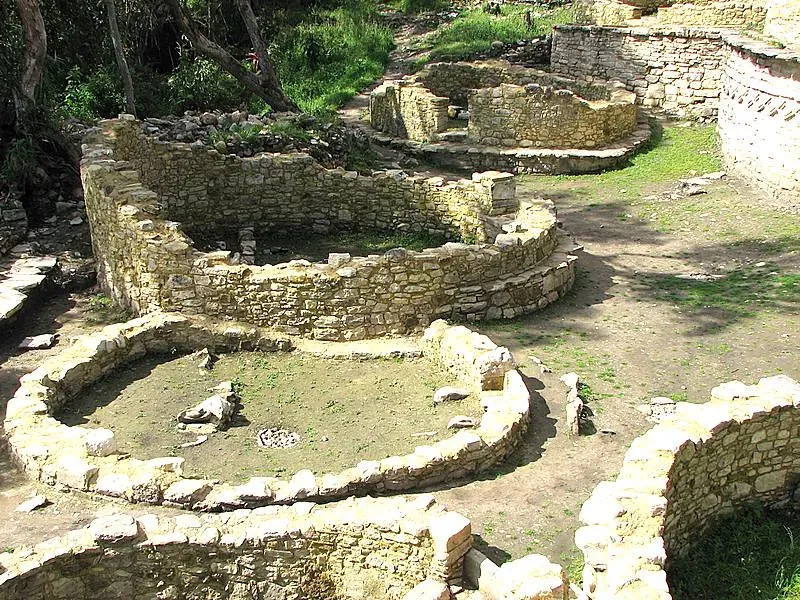
Imagine trying to build a life on steep, misty mountain slopes draped in cloud forest, where landslides, humidity, and limited flat ground make everything harder. The Chachapoya, often called the “Cloud People” of what is now northern Peru, did exactly that. They built settlements on ridges and mountaintops, balancing the need for defensible positions with the realities of fragile terrain. If you climbed up to one of their sites, you’d likely notice circular stone buildings, strategic walls, and terraces that declare, in their own quiet way, that they refused to be pushed off the edges of their world. Working that difficult land required careful adaptation. Terracing and selective clearing allowed them to farm in a place where careless cutting could trigger erosion or collapse. Storage structures helped protect food from the region’s persistent dampness, reducing spoilage in a place where a ruined harvest could mean real hunger. When you stand in such a place, even in your imagination, it hits you that they did not simply “put up with” a harsh environment; they learned how to cooperate with it just enough to stay, grow, and leave traces you can still see today. Their ingenuity lay not just in stonework, but in a stubborn decision to make a seemingly marginal zone into a functional homeland.
The Ancient Puebloans: Engineering Stone, Sun, and Cliff to Their Advantage
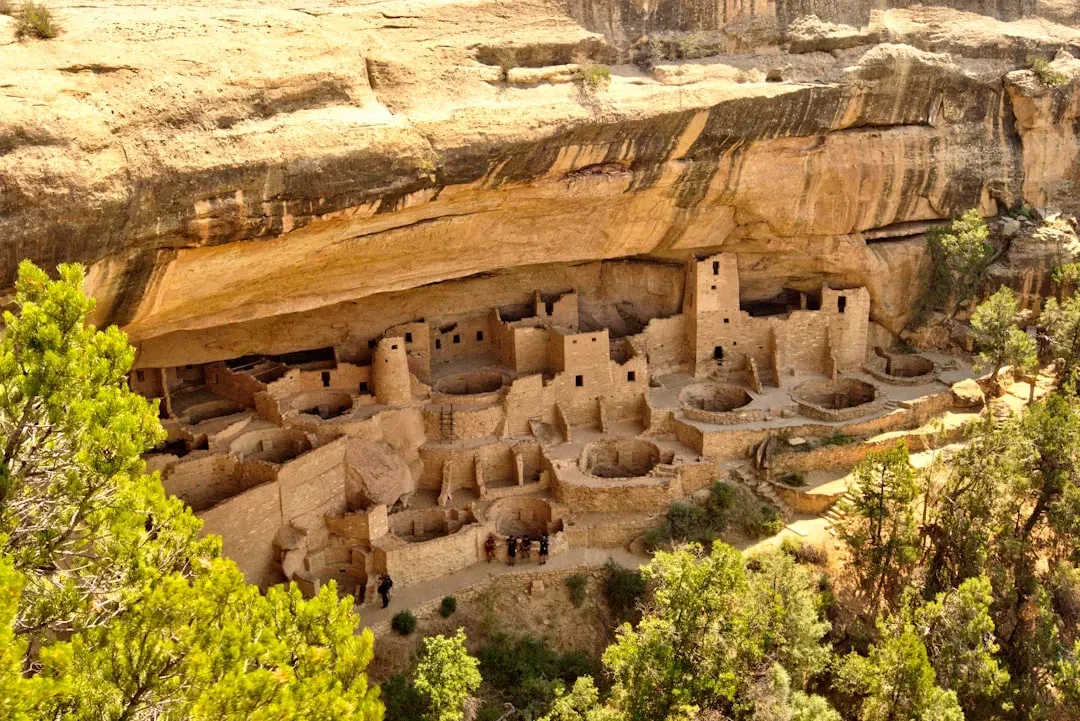
In the canyons and mesas of what is now the American Southwest, ancient Puebloan communities turned rock walls and narrow ledges into highly strategic living spaces. You might walk through a desert valley and think it is empty, but if you look up, you’d see cliff dwellings tucked into alcoves, chosen not just for defense, but for how they interact with light, wind, and temperature. Builders oriented structures to capture winter sun and stay cooler in summer, using thick masonry walls and overhanging rock as natural insulation. In an age without air conditioning or central heating, that kind of passive design determined whether cold nights and hot days were survivable. Their ingenuity extended to water and farming in an environment where rainfall is unpredictable and rivers can be both lifelines and threats. By analyzing the lay of the land, they built check dams, irrigation features, and fields in places where runoff could be slowed and absorbed instead of lost in sudden floods. Even the placement of small fields and gardens showed a detailed understanding of microclimates and soil. If you tried to live there with a modern mindset but without their accumulated insight, you would probably waste scarce water and exhaust the soil in a few seasons. Their success reminds you that “advanced architecture” does not always require steel and glass; sometimes, it’s stone, patience, and the humility to work with the sun and slope instead of ignoring them.
Conclusion: What These Tribes Quietly Teach You About Survival and Wisdom
When you step back from these nine examples – from icy seas to burning deserts, cloud forests to high plateaus – a pattern jumps out at you. The people who survived nature’s toughest challenges were not the ones who tried to overpower their environment, but the ones who paid very close attention to it. They built homes that cooperated with wind and sun, food systems that leaned on diversity instead of fragile uniformity, and social rules that balanced short-term need with long-term survival. In a way, they treated their surroundings as a demanding but wise teacher, not as an enemy to be crushed. You might live in a world of satellites and algorithms, but the core lesson still applies to you: if you ignore the limits and rhythms of your environment, you eventually pay the price. If you listen, adapt, and treat knowledge as a living inheritance rather than a disposable accessory, you stand a much better chance of thriving, not just surviving. So as you think about your own daily life – your home, your food, your community – which path are you really following: the impatient one that assumes you can fix anything later, or the slower, sharper one that these ancient tribes walked for centuries?