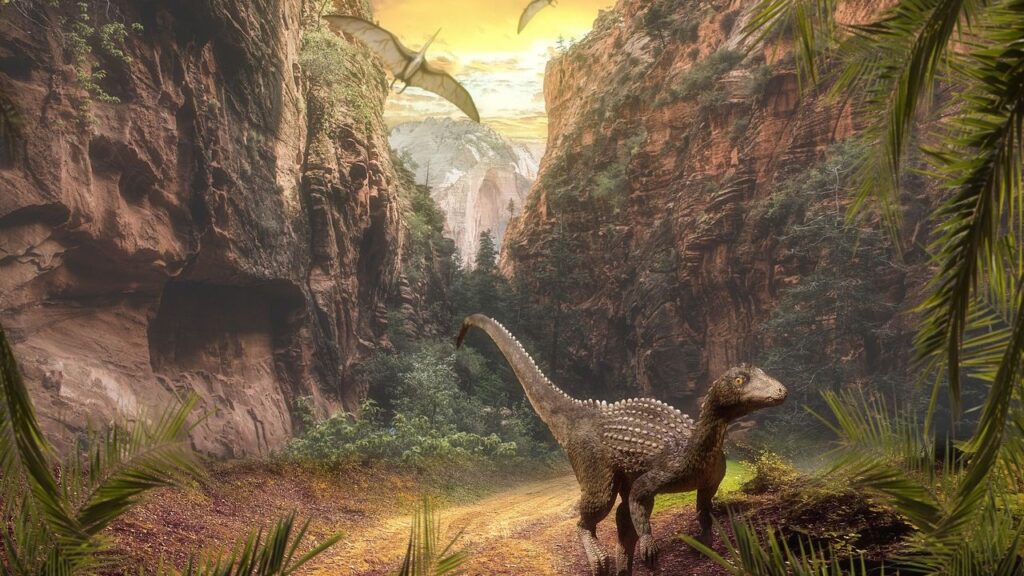
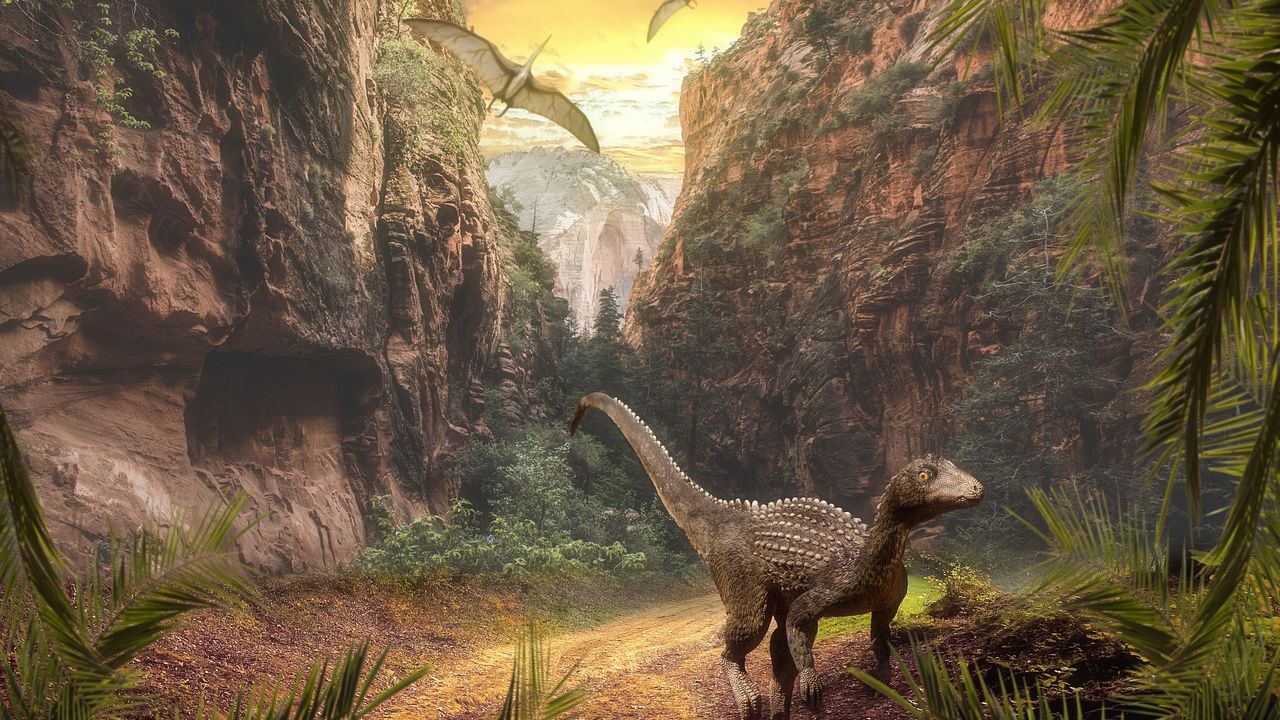
Why dinosaurs lived much more complex lives than we thought – Image for illustrative purposes only (Image credits: Pixabay)
A surge of dinosaur fossils unearthed over the past decade has upended long-held assumptions about these ancient reptiles. Scientists now recognize patterns of grouping, combat, and display that point to lives rich in social interaction and strategy. Paleontologist Dave Hone, drawing from his book Uncovering Dinosaur Behavior, highlights how these finds portray dinosaurs not as solitary brutes, but as animals with behaviors akin to those seen in modern herds and prides.[1]
Signs of Herding and Juvenile Societies
Many herbivorous dinosaur remains appear in clusters, suggesting they traveled and lived in groups much like today’s wildebeest. Floods sometimes concentrated these fossils, yet the pattern holds across sites, indicating deliberate social structures. Juveniles, which make up only about 5 percent of all finds, dominate half of these grouped assemblages, often without adults nearby.[1]
This separation likely served as an anti-predator tactic. Young dinosaurs needed to forage voraciously to grow but faced high risks alone. By banding together, they boosted vigilance and survival odds. A striking example comes from Patagonia, where over 80 skeletons of the early Jurassic sauropodomorph Mussaurus patagonicus, dated to 193 million years ago, reveal age-segregated herds: eggs and hatchlings in communal nests, juveniles clustered nearby, and adults foraging separately.[2][1]
Brutal Predation and Intraspecies Rivalries
Carnivorous theropods left clear marks of their hunting prowess on prey bones. Bite wounds concentrated on tails, leg muscles, and blood vessels crippled herbivores swiftly, mirroring tactics in lions or crocodiles. Such precision implies calculated attacks rather than mindless charges.[1]
Even predators turned on each other. Tyrannosaur skulls bear healed gashes from fierce clashes, with one specimen showing a chunk of bone embedded in another’s face. Hone and colleague Darren Tanke documented these injuries, underscoring a combative side to dinosaur life. Armored ankylosaurs wielded tail clubs capable of shattering bone, their plating optimized against blunt impacts from rivals rather than just bites, as research by Victoria Arbour confirmed.[1]
Displays and the Drive for Mates
Ceratopsians like Protoceratops and Triceratops sported elaborate frills that grew slowly at first, then exploded in size at maturity. Analysis of 80 Protoceratops fossils revealed this pattern matches sexual selection in living animals, where flashy traits signal fitness to potential mates. These structures likely served display over defense.[1]
Dinosaur clutches held 20 to 50 eggs, hinting at multiple broods yearly, yet few juvenile fossils survive. This scarcity reinforces ideas of protective grouping post-hatching. While pack hunting evidence remains thin – Deinonychus associations with prey like Tenontosaurus prove debatable – sociality clearly underpinned survival. Hone cautions against loose analogies to modern species: “You’ve got to be incredibly careful.”[1]
- Juveniles grouped for protection, rare alone in the record.
- Tail bites show targeted predation strategies.
- Healed tyrannosaur injuries indicate routine fights.
- Frill growth patterns signal sexual display.
- Early herds like Mussaurus date to 193 million years ago.
Broader Insights into Dinosaur Societies
These revelations extend beyond dinosaurs to pterosaurs, where Hone’s work shows precocial young capable of flight from hatching and crests likely for courtship. Parental care seemed standard, save for egg-dumping sauropods. No discovery stands alone; combined, they depict ecosystems buzzing with interaction.[1]
Hone notes dinosaurs dominated every continent for millions of years. “Dinosaurs lived for millions of years on every continent. It’d be weird if they didn’t do any given behaviour.” Recent tools like CT scans amplify this golden age of paleontology, promising more layers to peel back.
As fossils keep surfacing, dinosaurs emerge less as movie monsters and more as kin to the social web of life around us today.