
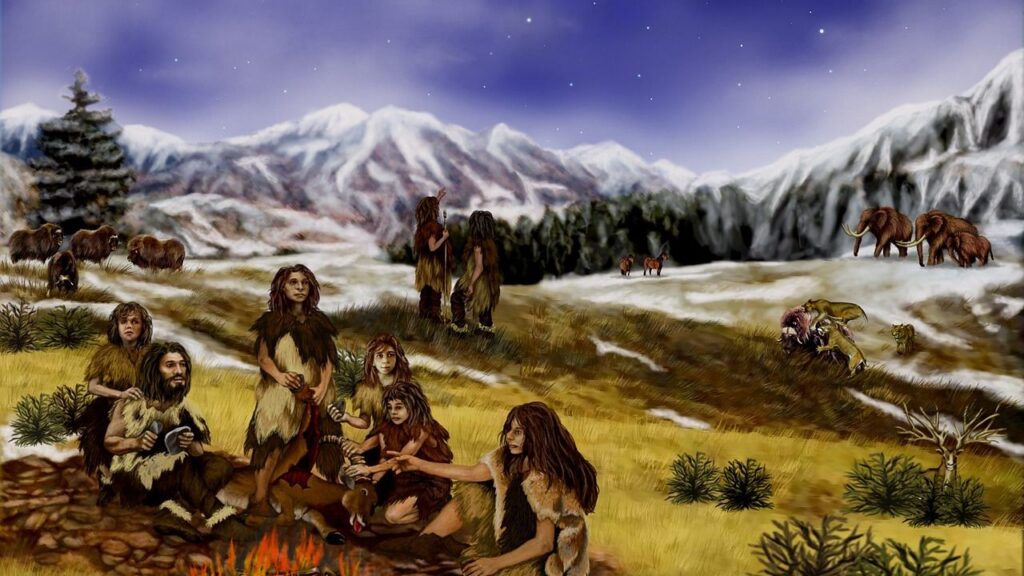
If you could listen in on the past, what moment would you choose? The first fire, the first wheel… or the first time one of your ancestors turned a raw cry into a real word. You will never hear that moment, and no fossil will ever record it, yet the story of how you came to speak is written into your body, your brain, and the deep history of your species.
As you explore when humans first started to speak, you quickly realize there isn’t a single magic date or a lone “first speaker.” Instead, you’re looking at a slow, tangled evolution where gestures, grunts, and shared attention gradually crystallized into language. You inherit that entire journey every time you open your mouth to talk, whisper, or even send a text. Let’s walk that timeline together and see how you got your voice.
The Problem With Pinpointing the First Word

When you ask when humans first started to speak, you’re immediately up against a frustrating fact: language doesn’t fossilize. You can dig up skulls, tools, and even traces of campfires from hundreds of thousands of years ago, but you’ll never unearth an actual spoken sentence. So instead, you’re forced to become a kind of detective, reading clues in bones, brains, tools, and living languages to reconstruct a story that was never directly recorded.
Because of this, you can’t honestly circle a year like you might for the invention of the printing press or the first moon landing. At best, you’re dealing with time ranges, probabilities, and overlapping stages. You’ll see different scholars argue for different timelines, sometimes separated by hundreds of thousands of years, each drawing on slightly different evidence. If that feels unsatisfying at first, remember: language itself is messy, flexible, and fluid, so it makes sense that its origins are, too.
Before Words: Gesture, Calls, and Shared Attention

To understand when you started to speak, you first have to understand how you communicated before speech became dominant. If you watch great apes today, you’ll see a lot of what your distant ancestors probably did: pointing, eye gaze, posture, facial expressions, and a rich set of calls and emotional sounds. You still rely on all of that – think of how much you can say with a raised eyebrow, a shrug, or the way you look at someone across a room.
Researchers often argue that language may have grown from this kind of multimodal communication, where gesture and vocal sounds worked together. Imagine one of your ancestors pointing toward a tree and making a specific sound or rhythm of sounds, repeated often enough that others began to expect a certain meaning. Over time, those repeated combinations could have become more conventional and less tied to immediate emotion, loosening the leash from raw feeling and edging closer to what you’d recognize as words.
The Anatomy of a Voice: When Your Body Became Ready

Your ability to speak depends on a surprisingly delicate physical setup. Modern humans have a descended larynx, a flexible tongue, and fine control over breathing and the muscles of the mouth and lips. These features let you shape a huge range of distinct sounds, from sharp “t” and “k” stops to smooth vowels. Fossil evidence suggests that some of these anatomical changes were already appearing in earlier hominins long before fully modern humans showed up.
When you look at the inner ear bones, the shape of the skull base, or the hyoid bone in ancient remains, you’re peeking at whether your ancestors could hear and produce speech-like sounds. Some archaic humans, like Neanderthals, seem to have had vocal tracts capable of complex sound production, not just simple grunts. That pushes you away from the idea of a sudden “speech switch” and toward a picture where your species gradually refined the physical machinery long before you used it for the full complexity of language.
Brains Built for Language: What Changed Inside Your Head
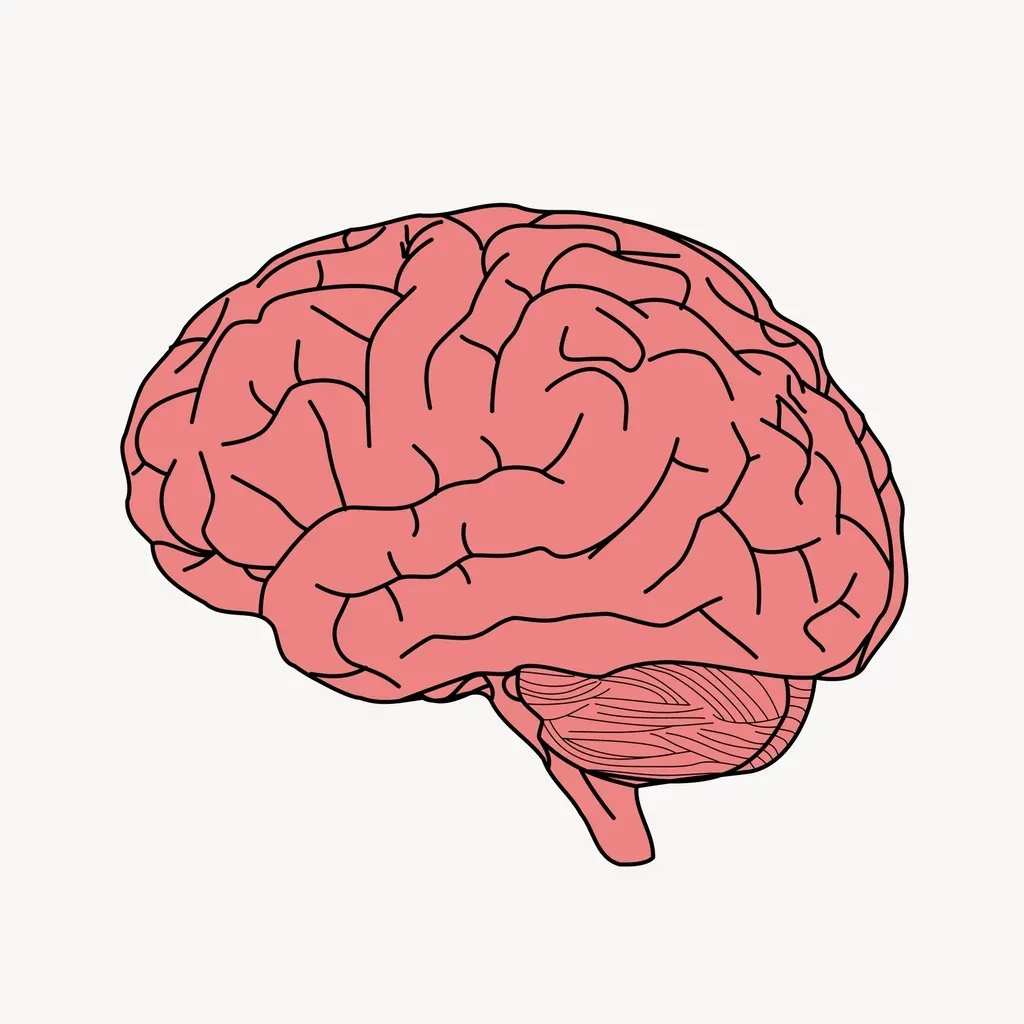
Of course, a voice box alone doesn’t give you language. You could mimic a lot of speech sounds with a clever machine, but that wouldn’t mean it understands grammar, stories, or jokes. Inside your skull, certain brain regions – like those traditionally called Broca’s and Wernicke’s areas – are strongly involved in language production and comprehension. Comparative studies suggest that ancestors in your lineage were already showing expansions and reorganization in some of these regions as brains grew larger over hundreds of thousands of years.
What really matters for language is not just size but connectivity and timing – how fast your neurons can coordinate complex sequences, how well they can link sounds to meanings and memories. You see clues in your own development: as a child, you go from babbling to meaningful words to layering grammar almost explosively. That pattern hints at brain circuitry primed for language, where a relatively small genetic and developmental tweak can unlock a huge communicative payoff. Similar shifts in your deep past may have nudged pre-human communication into something more structured and open-ended.
Archaic Humans, Neanderthals, and the Question of Who Spoke
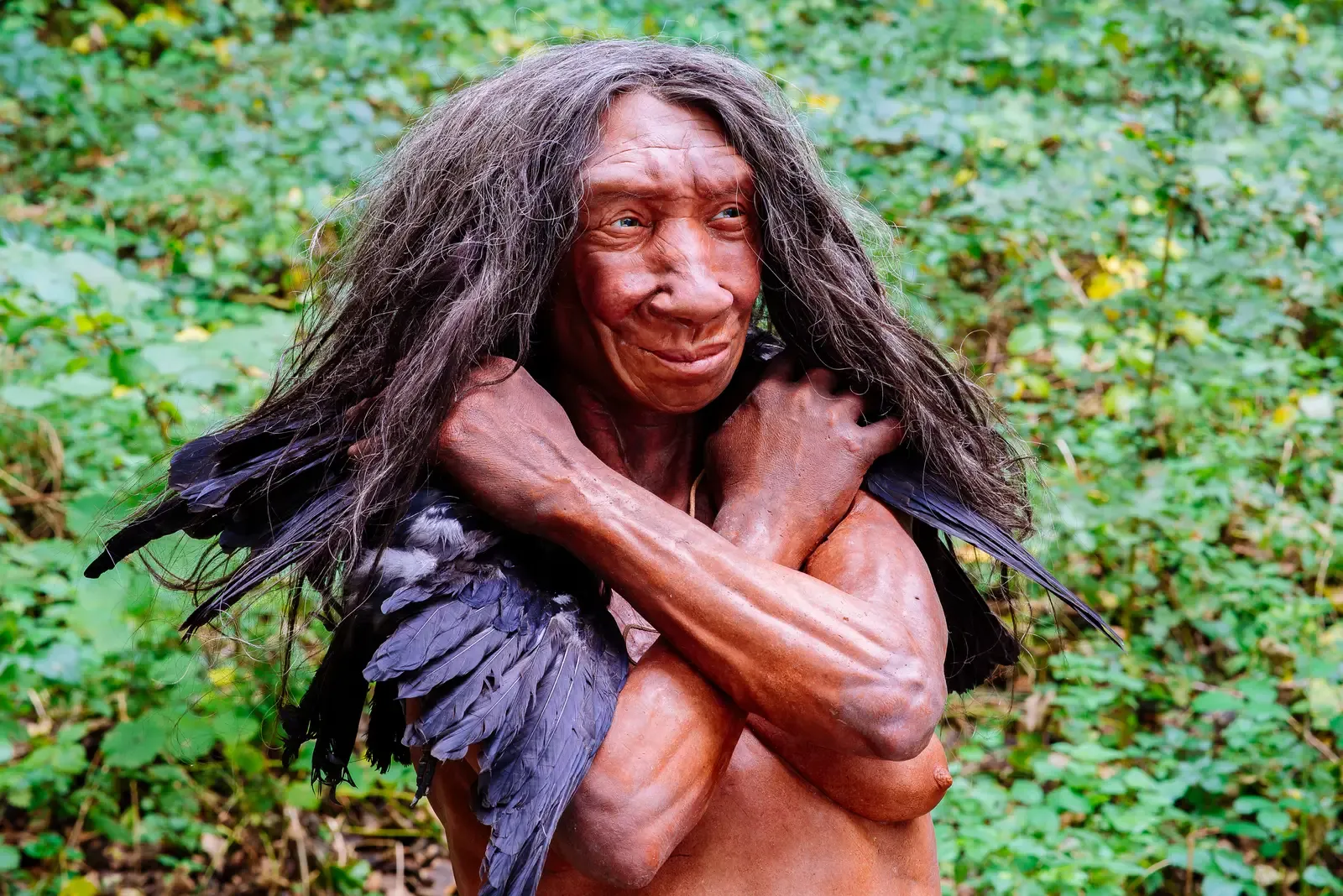
When you picture the first speakers, you might automatically imagine Homo sapiens, but your story is not the only one that might have included language. Neanderthals, for example, had brain sizes in the same range as modern humans and physical structures that likely allowed them to produce a wide variety of sounds. They crafted sophisticated tools, used fire, and survived in harsh climates, which suggests rich social organization that would be hard to maintain with only simple grunts.
You also know that Neanderthals and early modern humans interbred, and some of their genes live on in you today if your ancestry traces outside Africa. That overlap raises an intriguing possibility: perhaps multiple human species had some form of spoken language, even if it was not identical to yours. Instead of a single species suddenly inventing speech from nothing, you might be looking at a broader family of hominins gradually exploring the space of complex vocal communication together, with your branch eventually carrying it further than any other.
Genes That Hint at Speech: What Your DNA Reveals
Some of the most fascinating clues about when you started to speak come from genetics. One well-known example is a gene involved in speech and language development. When this gene is disrupted in modern humans, it can cause serious difficulties with articulation and grammar. Finding similar versions of that gene in Neanderthals and other ancient humans suggests that the biological underpinnings for speech were present before your own species fully emerged.
However, you have to be careful not to oversimplify. There is no single “language gene” that you can point to as the magical on-switch for speech. Instead, you are looking at a network of genes affecting brain development, motor control, memory, and social behavior. Over many generations, small changes in these systems may have made it easier for your ancestors to learn complex vocal patterns, share them, and stabilize them across a community. Your DNA, in this sense, carries a faint but real echo of countless conversations that happened long before you were born.
Archaeological Clues: Tools, Art, and Social Complexity
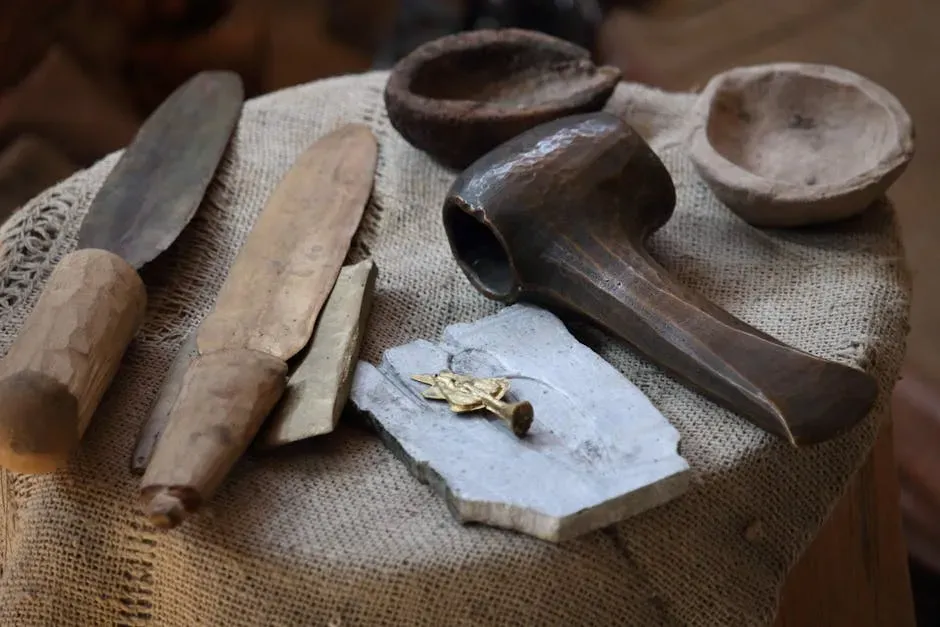
When you cannot hear ancient voices, you can still see what those voices might have helped create. Complex stone tools, coordinated hunts, and the spread of people into challenging environments all hint at planning, teaching, and shared knowledge. It’s hard to imagine passing on a multi-step toolmaking technique or organizing a large hunting party without some kind of structured communication, whether spoken, gestural, or both. The more intricate the culture, the more likely it is that language-like systems were already in play.
Later on, symbolic artifacts like beads, carvings, and cave paintings appear, suggesting that your ancestors were not just surviving but representing their world and themselves. Once you see this explosion of symbolism, it’s almost impossible to picture a world entirely without spoken language behind it. You might not be able to say exactly which came first, but you can reasonably assume a feedback loop: richer communication supports richer culture, and richer culture demands even more elaborate ways of speaking and thinking.
When Did Speech Likely Emerge? The Best Current Estimates
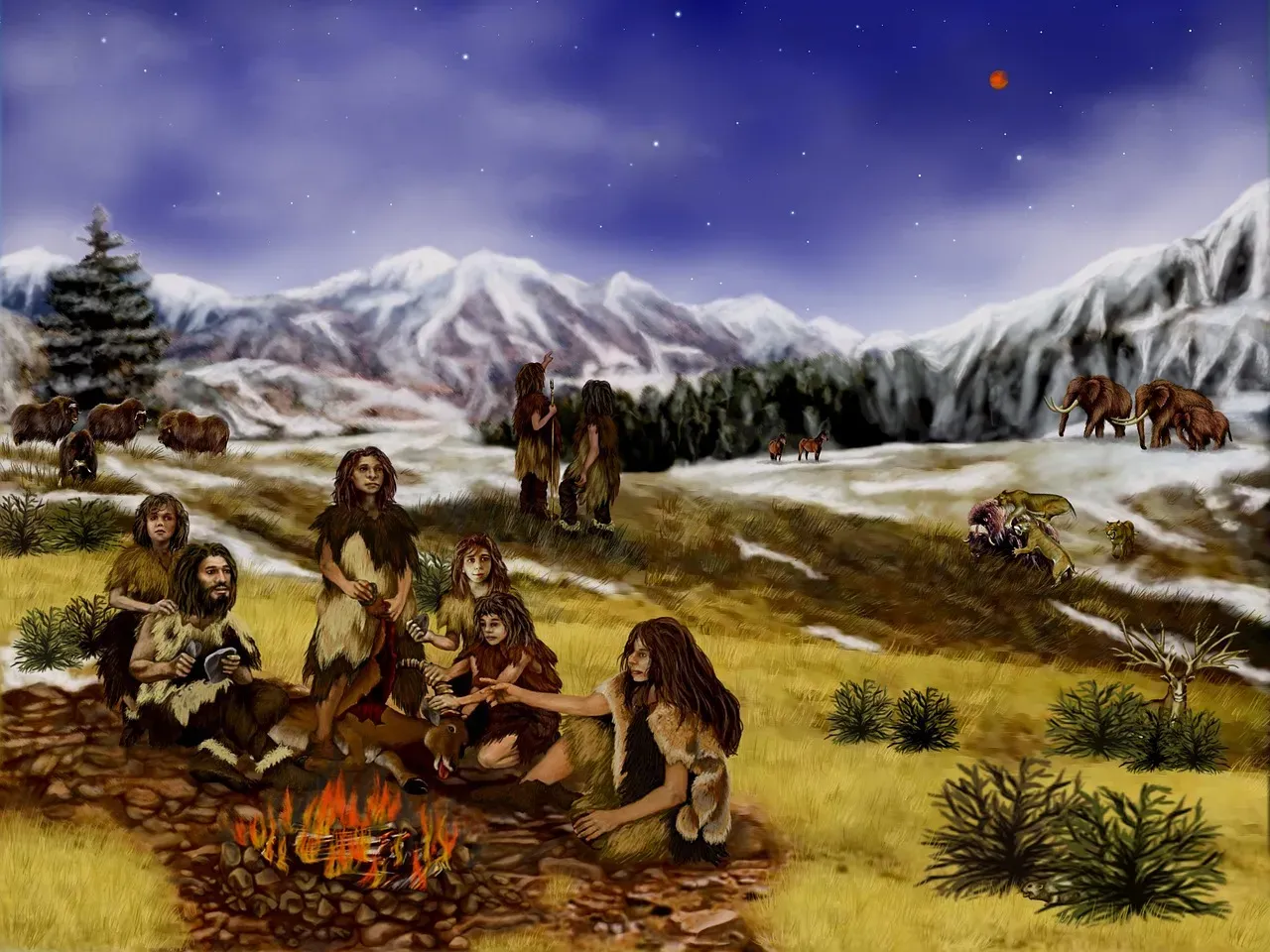
So if you had to place a rough bracket on when humans first started to speak in a way that resembles modern language, where would you put it? Many researchers cautiously suggest that fully modern spoken language probably emerged sometime within the last few hundred thousand years, with a lot of debate about whether the crucial period is closer to about two hundred thousand years ago or stretches back further. Those timelines tend to align with the appearance of anatomically modern humans and key shifts in brain and cultural complexity.
However, you should think of this not as a sharp line but as a fading gradient. Long before speech reached its modern flexibility, your ancestors were almost certainly using increasingly structured vocal systems, things that sat somewhere between animal calls and true language. Over time, these systems may have accumulated more words, more grammar, and more subtlety, until at some point your ancestors crossed a psychological threshold where they could say almost anything they could think. You will probably never know the exact moment, but you can be confident that by the time your species was spreading widely across the planet, speech was already central to its success.
Why Language Evolved: The Payoff of Being Able to Talk
To really appreciate when language evolved, you also need to ask why it was worth all the biological and cognitive investment. Speaking is not free; it takes precise coordination of muscles, time to learn, and brain resources to manage. One major idea is that language gave your ancestors a huge edge in cooperation. With words, you can share plans, warn about dangers, negotiate alliances, and explain new skills. In a world full of threats and opportunities, those abilities can mean the difference between surviving and thriving.
Language also lets you talk about things that are not here and now: the past, the future, abstract rules, imagined stories. That opens up a mental space where culture can grow – traditions, mythologies, legal systems, scientific thinking. When you gossip, teach a child, or tell a story by a campfire, you’re using the same superpower that may have tipped the evolutionary scales in favor of talkative hominins. In a sense, your ancestors bet on conversation as a survival strategy, and you are living proof that the bet paid off.
What the Origins of Speech Reveal About You Today
Understanding when humans first started to speak is not just a historical curiosity; it shines a light on why you are the way you are. Your urge to chat, argue, tell stories, or even just think in words is not a random quirk. It sits on top of a deep evolutionary foundation where communication was tied to safety, belonging, and meaning. That is why losing language temporarily – through illness, isolation, or technology issues – can feel so unsettling, like someone has cut you off from the very thing that makes you human.
It also reminds you to be humble about how much you truly know. Despite all your tools and theories, you are still piecing together the origin of your own voice from scattered traces. Yet there is something strangely fitting about that, because language itself is about filling gaps, negotiating uncertainty, and building shared realities from partial information. Every time you learn a new word, listen carefully to someone, or reshape your thoughts into sentences, you are quietly reenacting the same ancient process that once turned inarticulate cries into the first flickers of speech. Did you expect that the story of language would say so much about you?