If you zoomed out and watched Earth’s history like a long, wild documentary, the mass extinctions would be the jaw-dropping plot twists. Whole ecosystems vanish, dominant creatures disappear almost overnight in geological terms, and something completely new rises to take their place. You are living in the faint afterglow of those catastrophes, walking on a planet that has been reset several times by forces so large they are almost hard to imagine.
Scientists have spent decades trying to piece together what really happened during these great die-offs. There is no single villain; instead, you see a tangled mix of cosmic impacts, raging volcanoes, poisoned oceans, and even life itself turning deadly. As you walk through these seven major theories, you are really peeking behind the curtain at how fragile – and brutally resilient – life on Earth can be.
Giant Asteroid Impacts: When the Sky Literally Fell
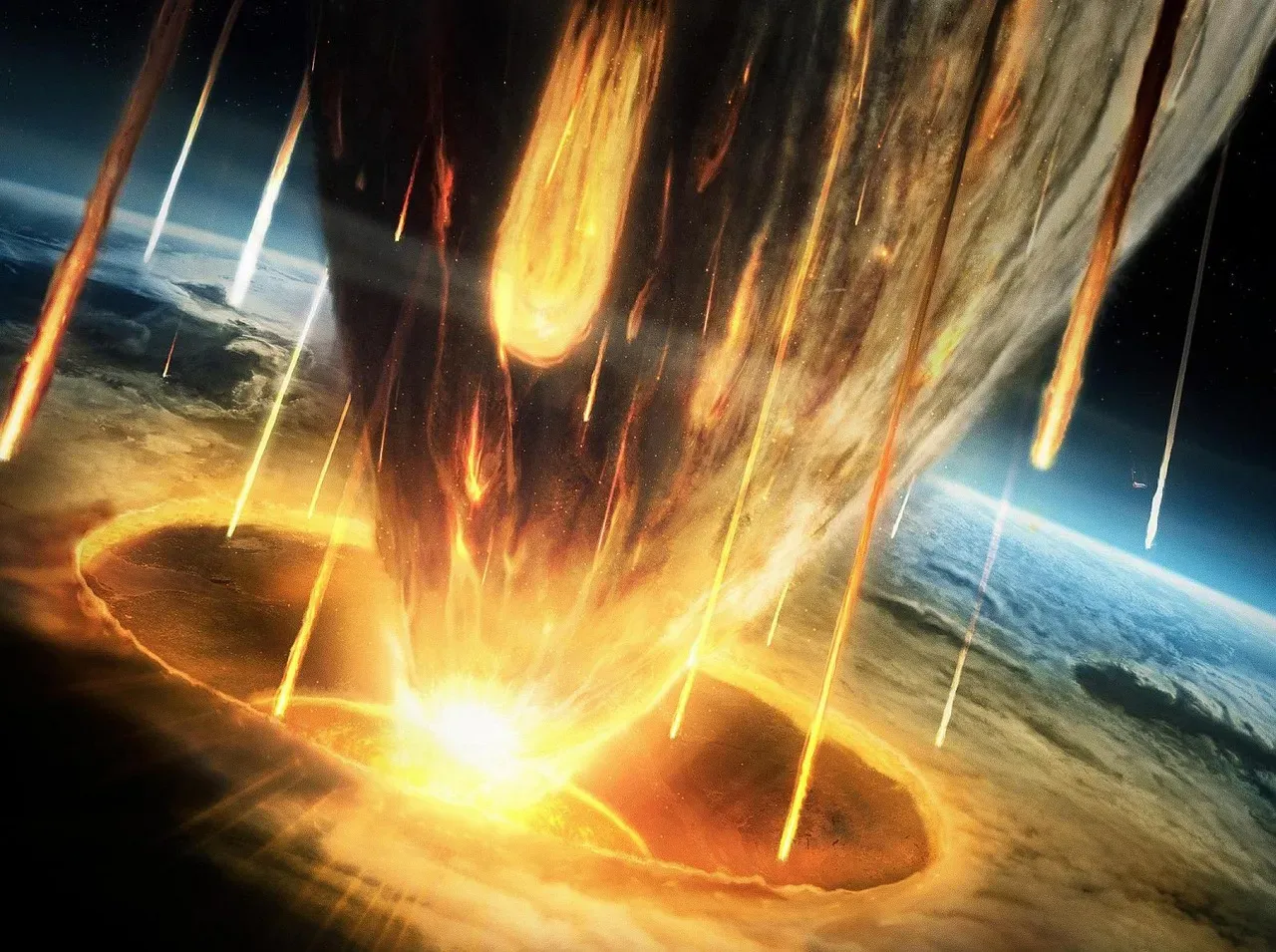
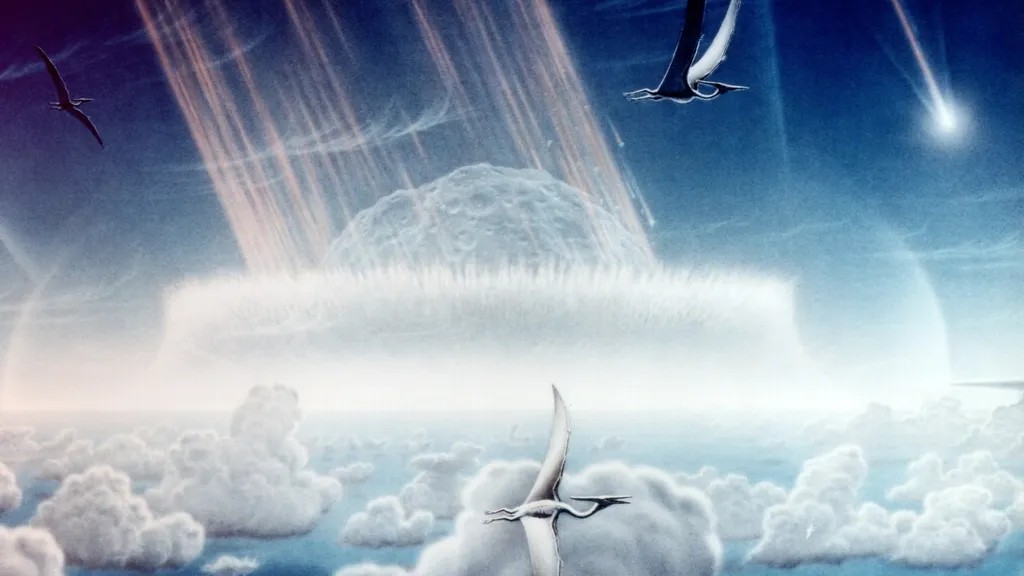
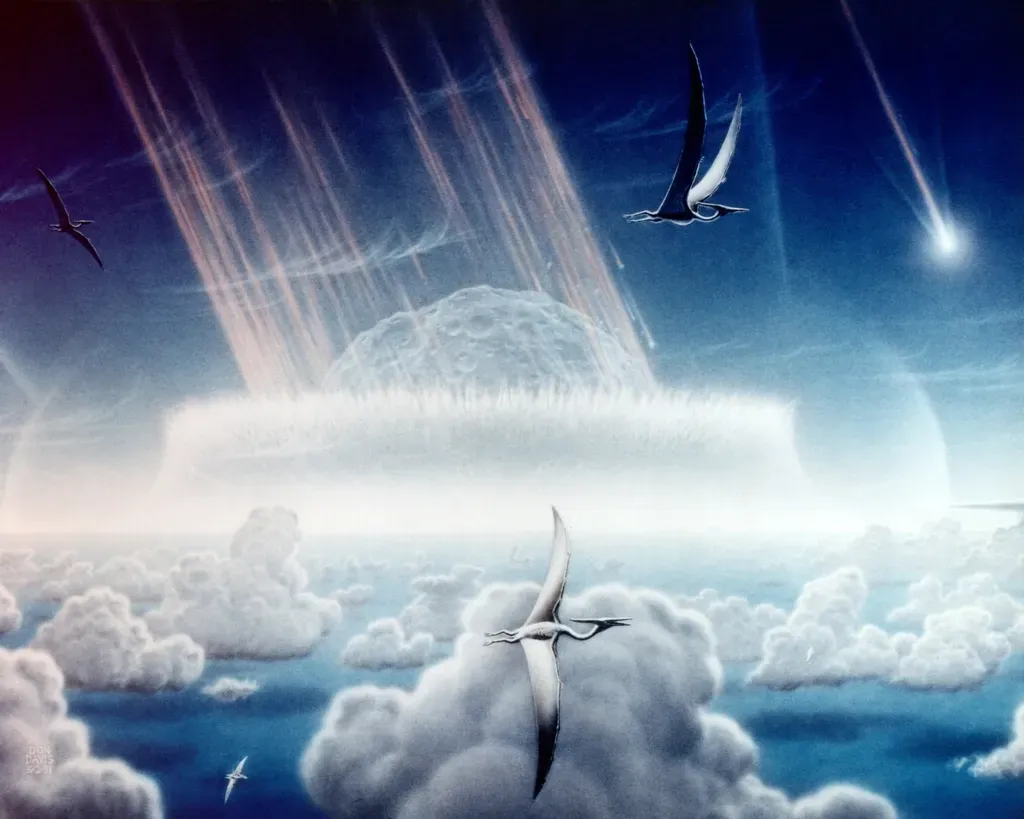
You have probably heard that an asteroid wiped out the dinosaurs, but when you dig into it, the story is even more intense than you were taught in school. Around sixty-six million years ago, a space rock several miles wide slammed into what is now the Yucatán Peninsula, carving out the Chicxulub crater and releasing energy that you would struggle to compare to anything modern humans have ever created. In a matter of minutes, you would have seen shock waves, firestorms, and tsunamis racing across oceans, followed by a choking cloud of dust and sulfur that wrapped the globe.
From your point of view, this is the nightmare scenario where the lights go out on the entire food chain. Sunlight drops, photosynthesis crashes, plants die, and anything relying on them – herbivores first, then predators – follows. You are looking at a cascade that might have killed off roughly about three quarters of all species, not just the famous dinosaurs but also many marine reptiles, flying reptiles, and countless tiny organisms you never hear about. When you hear people worry about near-Earth objects today, they are really reacting to this moment in deep time, when the sky once proved it could erase almost everything you know.
Supervolcanoes and Flood Basalts: The Planet Turns Inside Out
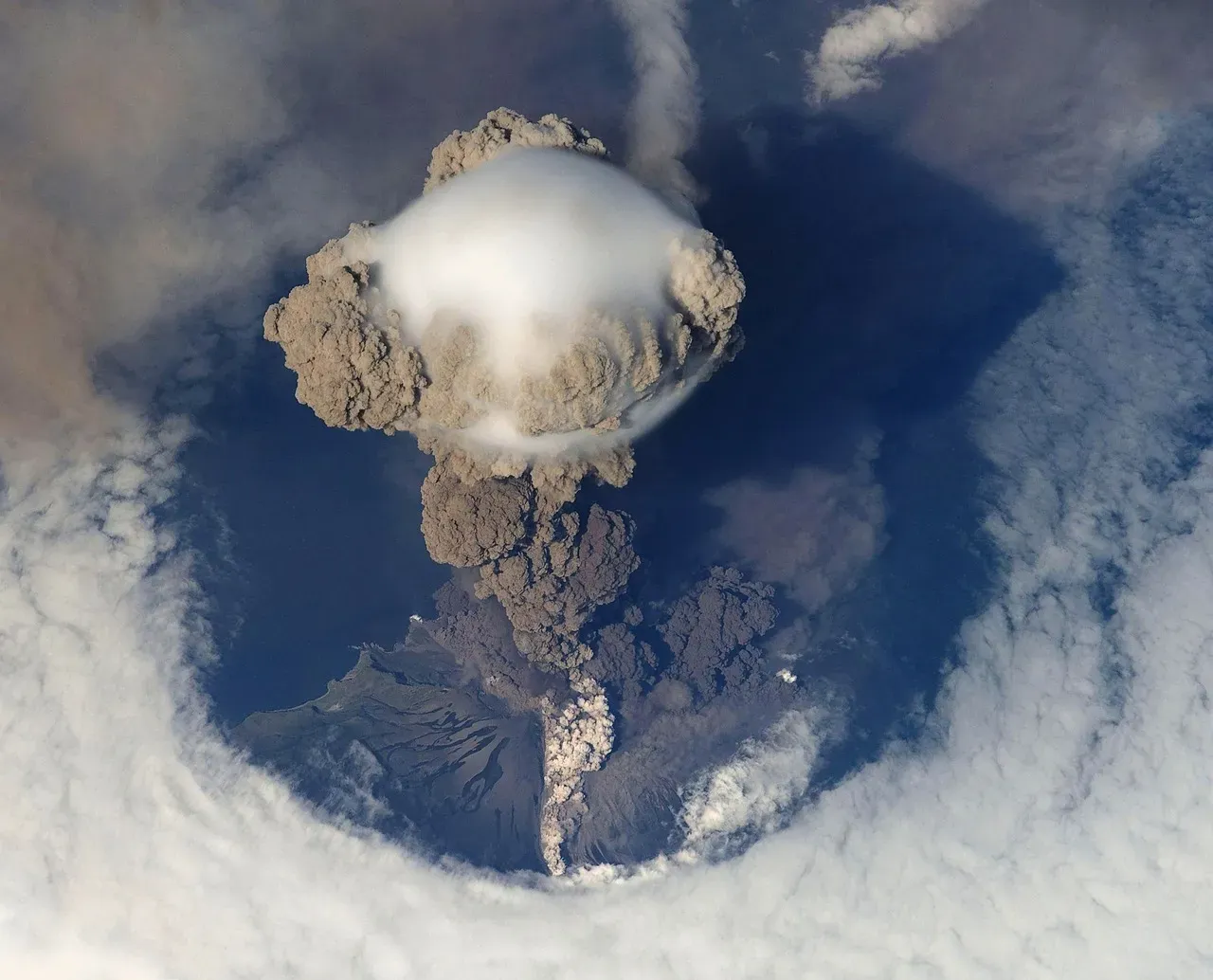
Now imagine the danger not coming from above, but from under your feet. In several of Earth’s biggest extinction events, you see signs that enormous volcanic outpourings, called large igneous provinces or flood basalts, smothered regions the size of continents under lava. You are not dealing with a single dramatic volcano like you might picture from a movie, but hundreds of thousands of years of relentless eruptions, such as the Siberian Traps during the end-Permian extinction or the Deccan Traps around the time of the dinosaurs’ demise. Lava was only one part of the problem; the real chaos came from the gases.
If you were standing there, you would be breathing air increasingly loaded with carbon dioxide and sulfur compounds. Over time, you would watch the climate swing wildly: intense global warming from greenhouse gases, acid rain falling from the sky, and oceans warming and losing oxygen. Life that was comfortable in narrow environmental ranges would suddenly find itself pushed beyond its limits. When you hear that the end-Permian event may have wiped out the vast majority of marine species, these supervolcano-style eruptions and their climate shockwaves are at the top of the suspect list.
Runaway Climate Change: A Planet Too Hot or Too Cold
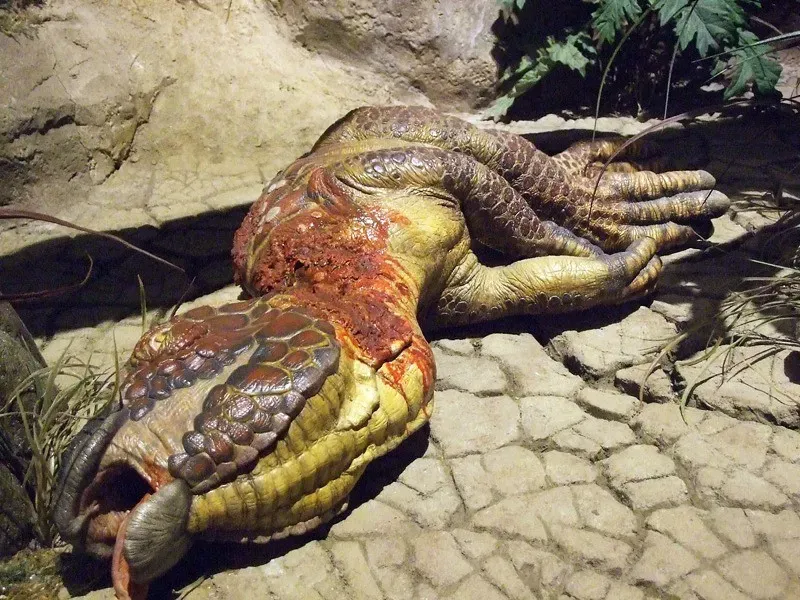
You already know climate matters for your everyday life, but in the deep past, climate shifts sometimes crossed thresholds so extreme that entire ecosystems simply could not keep up. At different times, Earth has tipped into intense greenhouse states and, at others, into frigid conditions that may have locked much of the planet in ice. When climate changes slowly, species can sometimes migrate or adapt; when change races ahead, you tend to see extinctions flare up. You can think of it like yanking the rug rather than slowly sliding it away.
During some extinction events, evidence suggests that global temperatures spiked by several degrees over geologically short periods. If you were a coral reef organism sensitive to even small temperature changes, you might suddenly find your home too hot and too acidic. On land, you would see ranges shift, forests die back, and food sources collapse. In other periods, like episodes linked to so-called Snowball Earth scenarios, ice may have crept toward the equator, strangling warm-water habitats and limiting where life could survive. When scientists warn you today about rapid climate change, they are, in part, haunted by these past moments when the climate system flipped fast and life paid the price.
Ocean Anoxia and Acidification: Seas That Suffocate and Burn
If you spend time imagining extinction, you might picture animals on land, but much of the real drama played out in the oceans. A recurring pattern in several mass extinctions is the rise of anoxic conditions – huge stretches of ocean that lost their oxygen. As volcanic emissions and climate warming altered circulation and nutrient flows, you would see parts of the ocean stagnate, bacteria thrive in low-oxygen zones, and vast layers of water become deadly to most higher life. To a fish or a shelled creature, this is like the air being quietly stolen from the room.
At the same time, you often have ocean acidification working in the background, driven by massive injections of carbon dioxide into the atmosphere and then into seawater. If you were a creature building a shell or a skeleton from calcium carbonate, you would find it harder and harder to form or maintain your protective layer. Reefs that had taken millions of years to build could crumble in a geological instant. For you, this combination of suffocating and corrosive seas is a reminder that you do not need an asteroid to have a planetary crisis; sometimes chemistry alone, nudged by eruptions or other events, is enough to flip the oceans from cradle of life into graveyard.
Methane Burps and Greenhouse Runaways: The Silent Gas Bomb
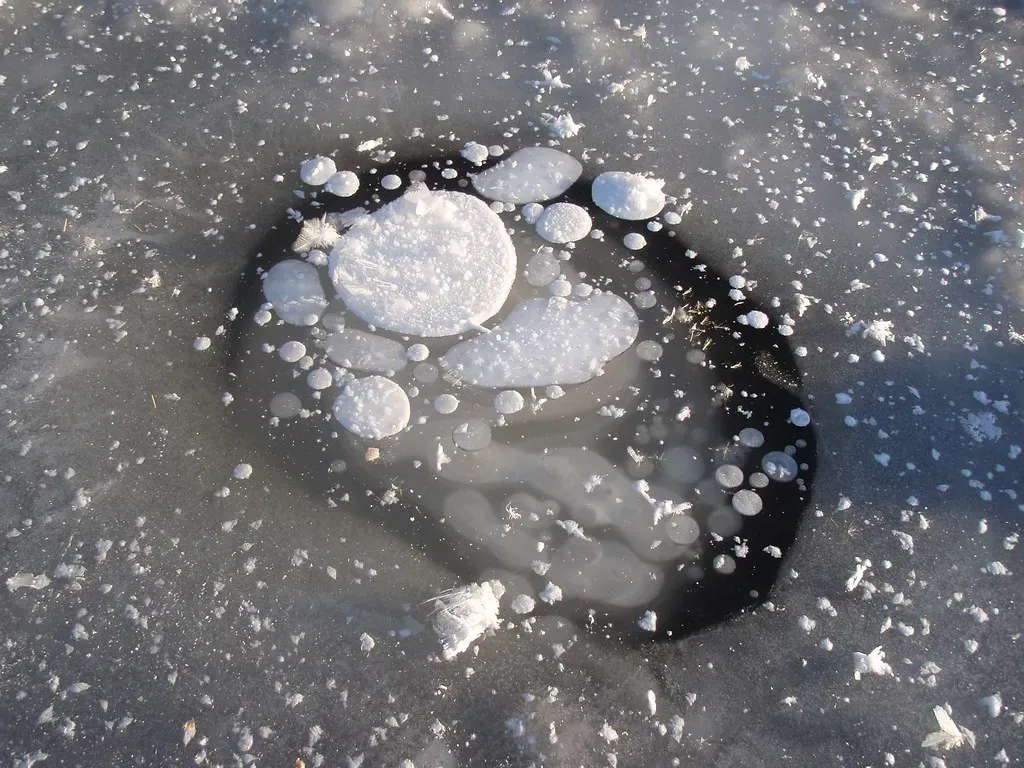
One of the more unsettling ideas you run into is that Earth may hide enormous, unstable reserves of methane that can suddenly release and turbocharge warming. In some extinction intervals, there are hints that large bursts of methane, possibly from seafloor hydrates or thawing permafrost-like deposits, might have flooded the atmosphere. You experience methane as an invisible, odorless greenhouse gas that traps heat far more efficiently than carbon dioxide over short time spans. If enough of it escaped quickly, you would see a sharp shock to global temperatures layered on top of other stresses.
For marine and terrestrial life, such a greenhouse pulse could mean already-warming conditions suddenly swing into the unbearable zone. Imagine you are a species already squeezed by low oxygen or shrinking habitat, and then the thermostat jumps again. Ecosystems that might have barely held together could cross into runaway collapse. Scientists still debate exactly how large and sudden these methane releases were in different extinction events, but when you think about the planet as a system with stored climate explosives waiting to go off, this theory makes extinctions feel less like isolated freak events and more like chain reactions built into Earth’s own geology.
Supernovae and Cosmic Radiation: Death from Deep Space
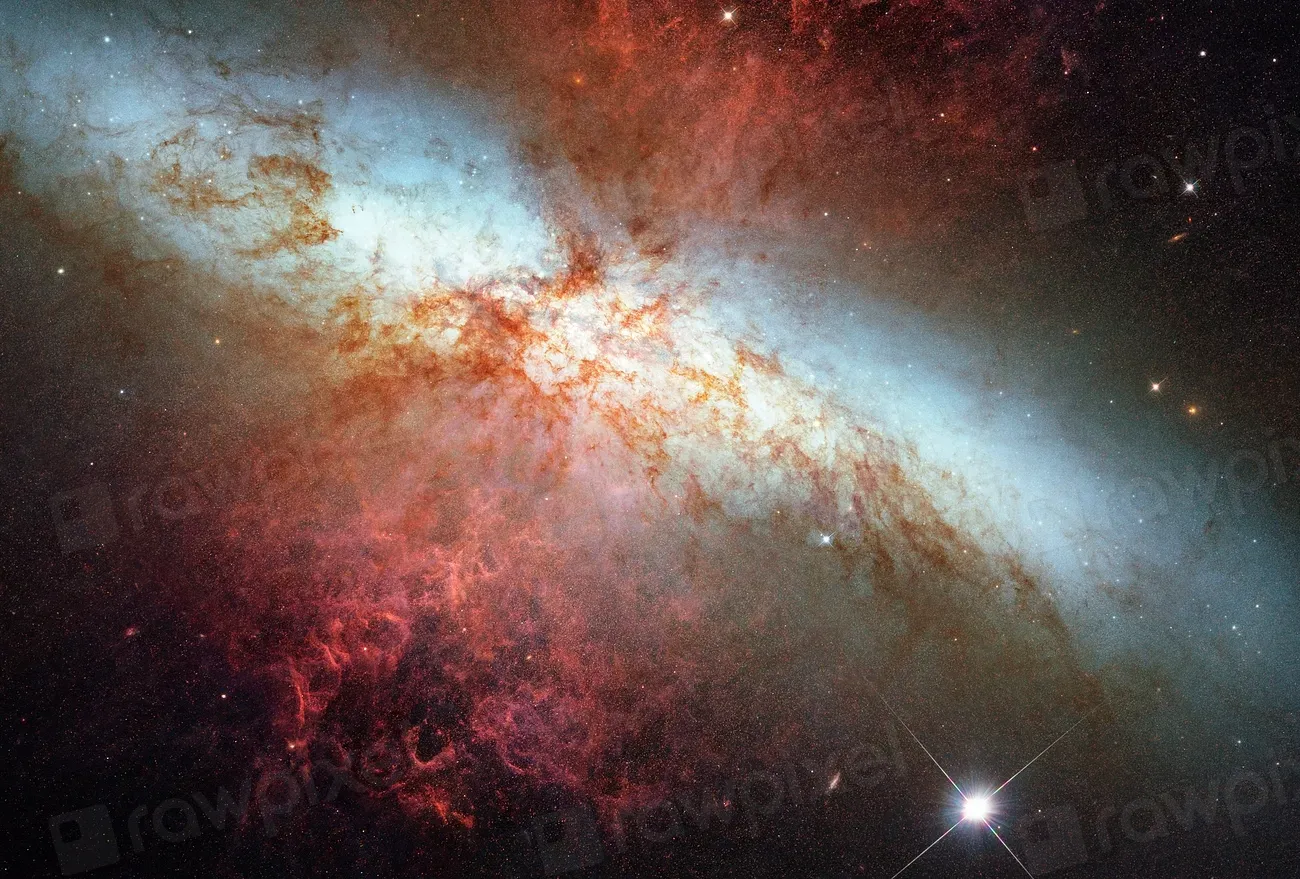
Asteroids are not the only dangers lurking beyond your sky. Some researchers have explored the idea that powerful cosmic events, such as nearby supernova explosions or bursts of high-energy radiation, might have helped trigger certain extinction episodes. You would never see these with your naked eyes if you were on Earth at the time; instead, you would feel them indirectly through subtle but potentially devastating changes to the atmosphere. High-energy particles could erode parts of the ozone layer, letting more ultraviolet radiation from the Sun bombard the surface.
From your vantage point, that means sunlight turns harsher and more damaging, especially for organisms near the surface of the ocean or living on land without much protection. Over time, increased radiation could harm DNA, disrupt food chains based on delicate plankton, and stress ecosystems already on edge from other factors. This theory is harder to nail down than a visible crater or a lava field, and right now you are dealing with more indirect evidence and plausible models than smoking guns. Still, when you stretch your imagination to cosmic scales, you see that life on Earth is not just shaped by what happens here, but by what happens in a galaxy that does not particularly care whether you survive.
Life as the Killer: When Evolution Itself Turns Ruthless
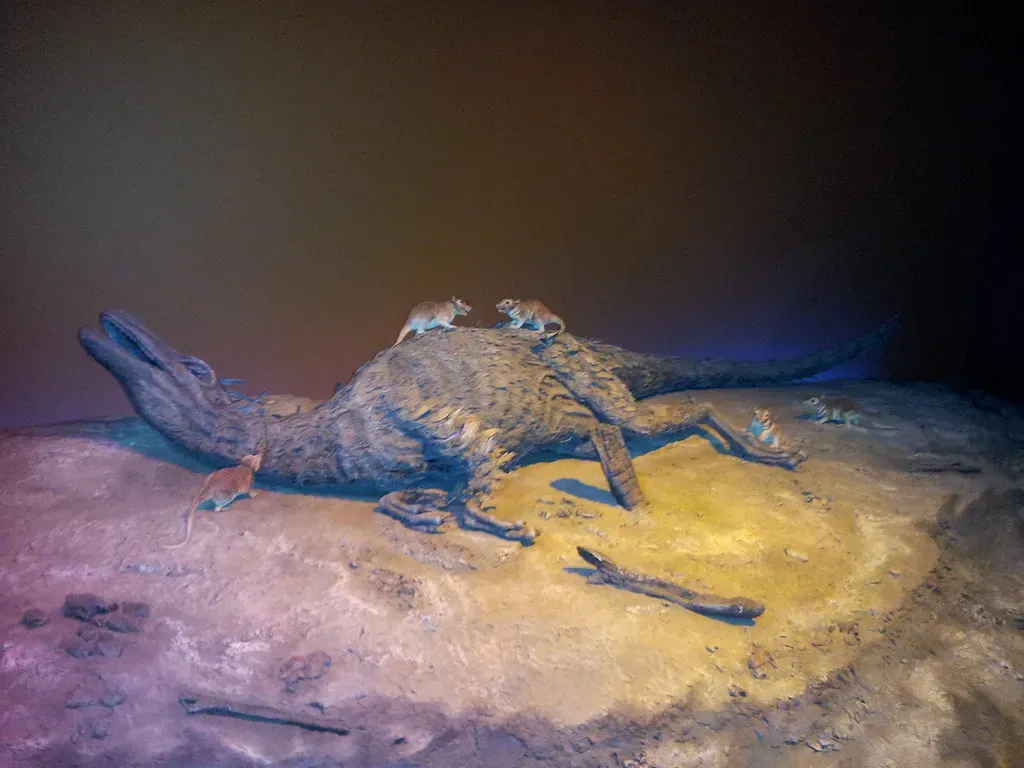
Strangely enough, one of the most fascinating ideas you encounter is that life itself can help trigger mass extinctions. Across Earth’s history, new kinds of organisms have emerged that fundamentally reshaped the atmosphere, oceans, and surfaces where other creatures lived. You can look back to the so-called Great Oxidation Event, when ancient microbes producing oxygen transformed an atmosphere that had been mostly oxygen-free. For the organisms adapted to that earlier world, the rise of oxygen was not a blessing; it was a toxin that likely drove many of them to extinction.
On a more subtle level, changes in how organisms burrowed, built reefs, or cycled nutrients may have cascaded into large-scale environmental shifts. If you imagine certain plants drawing down carbon dioxide rapidly or new animals stirring up seafloor sediments, you can see how ecosystems might accidentally flip key climate and chemistry switches. From your perspective, evolution is not a gentle, steady march upward; it is a rough competition where new winners can unintentionally alter the whole playing field and crush vast numbers of losers along the way. When you think of mass extinctions through this lens, you realize life is not just a victim of disaster but also, at times, the architect of its own upheavals.
Stacked Triggers: When Disasters Team Up
As you look over these theories, you might be tempted to pick a single favorite culprit for each extinction event. But when you pay closer attention to the evidence, you often see that the most convincing stories involve several triggers stacked on top of each other. For the extinction that ended the age of dinosaurs, for example, you are not just talking about an asteroid impact or volcanic activity in isolation; you are seeing how one event may have weakened ecosystems that were already under stress from the other. It is like watching someone who is already exhausted get hit with one more blow they cannot recover from.
For you, the key idea is that Earth’s greatest extinctions rarely come from a single simple cause. Instead, you see feedback loops: volcanoes warm the climate, warm climate changes the oceans, altered oceans change how life behaves, and life in turn modifies the atmosphere. An impact might then arrive at the worst possible moment. When everything lines up, even resilient ecosystems can unravel. This stacked-trigger view matters today, because it reminds you that multiple pressures – climate change, habitat loss, pollution, and more – do not just add up; they can combine in ways that suddenly tip systems over a cliff.
When you step back from all these theories, you are not just collecting scary stories from prehistory; you are learning how a living planet copes with shock. Each extinction ripped away what was dominant and cleared space for something new. Without the asteroid, you probably would not have mammals taking over and, eventually, you sitting here pondering these ideas. That perspective is both unsettling and strangely humbling. You are the product of catastrophe as much as of slow evolution.
At the same time, you are now the first species able to understand these patterns and, in some ways, create global pressures of your own. You cannot stop asteroids or supervolcanoes from existing, but you can choose how much extra stress you pile onto the system that sustains you. When you look at Earth’s greatest extinctions as warnings rather than distant curiosities, they start to feel less like old mysteries and more like a rough user’s manual for a fragile home. Knowing what you know now, how do you want your own species’ chapter in this story to end?