You tend to picture dinosaurs as gigantic teeth and claws ruling a brutal world, but the real story is a lot more balanced. For every towering predator, there were plant‑eaters and smaller hunters quietly evolving some of the wildest defenses nature has ever tried. Instead of going extinct overnight in a storm of jaws, many species survived for millions of years by turning their own bodies into armor, weapons, and early warning systems.
When you look closely at those defenses, you start to see a pattern that feels strangely familiar. You recognize trade‑offs you make in your own life: more strength but less speed, better protection but less freedom to move. As you walk through these ancient survival strategies, you are not just learning about dinosaurs; you are watching evolution run stress tests on every possible way to stay alive when something bigger, faster, and hungrier is always nearby.
Heavily Armored Tanks: Ankylosaurs and Their Bone-Plated Bodies
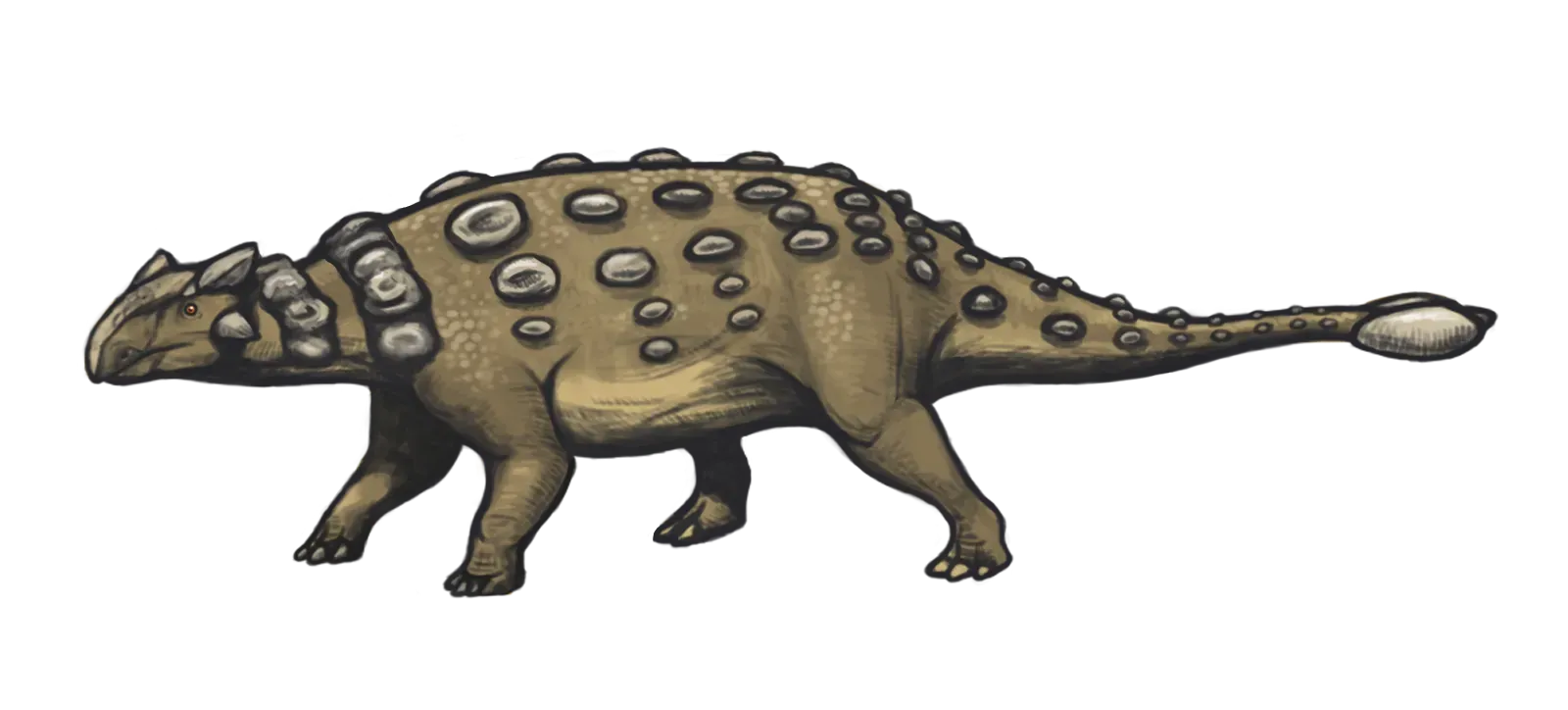
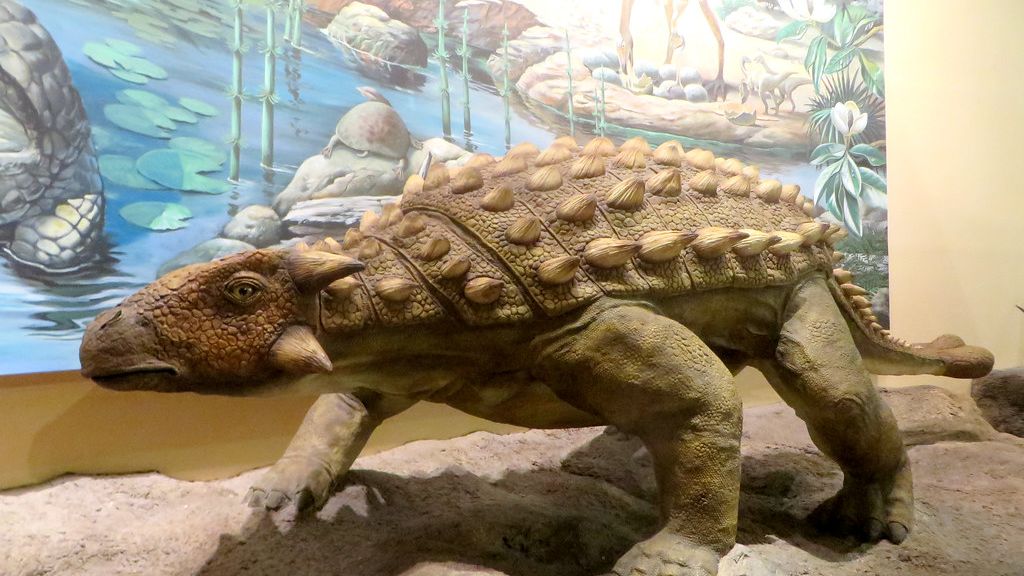
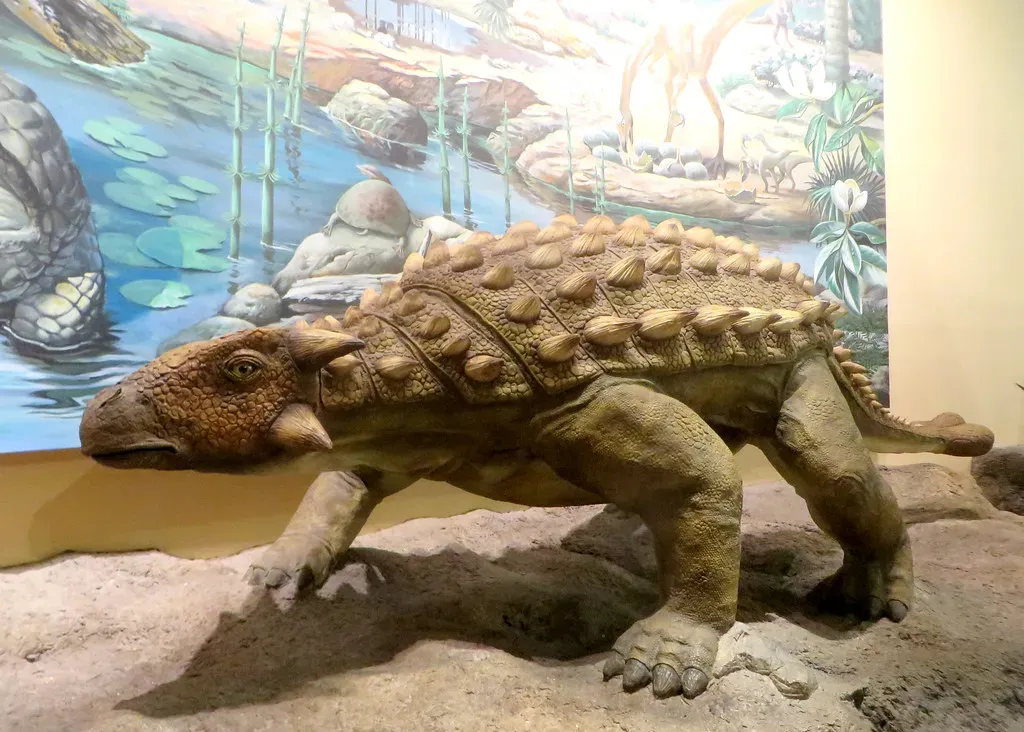
If you want to imagine pure defensive overkill, you look at ankylosaurs, the low‑slung, tank‑like dinosaurs covered nose to tail in bony plates. Their skin was packed with osteoderms, hardened armor chunks embedded like nature’s version of metal plates in a bulletproof vest. When you picture one, you are basically seeing a walking fortress that traded sleek elegance for a solid, stubborn refusal to be bitten through.
You can almost feel how slow and steady their lives must have been: head down, legs wide, every step a deliberate move under the constant threat of huge predators like tyrannosaurs. Instead of trying to outrun danger, ankylosaurs dared attacks to land on their backs, where teeth would skid off that protective shield. By turning their whole body into a problem predators did not want to solve, they nudged attackers toward easier, less armored meals.
Tail Clubs as Counterattack Weapons
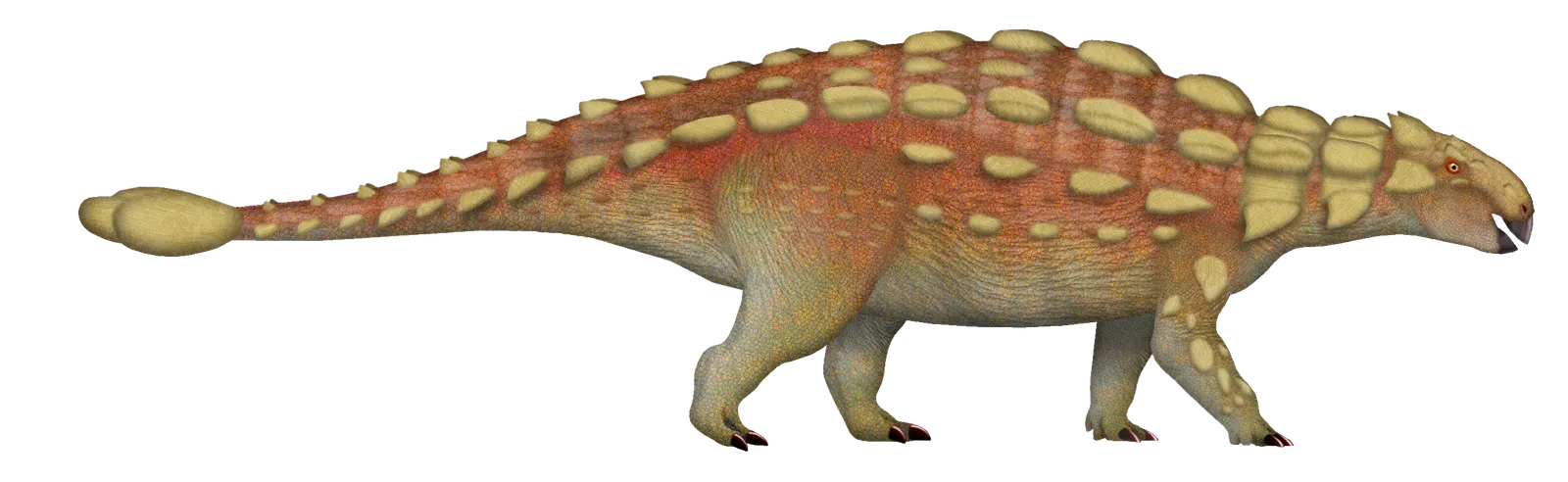
Of course, armor alone was not the full story for some ankylosaurs; they also carried what might be one of the most intimidating melee weapons in dinosaur history: the tail club. At the end of a stiff, reinforced tail, some species grew a massive bony mass that could be swung like a sledgehammer. You are not just looking at passive defense here; you are looking at a living creature capable of breaking bones in a charging predator.
Imagine a hungry tyrannosaur lunging in from the side and getting its leg smashed by a sideways swing it did not see coming. A well‑aimed blow could have turned a dominant hunter into a limping liability, making the risk of attacking an ankylosaur feel a lot less appealing. In your own terms, it is like locking your front door and also keeping a heavy flashlight by the bed: you defend by making any attempted attack both difficult and genuinely dangerous for the attacker.
Horned Fortresses: Ceratopsians and Shielded Skulls
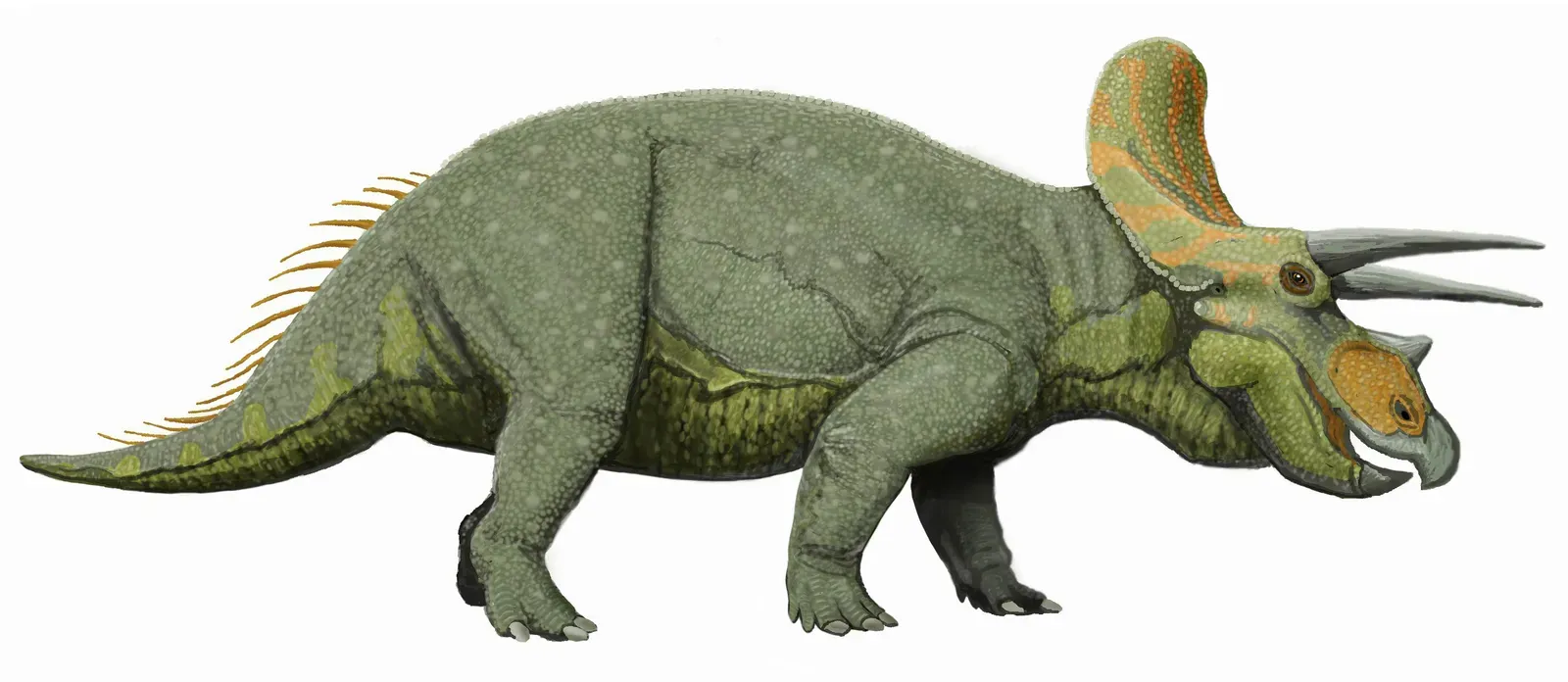
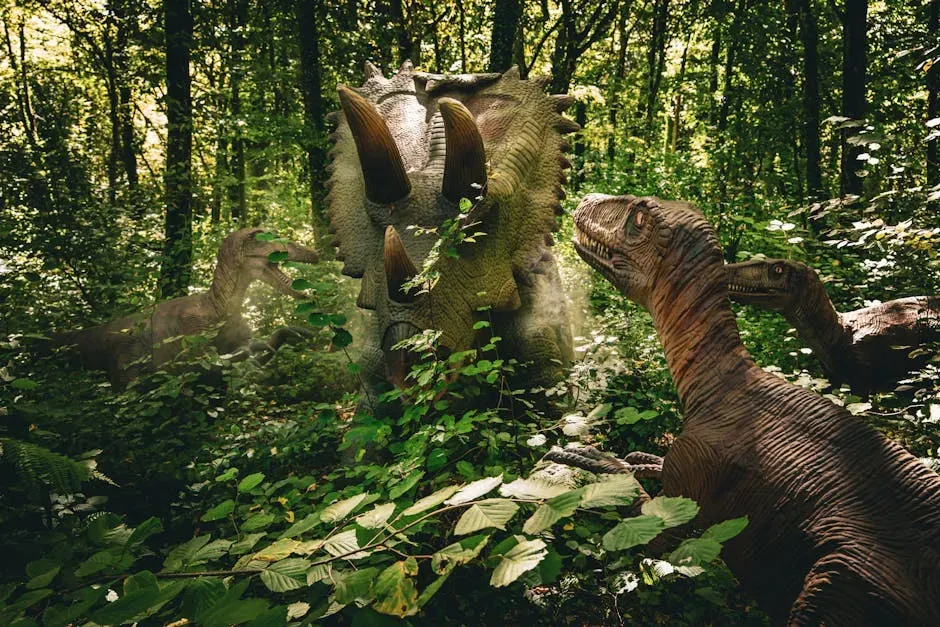
When you look at a ceratopsian like Triceratops, you are staring at a head that evolved into a combination of shield, battering ram, and alarm sign. That giant neck frill, reinforced skull, and forward‑pointing horns did more than just look dramatic; they created a solid barrier between soft body parts and the teeth of apex predators. You can think of the head as the armored front wall of a living tank, deliberately turned toward danger.
Those horns were not just decoration, either. You can picture a predator like Tyrannosaurus rex testing a herd and getting met by a solid wall of low, horned animals ready to thrust upward. For you, it is a reminder that sometimes the best defense is not hiding but standing together and making yourself look like a brutal, expensive problem to attack. Predators often searched for weak, isolated targets; a line of horned dinosaurs made it clear that a bad choice might end in gored flesh and serious injury.
Spikes and Plates: Stegosaurs’ Double-Layered Defense
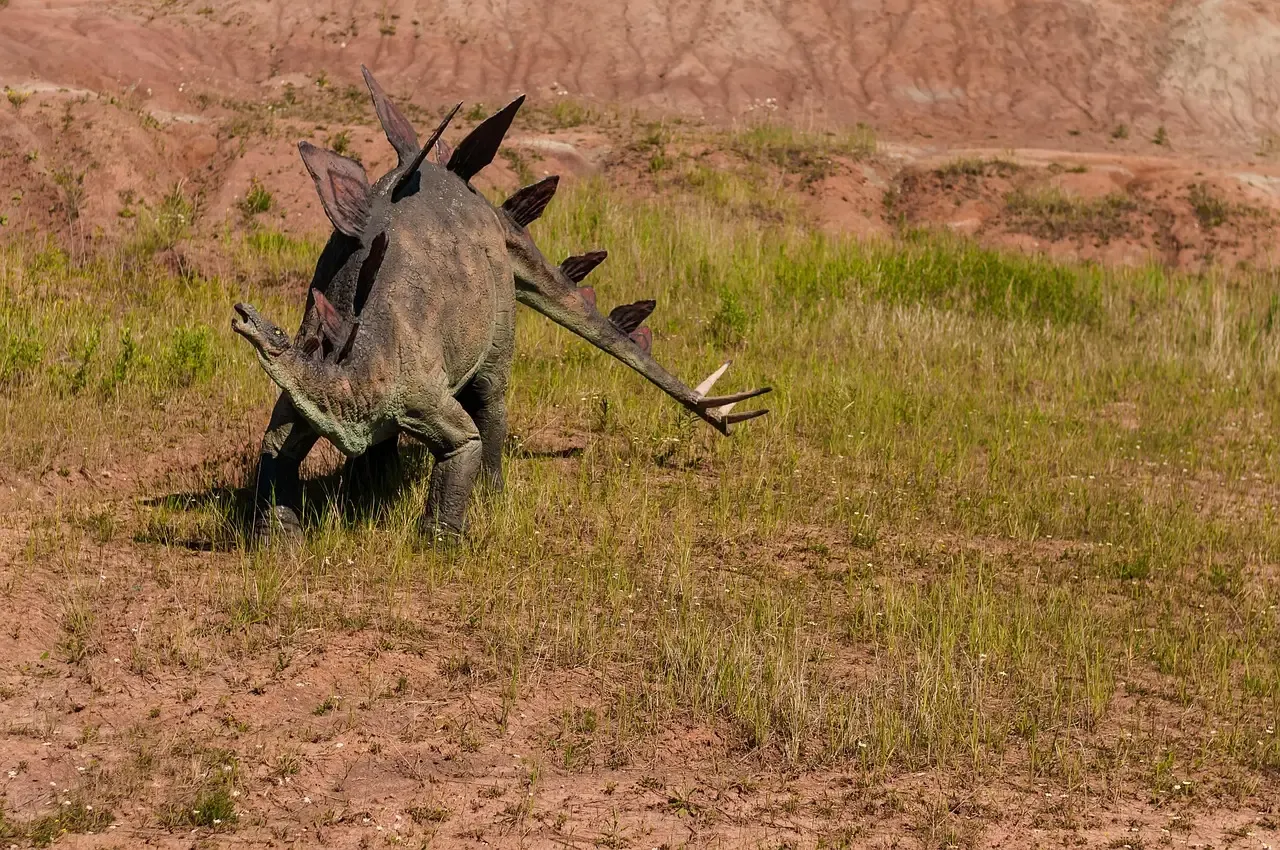
Stegosaurs, with their tall back plates and tail spikes, looked almost mythical, but their design was rooted in harsh reality. Along their backs, they carried large plates that may have helped with temperature regulation and visual display, but more importantly, they changed the profile of the animal. From a predator’s point of view, you see something big, awkward to grip, and difficult to bite without hitting hard bone or thick tissue.
Then there were the tail spikes, sometimes called a thagomizer, turning the rear half of the animal into a serious hazard zone. You can imagine a stegosaur swinging that tail in wide arcs, forcing any attacker to dodge or risk getting impaled. It is a bit like walking around with an umbrella held sideways in a crowded room: suddenly it is not so easy for anyone to get close without considering where those sharp ends are. Stegosaurs survived in part by making every approach angle dangerous.
Speed and Agility: Outrunning the Monsters
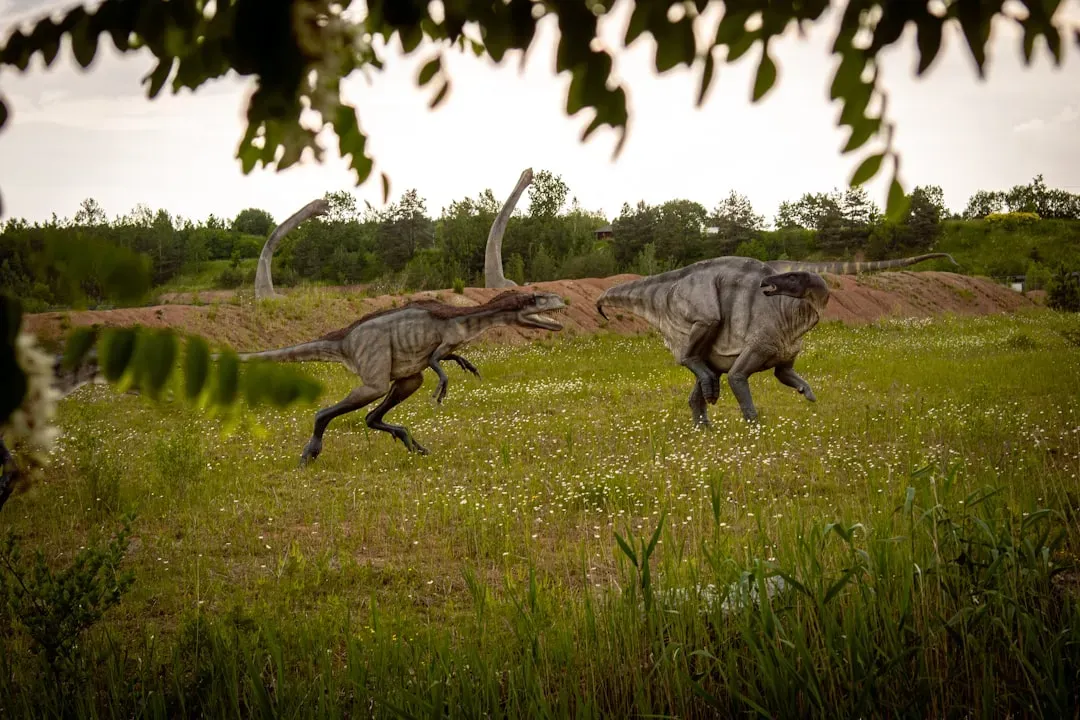
Not every dinosaur could, or needed to, become a walking tank. Many relied on something you can relate to immediately: speed. Smaller herbivores and nimble omnivores often had long legs, light bodies, and an ability to change direction quickly, turning their entire survival strategy into one rule – see danger early and run before it gets close. In a world of giant jaws, being hard to catch was one of the simplest and most reliable defenses.
You can picture lean, fleet‑footed dinosaurs darting across open ground, using bursts of speed in the same way antelopes or gazelles do today. They probably did not need to fight back if they could simply make every chase a waste of the predator’s energy. In your own life, it is like solving problems by avoiding conflict entirely: you stay a few steps ahead, notice trouble brewing, and change course before it reaches you.
Herd Behavior and Watchful Eyes
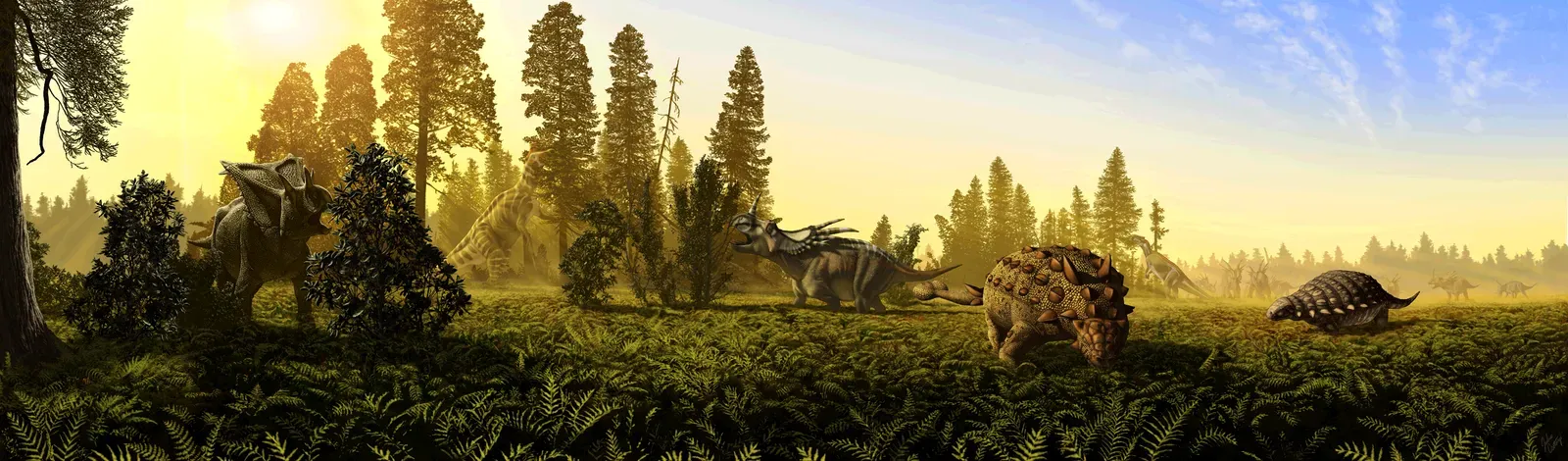
Another powerful defense did not depend on horns, plates, or spikes at all; it relied on numbers. Many plant‑eating dinosaurs likely lived in groups, where dozens or even hundreds of eyes scanned for threats. When one animal spotted movement, the entire herd could react, turning an ambush into a clumsy, failed rush as the prey scattered. You know this instinctively from watching birds, antelopes, or even a crowd that notices danger all at once.
Living in a herd came with costs – more competition for food and water, more noise, more stress – but it made each individual slightly safer. As a member of such a group, your own chance of being the unlucky one grabbed by a predator went down, simply because there were many others around you. It is a bit like walking home at night in a group instead of alone: predators, whether ancient or modern, often prefer solitary, distracted targets.
Camouflage and Staying Unseen
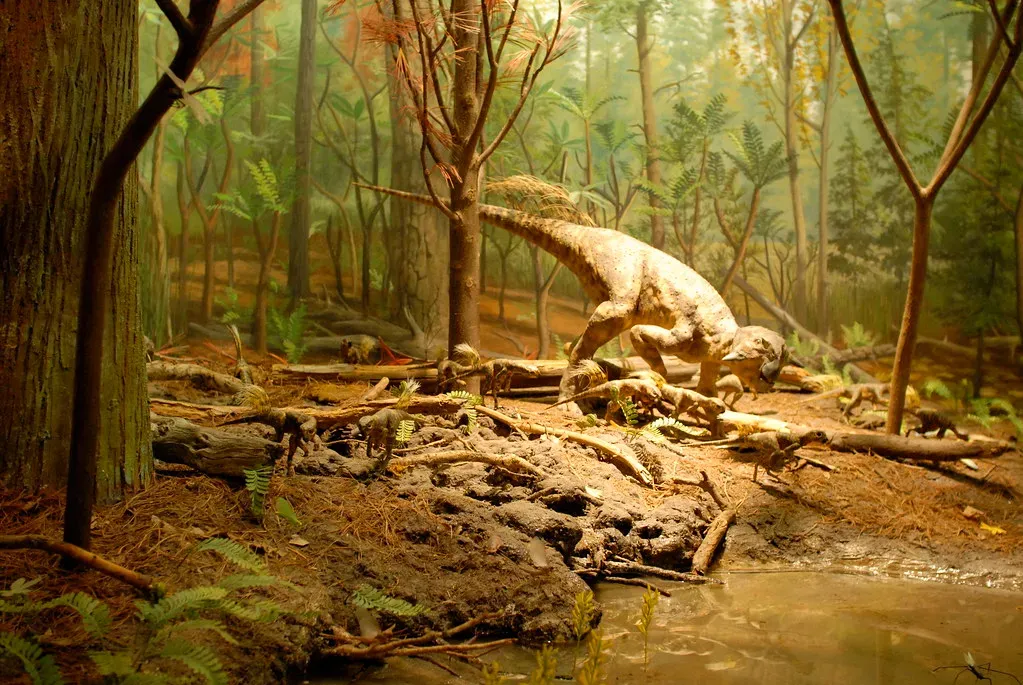
There is strong evidence that some dinosaurs used color patterns and shading to blend into their surroundings, especially in forested or mixed environments. You can picture darker backs and lighter bellies breaking up the outline of a body, just like you see in many animals today. For a mid‑sized herbivore or a juvenile, not being seen by a predator in the first place might have been the safest strategy of all.
You can imagine these animals choosing shaded routes, moving along tree lines, and freezing in place when they sensed movement. Even if they lacked the dramatic spikes and horns of other species, they could tip the odds in their favor simply by making it harder for a hunter to lock on to them as a target. In modern terms, it resembles walking through a risky neighborhood with neutral clothes, quiet behavior, and an awareness of where you stand instead of drawing attention to yourself.
Early Warning Senses and Smart Behavior
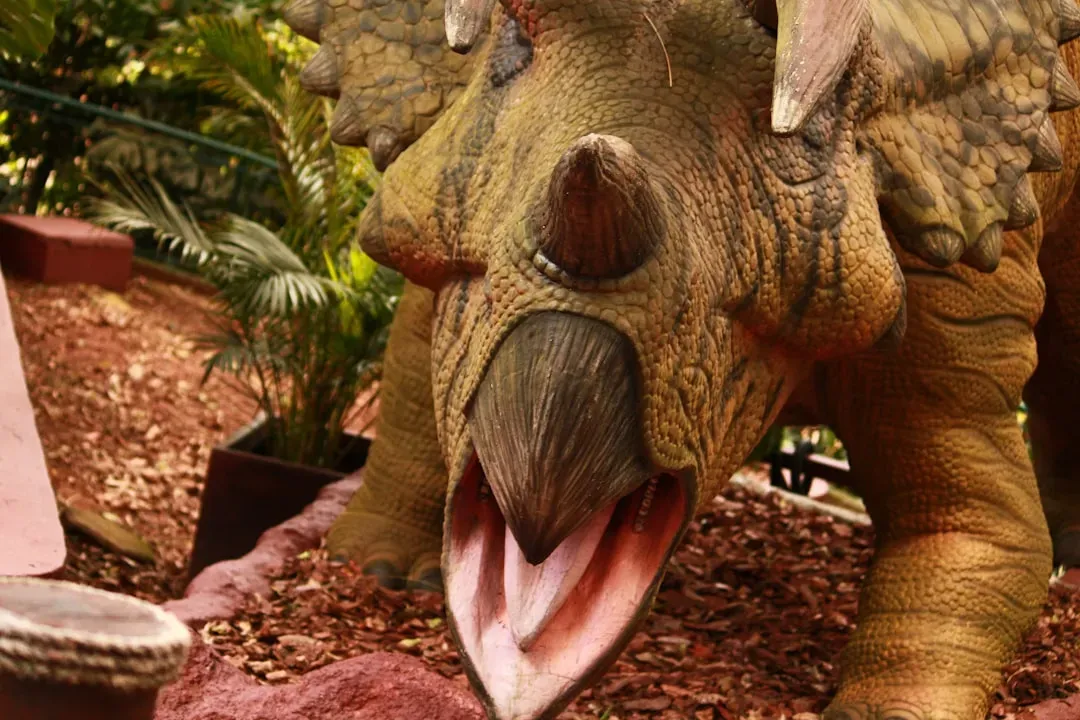
Defensive success was not just about hardware like armor or horns; it was also about software, meaning senses and behavior. Many prey dinosaurs probably had keen hearing, wide visual fields, and sharp awareness of movement, giving them precious seconds to react. If you think about how your own survival often rests on noticing small clues – a car drifting too close, a person acting strangely – you can easily see why this mattered.
There is also good reason to think that some species used alarm signals, body language, or rapid movement to warn others, even if it was not as organized as the calls you hear in birds or primates today. Smart behavior like choosing safer routes, staying near cover, or following larger, more experienced individuals would have pushed survival odds upward without needing any dramatic physical weapon. In your own life, this is like relying on awareness and wise habits instead of always needing stronger locks or thicker armor.
Trade-Offs: The Price of Staying Alive
Every one of these defenses came with a cost, and that is something you feel immediately if you put yourself in those animals’ place. Heavy armor slowed you down. Massive horns and frills required energy to grow and maintain. Bright display patterns that helped with communication or mating might have made you more visible to predators if you used them at the wrong time or place. Evolution does not hand out free upgrades; it reshuffles resources and forces tough compromises.
When you look at these dinosaurs through that lens, you see your own choices reflected back at you. You wear a seatbelt, lock your doors, and maybe learn self‑defense, but each layer of security slightly changes how you move through the world. Dinosaur defenses worked the same way: every added plate, spike, or behavioral trick solved one problem while creating another. Survival, for them and for you, was never about being invincible; it was about being just defended enough, in just the right way, to make it to another day.
Conclusion: What Dinosaur Defenses Teach You About Survival
When you step back and look at these ancient animals as a whole, you stop seeing them as helpless victims of giant predators and start appreciating them as remarkable survivors. Some turned their bodies into tanks, some carried built‑in clubs and spears, some trusted in their legs, their herds, or their ability to disappear in plain sight. They did not all make it to the present, but many of their strategies echo in the animals you see today – and even in the security choices you make without thinking.
If you let that sink in, you realize that survival has always been about creative trade‑offs, not perfection. You adapt, layer defenses, watch your surroundings, and accept that no solution is flawless, only good enough for now. The dinosaurs that lived longest were not necessarily the biggest or the meanest, but the ones whose defenses fit their world just well enough to tip the balance. When you face your own predators – whether they are literal threats or everyday pressures – how will you shape your defenses to match your world?